


 Released in 2023
- Allocation known before the IDO buy window
- Refund window of 1 to 7 days after some IDOs
- AI and infrastructure launches over memes
ChainGPT Pad Overview
- Crypto Launchpad Name
- ChainGPT Pad
- Release Date
- 2023
- Platform Type
- DEX / IDO Launchpad, Incubator / Advisory Launchpad
- Access Model
- Connected Wallet, Mixed By Sale
- KYC Level
- Full KYC, KYC Not Always Required, Varies By Region, Varies By Sale
- Core Sale Types
- IDO, Private / Community Round, Presale, Airdrop / Quest Distribution
- Native Token Dependence
- Varies By Sale
- Allocation Model
- Tiered Guaranteed, FCFS, Pro-Rata Subscription, Quest / Community-Based, Mixed By Sale
- API / Public Data Access
- Limited
- Status
- Live
ChainGPT Pad Screenshots
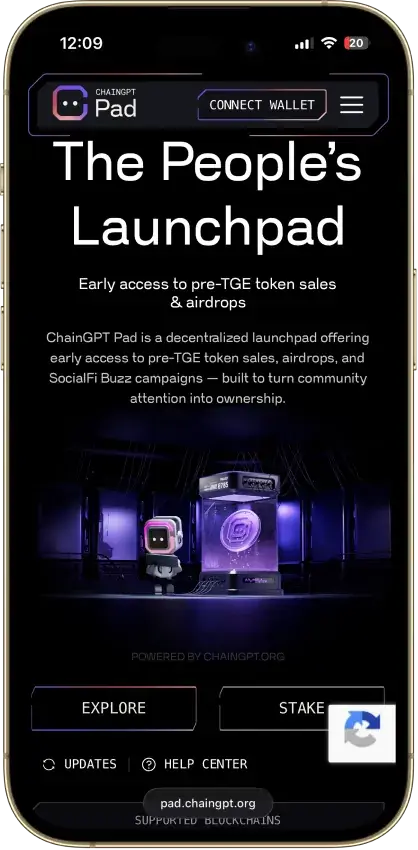
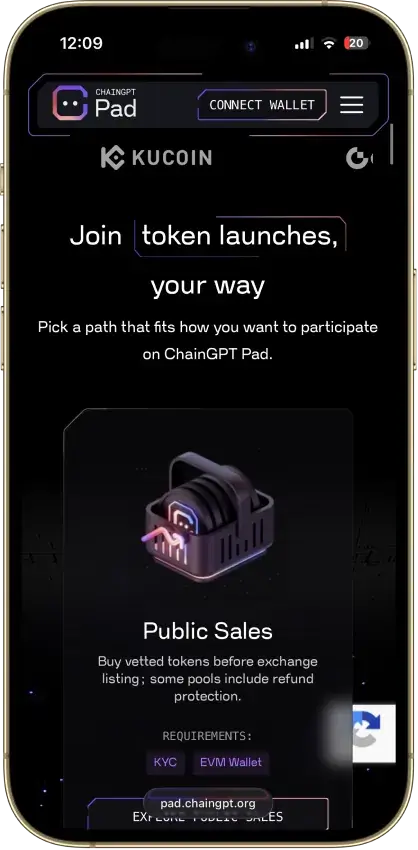
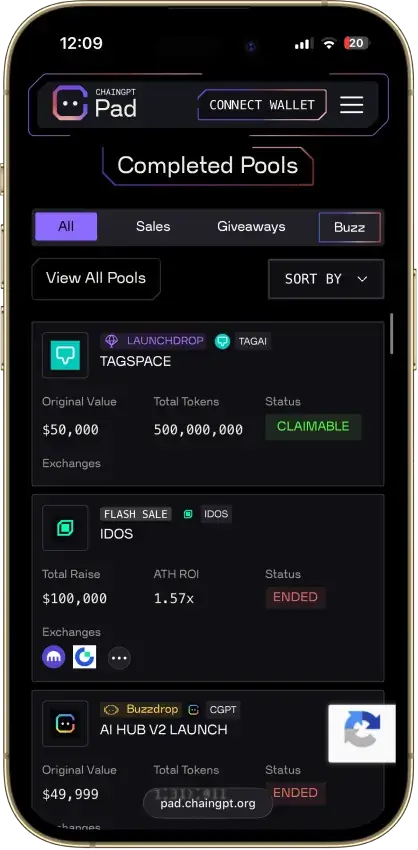
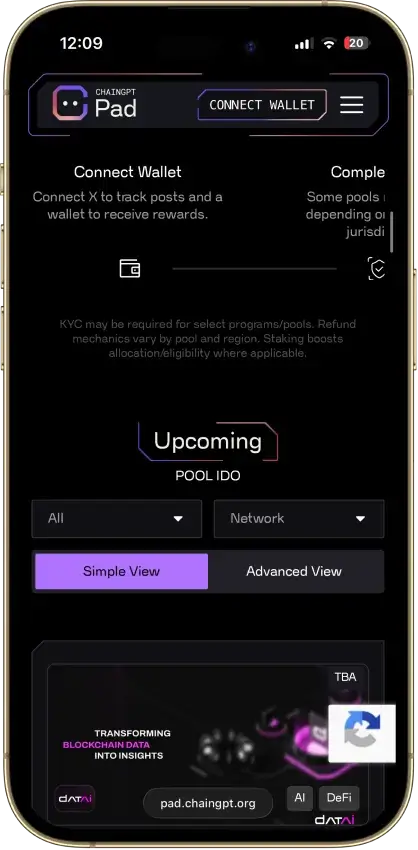
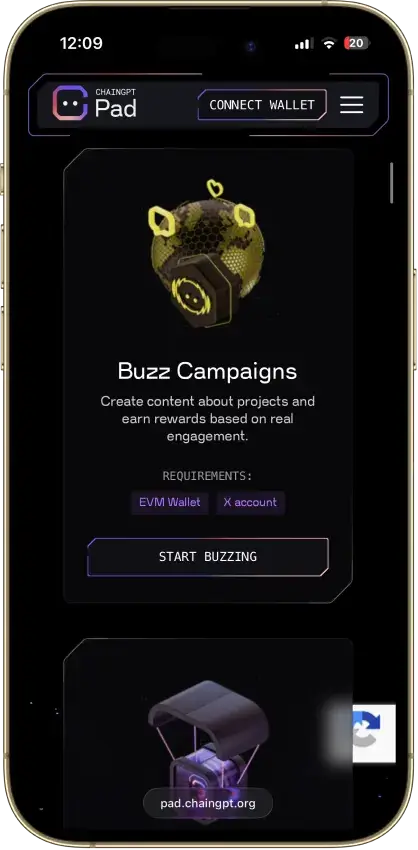
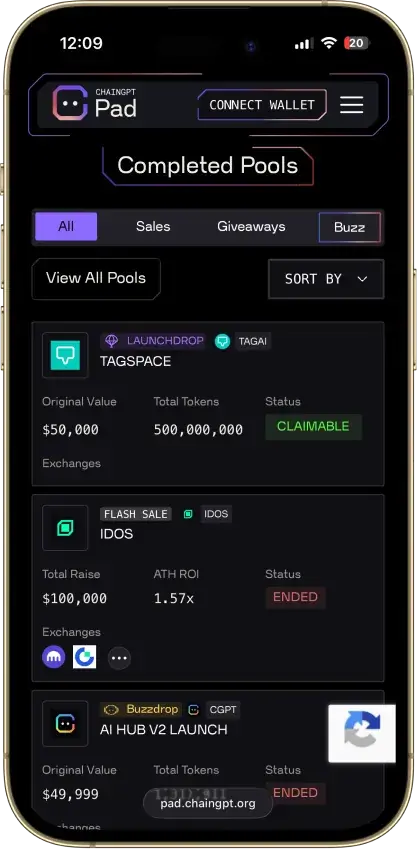
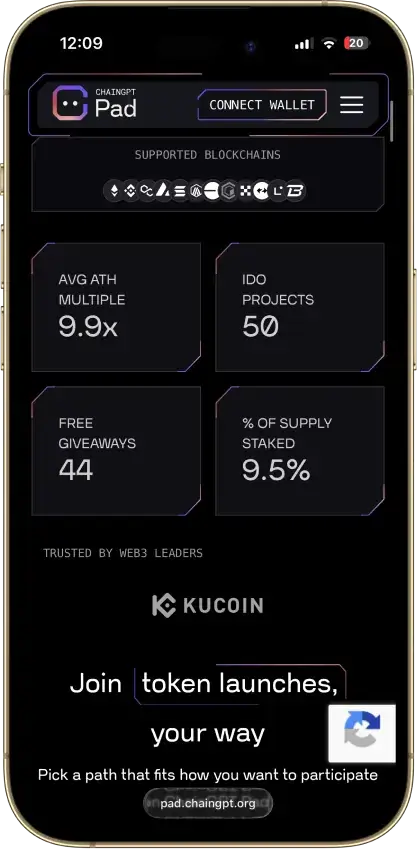
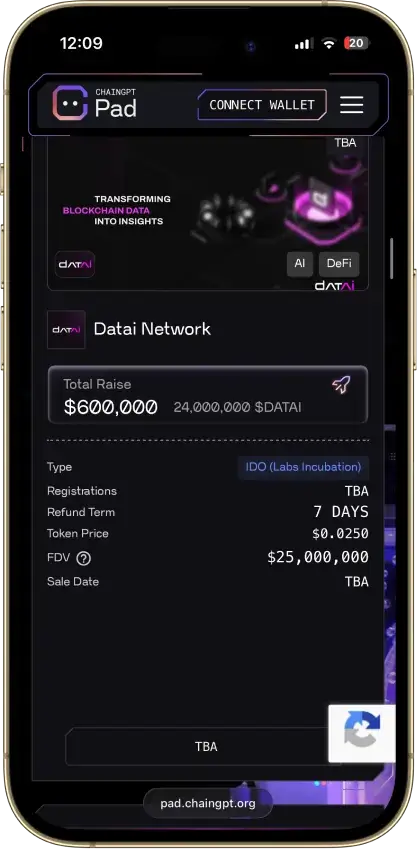
Screenshot 1 of 8
ChainGPT Pad Pros and Cons
Pros
- Public Sales need no CGPT stake
- Staking boosts more than one format
- EVM and Solana sales on one pad
- About 50 IDOs plus launchdrops so far
- Screening stricter than meme-first pads
Cons
- Best terms cluster in higher CGPT tiers
- Public Sale buyers commit before knowing fills
- Vesting and claims vary by project
Who ChainGPT Pad Is Best For — And Who Should Skip It
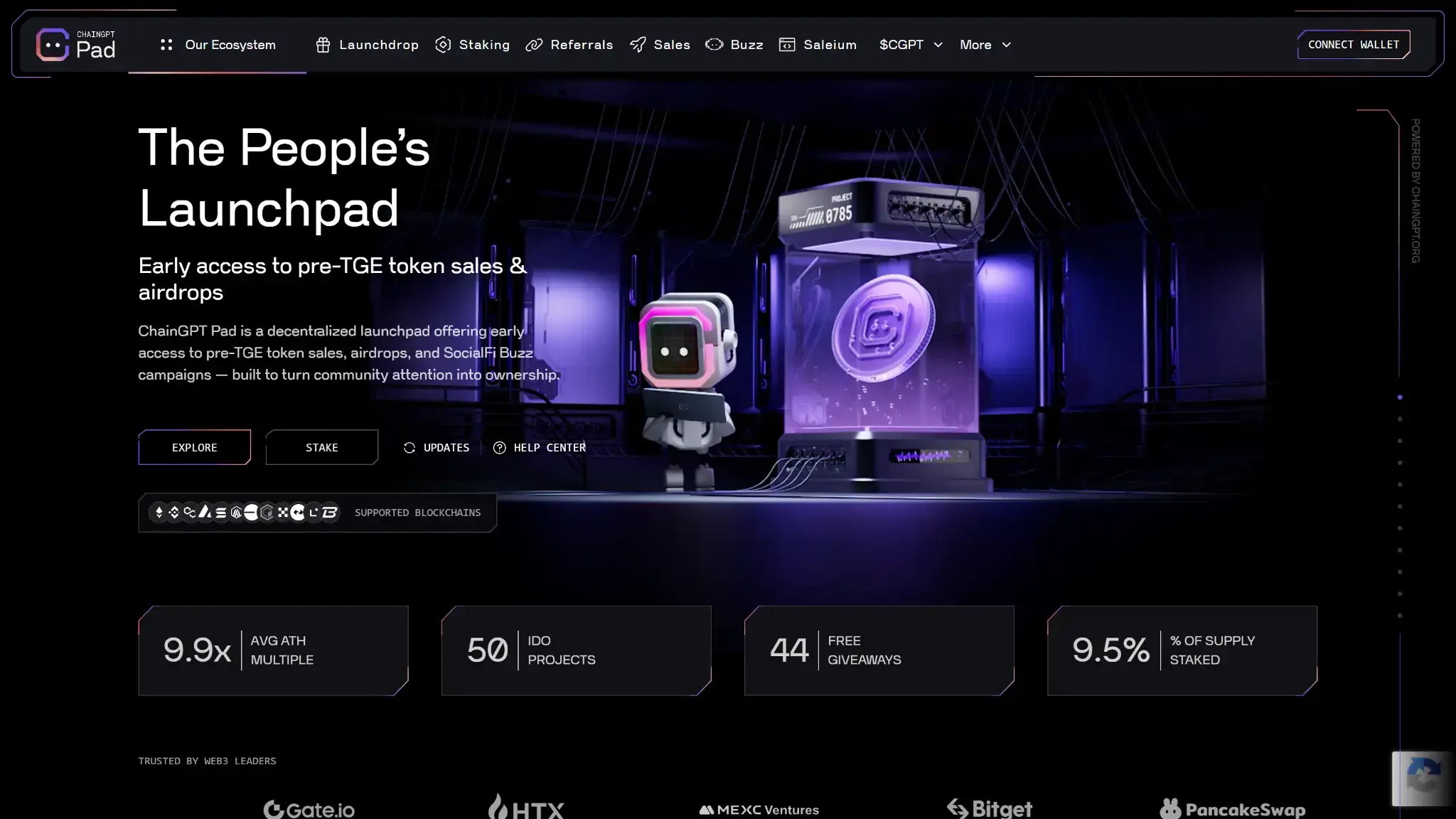
ChainGPT Pad works best for users who can pick the right format for each sale rather than expecting one fixed launch flow every time.
The best fit is someone who already uses a self-custody wallet and is comfortable picking between known-allocation IDOs, subscription sales, and campaign-based rewards. It also suits users willing to trade simplicity for format choice.
Those who want one fixed global rulebook should look elsewhere. The setup gets heavier if you dislike KYC, do not want to hold or stake platform tokens, or need one of the best best Solana wallets and an exit path across every launch.
What ChainGPT Pad Actually Is And How It Works
ChainGPT Pad runs several launch formats in one place. The main ones for token buyers are Standard IDOs and Public Sales. Buzz campaigns and Launchdrops sit beside them as reward and distribution layers. The Buzz system is the social side of the platform, where rewards can depend on content and engagement rather than direct token purchase.
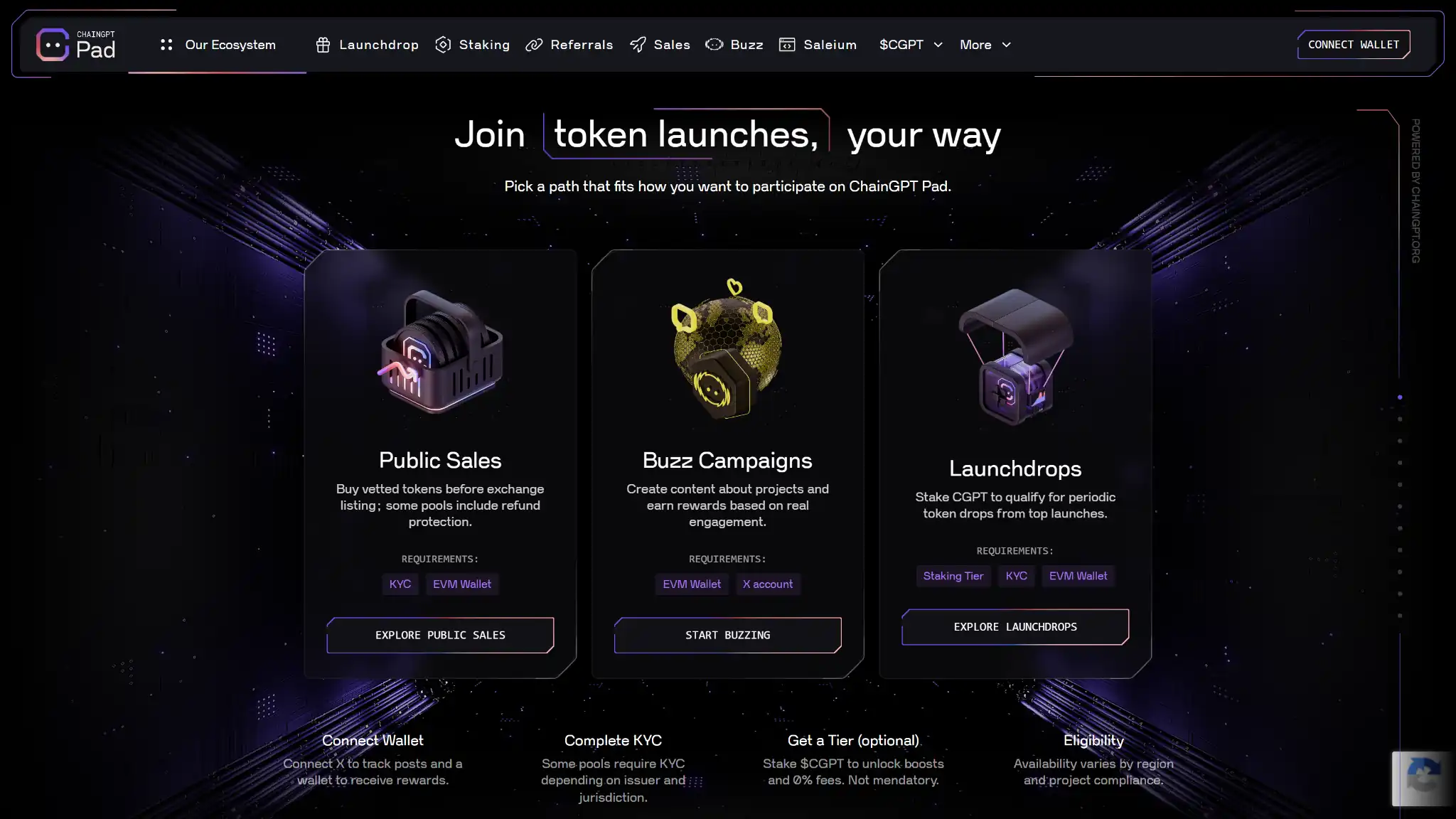
Access starts with a connected wallet. Core sale formats also require KYC. Standard IDOs are the token-gated route: you stake $CGPT, register, and get a known allocation before the buy window opens. Public Sales work differently. You commit funds during the live window and only learn the final allocation after the sale closes.
After that, users move into claim, refund, or vesting steps based on the sale. Some campaigns return excess funds, and some IDOs include a refund window after completion. The platform is built for structured pre-TGE launches, not fast no-rules meme launches. One dashboard, several sale engines, and a different rule set for each.
Availability, KYC and Setup Friction
Setup friction here goes beyond sign-up. It is the combined weight of wallet linking, KYC, chain choice, and sometimes staking before you can join the format you actually want.
The biggest delays come from KYC approval, matching the right wallet to the right chain, and staking $CGPT for tiered IDO access. Public Sales are the faster entry point. Standard IDOs require more preparation before you can participate.
Track Record, Current Activity and Project Screening
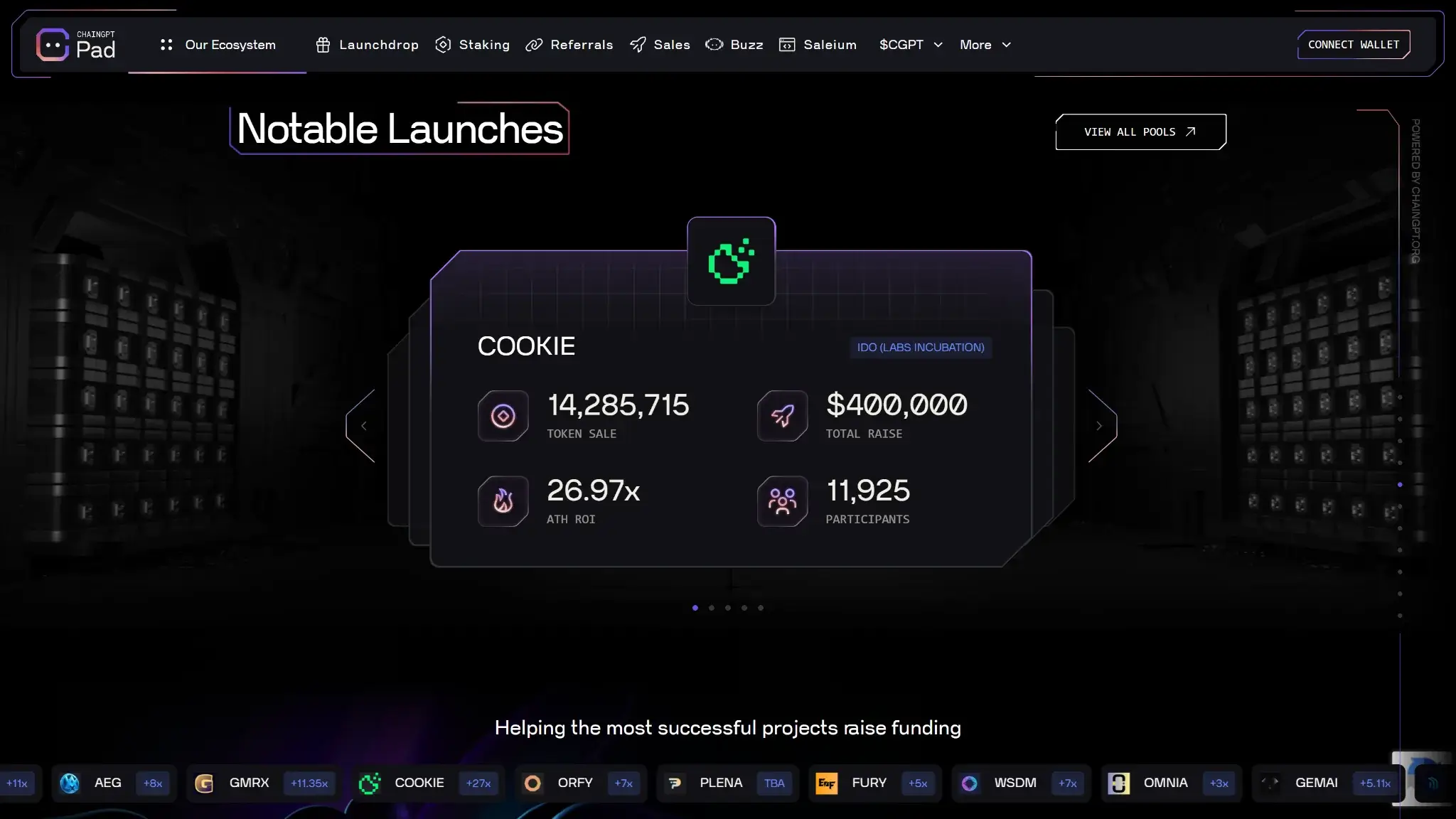
ChainGPT Pad has enough launch history to judge patterns rather than isolated results. The visible record runs to roughly 50 IDOs, plus giveaways and launchdrops, so this is not a one-season launchpad.
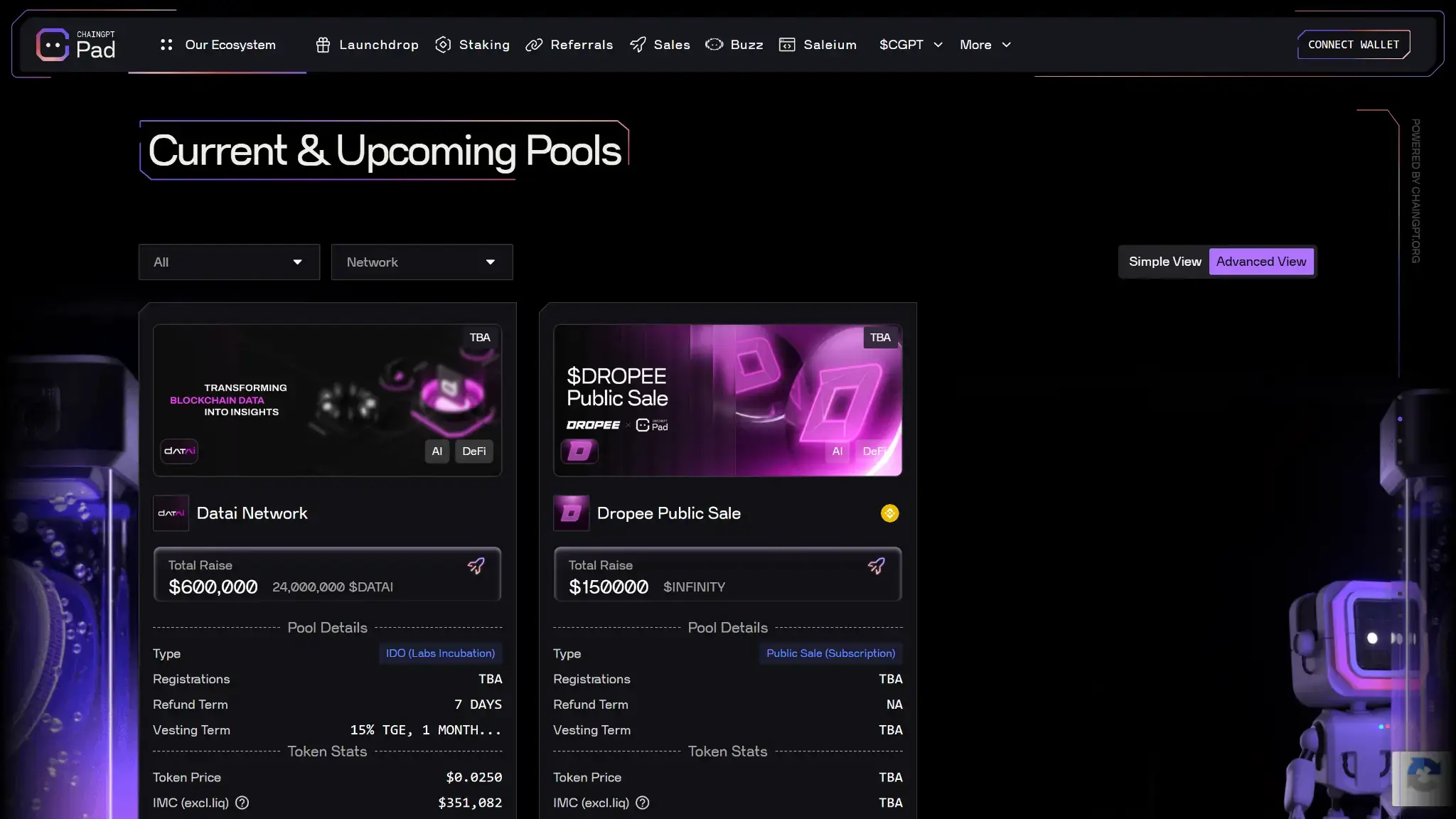
Cookie and Solidus AI Tech stand out among the stronger names, and recent pages still show live or upcoming IDOs and pools rather than a dead calendar. The platform also highlights average ATH ROI as a performance stat. That is useful as a headline figure, but it is weaker than clean data on unlocks, holding periods, and actual exit quality.
The screening model is stricter than on open meme-first pads. Projects go through screening, due diligence, and an optional incubation track that can last months. That helps quality control, but it also means the platform moves in smaller waves rather than pushing continuous launches.
Project Mix, Discovery Quality and Ecosystem Fit
Compared with broad generalist IDO pads, ChainGPT Pad leans harder into AI, data, infrastructure, and utility-led Web3 launches. It is less chaotic than meme-heavy venues, but also less broad if you want every hot category under one roof.
The mix is selective. It is not broad enough to feel noisy, but it is not so narrow that every sale looks the same. The platform moves in waves rather than with a constant flood of launches.
Claim Flow, Vesting and Exit Reality
Winning an allocation on ChainGPT Pad does not mean you have usable liquidity straight away. The platform can add refund protection and structured claim flows, but vesting, unlocks, and listing still depend on the project.
The most important detail is the claim-versus-refund tradeoff. On some Standard IDOs, there is a 1 to 7 day refund window after completion. Once you claim, that refund path closes, forcing the decision before the market has fully shown what the launch is worth.
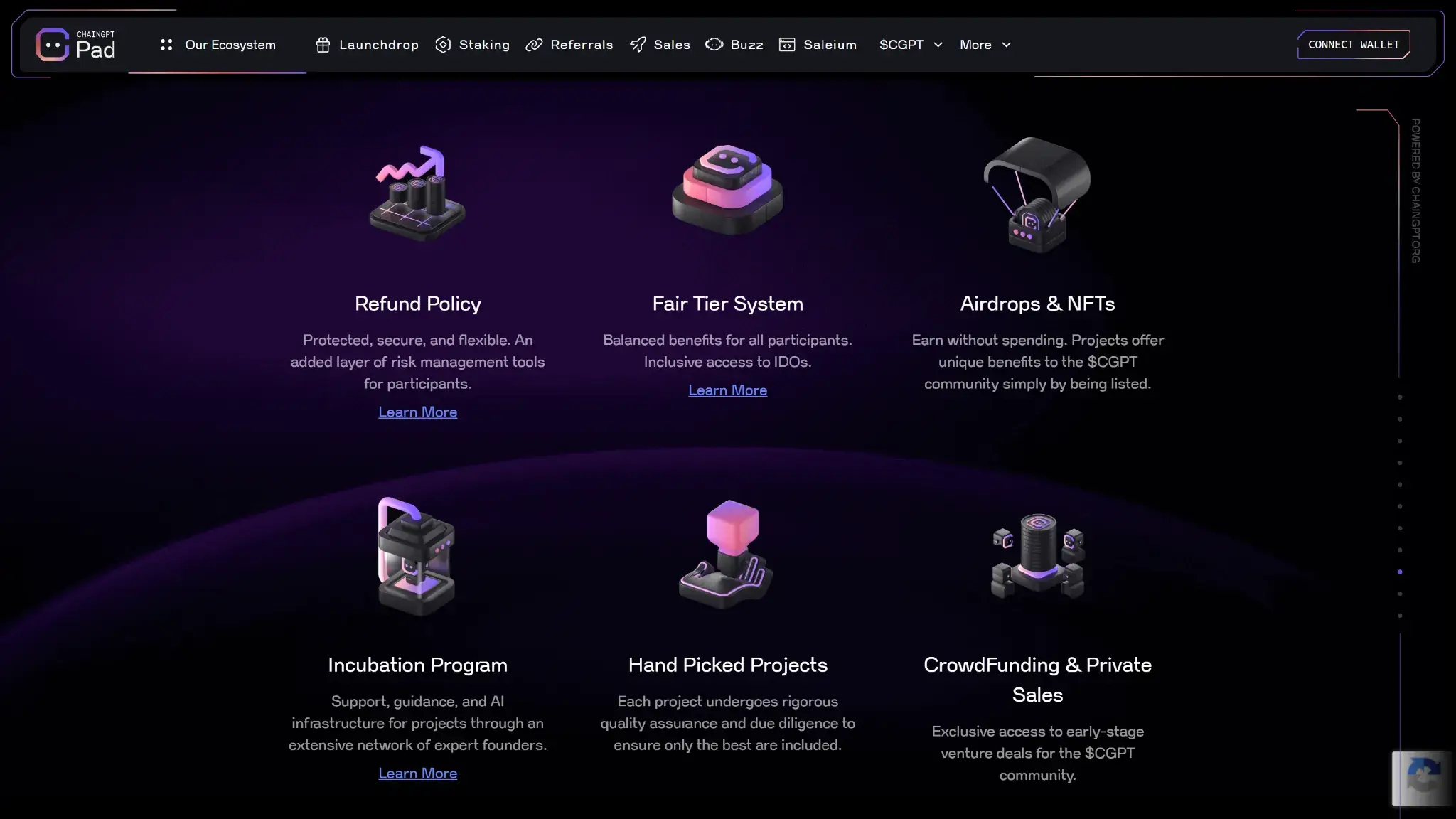
Exit terms are also not standardized. Some deals unlock only part of the position at TGE, some add cliffs, and some take longer to reach usable exchange or DEX liquidity. Winning the allocation is one step. The token becoming claimable, transferable, and liquid on your timeline is a separate one.
Fairness, Bot Resistance and Launch Integrity
ChainGPT Pad handles fairness better than speed-race launchpads, but the system is not flatly equal. Public Sales reduce pure click-speed abuse because final allocation is calculated after the window closes. Standard IDOs also reduce some randomness by showing the allocation before purchase, which is cleaner than a pure first-click scramble.
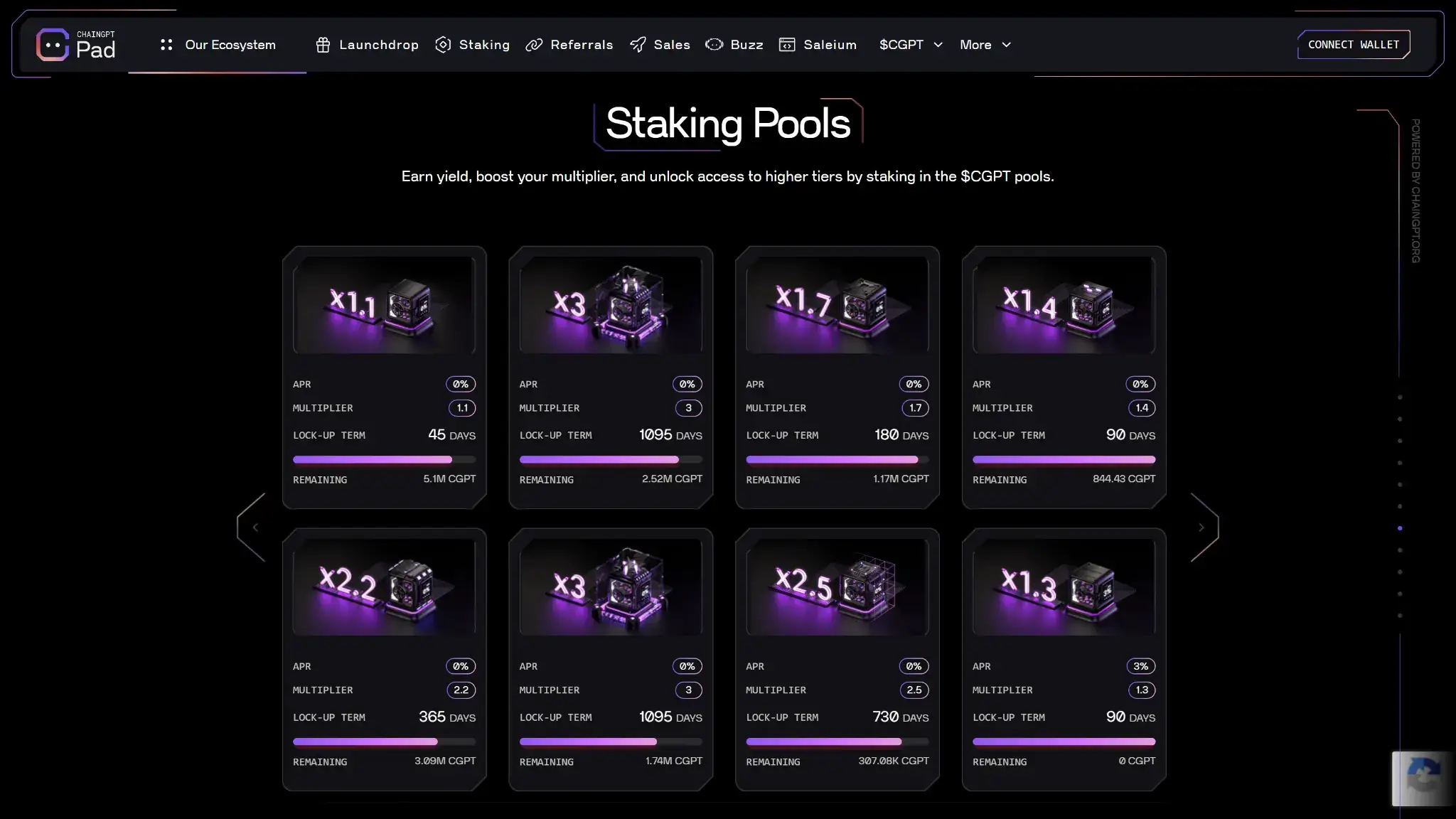
The tradeoff is tier bias. Higher staking tiers get better allocation weight, lower fees, and better access across more than one format. On core sales, KYC adds a real sybil check. In Buzz campaigns, fraud filters and leaderboard rules help more than on open quest farms, but none of that removes the edge that larger stakers have.
The main integrity risk is not classic sniper-bot chaos. It is that the platform can look fair at the top level while still favoring users who understand the rule stack, hold CGPT early, and know which format gives them the cleanest path. Liquidity lock visibility, treasury unlock visibility, and token-level verification are also more project-specific than platform-wide.
Security, Smart Contract Risk, Compliance and Trust
The main trust sits in the sale contracts and the platform's compliance flow, not in custodial account handling. ChainGPT Pad is wallet-based, so users stay in self-custody until they approve a stake or commit funds. After that point, the relevant risk shifts to platform contracts, claim logic, refund rules, and project delivery rather than exchange-style account custody.
That makes contract and execution risk more important than pure wallet custody risk. ChainGPT publishes contract addresses for core ecosystem contracts, but that does not remove campaign risk or project-level token risk. Privacy trade-offs also matter more than on low-friction launchpads because major sale formats rely on KYC. The platform can help structure sales and refunds, but it cannot protect users from a weak token market after launch or from poor vesting terms.
Customer Support, Community and Incident Handling
The documentation is deeper than the live support layer. ChainGPT Pad explains formats, tiers, staking, refunds, and wallet linking fairly well in its docs, but real help gets thin once the issue moves from setup into campaign edge cases or market outcomes.
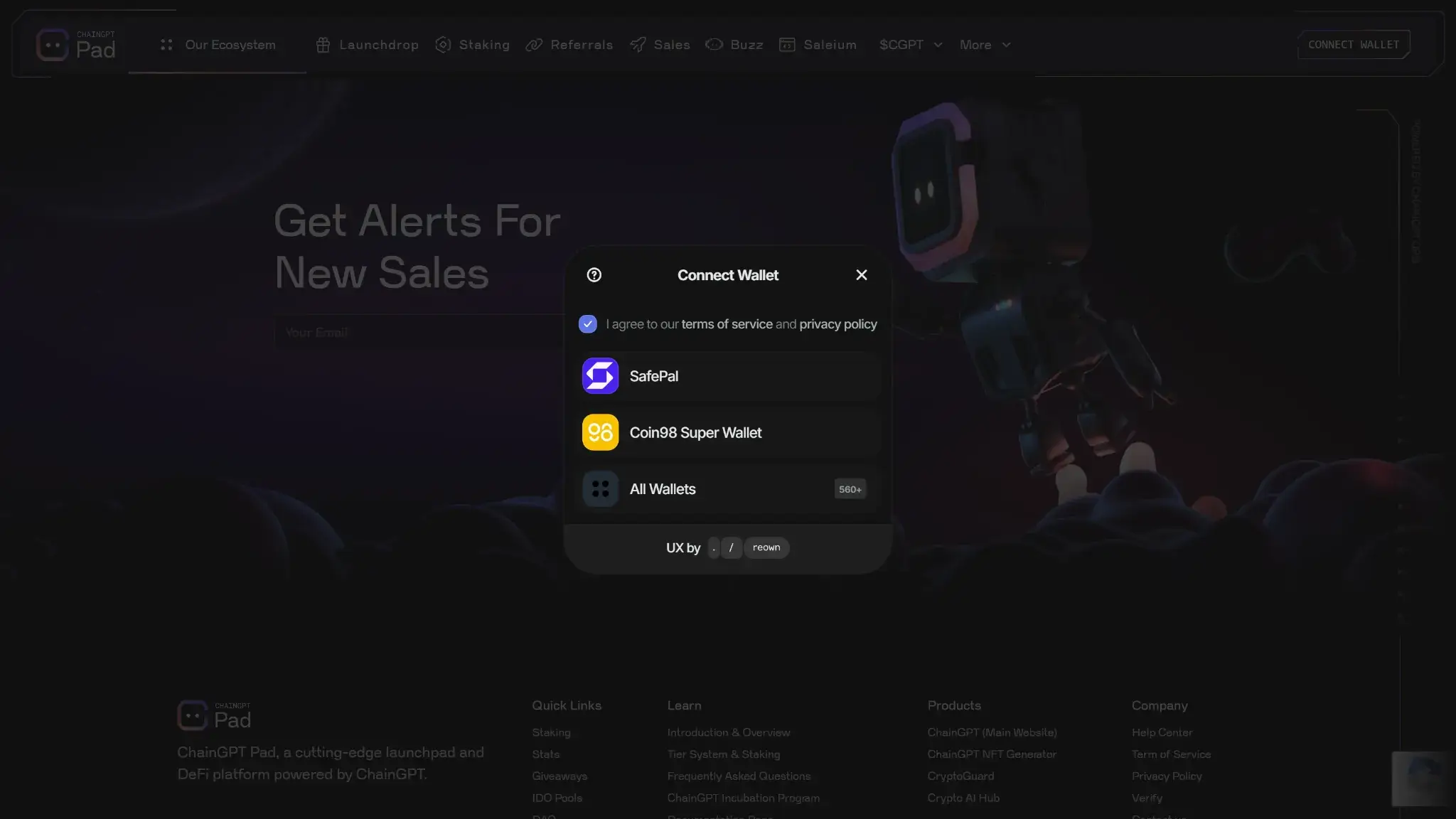
- Help center: ChainGPT Docs and ChainGPT Pad FAQ pages cover setup, tiers, public sales, Buzz, refunds, and wallet linking
- Live chat: not available as a clear Pad-specific support channel
- Email or ticket support: support@chaingpt.org
- Discord / Telegram / X presence: active social channels are part of the normal announcement flow
- Status page: not available
- Support can fix: wallet linking issues, profile setup, basic participation flow, where to complete KYC, and where a user sits in the process
- Support cannot fix: expired refund windows, blocked jurisdictions, onchain transaction finality, project vesting terms, or poor post-TGE liquidity
- Incident communication: usually through docs updates, sale pages, and social channels rather than through a dedicated operations status system
Support works for procedural problems. When the issue shifts to vesting, listings, or token performance, support becomes informational rather than corrective.
ChainGPT Pad Alternatives
-


Binance Launchpad
Binance Launchpad still delivers one of the cleanest exchange-side launch flows, but small users can still end up with very little size.
-

Legion
A curated pre-TGE launchpad that trades open access for project-led selection.
-
Kucoin Spotlight
KuCoin Spotlight makes token-sale access easier than most onchain pads, but sale rules, allocation quality, and vesting still vary too much to ignore.
-
Four.meme
A fast BNB Chain memecoin launchpad with low entry friction, but much weaker filtering and fairness than structured crypto launchpads.
Someone might choose a different launchpad if they want lower token lock-up, faster exchange liquidity, a stronger niche, or a simpler sale rulebook.
| Alternative | Why Someone Would Choose It Instead |
|---|---|
| Binance Launchpad | Better for exchange-native access, simpler funding, and faster post-listing liquidity on a major venue |
| Legion | Better for users who want a more selective, reputation-led launch flow with stronger community weighting |
| KuCoin Spotlight | Better for users who want exchange account access, centralized funding, and simpler post-sale trading on KuCoin |
| Four.meme | Better for users who want fast meme-token launches and lower-friction BSC speculation instead of curated pre-TGE sales |
ChainGPT Pad sits in the middle of that group. It is more structured than open-access pads, less exchange-native than Binance, and less niche than a gaming-first launchpad. The practical reason to choose it is the mix: tiered IDOs, public subscriptions, and campaign-based distributions in one place.
Final Verdict
ChainGPT Pad is more accessible than a pure token-gated launchpad, but that openness has limits. The staking system quietly raises the real cost of participation: users who skip it get worse odds, higher fees, and narrower access across formats. Public Sales look like the low-friction entry point, but committing funds before knowing your final allocation is a meaningful tradeoff that most users will only notice once it matters. The platform rewards preparation, and that is genuinely its strength on the quality side. Project screening is stricter than on meme-first pads, and the format variety gives experienced users real options. The friction is the price of that structure, and it is not evenly distributed.
Disclaimer: CryptoSlate may receive a commission when you click links on our site and make a purchase or complete an action with a third party. This does not influence our editorial independence, reviews, or ratings, and we always aim to provide accurate, transparent information to our readers.