


- Bonding-curve trades and PumpSwap markets
- SOL, USDC and supported custom pair assets
- Perpetual futures through Hyperliquid
Trade new Solana tokens from launch
Pump.Fun Overview
- Name
- Pump.Fun
- Launch Year
- 2024
- KYC
- No
- Products
- Spot, Futures or Perps, Simple-buy Broker
- Staking
- No
- Copy Trading
- No
- Derivatives
- Yes
- Proof of Reserves
- No
- Trading Fees
- 0.75% - 1.70%
- Website
- pump.fun
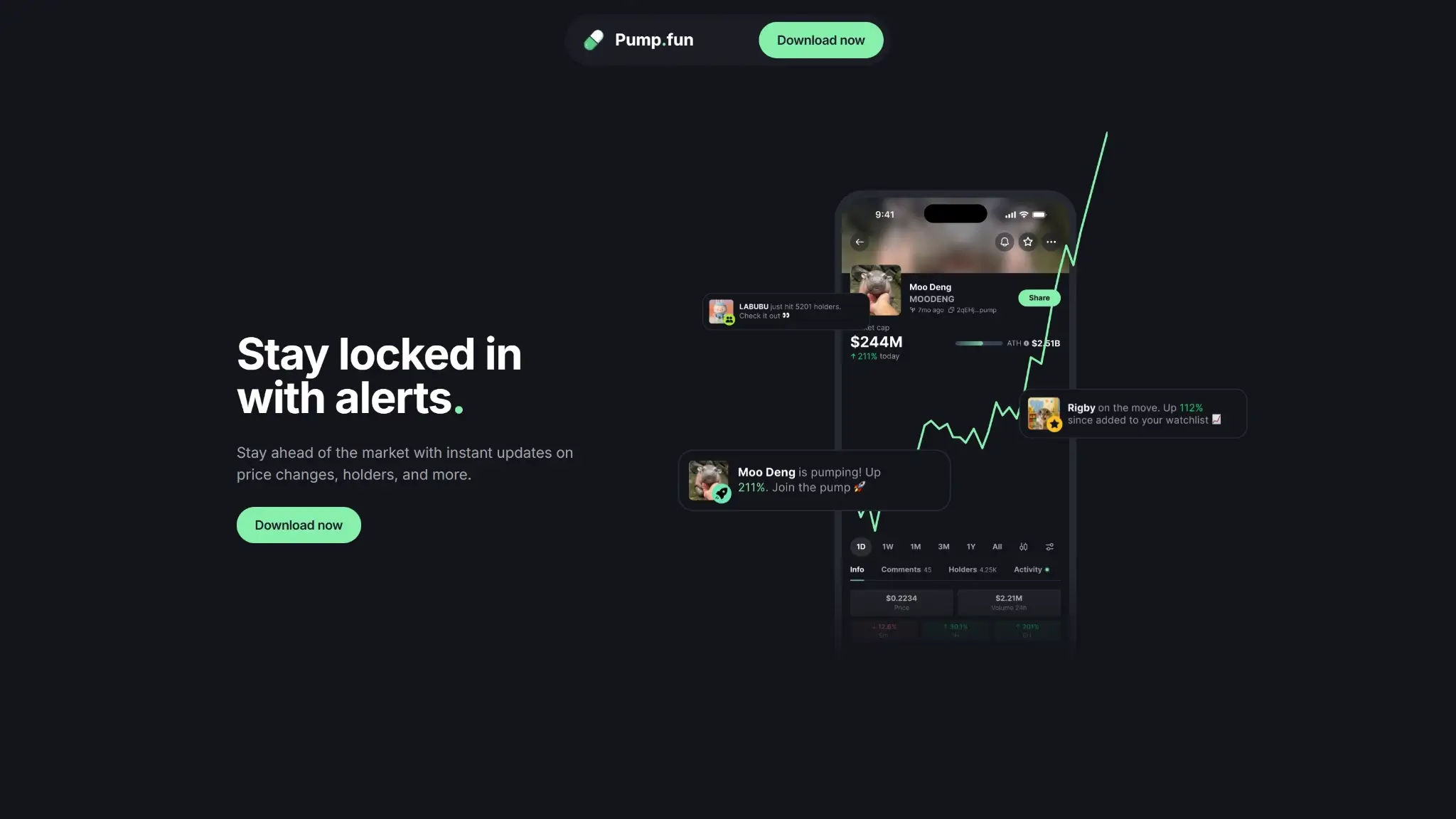
Pump.Fun Screenshots
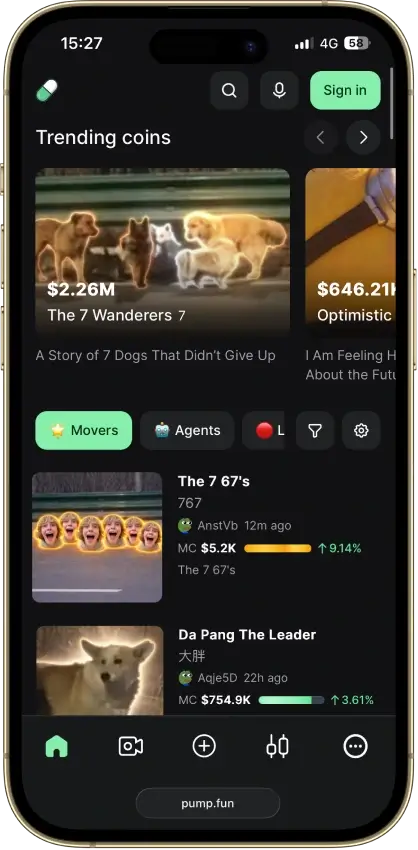
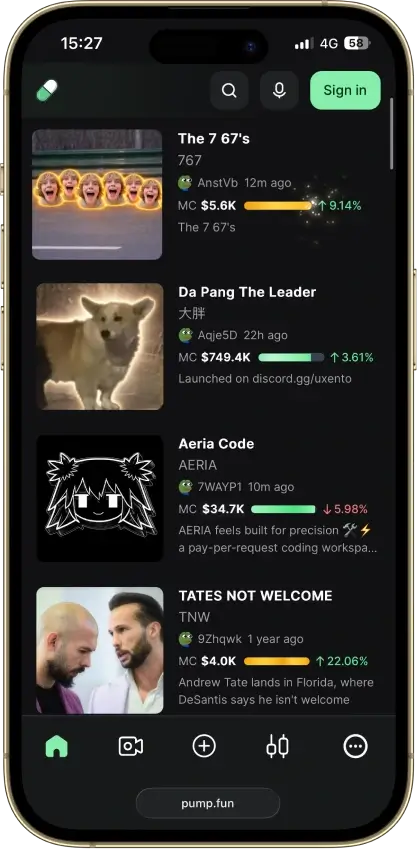
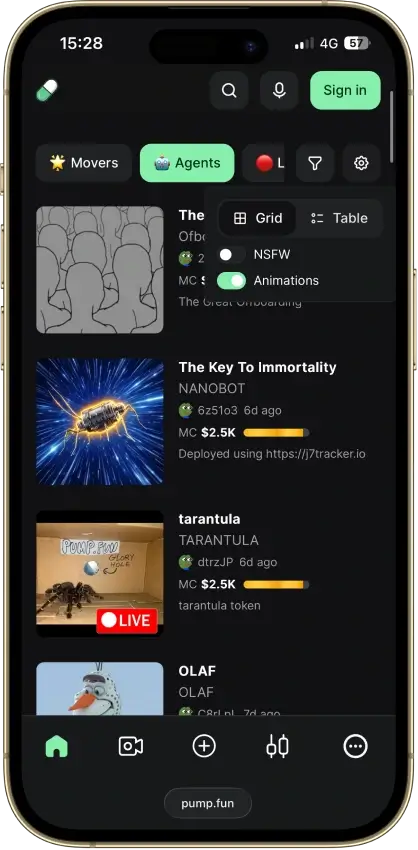
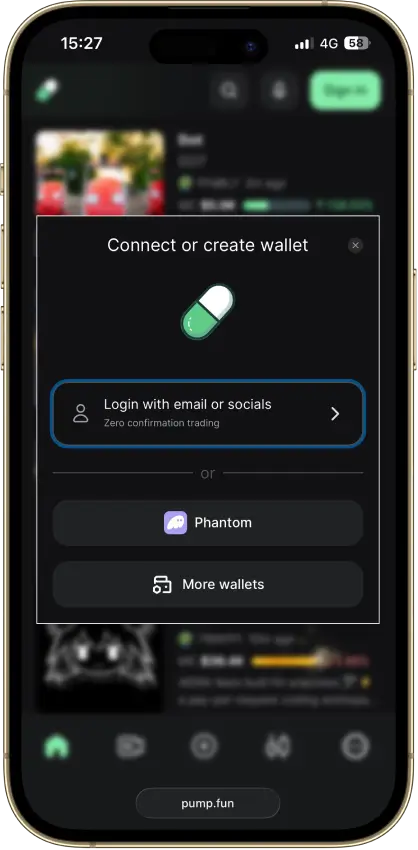
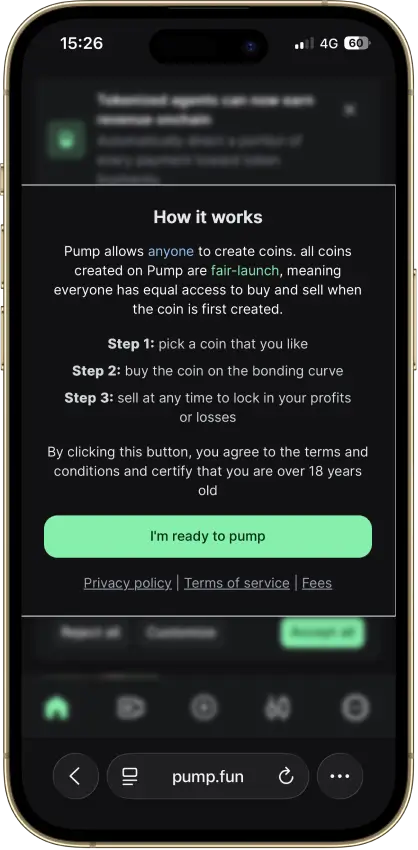
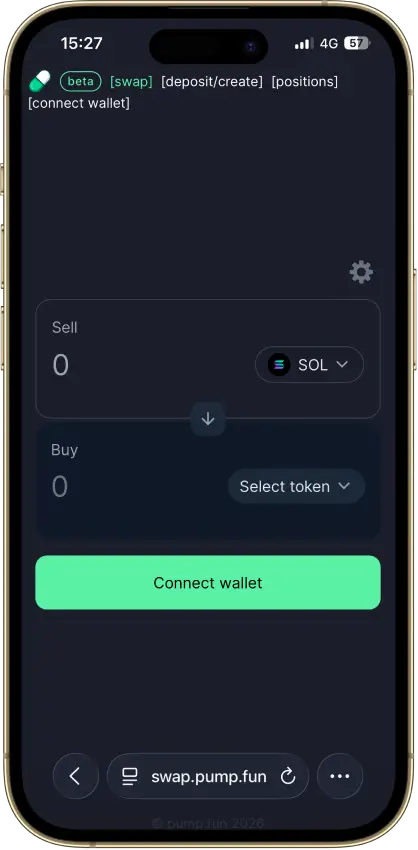
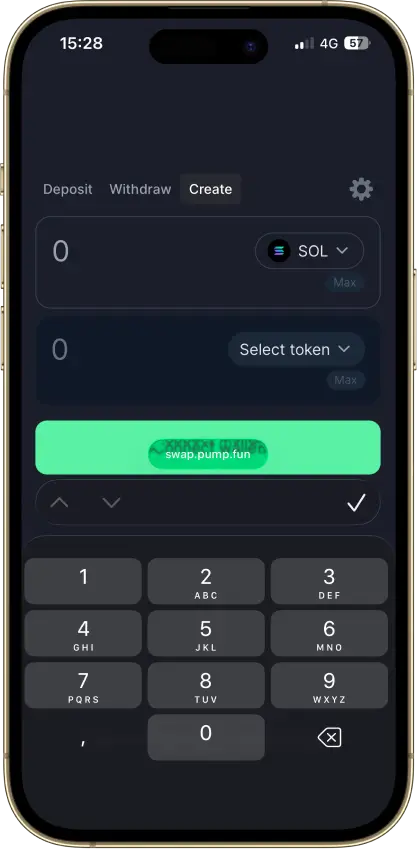
Screenshot 1 of 8
Pump.Fun Pros and Cons
Pros
- Direct access to launch-stage token markets
- Separate curve and pool fee disclosures
- Official developer tools for program access
- Mobile funding includes provider integrations
Cons
- Thin markets can prevent an affordable exit
- Curve trades incur on-chain and platform fees
- Custom assets add issuer and bridge risks
- Custom-pair holder rewards can raise fees
Is Pump.fun Worth It?
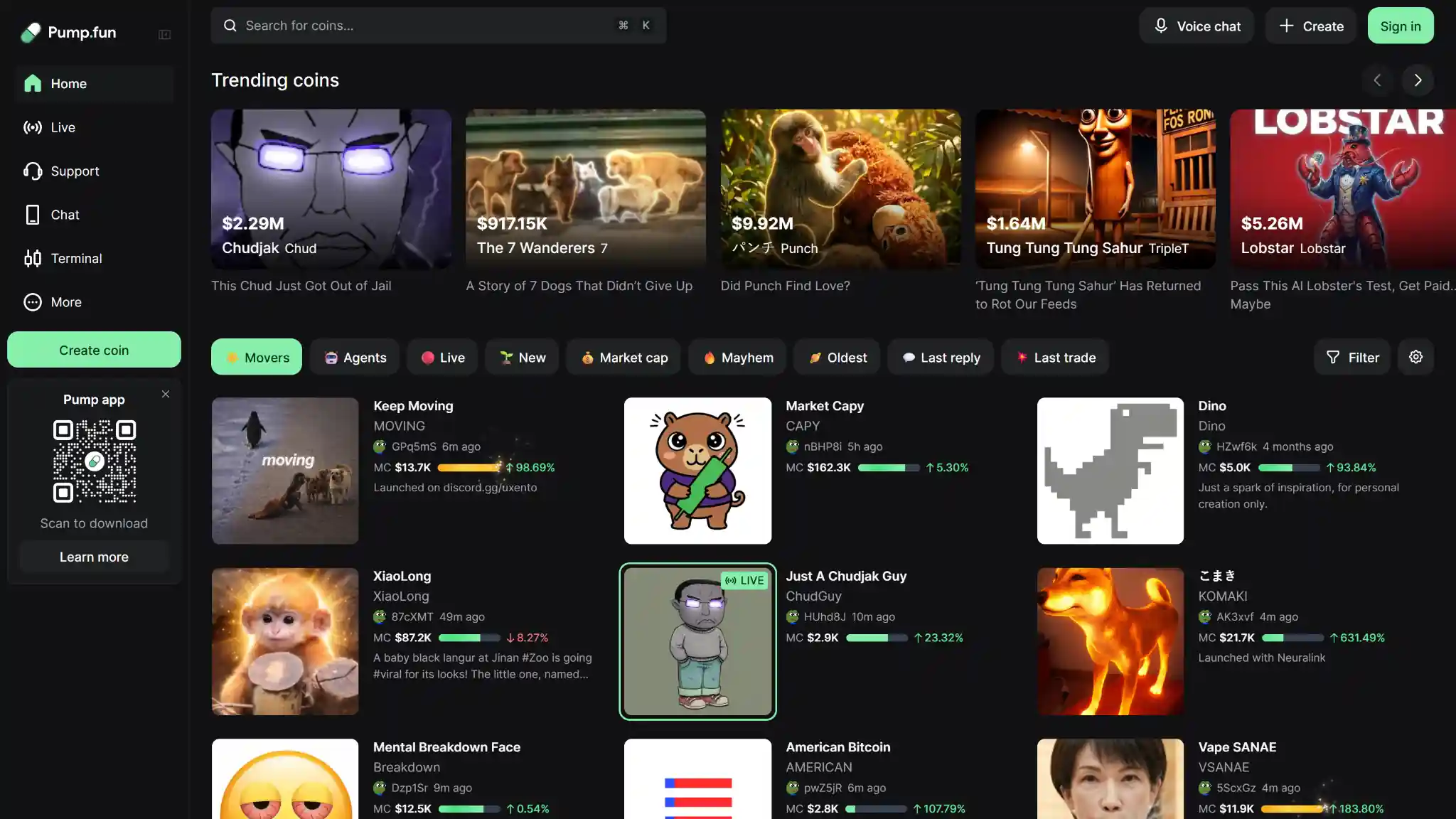
Pump.fun is worth considering when the specific token you want trades on its curve or PumpSwap pool and you understand how that market prices a sale. It offers access early in a token’s life, when information, liquidity and ownership distribution can be especially limited. The presence of a buy button tells you little about what a later sale will return.
A newcomer seeking a first purchase and a bank withdrawal has a different task. An account with one of the eligible beginner crypto exchanges can combine buying listed assets with a supported bank cash-out route. Pump’s payment integrations reduce some transfer steps, but they do not screen every token or insure a trading balance.
We assessed Solana launch-token trades on SOL- and USDC-paired bonding curves and canonical PumpSwap pools. Perps through Hyperliquid and custom-pair trades have separate fees and controls.
Who Is Pump.fun Best For
The main distinction is whether you want access to a particular speculative market or a general place to buy and hold crypto.
- New-Token Trader
Can reach curve-stage tokens, but must assess concentration, fees and exit liquidity
- Beginner Buying First Crypto
Faces token-selection and wallet decisions before the first trade
- Fee-Sensitive Swap User
Should compare the actual output with routes elsewhere once the token is available there
- Liquidity Provider
Can supply eligible PumpSwap pools, with token-price and pool-contract exposure
- User Seeking Regular Income
Creator fees and holder rewards depend on activity and their distribution rules
- Bank Cash-Out User
Needs an eligible external provider and a compatible transfer route
- Developer
Has official program documentation and SDKs, with updates that can change quote calculations
- User Keeping Trading Records
Needs to reconcile curve trades, pool trades, rewards and transfers
Creating a token through the Pump.fun launchpad involves choices about supply and who receives trading fees. A buyer inherits those settings, which can change the cost of each trade and the incentives of the people promoting the token.
Features And Services
Before trading, identify whether the token is on a bonding curve, in a graduated PumpSwap pool or being accessed through the app on another network. The same Pump name covers those different routes.
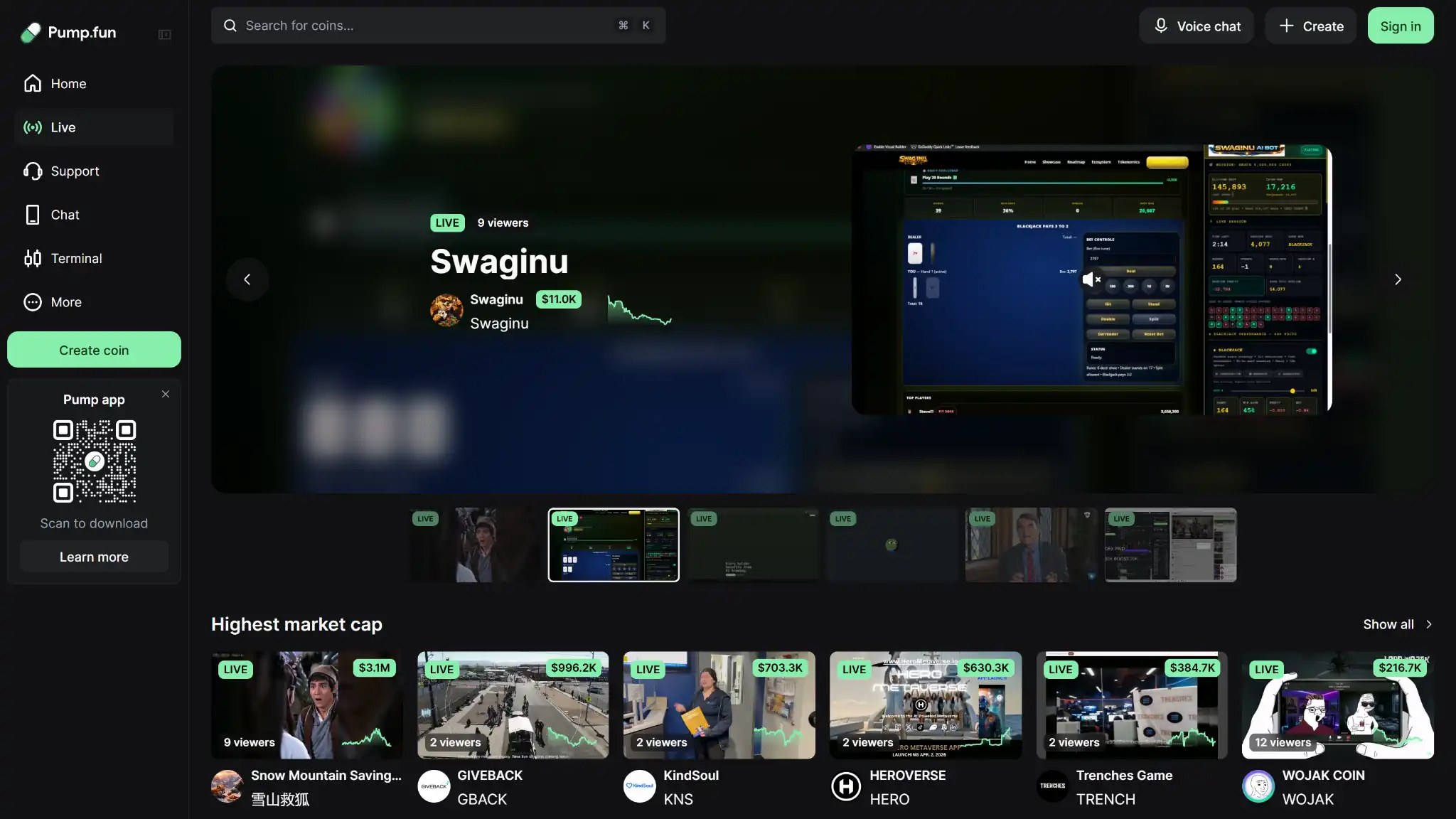
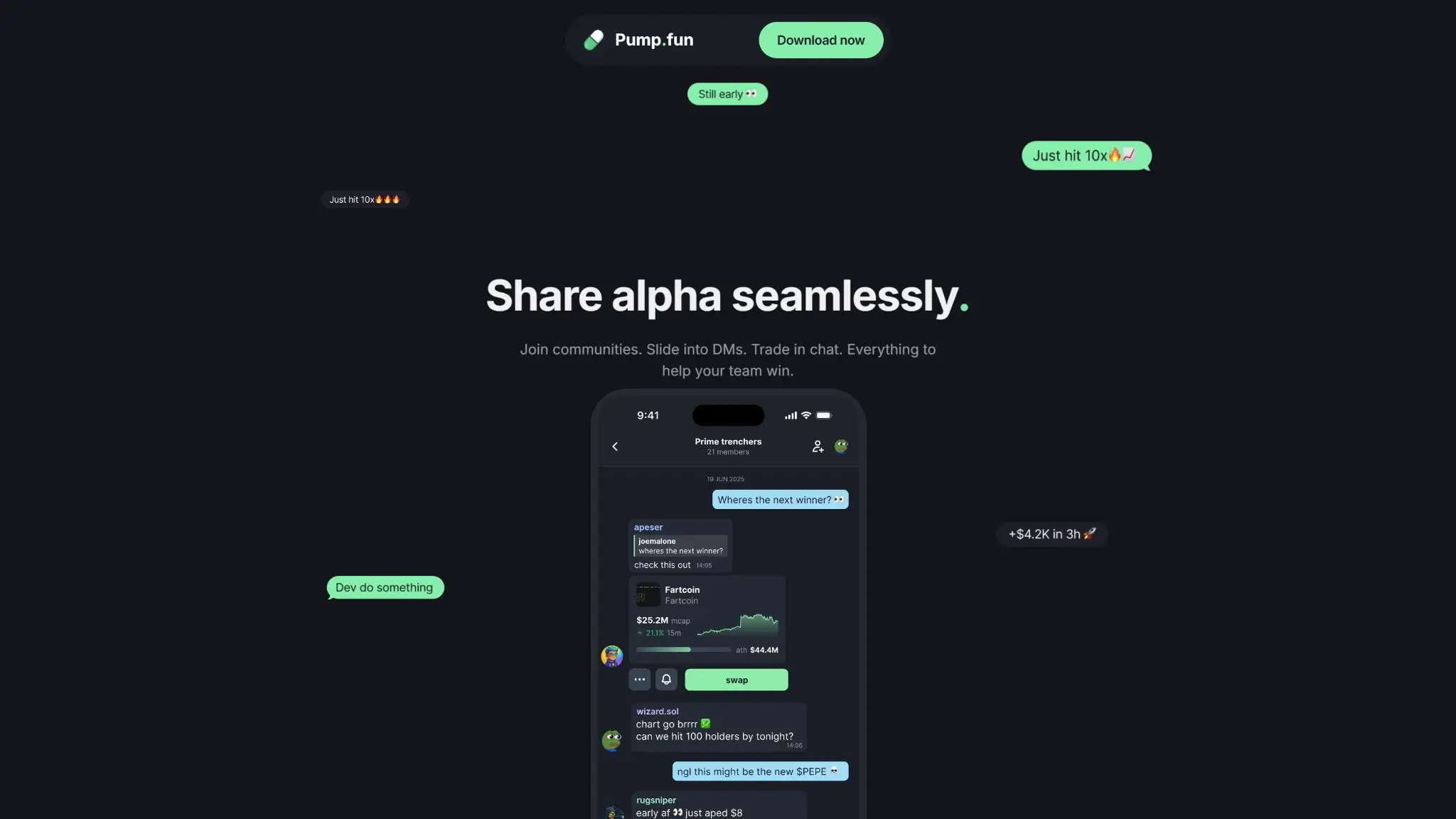
- Bonding Curve
Prices launch-stage purchases and sales using the program’s reserve formula
- PumpSwap
Provides Solana pools, including the market created when an eligible token graduates
- Perpetual Futures
Routes leveraged orders to Hyperliquid
- Mobile Trading
Adds app-based accounts, funding integrations and access to supported external-chain assets
- Discovery And Social Features
Help users find tokens and activity, without establishing asset quality
- Creator And Holder Rewards
Allocate certain token fees under the selected mode and its rules
Graduation moves a token into a different trading arrangement. It does not create unlimited demand. A large holder can still sell into the available quote asset, leaving a later seller with a worse price.
Perpetual Futures Via Hyperliquid
Pump.fun routes perpetual futures orders to Hyperliquid. The SOL market supports isolated-margin positions up to 20× the margin posted. Hyperliquid executes orders, manages collateral and handles funding and liquidations. Transfers between a Pump wallet and Hyperliquid use a bridge. Pump.fun excludes users in the U.S., including its territories, and Ontario from perps. Other eligibility rules apply under the terms of both platforms.
Liquidity And Mayhem
Slippage tolerance sets how much worse an execution price can be than the quote. A thin pool can already quote a poor price for a large sale because the order itself moves the price. We modeled matched buy and sell sizes using public balances and kept executed trades outside the comparison.
Mayhem adds automated bot activity and begins with an extra token allocation. Its April 2026 disclaimer describes an initial supply of two billion tokens, split between the curve and the bot, with remaining bot tokens burned under the stated conditions. Bot activity can stop before 24 hours and does not guarantee buying demand. Applying a standard one-billion supply assumption to every token would miss that difference.
Fees As Rewards
Receiving part of a token’s fees is different from earning interest on a deposit. Returns require eligible activity and can be outweighed by the token’s price decline.
- Creator Fees
A designated share of trading fees, subject to configuration and possible reassignment
- Existing Cashback Coins
Eligible users can receive the creator-fee portion under the coin’s rules
- New Cashback Coins
Current creation documentation says new cashback-mode coins are no longer accepted
- Holder-Rewards Mode
The creator-fee portion goes to a vault for distribution to eligible holders
- PumpSwap Liquidity
Eligible LPs receive pool fee income while bearing changing token balances and price risk
Pump.fun distributes holder rewards automatically when the vault and wallet meet its payout conditions. It can pause or withhold distributions. Existing cashback coins use a separate claim process.
Developer Access And Records
Pump provides program documentation and SDKs for curve and pool activity. Third-party services using “Pump” in their names should not be assumed to be official APIs.

- Official SDKs
Construct program interactions using current accounts and instructions
- Curve And AMM Events
Provide different records that an indexer must interpret correctly
- Wallet Transactions
Help reconcile transfers and trades, but do not by themselves classify every reward or cost
- Account History
Needs checking for address changes, older activity and export completeness
PumpSwap adds a virtual quote reserve to the actual quote-token balance when it calculates prices. The actual balance determines how many quote tokens the pool can pay out. An integration that reads only the actual balance can misprice a trade. Check whether an export covers the full account history before relying on it for tax records.
Supported Assets and Markets
Pump.fun supports other Solana pairing assets alongside SOL and USDC, including stock-linked tokens supplied by third-party issuers or listing providers.
- SOL-Paired Tokens
Token mint, available SOL liquidity and the applicable fee tier
- USDC-Paired Tokens
Correct USDC mint, quote liquidity and the separate USDC fee thresholds
- Custom Pair Assets
Exact mint, issuer, transfer restrictions, redemption terms and fee settings
- External-Chain App Trades
Network, wallet address, bridge provider and fees shown in the swap quote
- Mayhem Tokens
Extra bot allocation, possible automated trading and later supply burns
An asset bearing a stock ticker does not automatically convey the rights of a share held through a broker. Similarly, a Solana representation of another chain’s token adds backing and transfer dependencies. Holding the new token also exposes you to changes in the value or usability of the asset paired against it.
PumpSwap’s multi-hop route can combine eligible Solana pools and bonding curves in one swap. The program checks the minimum output at the end of the route.
Pump announced app trading across Ethereum, Base and BNB Chain in May 2026. Its current terms also address EVM transactions. Those facts do not establish that the Solana PumpSwap program operates identically on every app-supported network.
Pump.fun Fees and Pricing
Pump.fun adds a platform fee to spot trades through its website and mobile app. On a standard SOL- or USDC-paired bonding curve, Pump.fun’s fee schedule sets a 1.25% on-chain fee and a 0.45% platform fee without a referral code. PumpSwap pool fees vary by pool type and, for canonical graduation pools, by the token’s market-cap tier.
Using November 23 balances, we modeled $100 buys and sells across five markets. Different tokens supplied the open-curve and graduated-pool samples. The open SOL curve had roughly 4.4% buy impact and 4.2% sell impact before fees. A separate USDC curve lacked the actual quote reserves to pay out the modeled sale. The graduated pools we sampled had lower price impact, between about 0.06% and 0.20% per side before fees.
- Standard SOL- Or USDC-Paired Curve Trade
1.25% on-chain, split into 0.95% protocol and 0.30% creator fees
- Canonical Graduated SOL- Or USDC-Paired Pool
0.30%–1.25% on-chain. The lowest market-cap tier costs 1.25%
- Non-Canonical PumpSwap Pool
0.30% on-chain, including 0.25% for LPs and 0.05% for the protocol
- Custom Pair
Flat on-chain fees by pool type. A creator-set holder rewards rate replaces the standard creator fee on coins using that mode
- Pump.fun Web And Mobile Curve And Pool Trades
0.45% platform fee, or 0.40% with another user’s referral code, on top of the applicable on-chain fee
- EVM App Trade Via Pump Bridge
Chain-specific bridge fee included in the estimate. The fee schedule gives conflicting descriptions of when the separate platform fee applies
- Perpetual Futures
Pump.fun builder fee of 0.05% of each fill’s notional value, or 0.045% with a referral. Hyperliquid charges and any bridge costs are separate
- Other Costs
Network or priority charges, provider fees and price impact depend on the route
If Pump.fun calculates both fees on 100 USDC of traded value, the charges total 1.70 USDC before network costs and price impact. The same example costs 1.65 USDC with a referral code.
Pump.fun includes the Pump Bridge charge in the estimated amount received. Its cross-chain fee wording says the platform fee also applies, while a later section refers to an exception. Pump.fun says it adds no fee when Relay handles the swap.
For perpetual futures, Pump.fun can charge up to 0.25% per transfer through its in-app bridge, in addition to fees from the bridge provider. Pump.fun’s terms say Hyperliquid charges trading fees and deducts a one-time account activation fee from the first deposit. Funding payments can also affect the cost of holding a position.
Deposits, Withdrawals, KYC and Availability
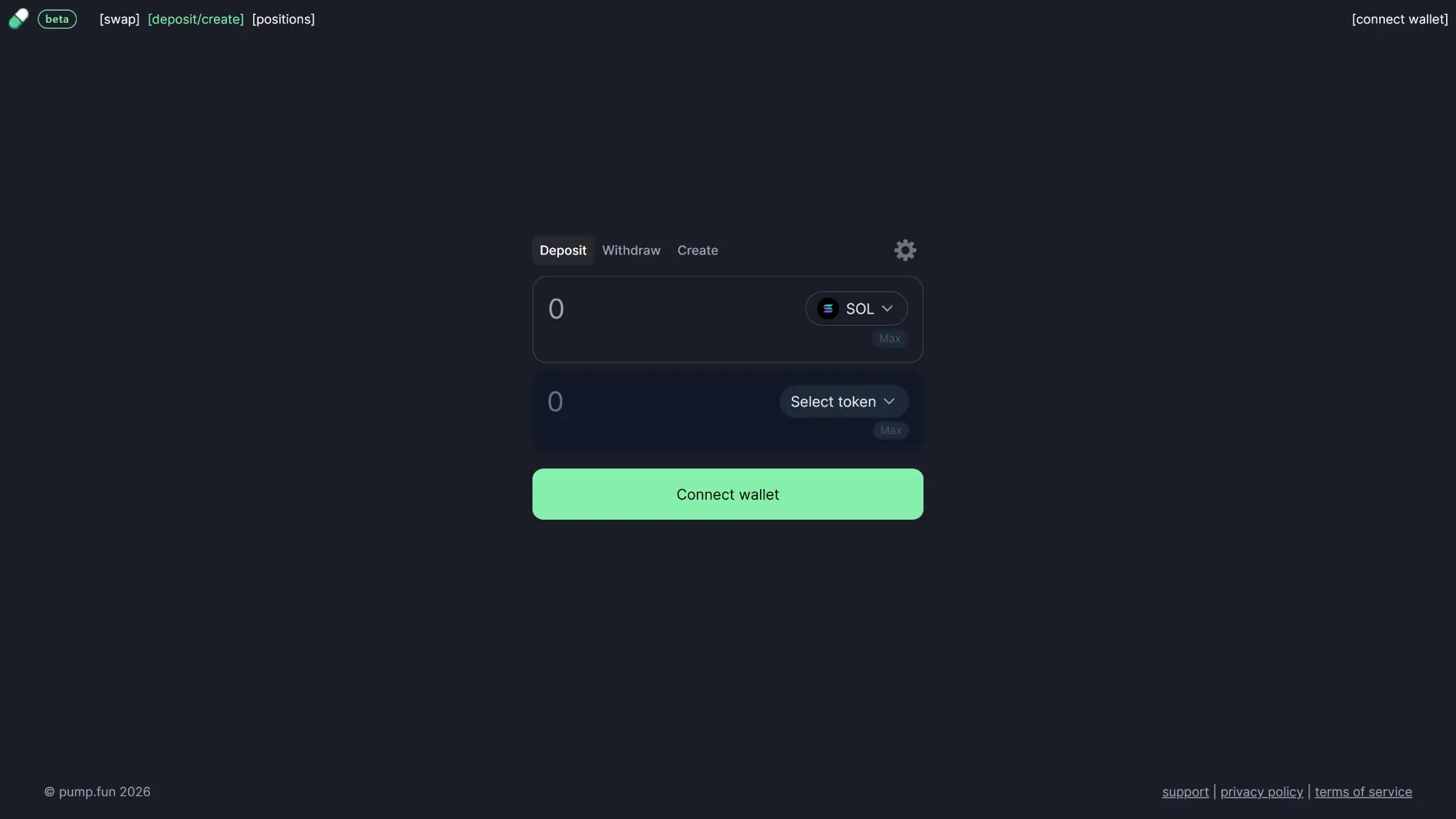
Pump.fun supports external-wallet sign-in on the web during the transition to email and social logins. MoonPay handles card purchases and may ask for identity documents. Apple lists the app in the U.S. App Store. Account-level U.S. spot trading access remains unverified.
Pump.fun excludes the U.K., Cuba, Iran, North Korea, Syria, Russia, Belarus and the Crimea, Donetsk and Luhansk regions of Ukraine, plus other comprehensively sanctioned jurisdictions. Additional restrictions for perpetuals include the U.S. and its territories, Ontario and restrictions under Hyperliquid’s terms.
The FCA’s December 2024 warning says Pump.fun is not authorized by the regulator and does not provide Financial Ombudsman Service or FSCS protection.
- External Wallet
Pump.fun schedules web sign-in retirement for November 30, 2026
- Email Or Social Login
Uses an embedded wallet and the login provider’s recovery arrangements
- Mobile App
Documents wallet funding, withdrawals and private-key export
- MoonPay Purchase
Subject to MoonPay verification, payment eligibility and limits
- Third-Party Asset
May add issuer-specific eligibility and transfer conditions
Choose an access route whose recovery process you understand before funding it. A payment provider approving a purchase does not determine how you will regain access to the wallet that receives the crypto.
Upcoming Web Sign-In Change
Pump.fun plans to retire external-wallet web sign-in on November 30, 2026 at 15:00 UTC. Web sign-in will use email, Google, Apple or GitHub. Pump.fun says the change applies to web sign-in and leaves mobile access, API sessions and trading available.
Pump.fun’s account-linking flow can keep an existing address by importing an exportable private key into Privy. Pump.fun’s migration notice warns against sharing a private key outside the signed-in linking flow. For a wallet whose key cannot be exported, the notice directs users to open a new account. The trading history stays with the original address.
Payment Rails, Networks, And Limits
The mobile help center describes direct SOL deposits, card or Apple Pay purchases, and selected cross-chain crypto deposits. The available asset and network must be chosen together.
- SOL Transfer
Requires the correct receiving address and enough SOL for subsequent network activity
- Cross-Chain Deposit
Uses the selected provider route, supported asset, network and minimum
- Card Or Apple Pay
Adds payment-provider pricing and verification
- Existing Wallet Import
Changes key management without moving assets between addresses
The mobile deposit guide says transfers below the cross-chain minimum are not processed and are not refunded. An arbitrarily small test transfer can therefore be unsuitable for that route. Confirm the displayed minimum before sending.
Withdrawals And Cash-Out
To cash out a launch token, traders first need to sell it for an asset the receiving wallet or service accepts. Thin liquidity can push down the sale price or prevent the sale. If PumpSwap pauses sells, the exit depends on whether another exchange has enough liquidity in the same token.
- SOL Withdrawal
Help instructions require an additional 0.005 SOL balance to process the withdrawal
- Other Supported Asset
Destination address and network must match the selected transfer
- PumpSwap LP Exit
Redeems the user’s own LP position for the pool’s current token amounts
- Bank Cash-Out
Requires a separate eligible service that accepts the asset and network
The help center illustrates a 1 SOL withdrawal with a 1.005 SOL balance. That example gives the balance needed to withdraw. Confirming the amount deducted would require a completed withdrawal.
An LP exit may return more of the asset that has fallen in price. Burning the LP tokens for that withdrawal is distinct from burning the initial LP tokens when a curve graduates.
If Pump.fun suspends access or removes its perps feature, open positions and collateral stay on Hyperliquid. Open positions can still accrue funding payments or be liquidated. Eligible traders who control the wallet can manage those positions through Hyperliquid directly.
Limits And Additional Checks
There is no single useful limit that covers trading, a card purchase, a cross-chain deposit and an issuer-controlled asset.
- Curve Or Pool Trade
Available reserves, trade size and transaction settings
- Cross-Chain Deposit
Provider-supported routes and the displayed minimum
- Payment Purchase
Identity review, payment method and provider limits
- Custom Asset Transfer
Token controls, issuer terms and destination compatibility
An accepted payment does not establish that the next token trade or withdrawal will succeed. Keep the purchase reference and transfer transaction separately, since they identify different parts of the journey.
Is Pump.fun Safe?
Pump.fun exposes traders to both token-market risk and technical control risk. Wallet access reduces dependence on an ordinary exchange balance, but funds committed to a pool remain subject to that program and its authorities.
- Wallet Keys
External and embedded wallets have different login, backup and recovery dependencies
- Program Upgrades
The bonding curve and PumpSwap use the same on-chain upgrade authority
- PumpSwap Administration
An administrator can pause buys, sells, deposits or withdrawals across PumpSwap pools
- Graduated Liquidity
Initial migration LP tokens are burned, which does not protect against token selling or every administrative action
- Custom Quote Assets
Issuers and transfer providers can introduce freezing, backing and redemption risks
- Audits
OtterSec and Pashov reviewed earlier code. Current audit coverage remains unverified
- Reserve Transparency
On-chain balances do not supply a complete consolidated liabilities audit
PumpSwap’s on-chain configuration showed no active sell pause on November 23. Pump.fun gives no maximum duration for a pause in its public documentation. Two of the three graduated tokens we checked had separate SOL-quoted pools with liquidity on Meteora. Those pools provide possible alternatives. Their capacity to absorb sales during a PumpSwap pause remains unverified.
Audits And Incident History
OtterSec and Pashov reviewed earlier versions of the bonding curve and PumpSwap. Solana records show both programs were upgraded on November 20, 2026. We found no public audit tied to the upgraded code.
Pump.fun reported that a former employee’s misuse of privileged access affected about 12,300 SOL in May 2024. The company paused trading and announced plans to restore liquidity. We traced 4.73 SOL back into one affected curve before trading resumed there. The total restored across affected markets remains unverified. Pump.fun says it disabled the old privileged withdrawal used for migration.
In February 2025, an attacker used Pump’s compromised X account to promote a fraudulent token. BleepingComputer reported Pump’s acknowledgment of the account takeover.
In August 2026, a U.S. federal court in New York dismissed some claims in a civil suit over Pump.fun and allowed some racketeering claims to proceed.
App, UX and Customer Support
Pump’s discovery and social features are geared toward finding and trading tokens quickly. The harder task is checking the correct token, pair and transaction settings before following a popular callout.

Apple offers the Pump.fun app for iPhone and iPad in the U.S. and India App Stores. Both iOS and Android listings name Maius Imperium Limited.
Reliability And Records Of Problems
Public help pages describe common funding and trading actions, but they do not provide a measured end-to-end success rate.
- Status Coverage
Pump.fun has no public status dashboard that covers the whole platform
- App Feedback
The September Google Play sample included complaints about lag and stale callouts
- Network And Provider Delays
Can affect different steps independently of the token’s market price
- Trade Records
Each coin page keeps a public trade feed and holder list, and every trade settles on Solana with its own transaction signature
The app-review sample is too small and selective to establish how often a problem occurs. Before repeating a trade after an unclear response, check the transaction and balance history to avoid submitting a second purchase unintentionally.
Customer Support
The current sign-in notice directs users to Support from the profile card on the website or app. The Android listing also provides support@pump.fun.
- Account Or Login
Official in-app or website support, with the affected address and error details
- Card Purchase
Payment-provider support, using the purchase reference
- Transfer Problem
Asset, network and transaction hash, without sharing keys
- Token Price Or Liquidity
Support cannot create a buyer or guarantee recovery of a market loss
Keep records of the specific failed step, and verify replies through the official support route. Unsolicited direct messages can come from impersonators.
Alternatives to Pump.fun
Other exchanges can help once a token trades in multiple markets or when you need a way to cash out to a bank.
For an eventual bank withdrawal, compare crypto exchanges by the asset and network they accept. Sending an unsupported token to a deposit address can turn a cash-out plan into a recovery problem.
-


Jupiter
Jupiter can compare supported Solana routes after a token has usable markets. Check the received amount for your size, since an aggregator cannot manufacture liquidity that the underlying pools lack.
-
Raydium
Raydium offers a different set of Solana pools and LP arrangements. A token appearing there does not establish that its cheapest or deepest pool is on Raydium, so pool identity remains part of the comparison.
-
Hyperliquid Labs
Hyperliquid is the protocol that handles Pump.fun’s perpetual futures. Its own interface has separate access, funding and order controls.
Pump.Fun Final Verdict
Pump.fun gives traders early access to Solana launch tokens. On the open SOL curve we modeled, price impact exceeded the standard trading fee. In the same November 23 model, three graduated pools had lower estimated price impact. Those pools hold different tokens from the sampled curves. The sampled USDC curve lacked the reserves to cover the modeled $100 sale. A sell pause and thin liquidity elsewhere can further limit your exit.

Best For
Experienced traders assessing new-token liquidity.
Avoid If
- You need screened listings or predictable exits.
CryptoSlate may earn a commission when you use partner links, at no extra cost to you. Our reviews, ratings, and editorial decisions remain independent of advertisers. Read How CryptoSlate Makes Money for funding details.