


- Solana swaps through competing routing sources
- Automated and manual swap settings
- Perps, lending and staking in one interface
Get the best Solana routes
Jupiter Overview
- Name
- Jupiter
- KYC
- No
- Products
- Spot, Futures or Perps, Simple-buy Broker
- Staking
- Yes
- Copy Trading
- Yes
- Derivatives
- Yes
- Proof of Reserves
- No
- Trading Fees
- 0% - 0.5%
- Website
- jup.ag
Jupiter Screenshots
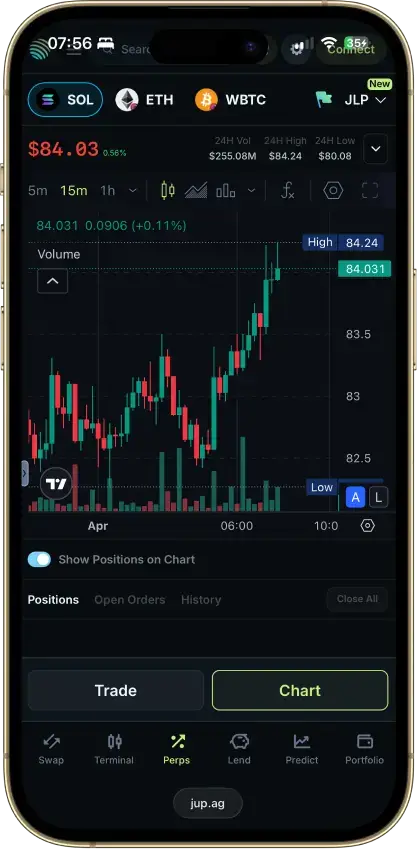
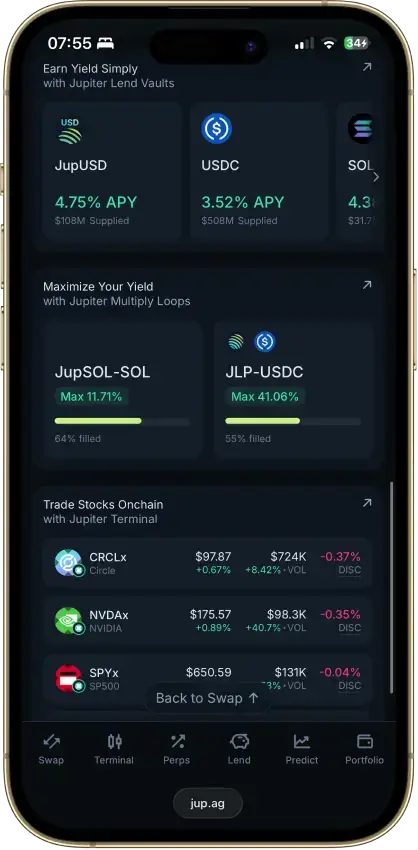
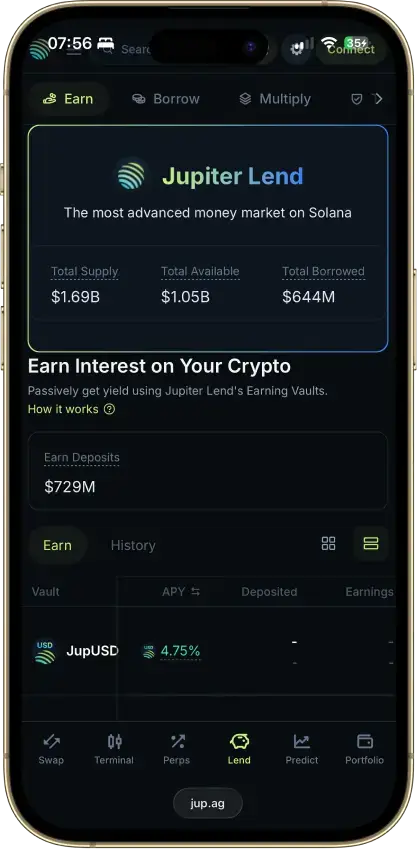
Screenshot 1 of 8
Jupiter Pros and Cons
Pros
- Solana routes compete for swap orders
- Manual controls alongside automated swaps
- Desktop transaction history supports CSV
- Public Lend upgrade and admin controls
Cons
- Native mobile and web fees differ
- Manual swaps exclude execution support
- Lending withdrawals depend on liquidity
- Latest swap builds postdate earlier audits
Is Jupiter Worth It?
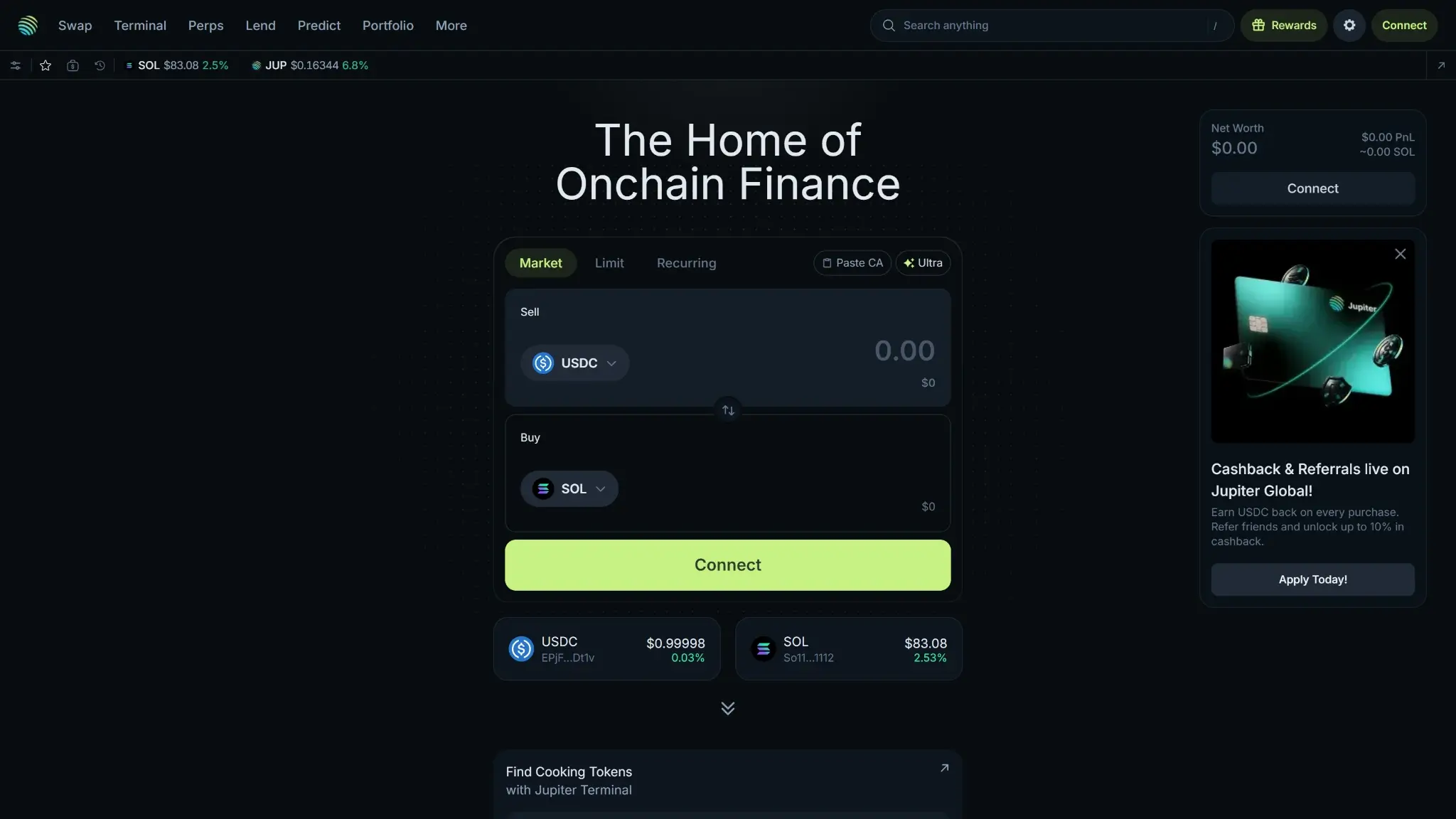
Jupiter is useful when you want a quote across several Solana liquidity sources without checking each pool separately. Ultra handles execution settings automatically, while Manual lets you choose slippage and transaction-fee settings. Manual has no Jupiter commission, but its transactions fall outside Jupiter's execution-support and refund model. Jupiter's fee page makes Manual protection against maximal extractable value (MEV) dependent on configuration, while its Manual guide warns that protection is absent. Ultra applies its protection automatically. Manual lets you choose broadcasting settings, with a Jito tip payable when you select Jito broadcasting.
A perps position borrows against pool liquidity, a Lend deposit enters lending contracts, and Spend holds a partner-managed balance. Connecting the same wallet does not give those activities identical risks or withdrawal rights.
Who Is Jupiter Best For
An existing Solana wallet makes Jupiter more straightforward to use. Starting from a bank card introduces a payment provider before trading can begin.
- Beginner Buying First Crypto
Card purchases are available, but provider checks and wallet recovery remain separate tasks
- Fee-Sensitive Spot Trader
Useful for comparing quotes, provided the selected device, mode and route are included in the comparison
- Derivatives Trader
Three major perps markets with position controls, hourly borrow charges and liquidation exposure
- User Who Needs Bank Cash-Out
Spend may work where eligible, otherwise a separate off-ramp is necessary
- Altcoin Hunter
Access to Solana tokens, with liquidity and mint controls that vary by token
- Staking / Earn User
Several choices, each with different reward sources and exit conditions
- Low-KYC User
Core wallet trading differs from verified Spend and fiat-provider accounts
- User Who Wants Cleaner Tax Exports
Desktop CSV helps, but filters and loaded history determine what enters the file
For a trader who already holds Solana assets, Jupiter's routing and position views can reduce the number of sites needed for routine activity. Someone whose priority is bank deposits and withdrawals should also compare crypto exchanges by local payment support.
Jupiter Fees and Pricing
Jupiter fees depend on the interface and transaction type. The useful comparison is the amount received after the quote's charges, plus any separately payable network costs.
On November 23, an unsigned 1,000 USDC buy quote returned 13.831844176 SOL. That was about 0.015% below a midpoint derived from public SOL/USD and USDC/USD order books. The matching sell quote was about 0.029% below its reference output. The second November 23 window around 22:46 UTC also returned quotes close to the reference values. The quotes each included Jupiter’s 0.02% platform fee. Network and account charges depend on the wallet.
- Web Ultra Market Swap
0–0.5% Jupiter commission, depending on token pair and age
- Web Ultra SOL / Stablecoin
0.02% commission
- Web Ultra Stablecoin / Stablecoin
0% Jupiter commission
- Web Ultra Liquid Staking Token / Stablecoin
0.05% commission
- Web Ultra Jupiter-Token Conversions
0% for listed SOL or stablecoin swaps into JUP, JLP or JupSOL
- Web Ultra Liquid Staking Token Pairs
0% between liquid staking tokens
- Web Ultra Lend Conversions
0% for supported deposits and redemptions
- Web Ultra Remaining Pairs
0.1% outside the categories above. Tokens under 24 hours old have a separate 0.5% rate
- Manual Market Swap
No Jupiter commission. MEV protection depends on configuration, with network costs and a Jito tip if selected
- Native Mobile SOL / Stablecoin
0.1% commission, distinct from the website
- Web Limit V2 / DCA V2
0.03–0.1% base fee plus the applicable Ultra charge
- Perps Open / Close
0.06% of position notional on each side, plus other position costs
- Card Non-USD Payment
1% FX fee through Rain or 1.8% through DCS
For an unchanged $1,000 perps notional, the base opening and closing charges total $1.20. That excludes borrow charges, price impact, any collateral conversion and network costs. Applying 0.06% only to the cash collateral would understate the bill.
Hidden Costs To Watch On Jupiter
Ultra Gasless Support covers SOL costs upfront and recovers them from the swap, on top of the ordinary commission. Recovery must stay within 10% of trade value. Eligibility requires less than 0.01 SOL in the wallet, a verified sell-side token and roughly a $10 minimum trade, adjusted for network costs. A fixed SOL cost therefore takes a larger share of a small trade. JupiterZ routes work differently: the market maker covers network and priority fees without that recovery charge, but does not cover the rent for a new token account.
Pool charges and price impact can affect a swap even when the Jupiter commission is zero. A new token can fall into a higher fee band, and a route can change between the first quote and the signed transaction. Compare final output in both directions if you expect to buy and then sell, rather than doubling a single headline percentage.
Perps add an hourly borrowing cost and a price-impact charge. Creating a position can also require SOL account rent, which is distinct from a fee and can return when the account closes.
Fee Discounts And Product Versions
Some Ultra pairs qualify for zero Jupiter commission, including specified pegged-asset routes. This is a pair-specific schedule, not evidence of a universal VIP discount. Native mobile has its own fee bands, including different charges on common pairs.
Legacy Limit and DCA schedules should also stay separate from web V2 orders. Check the order version before applying an old flat-rate example. Promotional rewards should not be subtracted from trading costs unless your actual eligibility and payment are established.
Deposits, Withdrawals, KYC and U.S. Availability
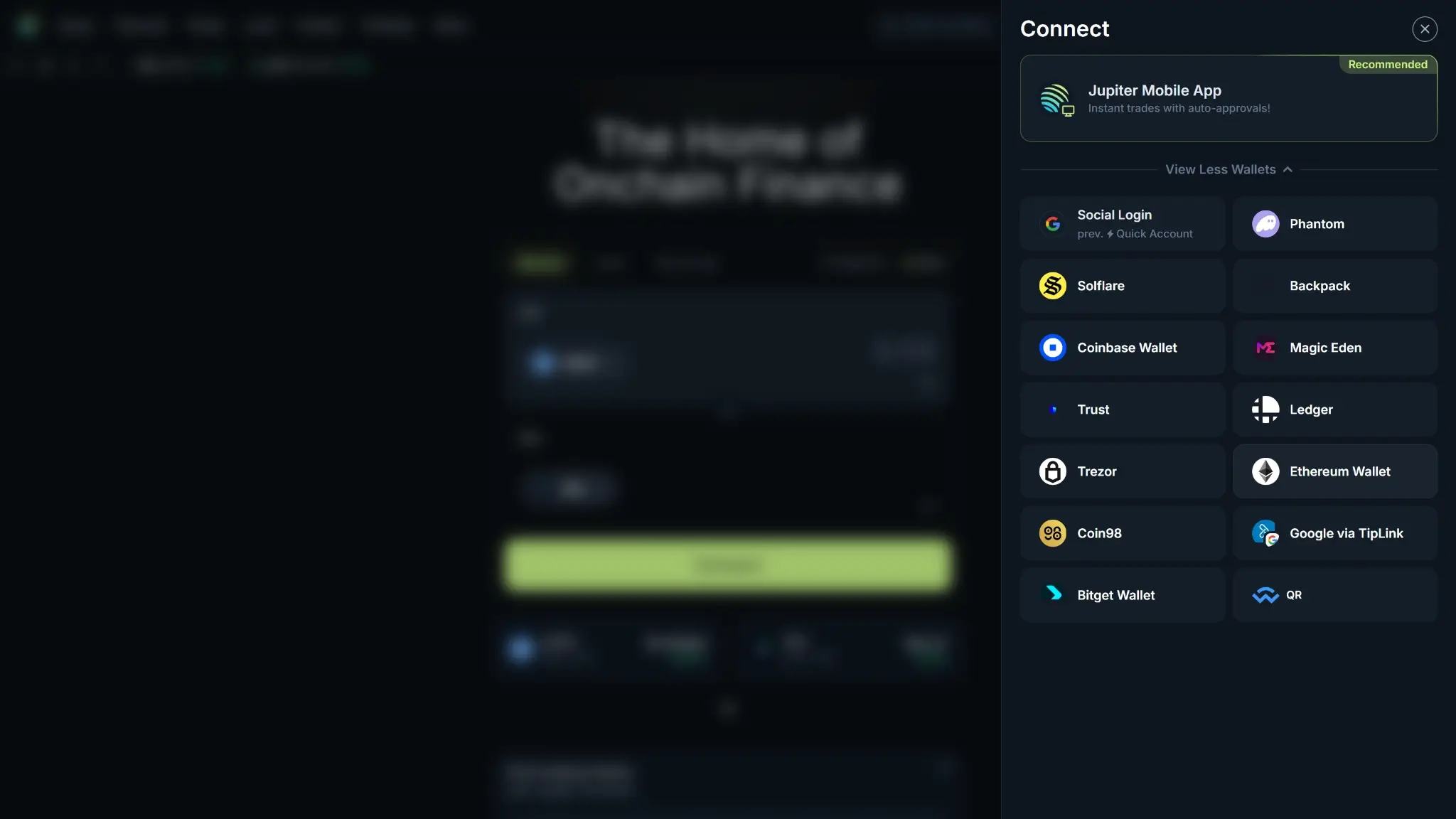
A core Jupiter swap begins with a wallet, while Spend and fiat purchases introduce identity checks and provider eligibility. One login does not make those checks interchangeable.
- Core Wallet Trading
Connect a supported wallet and comply with interface restrictions
- Jupiter ID Wallet
Email or supported social login, with private-key backup handled separately
- Card Purchase Of Crypto
Payment-provider verification, payment-method and country conditions
- Jupiter Spend
Verified identity, phone, liveness check and other onboarding information
- Lending Or Perps Exit
Contract and position conditions determine what can be released
Jupiter identifies SumSub as Spend's identity-verification provider. Manual review can extend onboarding beyond the ordinary automated process. That verification is not a promise that every card, transfer currency or withdrawal method becomes available.
What U.S. Users Need To Check Before Signing Up
Jupiter’s main-interface exclusions include the United States, Singapore, Iran, North Korea and other restricted jurisdictions, and that list is not exhaustive. Spend uses separate geographic rules for its cards and bank services. Check the exact product before funding it and do not use a VPN to bypass restrictions. Bank deposit availability can differ from card access.
When choosing a beginner crypto exchange, confirm the bank-withdrawal route before the first purchase. With Jupiter, a successful card purchase into a wallet does not establish that the same provider will cash out those funds later.
Funding a Solana wallet, depositing into a lending contract and adding to Spend are three different transfers. Use the receiving product’s instructions each time.
Fiat And Crosschain Funding Routes
Desktop card purchases and the native app can use different payment providers, so support and fees follow the route actually selected.
- Direct Solana Transfer
Correct wallet, token mint and network, with enough SOL for applicable transactions
- Universal Deposit
Supported source network and displayed minimum. Crosschain deposits arrive as USDC on Solana
- Bridge & Swap
Supported route, output asset, costs and completion conditions
- Desktop Card Purchase
Onramper's selected payment provider, quote and verification requirements
- Native Mobile Card Purchase
Mobile funding instructions and the named provider, currently MoonPay in its guidance
- Spend Bank Transfer
Verified account, accepted currency/corridor and incoming transfer charges
Universal Deposit amounts below the displayed minimum accumulate until the threshold is met. That is not the same as an immediate successful deposit. For a fiat purchase problem, the provider that processed the payment handles cancellation or refund eligibility. A completed blockchain transfer cannot be recalled.
Crosschain funding delivers assets to Solana, where Jupiter’s core swap market operates. Check the resulting asset as well as its destination network.
Withdrawal Networks And Fees
An expired transaction needs a new quote and signature. For SOL/USDC, Jupiter’s Metis routing and other Solana exchanges provide alternatives when a market-maker quote is unavailable. Switching routes can change the quoted output and the network costs.
Tokens held in your wallet can be sent on their supported network. Assets committed to another product first have to be released under that product's rules.
- Wallet Token Transfer
Network fee or applicable gas recovery, plus the recipient's accepted token and network
- Ordinary Lend Withdrawal
Available liquidity and dynamic withdrawal limits
- JupSOL Exit
Market-sale quote or delayed unstaking, with the applicable withdrawal charge
- Perps Close
Remaining collateral after profit/loss and charges
- Spend Fiat Withdrawal
Region and provider eligibility, with USDC-funded deposits eligible where supported
- Rain Card Refund
Credited balance can be spent but is not available for withdrawal
Jupiter Spend's remittance routes charge for incoming and outgoing transfers. USDT-funded Spend deposits cannot be withdrawn to fiat. Only USDC-funded deposits are eligible for that route.
Verification Levels And Withdrawal Limits
There is no single Jupiter withdrawal allowance covering a wallet, lending position and partner account. Spend remittance has a $10,000 per-transfer ceiling, while lending exits depend on liquidity and configured limits. Check withdrawable funds rather than assuming that the displayed total balance can leave immediately.
- Connected Wallet
Core trading uses wallet signatures. A wallet connection does not confer a universal withdrawal allowance
- Verified Spend Identity
ID, phone, liveness and onboarding checks. Manual review typically takes 3–5 working days
- Fiat Payment Method
The processing provider sets accepted methods and verification conditions
- Lending Position
Liquidity and contract limits determine the current withdrawable amount independently of identity verification
- Additional Spend Review
An application flagged for manual review can take longer than automated onboarding
Complete the requested provider checks before depending on a fiat exit. Approval for Spend identity does not by itself establish eligibility for every bank corridor or remove a lending contract's withdrawal limits.
Is Jupiter Safe?
Jupiter’s security reports cover individual contracts. A swap, lending deposit and partner-held balance each require a different assessment, even when the user signs with the same wallet.
A Solana swap requires wallet authorization and returns output under the transaction’s signed terms. The minimum output and transaction validity limit what can settle. Solana records identify a live Swap v6 program and a JupiterZ V1 program. Both builds postdate their independent audits. We found no public audit matched to those builds or enough control evidence for JupiterZ RFQ v2, Dflow and OKX.
Controls
Lend assigns upgrades, configuration, initialization and operations to separate authorities. Its upgrade wallet requires four of seven signers, and the public program repository describes a 12-hour delay for upgrades. Configuration authority is separate, so that delay should not be presented as a guarantee that every parameter change waits 12 hours.
Perps and lending also depend on price data and position-management logic. An audit of a swap program does not establish that every oracle, integrated token or later lending feature has the same reviewed behavior.
Custody And Insurance
The custody question is where the funds sit after signing, not whether a wallet was used to enter the product.
- Wallet Swap
Signed transaction, route programs and token behavior
- Lend / Smart Vaults
Lending contracts, available liquidity, oracle pricing and optional AMM composition
- Perps / JLP
Collateral management, price inputs and the pool's exposure to traders
- JupSOL
Validator performance, stake-pool controls and market-exit pricing
- Spend
Issuing and payment partners holding and processing the balance
None of those arrangements should be assumed to provide bank-deposit insurance or automatic compensation for a loss. An audit report and a support policy serve different purposes from insurance.
Proof Of Reserves Or Audits
Jupiter’s audits cover earlier Swap v6 code and named components of its perpetuals and lending products. The Lend transparency page also lists newer 2026 AMM reviews. These are reviews of code within defined scopes, not a financial audit of all user liabilities or a guarantee about every live integration.
Jupiter’s Lend bounty link showed a paused program in our September check.
Incidents And Remediation
Jupiter’s main X account was compromised in February 2025 and used to post malicious promotions. The team’s incident report described account recovery, device replacement and follow-up credential procedures, while leaving the exact takeover method unresolved. This was a social-account incident, not proof that the swap contracts themselves were drained.
It remains a practical reason to verify the domain and token mint independently of a promotional post. A familiar account name alone cannot authenticate a newly promoted token.
Supported Assets and Markets
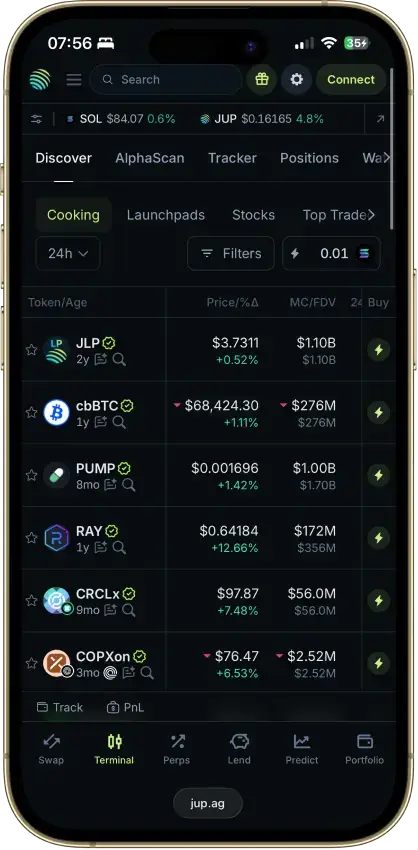
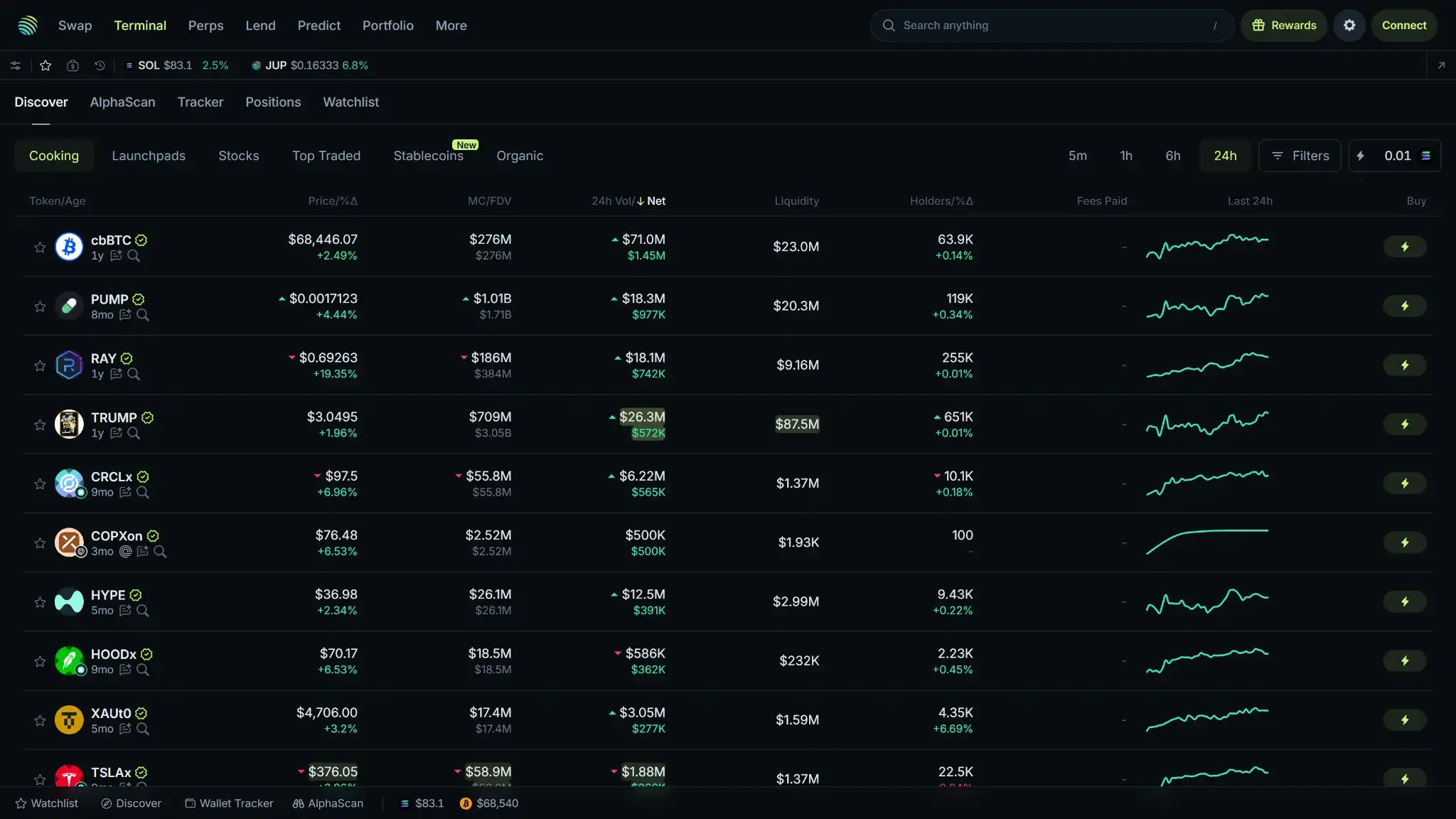
Jupiter compares swap routes on Solana, drawing on automated market makers that hold liquidity in pools and on quotes supplied by market makers. Search results can include tokens with thin liquidity or restrictive transfer controls, so finding the token is only the start of evaluating a trade.
- Spot Assets
Solana tokens with a supported route and sufficient available liquidity
- Perps Markets
SOL, ETH and wBTC, distinct from the spot token catalog
- Fiat Currencies
Selected payment-provider and Spend routes, without native fiat pairs across the spot market
- Stablecoins
USDC and USDT are available, with fees and liquidity depending on the selected pair
- Regional Access
Main-interface restrictions apply separately from Spend eligibility
Check the token's mint address, expected output and price impact before signing. For a small or newly created token, a visible buying route does not prove that an equally usable selling route will remain available. Price movement, depleted liquidity and token restrictions can all change the exit.
App, UX and Customer Support
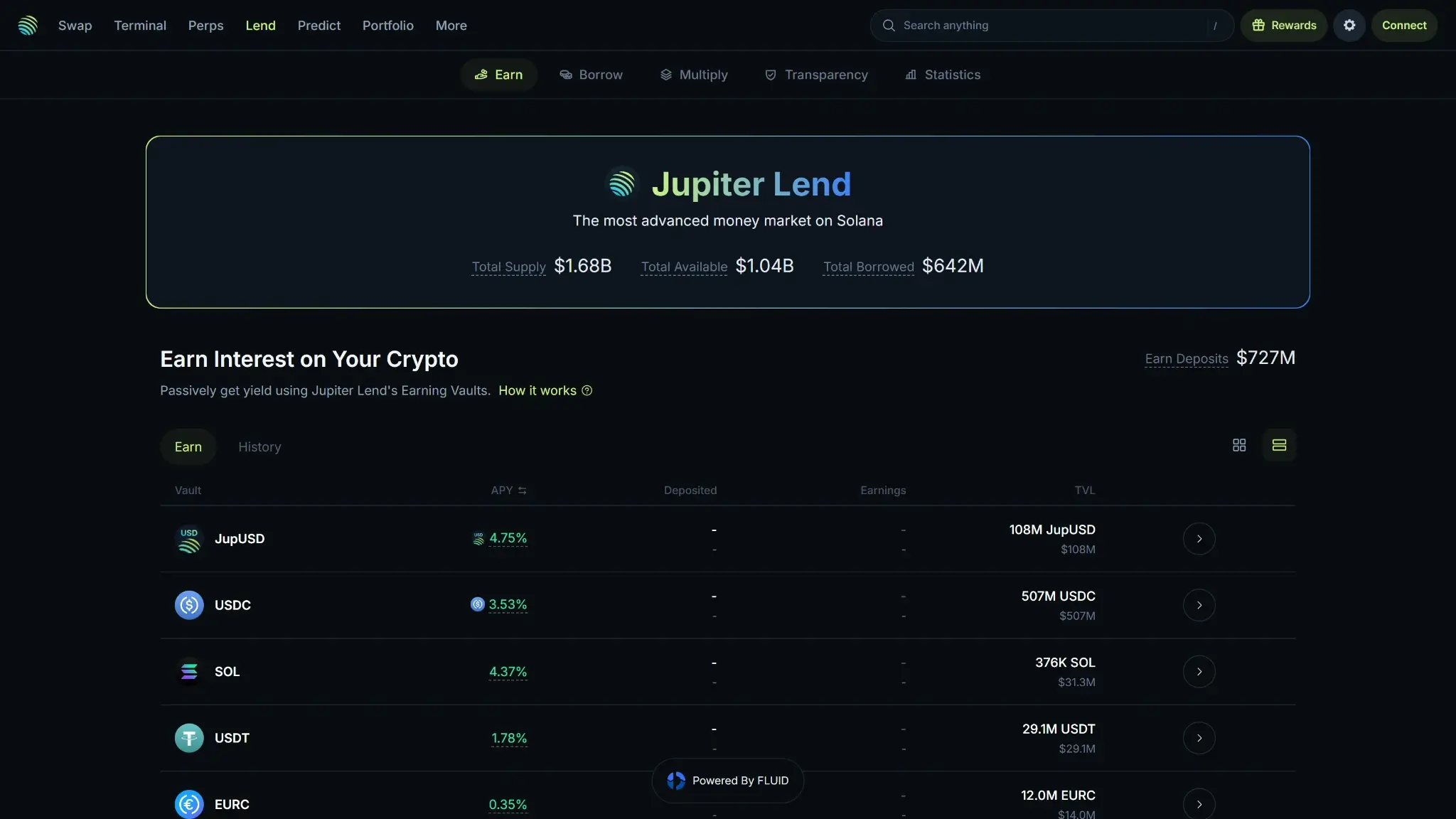
The website makes switching between trading and position-management products easy, but the fee and support differences require attention at each switch.
UI And Navigation
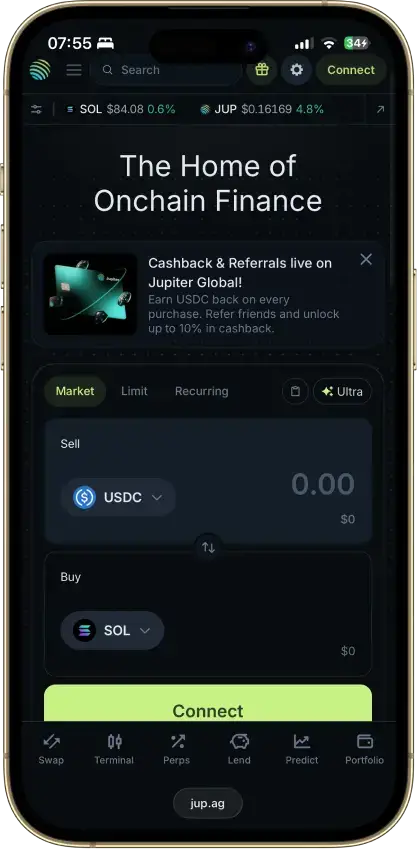
In our September 16 check, the USDC-to-SOL quote preview showed a 0.02% platform-fee row. The network fee is added at signing, so the preview alone does not give the full cost of the swap. Both $100 and $1,000 input samples returned quotes, with output changing as routes and markets updated.
Jupiter Portfolio adds transaction history and desktop CSV export. The export includes only loaded history and respects the filters hiding failed or spam transactions. Load every page you need before exporting. Multiple token movements from one transaction can occupy several rows, and the file does not replace a complete tax calculation.
Mobile App
The official Apple and Google listings identify Raccoon Labs as the mobile developer. The Chromium extension is a separate install linked from Jupiter's site. Native mobile fees differ from web fees, and the desktop CSV export is unavailable on small screens.
The small set of app-store reviews we examined praised convenience but also raised fee-page discoverability, a resolved font-size onboarding issue and occasional prediction-screen freezing. Those comments are useful usability signals, not measurements of swap reliability or security.
Reliability And Status Page
Jupiter's status page separates the website and several APIs, including Swap V2, Ultra and Trigger. Its rolling availability percentages describe those listed components and their current window. They do not measure the probability that your particular swap, bank transfer or lending withdrawal will succeed.
- Status Coverage
Separate website and named API indicators at status.jup.ag
- Availability Window
Rolling component percentages, with a 30-day window in the September 16 check
- Trading Dependencies
The interface, route and Solana transaction processing can affect a swap outcome
- Transfer Delays
Fiat-provider processing and lending withdrawal limits have separate causes
Use the affected component's status alongside your transaction record when diagnosing a failure. A working website does not establish that a payment provider has completed a transfer, and a delayed lending exit does not necessarily mean the website is down.
Customer Support
Use the support hub or in-app Get Help route, and identify the product and transaction involved before opening a ticket.
- Ultra Execution Issue
Limited compensation criteria apply, without guaranteed payment or potential-profit reimbursement
- Manual Swap
Excluded from Jupiter's execution support and refund model
- Card Or Fiat Purchase
Payment or issuing partner may need to investigate
- Lost Wallet Credentials
Recovery depends on your wallet backup or exported key
- Record Mismatch
Transaction identifiers and the selected history filters help identify the discrepancy
The compensation process’s stated waiting period is not a response-time promise for every support request. Support also cannot reverse a correctly executed blockchain transfer merely because its destination was wrong.
Features That Matter on Jupiter
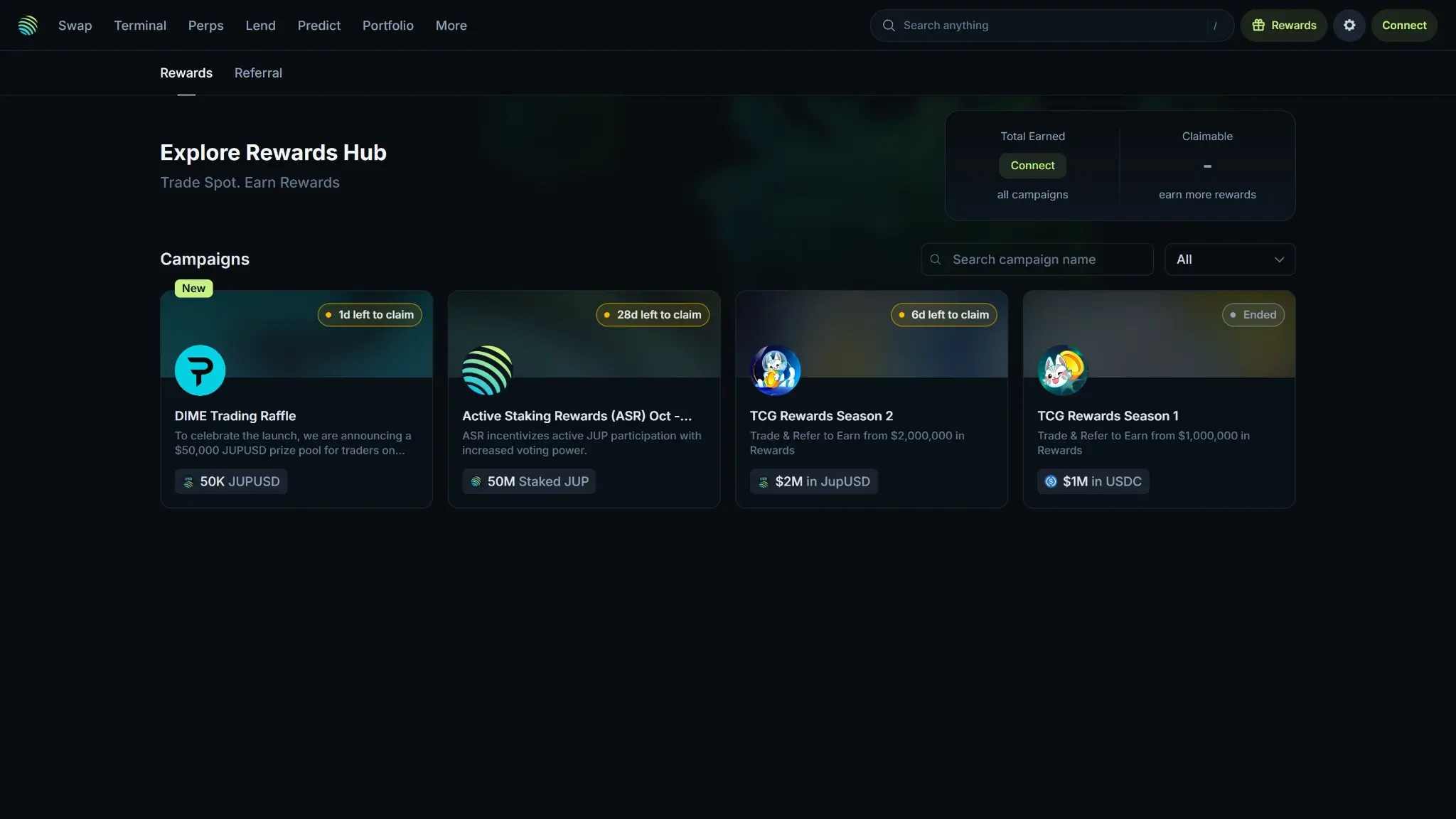
Jupiter compares pool routes with market-maker quotes for a requested swap. Manual settings let you exclude routing sources, which gives you more control but can change the price available for that order.
- Ultra And Manual Swaps
Automated execution settings or user-selected routing, slippage and transaction fees
- Limit And DCA Orders
Price-triggered orders and scheduled buying, with fees that depend on product version
- Perpetuals
Long and short exposure to SOL, ETH and wBTC using collateral
- Lend
Interest-bearing deposits, borrowing and optional Smart Vault positions
- JupSOL And JLP
Liquid staking exposure or liquidity backing perps, with different sources of return
- Wallet And Spend
Wallet management alongside separately verified card and transfer services
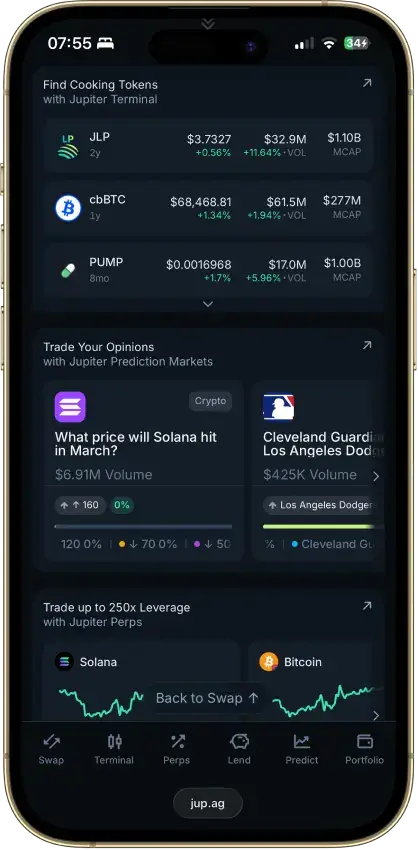
Prediction markets, Offerbook and Gacha also appear in Jupiter's navigation. Their presence should not be read as the same eligibility, pricing or risk profile as a spot swap.
Perpetuals And Margin Controls
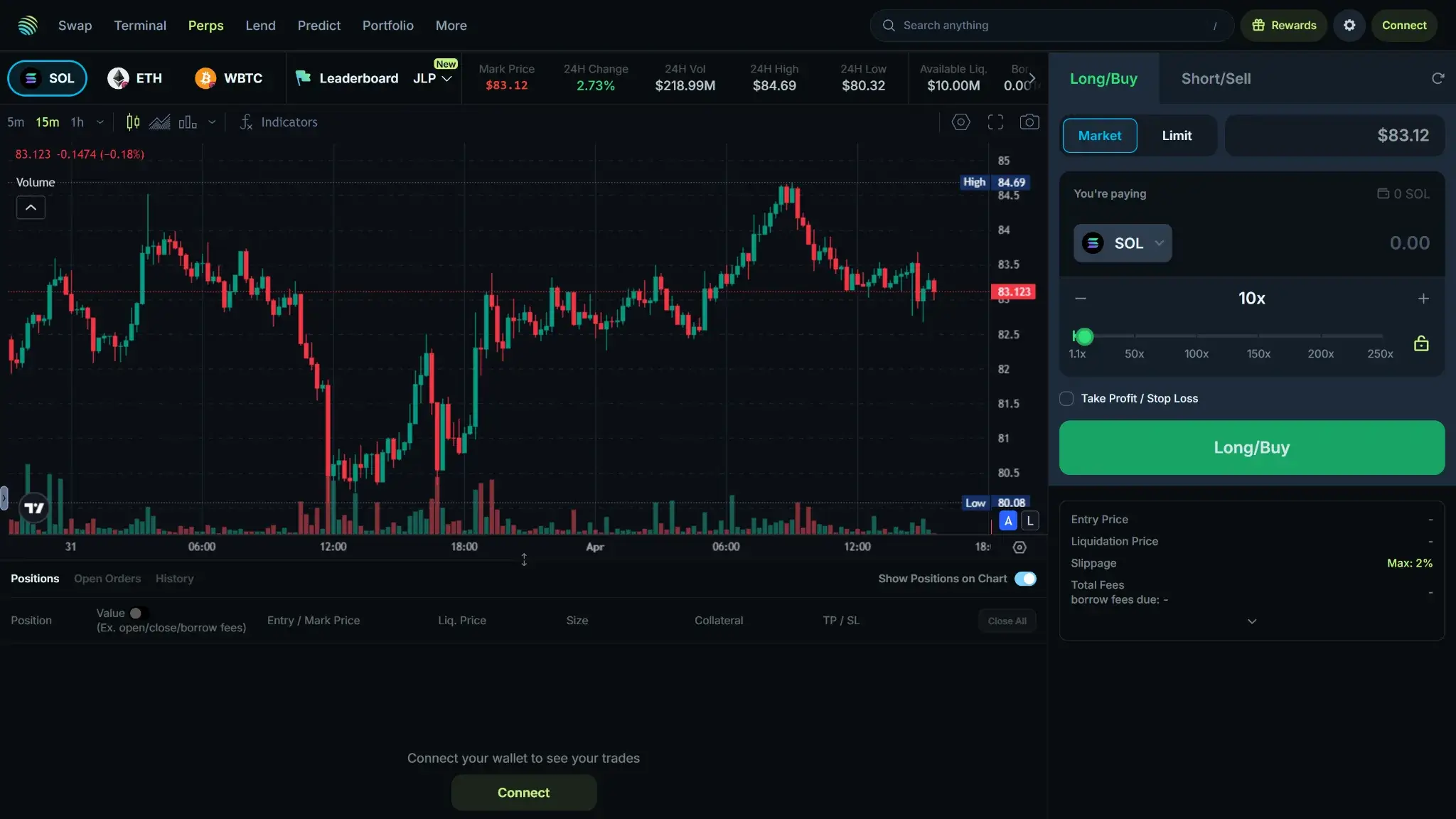
Jupiter Perps offers SOL, ETH and wBTC positions with an opening range of 1.1–250x. The separate 500 parameter used in maintenance-margin calculations is not a 500x opening limit. Long positions use the underlying asset as collateral, while shorts use USDC, so a different input token may need conversion.
Positions in the same asset and direction merge, with a maximum of six asset-and-side combinations. Borrow charges reduce collateral while a position remains open. Liquidation takes the remaining collateral, so stop-loss settings and the displayed liquidation estimate should not be treated as guaranteed protection against a loss.
Staking And Rewards
JupSOL represents a claim on staked SOL and keeps that exposure transferable. Its usefulness depends partly on how you plan to exit, since selling the token and unstaking the underlying SOL have different costs and timing.
- Available Asset
SOL through JupSOL, with separate native-staking access
- Yield
Variable staking rewards, with no fixed return
- Entry And Exit Charges
SOL entry 0%, SOL or stake-account withdrawal 0.1%
- Reward Deductions
Validator and stake-pool deductions apply. Jupiter and Sanctum give different fee figures
- Reward Receipt
Accrual changes the JupSOL-to-SOL exchange rate instead of increasing the token balance
- Unstaking
Delayed exit takes approximately one epoch, often around two days
- Regional Limits
The main-interface regional restrictions still apply
An immediate market sale depends on the quote and liquidity. Compare that output with the delayed unstaking route before treating JupSOL’s transferability as a promise of an immediate exit at its staking value.
Jupiter Lend’s ordinary Earn product pays variable interest from borrowing activity. Its 10% reserve factor applies to borrower interest, not to the principal you deposit. Smart Vaults add optional automated-market-maker exposure, where collateral or debt can consist of a changing token pair. Smart Earn supplies paired liquidity without borrowing, but still exposes funds to the assets and contracts involved.
JLP serves a different purpose again: it supplies the pool backing perpetual trades. Its value reflects the pool’s assets and trading outcomes as well as fee income. It should not be treated as a stable savings balance.
Card
Jupiter Spend uses Rain or DCS for cards, assigned according to residence. Deposited supported stablecoins are converted into a USD balance held through financial partners. Spending that balance is different from signing a swap directly from a DeFi wallet.
Physical cards are being introduced in phases, so availability can differ from the virtual card. Card eligibility does not establish access to the main trading interface, and a supported payment country does not automatically have a supported bank-withdrawal route.
Wallet And Self-Custody Options
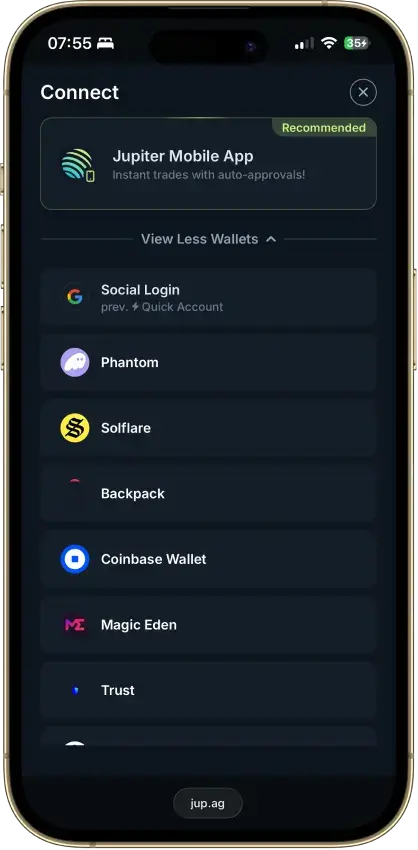
Jupiter accepts external wallets alongside its own wallet products. Jupiter ID offers email, Google and Apple access, with older login methods shown separately. Its embedded wallet has an exportable private key and no recovery phrase. Keeping an exported backup changes your recovery options if access to the login account is lost.
Jupiter Mobile and the Chromium extension are distinct products. The extension supports hardware wallets and optional Auto-Earn, which moves enabled stablecoins into Lend. That setting changes the funds’ exposure from a wallet balance to a lending claim. The extension’s code is not currently open-source.
API And Programmatic Trading
The website calls its automatic mode Ultra. In Swap V2, Order and Execute combines quotes from competing engines and handles submission after the wallet signs. Build supplies Metis instructions for an integration that assembles its own transaction, with no Jupiter swap fee.
Choose the integration path according to how much transaction assembly and submission you intend to manage.
- Meta-Aggregator Order / Execute
Returns an assembled transaction and supports managed submission across competing routers
- Router Build
Returns swap instructions using Metis, with transaction handling left to the integration and no Jupiter swap commission
- Keyless / Free Keyed Access
General limits are 0.5 and 1 request per second respectively, with separate execution limits
- Fee Accounting
The returned total fee can include gas recovery. An integration's referral fee changes the charge model
A third-party app using Jupiter may therefore charge differently from Jupiter's own website. The integration's fee fields and final token amounts show the applicable charges. A retail percentage alone cannot establish the cost of an API-powered trade.
Alternatives to Jupiter
The useful alternative depends on whether you want a different trading network or a different way to move between money and crypto.
Kraken places the account and identity-verification step before access to its bank rails, and holds the deposited trading balance.
-


Uniswap Labs
Supports swaps on Ethereum and other networks, so users with assets there can consider a route without first moving funds to Jupiter’s Solana market. Compare its wallet-swap workflow when your preferred liquidity sits outside Jupiter’s core Solana market.
Jupiter Final Verdict
Jupiter is useful for comparing SOL/USDC swaps from a Solana wallet. In two checks, Jupiter’s default quotes came close to the midpoint from public order books. One buy quote came from a JupiterZ market maker. The other routing engines have separate settlement dependencies. Earlier Jupiter audits leave gaps in the evidence for current default routing.

Best For
Solana traders comparing wallet swap quotes
Avoid If
- You need a bank balance or independent audits of live swap programs
CryptoSlate may earn a commission when you use partner links, at no extra cost to you. Our reviews, ratings, and editorial decisions remain independent of advertisers. Read How CryptoSlate Makes Money for funding details.