


 Launched in 2023
- Onchain order books with public market data
- Standard, unified and portfolio account modes
- Trading APIs and market-specific order controls
Trade perps from your own wallet
Hyperliquid Labs Overview
- Decentralized Exchange Name
- Hyperliquid Labs
- Launch Year
- 2023
- KYC
- No
- Products
- Spot, Futures or Perps
- Staking
- Yes
- Copy Trading
- No
- Derivatives
- Yes
- Proof of Reserves
- No
- Trading Fees
- 0.000% - 0.070%
Additional details
- Supported Cryptos
- Hyperliquid
Hyperliquid Labs Screenshots
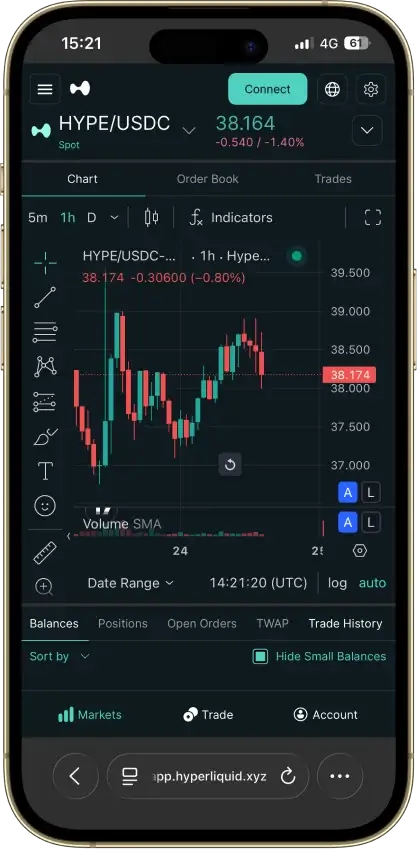
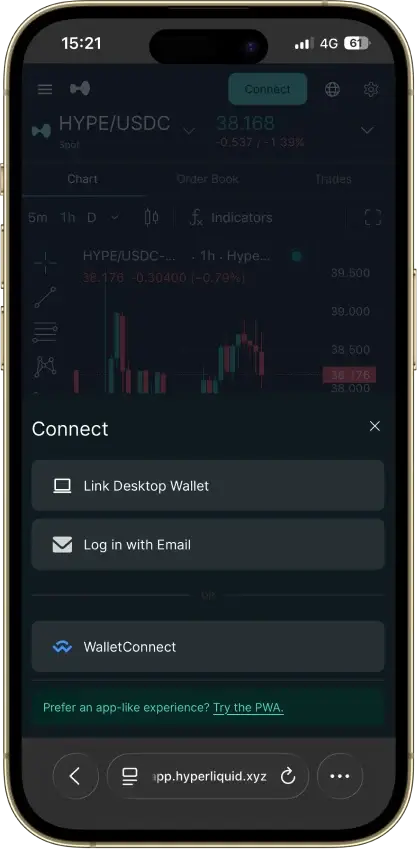
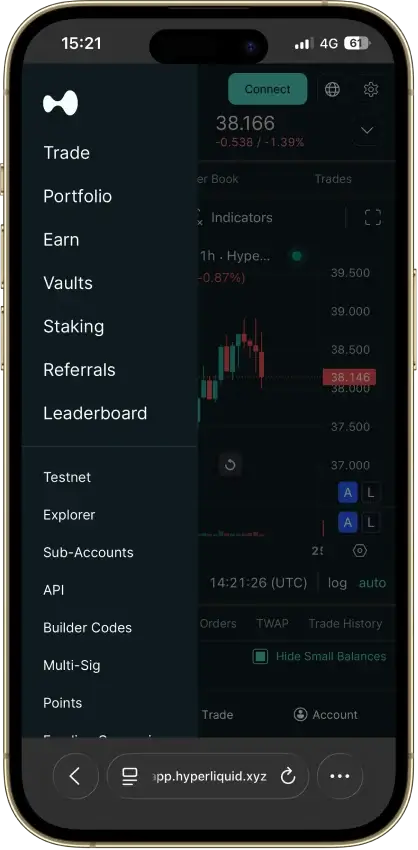
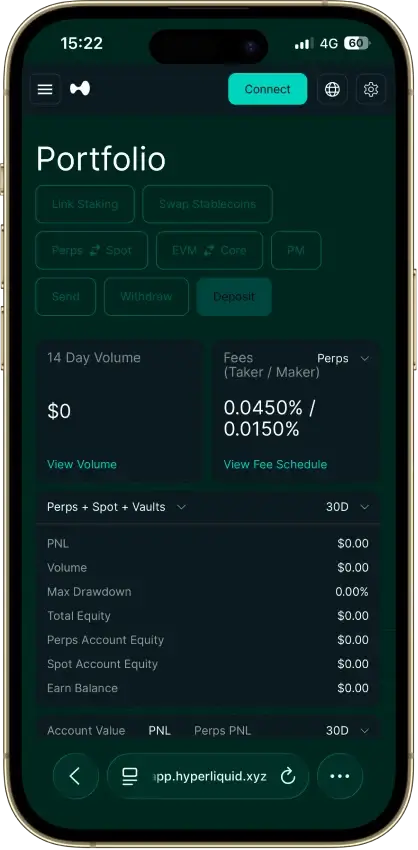
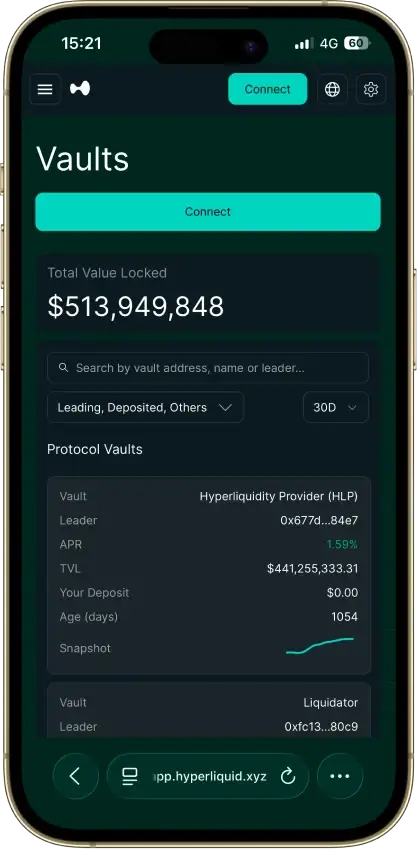
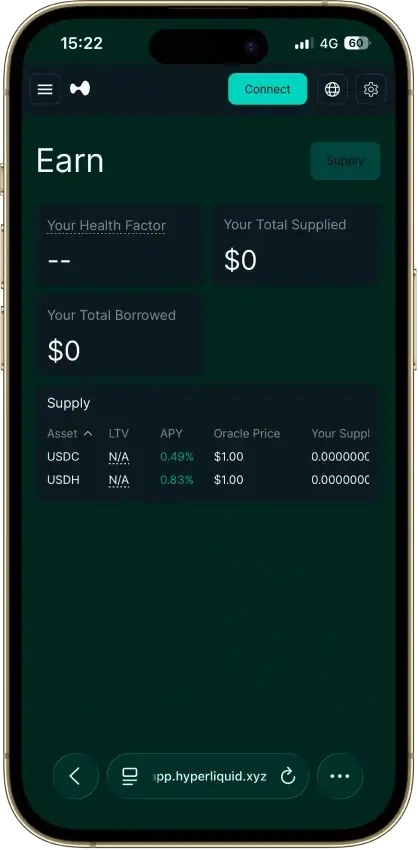
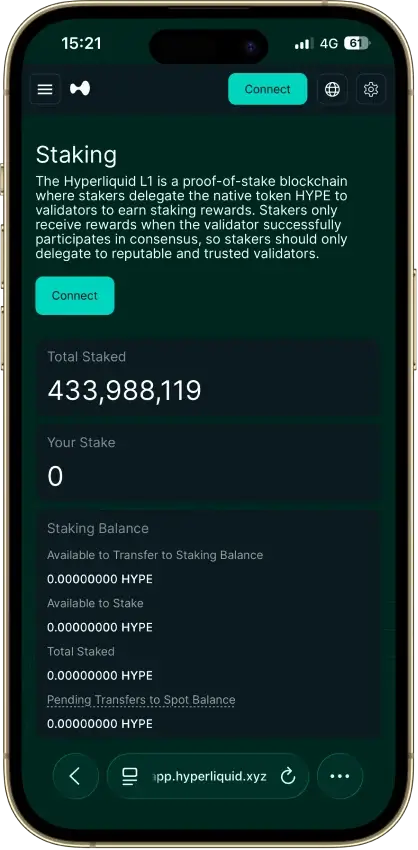
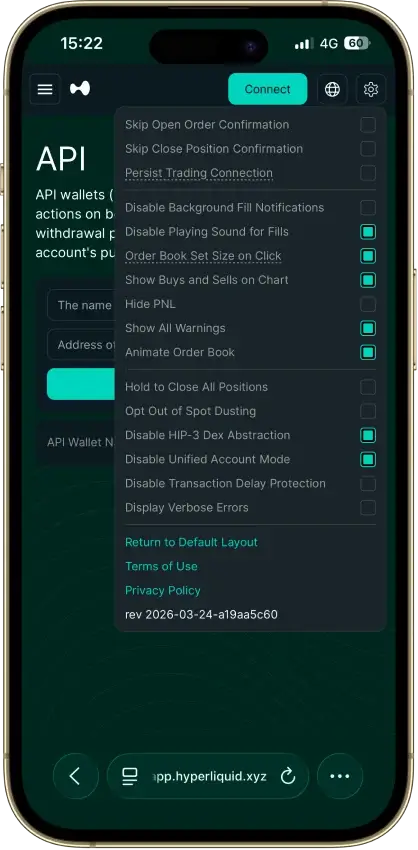
Screenshot 1 of 8
Hyperliquid Labs Pros and Cons
Pros
- $1.50 maker, $4.50 taker on a $10,000 fill
- Spot volume counts twice toward fee tiers
- Core and builder-operated perpetual markets
- Separate records for fills and funding
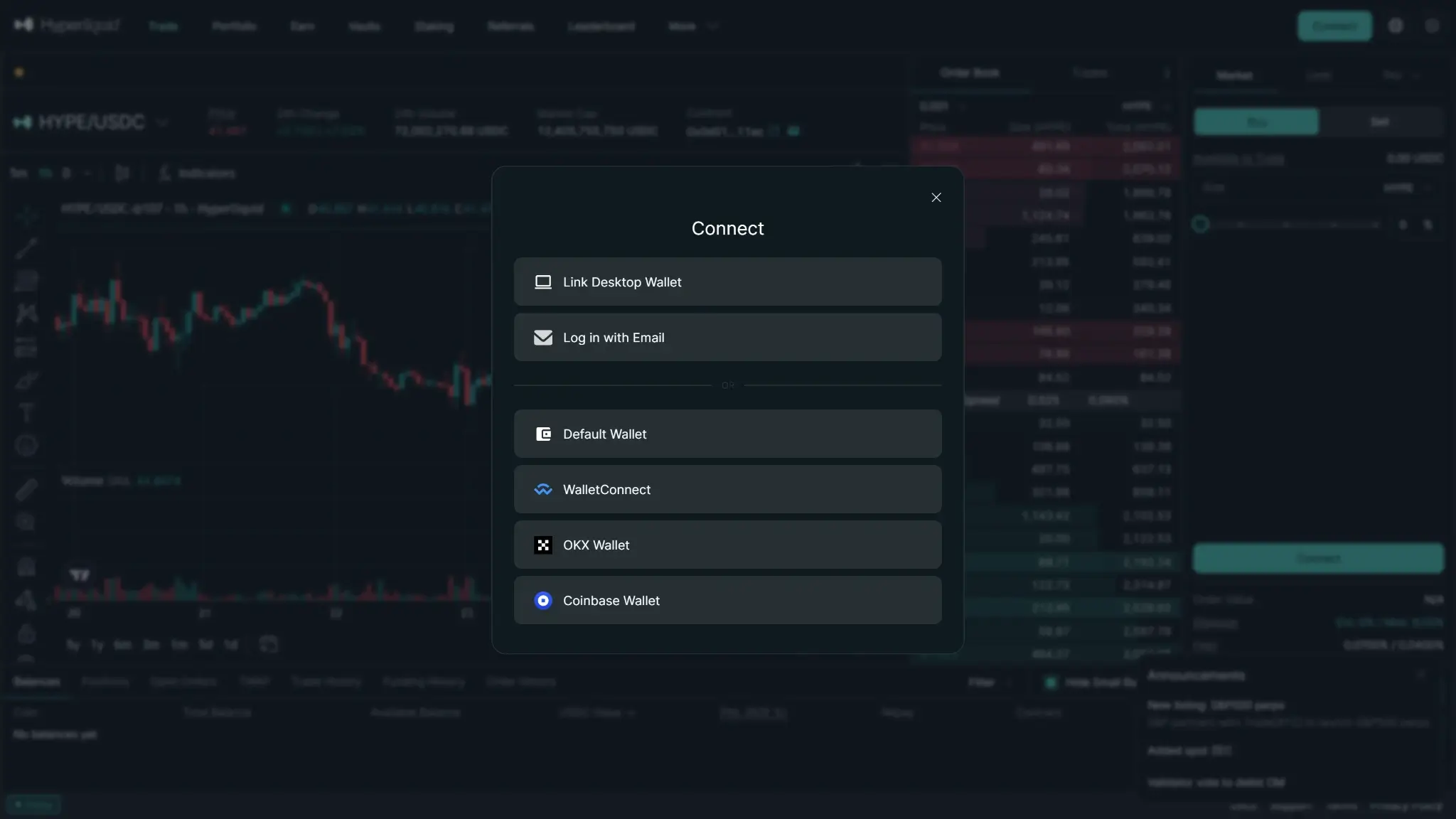
- Sign in by email or with a major wallet
Cons
- Builder fees change costs by market
- Vault deposits can lose principal
- Funding routes have different recovery rules
- Validator and builder decisions affect markets
Is Hyperliquid Worth It?
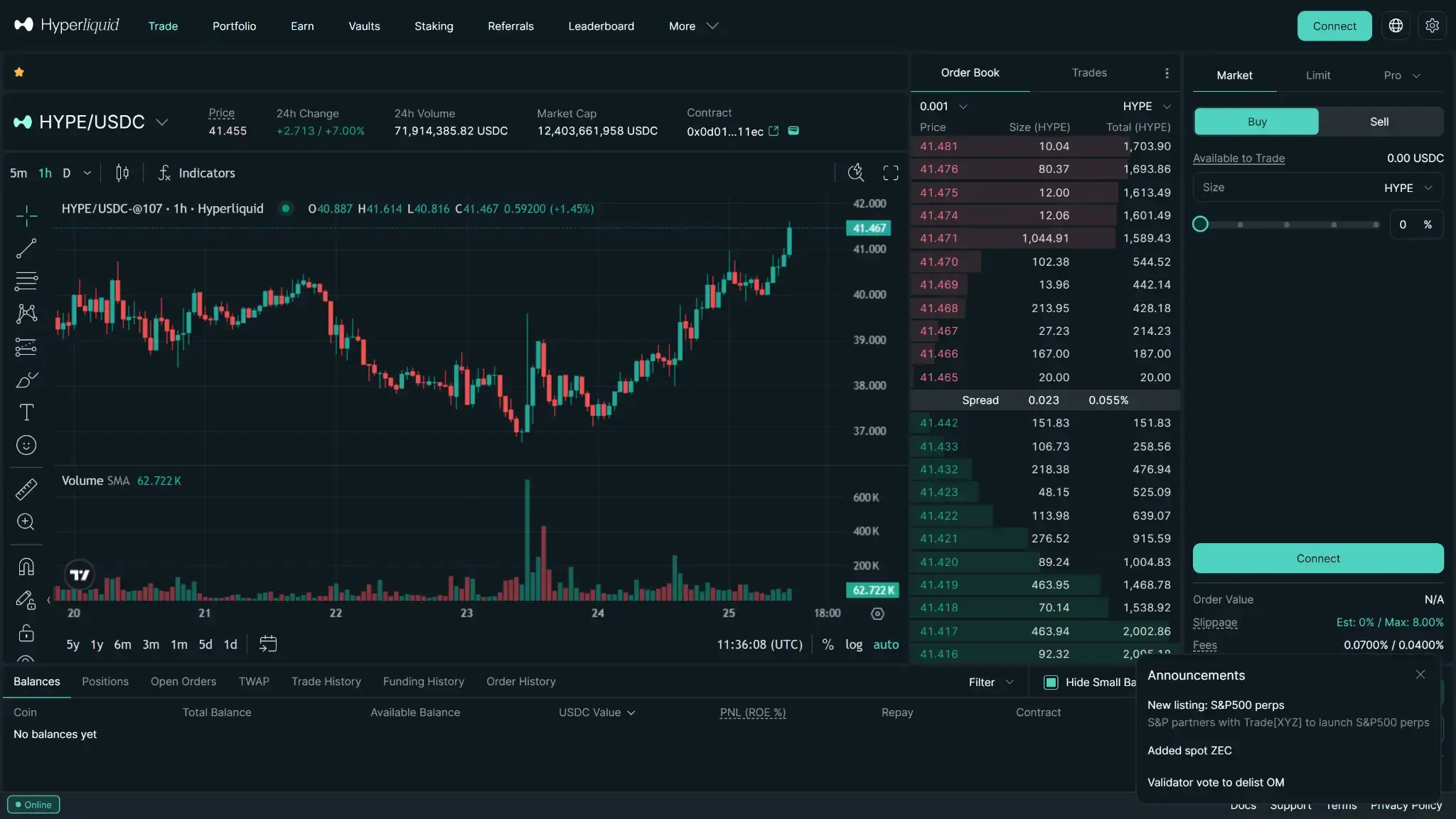
Hyperliquid is worth considering for traders who already understand margin and want direct access to an order book through a wallet. A trader can use resting limits, conditional exits and scheduled orders without opening a conventional exchange account. Choosing a builder-operated market adds another decision: who maintains its price feed and can settle the contract?
For someone buying their first cryptocurrency, the funding process is less straightforward. The same asset can arrive through different providers, and a transfer to HyperCore is different from a balance on HyperEVM. Compare beginner crypto exchanges if bank funding and account recovery matter more than advanced trading controls.
Who Is Hyperliquid Best For
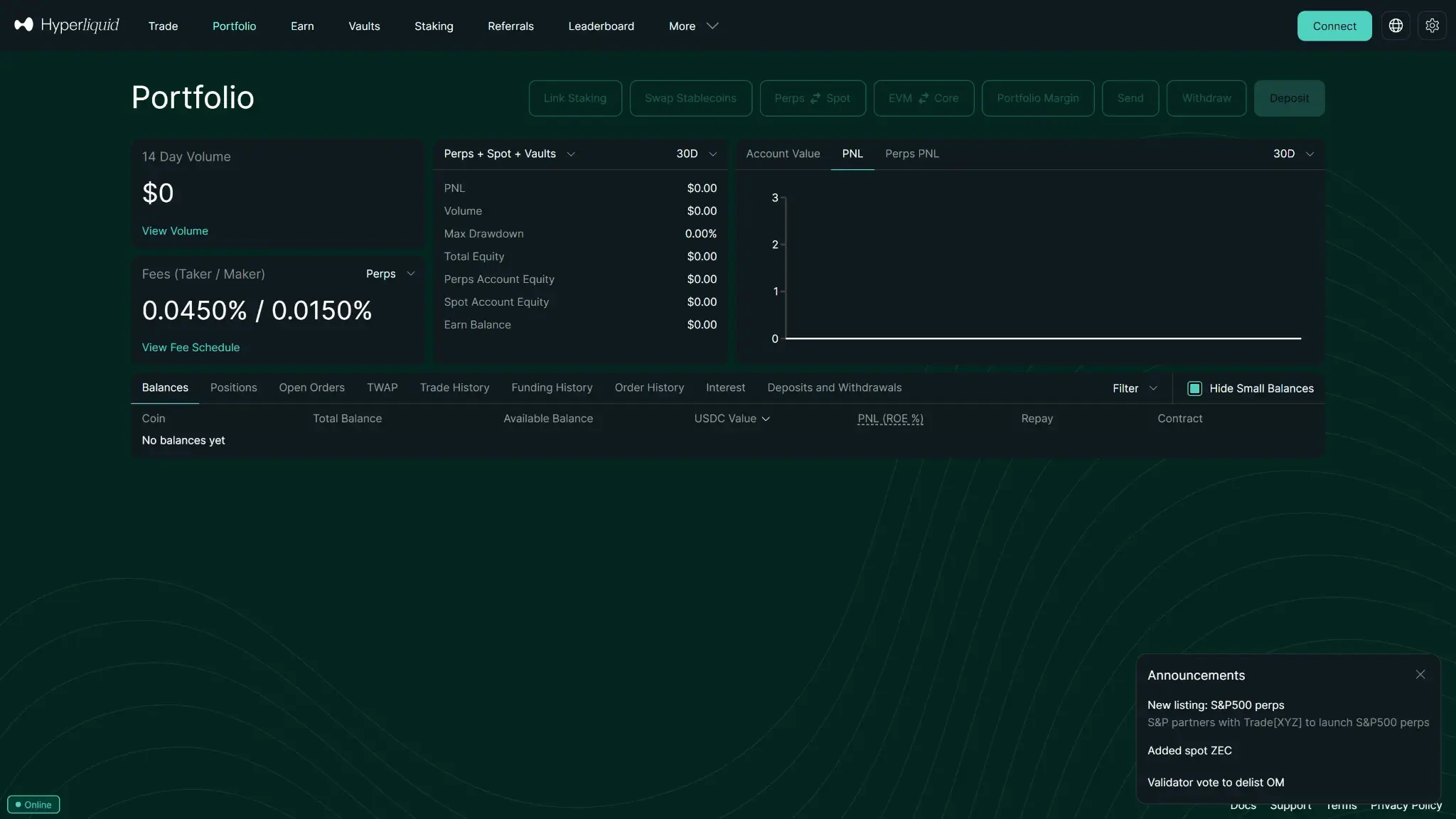
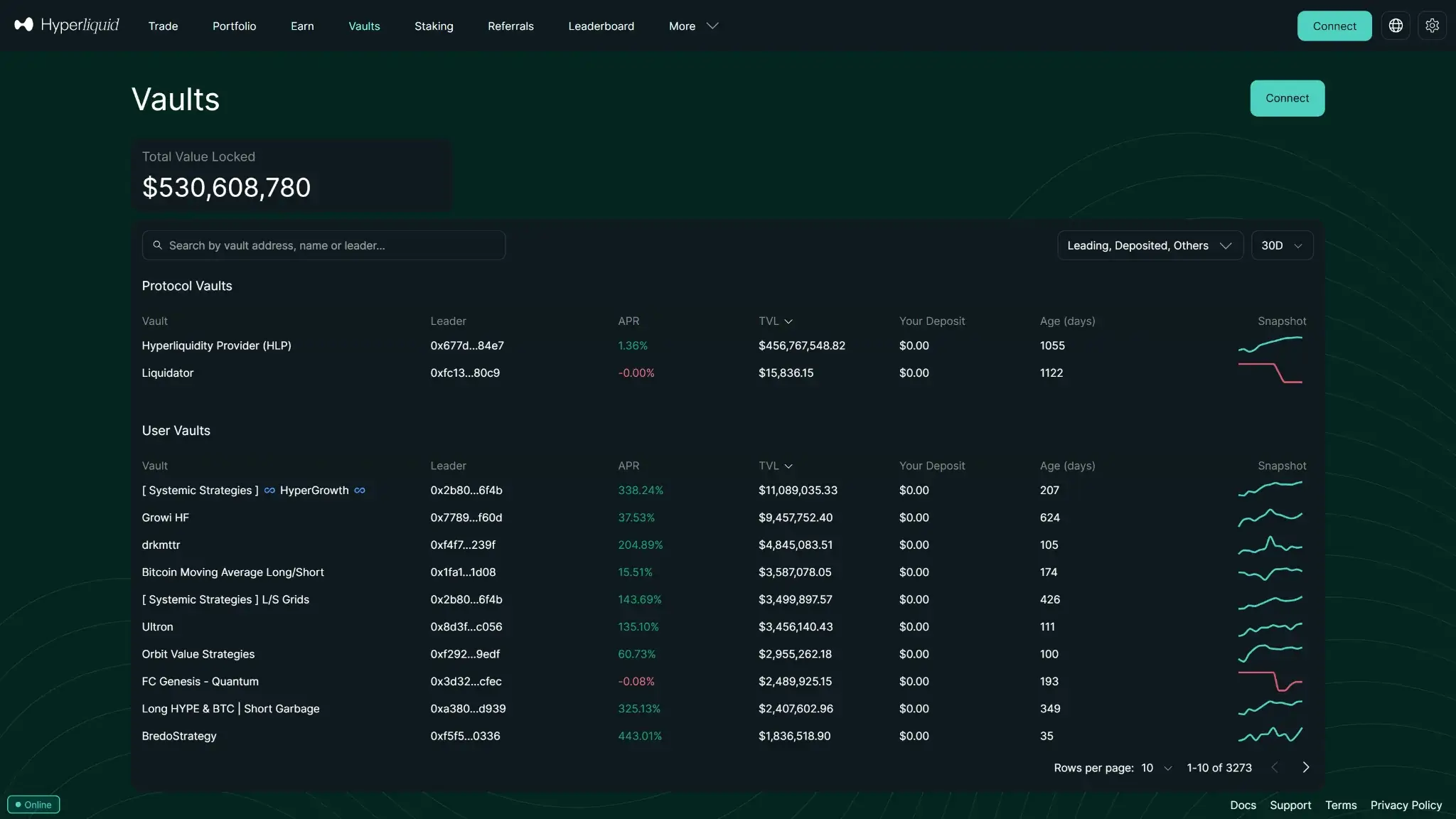
Trading, supplying a vault and staking HYPE put capital to work in different ways. None should be treated as a substitute for an ordinary cash balance.
For a spot buyer who only wants to exchange existing tokens, the order-management features may add little value. Comparing decentralized exchanges on the amount received for the same token and trade size makes that choice easier to assess.
Hyperliquid Fees and Pricing
Hyperliquid fees depend on the product and how the order reaches it. The base schedule below applies before volume, staking, referral, pair-specific or provider adjustments.
For example, a $10,000 core perpetual fill costs $1.50 as a base-tier maker or $4.50 as a base-tier taker. Opening and closing at the same $10,000 value as a taker would cost $9 before funding and other charges. The calculation uses position value, not just the margin deposited.
Volume tiers use a rolling 14-day measure, with spot volume counting twice toward that measure. Staking discounts also exist, but buying HYPE purely to obtain a fee reduction adds token-price exposure and an exit delay.
Why HIP-3 Fees Need A Market Check
The old shortcut that all HIP-3 trading costs twice the core rate is no longer reliable. Builders set a multiplier that affects their charge, while eligible markets can use a reduced protocol rate through growth mode. The combination determines the total market fee.
Our September 16 metadata sample showed XYZ100 using USDC collateral, growth mode and a fee scale of 1.0. At that scale, the builder charge equals the protocol charge. With growth mode, the published formula reduces each to one-tenth of the usual rate: 0.045% × 0.1 for the protocol, plus the same amount for the builder, totals 0.009%.
That gives a calculated $0.90 charge on a $10,000 base-tier taker fill, before any collateral-specific adjustment, account discount or access-app fee. We did not execute a trade to verify a charged receipt. The example applies to the sampled setting, and higher builder multipliers can offset the reduction associated with growth mode.
An app can add its own approved builder-code charge. Advanced users can also choose HYPE-denominated priority fees. For post-only priority orders, that fee can be charged when the order is placed even if it never fills. A blanket promise of gas-free or fee-free trading would miss those costs.
Deposits, Withdrawals, KYC and U.S. Availability
The core onboarding guide provides wallet and email access without a routine identity-document step. That does not remove interface restrictions or the checks attached to a fiat purchase, bounty payment or another separately administered process.
Swapped’s verification policy requires KYC, while its regional help materials describe different checks and documents. Its payment quote can include a spread and network charges. The presence of that integration does not give Hyperliquid a universal bank account or a single fiat-fee schedule.
Email-wallet recovery also depends on the route. Hyperliquid documents how to export the wallet key, but that is not a promise that support can reverse a completed transfer or recover every unsupported asset.
Payment Rails, Networks, And Limits
Hyperliquid’s current developer documentation prefers Circle’s Cross-Chain Transfer Protocol, or CCTP, for native USDC and describes the old Arbitrum bridge as deprecated. Other onboarding pages still describe route-specific Arbitrum and email flows, so an old saved deposit address should not be treated as the instructions for every new transfer.
The email support page says Across-route deposits below 5 USDC are redirected to the email wallet, while amounts below 1 USDC are lost. Those rules differ from the legacy bridge's minimum. Check the selected route before sending a small test amount.
Withdrawal Routes And Holds
First identify whether the funds are available in the relevant balance or committed to a position, vault or staking account. Closing a trade and sending assets to another blockchain are separate actions.
Hyperliquid's “Send” function transfers assets to another Hyperliquid account. It does not perform a cross-chain withdrawal. Sending to a centralized exchange address on an unsupported network can leave recovery dependent on that exchange.
Verification And Account Limits
Open positions, collateral rules and borrowing caps determine how much of a balance can be used or withdrawn. The wallet total alone does not show that capacity.
Cross margin can expose shared collateral to losses from more than one position. Automatic borrowing in portfolio mode also creates interest costs. A balance that helps support a trade today may become inadequate after price changes or accumulated charges.
Is Hyperliquid Safe?
Hyperliquid publishes market activity and documents several controls, but those disclosures do not make deposited collateral risk-free. A trader depends on the network, the selected market's pricing and liquidation rules, and any provider used to move assets in or out.
A builder's posted stake is not customer insurance. The HIP-3 rules describe validator-approved slashing, with the slashed stake burned. Traders still need to assess the builder's oracle and settlement approach.
Backstop liquidation and auto-deleveraging are also different. A liquidator vault can take over an undercollateralized position. If an account becomes negative, auto-deleveraging can close opposing profitable positions against it, interrupting a trade the counterparty wanted to keep open.
Incidents And Intervention
The history includes market-risk events and an API disruption, which should not be combined into a single supposed hack total.
HLP depositors can absorb trading losses, traders can face unexpected settlement decisions, and a functioning blockchain does not guarantee a working order-submission service. A past compensation announcement should not be read as insurance for the next incident.
Hyperliquid Supported Assets and Markets
Our public API samples at 14:34 UTC on September 16, 2026 showed a BTC bid of $75,723 and ask of $75,724. The sampled XYZ100 builder market showed $29,143 and $29,144. Those imply spreads of roughly 0.13 and 0.34 basis points respectively, before trading fees. They are two snapshots, not evidence that a particular order size will fill at that price or that spreads remain that narrow.
App, UX and Customer Support
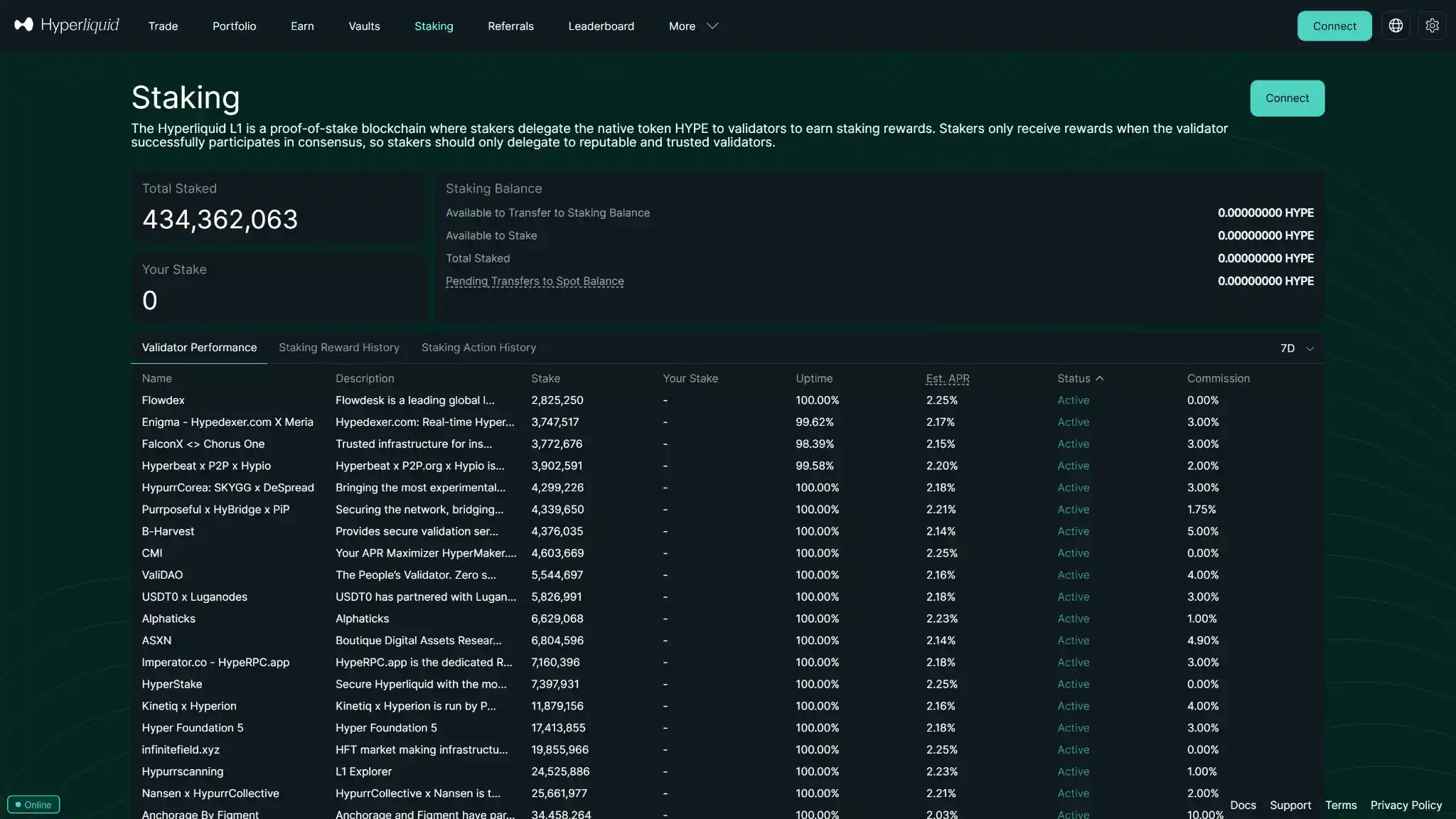
Hyperliquid's own trading interface is web-based. Its onboarding guide also lists independently operated mobile and wallet applications, including Based and Dexari. The chosen app's publisher and terms determine who provides the service, and its approved fees can change the cost of a trade.
After an uncertain order response, inspect the order and fill history before submitting another order. Repeating a request without checking its result can create exposure you did not intend.
Support And Recovery
Support is divided between Hyperliquid and the independent services connected to it. The official guide directs users to a Discord ticket channel or a Zendesk email form.
Hyperliquid says ticket responses can take up to 48 hours, with longer waits over weekends. We did not measure that response time or test a recovery request. Keep transaction hashes and order identifiers, since a general screenshot of an account balance may not identify the failed step.
Features That Matter on Hyperliquid
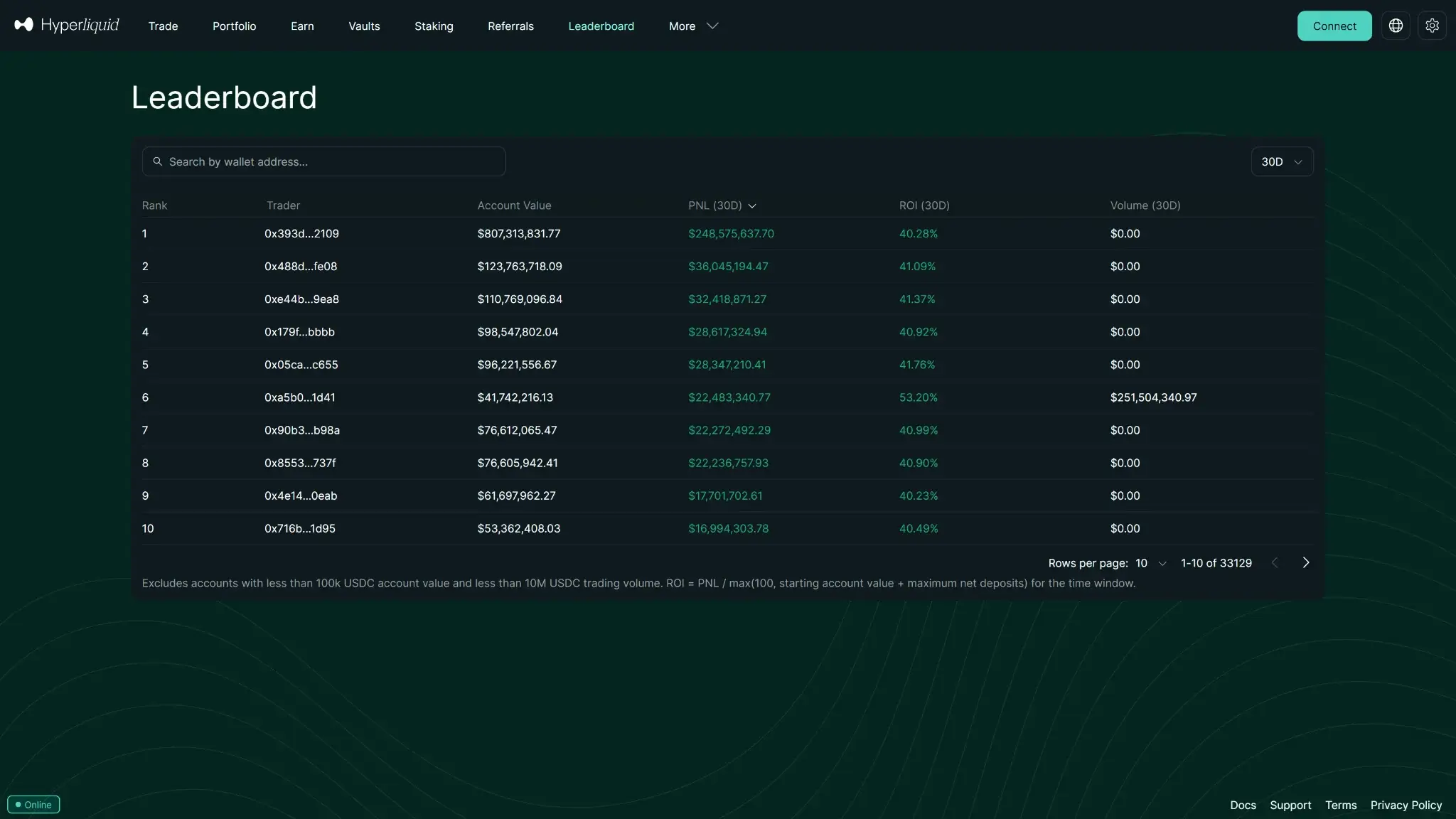
Hyperliquid combines a trading engine called HyperCore with the HyperEVM smart-contract environment. The distinction matters when moving funds: an asset can be on the same blockchain without being available as collateral in the selected trading account.
Permissionless HIP-4 markets have reached mainnet. Their contracts and settlement criteria need individual review, and interface eligibility can differ from spot or perps access. Buying an outcome token can still lose the amount paid even though the contract does not use the liquidation model of a perpetual position.
Orders And Account Modes
Post-only orders are intended to rest on the book. An ordinary limit order can cross the spread immediately and incur a taker fee. Trigger orders also depend on available liquidity after activation, so a stop price is not a guaranteed exit price.
TWAP divides an order over time, with current documented durations from five minutes to seven days. Its suborders have slippage controls, which can leave the overall order partly unfilled. Chase orders reprice a resting limit as the best bid or ask changes, but run in the browser tab where they were created.
Standard mode keeps spot balances separate from balances on each perpetual exchange, while unified mode shares a balance for each asset across supported activity. Portfolio margin allows eligible collateral to support borrowing and positions. Its documentation lists entry thresholds and asset-level caps, so holding a supported token alone does not establish eligibility or unlimited borrowing capacity.
Staking, HLP And Other Vaults
The Hyperliquidity Provider vault, or HLP, earns or loses money through activities including market making and backstop liquidations. It can inherit positions that other traders can no longer support.
A new HLP deposit restarts the four-day waiting period. That makes repeated top-ups materially different from leaving an existing deposit untouched. A vault's displayed historical return cannot establish what a future withdrawal will be worth.
APIs And Trading Records
Hyperliquid's public data API returned market catalogs and order books during this review. Trading integrations also exist, but require separate signing and permission handling.
The export code requests successive batches and includes a truncation warning. We did not download an account's files or verify mobile parity. Active traders should keep records regularly and reconcile fees, funding, interest and external transfers. One CSV may be insufficient for a complete tax report.
Alternatives to Hyperliquid
The useful comparison depends on whether you want a perpetual position, a token swap or a bank-linked account. Those products have different custody and exit requirements.
-


Uniswap Labs
Hyperliquid is built for margin/order-book positions; a trader who only wants a spot swap or LP position, with no funding or margin exposure, is better served by Uniswap's pool-based model.
-

Jupiter
Hyperliquid's HyperCore balance sits apart from HyperEVM and external networks; an ordinary Solana swap doesn't need that funding step and fits Jupiter's routing instead.
-

Raydium
Hyperliquid's HLP vault carries a four-day withdrawal wait tied to strategy performance; a trader wanting direct control over a liquidity position without that lock-up should compare Raydium's standard/concentrated pools.
Hyperliquid's main reason to choose it is control over onchain orders and margin positions. That choice is most useful when the trader is prepared to evaluate each market's rules and maintain records across the funding, trading and withdrawal process.
Final Verdict
Consider Hyperliquid for active onchain order management if you can assess the selected market, collateral and exit route.
Best For
Experienced wallet users managing spot and perpetual positions.
Avoid If
- You only want to swap tokens you already hold.
Disclaimer: CryptoSlate may receive a commission when you click links on our site and make a purchase or complete an action with a third party. This does not influence our editorial independence, reviews, or ratings, and we always aim to provide accurate, transparent information to our readers.