

Quick Take
- A wallet linked to Irish drug dealer Clifton Collins moved another 500 BTC worth $41 million after nearly 11 years of inactivity.
- The transfer brings Collins-linked Bitcoin movements to 2,500 BTC worth $208 million, reviving a fortune once thought lost in a landfill.
- Another 3,500 BTC worth $291 million remains, while questions persist over who controls the funds and whether further recoveries are possible.


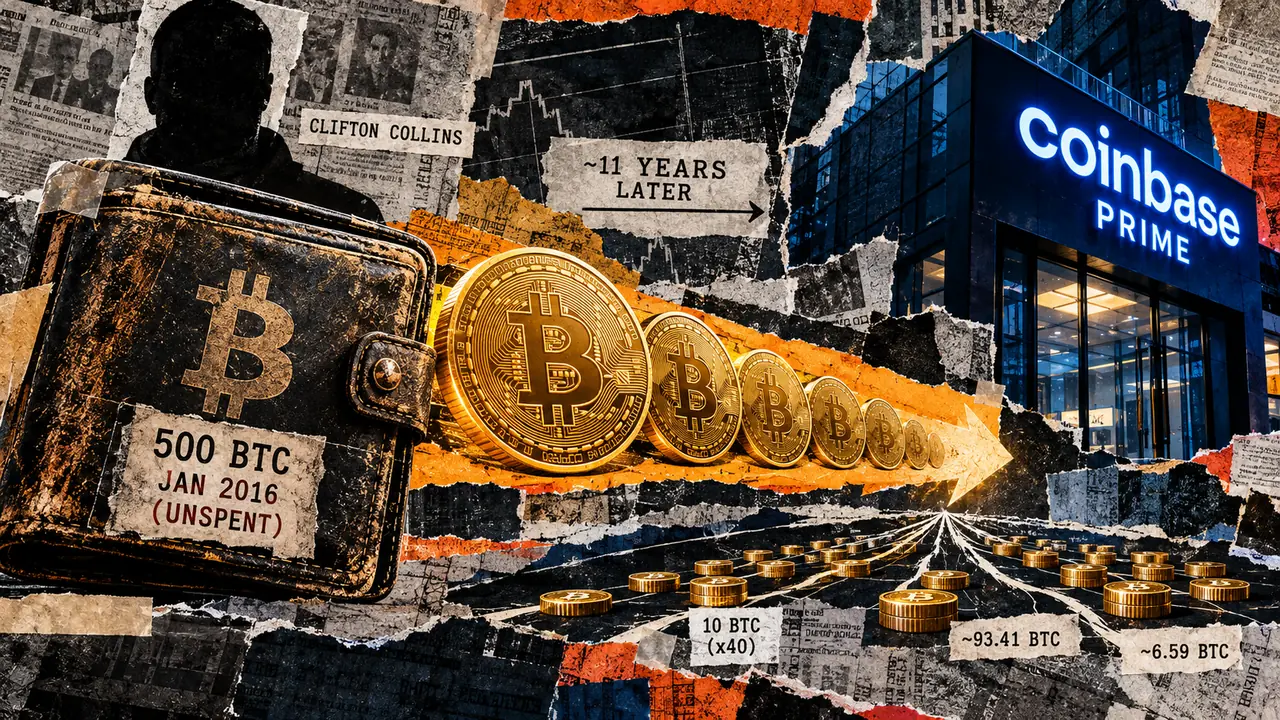
A Bitcoin wallet linked to convicted Irish drug dealer Clifton Collins moved about $41.5 million after a decade of inactivity.
Blockchain analytics firm Arkham Intelligence reported that 500 BTC moved on Oct. 20 from an address associated with Collins to a wallet it identifies as a Coinbase Prime deposit.
The transfer marks the fifth movement of 500 BTC from Collins-linked wallets this year, bringing the total to 2,500 BTC, worth approximately $208 million at Bitcoin's price of around $83,157.
The development leaves roughly 3,500 BTC, valued at $291 million, in wallets Arkham associates with the former drug dealer, raising questions about whether the remaining fortune could also become accessible.
The October transaction follows the same pattern seen in July and August, when separate wallets transferred 500 BTC each to the same Coinbase Prime-linked address.
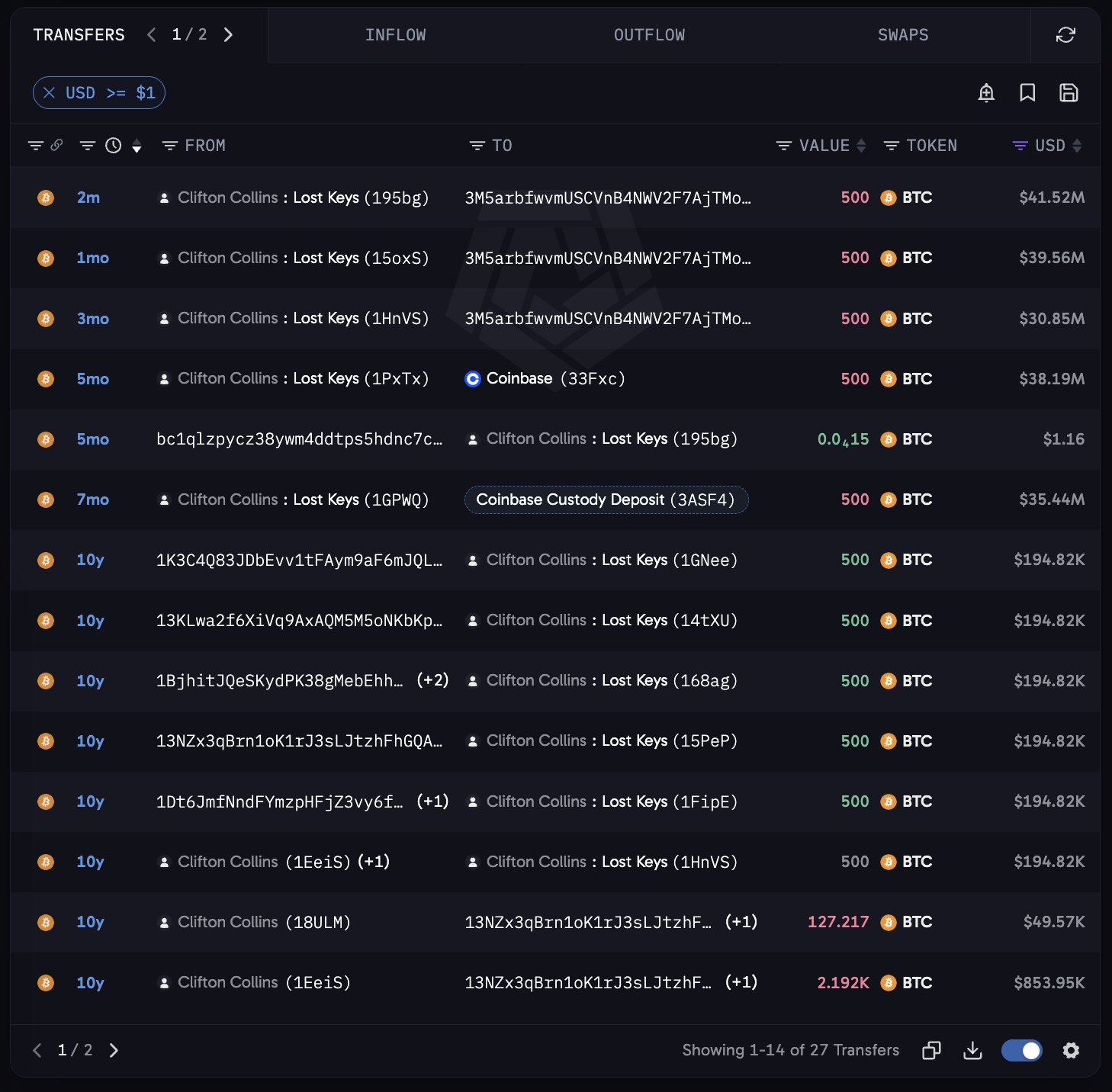
Blockchain records show that the latest transfer originated from coins received in January 2016, meaning those specific holdings had remained unspent for nearly 11 years.
The receiving address subsequently redistributed the funds across 42 outputs, including 40 transfers of exactly 10 BTC. Similar distributions followed the earlier movements, suggesting a recurring process for handling the Bitcoin.
However, the transactions do not show whether any assets were sold or identify who authorized the latest transfer.
Irish authorities' Bitcoin recovery raises questions over remaining $291 million
Collins, a former security guard and cannabis cultivator, accumulated approximately 6,000 BTC between 2011 and 2012 using proceeds from drug dealing.
He reportedly split the holdings into 12 wallets with 500 BTC each and stored the private keys needed to access them on printed paper hidden inside a fishing rod case.
Following his imprisonment in 2017, his landlord reportedly disposed of his belongings, including the case, at a landfill in County Galway.
The incident left the Bitcoin widely presumed inaccessible for years, until Irish authorities began recovering portions of the fortune earlier in 2026.
In March, Ireland's Criminal Assets Bureau (CAB), working with Europol's European Cybercrime Center, announced it had accessed a wallet containing 500 BTC, then worth about €30 million.
The bureau subsequently announced another 500 BTC recovery in May, followed by a third seizure in July, bringing its officially confirmed total to 1,500 BTC.
Europol provided investigators with technical expertise and decryption resources, though authorities have not publicly explained how they recovered access to the previously inaccessible wallets.
Another 500 BTC moved in August before October's latest transaction, extending the series of transfers beyond the amounts detailed in the bureau's July confirmation.
Arkham considers law enforcement the most likely party behind the movements, citing their recurring size and similarities to earlier confirmed seizures. However, Irish authorities have not publicly established their role in the latest transaction.
The transfers to Coinbase Prime also introduce uncertainty over the eventual disposition of the recovered assets.
Coinbase's institutional platform provides custody and trading services, allowing large Bitcoin holdings to be transferred without necessarily being sold on the open market.
Ireland's Criminal Assets Bureau handles the sale or disposal of seized property on a case-by-case basis under applicable court orders.
The bureau has not yet disclosed whether it will retain or liquidate the latest 500 BTC, while the remaining 3,500 BTC could represent another substantial recovery if authorities gain control of the associated wallets.
Mentioned in this article



Editorial credits