



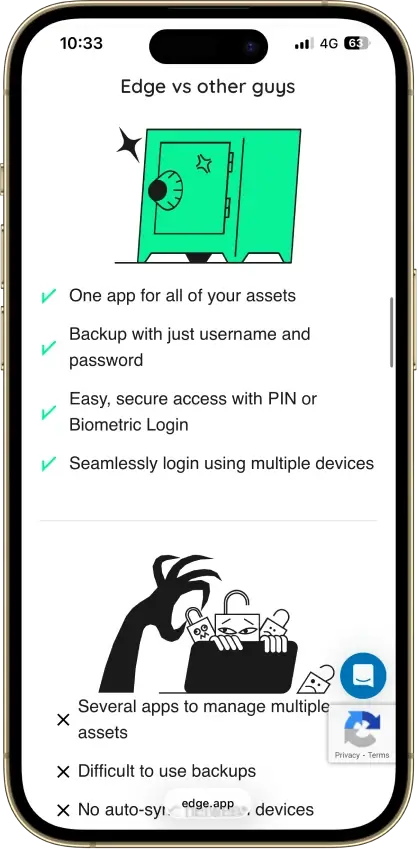
- Duress Mode hides funds under coercion
- No seed phrase to write down or lose
- Recovery token plus optional 2FA layer
Edge Wallet Overview
- Crypto Wallet Name
- Edge Wallet
- Wallet Type
- Multi-platform wallet
- Custodial Status
- Non-custodial
- Built-in Swaps
- Yes
- Open-source
- Fully open-source
- Fiat On-ramp
- Yes
Additional details
- Supported Blockchains
- Bitcoin, Ethereum, BNB Smart Chain, Avalanche, Tron, Optimism, Polygon, Solana
- Token Standards
- ERC-20, BEP-20, TRC-20, SPL
- Platforms
- iOS, Android, Desktop (macOS)
- Hardware Wallet Support
- No
- Staking Support
- Limited
Edge Wallet Screenshots
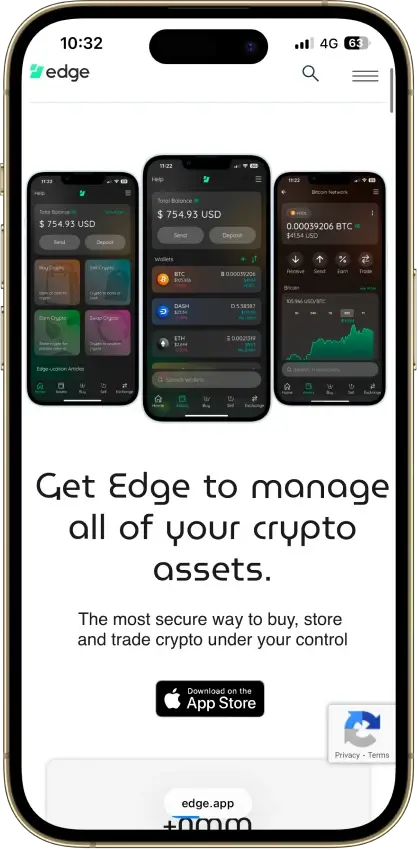
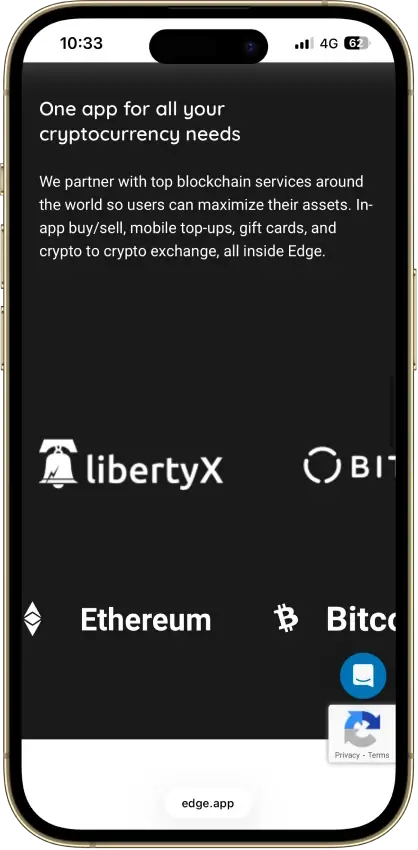
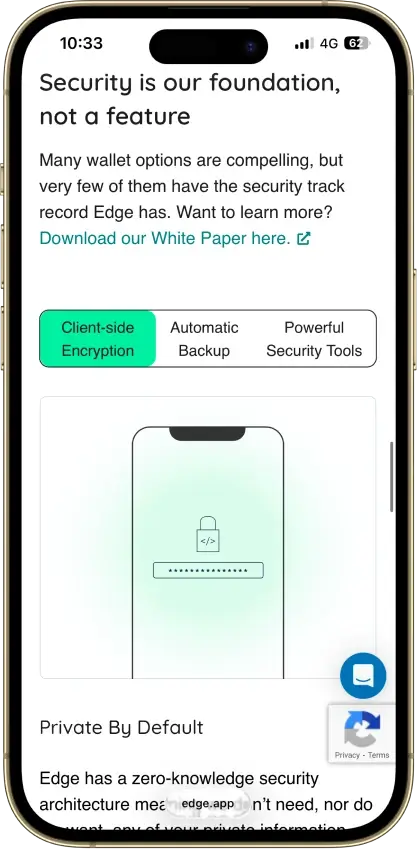
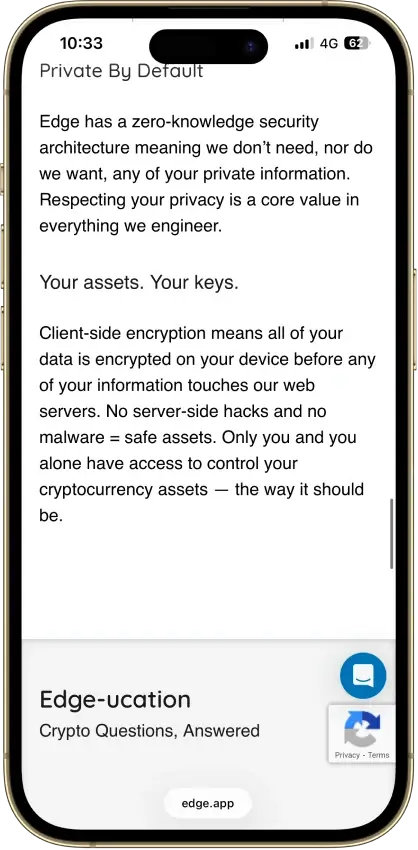
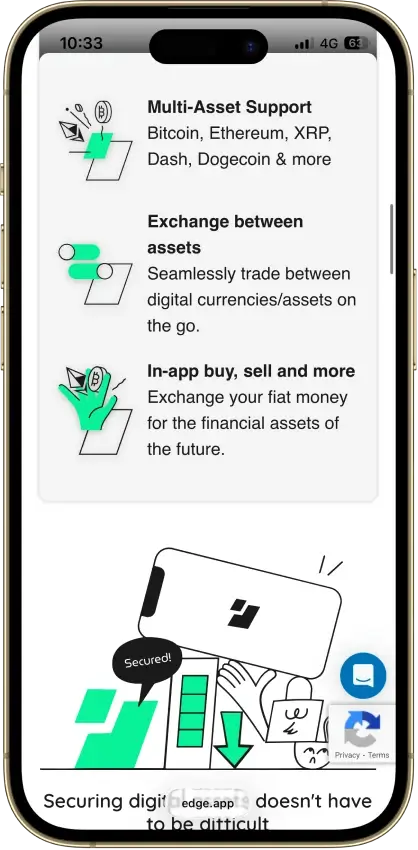
Screenshot 1 of 8
Edge Wallet Pros and Cons
Pros
- Public, auditable code (BSD-3-Clause app)
- Non-custodial, zero-knowledge encryption
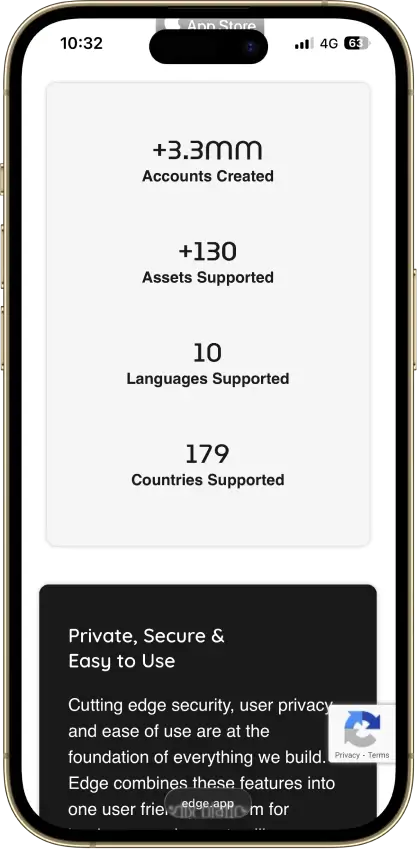
- 120+ assets plus major token standards
- Swaps shop quotes across several providers
- iOS app also runs on Apple Silicon Macs
Cons
- Weak passwords increase credential-guessing risk
- Encrypted key blobs sit on Edge servers
- 2023 bug exposed about 600 private keys
- No third-party audit made public
- No desktop app or browser extension
Who Edge Wallet is Best for and Who Should Skip It
Edge fits people who want full self-custody but know a seed phrase is where they would fail.
- Newcomers who want their first non-custodial wallet without backup anxiety
- Multi-chain users who live on their phone and want synced devices
- Open-code advocates who want a wallet whose entire codebase is public and auditable on GitHub
- Privacy-minded users who want no-KYC wallet use with optional on-ramps
Skip it if you need a hardware secure element for large holdings or work from a desktop or browser extension. It is also the wrong fit if you will not keep one long, unique password as the key to everything.
What is Edge Wallet and How Does it Work?
Edge is a mobile self-custody wallet for iOS and Android, with a direct APK for sideloading. The iOS app also runs on Apple Silicon Macs. There is no desktop app and no browser extension, so the phone is the whole product. That single-product focus also means there is no exchange account or hardware line to confuse it with, and no custodial sibling either.
The company behind it is Airbitz Inc. of San Diego, California, which launched the Airbitz Bitcoin wallet in 2014 and rebranded it as Edge. Twelve years of shipping self-custody software under a named US company with a public phone number counts for trust in a category full of anonymous teams. The same lineage carries the product's one security incident, covered below, so the pedigree earns credit without erasing the record.
Security and Custody
Edge is non-custodial because it generates and encrypts your keys on your device before anything reaches Edge's servers. The company states plainly that only you can access your assets. What Edge stores is an encrypted backup blob it cannot read, replicated across redundant peer-to-peer cloud servers, which makes it zero-knowledge storage.
The login model is where Edge splits from almost every other self-custody wallet. You create a username and password, and the app derives your encryption from them client-side. No raw seed phrase is pushed at you during onboarding. Both sides of that design deserve equal weight.
- The upside is that recovery stops depending on a slip of paper, since logging in on a new phone syncs your wallets. The risk of losing a seed outright, the most common way people destroy their own crypto, largely disappears. Optional 2FA and a recovery token add layers on top, and a Duress Mode covers coercion scenarios.
- The downside is that password strength matters, although preconfigured recovery gives you a separate way to regain access. A weak or reused password is exposed to brute-force and credential-stuffing attacks, and phishing for an Edge password works like phishing for any account. The encrypted blobs on Edge's servers are also a target that a pure offline seed never presents, so the choice is about security as well as convenience.
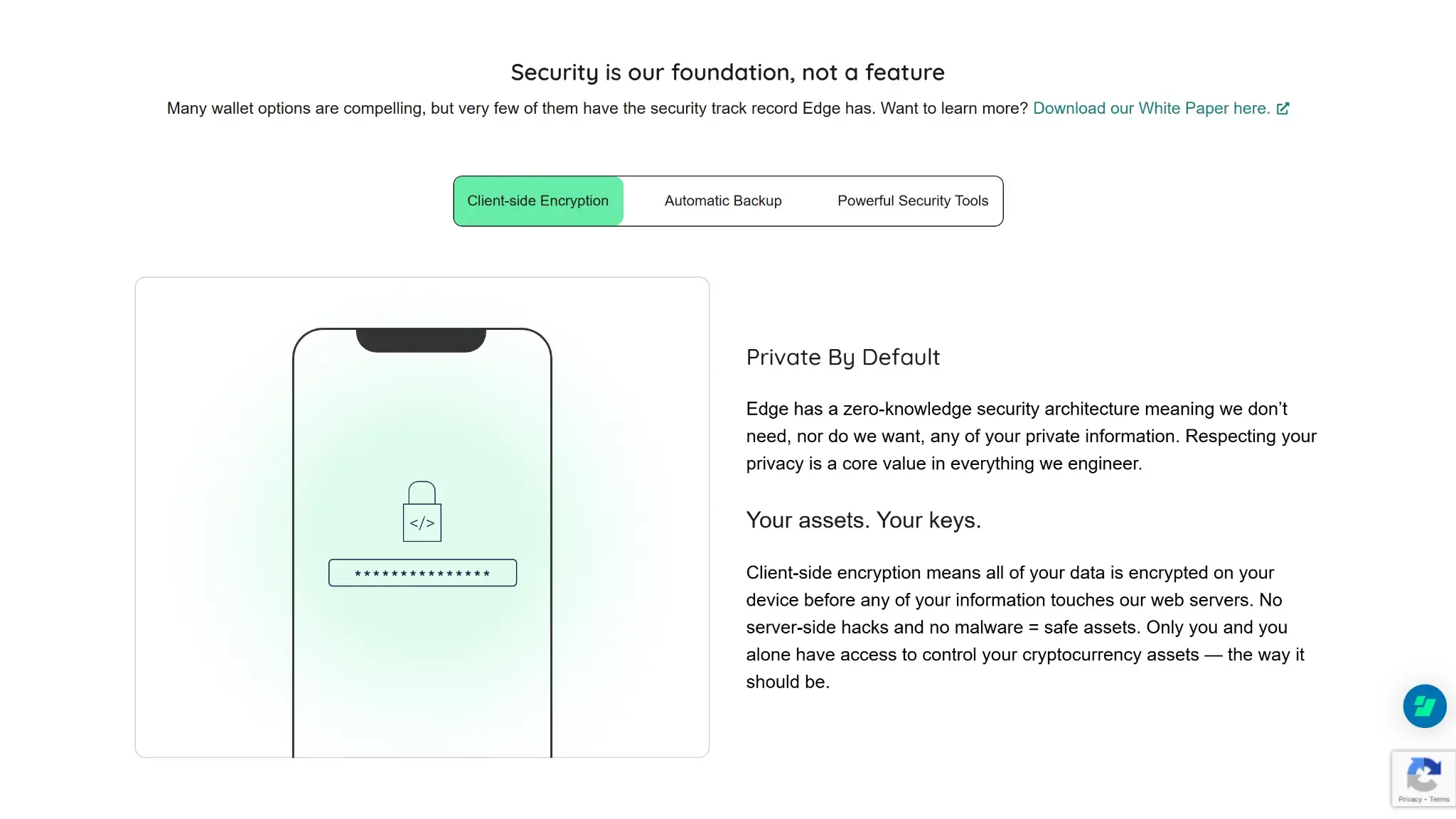
Edge's servers have held sensitive data once before, through a different flaw. In 2023, a logging bug wrote unencrypted private keys into app logs that were then uploaded to Edge's servers. Roughly 600 private keys were exposed, under 0.02% of all keys on the platform, with identified losses in the low five figures USD. Edge patched it in version 3.3.1 within days of discovery and disclosed the incident. The encrypted backup blobs were never cracked, because the bug was a plaintext-logging mistake in the app. Edge handled it responsibly and the scope was small, but it was still a fund-loss event on Edge's own infrastructure.
On transparency, Edge is above the software-wallet median, with its entire codebase public and auditable on GitHub. The licensing is not uniform, though. The app is under the permissive BSD-3-Clause license, while the core library that handles login and key encryption is source-available under a modified BSD that requires Airbitz's written permission to redistribute modified code. You can read and audit every line, but calling it fully open source overstates it, because the core is not freely forkable. No third-party audit report accompanies the code, so the public codebase is the verification path. As a mobile software wallet it has no secure element, and signing happens on a general-purpose phone OS, which is the structural ceiling for every hot wallet including this one.
Supported Chains and Assets
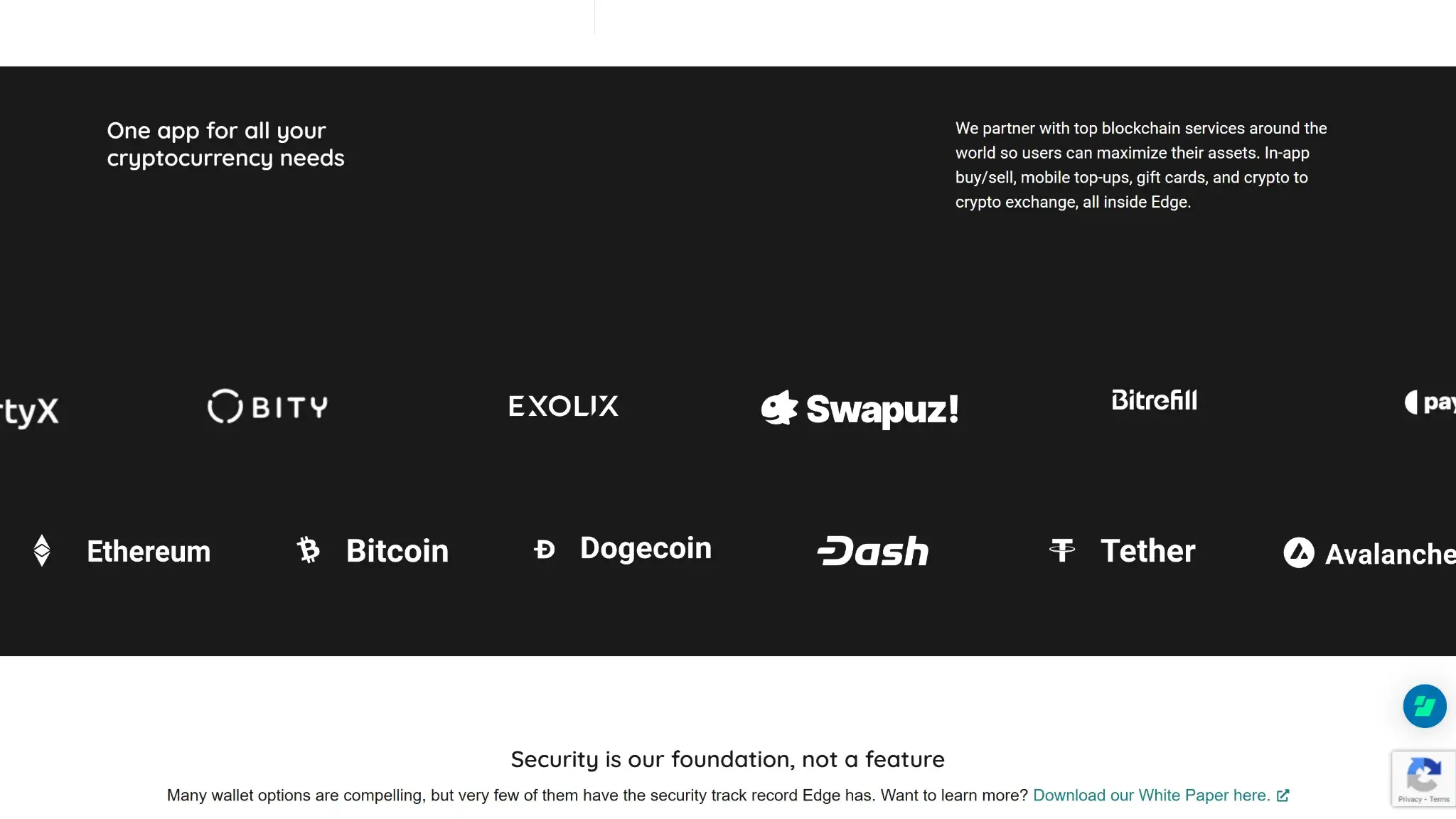
Edge's App Store listing counts 120+ supported assets across Bitcoin and Ethereum plus the major layer-1 and layer-2 ecosystems. Token support covers ERC-20 and BEP-20 plus TRC-20 and SPL. Coverage is solid for a mobile wallet, though what you can trade for each asset depends on which partner services it. Availability and fees therefore vary chain by chain. Multi-chain generalists get what they need here. Users of one specific niche chain should confirm support on Edge's asset list before moving funds.
Usability and Recovery
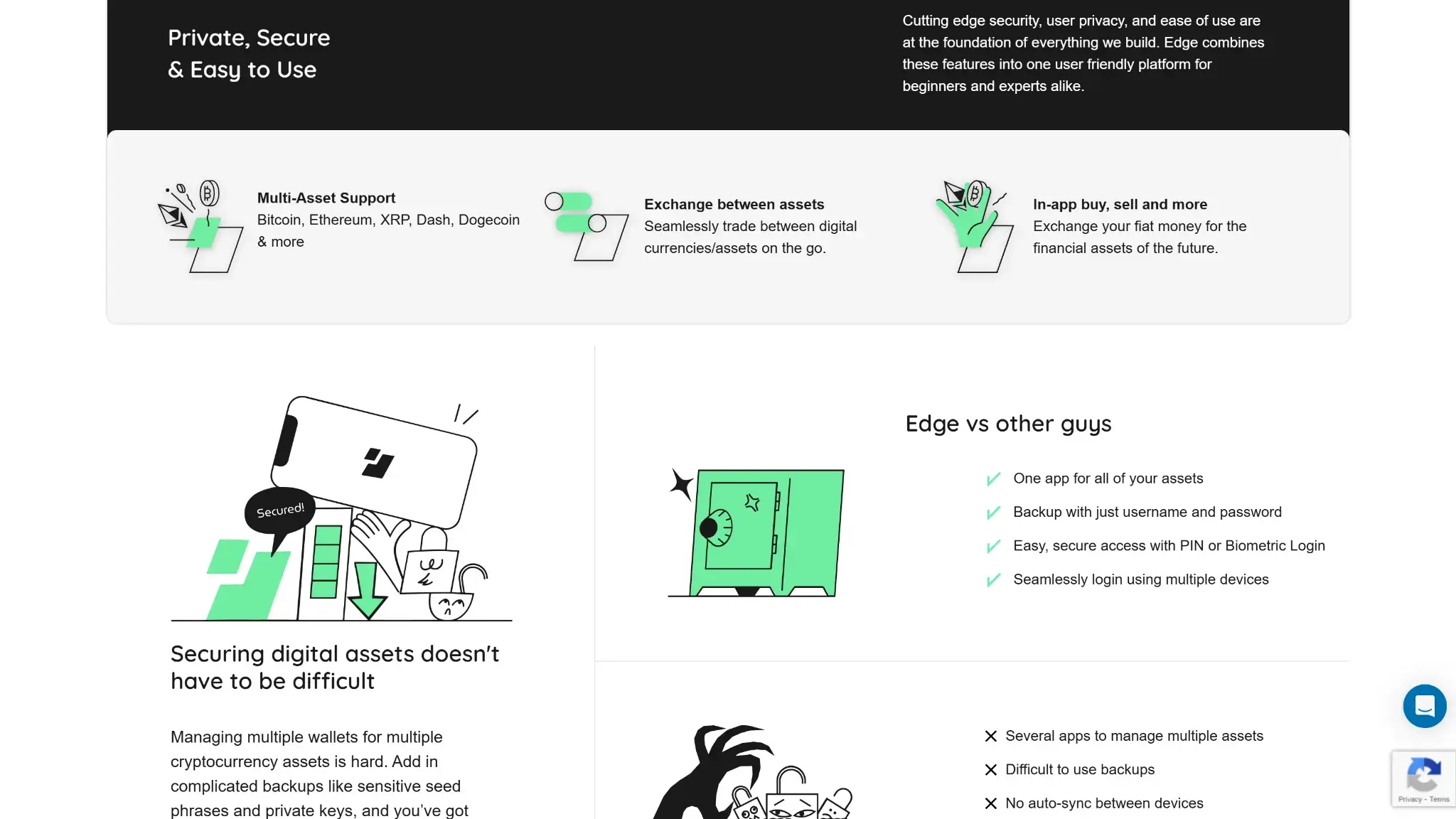
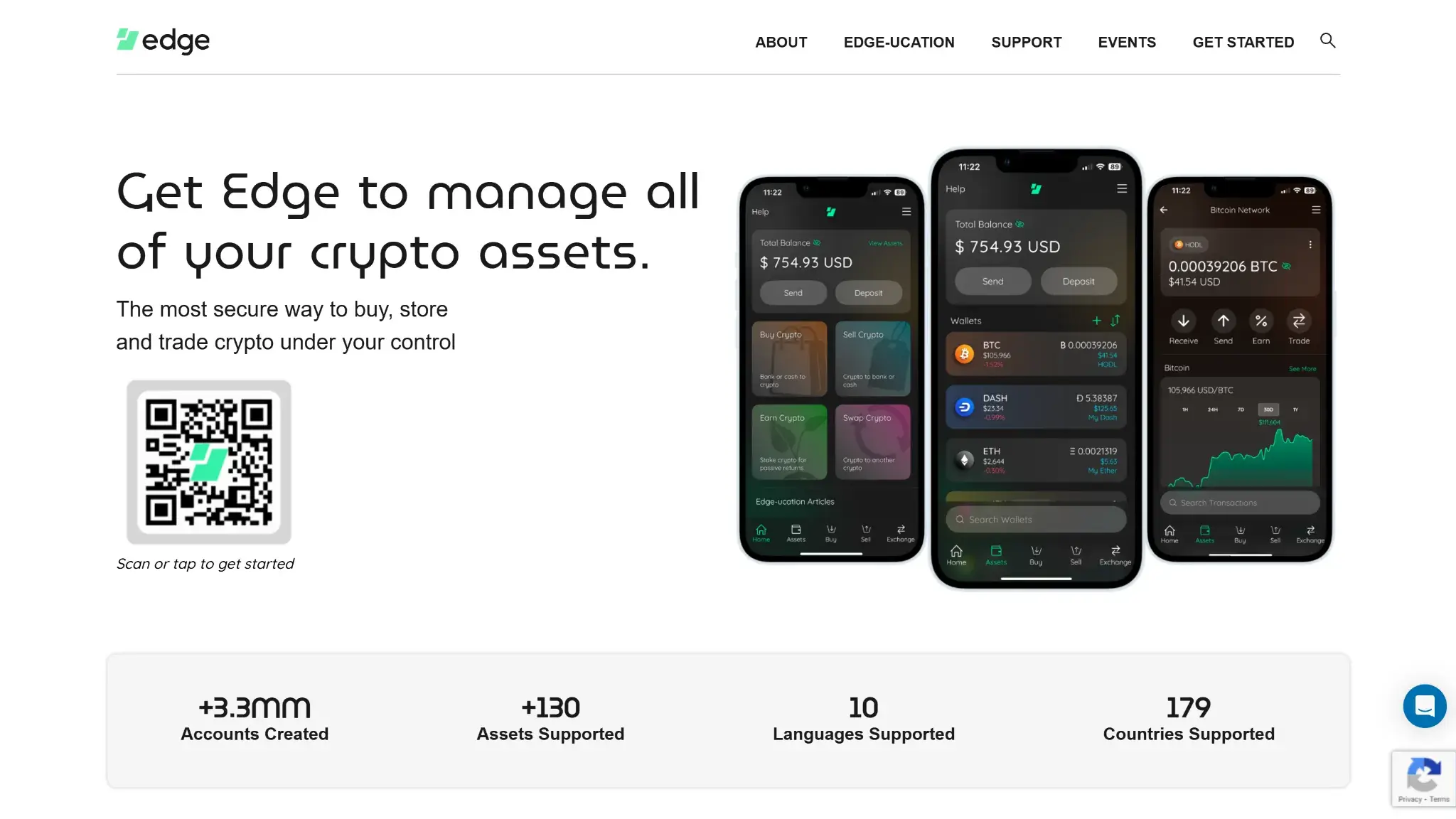
Onboarding is the easiest in self-custody, since you only pick a username and set a password. An optional PIN and biometric sign-in handle daily access, and the account model gives you multiple wallets per asset and sync across devices without ceremony. WalletConnect links the wallet to dApps even without a built-in extension.
Recovery follows the account model too, because your username and password restore the encrypted wallet backup on a new device. Existing-device approval or a saved 2FA backup code gives immediate access. Without either, new-device access requires at least seven days of waiting, with longer waits for dormant accounts. Preconfigured password recovery uses a saved link and answers to two questions. Because the password now does the job a seed phrase would, it must be long and unique and stored somewhere safe. Treat it casually and the convenience inverts into the wallet's biggest risk. Mobile-only remains the main usability ceiling, with no desktop app or browser extension for people who work on a computer.
Features
Swaps run through multiple integrated providers with DEX routing, so the app shops quotes instead of locking you to one provider. Fiat on-ramps and off-ramps come from third-party partners including Paybis and MoonPay, with fees ranging from roughly 1.5% for ACH transfers up to about 8% for ATM-style purchases. Basic wallet use requires no KYC, and identity checks apply only when a buy or cash-out partner requires them. Earn features exist for some assets via third-party partners, though staking is not a headline capability here.
Cost
The app is free and has no subscription tier, so your costs come from network fees on transactions and from the spreads and fees set by whichever provider fills a swap quote. Fiat purchases add partner fees that run from about 1.5% for ACH to 8% at ATMs. As with any partner-driven wallet, the full cost of a trade depends on the routed provider, so check the quoted total before confirming.
Comparison with Other Wallets
-

Kraken Wallet
Kraken Wallet is the self-custody counterpart to a major exchange, a free mobile app that needs no account, no identity check, and no trust in anyone else holding your keys. Few wallets...
-
Trust Wallet
Trust Wallet combines multichain accounts with optional cloud backup and a separate SWIFT passkey wallet. Check account-specific recovery, swap costs and access after its announced September network changes.
-

MetaMask
MetaMask combines EVM dApp access with native Bitcoin, Solana and TRON accounts. It offers hardware connections and optional linked-login recovery, with a 0.875% wallet swap fee.
Edge has three gaps, starting with the lack of a third-party audit behind its public code. Its asset coverage also trails the widest multi-chain wallets, and the product ends at your phone with no desktop app or extension. From the wallets we rank, each pick below closes one of them.
- Kraken Wallet suits users who want reproducible-build instructions and a public third-party audit.
- Trust Wallet suits users who want broader chain and token coverage.
- MetaMask suits desktop DeFi users through its browser extension.
None of the three can replicate Edge's core trick of full self-custody with nothing to write down, synced across devices under one password. Choose an alternative if audited code or a longer asset list matters more to you than that convenience, or if you need desktop access.
Crypto Wallets Pillar Scores
- Custody and key security 30% weight Who can authorize spending, protection of keys and signing, and independent access to every reviewed account type.8.5 / 10
- Security validation and track record 25% weight Independent security assessments, their coverage and findings, plus updates and the handling of known incidents.6.5 / 10
- Transaction safety and signing 20% weight Transaction details, signing warnings, scam checks, permission controls and the handling of unreadable requests.7.0 / 10
- Backup and recovery 10% weight Repeatable backup checks, complete restoration, recovery dependencies, costs and resilience after backup loss.8.0 / 10
- Usability, privacy and costs 10% weight Setup and everyday tasks, accessibility, support guides, data-sharing choices and device, service and transaction costs.8.0 / 10
- Assets, networks and compatibility 5% weight Asset and network support, devices, companion apps and connections needed for the uses covered in the review.10.0 / 10
Final Verdict
Edge makes its case on custody and transparency, since it is non-custodial and its full codebase is public and auditable. A named US team has built it since 2014. The password login lowers the most common self-custody failure, which is a lost seed, and multi-device sync makes it practical. The limits are just as clear. Edge is a mobile-only software wallet with no secure element, and its recovery convenience comes with a password attack surface and data that passes through Edge's servers, the kind of exposure the 2023 logging bug made concrete. Edge patched and disclosed that incident quickly. For a phone-first self-custody wallet where you choose the account model with open eyes, Edge is one of the most transparent options available.
Disclaimer: CryptoSlate may receive a commission when you click links on our site and make a purchase or complete an action with a third party. This does not influence our editorial independence, reviews, or ratings, and we always aim to provide accurate, transparent information to our readers.