

Direct asset conversions and two staking modes, with substantial crypto spreads and funding-related withdrawal restrictions.
Uphold vs Coinbase: Fees, Staking and US Access Compared
Coinbase wins for US crypto trading with an order book, lower published Advanced charges and access in New York. Uphold wins on Boosted staking commission and standard wire fees for transfers of at least $2,000.

Coinbase fits U.S. users who fund by ACH and use Advanced, but Simple Buy costs and regional product rules require attention.
Affiliate Disclosure
Some links in this comparison are affiliate links. CryptoSlate may earn a commission if you sign up through these links. Our ratings remain editorially independent.
Winners by Category
Coinbase takes the overall verdict for US crypto trading. Uphold earns narrower wins for Boosted staking commission and wire fees. Standard ACH fees tie.
Uphold Coinbase
Coinbase wins for the core US trading account. Uphold remains useful for the specific staking and banking advantages below.
Quote-based conversions, Boosted staking and lower standard wire fees
Advanced order book, lower published trading charges and broader US access
Coinbase has the lower published charge. Its commission excludes market spread and slippage, so this is not an all-in execution-cost guarantee.
Typical spread of 2.05%–2.20%
US Advanced entry commission of 0.50% maker or 0.90% taker
Coinbase wins for traders who want to inspect order-book prices and place orders against that book.
Quote-based retail trading, without a conventional order book
Advanced order book alongside Simple Buy
Uphold wins on the stated commission for these shared assets. Boosted staking can require a lengthy unstaking period.
20%–25% of rewards, depending on asset
35% standard on ETH, SOL and ADA
Uphold wins without a paid plan. Coinbase One Preferred and Premium waive Coinbase wire fees, and bank charges can remain on both.
No Uphold fee for deposits or withdrawals
Standard fees of $10 incoming and $25 outgoing
Tie — standard US bank funding and withdrawals have no platform fee.
No platform charge
No platform charge
Coinbase wins for New York residents. Other product restrictions still apply.
Unavailable
Centralized spot account available, with asset restrictions
Screenshots
Uphold screenshots

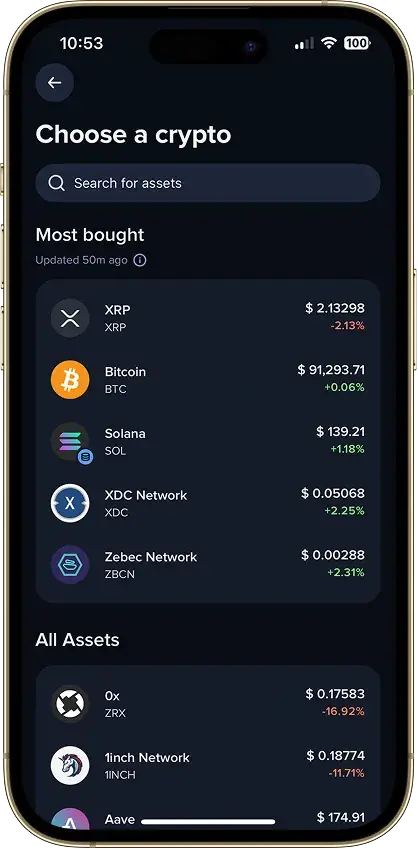
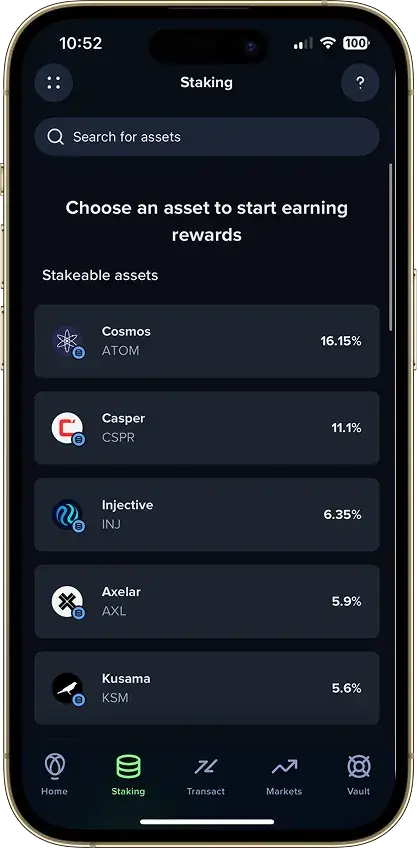
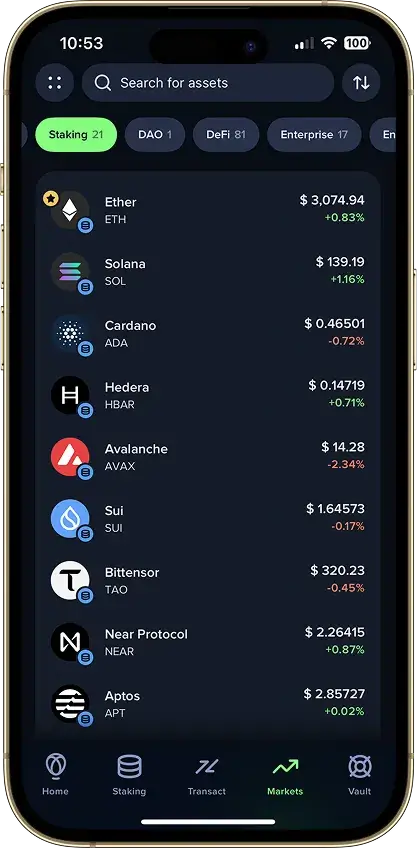
Screenshot 1 of 4
Coinbase screenshots

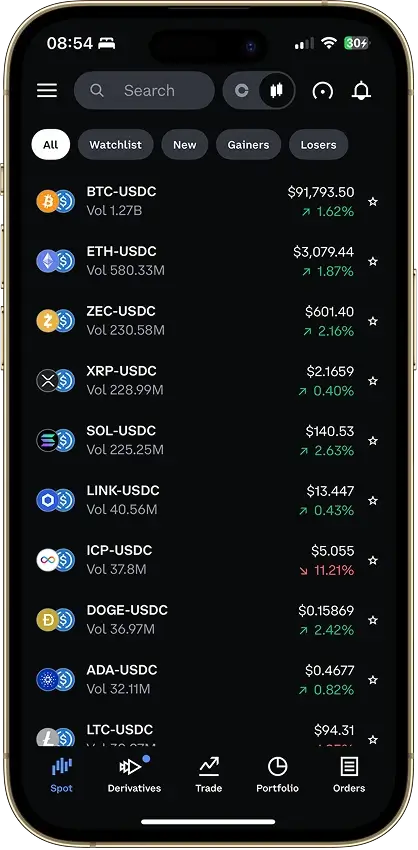
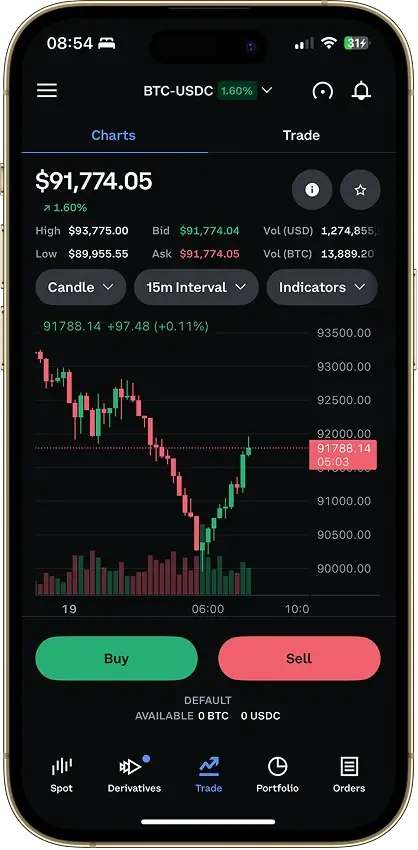
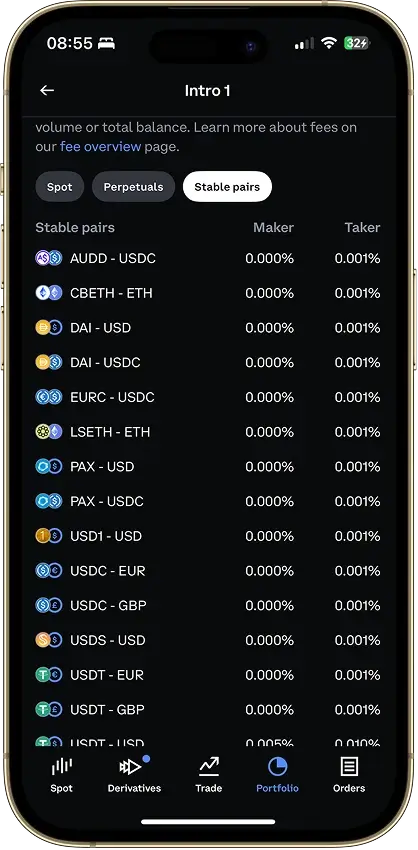
Screenshot 1 of 4
Uphold vs Coinbase Overview
This comparison covers US Uphold custodial retail accounts and US Coinbase retail accounts, including Advanced. The choice is between a conversion-first service and an account with an order-book trading option.
Trading Fees
Coinbase Advanced has lower published entry charges than Uphold’s typical BTC and ETH spread. Compare the final executable quotes before treating the difference as a saving.
Uphold Coinbase
BTC or ETH Trade of $5,000
Coinbase wins on the published charge. Its market spread and slippage are additional, so the figures are not matched all-in quotes.
Typical spread equivalent: $102.50–$110
Entry Advanced commission: $25 maker or $45 taker
Coinbase wins trading Fees
Coinbase Advanced wins on published trading charges. Simple Buy needs a separate quote comparison.
Coinbase’s US entry fees changed on September 16, 2026. Lower EU and UK rates do not apply to this US comparison, and Coinbase Simple Buy is a separate pricing route. A limit order that immediately matches an existing order can incur taker commission.
Uphold’s typical altcoin spread is 2.85%–3.80%, above its 2.05%–2.20% BTC and ETH range. Converting an altcoin into a stablecoin uses the higher asset-class rate, despite the stablecoin destination. Quotes can widen with market conditions.
An eligible Uphold trade below $500 also incurs $0.99, with exceptions for stablecoins and specified payment or order types. For an eligible $100 BTC purchase, the stated spread plus that fee is approximately $3.04–$3.19. Coinbase’s estimated small Simple Buy cost is roughly $2.50–$3.50 per $100. Those overlapping estimates do not support a universal small-purchase winner.
Coinbase One changes the calculation for subscribers. Basic costs $4.99 monthly and has no Advanced rebate. Preferred costs $29.99 monthly and rebates 25% of eligible Advanced spot fees, capped at 100 USDC a month. Premium costs $299.99 monthly and removes that rebate cap. Include the subscription price when calculating the benefit.
The subscription’s qualifying Simple Buy fee waiver does not remove every spread or waive Advanced commissions. Use the order preview to compare the crypto received for the same dollar spend. A quoted spread and an order-book commission measure different parts of trading cost.
Supported Crypto Assets
Both accounts support major cryptocurrencies, but the useful question is whether the required asset can be bought and withdrawn in your state.
Coinbase’s dated US retail inventory is roughly 270–315 assets and about 460 pairs, depending on the interface and restrictions. Uphold’s published totals span different products, so they do not supply a reliable like-for-like US spot count. Check the required token in both US accounts instead of relying on a headline total.
For a particular token, check the trade screen and its withdrawal network before funding. A price page is not proof that a coin can be bought, and support in a separate wallet does not establish support in the exchange account. Uphold’s metals and foreign-currency exposures are also different asset classes, not additional cryptocurrencies.
Foreign-currency exposure on Uphold can represent the currency’s price without being a foreign-currency cash balance that can be deposited or withdrawn. That distinction matters if the aim is to receive money in a foreign bank account.
Staking
Uphold Boosted takes a smaller reward commission on shared assets. Coinbase takes less than Uphold Flexible, so the choice of staking mode changes the winner.
Uphold Coinbase
ETH, SOL and ADA: Boosted Commission
Uphold Boosted wins on commission percentage, not guaranteed net yield. Unstaking waits apply.
20%–25%, depending on asset
35% standard
ETH, SOL and ADA: Flexible Commission
Coinbase wins on commission versus Uphold Flexible. Access and unstaking terms are not identical.
50% through Uphold Flexible
35% standard
Uphold Boosted can involve protocol commitment and unstaking periods typically reaching 30 days, sometimes longer. Flexible normally preserves trading access, but exceptional demand can delay access. Flexible stakes a portion of eligible holdings, and the customer cannot choose which assets are included.
Coinbase supports nine named staking assets: ADA, ATOM, AVAX, DOT, ETH, MATIC (POL), SOL, SUI and XTZ. Its standard 35% deduction covers eight of those, with SUI requiring a separate commission check. Uphold’s Boosted menu includes the ETH, SOL and ADA assets used in the table.
Eligible Coinbase One plans reduce commission on six assets: ADA, ATOM, DOT, ETH, SOL and XTZ. Basic, Preferred and Premium bring the deduction to 31.75%, 28.5% and 25.25% respectively. Even Premium’s percentage remains above Uphold Boosted’s published 20%–25% range for the shared examples, before the subscription cost is considered.
Commission alone does not establish the higher return. Compare the same asset’s displayed net rate, when rewards begin and when principal can be released. The staking guide covers those distinctions. State eligibility can settle the choice first, as the US access section below shows.
Order Types and Trading Controls
Coinbase wins for visible order-book trading. Uphold still provides limit and automated exit instructions within its quote-based service.
Uphold Coinbase
Visible Retail Order Book
Coinbase wins for inspecting order-book prices and trading against displayed liquidity.
No conventional retail order book
Available through Advanced
Limit Orders
Tie on providing a limit instruction. The execution models differ and neither guarantees a fill.
Supported within the conversion service
Supported on Advanced
Coinbase wins order Types and Trading Controls
Coinbase wins for order-book trading. Both provide limit instructions.
Uphold’s limit orders, take-profit and trailing-stop instructions can help manage conversions without watching the app continuously. Coinbase Advanced provides market, limit and stop-limit orders on the retail balance. A trigger price and a limit price serve different purposes, and neither promises that an order will complete during a fast move.
Coinbase is the better fit when a visible book is part of the trading workflow. That does not prove its next fill will beat every Uphold quote. Compare the executable price for the same asset and order size, not just the chart’s midpoint.
Uphold’s ordinary retail account does not offer standard derivatives trading. Coinbase’s US futures and perpetual-style products use separate derivatives entities and eligibility checks. Evaluate them separately through the derivatives comparison guide. Approval for a spot account does not automatically grant derivatives access.
Deposits and Withdrawals
Standard ACH fees tie. Uphold has lower standard wire fees for transfers of at least $2,000, while Coinbase avoids Uphold’s additional $0.99 platform charge on ETH withdrawals.
Uphold Coinbase
Standard ACH Funding and Cash-Out
Tie on the platform charge. Settlement and account holds can delay withdrawals.
No Uphold fee
No Coinbase fee
Incoming Wire of at Least $2,000
Uphold wins without a paid plan. Coinbase One Preferred and Premium waive the Coinbase fee.
No Uphold fee
Standard $10 Coinbase fee
Outgoing Wire of at Least $2,000
Uphold wins without a paid plan. Subscription waivers and separate bank charges can change the total.
No Uphold fee
Standard $25 Coinbase fee
ETH Onchain Platform Surcharge
Coinbase wins on the added platform charge, not a guaranteed lower total network quote.
Network charge plus $0.99
Network charge, without that extra platform surcharge
Uphold’s current fee schedule lists the wire threshold separately for deposits and withdrawals. Transfers below $2,000 carry a $10 Uphold fee. Coinbase’s standard incoming charge is $10 and outgoing charge is $25. A sending, receiving or intermediary bank may charge independently.
Uphold’s 65-day restriction can apply when a bank was not linked through Plaid or loses that connection. It restricts transfers to other destinations, not every withdrawal: settled funds can still return to the originating bank. That is different from the normal ACH settlement period and is important if the plan is to buy crypto and immediately send it elsewhere.
Uphold adds $0.99 to most crypto withdrawals on top of the network charge, with BTC, XRP and HBAR exempt. Coinbase’s BTC onchain and ETH examples use network charges, while USDT adds 0.01%, capped at 20 USDT. Its Bitcoin Lightning route has a separate 0.2% processing fee. Match the coin and network before comparing totals.
For speed, Uphold’s eligible instant cash-out costs 1.75%, with a $1 minimum. Coinbase offers eligible RTP withdrawals up to $100,000 per transaction. A transaction ceiling is not a daily allowance, and instant availability does not override an account hold. Check the available route before paying to accelerate a transfer.
US Availability and Verification
Coinbase serves New York, where Uphold is unavailable. Staking availability differs by state and by Uphold’s Flexible or Boosted mode.
Uphold Coinbase
New York Spot Account
Coinbase wins for New York residents who need a custodial spot account.
Unavailable
Available, subject to asset restrictions
New Staking in California
Uphold wins for eligible California residents seeking Boosted staking. The win does not extend to Flexible.
Boosted available where otherwise eligible. Flexible excluded
New staking principal paused
Staking in Washington
Coinbase wins for eligible Washington staking users, subject to the asset’s rules.
Flexible and Boosted excluded
Eligible staking available
Both require identity verification for normal use and can request further funding or transfer checks. Coinbase’s basic spot account reaches all 50 states, while individual coins and products can remain restricted. Uphold excludes New York accounts entirely.
Uphold Flexible excludes California, Louisiana and Washington. Boosted excludes Louisiana and Washington, leaving an important distinction for California residents. Its staking terms are more specific than a broad marketing statement about US availability.
Coinbase pauses new staking principal in California, Maryland, New Jersey and Wisconsin. SUI staking additionally excludes New York. Use the US exchange directory if a required product is unavailable where you live, and confirm eligibility for the specific product before funding.
Security and Custody
Both custodial accounts require trust in the company holding the assets. Coinbase publishes audited corporate financials, while Uphold provides reserve information behind a login.
Uphold Coinbase
Authenticator-Based Two-Factor Authentication
Tie on this login safeguard. Recovery practices and other account controls still matter.
Supported
Supported
Uphold describes its ordinary holdings as fully reserved and not lent unless a customer enters a separate staking or lending arrangement. Its reserve tiers require login, and no customer Merkle-inclusion check is provided. Coinbase says customer crypto is held 1:1 and not used or lent without permission. It also lacks a personal Merkle-inclusion check.
Neither disclosure guarantees recovery after a platform failure. Coinbase reports partial crime insurance for specified custody events, not universal protection against compromised customer credentials. Eligible USD at partner banks can have conditional pass-through FDIC protection, but cryptocurrency itself is not FDIC-insured.
Uphold’s historical CredEarn promotion led to an April 2026 New York Attorney General settlement involving $5 million plus Cred bankruptcy proceeds. That was a third-party lending dispute, not a hack of Uphold’s exchange custody. Coinbase’s 2025 support-contractor incident exposed information used in scams, while Coinbase said centralized custody was not breached.
Coinbase also reported trading and transfer disruptions in May and July 2026. Public reporting does not prevent those service interruptions or security incidents. The custody and exchange safety guide separates financial disclosure, login protection and custody risk.
Debit Cards
Both have a debit-card option without an annual card fee. Rewards, state access and the cost of spending crypto require a separate card comparison.
Uphold Coinbase
Annual Fee on the Entry Debit Card
Tie on the annual card fee. This does not compare rewards or total spending costs.
Essential: $0
Coinbase Visa debit: $0
Uphold’s Essential and Elite cards use different reward and fee terms. Elite carries a $99.99 annual fee. Advertised introductory rewards last for a limited period after activation and have caps, so they should not be treated as permanent returns. Uphold’s US card excludes Louisiana, New York and US territories.
The Coinbase debit card is available outside Hawaii and can spend USD or converted supported crypto. Its separate One Amex product is a credit card with membership and approval requirements, not a substitute for the no-annual-fee debit comparison.
Wallets and Self-Custody
Uphold Vault and Base are separate from the custodial trading balances compared above. Moving assets into either changes the recovery responsibilities.
Uphold Vault is a paid mobile subscription for selected assets, including BTC, HBAR and XRP. Its two-of-three-key design gives the user two keys and Uphold the third. Uphold can assist after one key is lost, but losing both user keys without a backup can make recovery impossible.
Base is Coinbase’s separate self-custody app, with Bitcoin, Solana and EVM support. The classic Coinbase Wallet was closed on August 15, 2026. Its networks should not be added to Coinbase’s centralized exchange listing count.
The custodial wallet explainer describes the change in responsibility. Choose a wallet around supported assets, recovery design and cost. The exchange verdict does not assess these separate wallets.
Apps, APIs and Support
Both offer web and mobile access. Coinbase is the documented retail API option for users who need Advanced order placement and WebSocket feeds.
Uphold Coinbase
Web, iOS and Android Access
Tie on access formats. This is not a measurement of app reliability or ease of use.
Available
Available
Coinbase Advanced provides retail REST trading endpoints and public and private WebSocket feeds. Its sandbox returns static mocked responses, so it cannot demonstrate live execution quality. Uphold’s developer material focuses on enterprise services and approved integrations. A retail customer would need to confirm access to the intended integration.
For customer help, Coinbase advertises 24/7 phone and live chat for all customers. One Preferred changes priority and Premium adds concierge service. Uphold directs customers through its help center and authenticated support requests. Those documented channels make Coinbase worth considering when live contact matters, but they do not measure actual response or resolution time.
Both accounts can provide transaction records for reconciliation. Uphold offers transaction CSV exports and tax forms, while Coinbase provides account reports. Keep bank transfers and movements to a separate wallet identifiable so they are not mistaken for purchases or disposals when reviewing the records.
Final Verdict
Coinbase wins for US crypto trading through its Advanced order book, lower published charges and New York access. Uphold is the alternative for Boosted staking commission and qualifying wire fees.
Affiliate Disclosure
Some links in this comparison are affiliate links. CryptoSlate may earn a commission if you sign up through these links. Our ratings remain editorially independent.
Choose Coinbase for regular crypto trading, a visible order book or a retail API workflow. Use Advanced when its order controls suit the trade, because Simple Buy has different pricing. Public financial reporting adds useful scrutiny but does not eliminate custody risk.
Choose Uphold for eligible Boosted staking when the commission advantage justifies the unstaking wait, or for wires of at least $2,000 without a paid-plan fee waiver. Its conversion-first interface may suit occasional transactions, but compare the quoted crypto received before accepting the spread.
Uphold vs Coinbase FAQs
Is Uphold or Coinbase better for US crypto trading?
Coinbase wins this comparison for its Advanced order book, lower published trading charges and broader state access. Uphold has specific advantages in Boosted staking commission and standard wire fees for transfers of at least $2,000. The best account can change when a required product is unavailable in your state.
Which has lower fees, Uphold or Coinbase?
Coinbase Advanced publishes US entry commissions of 0.50% maker and 0.90% taker. Uphold’s typical BTC and ETH spread is 2.05%–2.20%. Coinbase’s commission excludes market spread and slippage, so compare final quotes for an all-in result. Coinbase Simple Buy uses different pricing.
Is Uphold staking better than Coinbase staking?
Uphold Boosted takes 20%–25% of rewards, below Coinbase’s standard 35% on ETH, SOL and ADA, but can require lengthy unstaking waits. Uphold Flexible takes 50%, above Coinbase’s standard deduction. Commission percentages do not guarantee higher net rewards, and state restrictions differ.
Can New York residents use Uphold and Coinbase?
Coinbase offers a centralized spot account in New York with asset restrictions. Uphold does not accept New York accounts. Staking, cards and derivatives have separate eligibility rules.
Are bank transfers free on both platforms?
Standard ACH deposits and withdrawals have no platform fee on either. Uphold wires of at least $2,000 also carry no Uphold fee. Coinbase’s standard wire fees are $10 incoming and $25 outgoing, waived for One Preferred and Premium. Banks may charge separately.
Does Uphold hold withdrawals for 65 days?
A 65-day restriction can apply to funds from banks not linked through Plaid or after the connection is lost. It affects transfers to other destinations. Settled funds can still return to the originating bank, so it is not a universal 65-day freeze on every withdrawal.
Is crypto on either platform FDIC-insured?
No. Crypto holdings are not FDIC-insured. Eligible USD held through partner banks may qualify for conditional pass-through protection, but that is different from protection for cryptocurrency. Corporate audits and reserve claims also do not guarantee reimbursement for every loss.
Can you move crypto from Uphold to Coinbase?
Yes, if both accounts support the same asset and transfer network and the funds are withdrawable. Check the destination address and any required memo. Uphold’s network charge and applicable platform surcharge appear before sending. Account holds or compliance checks can delay a transfer.

Coinbase earns the trading recommendation because Advanced shares the retail balance and lets customers place orders against a visible order book. The Coinbase exchange review covers that US account, not the separate institutional Exchange fee schedule.
Uphold keeps direct asset conversions at the center of its service. A customer reviews a conversion quote before confirming the trade. The Uphold account review identifies useful bank funding and staking choices, alongside relatively high typical crypto spreads.
Uphold can be the more useful account for an eligible Boosted staking customer or someone making qualifying wires without a subscription. Those benefits do not make its trading quote cheaper. Cards, assisted self-custody and Coinbase’s separately approved derivatives accounts have their own terms and do not decide the core spot-account verdict.