



Bitget Overview
Additional details
Bitget Screenshots
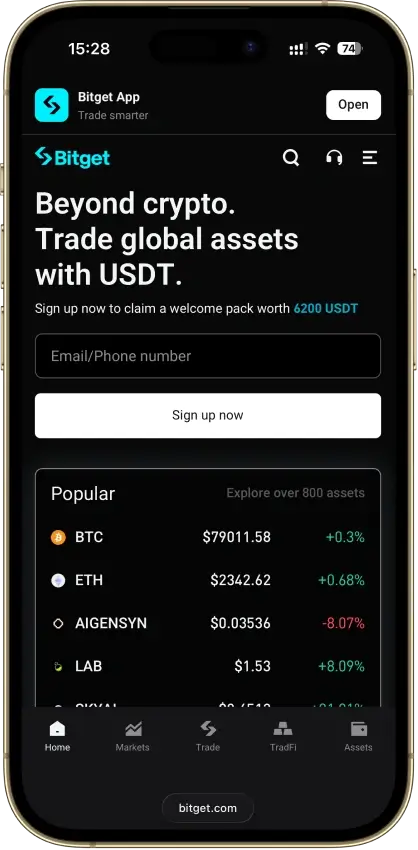
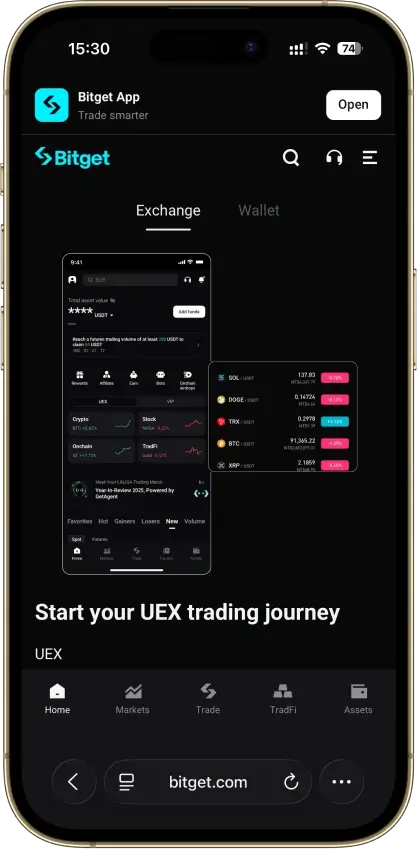
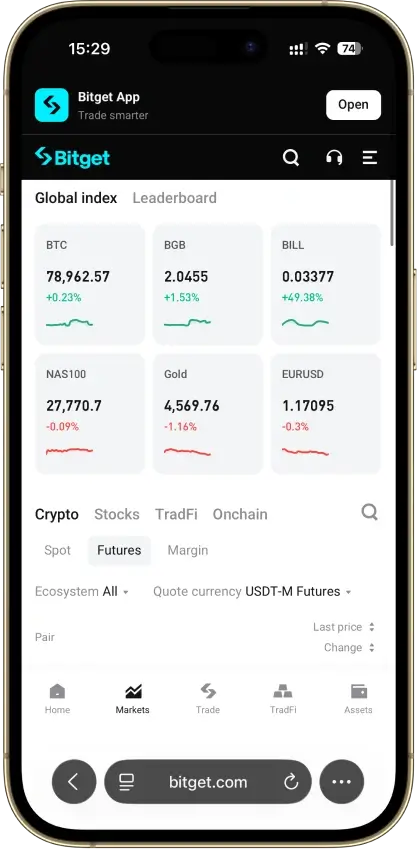
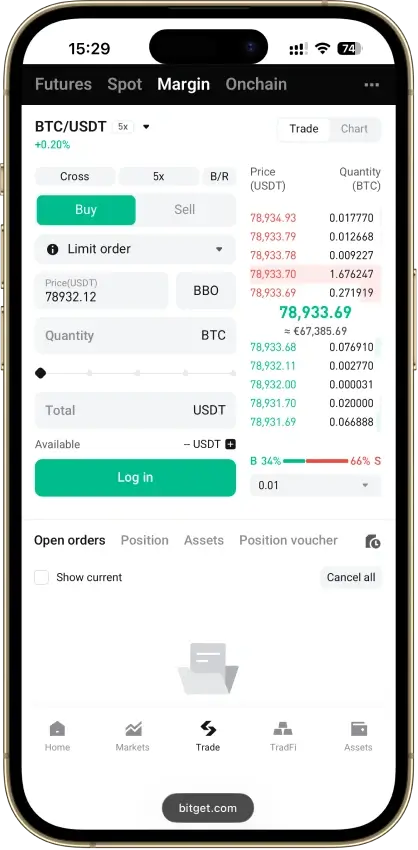
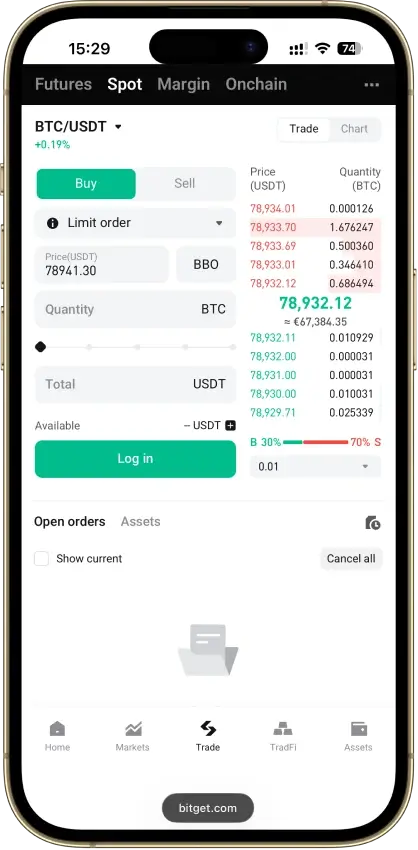
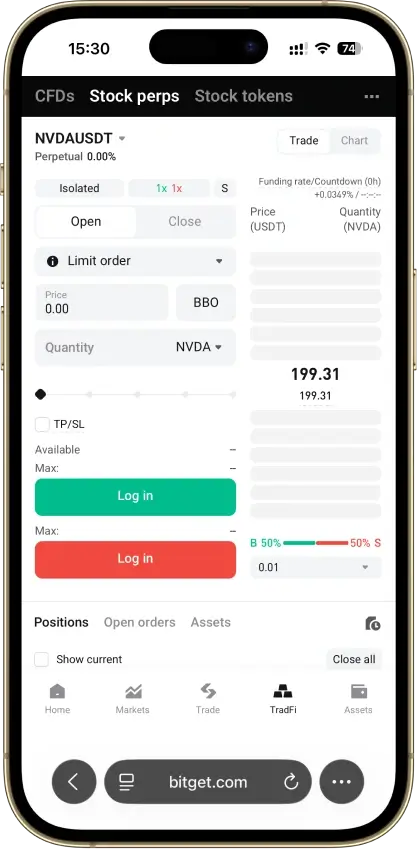
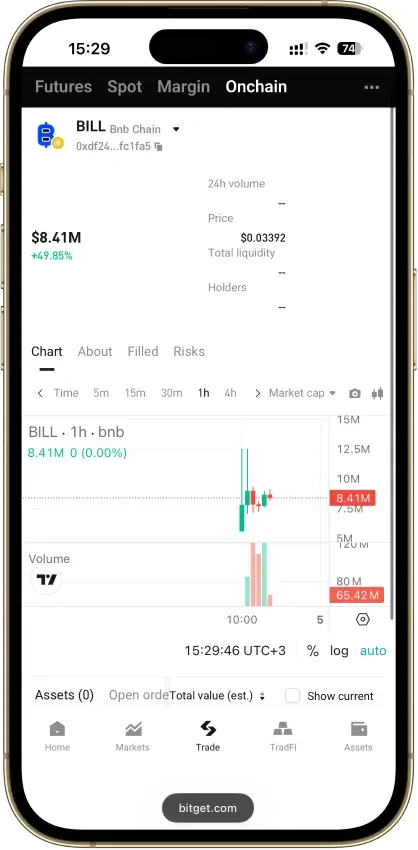
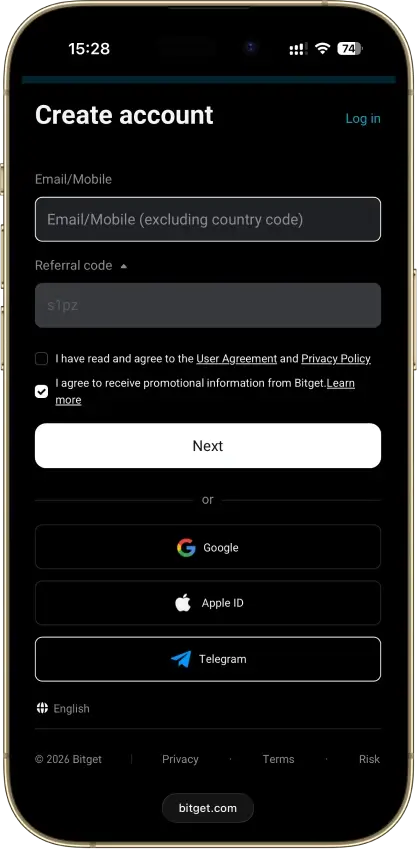
Screenshot 1 of 8
Bitget Pros and Cons
Pros
- Spot and futures copy trading
- 0.10% standard spot fees
- Monthly Merkle inclusion checks
- 800+ published global crypto count
Cons
- No U.S. or Canadian exchange access
- Japan account wind-down in 2026
- Bank eligibility conflicts with terms
- Market incidents in 2024 and 2025
Quick Decision: Is Bitget Worth It?
Spot and futures copy trading distinguish Bitget for eligible users, with standard fees of 0.10% maker and taker on spot and 0.02% / 0.06% on futures. Bots and order-book spot extend that workflow, while the monthly reserve process lets a user check inclusion in the reported liability set.
Use Bitget for a copy-first global trading workflow. Users in the U.S., Canada, Singapore, Austria, France, or Germany need another exchange, and Japanese accounts are winding down. Users who need uniform bank terms across countries should choose another exchange.
Who Bitget Is Best For And Who Should Skip It
Bitget fits by jurisdiction first and trading style second. A derivatives trader in an eligible jurisdiction receives the broadest practical use of the exchange, while a user in a prohibited country cannot open the core account regardless of product interest.
The Unified Trading Account belongs to Bitget's custodial exchange, while Wallet and TradFi use separate custody, inventory, and risk boundaries. Spot and futures copy trading remain exchange features without adding Wallet tokens or TradFi instruments to the exchange's asset count.
Bank-page conflicts create more practical friction than the global funding menu suggests. A user needs the current terms and the logged-in account to confirm access.
Features And Services
Bitget combines a custodial crypto exchange with copy trading and bots. Earn and an API extend the exchange, while Wallet and TradFi services stay separate. Bitget recommends the Unified Trading Account for new trading or API setups. Classic Account remains in maintenance mode and receives essential updates only.
The custodial exchange includes spot and futures copy trading. Bitget Wallet and Wallet Card use different product agreements, while Wallet users assume their own key recovery and network selection.
Assets, Markets, Liquidity And Copy Trading
Bitget currently publishes an 800+ digital-currency claim for the global custodial exchange. It does not publish a same-date total for spot pairs or crypto derivatives contracts.
The 800+ figure measures listed access. Liquidity requires market-level evidence that the count does not provide. Bitget Wallet tokens stay outside the centralized crypto count. Tokenized stocks and stock futures sit in TradFi, and CFDs do too.
Liquidity, Order Types, And Trading Limits
Bitget supports spot, margin, and futures orders through its interfaces and APIs, but it publishes no matched depth, spread, slippage, fill, or latency sample. Users should inspect live depth for the intended pair and order size.
Instrument rules and account risk controls determine order size, so a user must confirm the live maximum before placing a large order. A large published asset list still does not establish the execution price.
Copy Trading
Copy trading separates Bitget from a standard spot exchange. Eligible users can mirror lead traders across spot and futures. CFD modules and gold or index copy modules sit in TradFi, which this review excludes.
Lead-trader performance can change after selection, and copied futures exposure transmits drawdowns along with gains. Allocations and stop controls matter more than the size of the trader pool. Bitget does not publish a stable pool count, and historical leader returns do not establish a follower-performance advantage. Users comparing the feature can review other crypto copy-trading exchanges without treating past returns as a forecast.
Staking, Rewards And Card
Bitget divides yield between Cash Plus and Simple Earn. VIP pools use separate terms, as do onchain and structured products. Bitget publishes no single current asset total across Earn products.
Cash Plus launched in July 2026 with a one-to-one receipt token and a 4% reference APR, but the rate is dynamic. Users need the live net rate and redemption terms for the exact product. A platform-wide yield claim would flatten different products.
Card
Since August 1, 2026, new Bitget Card applications route through Bitget Wallet Card. Existing exchange-side cards continue, while expired cards are not replaced through the former application route.
Bitget says Wallet Card coverage extends to eligible countries in Asia-Pacific, Europe, Latin America, and Africa. Availability remains country-specific. Users need to check funding and conversion costs, then rewards and tax treatment. Custody terms require a separate check. A comparison with other crypto-linked payment cards should keep the Wallet application boundary intact.
Wallet And Self-Custody Options
The exchange holds custodial balances, while Bitget Wallet is a separate self-custody application. Wallet users control their keys and recovery, and onchain token reach does not increase the exchange's 800+ listing claim.
Moving assets into Bitget Wallet transfers recovery and network-selection responsibility to the user. The custodial crypto wallet explainer helps frame that change without suggesting that either custody model removes transaction or loss risk.
API And Programmatic Trading
Bitget documents public and private REST endpoints alongside WebSocket feeds. Subaccount keys and scoped permissions are supported. IP allowlisting works alongside demo trading. Demo API access requires KYC, and new integrations should use the Unified Trading Account.
Automated workflows use documented REST and WebSocket interfaces, scoped keys, IP allowlisting, and KYC-gated demo trading. Bitget publishes no matched latency, rate-limit, uptime, or execution results.
Fees And Pricing
Standard spot starts at 0.10% maker and taker, while standard futures starts at 0.02% maker and 0.06% taker. Other routes use different costs.
A $10,000 standard spot order costs $10 as either maker or taker before spread or slippage. A standard futures order of the same notional costs $2 as maker or $6 as taker before funding or liquidation. Execution effects also sit outside commission.
Hidden Costs To Watch On Bitget
The maker-taker schedule does not cover the final simple-buy quote or P2P counterparty spread. It also omits futures funding and liquidation. Bank-provider terms and dynamic crypto-withdrawal charges sit outside it.
- BGB price exposure can exceed fee savings
- Perpetual funding changes while a trade is open
- Liquidation losses sit outside commission
- P2P pricing depends on the counterparty
- Card and bank costs depend on the provider
- Wrong-network transfers can be unrecoverable
The lowest-cost practical path is an eligible low-cost bank or crypto deposit followed by order-book trading. Paying supported spot or spot-margin fees in BGB can cut the standard rate by 20%, but the holding should be sized against the savings.
VIP Tiers And Fee Discounts
Bitget separates the standard BGB fee-payment deduction from its VIP schedule. The current BGB guidance supports a 20% reduction on eligible spot and spot-margin charges. It does not establish a futures BGB-payment discount.
The 0.10% standard spot rate requires no BGB position, so the token is optional at entry. A trader should compare the token position's price risk with the dollar saving. The BGB asset profile provides market context for that exposure.
Deposits, Withdrawals, KYC And Availability
Bitget documents direct bank transfers in 15 currencies for eligible users, alongside cards and P2P. Third-party payments and crypto transfers add two more routes. The applicable country terms and logged-in account remain controlling.
Examples include BRL Pix at 0 BRL for deposits and 2.6 BRL for withdrawals. These are route-specific examples, not worldwide pricing. The bank help pages also list some currencies or locations that current prohibited-country terms exclude.
Bitget's regulatory page names registrations or approvals in Australia, El Salvador, Georgia, Argentina, Mexico, and Switzerland, plus a U.K. marketing arrangement. Its Austrian MiCAR application remained pending as of July 2, 2026. Each status applies to a specific entity or activity and does not establish exchange access in every named market.
What U.S. Users Need To Check Before Signing Up
Bitget excludes U.S. residents and the named U.S. territories from the core custodial exchange, without a reduced U.S. spot account to compare with the global derivatives product.
Bitget does not provide its core exchange to U.S. residents or named U.S. territories. A Wallet page or regional registration does not establish access to the custodial exchange.
Payment Rails, Networks, And Limits
Bank routes and cards have distinct eligibility and timing. P2P and crypto transfers do too. The cheapest route depends first on country and currency. Account status then determines availability, while current terms override a stale bank-help page.
Fiat Rails By Region
The current examples include zero-fee EUR and USD deposits, making an active direct-bank route useful. Resident eligibility and withdrawal pricing still require separate checks.
The documented bank menu names CAD and routes connected with France, Germany, and Austria, while current terms prohibit Canada and all three countries. Users should follow the governing terms and the account's displayed rail instead of assuming that a currency page establishes access.
Withdrawal Networks And Fees
An 800+ crypto claim does not establish every withdrawal network. Bitget displays the active network and fee for the selected asset. The minimum also appears before withdrawal.
Crypto deposits are generally free on Bitget's side, although the sender can pay a network or withdrawal charge. A compliance review can take longer than blockchain confirmation, and an unsupported-network transfer may not be recoverable.
Verification Levels And Withdrawal Limits
Bitget requires identity verification for core deposits and trading. Withdrawals require it too. Registration with an email address or phone number alone does not open core trading or withdrawals.
Published 24-hour crypto withdrawal caps start at 3 million USDT for VIP 0 and reach 20 million USDT for VIP 7 after KYC. Those limits do not promise approval or replace payment-method and compliance controls.
Is Bitget Safe? Security, Custody And Proof Of Reserves
Bitget provides user-verifiable monthly reserve reports and standard account controls. A dynamic company-funded protection fund adds a separate backstop. Those disclosures strengthen the custody case, but they do not turn a point-in-time company report into a complete solvency audit. Two compensated market-integrity events remain relevant to the trading record.
Controls
Bitget documents 2FA and passkeys. Withdrawal-address management works with anti-phishing codes. Device controls and API IP allowlisting add two more layers. Configured correctly, these tools make account takeover harder. They do not validate corporate liabilities or reverse an authorized blockchain transfer.
Custody And Insurance
The exchange is custodial and states that most assets remain in cold storage. The Protection Fund averaged $351 million in July 2026, with a $365 million high and $329 million low. Bitget says it will keep the fund above $300 million.
At a $351 million July average, the company-funded backstop moves in value with its holdings. It provides neither government insurance nor a fixed per-user reimbursement. Exchange custody also remains distinct from the self-custody Wallet.
Proof Of Reserves Or Audits
Bitget's 45th proof-of-reserves report was published on August 27, 2026 and stated a 122% aggregate reserve ratio for the tracked BTC/ETH and USDT/USDC snapshot. A user can check inclusion through the Merkle validator.
The company published a point-in-time report that covers four tracked assets. It does not establish every corporate liability and is not a full financial audit. Users comparing crypto proof-of-reserves models should separate account inclusion from complete solvency evidence.
Incidents And Remediation
In October 2024, BGB fell about 52% within minutes during a leveraged cascade. Bitget pledged full compensation and targeted completion within 72 hours. In April 2025, abnormal VOXELUSDT perpetual trading led Bitget to roll back irregular trades and compensate residual losses.
Both were market-integrity events rather than external custody breaches. Compensation shows that the backstop disbursed, while the events prevent a clean market-integrity record.
App, UX And Customer Support
Spot, futures, bots, and copy trading sit near Bitget's main navigation. A first-time user must distinguish the custodial Exchange and Unified Trading Account from Wallet, Card, and TradFi surfaces.
UI And Navigation
The cheaper order-book path is visible to an active trader, while simple-buy, Exchange, and UTA use their own terms. Wallet and Card follow separate agreements. TradFi does too. Users need to confirm the balance and instrument before moving funds, then check the custody model.
Mobile App
The iOS and Android apps support spot and futures. Copy trading and account management are available too. Security controls are available on mobile, while Wallet remains a separate self-custody surface and new Card applications route through it.
Reliability And Status Page
Bitget publishes service notices and status information, but no measured volatile-session uptime percentage is available.
The two historical market events were trading-integrity incidents rather than measures of ordinary service uptime. Bitget publishes no outage or review-delay rate.
Customer Support
Bitget provides live chat, tickets, and help articles but publishes no response-time or resolution SLA. Restriction reviews depend on the account and case.
- Help articles cover account and product steps
- Live chat handles routine questions
- Tickets carry complex cases
- Compliance review may need more documents
- Support cannot reverse confirmed onchain transfers
Bitget publishes no measured restriction-review or human-handoff time.
Reporting And Account Records
Bitget provides transaction history and exports that can support recordkeeping. Its documented record tools stop short of universal tax forms, complete cost-basis treatment, or a cross-jurisdiction tax-software workflow.
Final Verdict
Bitget earns a 6.7/10 score for its international custodial exchange through a 0.10% standard spot tier and named spot and futures copy trading. An 800+ published crypto count adds asset access. Monthly Merkle inclusion checks work alongside a protection fund with documented remediation history. Bitget Wallet, Wallet Card, and TradFi remain separate products. Bitget's jurisdiction-specific registrations and approvals are positive regulatory evidence, while its pending MiCAR application is neither enforcement nor proof that an account is available. Restrictions in the U.S., Canada, Singapore, Austria, France, and Germany plus Japan's account wind-down materially reduce access. Bitget also publishes no matched execution results or support SLA. The 2024 BGB and 2025 VOXEL events were compensated but remain part of the market-integrity record. Choose Bitget if you are eligible and want spot or futures copy trading with a low published entry schedule. Choose another platform when your country is restricted or uniform bank rails are required. A complete independent financial audit also requires another option.
USP 1: Spot and futures copy trading · USP 2: 800+ published global crypto count · USP 3: Monthly Merkle inclusion checks
Disclaimer: CryptoSlate may receive a commission when you click links on our site and make a purchase or complete an action with a third party. This does not influence our editorial independence, reviews, or ratings, and we always aim to provide accurate, transparent information to our readers.