

Binance.com combines 0.10% entry spot fees with deep liquidity and extensive trading tools, but access, fiat rails, and products vary by jurisdiction.
Binance vs Bitget Fees and Copy Trading
Binance costs less for token-paid spot orders and standard futures takers. Bitget publishes the higher crypto count, while both offer spot and futures copy trading.

Bitget scores 6.7/10 for its international custodial exchange. Use it for eligible copy trading and derivatives access. Compare alternatives when your country is restricted or uniform banking is required.
Affiliate Disclosure
Some links in this comparison are affiliate links. CryptoSlate may earn a commission if you sign up through these links. Our ratings remain editorially independent.
Binance vs Bitget Overview
Binance’s lower token-paid spot and standard futures taker rates earn the overall verdict. Standard spot trading costs the same on both.
Winners by Category
Binance wins on the specified trading costs and reserve-report coverage, while Bitget publishes the higher asset figure. Standard spot fees and access to spot and futures copying tie.
Binance Bitget
Binance wins for active traders using these fee schedules.
Lower token-paid spot and standard futures taker fees
Higher published crypto count
Tie — neither costs less at the regular spot tier.
0.10% maker and taker
0.10% maker and taker
Binance wins — $0.50 less commission per $10,000 fill when both discounts apply.
0.075% with eligible BNB payment
0.08% with eligible BGB payment
Binance wins — $1 less per $10,000 filled notional.
0.05%
0.06%
Bitget has the higher stated figure. Dates and counting methods differ, so this is not a matched live inventory.
486 spot base assets, August 29, 2026 capture
800+ published digital currencies
Tie on these two copy products. The selected trader and follower controls decide the fit.
Both available
Both available
Binance wins on covered-asset count, not safety or independently audited solvency.
53 assets in the disclosed snapshot
Four assets in the August 27 report
Binance takes the overall verdict on cost.
Trading Fees
Binance wins for token-paid spot orders and standard futures takers, while regular spot fees and futures maker fees tie. These examples use $10,000 of filled notional.
Binance Bitget
Standard Spot Maker or Taker
Tie — the same order-book commission without token payment.
0.10% — $10
0.10% — $10
Eligible Token-Paid Spot Order
Binance wins — $0.50 less for the same filled amount.
0.075% — $7.50
0.08% — $8
Standard Futures Maker
Tie — adding liquidity costs the same at these tiers.
0.02% — $2
0.02% — $2
Standard Futures Taker
Binance wins — $1 less each time $10,000 of notional fills.
0.05% — $5
0.06% — $6
Binance wins trading Fees
Choose Binance for the discounted spot rate or regular futures taker rate. For standard spot orders, fees alone do not separate the two.
Binance’s 25% spot reduction and Bitget’s 20% reduction require the relevant token-payment setting to be enabled and funded. Holding BNB or Bitget Token introduces price exposure that can exceed a small fee saving.
Binance also documents a 10% BNB payment reduction on eligible futures commission. Bitget’s BGB deduction covers supported spot and spot-margin fees, not a confirmed futures reduction. Higher account tiers can change these results.
Commission is charged on filled value, not just the margin deposited. Futures funding, borrowing, liquidation, spread and slippage are additional costs. A limit order can incur taker pricing if it fills immediately. Buy and Convert checkouts use their own executable quotes and payment charges.
Copy Trading
Both exchanges let users copy spot and futures strategies. Binance documents amount-based or ratio-based allocation with a total stop-loss setting, while Bitget integrates copying into its trading workflow.
Binance Bitget
Spot Copy Trading
Tie — both support copying spot strategies.
Available where permitted
Available where permitted
Futures Copy Trading
Tie — both support futures copying, with the risk of liquidation.
Available where permitted
Available where permitted
Tie
Tie on spot and futures copy products. Choose the strategy and follower controls that suit your account.
Start with the strategy you want to follow, then examine its allocation and exit settings. Binance’s documented fixed-amount and fixed-ratio choices let a follower choose how copied orders are sized. On Bitget, check those settings in the selected copy module before committing funds.
A platform-level winner would not identify the right lead trader. Review drawdowns, position sizes and profit-sharing terms instead of using only a leader’s recent return. The copy-trading exchange guide explains the follower risks, including different entry prices and copied losses.
Listed Cryptocurrencies
Bitget has the higher stated asset count. Binance’s dated API capture gives a more specific inventory, but uses a different counting method.
Binance Bitget
Asset Count Basis
Bitget leads the stated count. Different methods and dates prevent an exact listing-gap calculation.
486 spot base assets in the August 29, 2026 API capture
800+ published digital currencies
USDT and USDC
Tie on these stablecoins. The required trading pair and transfer network still need checking.
Both supported
Both supported
Bitget wins listed Cryptocurrencies
Bitget wins the stated-count comparison.
The Binance capture covered 1,358 spot symbols, including 794 margin-enabled symbols. These are pairs and market permissions, not additional unique cryptocurrencies. Bitget’s headline is a global asset figure without a matching pair-by-pair capture.
For an uncommon token, Bitget’s published range makes it a useful first check. If both list your coin, the quote currency and withdrawal route may matter more than either exchange’s total. Tokens available only through separate wallets are not exchange listings.
Margin, Futures and Trading Bots
Both supply margin, futures and bots. Binance additionally documents options and coin-margined formats in detail, giving traders with those requirements a specific product to inspect.
Binance Bitget
Margin Trading
Tie — both support borrowing to trade.
Available under account and market rules
Available under account and market rules
Futures Trading
Both offer futures. Contract collateral and settlement determine whether a particular market fits.
USD-M and COIN-M formats
Futures available
Trading Bots
Both offer automation. Select by strategy and controls, not the presence of a bot menu.
Grid, funding-rate arbitrage, rebalancing and DCA tools
Trading bots available
Tie
Tie on the core margin, futures and bot products. Inspect Binance first if you specifically require its documented options or coin-margined contracts.
Binance’s August 29 sample provides a reference for options and coin-margined strategies, with 30 COIN-M contracts across 20 base assets and 1,634 options contracts across six underlyings. Bitget’s corresponding options and coin-margined inventory is not disclosed.
A trader choosing a perpetual should compare collateral, funding and liquidation rules for that contract. The derivatives platform comparison explains these distinctions. Bot orders still incur the applicable fees and can lose money.
Bank Funding and Withdrawals
The stated bank-fee examples split: Binance charges less for USD SWIFT withdrawals, while Bitget charges less for SEPA deposits. Deposit and withdrawal fees otherwise tie on those routes.
Binance Bitget
Stated USD SWIFT Deposit Fee
Tie — both examples show a $0 exchange deposit charge.
$0
$0
Stated USD SWIFT Withdrawal Fee
Binance wins by $5 if both accounts offer these quoted USD SWIFT routes. Confirm the current account quote.
$25
$30
Stated SEPA Deposit Fee
Bitget wins by €1 in the stated examples, subject to account eligibility for the SEPA route.
€1
€0
Stated SEPA Withdrawal Fee
Tie — the stated withdrawal charge is €1 on both.
€1
€1
Binance’s quotes were captured on August 29, 2026 and did not establish account eligibility. Bitget’s bank help pages name 15 currencies, but some conflict with prohibited-residency terms, including Canada and parts of Europe. A listed currency does not establish resident eligibility.
KYC and Country Restrictions
Neither global exchange serves US or Canadian residents. For other countries, confirm the contracting entity and product permissions before comparing fees.
Both require identity verification for ordinary exchange use. Binance can request proof of address or enhanced checks, while Bitget can request source-of-funds and payment-method checks. Opening an account does not guarantee access to every derivative, Earn product or banking route.
Alongside its restrictions in Singapore, France, Germany and Austria, Bitget stopped Japanese registrations on August 3, 2026, with close-only operation scheduled for November 1. Its Austrian MiCAR application was pending as of July 2, 2026. The August 29 register check found no Binance entity in the MiCA-authorized CASP register. These facts do not establish a common-country access advantage.
Use the governing terms for your account rather than a payment-help page, wallet download or group-level registration. Where a restriction rules out either exchange, the fee comparison is no longer the deciding factor.
Reserve Checks and Account Security
Binance reports 53 covered assets against Bitget’s four. Both let users verify covered balances, but neither reserve process amounts to a full financial audit.
Binance Bitget
User Balance Inclusion
Tie — both support checking a covered balance against the reported liability set.
Monthly Merkle and zero-knowledge checks
Monthly Merkle checks
Covered Assets
Binance wins on coverage: more assets are included in the published reserve process.
53 assets in the disclosed snapshot
BTC, ETH, USDT and USDC in the August 27 report
Shared Account Controls
Tie on these safeguards. Their presence does not establish equal overall security.
2FA, anti-phishing codes and API IP controls
2FA, anti-phishing codes and API IP controls
Binance wins on reserve-report coverage. Both offer balance-inclusion tools. Neither earns a general safety verdict from these disclosures alone.
Binance is the choice on report coverage if the asset you hold is included there but not in Bitget’s four-asset report. Bitget’s stated 122% aggregate reserve ratio cannot be compared directly with an individual Binance asset ratio. Neither report establishes all corporate liabilities or continuous solvency. The limits of proof-of-reserves reporting explain what remains outside these checks.
Binance says SAFU covered its 2019 theft of more than 7,000 BTC without reducing user balances. Bitget’s BGB collapse and VOXEL rollback involved compensated market-integrity events and did not involve external custody theft. These histories deserve attention, but counting them as equivalent incidents would be misleading.
Binance’s 2023 guilty plea and $4.3 billion compliance resolution also remain relevant. Company-funded backstops on either exchange are not government deposit insurance or guaranteed payouts. Trading balances remain in a custodial exchange account controlled by the platform. A separate self-custody wallet puts signing and recovery in your hands.
Apps, APIs and Customer Support
Both provide web and mobile trading with REST, WebSocket and testing access. Binance documents Spot FIX, while Bitget recommends Unified Trading Account for new integrations.
Binance Bitget
Trading Interfaces
Tie — both support desktop-browser and mobile use.
Web, iOS and Android
Web, iOS and Android
Core API Protocols
Tie on REST and WebSocket. Binance’s documented Spot FIX is relevant to integrations that require it.
REST and WebSocket, plus Spot FIX
REST and WebSocket
Testing Before Live Orders
Both offer testing. Bitget’s demo API requires identity verification.
Spot Testnet
Demo trading, with KYC for demo API access
Tie on the core interfaces and API protocols. Binance is the documented option for Spot FIX and round-the-clock chat. Bitget’s account architecture is the key setup consideration.
Choose Binance if its documented Spot FIX connection is a requirement of your integration. Bitget recommends Unified Trading Account for new setups because Classic Account receives essential maintenance only.
Binance states that chat is available 24/7. Bitget lists live chat, tickets and help articles. Neither publishes a response-time or resolution SLA. The 24/7 schedule helps overnight users, but it does not establish faster case resolution.
Testing can validate order logic and permissions, not live liquidity. Try the intended order and exit workflow before funding a strategy.
Screenshots
Binance screenshots


Screenshot 1 of 4
Bitget screenshots
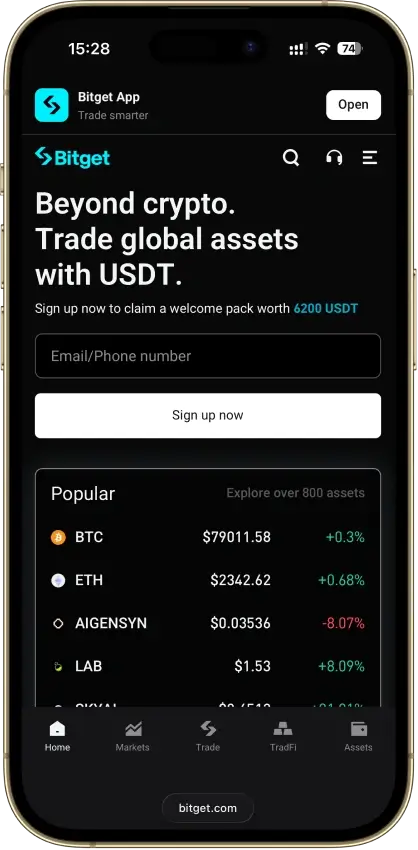
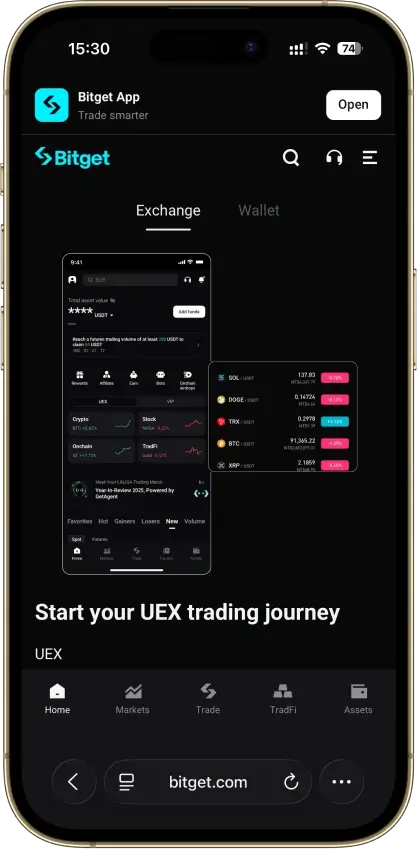
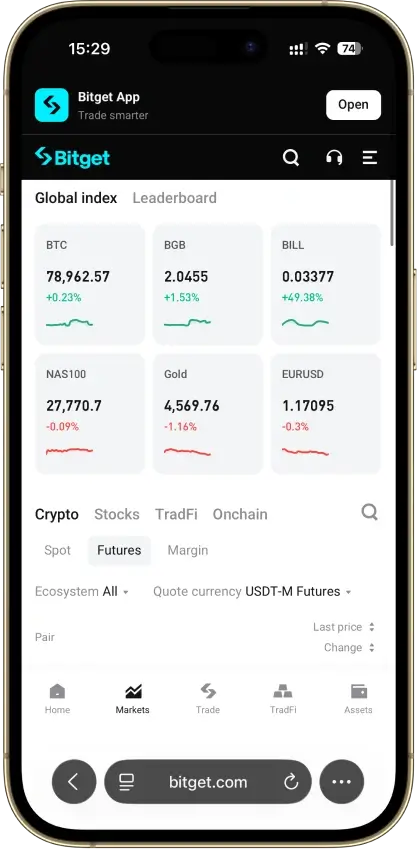
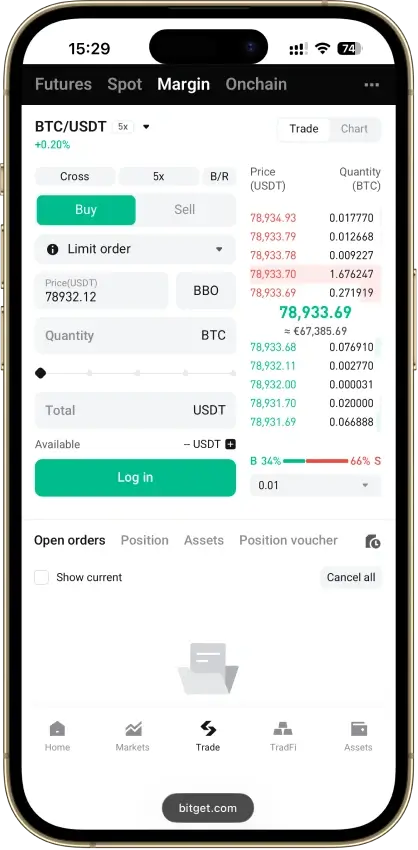
Screenshot 1 of 4
Final Verdict
Binance wins overall for the specified token-paid spot and standard futures taker rates.
Affiliate Disclosure
Some links in this comparison are affiliate links. CryptoSlate may earn a commission if you sign up through these links. Our ratings remain editorially independent.
Choose Binance if you place regular futures taker orders, use eligible BNB spot payment, or require its documented options, coin-margined contracts or Spot FIX interface.
Choose Bitget if it supports a required coin and withdrawal network unavailable in your Binance account. Standard spot commission matches Binance, so users who do not use token discounts pay the same entry rate.
FAQs
Is Binance or Bitget better overall?
Binance wins this comparison on eligible token-paid spot fees and standard futures taker fees. Bitget publishes the higher crypto figure. Both offer spot and futures copying, while country permissions and account tiers can change which service fits.
Which exchange has lower spot fees?
Both start at 0.10% for spot makers and takers. Eligible BNB payment reduces Binance to 0.075%, while eligible BGB payment reduces Bitget to 0.08%. On a $10,000 fill, those discounted rates cost $7.50 and $8 respectively. Token-price exposure and other trading costs remain separate.
Is Bitget better for copy trading?
Both support spot and futures copy trading. Binance documents fixed-amount or fixed-ratio allocation and a total stop-loss setting. Check the selected Bitget module’s follower controls. Choose by the strategy’s position sizing and loss controls. Copying a profitable trader can still leave your account with a loss.
Does Bitget list more cryptocurrencies?
Bitget publishes support for more than 800 digital currencies. Binance’s August 29, 2026 spot capture contained 486 base assets. Bitget’s figure is higher, but the methods and dates differ. Neither figure guarantees that your account can trade or withdraw a particular token.
Which exchange has lower futures fees?
At the regular futures maker tier, each exchange charges 0.02%. Takers pay 0.05% on Binance’s stated USDT schedule and 0.06% on Bitget, equivalent to $5 and $6 per $10,000 filled. Funding and liquidation costs are additional. Higher tiers and eligible Binance BNB payment can change the rates.
Can US residents use these exchanges?
Neither Binance.com nor the Bitget global exchange accepts US residents. Binance.US is separate and is not scored or compared here. Canadian residents are also excluded from both global services.
Which exchange provides more reserve coverage?
Binance’s disclosed snapshot covers 53 assets, compared with BTC, ETH, USDT and USDC in Bitget’s August 27 report. Both provide user-inclusion checks. The coverage difference does not establish independently audited solvency or guarantee future withdrawals.
Which costs less to withdraw dollars?
The stated USD SWIFT examples show $25 on Binance and $30 on Bitget, with $0 exchange deposit charges on both. Binance’s stated example is $5 cheaper.



A $10,000 standard futures taker fill costs $5 on Binance and $6 on Bitget. Eligible token payment also reduces Binance spot commission to $7.50, against $8 on Bitget. The savings are $1 and $0.50 respectively per $10,000 fill.
Binance combines its global order book with options and programmatic trading (exchange assessment). Bitget publishes an 800-plus crypto figure and recommends Unified Trading Account for new setups (platform review).
This page compares Binance.com with Bitget’s global custodial exchange. Neither accepts US or Canadian residents. Binance.US, self-custody wallets and separate card or TradFi products are excluded. Elsewhere, the account’s country and product permissions still apply.