



- On-device recovery phrase verification
- Five seed + five private-key/keystore accounts
- Public upgrade-file verification tool
ELLIPAL Titan 2.0 Overview
- Crypto Wallet Name
- ELLIPAL Titan 2.0
- Wallet Type
- Hardware wallet
- Custodial Status
- Non-custodial
- Built-in Swaps
- Yes
- Open-source
- Partially open-source
- Fiat On-ramp
- Yes
Additional details
- Supported Blockchains
- Bitcoin, Ethereum, BNB Smart Chain, Avalanche, Tron, Base, Polygon, Solana
- Token Standards
- ERC-20, BEP-20, TRC-20
- Platforms
- iOS, Android
- Hardware Wallet Support
- No
- Staking Support
- Limited
- Hardware Connection Methods
- QR (air-gapped), WalletConnect
ELLIPAL Titan 2.0 Screenshots
Screenshot 1 of 8
ELLIPAL Titan 2.0 Pros and Cons
Pros
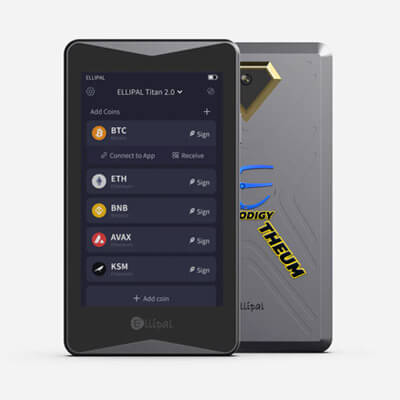
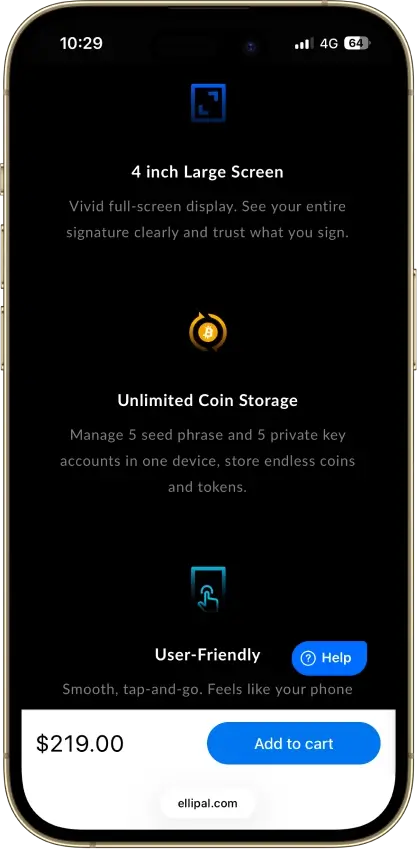
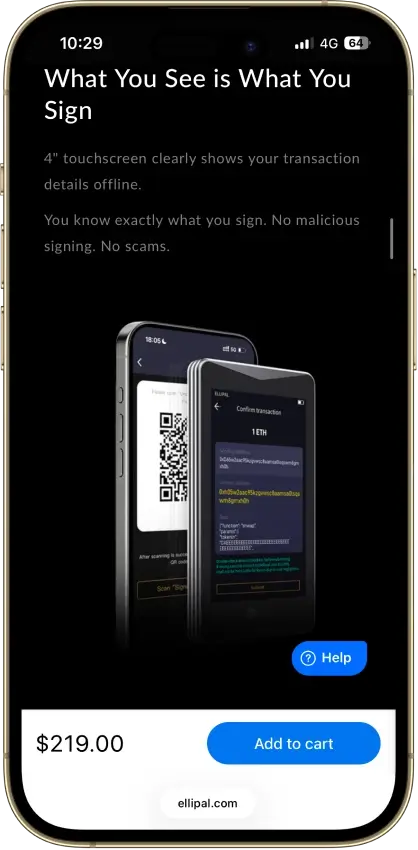
- Four-inch touchscreen for on-device review
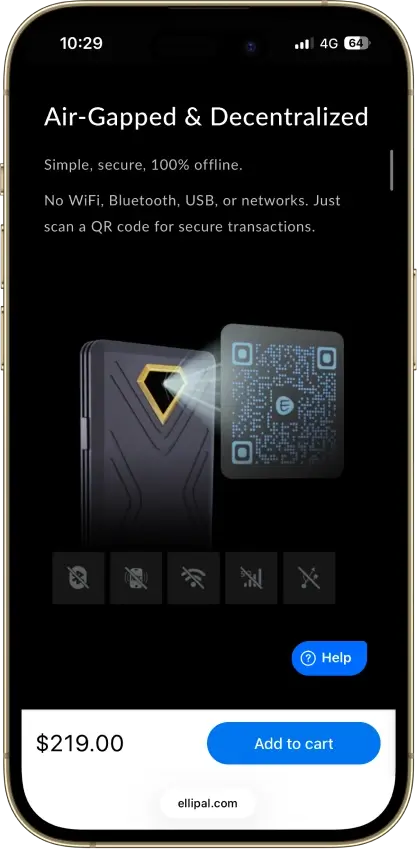
- No cable or radio link for transactions
- Multiple chains in one mobile app
- Optional passphrase-derived wallets
Cons
- Firmware transparency is partial
- Signing requires camera exchanges
- Updates need a separate adapter and microSD
- Lost backups can prevent recovery
What Is ELLIPAL Titan 2.0?
| Key Fact | Detail |
|---|---|
| Type and custody | Hardware wallet with user-controlled signing keys |
| Maker | ELLIPAL Limited |
| Display | Four-inch IPS color touchscreen |
| Transaction connection | Camera and QR codes, without USB data, Bluetooth, Wi-Fi or NFC |
| Firmware updates | microSD through a separate Security Adapter |
| Security component | CC EAL5+ secure chip, according to ELLIPAL |
| Source availability | QR format and selected tools, not a fully open firmware stack |
| Assets | ELLIPAL advertises 45+ blockchains and 10,000+ assets |
| Main companion | ELLIPAL App for iOS and Android |
| Recovery | BIP39 phrase, plus the exact passphrase if one is set |
| Integrated services | Provider-based purchases, swaps and supported staking |
| Selected store offer | $149 USD, with $169 comparison price, checked September 13, 2026 |
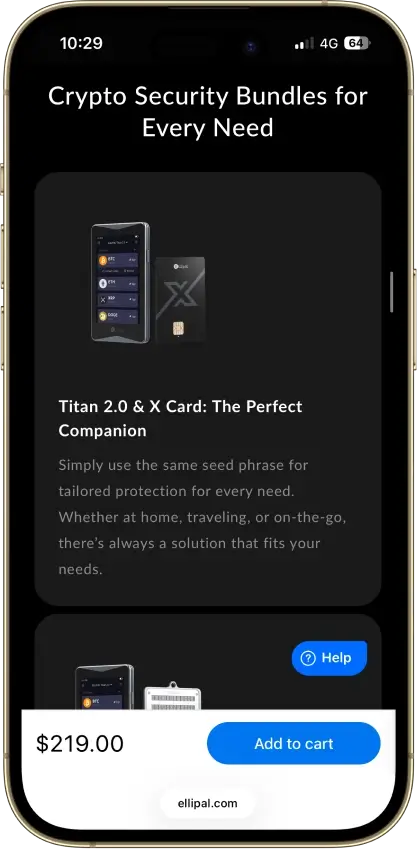
Titan 2.0 is ELLIPAL's touchscreen hardware model. It is distinct from the original Titan, the Titan Mini and the X Card. Firmware files are model-specific.
The normal companion is ELLIPAL's mobile app. It displays holdings and prepares transactions, while the Titan handles hardware approvals. This two-device arrangement explains both the appeal and the inconvenience: you can review a request away from the phone, but moving signed data between screens requires camera scans.
ELLIPAL Limited identifies itself as the provider in its privacy policy. That policy also discloses collection of device and usage information, IP addresses and public blockchain data. Self-custody describes control of the signing keys, not anonymous use of the app.
ELLIPAL Titan 2.0 Security and Custody
What the Air Gap Does
Titan 2.0 avoids a live cable or radio connection for transaction exchange. Its camera still receives data for the firmware to interpret. You remain responsible for checking the destination, amount and requested action before signing.
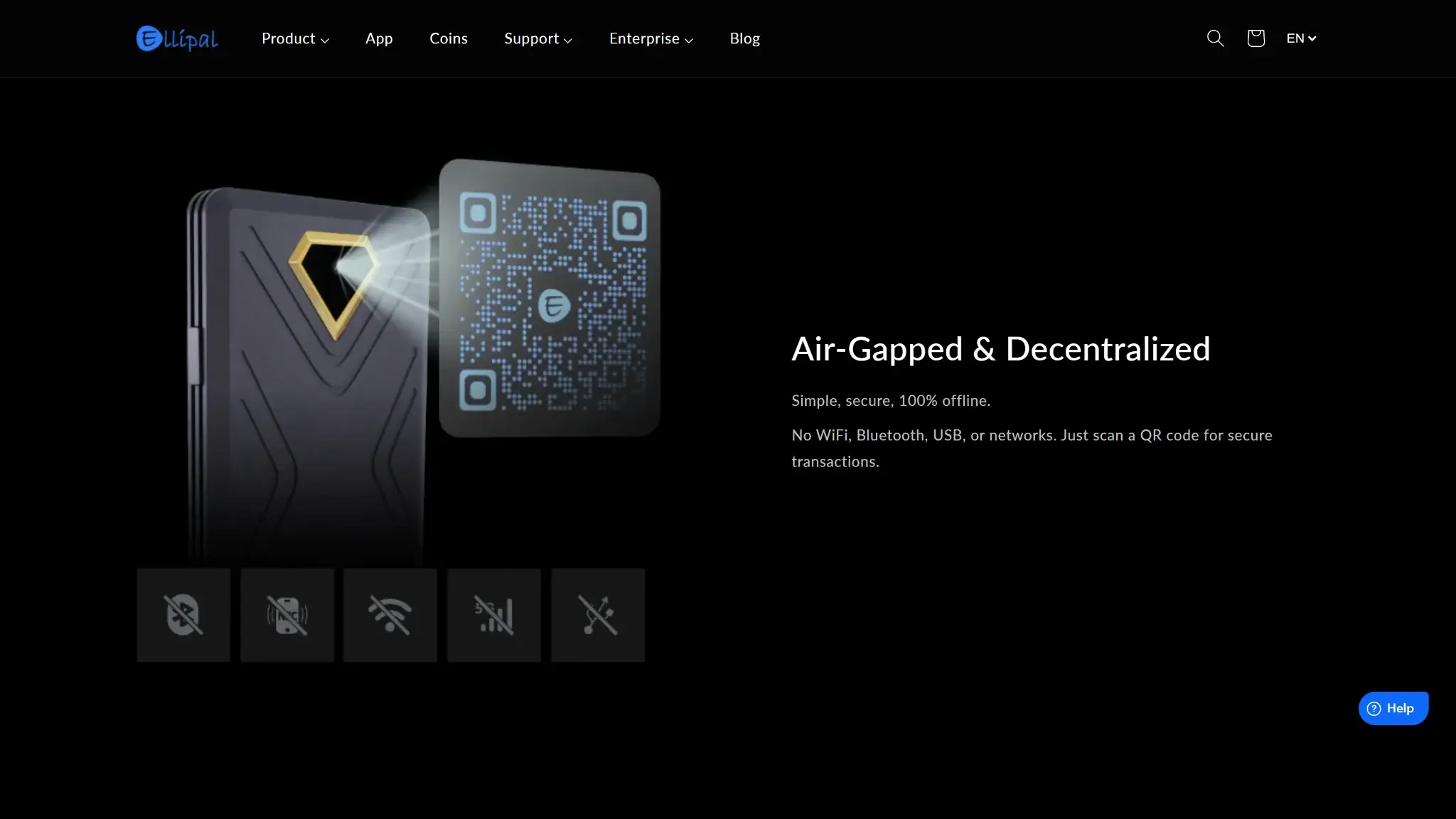
ELLIPAL describes a CC EAL5+ secure chip, password protection and tamper-triggered erasure. Those are manufacturer claims about the chip and its protections. We did not independently validate the chip certificate, test the enclosure or establish protection against every physical attack. Component certification also does not certify the mobile app or a connected smart contract.
Titan 2.0 includes an on-device seed-verification function for checking your written backup. Protect the backup separately: possession of the recovery words, together with a passphrase if one was used, allows restoration on a compatible wallet. Keeping the Titan offline does not disable a second copy of the same keys.
Public Code and Firmware Trust
ELLIPAL publishes its QR data format and an upgrade-file verification tool. The latter checks a signed firmware-file hash against the manufacturer's verification key. That helps establish file origin and integrity. It does not prove the program is free of defects.
ELLIPAL's 2019 source-policy explanation describes closed firmware with selected public components. Its QR and verification repositories provide narrower inspection opportunities than a complete open firmware stack. You still depend on ELLIPAL for the behavior of the firmware you install.
The 2019 EC01 Study and 2025 XRP Loss
Researchers at Donjon, the security lab of competing wallet maker Ledger, documented physical-access weaknesses in ELLIPAL's older EC01 in 2019. ELLIPAL acknowledged hardware vulnerabilities and described firmware and hardware changes in response. Donjon explicitly said it had not checked the corrective upgrade. This history concerns the EC01, not a demonstrated attack against Titan 2.0.
A separate October 2025 case involved an investor who reported losing more than $3 million in XRP. According to CoinDesk, ELLIPAL said its review indicated that the hardware wallet's seed had been imported into its phone app. CoinDesk also said it had not independently verified the investor's identity, balances or full transaction trail, and the company's explanation did not establish the precise cause of the theft. The report neither proves a Titan 2.0 hardware break nor supports a blanket claim that its hardware cannot be compromised.
ELLIPAL's October 23, 2025 notice scheduled its hot-wallet service's closure for October 31, 2025. Its cold-wallet management app continued, with current documentation for Titan pairing, swaps and staking. Connecting the app to hardware by QR is different from entering recovery words into the phone. If a seed has been exposed in software, pairing hardware afterward does not make that earlier copy disappear.
ELLIPAL Titan 2.0 Supported Coins
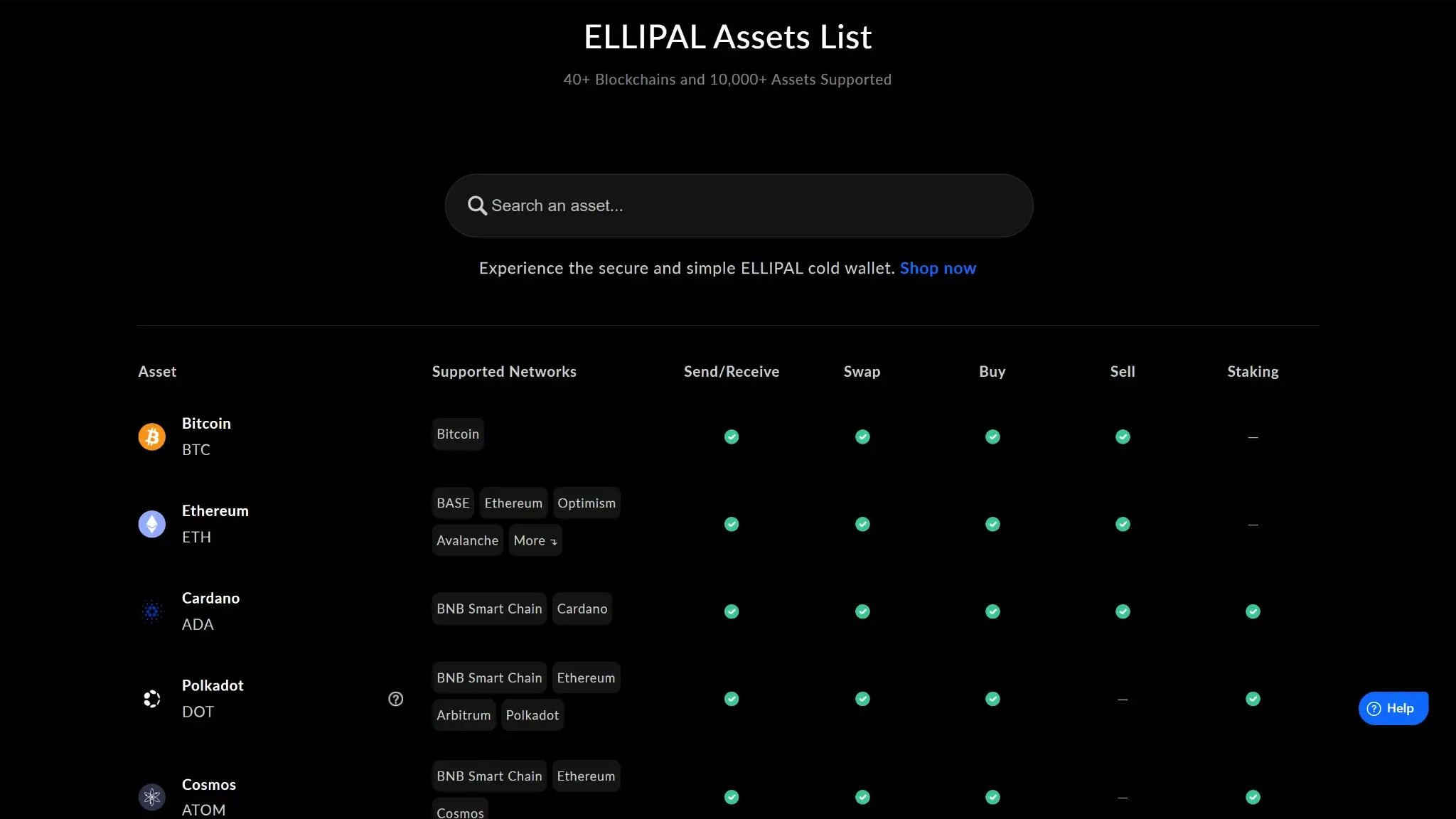
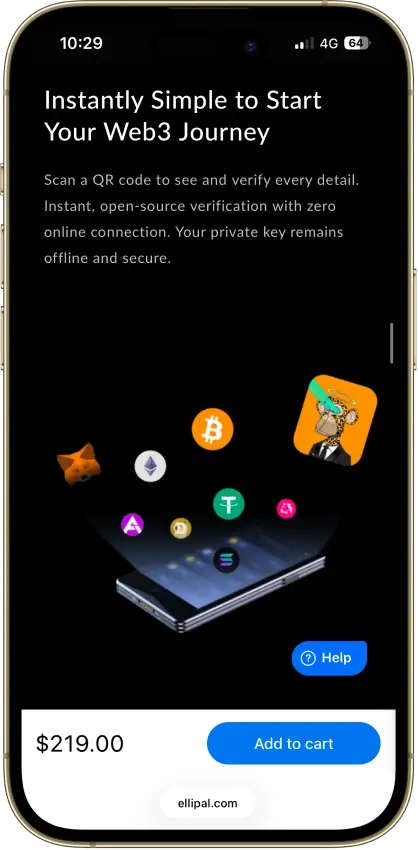
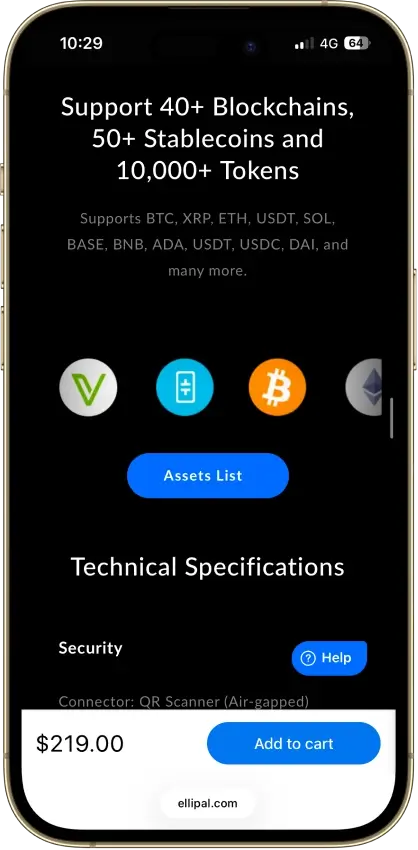
ELLIPAL advertises more than 45 blockchains and 10,000 assets. Its app covers holdings such as Bitcoin, Ethereum, XRP and Solana. These headline totals describe supported holdings, not thousands of assets with identical buying, swapping and staking options.
Check the exact asset and network in the supported-coin directory and app before transferring. A token name alone is insufficient when that token exists on several chains. The directory separates sending and receiving from swap, purchase, sale and staking availability.
For example, current guides cover staking ADA, ATOM, XTZ, DOT and KSM, with ETH addressed in a separate guide. The app page still labels Solana staking as forthcoming. Holding SOL and staking SOL through the integrated service are different capabilities.
Setup, Firmware Updates and Recovery
Creating and Connecting a Wallet
Create the wallet on the Titan, choose its account password and record the generated recovery words offline. The setup guide then has you verify the words, select networks and show the connection QR codes.
In the mobile app, choose the cold-wallet connection for Titan and scan the device's codes. The documented pairing process does not ask you to type the recovery phrase into the app. If rotating codes are difficult to scan, ELLIPAL's setup guide includes a pause control.
Titan 2.0 supports five seed-phrase accounts plus five private-key or keystore accounts. That is not ten separate seed-phrase wallets. Before adding accounts, be clear about which backup restores each one.
Firmware Uses a Separate Adapter
On September 13, 2026, ELLIPAL's update guide listed Titan 2.0 firmware V4.14.0. Installation uses a FAT32 microSD card through the Security Adapter. The guide accepts 8GB, 16GB or 32GB cards and requires the correct Titan 2.0 download.
Keep the downloaded ZIP intact, follow the documented power and adapter sequence, and confirm the version in the device's About screen afterward. Avoid interrupting power during installation. Firmware installation is a removable-media operation, even though normal transaction signing uses QR codes.
ELLIPAL's ETH staking guide says versions before 4.14 can show an unknown-function label during staking or unstaking. Version 4.14 or later enables fuller transaction details for that flow. Update before using it and inspect the displayed request instead of treating an unfamiliar function label as routine approval. For this staking flow, the update affects what you can check before signing.
Checking Backups and Recovering Access
Titan 2.0 has an on-device seed-verification function. Use it to check the recorded words before relying on the backup or resetting the device. A reset removes local account data, not funds from the blockchain or copies of keys held elsewhere.
The optional passphrase creates a different wallet derived from the recovery phrase. Recovery needs the exact, case-sensitive passphrase as well as the words. A device password does not substitute for either. Keep a secure offline record of any passphrase separately from the phrase.
If the Titan is lost or fails, a compatible replacement wallet can provide a recovery route. Check support for your assets and address types, then compare restored receiving addresses before using the recovered account. The BIP39 label alone should not be treated as a promise that every replacement supports every asset you held.
Restoring into a software wallet introduces an online copy of the keys. Treat that as a temporary recovery measure and move to fresh hardware-generated keys if you want to reestablish hardware-only storage. Without a usable device or the necessary backup, ELLIPAL cannot restore access for you.
Swaps, Staking and dApp Features
Swaps and Fiat Purchases
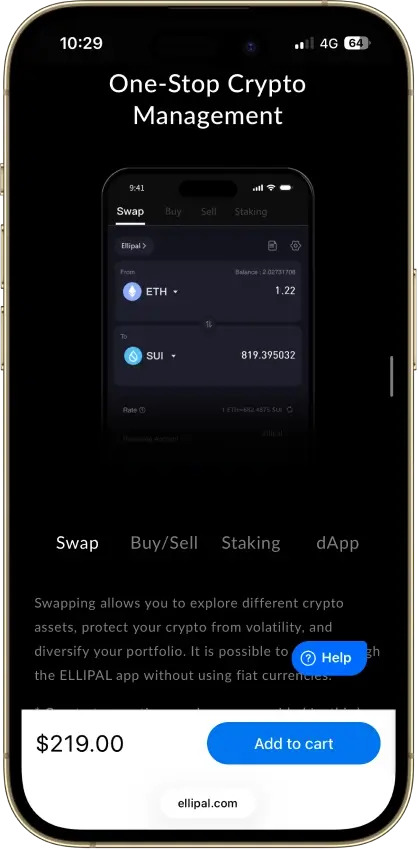
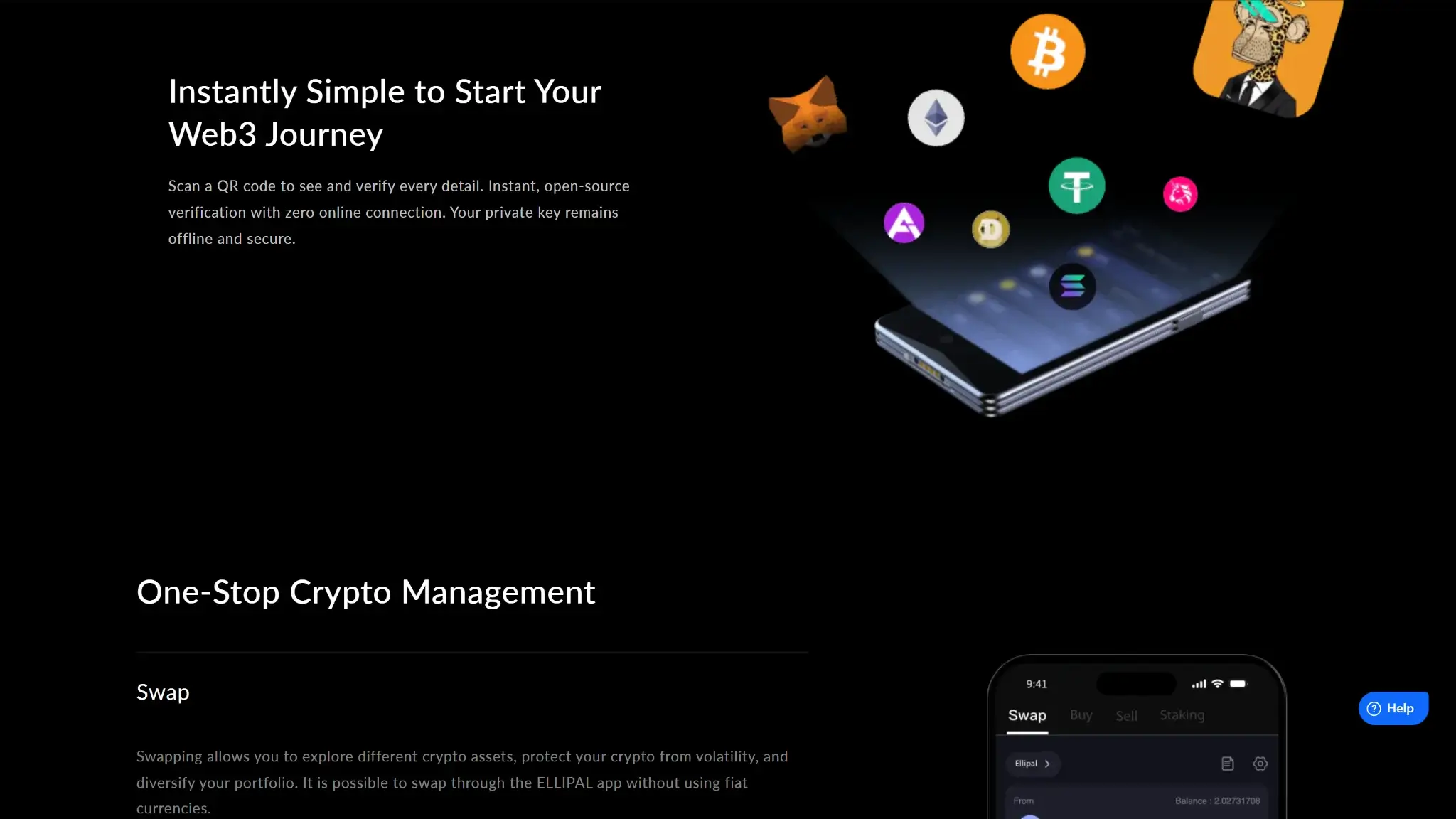
The app provides access to swap services, including providers such as Changelly. ELLIPAL's swap instructions explain that the input assets go to a service provider or smart contract before the replacement asset returns. Signing that transfer on Titan protects the approval step, but it does not eliminate provider or contract risk during the exchange.
Buying crypto involves a separate provider checkout. ELLIPAL links MoonPay and Simplex and says available providers depend on location, currency, asset and order size. Those providers set verification requirements, limits, rates and charges. Check the final crypto amount and receiving address before paying.
Staking and Withdrawals
For supported delegated assets, the app prepares the staking request and Titan signs it by QR. Minimums, validator performance and withdrawal periods vary by network. The fact that signing happens on hardware does not guarantee a return or immediate access to staked funds.
The ETH route uses a Kiln-managed smart contract and has a documented minimum of 0.01 ETH, plus gas. Staking, unstaking and withdrawal each require network fees. Review the contract and withdrawal conditions separately from the hardware purchase, and retain enough ETH for those later actions.
MetaMask and WalletConnect
ELLIPAL documents a MetaMask hardware-wallet connection using the QR-based option, the Titan's MetaMask connection code and account selection. This is a documented integration, not a claim that we tested every current browser or mobile combination. Check the intended interface and network before relying on it for a particular dApp.
The ELLIPAL App also advertises WalletConnect access to compatible dApps. Each connection gives another application a way to request actions. Reject requests you do not understand, even when they arrive through a familiar app.
ELLIPAL Titan 2.0 Price and Ongoing Costs
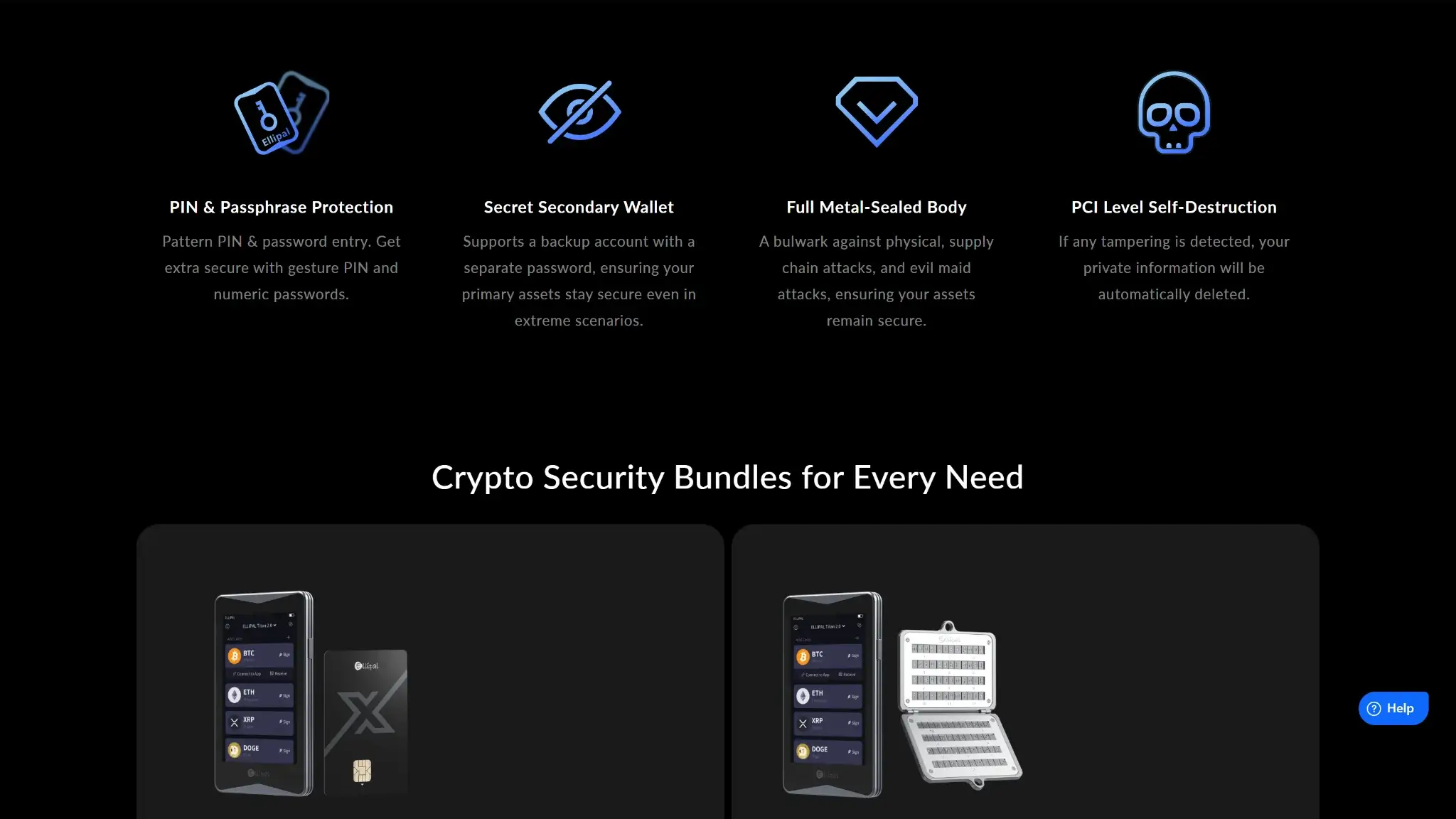
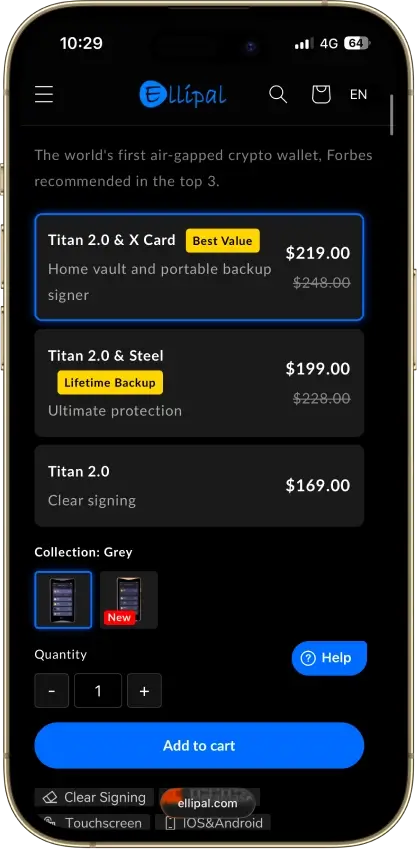
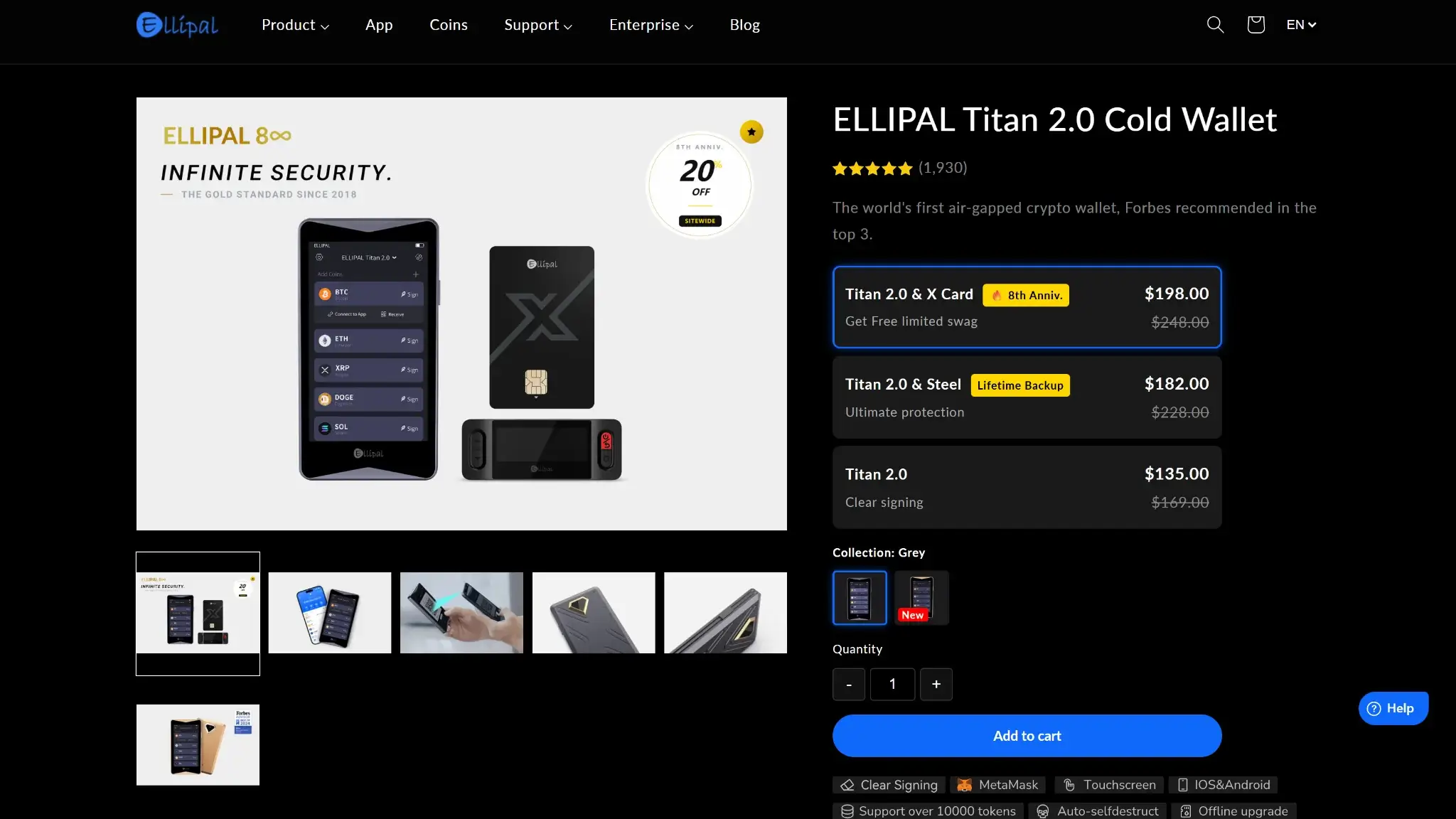
The selected gray Titan 2.0 store offer was $149 USD on September 13, 2026, against a displayed $169 comparison price, with a Seed Phrase Steel promotion. Bundle contents and checkout costs can change. Check the selected package, delivery eligibility, shipping and taxes before ordering.
| Cost | What to Check |
|---|---|
| Hardware | Selected device or bundle price at checkout |
| Sending crypto | Network fee and the native asset needed to pay it |
| Swapping | Amount received after the exchange rate and applicable network, liquidity or cross-chain charges |
| Buying with fiat | Provider quote, payment charges, limits and identity requirements |
| Staking | Network fees, provider or validator terms, and withdrawal conditions |
| Replacement or return | Warranty eligibility and any return-postage obligation |
ELLIPAL's August 2026 policy provides a one-year replacement warranty from delivery for covered problems. It also permits change-of-mind returns within 30 days, subject to its return process, with the customer paying return postage. Device modification and some forms of damage are excluded. Confirm the policy for your order rather than assuming every failure qualifies.
Who Should Consider Titan 2.0?
Titan 2.0 fits a phone-led routine where you are willing to bring out a second device for approvals. The separate screen is most useful when you actually read it, and the recovery design needs a backup you can keep safe and retrieve later.
- Consider it for multichain holdings managed through a mobile app.
- Choose it only if QR signing and removable-media updates suit your routine.
- Look elsewhere if you need a cable connection or fully open firmware.
- Check staking and dApp requirements before treating asset support as feature support.
For another touchscreen workflow, our Trezor Safe 5 review covers a USB-connected option for computers and compatible Android phones. The Ledger Flex review examines a device with mobile Bluetooth and desktop USB connections. These crypto wallets handle approvals through different connections, which alone do not establish a security ranking.
Final Verdict
Titan 2.0 is worth considering when you want a separate touchscreen for a multichain phone wallet and accept QR scans as part of each hardware-signed transaction. Its limitations are concrete: partial firmware transparency, adapter-based updates and a recovery phrase that you must protect yourself. Swaps and staking require additional decisions about providers and contracts. The published 6.6/10 remains unchanged. Buy for the documented signing workflow, not a promise that an air gap removes every way to lose funds.
Disclaimer: CryptoSlate may receive a commission when you click links on our site and make a purchase or complete an action with a third party. This does not influence our editorial independence, reviews, or ratings, and we always aim to provide accurate, transparent information to our readers.