Quick Take
- The US expanded sanctions over Iran’s crypto sector and threatened dollar penalties for foreign partners.
- The move could disrupt Iran-linked crypto activity while testing Washington’s ability to pressure China.
- Bitcoin and gold rose amid dollar concerns, but sanctions may not drive demand for alternatives.


The United States is threatening to eject Iran’s trading partners from the dollar system while widening its power to sanction the country’s crypto sector, escalating a financial campaign that is already testing Washington’s leverage over China.
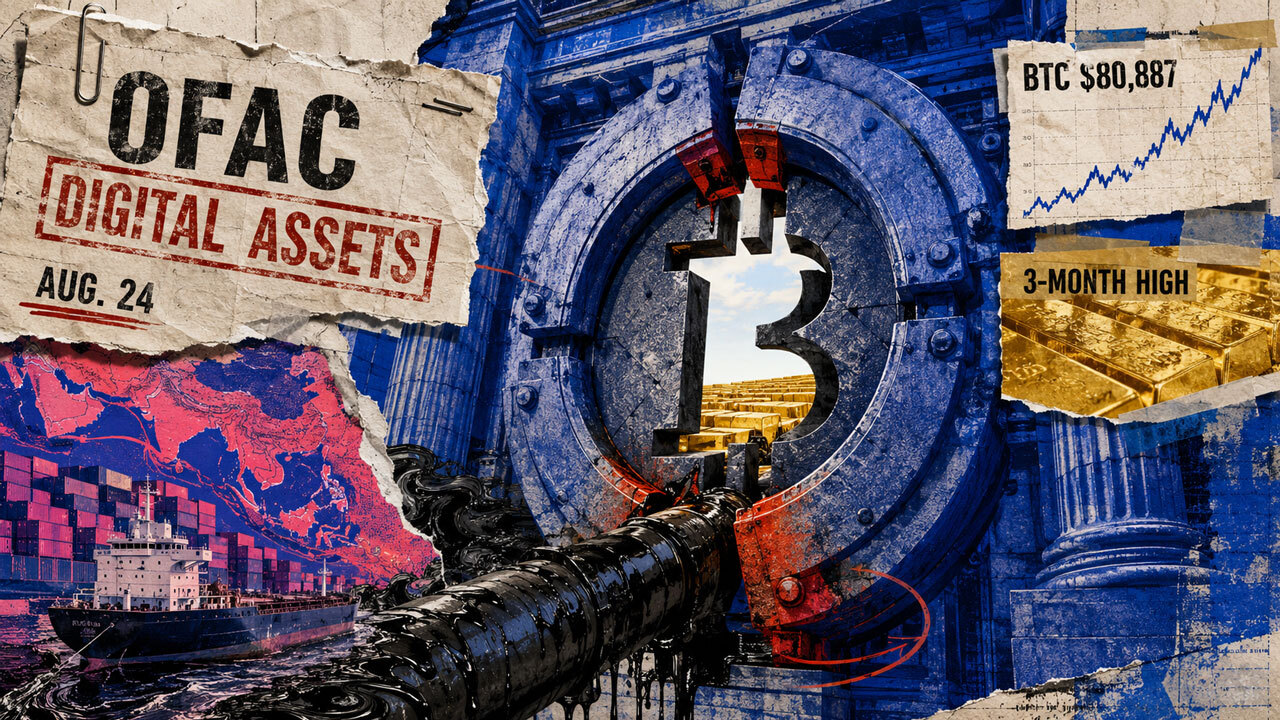
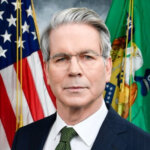
On Aug. 24, Treasury Secretary Scott Bessent launched “Operation Economic Outcast,” imposing sanctions on nearly 60 individuals, entities and vessels and opening five Iranian sectors to broader sanctions: digital assets, technology, gold, aviation and shipping.
Treasury said the campaign would expand secondary sanctions exposure for foreign businesses that continue dealing with Tehran. He stated:
“In the Second World War, D-Day marked the historic beginning of a campaign with our allies to target and drive the enemy from its positions, including those in third countries. Today, in that same spirit, we are launching an economic onslaught against Iran’s financial connections around the globe. Our objective is to sever every economic lifeline that sustains this tyrannical regime until Tehran stands alone.”
Bessent made the enforcement threat explicit, saying entities facilitating Iranian money laundering would be “removed from the US dollar system.”
The push comes as Bitcoin crossed $80,000 on Tuesday and gold reached a three-month high, sharpening a debate over whether repeated use of dollar access as a geopolitical weapon could accelerate demand for assets outside the traditional financial system.
Bitcoin climbed to as high as $80,887, its strongest level since mid-May, and has gained 27% in August.
CryptoSlate previously reported that this rally has been driven primarily by a weaker dollar, the Treasury’s increased long-term debt buybacks, renewed crypto optimism, and demand for alternative assets rather than the Iran sanctions themselves.
OFAC broadens who can be targeted over Iranian crypto
The new sectoral determinations give the Office of Foreign Assets Control (OFAC) a wider route to pursue overseas companies without first tying every target to a previously sanctioned Iranian counterparty.
Under Executive Order 13902, OFAC can now sanction any person, regardless of location, that it determines operates in Iran’s digital-asset sector. Treasury said the same authority now applies to the country’s technology, gold, aviation and shipping sectors.
That expands a sanctions architecture that already treated Iranian crypto exchanges like Nobitex as financial institutions.
US rules block Iranian digital-asset exchanges within US jurisdiction, while foreign financial institutions can face penalties for significant transactions involving sanctioned Iranian exchanges.
The new determination gives OFAC broader authority to designate people or businesses it determines are operating in the sector and increases the risks for companies providing services around that activity.
Treasury said Tehran has increasingly turned to cryptocurrency for sanctions evasion and transactions linked to the Islamic Revolutionary Guard Corps (IRGC) and regime insiders. Monday’s designations also showed how crypto has become intertwined with Iran’s oil and security networks.
UAE-based Ukrainian national Ivan Obukhov, a broker for Iran’s shadow fleet, processed more than $100 million in cryptocurrency payments since 2023 to facilitate oil sales for the IRGC-Quds Force, Treasury said. OFAC sanctioned Obukhov and his company, Foscom FZE.
Treasury also targeted Iranian cyber actors accused of attacks on US infrastructure and financially motivated theft. One of them, Arman Kahzadian, allegedly gained control of a wallet containing more than $30,000 in Bitcoin in 2023.
The broader exposure now reaches beyond crypto companies themselves. Treasury warned that foreign financial institutions facilitating significant Iran-related transactions can face sanctions or restrictions on access to US correspondent banking.
China tests how far Washington will push the dollar threat
The harder test begins with China, Iran’s biggest oil buyer and the trading partner best positioned to challenge Washington’s demand that countries choose between Tehran and access to the US financial system.
Bessent declined to immediately sanction major Chinese financial institutions suspected of facilitating Iranian trade, saying Washington would first give countries and companies time to change their behavior.
Asked why the administration was holding back some of its most disruptive measures, Bessent said, “Why would I want to blow up the global financial system?” He later warned that “no one is above the reach of US sanctions.”
The comments expose the balance Washington is attempting to strike. Dollar dominance allows the United States to impose costs on companies far outside its borders because banks and businesses depend on dollar clearing, correspondent banking and access to American financial markets.
Applying that leverage against major Chinese institutions could also invite retaliation and destabilize financial relationships Washington still depends on.
China signaled Tuesday that it was unwilling to accept the US demand.
Foreign Ministry spokesman Lin Jian said China’s cooperation with Iran was conducted within international law and should not be disrupted, adding that Beijing would take necessary measures to protect its interests.
China has also argued that unilateral sanctions could increase tensions and disrupt global economic and financial stability.
Iranian officials are similarly betting that Washington will struggle to force major trading partners into compliance.
Parliament Speaker Mohammad Bagher Ghalibaf said the United States was “not in an economic position” to further restrict its relationships with other countries and claimed Iran’s trading partners had privately and publicly indicated that they would disregard the threats.
That confidence sits alongside signs of growing economic strain inside Iran. President Masoud Pezeshkian acknowledged that citizens were confronting “many problems” as sanctions and nearly six months of conflict weighed on the economy.
“I understand we have many problems in society right now,” Pezeshkian said on state television. “We are trying to prevent these as much as we can.”
Iran has vowed to retaliate against the expanded US measures, while officials have suggested that Russia, China and other partners will resist Washington’s pressure.
Russia precedent returns as Bitcoin crosses $80,000
The prospect of forcing foreign institutions out of the dollar system has revived comparisons with the Western response to Russia’s invasion of Ukraine, when the United States and its allies immobilized roughly $280 billion of Russian sovereign assets.
Most of those reserves were held in Europe rather than the United States, but the action demonstrated that foreign central-bank assets held within Western jurisdictions could become inaccessible during a geopolitical conflict.
Bitwise Chief Investment Officer Matt Hougan said the freezing of Russian reserves accelerated demand for gold and Bitcoin, arguing that another aggressive use of the dollar-based financial system would carry similar downstream effects.
The period following Russia’s invasion also coincided with a sharp shift in central-bank demand for gold. Central banks bought more than 1,100 metric tons in 2022, then added more than 1,000 tons again in 2023. The World Gold Council cited geopolitical uncertainty and inflation as reasons central banks favored the metal.
Still, that does not establish that the Russian reserve freeze was the sole cause of gold’s subsequent rally. Inflation, interest rates, geopolitical conflicts, currency moves and investment demand all played major roles in influencing prices.
The comparison nevertheless points to a longer-term tension in Washington’s strategy.
The effectiveness of secondary sanctions rests heavily on foreign governments, banks and businesses valuing continued access to the dollar system more than their economic relationships with Iran.
Every successful use of that leverage also demonstrates the consequences of depending on financial infrastructure ultimately subject to US control.
That argument is appearing as investors are already buying assets associated with protection against currency depreciation and financial intervention.
Bitcoin’s move above $80,000 followed Treasury’s decision last week to increase buybacks of long-dated government debt, which pressured the dollar and revived the so-called debasement trade. Gold has moved higher alongside it.
The immediate impact of Washington’s Iran campaign could still be negative for Iran-linked crypto activity as exchanges, brokers, stablecoin issuers and banks tighten compliance to avoid OFAC exposure.
The longer-term question is whether Washington can repeatedly exploit the dollar system’s reach without encouraging more governments and investors to seek alternatives in scarce assets like BTC and gold.
Mentioned in this article


Editorial credits