


 Released in 2021
- Seedless recovery through linked NFC cards
- 25-year limited hardware warranty
- Optional seed phrase on newer cards
Tangem Overview
- Crypto Wallet Name
- Tangem
- Release Date
- 2021
- Wallet Type
- Hardware wallet
- Custodial Status
- Non-custodial
- Built-in Swaps
- Yes
- Open-source
- Closed-source
- Fiat On-ramp
- Yes
Additional details
- Supported Blockchains
- Bitcoin, Ethereum, BNB Smart Chain, Avalanche, Tron, Arbitrum, Optimism, Base, Polygon, Solana
- Token Standards
- ERC-20, BEP-20, TRC-20, SPL
- Platforms
- iOS, Android
- Hardware Wallet Support
- No
- Staking Support
- Limited
- Hardware Connection Methods
- NFC, WalletConnect
Tangem Screenshots
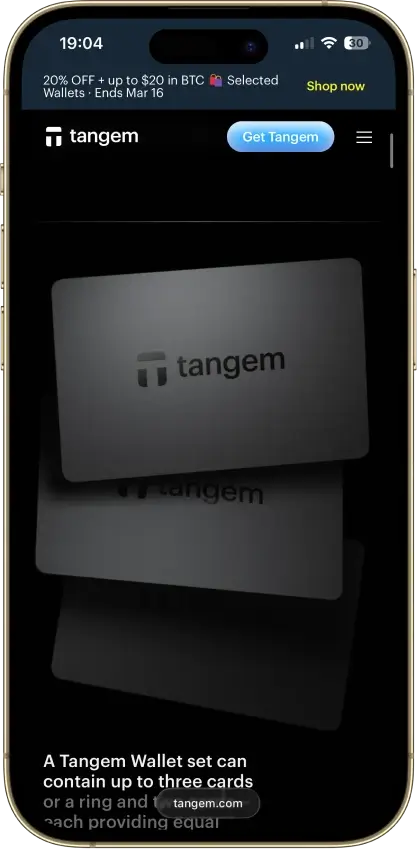
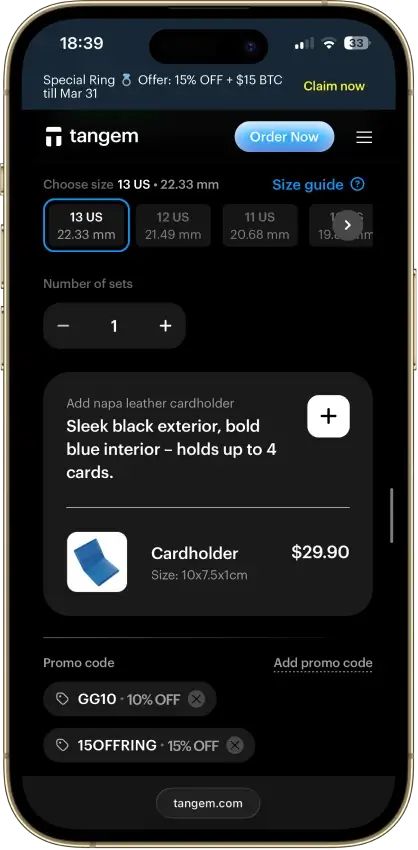
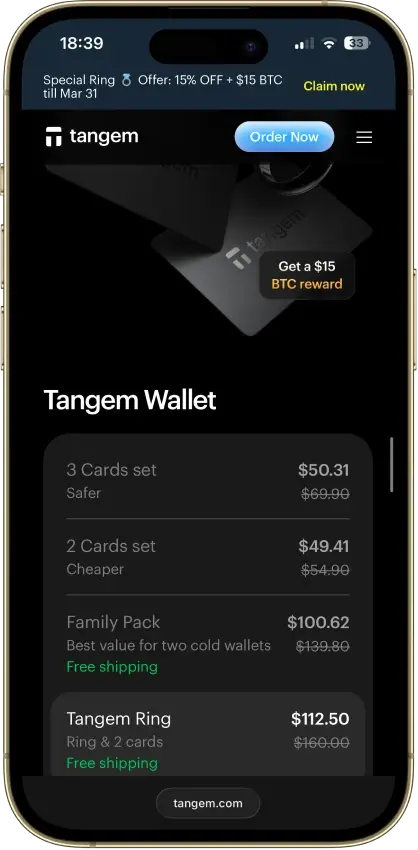
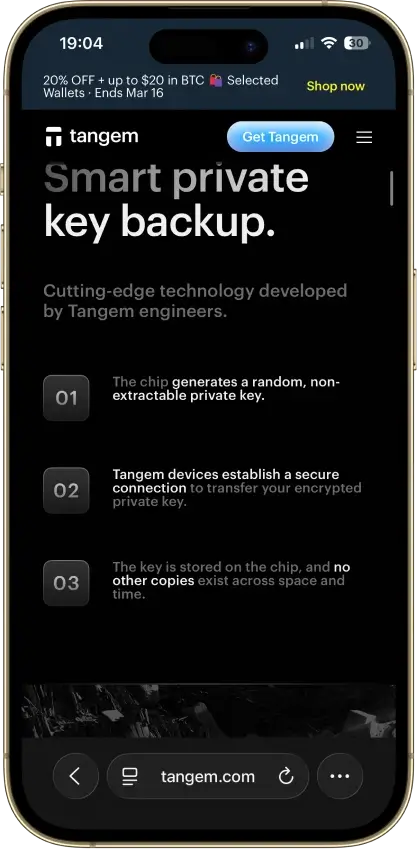
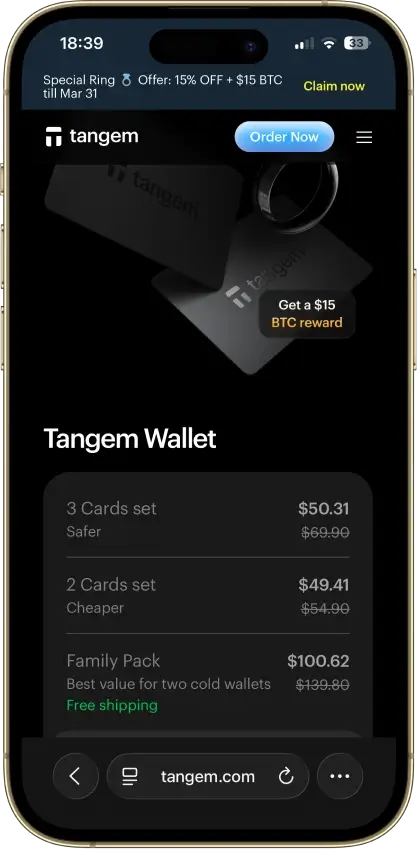
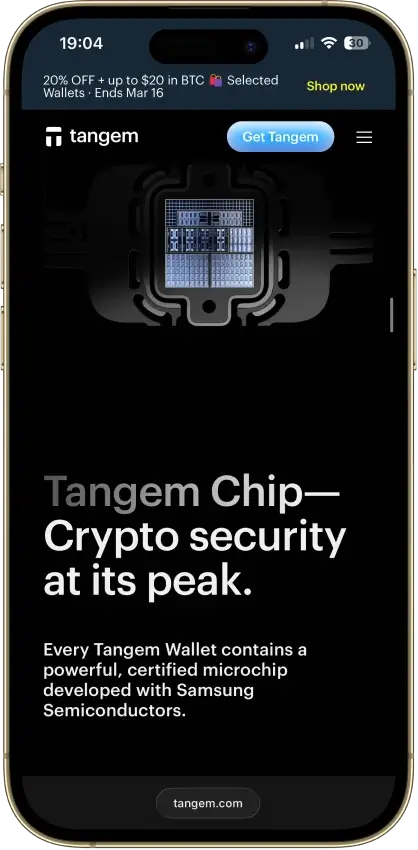
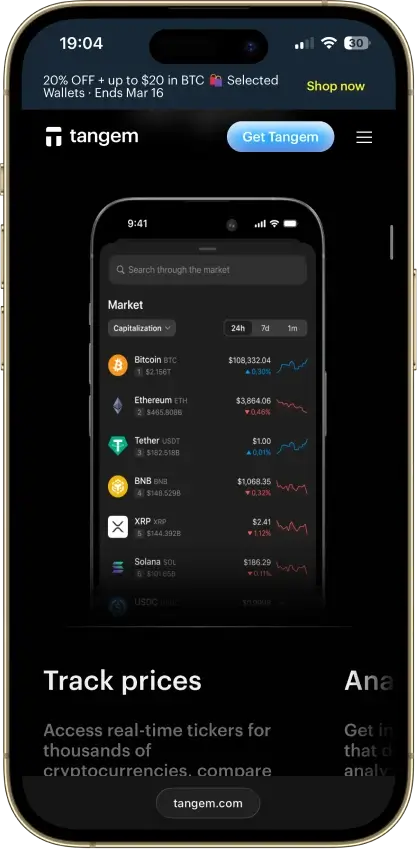
Screenshot 1 of 8
Tangem Pros and Cons
Pros
- Native BTC, ETH, SOL and XRP support
- No battery, the phone powers signing
- App source code is publicly inspectable
- Independent SDK audit with a public summary
- WalletConnect on Solana and listed EVM chains
Cons
- No on-card transaction display
- Card firmware cannot be updated
- Proprietary app licenses limit reuse
- Some Solana NFTs can't be sent from it
What Is Tangem Wallet?
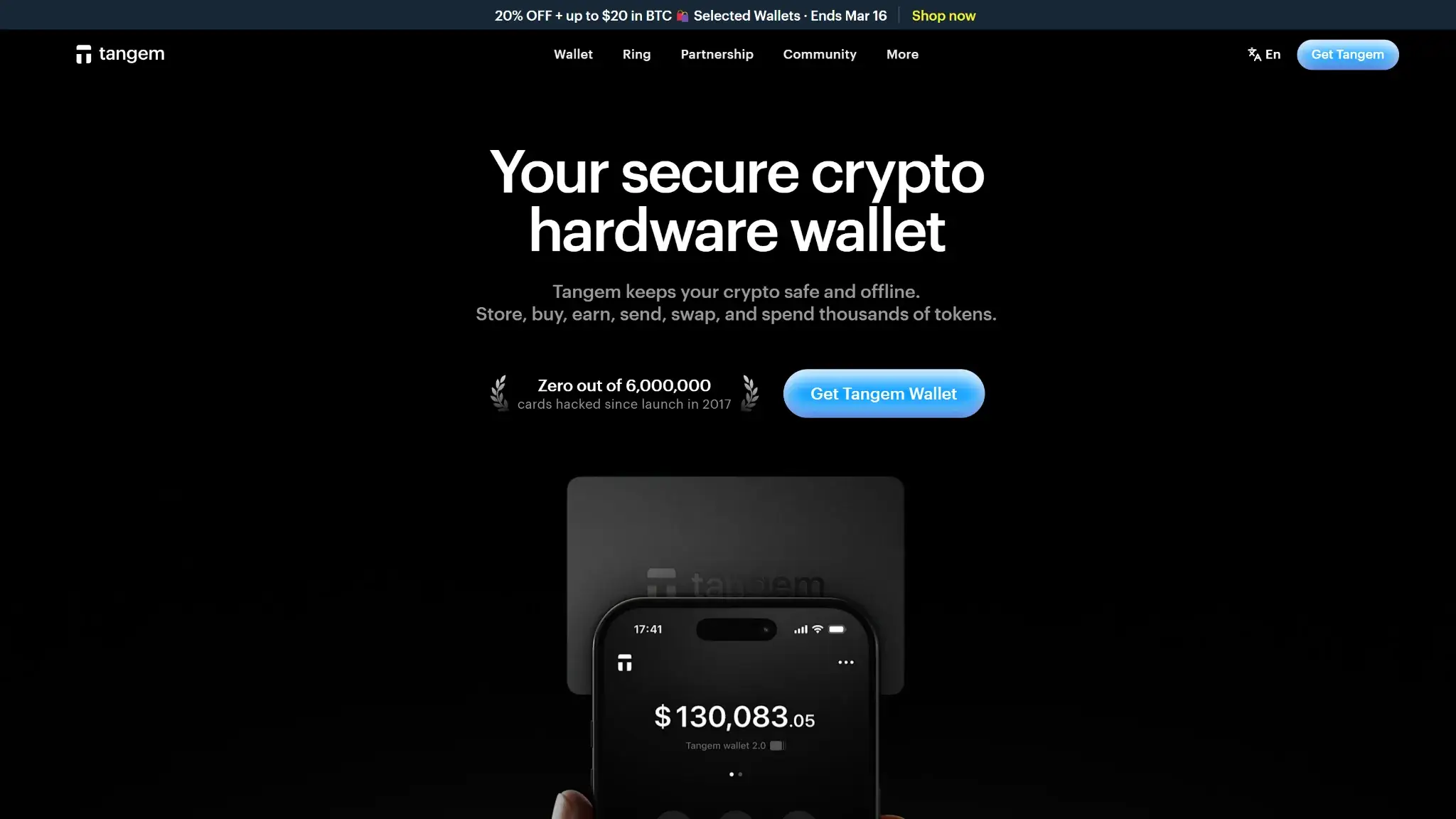
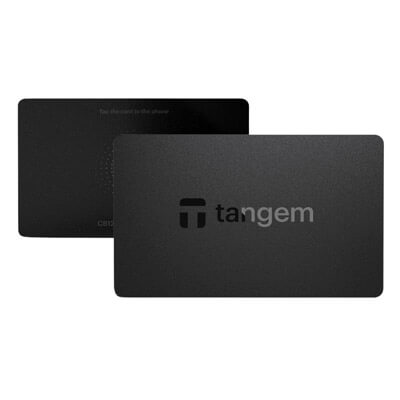
Swiss company Tangem AG makes the card wallet and its companion app. Within the self-custody wallet category, its defining feature is that a phone supplies both the interface and power for NFC signing. The card needs no battery or cable. The app is available on iOS and Android, with a compatible NFC-equipped phone required for the hardware workflow.
Tangem also offers a software-only Mobile Wallet and a Ring product. The Mobile Wallet keeps encrypted wallet data on the phone and does not require a card. Those products should not be confused with the card wallet reviewed here.
| Key Fact | Tangem Card Wallet |
|---|---|
| Type and custody | NFC hardware wallet, self-custody |
| Company | Tangem AG, Zug, Switzerland |
| Platforms | iOS and Android companion app |
| Signing display | Phone screen, no screen on the card |
| Source code | Public app repositories under proprietary licenses, closed card firmware |
| Assets | Native Bitcoin, Ethereum, Solana, XRP and other supported networks |
| Recovery | Linked backup cards, optional seed phrase on second-generation cards or later |
| Device price | Standard sets: two cards $59.90, three cards $69.90, checked September 9, 2026 |
| Optional services | Third-party swaps, purchases, staking and Yield Mode |
| US access | US iOS listing available, shipping and individual services have separate eligibility |
Tangem Wallet Security And Custody
Seedless And Seeded Keys
In seedless setup, the card generates keys inside its secure element. During backup, encrypted key material is copied to the other linked devices. Each linked card can authorize spending on its own with the required access credentials. A three-card set is not a two-of-three multisignature wallet.
The optional seed-phrase route changes where keys originate. On supported newer cards, the app can generate a 12- or 24-word phrase or accept an existing phrase before importing derived keys into the hardware. A seed phrase therefore introduces a backup outside the cards and exposure during phone-based setup. The claim that keys have never existed outside the chip only describes the seedless generation route.
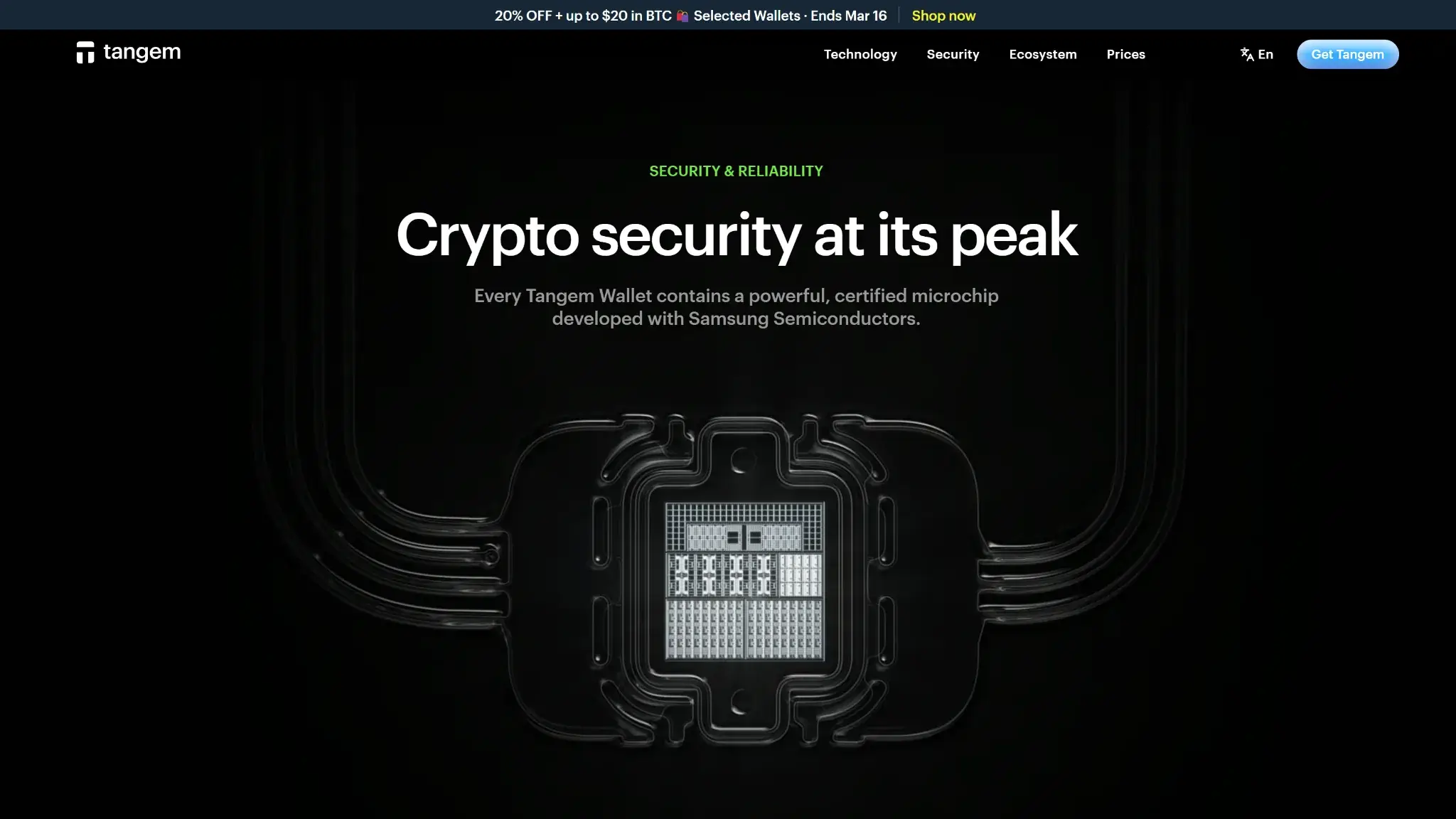
Tangem identifies its chip as a Samsung S3D232A secure element with EAL6+ certification. That certification does not make the complete wallet immune to implementation flaws. There is also no card screen to independently confirm the recipient or requested action before signing.
Public App Code, Restricted Licenses
Both the Android and iOS app repositories currently carry Tangem proprietary licenses. They permit specified personal, non-commercial uses, including code inspection and personal builds, while restricting distribution and commercial use. Publicly readable code is useful for scrutiny, but calling these applications fully open-source misstates their current terms. Card firmware is closed and cannot receive updates, while the phone applications can.
Security Disclosures
Tangem's December 31, 2024 disclosure described a bug that placed private keys from seeded setup in app logs. Sending those logs to support within seven days of activation could expose them. Tangem said it fixed the issue in iOS 5.19.1 and Android 5.19.2. Cointelegraph separately reported the incident. Tangem said seedless setup was outside the bug's scope.
In September 2025, Ledger's Donjon team published a physical attack that bypassed delays between access-code guesses. Tangem disputed its practical feasibility. Hard-to-guess access codes address guessing risk, but they do not resolve every type of physical attack.
On July 9, 2026, Donjon disclosed a separate laser attack that reset a card's password without the existing code or a backup. Donjon is part of competing wallet maker Ledger. Its demonstration required physical possession and invasive laboratory work, not a remote connection to a user's phone. Tangem acknowledged the laboratory scenario but disputed the risk to everyday users. The Block reported both positions.
Donjon said affected cards could not be patched because their firmware is fixed. That finding concerns the disclosed cards and attack, not a proven result for every future Tangem model. App updates cannot reach the firmware on those cards.
What The Audits Establish
Kudelski assessed firmware in 2018, while Cure53's November 2025 work examined Android and iOS SDKs. Their conclusions apply to the components and test periods listed below.
| Audit | Scope And Published Result |
|---|---|
| Kudelski, 2018 | Tangem's hosted summary covers firmware v1.28 internal logic and says identified risks were mitigated. Physical attack resistance was excluded. |
| Riscure, 2023 | Tangem's announcement describes firmware/NFC testing. Its public PDF is a notice withholding the full report, not the findings themselves. |
| Cure53, report dated February 10, 2026 | Android/iOS SDK work conducted in November 2025. Of 12 findings, fixes for 10 were validated and two low-impact issues remained. No Critical or High findings were reported. |
Tangem Wallet Supported Coins And Networks
Tangem supports native Bitcoin network assets, Ethereum and its tokens, and Solana network assets, alongside XRP Ledger and other networks. A token ticker alone is insufficient when withdrawing from an exchange. The asset and network shown by the sender must match the receiving wallet entry.
The app's token list can be inspected before buying hardware. Swap providers, staking integrations and connected applications have separate asset-support lists.
NFT support includes selected EVM networks and Solana. Tangem's current documentation excludes sending Solana compressed NFTs and programmable NFTs, as well as frozen NFTs. Check that the specific NFT can be sent before transferring a collectible into the wallet.
Using Tangem And Recovering Access
Set up the complete backup arrangement before transferring a meaningful balance. Tangem's card-authenticity check and backup process are part of onboarding, but they do not replace checking that you are using the official app.
- Install the app through Tangem's official links and check your phone's NFC compatibility.
- Scan a new card and follow the authenticity and wallet-creation prompts. Do not fund an unfamiliar, already-activated wallet.
- Choose seedless setup or the optional seed-phrase route before creating the wallet.
- Add all intended backup cards during the backup process and set the access code. Internet access is required for device-certificate checks during backup.
- Store the backups separately. Confirm the chosen asset/network and try a small receive-and-send transaction before increasing the balance.
Tangem's guidance places the card near the top of an iPhone, while Android NFC antenna positions vary by model. Thick or metal cases can interrupt scanning. Hold the card still during a requested scan and remove it while entering the access code.
What Happens When A Card Goes Missing?
Losing one card does not automatically lock you out if another linked card and its access code remain available. A lost card cannot be remotely revoked, however. It remains a device associated with the same keys. Moving funds to a newly created wallet changes which keys control the balance.
You cannot add a replacement card or another backup after completing backup creation. If your recovery arrangement becomes too fragile, buying a fresh set and moving the funds is different from replacing one card in place. Losing the phone is a separate problem: another compatible phone with the app can access the hardware wallet using a card and its code.
Total device loss has different outcomes depending on setup. With no seed phrase, losing every usable card means losing access. A valid saved seed phrase may allow recovery through compatible wallet software, but supported networks and derivation paths must match. Tangem cannot reconstruct a seed phrase for a wallet originally created seedless.
Wallet support is available through Tangem's Help Center and support@tangem.com. Support cannot supply the missing keys for total seedless loss. Do not share a seed phrase or access code with someone offering recovery assistance.
Swaps, Staking And Connected Apps
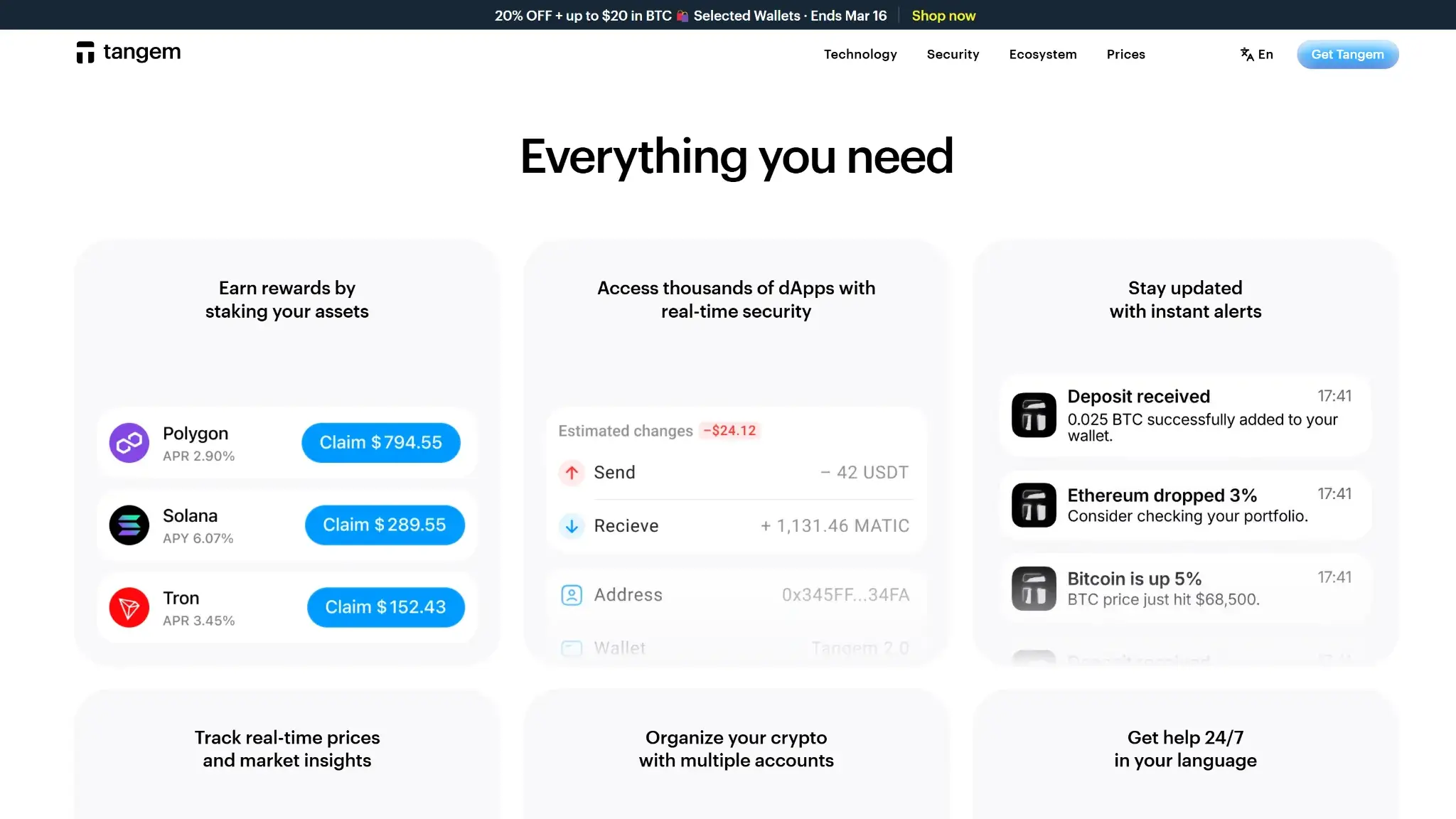
Tangem's swap interface uses third-party providers. The quoted amount reflects route costs, which can include provider charges and network fees. Centralized exchange routes may request identity verification and require the provider's support team to resolve a delayed swap. A self-custody wallet does not make every integrated exchange non-custodial throughout the trade.
Buying crypto also sends you through providers such as MoonPay, Mercuryo, Simplex or Unlimit. Payment method, country and asset affect availability and price. The wallet's own setup does not require identity verification, but purchase providers can impose their own checks. Tangem Pay is another separate service with mandatory KYC and country or US-state eligibility.
Staking integrations include Yield.xyz and P2P.org, with supported assets such as SOL, ATOM and ETH. Validator charges and unstaking schedules depend on the selected asset and service. Check those terms before delegating, particularly if you expect to need the balance immediately.
Yield Mode supplies eligible assets to Aave through smart contracts. Tangem charges 15% of earned yield, rather than 15% of the principal. Gas costs also apply. Funds committed to lending contracts carry protocol risk even when a Tangem card controls the wallet, and the displayed yield can change.
WalletConnect supports Solana and listed EVM networks, including connections initiated from a computer. Signing still uses the phone-and-card workflow. Review the requested permissions before approving a connection or transaction. Tangem's supported dApp list is narrower than its full list of networks for storing assets.
Tangem Wallet Price And Fees
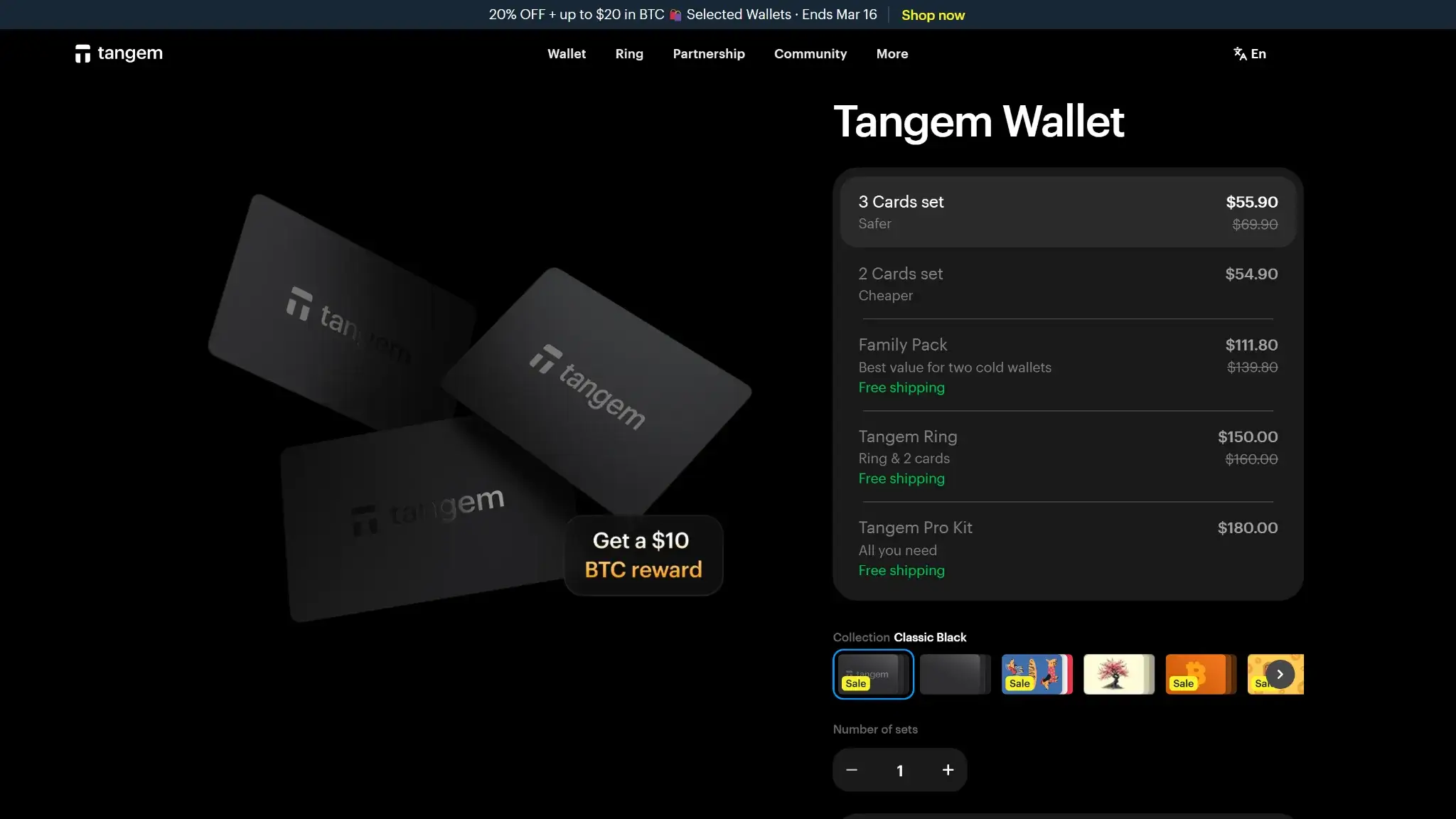
Tangem's standard sets cost $59.90 for two cards and $69.90 for three, checked September 9, 2026. The additional $10 buys another device in the initial backup arrangement. It only improves resilience if that card is stored separately and remains accessible when needed.
| Cost | What To Expect |
|---|---|
| Hardware | One-time set purchase, with delivery, tax or import charges depending on the order |
| Ordinary transfers | Blockchain network fees, without an extra Tangem transfer commission |
| Swaps | Provider and route costs reflected in the quote, including applicable network charges |
| Fiat purchases | Selected provider's fees and conversion terms |
| Staking | Asset/service-dependent charges and withdrawal timing |
| Yield Mode | 15% of earned yield plus applicable gas costs |
Tangem advertises a 25-year limited hardware warranty. That is not insurance against lost cards, compromised keys or investment losses. Its Ring-and-two-card package is a separate $160 product at the same price check.
Tangem does not deliver to some destinations, including Iran and Russia, and some eligible destinations require tax-identification information. Core wallet access, device delivery and eligibility for a purchase or payment service are separate questions. Check the shipping destination and intended provider before ordering.
Who Should Use Tangem?
Tangem fits phone-based holders who want hardware signing and can plan their physical backups before use. Its card format makes carrying one device practical, while the recovery design calls for leaving the others elsewhere.
It is a reasonable fit if you:
- Prefer NFC signing to managing a rechargeable device.
- Want native assets from several networks in one app.
- Understand whether your recovery depends on cards alone or a saved seed phrase.
It is a poor fit if you:
- Need a separate hardware display to inspect transactions.
- Expect to add or replace backup devices after setup.
- Require fully open-source applications and updateable card firmware.
Crypto Wallets Pillar Scores
- Custody and key security 30% weight Who can authorize spending, protection of keys and signing, and independent access to every reviewed account type.7.5 / 10
- Security validation and track record 25% weight Independent security assessments, their coverage and findings, plus updates and the handling of known incidents.6.0 / 10
- Transaction safety and signing 20% weight Transaction details, signing warnings, scam checks, permission controls and the handling of unreadable requests.7.0 / 10
- Backup and recovery 10% weight Repeatable backup checks, complete restoration, recovery dependencies, costs and resilience after backup loss.8.0 / 10
- Usability, privacy and costs 10% weight Setup and everyday tasks, accessibility, support guides, data-sharing choices and device, service and transaction costs.8.0 / 10
- Assets, networks and compatibility 5% weight Asset and network support, devices, companion apps and connections needed for the uses covered in the review.8.0 / 10
Final Verdict
Tangem makes hardware signing portable, but the purchase decision depends on more than the shape of the card. The recovery set is fixed after setup, the phone provides the only display, and the security history includes both a patched app bug and disclosed physical attacks. Those limitations deserve the same attention as battery-free signing and multi-network support. For a buyer comfortable with those conditions, the three-card set gives another backup for $10 over the two-card price. Choose the seedless or seeded setup deliberately and keep the backups apart. If independent transaction verification or replacing a missing backup is essential, choose a wallet designed around those requirements.
Disclaimer: CryptoSlate may receive a commission when you click links on our site and make a purchase or complete an action with a third party. This does not influence our editorial independence, reviews, or ratings, and we always aim to provide accurate, transparent information to our readers.