

Coinbase fits U.S. users who fund by ACH and use Advanced, but Simple Buy costs and regional product rules require attention.
Coinbase vs Gemini: Fees, Cards, and Security Compared
Coinbase leads on opening US spot fees and staking selection, while Gemini charges no incoming USD wire fee. Compare bank costs, card terms and support before choosing.

Gemini offers U.S. access, free ACH, and documented controls. Compare alternatives for lower entry fees or access in more countries.
Affiliate Disclosure
Some links in this comparison are affiliate links. CryptoSlate may earn a commission if you sign up through these links. Our ratings remain editorially independent.
Coinbase vs Gemini Overview
A US customer pays $9 on a $1,000 opening-tier Coinbase Advanced taker fill, versus $12 on Gemini ActiveTrader. Gemini’s incoming USD wires are free, while card approval and staking have separate conditions.
Coinbase Gemini
US Spot Accounts
Tie — core spot accounts are available in all 50 states. Individual assets and extra products have their own restrictions.
All 50 states, subject to asset rules
All 50 states, plus Puerto Rico and Washington, DC
Entry Maker / Taker
Coinbase wins on entry order-book fees: lower maker and taker commissions.
0.50% / 0.90%
0.60% / 1.20%
ACH Fees
Tie — neither exchange charges for US ACH deposits or withdrawals.
No Coinbase deposit or withdrawal fee
No Gemini deposit or withdrawal fee
Named Staking Assets
Coinbase wins on named staking selection, not guaranteed net yield.
Nine, with local restrictions
ETH, SOL and MON where eligible
Compromised-Account Phone Help
Coinbase wins for a published round-the-clock compromised-account phone route. This does not rank general support speed.
Published 24/7 US and Canada phone line for compromised accounts
Exchange form/email, with exceptional prearranged callbacks
Credit Card Requirement
Gemini wins for avoiding a required paid exchange membership. Both cards require credit approval.
Coinbase One membership and credit approval
Credit approval. No annual card fee stated
Winners by Category
Coinbase is our overall US trading pick. Gemini wins on standard incoming-wire fees, credit-card membership cost and API trading practice. Both offer free ACH and publish audited financial statements.
Coinbase Gemini
Coinbase wins — our pick for repeated US order-book trades. Gemini’s free incoming wires can matter more to someone who funds by wire but trades infrequently.
Lower entry spot fees, nine staking assets and US retail crypto futures
No incoming USD wire fee and audited financial statements
Coinbase wins — On a $1,000 fill, Coinbase saves $1 for a maker or $3 for a taker, before other costs.
0.50% maker / 0.90% taker
0.60% maker / 1.20% taker
Coinbase wins — it offers a US retail route with its own onboarding. Gemini’s Moonbase margin requires Eligible Contract Participant status and is not a substitute.
Separately approved US futures and perpetual-style contracts
Ordinary US retail perpetual access is unsupported
Coinbase wins — it names nine staking assets against Gemini’s three. The available selection and net rewards still depend on the account, protocol and commission.
Nine supported assets, with asset and state limits
Three: ETH, SOL and MON
Coinbase wins for a published round-the-clock compromised-account phone route. This does not rank general support speed.
Published 24/7 US and Canada phone line for compromised accounts
Exchange form/email, with exceptional prearranged callbacks
Gemini wins — it lists a $0 incoming fee. Preferred and Premium erase the difference by waiving Coinbase’s standard $10 fee.
$10, waived on One Preferred and Premium
$0 Gemini fee
Gemini wins for simulated trading practice. Test fills do not predict production execution.
Static mocked Advanced responses
Demo exchange with test funds and simulated trading
Gemini wins for lower fixed access cost. Rewards, credit approval and interest remain separate considerations.
Paid Coinbase One membership required
No paid exchange membership or annual card fee
Tie — Both publish financial audits. Neither supplies customer-queryable Merkle reserve inclusion, and an audit does not insure the customer balance.
Annual audited statements plus quarterly SEC reporting
Audited financial statements through December 2025
Advanced and ActiveTrader Fees
Coinbase Advanced costs less at the opening US tier. Gemini’s daily tier calculation and named zero-fee stablecoin pairs can change the rate on a particular account or market.
Coinbase Gemini
Entry Maker
Coinbase wins — $1 less commission per $1,000 maker fill at the opening tier.
0.50%
0.60%
Entry Taker
Coinbase wins — $3 less commission per $1,000 taker fill at the opening tier.
0.90%
1.20%
Coinbase wins entry spot commission. Gemini’s special stablecoin schedule and higher qualifying tiers must be evaluated for the exact trade.
A $1,000 maker fill costs $5 on Coinbase and $6 on Gemini. A taker fill costs $9 and $12 respectively. Coinbase’s taker commission is 25% lower at entry. These figures exclude spread, slippage, funding and withdrawal costs.
At $10,000 of filled notional, the taker commissions would be $90 and $120 if the entry rates applied throughout. Actual fees can fall as qualifying volume or balances move the account into another tier. Compare the rate assigned to your account, not an advertised top tier.
Gemini gives named stablecoin pairs a separate schedule: RLUSD/USD, USDC/GUSD and GUSD/USD have zero maker and taker commission. Other qualifying stablecoin pairs use 0% maker and 0.010% taker. Confirm the actual pair before applying that exception to a Gemini dollar trade.
For a simple purchase, compare the final quote for the same asset and dollar amount. An Advanced or ActiveTrader fee does not describe the cost of the simple-buy screen.
Coinbase One and Volume Discounts
A Coinbase One subscription is optional for ordinary exchange use. Its simple-trade waivers and Advanced rebates are separate benefits, while Gemini assigns ActiveTrader fees using qualifying activity or eligible assets.
Under the Coinbase One plan terms, Basic is priced at $49.99 for a year or $4.99 per month and waives eligible simple-trade fees on $500 of monthly volume. It has no Advanced rebate. Preferred membership costs $299.99 a year or $29.99 when billed monthly, extends that simple-trade allowance to $10,000 and adds a 25% eligible Advanced spot rebate capped at 100 USDC a month.
Premium is $2,999.99 with annual billing, or $299.99 each month. It removes the eligible simple-trade volume cap and provides the 25% Advanced rebate without Preferred’s 100 USDC ceiling. Preferred and Premium also waive Coinbase’s domestic wire fees. Spread can remain on simple transactions, and subscription cost is additional.
For an existing Preferred subscriber, a qualifying $12 Advanced spot commission produces a 3 USDC rebate, subject to the remaining monthly cap. That does not mean buying a subscription is worthwhile for a single trade. Compare the benefits you will actually use with the recurring charge. Gemini’s tier instead depends on qualifying trading activity or eligible assets, with no balance shortcut shown for its highest displayed volume tiers.
Cryptocurrencies and Trading Markets
Check your intended coin and withdrawal network before choosing. Coinbase’s US listing figure and Gemini’s company-wide total measure different inventories.
Coinbase’s reviewed US listing range is roughly 270–315 assets. Gemini’s August 29, 2026 Trust Center snapshot lists 99 cryptocurrencies company-wide. Coinbase is worth checking first for a less common coin, but these differently measured totals do not establish how many more coins a particular US customer can trade today.
Search both accounts for the asset, quote currency and withdrawal network you need. Gemini’s published pair total differed from its API total on the same date, so a precise market-count comparison would be misleading. Tokens accessible through the separate Base or Gemini wallets are not exchange listings.
US Crypto Futures and Staking
Coinbase wins for separately approved US retail crypto futures and its nine named staking assets. Gemini’s international perpetuals exclude US users, while its Moonbase margin requires Eligible Contract Participant approval.
Coinbase Gemini
US Retail Crypto Futures
Coinbase wins for a US retail futures route with separate approval. Gemini’s international perpetuals and ECP margin are not ordinary US retail alternatives.
Futures and perpetual-style contracts through separate US entities
Ordinary US retail perpetual access unsupported
Named Staking Assets
Coinbase wins on named staking selection: nine assets versus three, subject to eligibility. This is not a net-return ranking.
ETH, SOL, ADA, ATOM, AVAX, DOT, MATIC/POL, SUI and XTZ
ETH, SOL and MON
Coinbase provides more named staking choices and a separate US retail derivatives route. Check the commission and exit terms for the asset before committing funds.
The US futures trading route on Coinbase involves a separate regulated derivatives service and product checks. Its US perpetual-style product advertises up to 10× intraday exposure. Contract size and collateral requirements belong to that product, not to an ordinary spot order.
Gemini Margin is for approved Moonbase Eligible Contract Participants after product and location checks. It is not ordinary retail borrowing. Gemini’s pages conflict on whether it allows only long positions or also shorts, so confirm the available directions in the account. The separate international perpetual product does not supply a US alternative.
Coinbase’s 35% standard staking charge covers eight assets. Check the SUI commission shown in your account because that schedule does not establish its rate. Its One discounts cover ADA, ATOM, DOT, ETH, SOL and XTZ. Commission on those six is 31.75% for Basic, 28.5% for Preferred and 25.25% for Premium. AVAX, MATIC/POL and SUI are outside that general discount list.
Gemini’s staking agreement states 35%, its product page says up to 35%, and a support article retains 25%. Resolve the rate governing the account before comparing exchange staking costs. Its stated unbonding estimates are 6–60 days for ETH and usually 3–4 days for SOL, subject to network conditions.
Gemini also offers US prediction contracts through Titan. Those event contracts are distinct from crypto futures, so Coinbase’s category win here is specifically for the US retail crypto-futures route, not every form of derivative.
Order Controls and Trading APIs
Coinbase Advanced and Gemini ActiveTrader both provide order books and retail REST and WebSocket access. Gemini’s FIX connection is limited to eligible institutional workflows.
Coinbase Gemini
Order Book
Tie — both provide a retail spot order book. This does not establish equal liquidity or execution.
Advanced spot order book
ActiveTrader central-limit book with price-time priority
Retail APIs
Tie — both offer retail REST and WebSocket access. Endpoint coverage differs.
REST plus public and private WebSocket
REST and WebSocket
API Trading Practice
Gemini wins for practicing trading workflows against simulated activity. Neither test environment establishes live fill quality.
Static mocked Advanced responses
REST and WebSocket demo exchange with test funds and simulated trading
Coinbase Advanced supports market, limit and stop-limit orders where available. Gemini ActiveTrader supplies order instructions and charting, with supported instructions depending on the market and endpoint. Check the order type your strategy needs before funding either account.
Gemini’s demo exchange supplies test balances and simulated order-book activity through REST and WebSocket interfaces. It is more useful for trading-workflow practice than Coinbase Advanced’s static mocked responses. Gemini supports only Bitcoin Testnet deposits and withdrawals in that environment.
Coinbase’s mocked responses still help test an integration’s data handling. Neither environment establishes live matching quality, queue position or slippage. Gemini’s institutional FIX service is separate from this retail comparison. Limit API permissions to the operations needed and keep withdrawal authority separate.
Bank Transfers and Crypto Withdrawals
Both offer free ACH, but Gemini charges less for a standard incoming USD wire. Coinbase offers instant RTP cash-out on eligible transactions, with the charge to be checked in the account before confirming.
Coinbase Gemini
ACH Deposit Fee
Tie — no exchange fee for ACH deposits. Settlement and withdrawal holds still apply.
$0 Coinbase fee
$0 Gemini fee
ACH Withdrawal Fee
Tie — no exchange fee for ACH withdrawals. Account limits are separate.
$0 Coinbase fee
$0 Gemini fee, with a $100,000 daily cap
Standard Incoming USD Wire
Gemini wins on the standard incoming fee: $0 instead of $10. Coinbase One Preferred and Premium waive Coinbase’s fee.
$10, waived on One Preferred and Premium
$0 Gemini fee
Standard Outgoing USD Wire
Tie — standard outgoing wire fees are $25. Coinbase One Preferred and Premium waive its fee, and bank charges can remain.
$25, waived on One Preferred and Premium
$25 fee and $25.01 minimum
Gemini saves $10 in exchange fees on each standard incoming USD wire. Coinbase One Preferred and Premium waive Coinbase’s domestic wire fees, so existing subscribers should compare their plan’s terms instead. Both exchanges charge $25 for a standard outgoing wire before any bank charges.
Coinbase lists ACH settlement at 1–5 business days. Gemini usually makes the associated value withdrawable after 4–5 business days, even if it allows earlier trading. Settlement and permission to withdraw are different events, so those windows do not establish a speed winner.
Coinbase offers eligible instant RTP cash-out up to $100,000 per transaction, with the fee shown in the account. Gemini’s $100,000 ACH figure is a daily withdrawal limit, not a comparable instant-transfer allowance.
Gemini’s debit, Apple Pay and Google Pay purchases carry a 3.49% charge plus trading fees, a $1,000 daily purchase limit and a possible crypto withdrawal hold of up to 48 hours. Coinbase’s payment-method quote depends on the account. Compare the total crypto received for the same spend before choosing a card-funded purchase.
For crypto withdrawals, compare the same asset, network and amount. Coinbase charges 0.2% for Lightning sends and 0.01% on USDT withdrawals, capped at 20 USDT, with network cost additional for USDT. Gemini displays an asset-network fee and minimum.
US Access, Verification and Account Entities
Both exchanges provide core spot access across all 50 states and require identity verification. Gemini’s account entity matters for custody and margin, while Coinbase derivatives use separate product terms.
Coinbase Gemini
Core US State Access
Tie — both offer core spot access across all 50 states. That does not guarantee access to every asset, card or staking product.
All states, subject to asset rules
All states, with Puerto Rico and Washington, DC also named
Both require identity verification. Later source-of-funds, compliance or security checks can restrict activity even after verification, and funding holds still apply.
Most Gemini consumer accounts use Moonbase. Idaho, Louisiana, New York, Ohio and Texas accounts use the Trust agreement, which also serves qualified custody and documented exceptions. Use the agreement for your actual account to identify the applicable protections.
Coinbase’s spot-account approval does not remove the pause on new staking principal in California, Maryland, New Jersey and Wisconsin, or the Hawaii exclusion for its debit card. Gemini also applies separate asset, program and entity rules.
Account Security, Custody and Financial Audits
Both publish audited financial statements, but neither supplies a customer-queryable Merkle reserve check. Gemini requires 2FA, while both provide hardware-key and withdrawal-address controls.
Coinbase Gemini
Hardware-Key Authentication
Tie — both support hardware keys. Enable appropriate account protection. This is not an overall safety rating.
Hardware-key support
Hardware-key support
Withdrawal-Address Allowlisting
Tie — both offer address allowlisting to restrict withdrawals.
Available
Available
Audited Financial Statements
Tie — both publish financial audits. An audit is not insurance or a guarantee against loss.
Annual audited financial statements and SEC reporting
Audited financial statements through December 2025
Gemini lists examinations for both SOC 1 and SOC 2, each Type 2, through September 30, 2025. Its financial statements extend through December 2025, with ISO 27001 coverage and annual penetration testing also stated. These disclosures document financial reporting and controls. They do not make a balance immune to loss.
Coinbase says most customer digital assets are offline. Eligible dollar cash can receive up to $250,000 in FDIC or NCUSIF pass-through coverage under the applicable institution and eligibility conditions. Crypto does not receive FDIC protection. Coinbase One account protection and its crime policy have separate triggers and exclusions.
The 2025 Coinbase support-contractor data incident enabled scams against affected users even though Coinbase said central custody was unbreached. Required account controls, a financial audit and a cold-storage policy address different risks. A comparison of exchange security practices should keep those distinctions intact.
Gemini’s mandatory 2FA is a specific account rule, not proof that Coinbase users lack two-factor protection. Hardware keys and withdrawal allowlists are available on both. Use those controls alongside caution with messages claiming to be account support.
Crypto Rewards Credit Cards
Gemini states no annual card fee. Coinbase One Card requires membership and pays 2%–4% Bitcoin rewards according to qualifying holdings, while Gemini’s rates follow spending categories.
Coinbase Gemini
Required Paid Membership
Gemini wins on fixed access cost. Coinbase’s charge is membership, not a card annual fee.
Coinbase One required. Basic users need the $49.99 annual plan
No paid exchange membership or annual card fee
Base Rewards on Other Eligible Purchases
Coinbase wins on the base reward rate before its membership cost and any interest.
2% Bitcoin at the starting tier
1% crypto rewards outside bonus categories
Dining at Coinbase’s Starting Tier
Gemini wins for dining against Coinbase’s starting tier. Higher Coinbase holdings-based tiers can change this result.
2% Bitcoin rewards
3% crypto rewards
Groceries at Coinbase’s Starting Tier
Tie — both pay 2% at this comparison point, before membership cost and interest.
2% Bitcoin rewards
2% crypto rewards
The Gemini card pays 4% on qualifying gas, EV charging, transit, taxis and rideshare for the first $300 each calendar month, then 1%. Coinbase’s holdings-based rewards rise from 2% to as much as 4%, with rates above 2% limited to the first $10,000 of qualifying monthly purchases. These are different caps and qualification rules.
For $1,000 of eligible spending entirely in Gemini’s 4% category, its rewards total $19: $12 on the first $300 and $7 on the rest. Coinbase’s starting 2% produces $20 before membership cost. A different spending mix can reverse that result.
Both require credit approval. Gemini also states no foreign-transaction fee. An existing Coinbase One subscriber may not treat the full membership as a new card expense, but a new subscriber should include it. Interest on an unpaid balance can exceed rewards, and holding more assets to qualify for a higher tier adds exchange exposure.
Coinbase also advertises a separate 5% Bitcoin reward for bookings through One Card Travel. That portal rate is outside the ordinary holdings-based schedule and its $10,000 cap. Compare the booking price and terms before treating a higher reward as a saving.
Debit Spending From an Exchange Balance
Coinbase’s Visa debit card is separate from its One credit card. Gemini’s disclosed card is a credit product, so its rewards do not describe spending from an exchange balance.
The Coinbase Visa debit card spends eligible USD, USDC or converted crypto balances and is available to eligible US users outside Hawaii. It has no annual or Coinbase spending fee. Spending crypto involves selling that holding, whereas paying from USD does not.
Gemini’s credit card creates a credit-card bill to repay. It is not a debit route into the exchange balance. If debit spending is your requirement, Coinbase has the documented product to assess. Do not apply either credit card’s rewards schedule to it.
Mobile Apps, Wallets and Exchange Support
Coinbase provides a published 24/7 US phone route for compromised accounts. For ordinary exchange questions, both offer written support, while phone arrangements differ.
Coinbase Gemini
Mobile Account Tools
Tie — both supply mobile funding and trading tools. This does not rank usability or reliability.
Funding, trading and Advanced inside the main app
Funding, trading, security and supported ActiveTrader functions
Compromised-Account Phone Help
Coinbase wins for a published round-the-clock compromised-account phone route. This does not rank general support speed.
Published 24/7 US and Canada phone line for compromised accounts
Exchange form/email, with exceptional prearranged callbacks
Coinbase wins for a published 24/7 compromised-account phone route. Ordinary support hours and case resolution are separate questions.
Coinbase’s compromised-account help page lists 24/7 US and Canada phone lines. Its general contact page describes chat, requested calls, email and mail during business hours. Those are different scopes, so do not assume all channels operate around the clock.
Gemini directs exchange cases to its request form and email. Exceptional callbacks can be arranged in advance, while its 24/7 card hotline handles card issues. Neither channel list establishes a faster resolution time.
Both keep their order-book interface within the retail account experience. Select Advanced or ActiveTrader deliberately because a simple-buy shortcut can use a different fee schedule.
The separate Base app and Gemini Wallet change who controls signing and recovery. Their supported chains are not a list of exchange withdrawal networks.
Screenshots
Coinbase screenshots

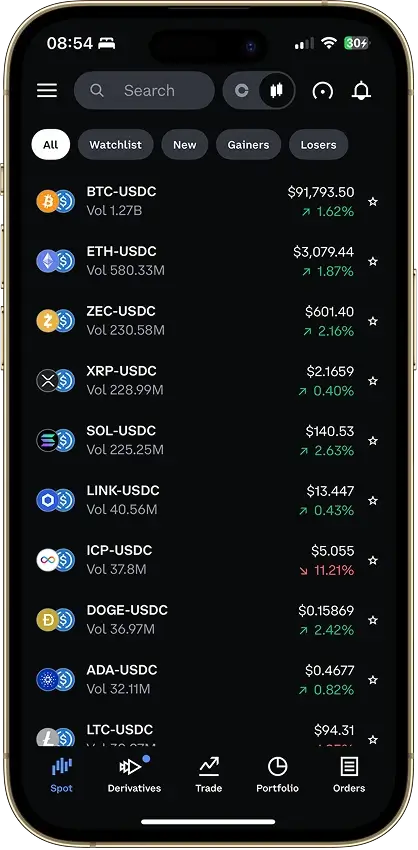
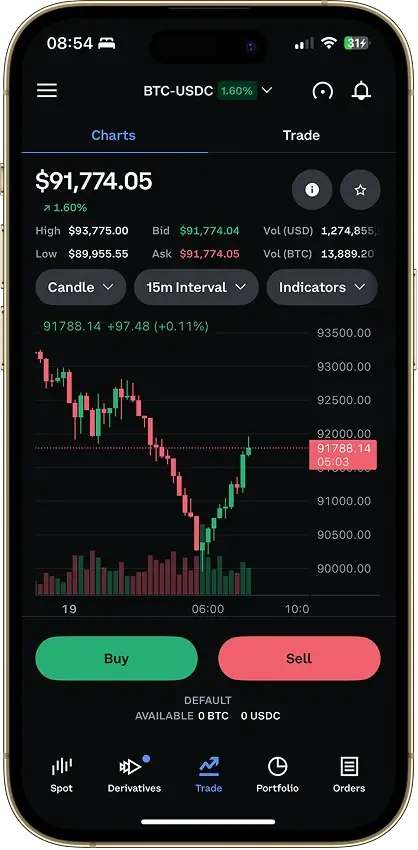
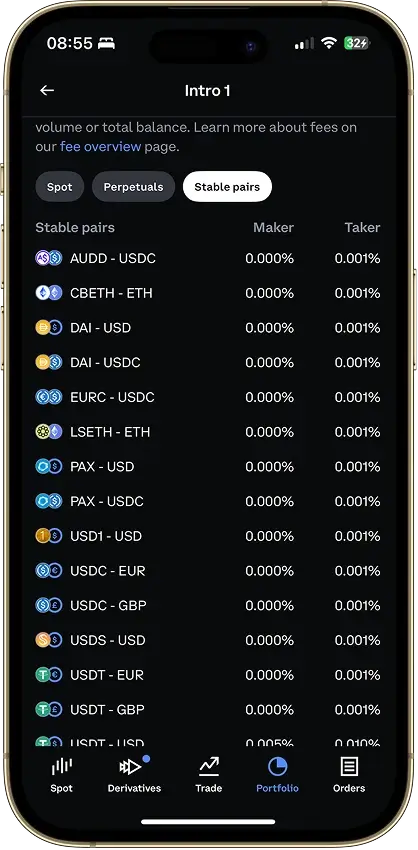
Screenshot 1 of 4
Gemini screenshots

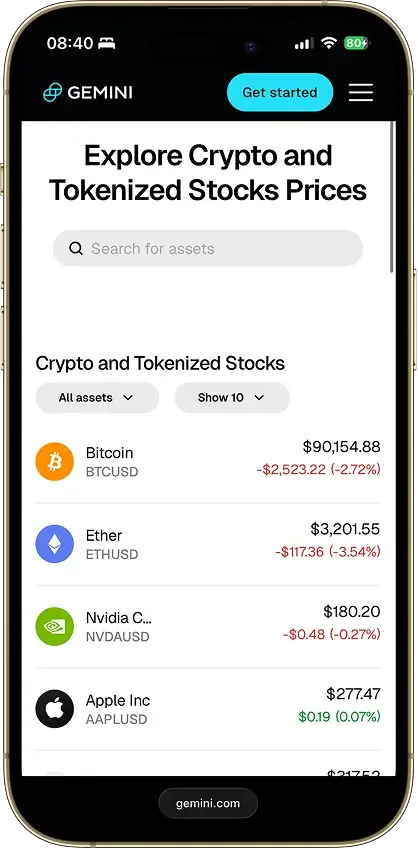
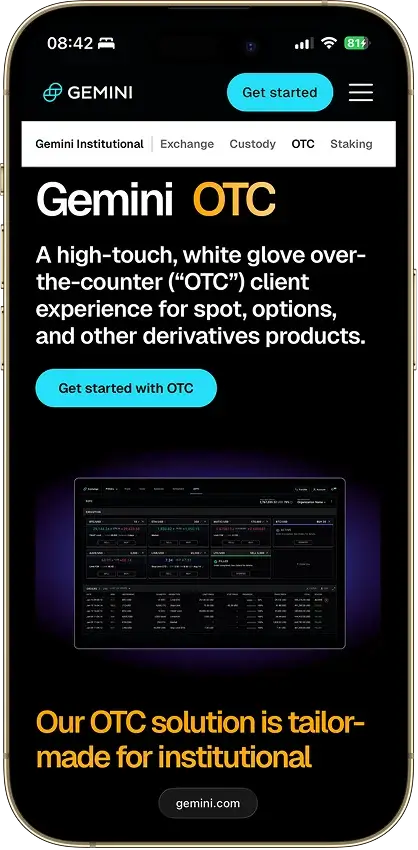

Screenshot 1 of 4
Final Verdict
Coinbase wins for lower US entry trading fees, more staking assets and retail crypto futures. Gemini wins on incoming wire fees, API trading practice and credit-card membership cost.
Affiliate Disclosure
Some links in this comparison are affiliate links. CryptoSlate may earn a commission if you sign up through these links. Our ratings remain editorially independent.
Choose Coinbase for lower opening Advanced fees, broader staking selection or separately approved US retail crypto futures. Use the Advanced interface for the compared commission, and check state and product eligibility.
Choose Gemini if free incoming USD wires, simulated API trading or avoiding a paid credit-card membership matters more. Its dining rewards beat Coinbase’s starting tier, while Coinbase pays a higher base rate on other eligible purchases. Include fixed costs and interest in that choice.
FAQs
Which is better for a US user, Coinbase or Gemini?
Coinbase is our overall choice for repeat spot trading because its opening Advanced fees are lower. It also names nine staking assets and offers a separate US retail crypto-futures route. Gemini wins on standard incoming wire fees, simulated API trading and credit-card membership cost.
Is Coinbase’s taker fee half Gemini’s?
No. The current US entry rates are 0.90% on Coinbase Advanced and 1.20% on Gemini ActiveTrader. Coinbase is 25% lower at that tier. A $1,000 taker fill costs $9 versus $12, excluding spread, slippage and other charges.
Are ACH and wire transfers free at both exchanges?
ACH deposits and withdrawals have no exchange fee at either. Gemini also charges no USD wire-deposit fee. Coinbase normally charges $10 incoming and $25 outgoing, with its domestic wire fees waived on One Preferred and Premium. Gemini’s outgoing USD wire fee is $25. Bank charges can still apply.
Can ordinary US Gemini users trade perpetuals or margin?
Gemini’s perpetual product is limited to selected non-US jurisdictions. Margin needs Moonbase Eligible Contract Participant approval and additional eligibility checks, so it is not ordinary retail borrowing. Coinbase has a separate US retail derivatives route with its own onboarding and contract rules.
Which exchange has more staking choices?
Coinbase names nine assets, compared with ETH, SOL and MON at Gemini. That selection does not establish a net-yield winner. Coinbase’s standard commission covers eight assets, but does not establish SUI’s rate. Check SUI’s in-account commission. Gemini’s service-fee disclosures conflict and need reconciliation for the account.
What fixed costs apply to the two credit cards?
Gemini states no annual card fee. Coinbase One Card requires paid membership, with Basic users on the $49.99 annual plan. Those are different cost types. Gemini’s rewards vary by category, and its 4% category is capped at $300 of spending per calendar month before falling to 1%.
Is Gemini safer because it requires 2FA?
Required 2FA is a useful rule, but it does not establish the exchange’s overall safety. Both provide hardware-key support and withdrawal allowlisting, and both publish audited financial disclosures. Neither offers a customer-queryable Merkle reserve proof. Custody, account security and financial condition are different checks.
Can I call either exchange about an account problem?
Coinbase publishes 24/7 US and Canada phone lines for compromised-account help. Its general contact page describes chat and requested calls during business hours. Gemini’s exchange support uses a form and email, with exceptional callbacks arranged in advance. Its 24/7 card hotline handles card issues. Neither promises a particular resolution time.







This comparison covers US accounts. Coinbase charges less at the opening Advanced tier, while Gemini charges no incoming USD wire fee. Use Advanced or ActiveTrader for the order-book fees shown here. Simple purchases use separate pricing, and cards and derivatives require their own approval.