
Quick Take
- Bitcoin’s Bull Score hit 90 after its run to $87,400, but spot demand, ETF inflows and futures demand are now weakening.
- Profit-taking is rising just as new buying fades, creating a tougher setup for Bitcoin to extend the rally.
- The short squeeze is largely spent and $80,000 now stands as the first major test of the new bull phase.


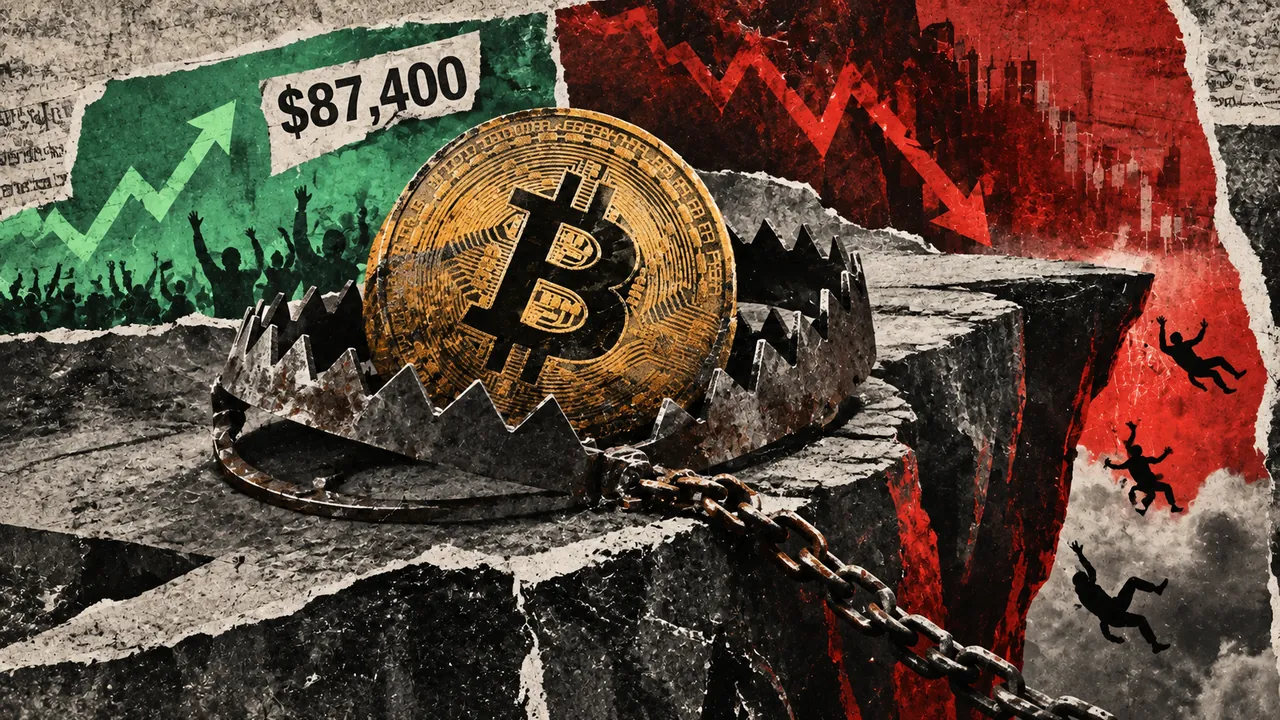
Bitcoin’s newly confirmed bull market is already showing signs that the rally powering it may be losing momentum.
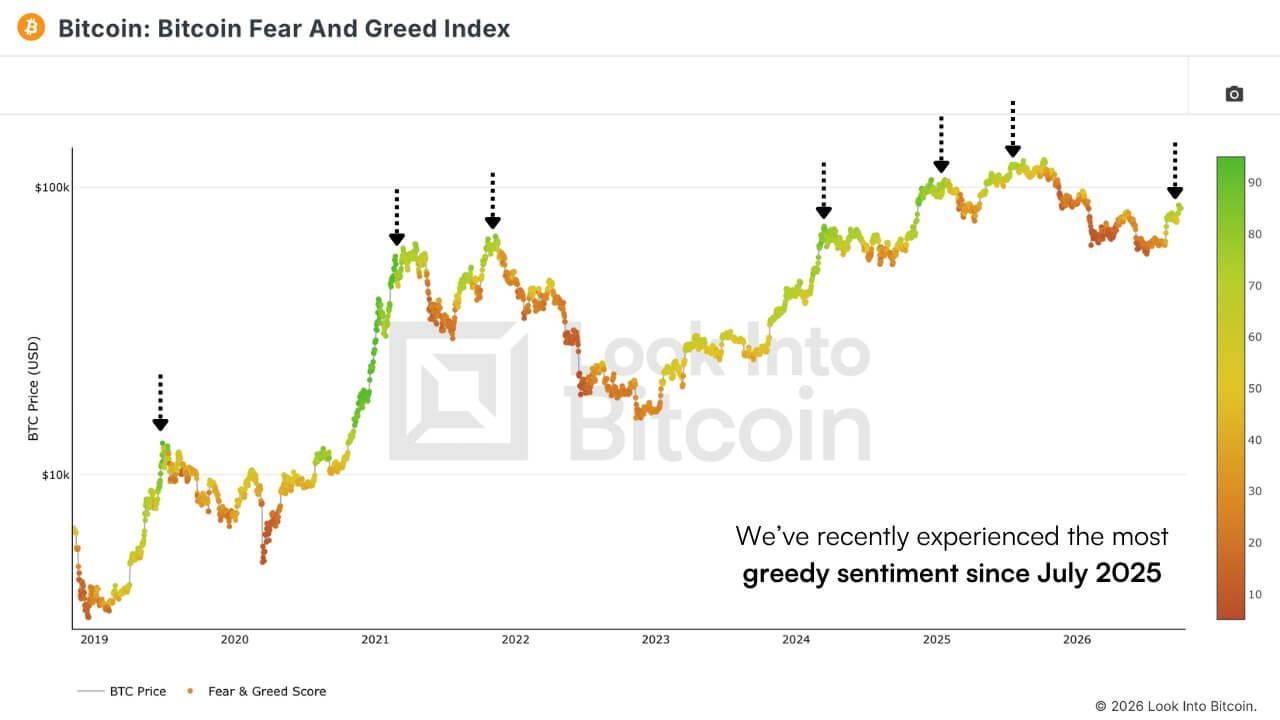
Last week, the top digital asset climbed to an eight-month high near $87,400 after reclaiming a long-term technical threshold that CryptoQuant says marked the start of a fresh bullish phase. Its Bitcoin Bull Score Index has since risen to 90 out of 100, a reading consistent with broadly favorable market conditions.
In fact, data from Look Into Bitcoin shows that “Bitcoin sentiment has hit its greediest reading since July 2025.”
But beneath that headline strength, the balance between new demand and existing holders looking to cash out is beginning to shift.
The change does not yet amount to a breakdown in the broader trend. Bitcoin remains above several long-term support levels and has retained much of its recent advance. Still, weakening demand and heavier profit-taking raise the prospect that the market could face its first meaningful test since the bullish breakout.
Demand fades as spot buying weakens and holders take profits
The clearest strain is emerging across the sources of demand that supported Bitcoin’s advance.
CryptoQuant estimates apparent spot demand contracted by about 170,000 BTC over the past 30 days, suggesting cash-market buying has failed to keep pace with the rally.
US exchange-traded fund flows point in the same direction. CryptoSlate previously reported that ETF daily inflows declined by 97% over the past week, falling from around $1 billion to just $31 million by Sept. 28.
Speculative demand has cooled even faster.
CryptoQuant estimates growth in futures demand has fallen to about 16,000 BTC from 164,000 BTC on Sept. 14, removing another source of incremental demand as Bitcoin retreats from $87,400.
The slowdown is becoming more consequential because existing holders are sitting on increasingly large gains.
Short-term traders’ unrealized profit margin has climbed to 33%, its highest since December 2024, expanding the pool of gains available to be realized if investors choose to reduce exposure.
Some have already done so.
Bitcoin holders realized profits on 25,700 BTC on Sept. 22, the largest single-day total of 2026, according to CryptoQuant, as investors used the rally to lock in gains near the top of the recent range.
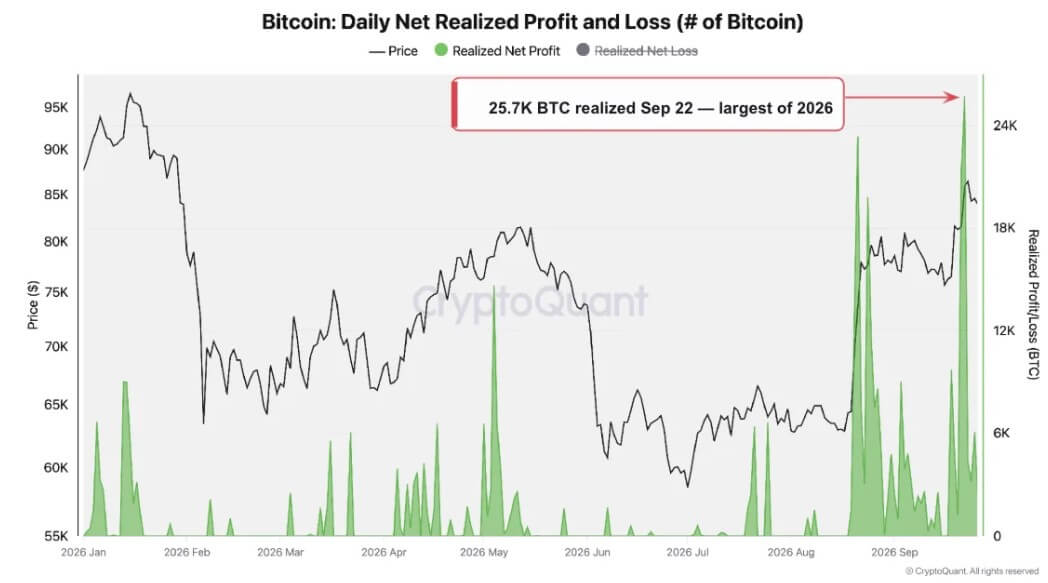
That leaves Bitcoin confronting a widening imbalance: the pace of fresh buying has weakened while the amount of profitable supply available for sale has increased.
The combination does not establish a cycle top. But another sustained leg higher would likely require spot demand to strengthen enough to absorb profit-taking from holders who accumulated Bitcoin at lower prices.
Futures take control as liquidation risk flips to Bitcoin longs
Bitcoin’s market structure has become increasingly dependent on derivatives even as overall leverage retreats.
CryptoQuant data shows the spot-to-futures volume ratio on Binance at about 0.12, meaning roughly 90% of combined trading activity is in futures. For every dollar traded in the spot market, roughly $8 to $9 is changing hands through derivatives.
Despite falling leverage, that imbalance has barely improved because cash-market participation remains subdued.
Open interest on Binance has dropped to about $9.2 billion from $10.6 billion over the past week. Glassnode data points to a broader decline, showing that BTC's coin-denominated open interest has fallen nearly 20% to its lowest since March despite the recent market rally.
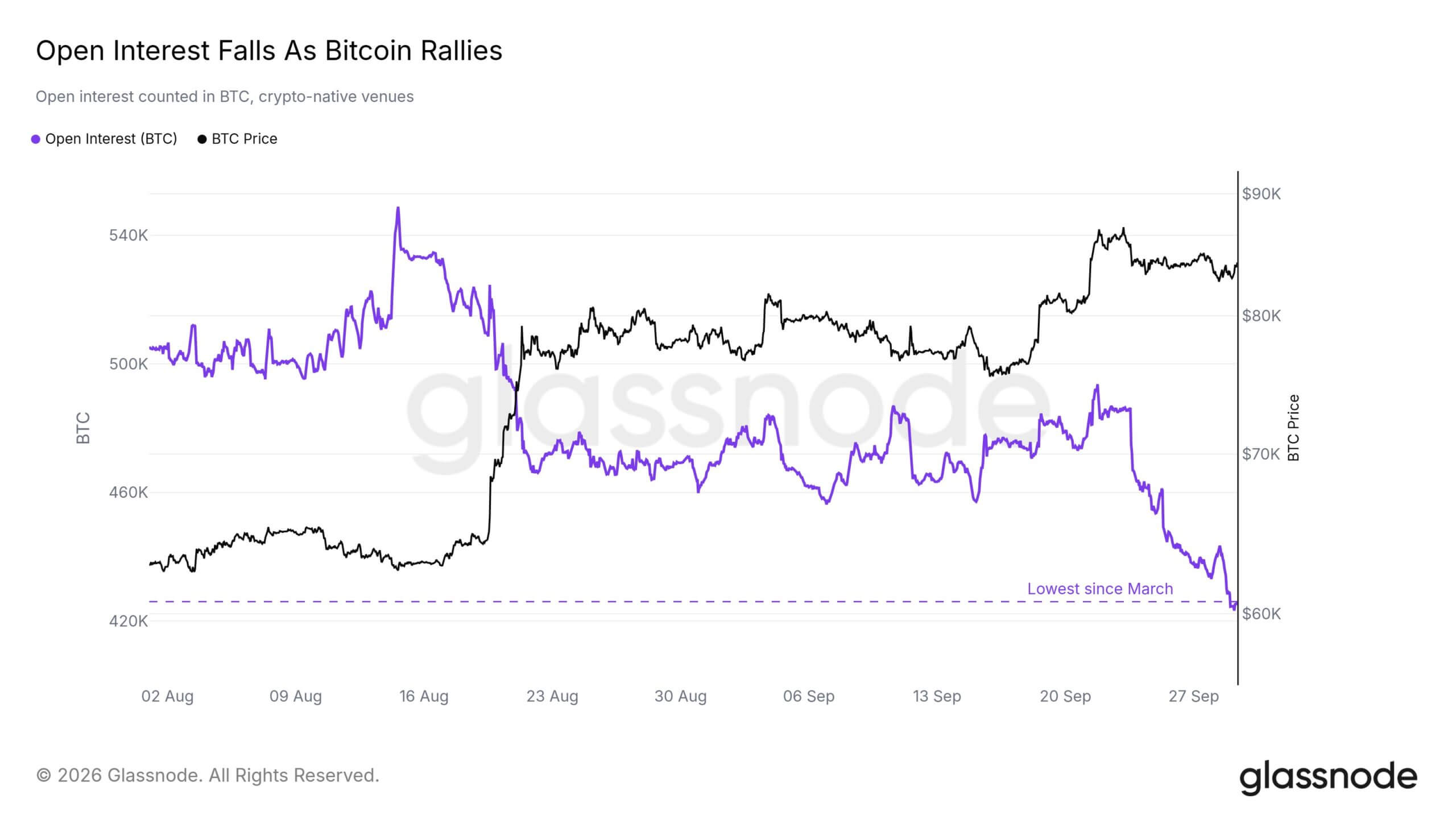
That retreat cuts both ways. Lower leverage reduces the amount of speculative fuel available for another rapid advance, but it also makes the market less vulnerable to the kind of crowded positioning that can amplify liquidations.
The composition of the remaining leverage, however, is becoming more important.
Alphractal data shows Bitcoin’s advance toward $87,000 swept through the largest clusters of short positions accumulated over the past 365 days. The move included what the analytics firm described as the biggest short-liquidation pool of the year, forcing bearish traders out as the price accelerated higher.
Those liquidations reinforced the advance because short sellers were compelled to buy back positions as Bitcoin rose.
That source of forced buying has now largely been exhausted.
Alphractal said the largest unliquidated position clusters are concentrated on the long side, shifting the market’s liquidation exposure after the recent short squeeze.
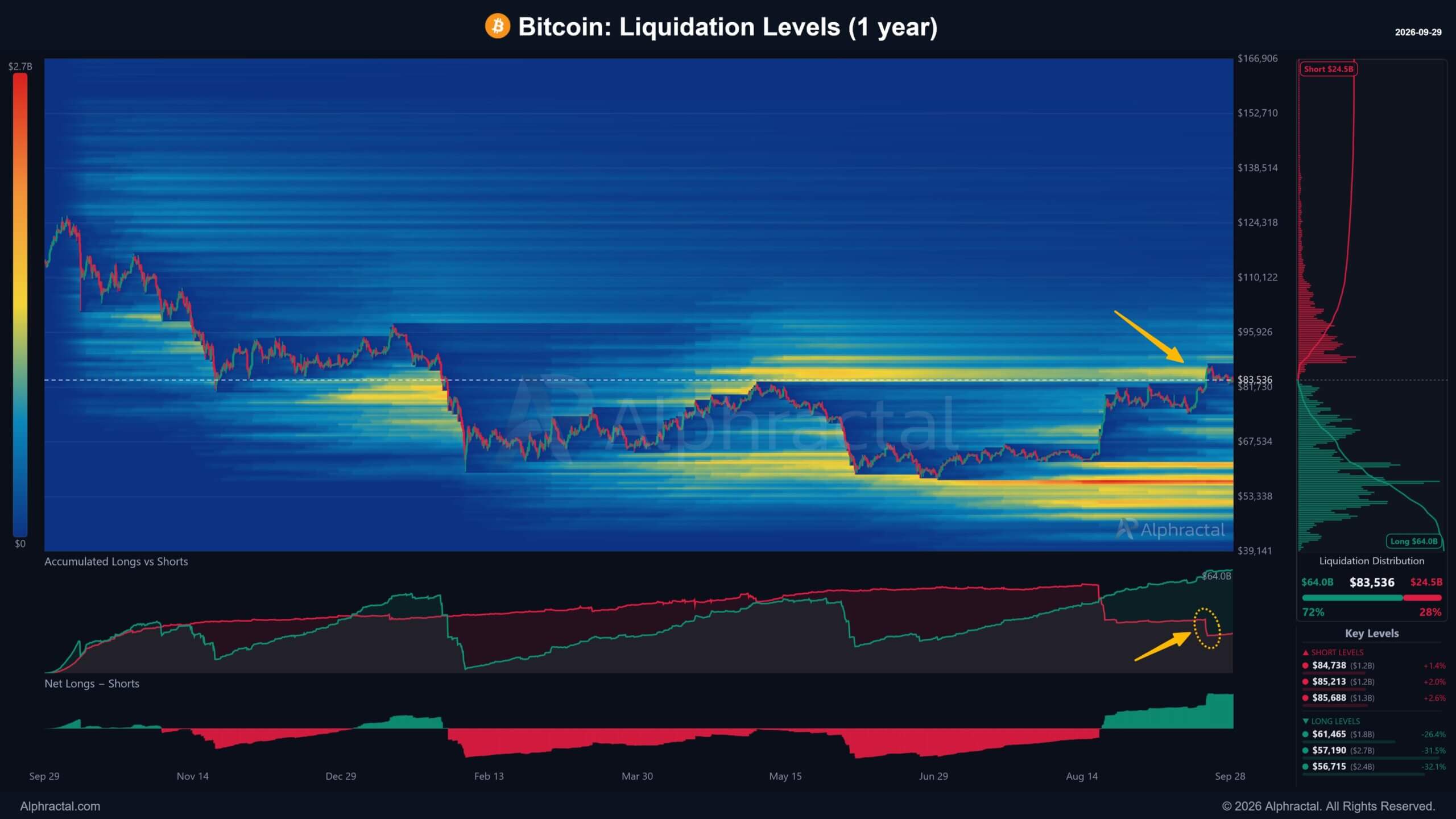
That leaves fewer large short positions available to provide forced buying if Bitcoin rises again. A decline, by contrast, could begin hitting concentrated long positions, turning leveraged traders into a source of forced selling.
Large investors have also yet to signal sustained bullishness.
Joao Wedson, chief executive officer of Alphractal, said the firm’s Whales vs. Retail Delta recently showed whales becoming more bullish relative to smaller traders, but the shift failed to persist. He said the indicator would need to turn positive and remain there before providing stronger evidence that larger investors are positioned for a lasting continuation of the rally.
The change in positioning puts more significance on Bitcoin’s downside levels if momentum continues to fade.
The 365-day moving average sits near $80,000, the level Bitcoin reclaimed when CryptoQuant identified the start of the new bull phase. Below that, the 200-day moving average stands near $71,000, while traders’ realized price is around $67,000.
A retreat toward $80,000 would provide the first indication of how well the breakout can withstand the shift in demand and positioning. Losing that level would expose progressively deeper support while increasing the risk that the long positions left behind after the short squeeze become the next source of forced liquidation.

Bitcoin is +0.97% over the past 24 hours and currently sits at rank #1 by market cap.
Mentioned in this article


Editorial credits