
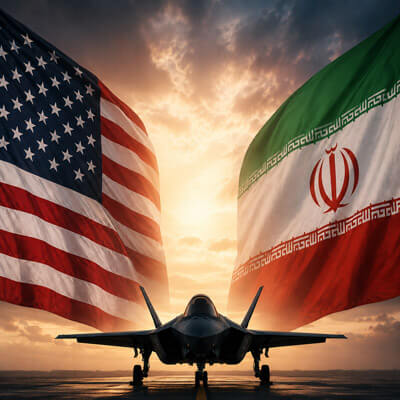
US announces halt in Iran offensive operations date
Final Results
Scheduled deadline: Aug 31, 2026, 23:59 UTC

1 more outcomes Other final results
- July 24No
Market Resolution
This US announces halt in Iran offensive operations date prediction market is settled. The percentages above are the final outcome probabilities reported by Polymarket.
Polymarket · Final sync
 Kharg Island no longer under Iranian control by…?
  Will the U.S. invade Iran before 2027?
  Iran agrees to surrender enriched uranium stockpile by…?
 Market Analysis
Escalation Delays an Iran Halt While White House Precedent Lifts August

Nine consecutive nights of strikes constrain the earliest deadlines, yet the administration has already shown a willingness to convert conditional agreements into formal ceasefire declarations. The curve therefore depends on whether renewed coercion produces another announcement-ready bargain before August ends.

The market’s hierarchy prices two distinct phases: an active campaign that makes an immediate halt difficult to announce, followed by a widening window for Washington to package military pressure into a formal cessation. That interpretation fits the sharp rise from 18.5% by July 21 to 38.5% by July 24, the modest increase to 42.5% by July 31, and the larger extension to 67% by August 31.
Ongoing strikes suppress the earliest deadlines
AP reported on July 20 that U.S. strikes had entered a ninth consecutive night. CENTCOM said the campaign was targeting command centers, air defenses, coastal surveillance, and missile and drone launch sites. AP also reported that the United States reimposed its blockade of Iranian ports on July 14 after talks stalled and fighting around the Strait of Hormuz intensified.
Those actions make the 18.5% July 21 outcome especially demanding. A qualifying announcement would require a policy transition almost immediately after an expanding operation. The move to 38.5% by July 24 implies that the market assigns meaningful probability to a rapid diplomatic or operational pivot, although the supplied evidence identifies no scheduled agreement or official deadline during that three-day interval. That part of the curve is therefore an inference about how quickly policy could change, rather than a response to a confirmed catalyst.
White House precedent gives later dates a stronger foundation
The August probabilities draw support from the administration’s previous language. In a May 13 statement of administration policy, the White House said there were “no present hostilities” and described the conflict that began February 28 as terminated by President Donald Trump’s April 7 ceasefire order. That establishes a direct precedent for an official declaration capable of satisfying language such as end, cessation, or suspension.
The precedent also carries a warning. On June 19, the White House announced that Trump and Vice President JD Vance had signed a memorandum of understanding with Iran covering nuclear restrictions and reopening the Strait of Hormuz while broader negotiations continued. By July, the blockade had returned and strikes had resumed. Formal de-escalation language can arrive quickly, yet the underlying arrangement can remain conditional and reversible.
The curve assumes coercion can produce another conditional bargain
The rise from 42.5% by July 31 to 53% by August 15 and 67% by August 31 implies that added negotiating time materially improves the chance of an announcement. The causal thesis is that strikes and the blockade increase pressure for concessions, after which Washington has an incentive to describe a ceasefire or suspension as completion of a defined military objective.
That thesis contains several hidden assumptions. Iran would need to offer terms the United States can publicly accept, likely involving the nuclear file or navigation through Hormuz, given the June memorandum. U.S. officials would also need to judge that continued offensive action adds fewer benefits than a declared pause. Finally, retaliation or verification disputes would need to stay contained long enough for an authorized representative to speak formally.
Contract language makes communication as important as battlefield activity
The resolution rules require a public, official U.S. announcement ending, terminating, ceasing, or suspending offensive military action. A reduction in sorties, an unannounced operational pause, or resumed negotiations would not independently establish that outcome. Conversely, an explicit suspension could qualify even if broader confrontation, defensive deployments, sanctions, or disputed maritime measures continued, subject to the market’s application of its rules.
This distinction helps explain why August 31 reaches 67% instead of approaching certainty. The remaining probability covers scenarios in which operations taper without qualifying language, negotiations continue past the deadline, or Washington preserves freedom of action through deliberately conditional statements. With $375,140 in volume, $176,610 in liquidity, and $163,330 in open interest, the term structure has meaningful participation, though those figures cannot validate its diplomatic assumptions.
Renewed escalation is the strongest counter-signal
The main failure mode is that July’s campaign represents a sustained shift in U.S. objectives. Continued strike announcements, an extended blockade, new Iranian attacks, or official statements tying cessation to unmet conditions would weaken the case for every near-term deadline and could move probability toward later dates.
Concrete evidence in the other direction would include a White House or CENTCOM statement explicitly suspending offensive operations, a verified ceasefire, restoration of navigation through Hormuz, or a new agreement paired with termination language. The decisive catalyst is the official wording: diplomacy can improve the setting, while the contract resolves on Washington publicly declaring the halt.
Sources
Market Details
- Resolution criteria
- This market will resolve to "Yes" if the United States government, or an authorized representative of the United States government, publicly and officially announces the end, termination, cessation, or suspension of the United States' offensive military action against Iran, between market creation and the specified date, 11:59 PM ET. Otherwise, this market will resolve to "No".
- Platform
-


- Category
- Politics › Iran
- Scheduled deadline
- August 31, 2026, 11:59 PM UTC
- Market rules summary
- Multi-timeframe Polymarket event. Each listed timeframe is represented by its Yes price on the underlying binary market. View full rules
Frequently Asked Questions
What was the final result of the US announces halt in Iran offensive operations date prediction market?
Polymarket reports the US announces halt in Iran offensive operations date prediction market as closed. The final snapshot shows July 31 at 100%, August 15 at 100%, August 31 at 100%, and July 19 at 0%. The final market snapshot includes $5.57M volume and $3.17M open interest. CryptoSlate last synced the final market data at Jul 30, 2026, 00:37 UTC.
How does the US announces halt in Iran offensive operations date prediction market resolve?
This market will resolve to "Yes" if the United States government, or an authorized representative of the United States government, publicly and officially announces the end, termination, cessation, or suspension of the United States' offensive military action against Iran, between market creation and the specified date, 11:59 PM ET. Otherwise, this market will resolve to "No". Multi-timeframe Polymarket event. Each listed timeframe is represented by its Yes price on the underlying binary market.
Related Iran Markets
 US x Iran Effective Ceasefire date Will the U.S. invade Iran before 2027?
  US charges Hormuz fees by…?