


- $90,138 median depth within 2¢ of the price
- No fee on resting limit orders
- No-key public API with live order books
Polymarket US Overview
- Prediction Market Name
- Polymarket US
- Platform Type
- Regulated Event Exchange
- Fun Play Mode
- No
- Regulated
- Yes
- Availability
- U.S. residents in every state except Nevada
- Age Requirement
- 18+ (age of majority where you live: 19 in Alabama and Nebraska, 21 in Mississippi)
- KYC Level
- Full KYC
- Funding Currency
- USD
- Deposit Methods
- Debit card, ACH bank transfer, wire transfer
- Minimum Deposit
- No card or ACH minimum stated ($1,000 by wire)
- Core Market Categories
- Sports, politics, culture, economics, tech, finance, crypto, climate, geopolitics, science
- Contract Type
- Binary Contracts, Multi-Outcome Contracts, Range Contracts
- Liquidity Model
- Order Book
- Early Exit
- Yes
- Position Limits
- No
- API / Historical Data Access
- Yes
- App Availability
- iOS, Android, Web-Based
- Tax Reporting
- No
Additional details
- Languages
- English
Polymarket US Screenshots
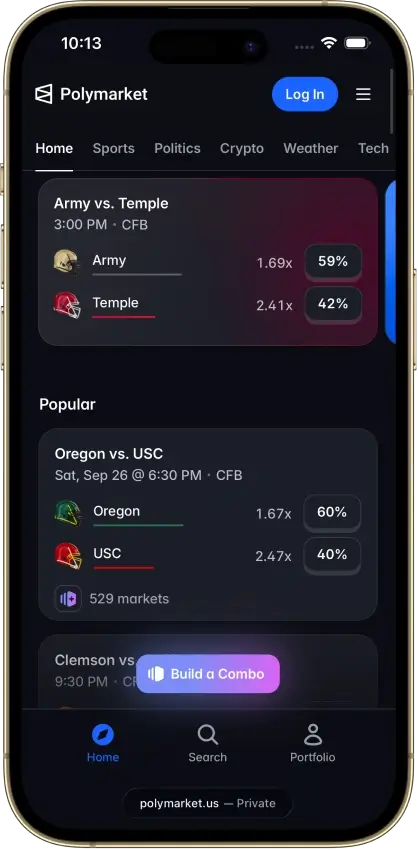
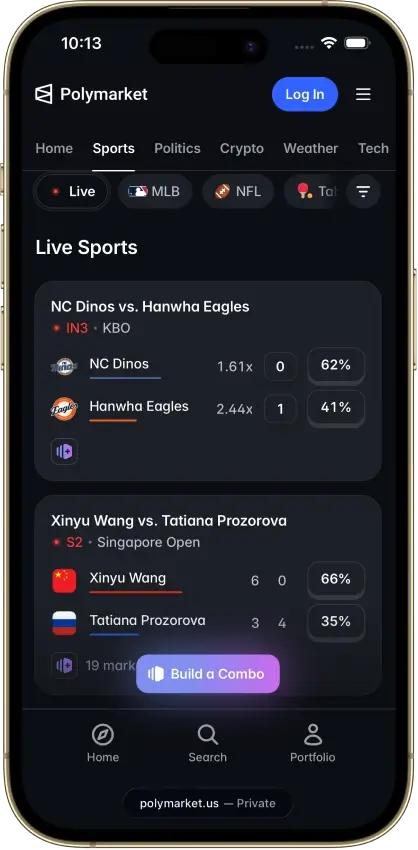
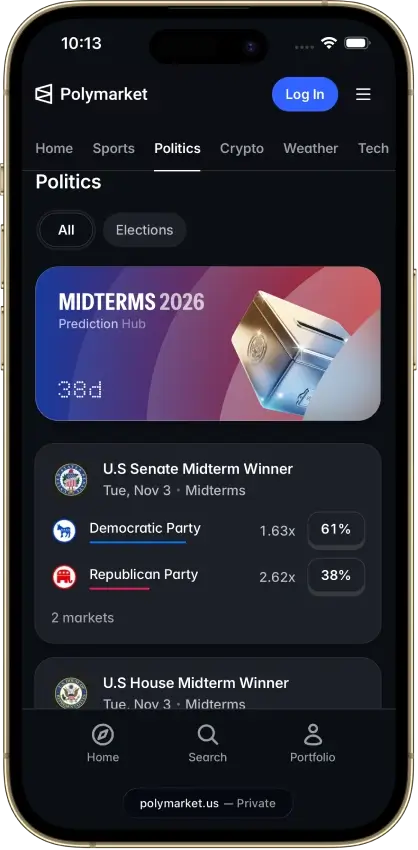
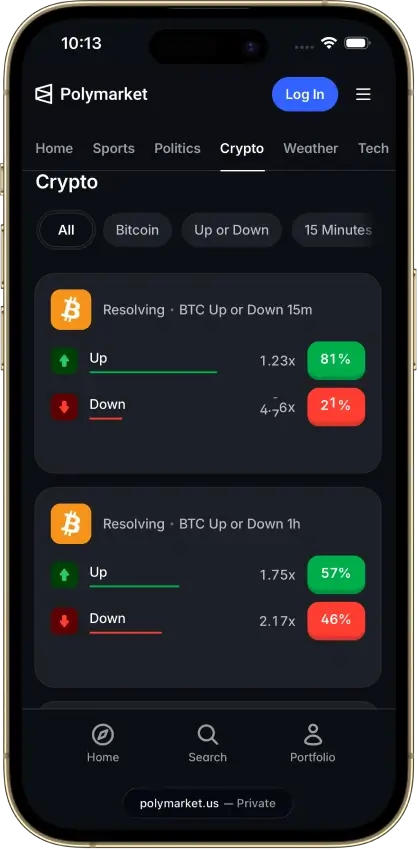
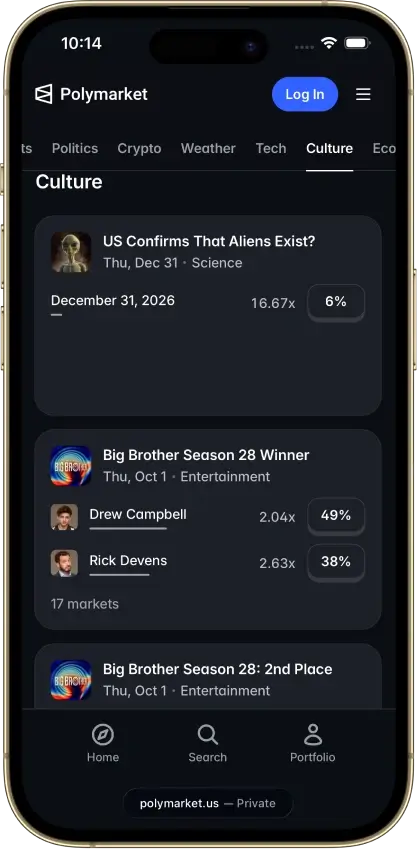
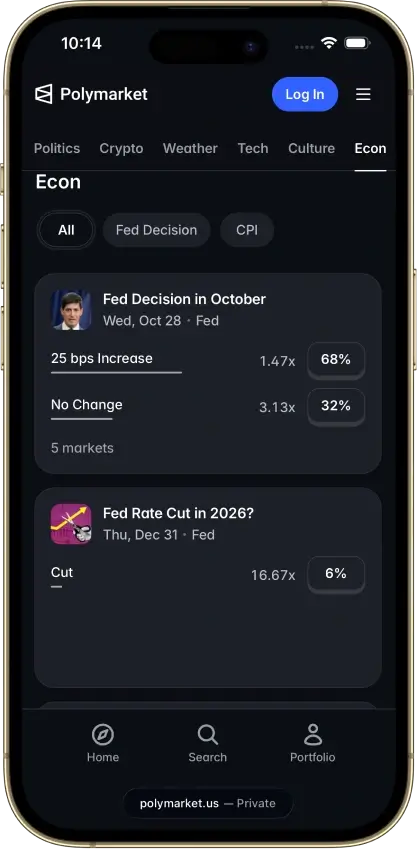
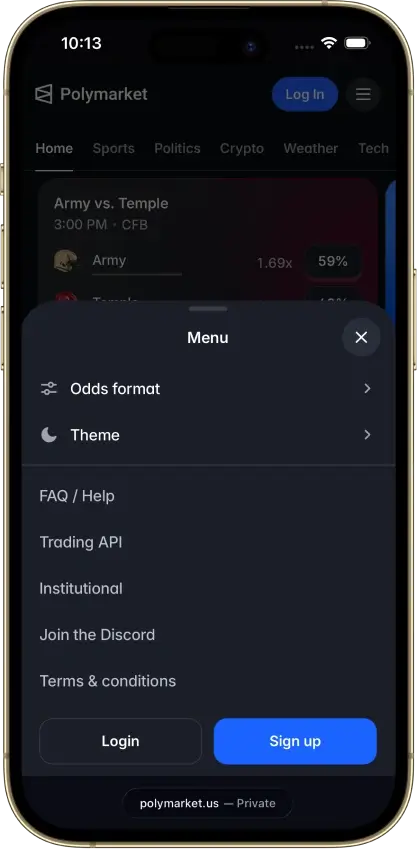
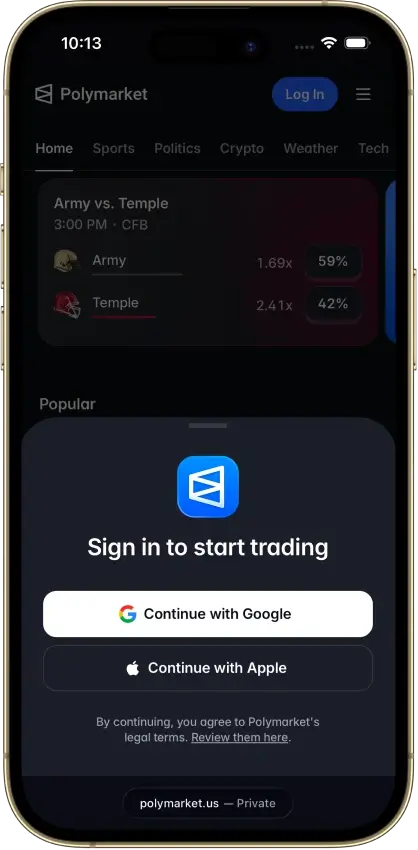
Screenshot 1 of 8
Polymarket US Pros and Cons
Pros
- 0.5¢ spreads on top game markets
- CFTC exchange and clearing house end to end
- Taker fee 1.74¢ at 50¢, level with Kalshi
- iOS, Android, web and a public API
- Available in every state except Nevada
Cons
- Deposits take 3–4 business days to clear
- Withdrawals only to the original source
- No crypto, PayPal or instant transfers
- Company decisions on outcomes are final
- No tax form listed for event-contract gains
Who Polymarket US Is Best For — And Who Should Skip It
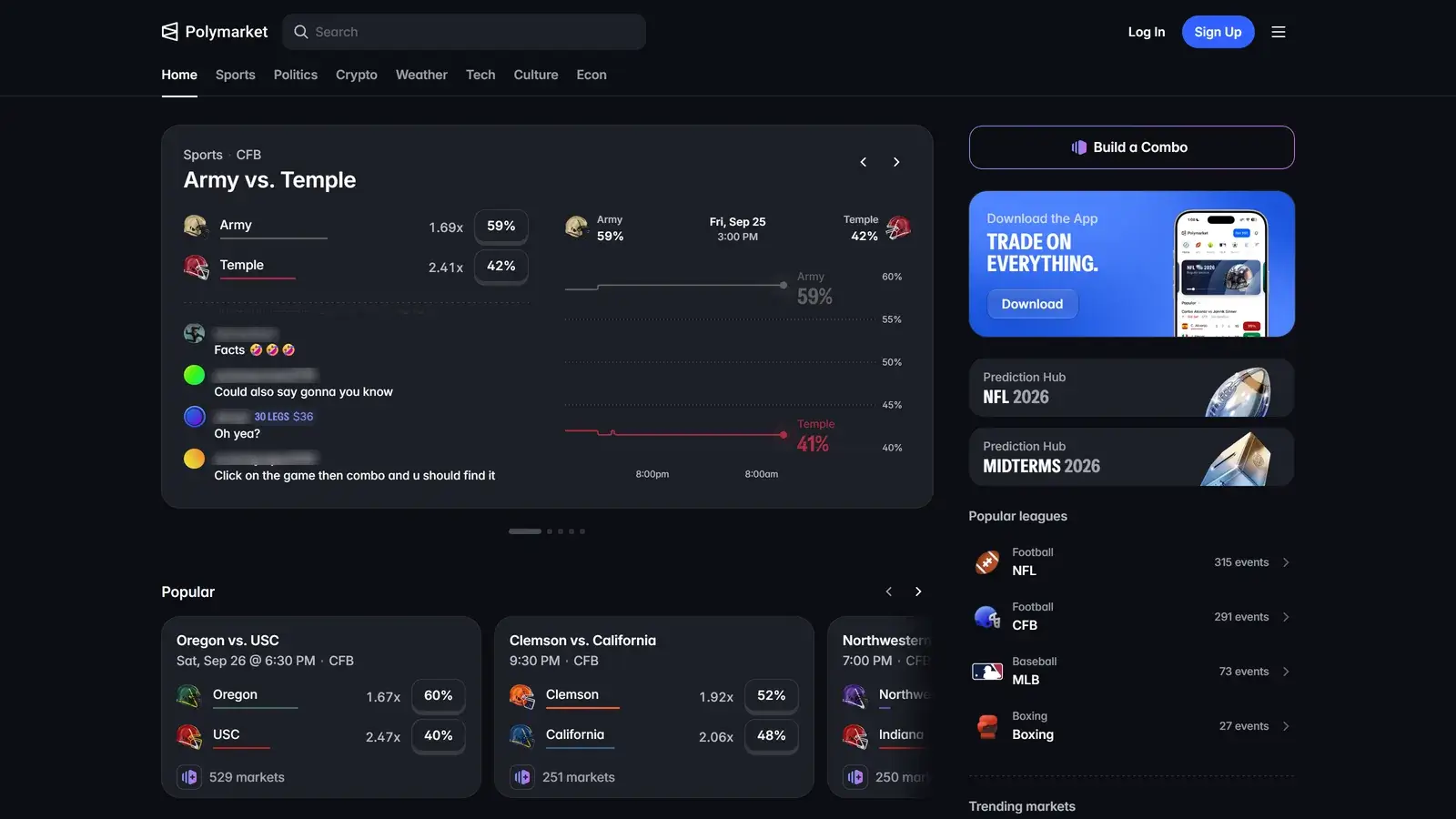
Polymarket US fits active sports and election traders in the U.S. who want depth behind the price. Its most-traded games and Senate races have bids and asks half a cent to a cent apart, and resting orders pay no fee. Developers get a public API that serves live order books without a key, and traders who take more than $250,000 of volume a month get part of their fees back.
Skip it if you live in Nevada, where a court order blocks it, or if you need money back in your bank within a day or two. Card and bank deposits have to clear for 3–4 business days before any of that money, or winnings made with it, can leave, and withdrawals only go back to the account you funded from. Traders who want PayPal, Venmo or crypto funding and debit withdrawals that land within hours can use Kalshi, and brokerage customers can compare Robinhood's event contracts.
| Category | Fit | Why |
|---|---|---|
| Casual Events | Medium | Instant sign-up, slow cash-out |
| Sports | High | 13,000+ markets, 0.5¢ spreads |
| Macro Or Economic | Medium | 227 economics and finance markets |
| Politics | High | 6,349 markets, 2026 races |
| Crypto-Native | Low | USD only, no crypto rails |
| API Or Bot | High | Public book API, SDKs |
| Fast Cash-Out | Low | 3–4 business days to clear |
| Low KYC Friction | Medium | Most checks pass instantly |
| Clear Regulation | High | CFTC exchange and clearing house |
What Is Polymarket US And How Does It Work?
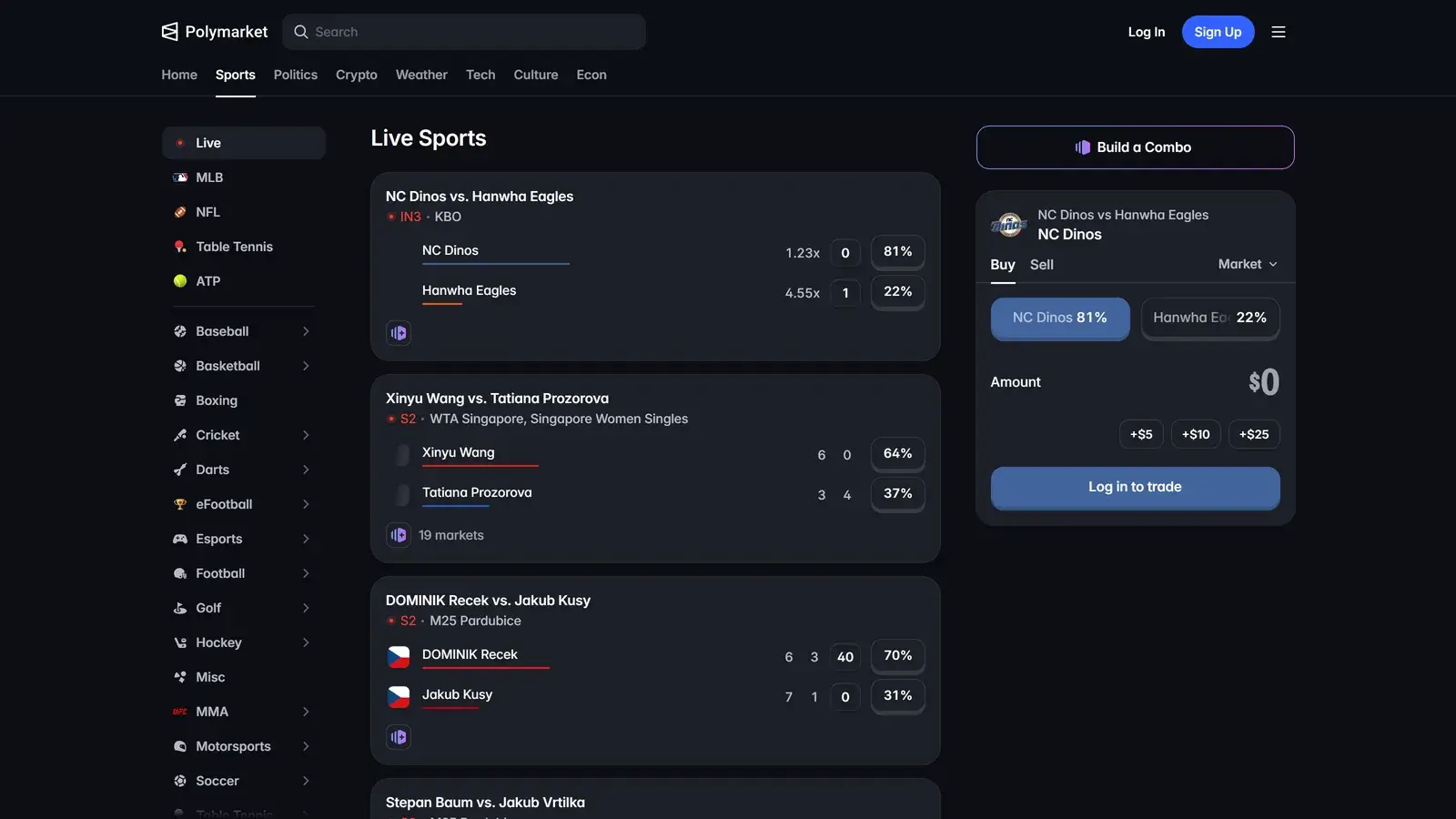
Polymarket US is an order-book exchange for fully collateralized event contracts, with its own clearing house. A winning contract pays $1 and a losing one pays nothing, with ties and long postponements priced separately by the rules, so a Yes contract at 38¢ prices the outcome at 38%.
Trading takes five steps:
- Sign in with Google or Apple and pass the identity check
- Fund the account by debit card, bank transfer or wire
- Buy Yes on an outcome, or sell Yes to take the other side
- Close the position before the event ends, or hold it to settlement
- Withdraw cleared funds back to the card or bank you used
Every order meets another user's order, since Polymarket US doesn't take the other side or set prices. Each position is fully paid for when the trade happens, so a seller posts $1 per contract to cover the payout. Trades are in whole contracts only. Polymarket also runs a separate international crypto site, Polymarket.com, which U.S. residents can't use.
Is Polymarket US Legit?
Yes. Polymarket US runs on a federally regulated exchange. The CFTC designated QCX LLC as a contract market in July 2025, and QC Clearing, the clearing house in the same group, registered with the CFTC as a derivatives clearing organization in December 2024. Both belong to Blockratize, the company behind Polymarket, and Intercontinental Exchange owns more than 10% of Blockratize.
| Role | Entity | Registration |
|---|---|---|
| Exchange | QCX LLC (Polymarket US) | CFTC contract market, 2025 |
| Clearing house | QC Clearing LLC | CFTC clearing organization, 2024 |
| Broker | Not applicable | You clear directly |
| App provider | PM US Tech | Software only |
| Customer funds | Member account at QC Clearing | Segregated, fully collateralized |
Several states argue that sports contracts are unlicensed wagering under state law, and Polymarket US is in court with the states below. Only Nevada has an order against it in force.
- Nevada: a state court granted Nevada's gaming regulator a preliminary injunction on May 29, 2026, and trading is unavailable there.
- Minnesota: a federal court blocked the state's prediction-market law in a case Polymarket US brought.
- Michigan: a federal judge denied Polymarket US's request to block state enforcement in June 2026, and the appeal is pending at the Sixth Circuit, which ruled against Kalshi on the same question in Ohio and Tennessee on September 25, 2026. No order stops trading there.
- New York: the attorney general sued Polymarket US on September 24, 2026 as an unlicensed gambling operation. Polymarket US has asked a federal court to declare New York's gambling laws preempted, and neither case has a ruling.
- Kentucky, Wisconsin and Baltimore, Maryland: state or city suits are pending in federal court with no ruling against it.
- New Mexico: a suit Polymarket US brought against the state is on hold.
A consumer class action is pending in New York federal court, where the Polymarket companies have asked the judge to send it to arbitration. A second suit, which Polymarket moved from D.C. Superior Court to federal court in early September 2026, concerns the paid-creator campaign that the Wall Street Journal and others reported in the summer. According to those reports, creators were paid to film staged wins.
For traders asking whether Polymarket US is safe, positions are fully collateralized at a CFTC-registered clearing house, the same exchange-and-clearing-house setup Kalshi uses. The state cases decide where it can offer sports contracts, and the two consumer suits are still waiting on first rulings.
Access, Eligibility and Account Setup
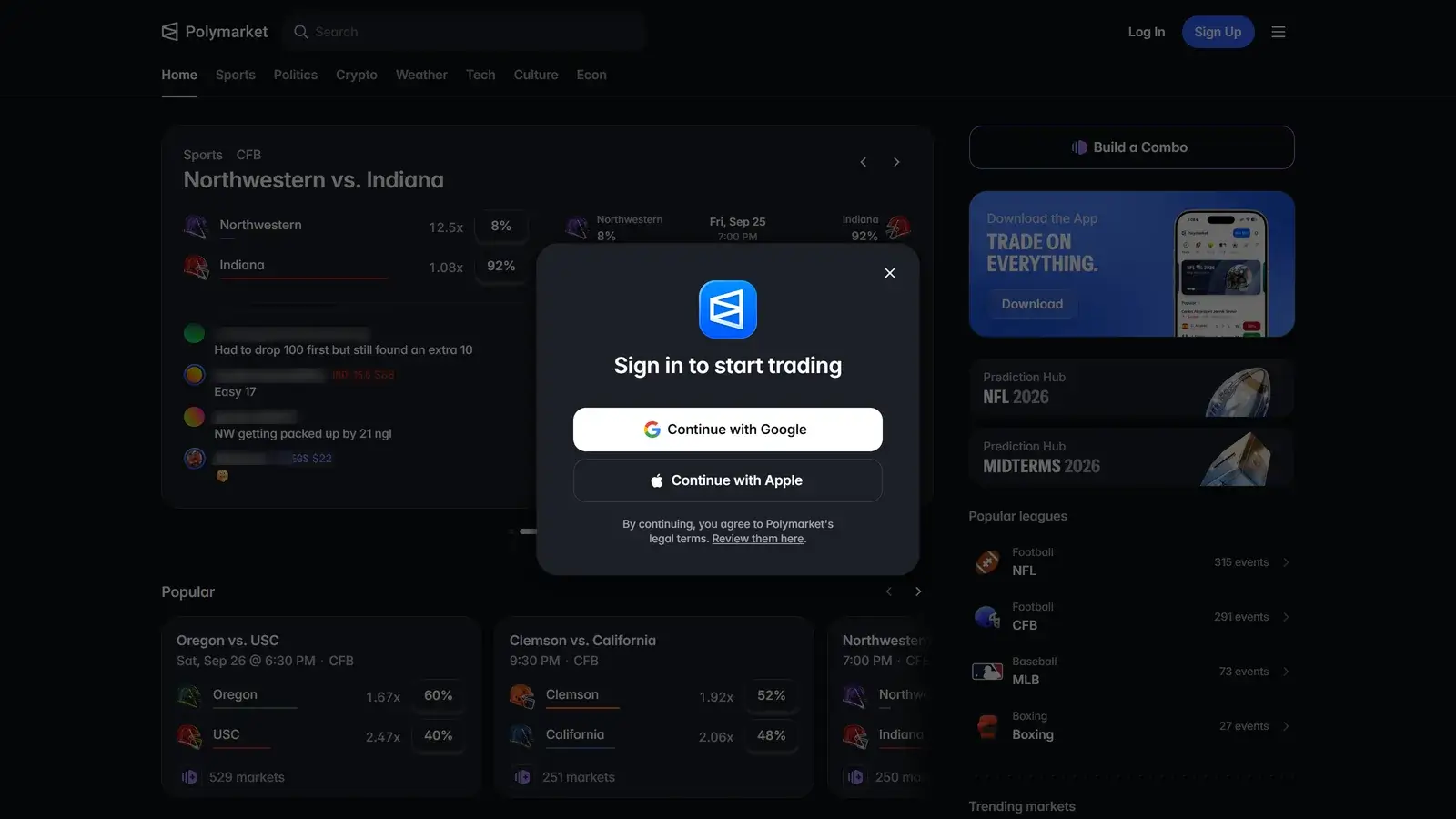
You sign up with a Google account or Apple ID, pick a username and enter your full name, date of birth and home address. Most identity checks pass instantly. If one doesn't, you upload a government ID and a selfie, and manual review takes up to 3–5 business days. The minimum age is 18, or older where state law sets adulthood later: 19 in Alabama and Nebraska and 21 in Mississippi. Every deposit has to come from an account held in your name.
U.S. State Availability as of October 2026
Traders in California, Texas, New York, Florida and Washington can all use Polymarket US, since no order blocks it in any of them. With an account open and a card or bank linked, you can trade within minutes of depositing, because card and bank deposits come with instant buying power while they clear.
Market Coverage and Contract Design
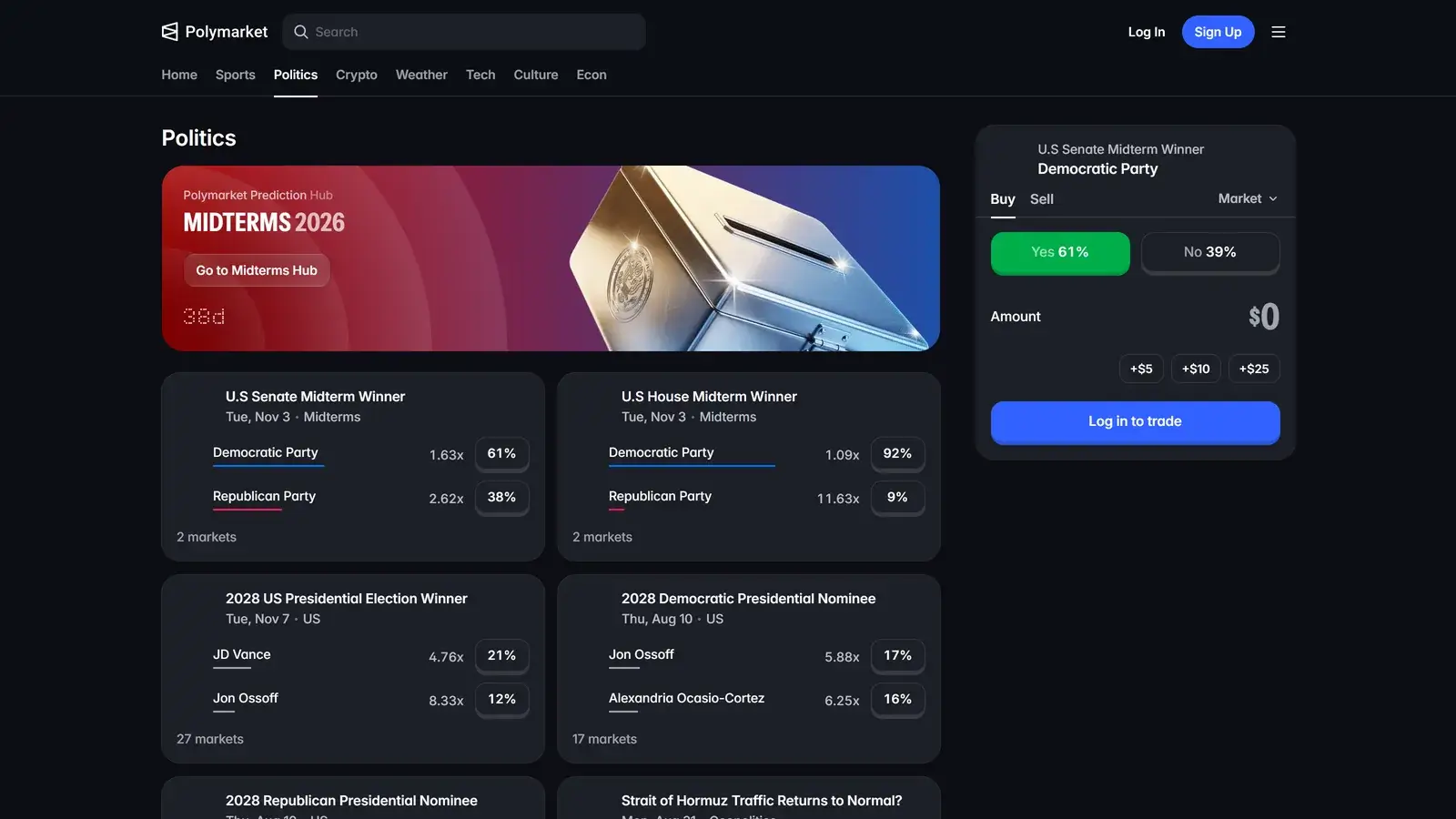
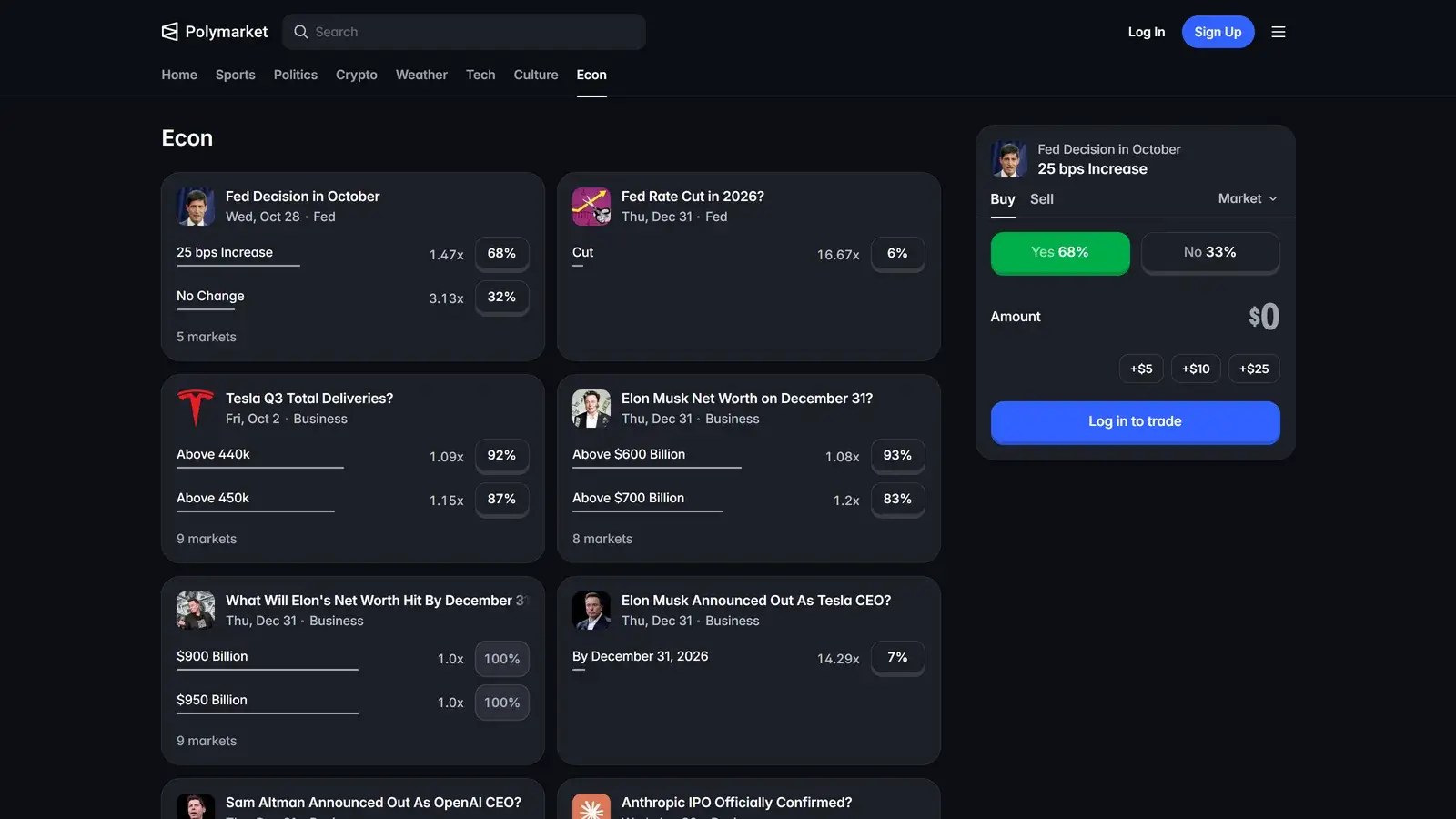
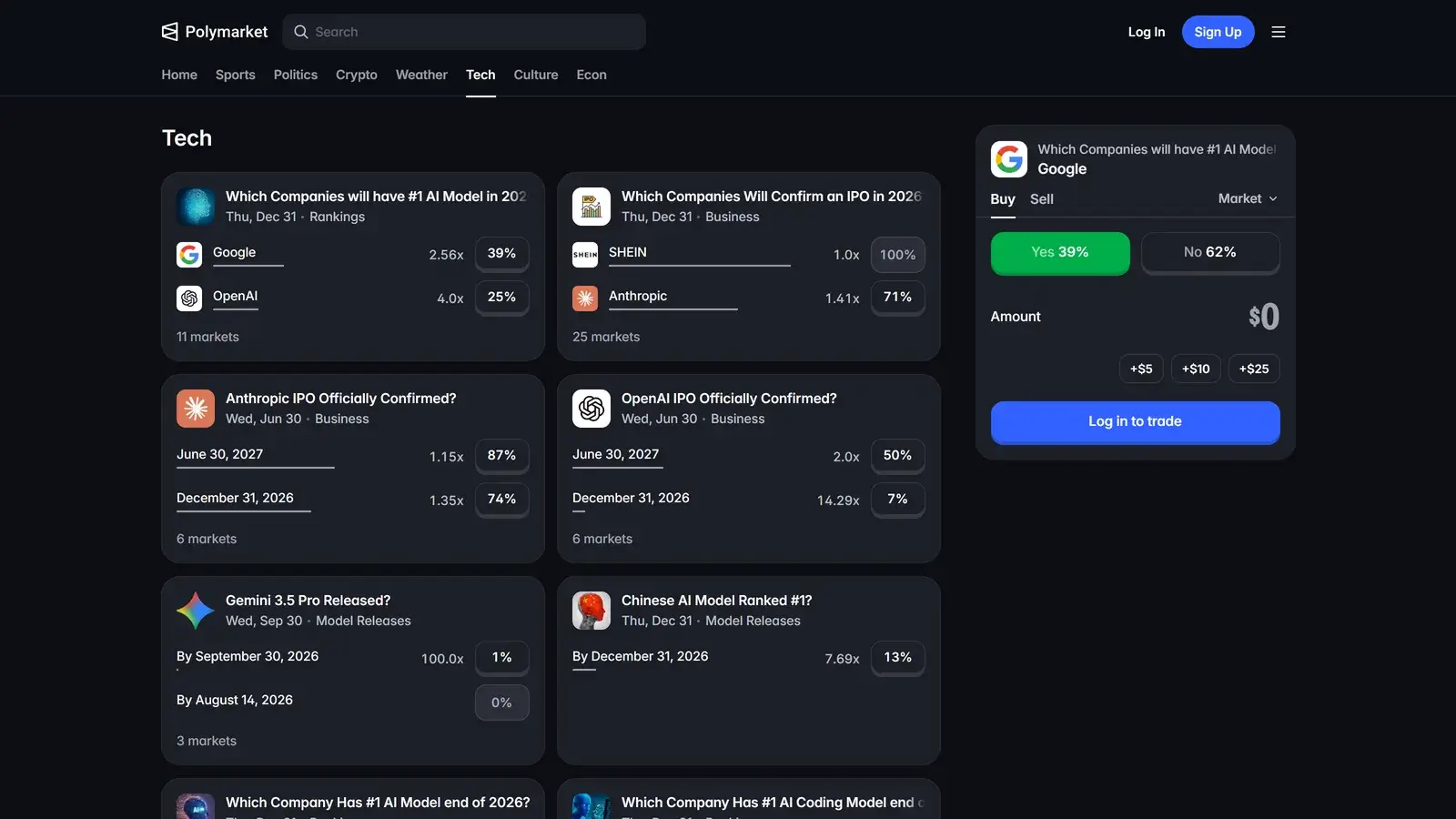
Polymarket US lists more than 20,000 open markets across about 3,800 events. Live sports markets make up about two-thirds of them and 2026 election markets most of the rest, with smaller sets in culture, economics, tech, finance, crypto and climate.
| Category | What Is Covered | How Deep It Is | Gaps |
|---|---|---|---|
| Sports | NFL, college, MLB, UFC, futures | 13,353 markets | Futures hold less depth |
| Politics | Midterms, governors, Senate | 6,349 markets | Mostly U.S. races |
| Culture | Awards, entertainment | 422 markets | 2% of listings |
| Economics, finance | Rates, data releases, stocks | 227 markets | 1% of listings |
| Tech, crypto, other | AI, crypto prices, science | 149 markets | Under 1% of listings |
Football drives the sports side, with spreads, totals, quarter and half markets, and a long list of team and player props for every NFL and college game. Politics runs down to individual governor and Senate races in the 2026 midterms.
Contract Design Notes
- Game contracts: winner, spread, total and props. A game winner with no tie option settles at $0.50 each side if the game ends tied.
- Multi-outcome events: sets of contracts where one outcome wins, such as a championship or an election with several candidates.
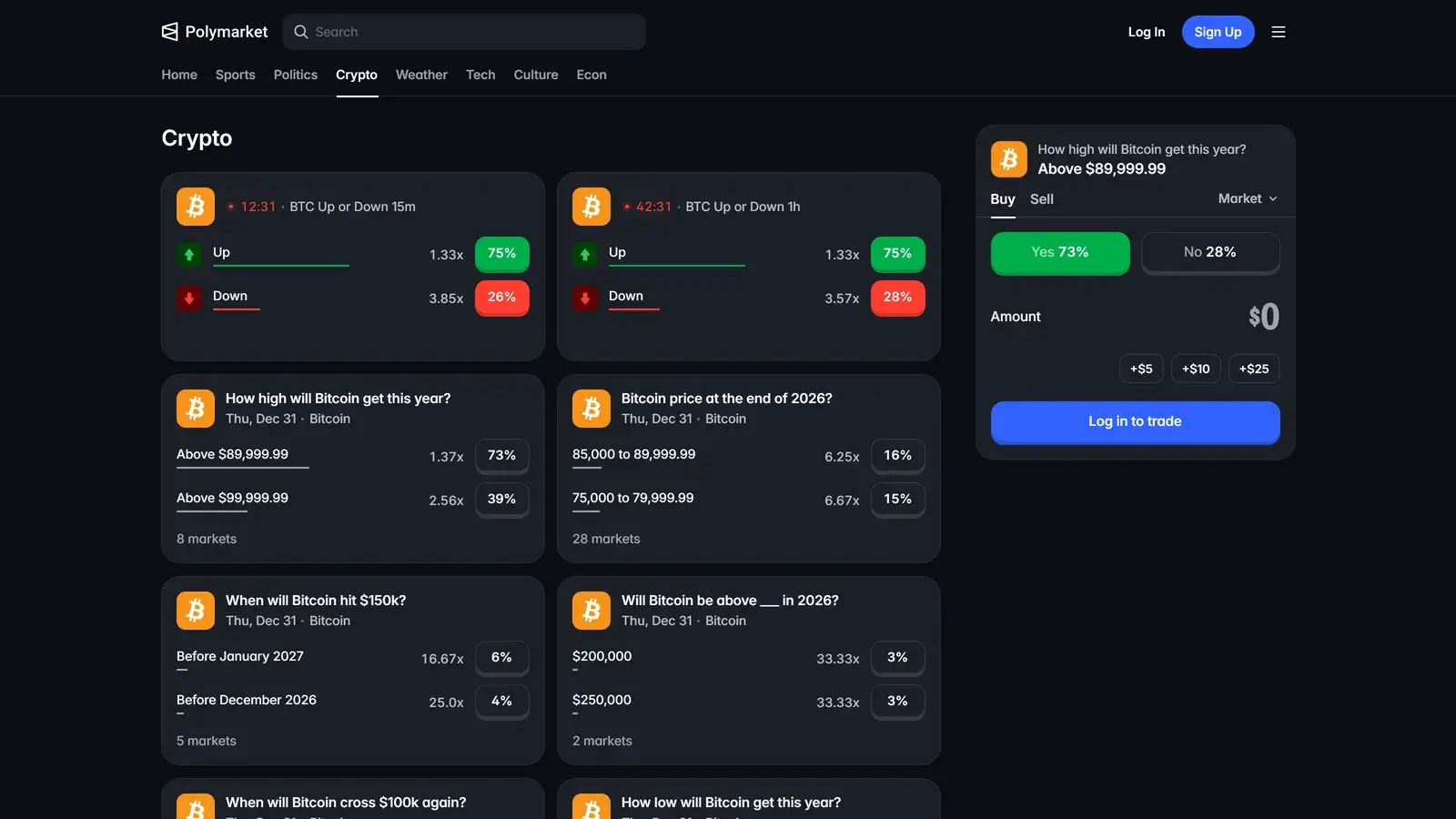
- Range contracts: crypto price markets settle on a named index, such as a CF Benchmarks rate.
- Combos: 2 to 10 legs priced by market makers on request. A leg that can't settle is valued at its last fair market price, set by a settlement committee whose decision is final.
- Listings: the company's markets team picks every market. Users can't create them.
Liquidity, Order Book and Execution Quality
A 12-market sample of heavily traded politics and sports markets on Polymarket US, priced between 10¢ and 90¢, held a median $90,138 within 2¢ of the mid price, against $72,580 in Kalshi's comparable sample and $63,871 on Polymarket's international site. Their median spread was 1¢, and five of them quoted half a cent apart, since prices move in tenths of a cent. Game markets held the most size, with over $4 million near the price on a Falcons–Packers game. The smallest book in the sample, an NFL championship futures market, held $9,804.
| Market | Spread | Depth ±2¢ |
|---|---|---|
| Falcons vs. Packers | 0.5¢ | $4,048,432 |
| Mets vs. Rangers | 0.5¢ | $903,969 |
| Ole Miss vs. Florida | 0.5¢ | $217,348 |
| Twins vs. Giants | 0.5¢ | $150,075 |
| Texas Senate winner | 1¢ | $123,678 |
| Iowa Senate (Republican) | 1¢ | $92,313 |
| Ohio Senate winner | 1¢ | $87,963 |
| Iowa Senate (Democrat) | 1¢ | $63,564 |
| Blue Jays vs. Orioles | 0.5¢ | $50,365 |
| Maine Senate winner | 1¢ | $39,649 |
| Georgia governor winner | 1¢ | $36,644 |
| NFL champion (Bills) | 1¢ | $9,804 |
If a market order is larger than the quantity at the best price, the rest fills at the next prices on the book. Orders buy whole contracts only, so a dollar-amount order returns any leftover cents to your balance. When the exchange's systems lag, it rejects any order it can't process within 5 seconds, which limits the risk of a fill at a stale price.
Every market in the sample held at least $9,804 within 2¢ of the price, counting bids and offers together, so none of the sampled books was close to empty.
Fees and Total Cost to Trade
Traders whose orders match immediately pay 0.0695 × contracts × price × (1 − price). That's 1.74¢ a contract at a 50¢ price, falling toward the extremes. Kalshi's standard taker fee uses 0.07 on the same formula, 1.75¢ at 50¢, so Polymarket US costs about 0.01¢ less per contract. Resting orders that get filled pay no maker fee. From mid-October 2026, a fee change filed on October 2 limits maker rebates to traders with at least $10 million of maker volume in the prior month. The same change sets taker rebates at 3% to 30% for anyone who traded more than $250,000 as a taker. Combos carry a higher taker fee than single contracts.
Take 100 contracts bought at 50¢ and sold at 60¢, both with market orders. The buy costs $50 plus $1.74 in fees and the sale returns $60 minus $1.67, so fees take $3.41 of the $10 gain and leave $6.59. If the buy rests on the book as a limit order, it pays no fee and total fees drop to $1.67.
Sign-up and deposit promotions pay trading credits, not cash. Credits can't be withdrawn even after you trade them, and only the profit they produce becomes withdrawable once you've made a cleared deposit of your own.
Funding, Settlement and Cash-Out Flow
Everything runs in U.S. dollars. There's no crypto, PayPal, Venmo or instant bank transfer.
Deposits
| Method | Minimum | Clears |
|---|---|---|
| Debit card | Not disclosed | 3–4 business days |
| Bank transfer (ACH) | Not disclosed | 3–4 business days |
| Wire | $1,000 | 1 business day |
Card and ACH deposits are capped at $25,000 a transaction, $50,000 a day and $2 million over 60 days, and they give you instant buying power while they clear. Wires come from a U.S. bank in your own name, with your name and phone number in the memo.
Withdrawals
No deposit fee is listed for any method, and every withdrawal method is free. A card or ACH deposit has to fully clear before any of it can leave, and that includes profits from trades made with its instant buying power. Withdrawals also return first-in, first-out to the original payment method, so money deposited by card goes back to that card. Traders report withdrawals held for days, which these rules explain.
Sports markets settle after the league posts the official result, and political markets wait for certification where the rules require it. Winnings then land in your cash balance, ready to trade at once and to withdraw once the deposits behind them have cleared.
Resolution Rules, Market Integrity and Disputes
Each market names its source in the rules, and sports markets follow the league or governing body first, then official scorecards and reports, then wire services such as the AP and Reuters. The rules also cover the awkward cases:
- Postponements: a game rescheduled beyond about two weeks settles at the last fair market price.
- Death, illness or injury: since September 14, 2026, a market whose subject dies or can't take part settles at the last traded price before the news.
- Error trades: from September 30, 2026, trades within 20¢ of fair value stand, and review requests close 15 minutes after the trade.
- Clarifications: the exchange adds them as “Additional context” at the top of the rules, and posting one can cancel resting orders.
The exchange decides outcomes itself. Under its Rule 10.4, senior officers can review any market before settlement and reverse a result in the case of obvious error, and their decisions are final. There's no appeal, and claims against the exchange go to arbitration in New York. None of the exchange's notices since August 2025 reversed or re-settled an outcome. After outages such as the college football kickoff disruption on September 5, 2026, Polymarket US paid credits instead of changing results.
The rulebook bars trading on inside information and trading by anyone who can influence an outcome, and the National Futures Association runs trade surveillance for the exchange under contract. Polymarket US hasn't announced any disciplinary actions.
Security, Custody, Privacy and Trust
Your cash sits in a member account at QC Clearing, kept separate from company funds, and every position is backed in full when the trade happens, so the clearing house keeps no default fund. As a retail user you're a direct member of the exchange and clearing house, with no broker in between. Clearing-house rules let member funds be invested in the instruments CFTC rules allow.
Login runs through Google or Apple, so your account is only as secure as that sign-in, and Polymarket US tells users never to share a verification code, even with support. Identity checks need your name, date of birth, address and, in some cases, ID and a selfie.
UX, Apps, Automation and Data Access
Trading works in the iOS and Android apps and on the web at polymarket.us. The exchange runs nearly around the clock, with weekly maintenance on Thursdays from 6 to 8 a.m. Eastern starting September 24, 2026, and every open order is canceled before each window.
Its order-book API needs no key to read and serves full order books, price history and settlement prices for every market. A keyed API handles orders and positions, and WebSocket feeds stream books and trades, with Python and TypeScript libraries for both. Larger firms can apply for institutional FIX access.
Taxes, Statements and Record-Keeping
Polymarket US doesn't list a tax form for event-contract gains. Your trade history, settlements and balance changes are in the app's portfolio view and available through the activity endpoint of the API, and working out what you owe on prediction-market gains is up to you.
Customer Support, Limits and Incident Handling
Support runs through in-app chat and email at support@polymarket.us, and there's no phone line or stated reply time. Traders report slow replies and outages during big games. The exchange lists no trade-size or position limit, though its rules let it set position limits for individual contracts. Since September 30, 2026, you can set deposit limits and exclude yourself for 30 days or longer, up to permanently. Lowering a limit takes effect at once, and raising one comes with a waiting period.
Incidents appear as public exchange notices. In 2026 the exchange halted two markets over technical errors, and after several disruptions and a delayed settlement it paid credits from $10 up to the principal plus fees on affected positions. Each notice states the credits set no precedent for future outages.
Prediction Markets Pillar Scores
- Funding and withdrawals 20% weight Deposit routes, minimums and holds, settlement to balance, withdrawal timing, limits, and bank or wallet access.6.5 / 10
- Fees and total cost 15% weight Trading commissions, broker charges, profit fees, funding and withdrawal costs, gas, and currency conversion.6.0 / 10
- Liquidity and execution 15% weight Executable spreads, order-book depth, slippage, order handling, and the ability to exit before resolution.10.0 / 10
- Market rules and resolution 15% weight Resolution sources, outcome definitions, edge cases, payout rules, challenge windows, and disputed outcomes.8.0 / 10
- Safety, custody and eligibility 15% weight Serving entities and permissions, custody or contract safeguards, collateral, account controls, eligibility, and setup.8.5 / 10
- Market coverage and contracts 10% weight Relevant live events, category coverage, contract types, expiries, listing timeliness, and useful alternatives.10.0 / 10
- Usability, support and reporting 10% weight Trading usability, order and portfolio views, relevant data tools, human support, dated terms, statements, and exports.7.0 / 10
Final Verdict
Under our prediction-market rating method, Polymarket US scores 7.9. Its order books were the deepest we sampled, with a $90,138 median within 2¢, and its taker fee sits just under Kalshi's while resting orders pay no fee. The exchange and clearing house are CFTC-registered, and only Nevada has an order against it. Cash-out is where it falls short of Kalshi, since card and bank deposits take 3–4 business days to clear and withdrawals only go back to the original source. Disputed outcomes end with the company's final call. Pick it for U.S. sports and election trading. Traders who need faster withdrawals or more ways to fund can compare regulated U.S. prediction markets.
Disclaimer: CryptoSlate may receive a commission when you click links on our site and make a purchase or complete an action with a third party. This does not influence our editorial independence, reviews, or ratings, and we always aim to provide accurate, transparent information to our readers.