
Global Bybit fits active traders outside its named blocked markets. It does not fit users who need U.S. access, one European and global product set, or dependable bank cash-out everywhere.
Bybit vs Kraken: Which Crypto Exchange Is Better in 2026?
Kraken is the more practical overall choice for users who need access in the US outside New York and Maine or an EEA account route, along with named US bank-transfer routes.

Kraken scores 7.8/10 for security controls, quarterly reserve checks, bank rails and advanced tools. Entry fees, reserve coverage and product restrictions are the main tradeoffs.
Affiliate Disclosure
Some links in this comparison are affiliate links. CryptoSlate may earn a commission if you sign up through these links. Our ratings remain editorially independent.


Start With the Account That Is Actually Available
Bybit Kraken
Global account
Global Bybit menu: spot, margin, derivatives, Earn, P2P, copy trading, bots, and APIs
Kraken menu: spot, margin, derivatives, staking, fiat transfers, OTC, and APIs
United States
Unavailable
Available except New York and Maine, with state and product limits
United Kingdom
Not listed among Global Bybit's blanket country exclusions. Product-specific restrictions still apply
Available through FCA-authorized entities, with product limits
Separate MiCAR-authorized Bybit EU service
MiCA-authorized service with an Irish e-money structure
Not disclosed for Bybit EU
MiCA-authorized EEA account route, with product-specific availability
France
EEA migration applies. Eligible residents use the separate Bybit EU service
MiCA-authorized EEA account route, with product-specific availability
Kraken wins this section
Kraken serves more of the named major markets. Bybit users must distinguish the global account from Bybit EU before comparing products or fees.
Bybit vs Kraken at a Glance
Bybit Kraken
0.10% maker and taker on Global Bybit
0.40% maker and 0.80% taker on Kraken Pro
0.10% maker and 0.25% taker until October 5, 2026
Not applicable
0.075% maker and taker on eligible MNT-paid orders
No exchange-token payment route
0.020% maker and 0.055% taker on Global Bybit
Per-contract and per-side in the US, separate international schedule
350+
600+ globally
Not applicable
Materially smaller than the global list, with 159 restricted symbols published separately
450+ pairs on Global Bybit
16 dollar-settled perpetual contracts for eligible US clients, plus CME-listed futures
USDC-settled contracts on Global Bybit
Not disclosed for Kraken retail accounts
Up to 10× where available
Up to 10× for eligible clients
Both available
No comparable built-in copy-trading or bot set
No US account
ACH, FedWire, and RTP withdrawals where eligible
Required for normal product use
Required for the core exchange flow
May 27, 2026 Hacken-verified snapshot with user inclusion
June 30, 2026 snapshot with user inclusion and published ratios
Apps
One main global app plus a separate EU app
Kraken, Kraken Pro, Kraken Desktop, Krak, and Kraken Wallet serve different tasks
API testing
Open testnet and demo support
Public futures demo, while spot test access requires qualification
24/7 chat and tickets
24/7 messaging, chat, and forms
No clear winner
Kraken leads on access, global token count, and US bank rails. Global Bybit leads on entry spot commission, contract count, automation, and open API testing.
Category Decisions
Bybit Kraken
Lower entry spot commission and more derivatives tools
Access in the US outside New York and Maine and an EEA account route, plus 600+ globally listed tokens, named US bank rails, and additional account-lock controls
0.10% maker and taker
0.40% maker and 0.80% taker
Percentage maker-taker schedule
US contracts priced per contract and per side
450+ perpetual pairs plus documented retail USDC options
16 US perpetuals plus CME-listed futures
350+
600+ globally
Up to 10×
Up to 10×
Three copy formats and several built-in bot types
No comparable built-in set
Global Bybit excludes the US
Available except New York and Maine, with location and product restrictions
MiCAR-authorized Bybit EU with a separate product set
MiCA-authorized service with product-specific access
No US account
Named ACH, FedWire, and RTP paths
Escrow P2P through the Global account, subject to country restrictions
No comparable P2P market
May 27 Hacken-verified snapshot
June 30 snapshot with eight named ratios
Passkeys, anti-phishing code, allowlisting, and device review
Global Settings Lock, Master Key, and Kraken's statement that no breach has caused client-fund loss
Open testnet
Public futures demo and gated spot testing
Tools concentrated in the main app
Consumer and Pro workflows separated
Product-specific rates and exits
Asset-specific rates, commissions, and lock periods
Kraken wins winners by category
Kraken wins overall through access and funding. Global Bybit has the measurable pricing, contract-selection, automation, and testnet advantages.
Screenshots
Bybit screenshots

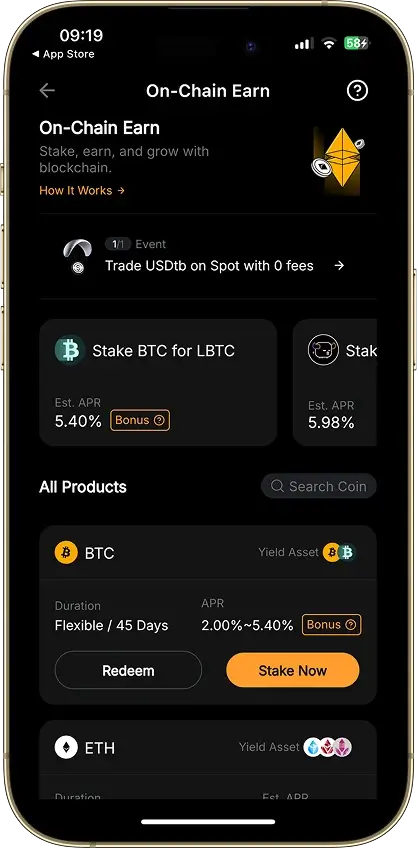
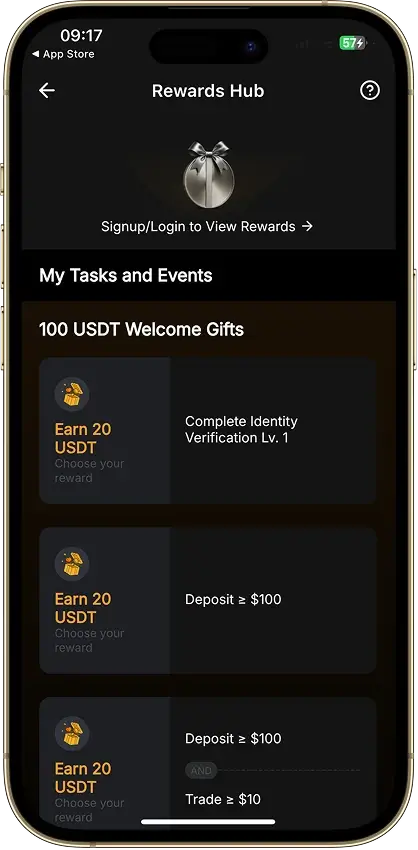
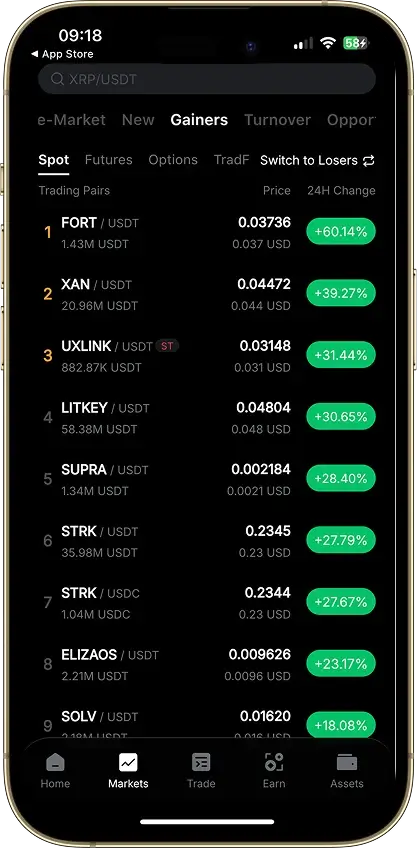
1 / 4
Kraken screenshots

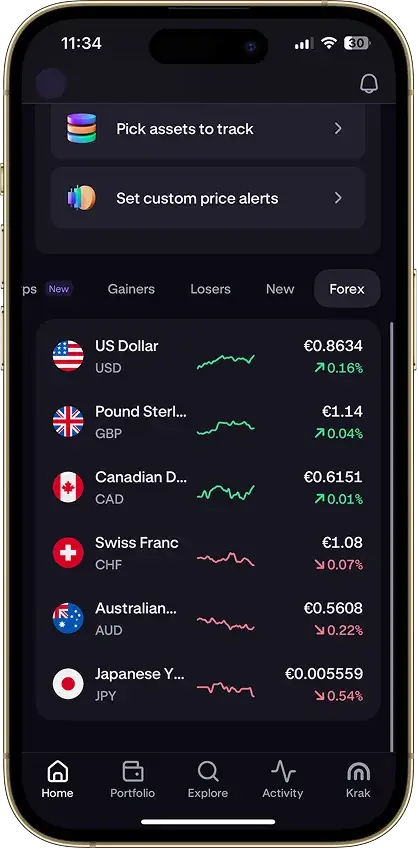
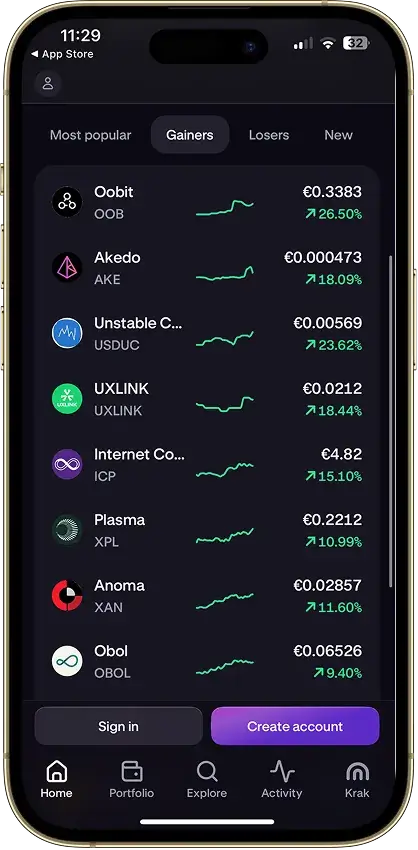
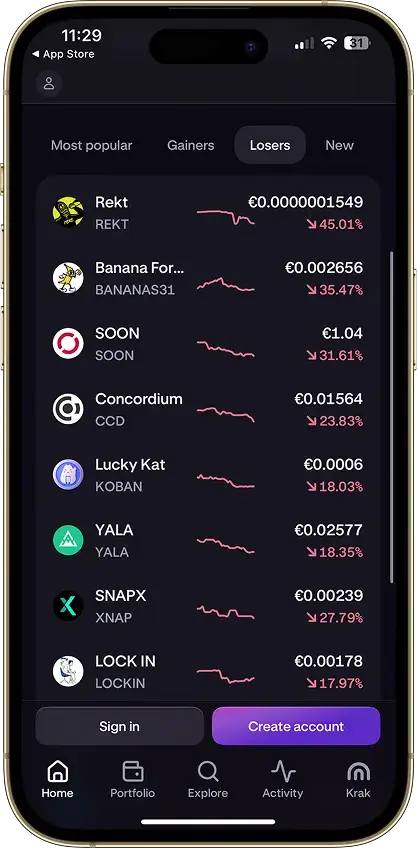
1 / 4
Spot Fees and Simple Purchase Pricing
Bybit Kraken
0.1000%
0.4000%
0.1000%
0.8000%
0.0750%
Not applicable
0.0750%
Not applicable
Comparable top tier unavailable
0% maker and 0.0500% taker
Provider fee plus executable quote
1% plus variable spread and any payment fee
Provider and method specific
1.5% plus spread and payment costs
Product specific
3%
Paid subscription
No subscription required for order-book rates
Kraken+ at $4.99 monthly or $49.99 yearly
Subscription allowance
Not applicable
Covered transaction fee waived on up to $10,000 monthly, with spread and processing costs remaining
$1,000 entry maker
$1.00
$4.00
$1,000 entry taker
$1.00
$8.00
$10,000 entry maker
$10.00
$40.00
$10,000 entry taker
$10.00
$80.00
$10,000 eligible MNT-paid maker or taker
$7.50
Not applicable
Bybit wins this section
Global Bybit has the lower entry spot commission. Simple-purchase costs still require an executable quote.
Global Bybit charges 0.10% for either a maker or taker order at VIP 0. Eligible MNT payment reduces spot commission by 25% to 0.075%. The reduction excludes API, Pro, institutional, and market-maker accounts. Bot and copy-follower orders are excluded. The same applies to RFQ and liquidation orders as well as inverse contracts.
Under the July 2026 schedule, Kraken Pro's opening rates are 0.40% when an order makes liquidity and 0.80% when it takes liquidity. Its published endpoint reaches 0% maker and 0.05% taker, but the qualifying tier depends on the better result from 30-day spot volume or Assets on Platform. A comparable Bybit endpoint is unavailable, so only Kraken's endpoint appears below.
The Bybit EU rate above applies only until October 5, 2026, when a unified structure is scheduled to begin. An EEA account holder should confirm the replacement rate before trading.
These examples cover order-book commission only. Simple-buy spread and payment charges remain outside the calculation. Crypto withdrawal fees and future tier changes do too.
Why the Derivatives Fees Do Not Produce a Winner
Bybit Kraken
0.0200%
US contracts charge per contract and per side
0.0550%
US contracts charge per contract and per side
0.0180% maker and 0.0495% taker
No exchange-token payment route
Not applicable
$0.15 per contract per side, plus daily funding
Published Global Bybit percentage schedule
Separate maker-taker ladder
0.0200% maker and 0.0300% taker
No retail options pricing disclosed
No clear winner
Bybit supplies transparent percentage examples. Kraken uses a different pricing basis, so no cross-platform derivatives-fee winner is supported.
Global Bybit publishes percentage rates for perpetuals and options. A $10,000 perpetual taker order costs $5.50 at 0.055%, or $4.95 if the 10% MNT reduction applies. Those calculations say nothing about Kraken's cost because its eligible US perpetuals use contract-based pricing and daily funding.
The crypto derivatives platform guide explains why contract size and collateral must align with settlement and funding before comparing two rates.
Assets, Markets, and Contract Selection
Bybit Kraken
350+
600+ globally
No account access
Not disclosed
Stablecoin-centered spot pairs, with some BTC quotes
Hundreds of markets across crypto and cash quote currencies
450+ pairs on Global Bybit
16 dollar-settled contracts for eligible US clients
Dated USDC futures on core markets
CME-listed futures for eligible US clients, plus region-specific international products
USDC-settled European-style contracts
Not disclosed for Kraken retail accounts
Available, with no public minimum
OTC unlocked for Pro Personal, with no public minimum
No clear winner
Kraken leads the global spot-asset count. Global Bybit leads the documented perpetual count and provides retail options.
Kraken lists more than 600 tokens globally, but that total does not describe the US inventory. Its restriction page separately names 159 symbols that US clients cannot trade. State or product rules can remove more, so subtracting that list from the global total would not produce a durable signed-in inventory.
Global Bybit's spot inventory exceeds 350 assets, while its perpetual market covers more than 450 pairs. The perpetual count is not a spot-market count, so it belongs in a separate row.
Margin, Contract Controls, Copy Trading, and Bots
Bybit Kraken
Up to 10× where available
Up to 10× for eligible clients
No US account
Separate Kraken Pro product with eligibility checks
Isolated, cross, and portfolio margin
Product and jurisdiction specific
BTCUSDT maximum
Up to 100×
Contract maximum varies by product and account
Selected USDC perpetual maximum
Up to 125×
Contract maximum varies by product and account
Classic, Pro, and TradFi formats
No comparable copy-trading product disclosed
Built-in bots
Grid, DCA, futures grid, martingale, and combo tools
No comparable built-in set
Risk limits
Contract tiers adjust maximums and maintenance margin
Product-specific position and eligibility limits
No clear winner
The stated spot-margin maximum is tied. Bybit wins copy trading, built-in bots, and its named global derivatives controls.
Both exchanges state spot margin of up to 10× for eligible accounts and markets. Global Bybit then extends its derivatives account through isolated and cross margin as well as portfolio margin. BTCUSDT positions can reach 100×, while selected USDC perpetuals can reach 125×. Most traders should not go anywhere near those limits.
Staking and Earn
Bybit Kraken
Easy Earn
Flexible Staking and Auto Earn
Fixed Easy Earn and On-Chain Earn
Bonded staking
Not disclosed
More than 20 staking assets
Displayed return is net of applicable product charges
30% of rewards
Product specific
25% to 0% by eligible assets under management
Product specific
Generally weekly
No US account
No service in New York or Maine, with staking also unavailable in California, Maryland, New Jersey, and Wisconsin
No clear winner
No return winner is supported without matching the asset, commission, rate, quota, and exit path.
Bybit offers flexible and fixed Easy Earn alongside fixed-rate loan supply. It also provides On-Chain Earn and Launchpool as well as distribution programs. The rate and quota belong to the selected product, as do redemption time and availability.
More than 20 assets can be used with Kraken's bonded or flexible staking. Auto Earn is separate, as are eligible stablecoin and DeFi rewards. Flexible Staking and Auto Earn take 30% of rewards. Bonded staking has five bands: zero, 5%, 10%, 20%, and 25%, with eligible assets under management determining the band.
The staking service comparison provides context for asset support and commissions alongside unbonding periods and reward timing. No listed annual rate should be treated as fixed until payout.
Order Types, Liquidity, and Trading Limits
Bybit Kraken
Market and limit
Available
Available
Stop and take-profit
Available
Available
OCO
Available
Available
Post-only
Available
Available
Reduce-only
Available on derivatives
Product specific
Advanced instructions
Position TP/SL and derivatives controls
Trailing, iceberg, conditional-close, and time-weighted orders
Activity evidence
About $24.7 billion derivatives volume and $16.0 billion open interest at the stated snapshot
Comparable Kraken figure unavailable
Same-size slippage
Not quantified
Not quantified
Account limits
Published crypto withdrawal tiers and contract risk limits
Signed-in limits vary by verification, location, rail, and activity
No clear winner
Bybit names more derivatives controls. Neither platform receives an execution-quality win.
Both platforms cover market and limit orders, along with stop and take-profit instructions. Post-only and OCO are also available. Bybit adds reduce-only and position-level take-profit or stop-loss controls for derivatives. Kraken documents trailing and iceberg orders, plus conditional-close and time-weighted instructions where supported.
Published execution data does not include a shared spread or slippage test. Bybit's derivatives activity at the stated snapshot cannot be compared with an undated Kraken spot-book description. Latency and rejected-order data are also unavailable, as are comparable fill rates.
Deposits, Withdrawals, and Fiat Rails
Bybit Kraken
Unavailable
$1 minimum, free, near-instant for trading, seven-day withdrawal hold on the amount
Unavailable
$1 minimum, free, estimated zero to one business day
Unavailable
$1 minimum, processing fee at confirmation, 72-hour hold on each purchase
Unavailable
$10 minimum, $0.25 plus 3.75%, near-instant with possible holds
Bybit EU, subject to account-level method availability
Not disclosed
Not disclosed
Not disclosed
Selected SWIFT and local partners
Country and currency specific
Unavailable
$1 minimum, free, estimated zero to two business days
Unavailable
$20 minimum, $4, estimated zero to one business day
Unavailable
$20 minimum, 1.5% capped at $50, near-instant for eligible banks
Bybit EU method specific
Not disclosed
P2P cash-out
Global Bybit escrow market, subject to country restrictions
No comparable P2P market
Card and wallet hold
Method and security-change specific
Qualifying card and digital-wallet purchases can carry 72 hours
Fixed by asset and network, shown before confirmation
Kraken flat fee set by asset and network, shown with the minimum
USDT routes
TRC-20 and ERC-20 are named, with other routes available
Network support varies by account and asset
New address
Security controls can delay transfers after sensitive changes
Email confirmation required
Password-change hold
Security-change specific
New or updated addresses can carry a 24-hour hold after a recent password change
Kraken wins this section
Kraken wins US bank access. Global Bybit supplies P2P subject to country restrictions. Crypto transfer fees still require the same asset and chain.
Kraken provides the clearer US bank schedule. Bybit cannot serve a US account. Elsewhere, each user still needs the correct entity and currency, then the correct bank or payment provider.
Bybit EU supports SEPA and cards plus selected SWIFT or partner routes. Fees and limits vary by method. Global Bybit also provides cards and local partners, with P2P subject to country restrictions. One-Click Buy shows the provider fee and quoted rate before confirmation.
A seven-day withdrawal hold applies to the amount from each Plaid ACH deposit or purchase. Trading can remain available during that period. Adding a Kraken withdrawal address does not independently create a 72-hour lock.
KYC, Licensing, and Geographic Availability
Bybit Kraken
Standard required for normal products
Intermediate or Pro Personal for the core flow
United States
Unavailable
Available except New York and Maine
United Kingdom
Not listed among Global Bybit's blanket country exclusions. Product-specific restrictions still apply
FCA-authorized entities with product limits
France
EEA migration applies. Eligible residents use the separate Bybit EU service
MiCA-authorized EEA account route, with product-specific availability
MiCAR-authorized Bybit EU
MiCA authorization and Irish e-money structure
Not disclosed for Bybit EU
Account and product specific
450+ perpetual pairs plus options
Regional Kraken products vary
Product specific, no US account
Additional restrictions in California, Maryland, New Jersey, and Wisconsin
Kraken wins this section
Kraken covers more named regions. Bybit users must separate Global Bybit from the MiCAR-authorized EU service.
At least Standard KYC is mandatory for normal Bybit products. Without verification, an account is restricted to withdrawals only, capped at 20,000 USDT a day and 100,000 USDT a month. Standard raises the daily ceiling to 1 million USDT. Advanced or Pro raises it to 2 million before individually raised limits. Bybit says ordinary KYC often takes about 15 minutes but can take up to 48 hours.
Kraken personal accounts verify at Intermediate or Pro Personal, and Intermediate covers ordinary use with cash funding below $100,000 a month. Pro Personal raises that band and unlocks OTC. Exact signed-in limits depend on the account and location, while the payment route and activity can change them too.
The US exchange access guide helps users compare alternatives where Global Bybit is unavailable or Kraken excludes the state.
Security, Custody, and Proof of Reserves
Bybit Kraken
May 27, 2026
June 30, 2026
Available for covered balances
Available for covered balances
Hacken
No verifier disclosed
100%+ coverage for covered assets at the snapshot
Eight named assets above 100%
Cold storage wording
Majority held offline
Majority held offline
Customer loss insurance
No government crypto insurance
No insurance against account or digital-asset loss, with no FDIC or SIPC coverage
Bybit 2025 incident
About $1.5 billion in ETH removed, withdrawals paused, reserves replenished in about 72 hours, no announced haircut
Not applicable
Kraken breach history
Not applicable
Kraken says no breach has caused client-fund loss since launch
Kraken 2024 bug
Not applicable
Deposit bug mitigated in under an hour, with no client assets impacted
Account controls
TOTP, passkeys, anti-phishing code, address allowlist, device and session review
FIDO2 keys, authenticator 2FA, Master Key, Global Settings Lock, PGP email, device and session revocation
No clear winner
Kraken adds Global Settings Lock and Master Key and states that no breach has caused client-fund loss. Bybit supplies a Hacken-verified May snapshot. Neither report proves continuous solvency.
Bybit's May 27, 2026 report received Hacken verification for the covered liability tree and wallet control. Kraken's latest documented snapshot carries a June 30, 2026 date. It reports BTC at 102.9% and ETH at 100.5%. SOL is 100.6%, XRP is 102.3%, and ADA is 100.3%. The three named dollar stablecoins are each at least 105%.
Both systems let an account holder check inclusion for covered balances. Neither report covers every listed asset or proves continuous solvency. A frequency winner is unavailable. Bybit describes its reports as recurring without a fixed cadence, while Kraken's June 30 snapshot does not establish a comparable schedule.
Kraken's retail terms assign users title to their digital assets and say separate internal ledgers are maintained, while shared addresses may be used. The company warns that a court may reach a different conclusion. Bybit describes majority cold storage and in-house custody, with policy-level segregation. Neither description creates a promise of bankruptcy immunity.
The exchange custody and safety ranking shows why reserve checks and login controls answer different questions from custody terms and incident history.
Apps, APIs, Wallets, Cards, and Support
Bybit Kraken
Consumer mobile
iOS and Android with many trading controls
Separate Kraken app for purchases, transfers, and staking
Pro mobile
Advanced tools inside the main app
Separate Kraken Pro app
Desktop app
Not disclosed
Kraken Desktop
Trading API
Unified V5 REST and WebSocket across spot, derivatives, options, positions, assets, and RFQ
Spot REST, WebSocket v1/v2, FIX, futures REST and WebSocket, and Status API
Test access
Open testnet and demo
Public futures demo, with spot testing limited to qualified onboarded clients
API controls
Scoped keys, IP restrictions, HMAC or RSA, and endpoint limits
Permissions, IP restrictions, expiration, API 2FA, and rate limits
Self-custody wallet
Separate Bybit Seed Phrase Wallet
Separate Kraken Wallet
Spending card
Bybit Card for eligible EEA and Switzerland users
Kraken Card for verified UK and EEA personal clients, managed in Krak
24/7 chat and tickets
24/7 messaging, chat, and forms
Voice support
No published direct-dial route
In-app only when available, with verified callback banners
No clear winner
Bybit wins open test access. Kraken adds FIX, a desktop app, and a larger interface set. Mobile preference and support outcomes remain unranked.
Bybit places spot and derivatives alongside copy trading and bots in its main web and mobile interfaces. Earn and account security use the same interface. Kraken separates consumer purchases from Kraken Pro trading. Kraken Desktop adds an advanced computer interface, while Krak handles everyday transfers and card management.
The Kraken self-custody wallet review covers recovery-phrase responsibility outside the exchange account. Eligible European users can separately examine the Bybit Card fee and rewards assessment before comparing conversion and ATM charges.
Choose Bybit If...
Bybit fits supported-country users prioritizing entry spot commission, contract selection, automation, P2P, or open API testing.
- Global Bybit is available in the account holder's country and its 0.10% entry spot rate matters.
- The strategy needs 450+ perpetual pairs, USDC options, pre-market contracts, copy trading, or built-in bots.
- One V5 interface across spot, derivatives, options, and RFQ simplifies the intended integration.
- P2P funding or the eligible MNT commission reduction matches the transaction path.
Choose Kraken If...
Kraken fits users prioritizing regional access, its global token list, bank rails, account locks, or separated consumer and Pro interfaces.
- The account needs access in the US outside New York and Maine or an EEA account route.
- A global list of 600+ tokens matters, with the understanding that US availability is materially smaller.
- ACH, FedWire, or RTP withdrawals are required.
- Global Settings Lock, Master Key, separate consumer and Pro apps, or Kraken Desktop fits the account workflow.
Final Verdict
Choose the serving entity first, then compare the required asset, payment route, and withdrawal network.
Kraken wins overall because access and funding come before trading tools. It serves the US outside New York and Maine and provides an EEA account route, lists 600+ tokens globally, and documents named US bank routes. Global Settings Lock and Master Key give users two additional ways to restrict an account, and Kraken states that no breach has caused client-fund loss. The 0.40% maker and 0.80% taker entry spot schedule is its clearest pricing disadvantage.
Global Bybit fits an account that prioritizes low entry spot commission, 450+ perpetual pairs, retail options, copy trading, bots, portfolio margin, or an open testnet. Bybit EU cannot be treated as the same product. It has a separate spot schedule and its current fees are due to change on October 5, 2026. Its derivatives offering is not disclosed.
Bybit and Kraken quote derivatives fees in different units, so their schedules cannot be compared directly. The available measurements also do not establish an execution, Earn-return, support-resolution, or custody-outcome winner. The account holder should first identify the serving entity, then compare the required asset, payment route, and withdrawal network.
Bybit vs Kraken FAQs
Is Bybit or Kraken better overall?
Kraken is the more practical overall choice for users who need access across the US outside New York and Maine or an EEA account route. It also documents named US bank rails and lists 600+ tokens globally. Global Bybit is the better fit for lower entry spot commission, 450+ perpetual pairs, options, copy trading, and bots when the account has access to those products.
Is Bybit cheaper than Kraken?
Global Bybit is cheaper for entry spot orders. It charges 0.10% on both maker and taker orders. Kraken Pro's opening commission is 0.40% on makers, rising to 0.80% on takers. A direct derivatives-fee winner is unavailable because Bybit uses percentage rates while Kraken's eligible US perpetuals are priced per contract and per side.
Can US users choose Bybit instead of Kraken?
No. Global Bybit does not serve US residents. Kraken serves eligible US users except residents of New York and Maine. Asset listings, margin, derivatives, staking, and funding routes can still vary by state and account.
Does Bybit or Kraken list more crypto assets?
Kraken lists more than 600 tokens globally, while Bybit states 350+ spot assets. Kraken's global total is not the US inventory. Its US restriction page separately identifies 159 unavailable symbols, and other state or product limits can reduce the signed-in inventory.
Is Bybit or Kraken better for futures and options?
Global Bybit has the larger documented contract set with 450+ perpetual pairs, dated USDC futures, and retail USDC options. Kraken provides 16 dollar-settled perpetual contracts plus CME-listed futures to eligible US clients. The fee formats are not directly comparable.
How do Bybit and Kraken proof-of-reserves systems differ?
Bybit's Hacken-verified snapshot is dated May 27, 2026. Kraken's June 30 snapshot reports ratios above 100% for eight named assets. Both support user inclusion checks for covered balances. Neither is a complete balance-sheet audit or continuous solvency guarantee.
Is Bybit or Kraken easier to fund from a bank?
Kraken has the clearer named bank schedule, including free US ACH deposits and withdrawals, free FedWire deposits, $4 FedWire withdrawals, and eligible RTP withdrawals priced at 1.5% capped at $50. Bybit uses regional partners, Bybit EU bank routes, cards, and P2P where available.
How do Bybit EU and Kraken differ in the EEA?
Bybit EU is a separate MiCAR-authorized service with its own spot fees and a product set that must be checked on the EU entity. Before October 5, 2026, it charges makers 0.10% and takers 0.25%. A unified schedule is due to begin on that date. Kraken uses a MiCA-authorized EEA service with an Irish e-money structure, while product access still depends on the account and country.

Kraken is the more practical overall choice for users who need access in the US outside New York and Maine or an EEA account route, along with named US bank-transfer routes. Global Bybit costs less at the entry spot tier and provides 450+ perpetual pairs, USDC options, copy trading, and built-in bots. There is no defensible derivatives-fee winner because the two platforms use different pricing formats.
Global Bybit and Bybit EU apply different product and fee rules by country, as detailed in the Bybit derivatives exchange review. Kraken uses one account family, but its available assets and products still change by residence, as detailed in the Kraken exchange safety evaluation.