

Global Bybit fits active traders outside its named blocked markets. It does not fit users who need U.S. access, one European and global product set, or dependable bank cash-out everywhere.
Bybit vs Binance: Fees and Futures by Region
Binance wins overall for lower USDT perpetual taker fees. Spot commission ties, while Bybit wins on independent checking of the compared reserve snapshot.

Binance.com combines 0.10% entry spot fees with deep liquidity and extensive trading tools, but access, fiat rails, and products vary by jurisdiction.
Affiliate Disclosure
Some links in this comparison are affiliate links. CryptoSlate may earn a commission if you sign up through these links. Our ratings remain editorially independent.
Bybit vs Binance Overview
Both start at 0.10% spot and 0.02% USDT perpetual maker commission. Their perpetual taker costs and API structures differ.
Winners by Category
Binance takes the overall verdict and USDT perpetual taker fees. Bybit takes independent reserve-snapshot checking. Spot and perpetual maker commission are tied.
Bybit Binance
Binance wins for an eligible global trader using regular perpetual taker orders.
Unified V5 integration and independent snapshot checking
Lower USDT perpetual taker commission
Tie on matched qualifying orders. Bybit’s MNT exclusions matter for automation.
0.10% regular, 0.075% with eligible MNT payment
0.10% regular, 0.075% with eligible BNB payment
Tie on the quoted maker rates, subject to each deduction’s eligibility.
0.02% regular, 0.018% with eligible MNT payment
0.02% regular, 0.018% with eligible BNB payment
Binance wins before and after the eligible token deductions.
0.055% regular, 0.0495% with eligible MNT payment
0.05% regular, 0.045% with eligible BNB payment
Bybit wins on independent checking of that snapshot, not overall safety.
Hacken checked the May 27, 2026 covered snapshot
Self-published reserve process
Binance wins the fee-led comparison. Bybit’s reserve-check advantage is a separate disclosure benefit.
Spot and Futures Fees
The spot and USDT perpetual maker rates match. Binance costs less for USDT perpetual taker fills, including when both accounts qualify for token payment.
Bybit Binance
Regular Spot Maker or Taker
Tie at the opening spot tier.
0.10% — $100 on $100,000 traded
0.10% — $100 on $100,000 traded
Eligible Token-Paid Spot
Tie when the selected order qualifies for MNT or BNB payment.
0.075% — $75 on $100,000 traded
0.075% — $75 on $100,000 traded
Regular USDT Perpetual Maker
Tie on commission for adding liquidity.
0.02% — $20 on $100,000 traded
0.02% — $20 on $100,000 traded
Eligible Token-Paid Perpetual Maker
Tie after the eligible 10% deduction.
0.018% — $18 on $100,000 traded
0.018% — $18 on $100,000 traded
Regular USDT Perpetual Taker
Binance wins by $5 per $100,000 of filled notional.
0.055% — $55 on $100,000 traded
0.05% — $50 on $100,000 traded
Eligible Token-Paid Perpetual Taker
Binance wins by $4.50 per $100,000 when both deductions apply.
0.0495% — $49.50 on $100,000 traded
0.045% — $45 on $100,000 traded
Binance wins for USDT perpetual taker commission. The spot tie applies to matched qualifying order paths.
The futures examples use the full position value traded, not the margin deposited. They show one fill, so an opening and closing taker trade each attracts commission. Futures funding can add ongoing costs. Margin borrowing follows a separate schedule. Spread, slippage and liquidation charges are outside the table.
Bybit uses MNT for a 25% eligible spot reduction and 10% eligible USDT perpetual reduction. Its exclusions include API and Pro users, bot orders and copy-follower trades. RFQ and liquidation orders are also excluded, as are options and inverse contracts. An automated Bybit strategy should therefore budget the regular rate unless its own terms say otherwise.
BNB fee payment provides the compared 25% spot and 10% futures reductions on Binance. Neither token is needed for the regular rates. Holding either exposes the balance to token-price movements, which can exceed a small commission saving. Higher VIP tiers and promotional pairs use different terms.
Markets, Copy Trading and Bots
Bybit names martingale and combo bots, while Binance names funding-rate arbitrage and rebalancing bots. Their listing totals use different methods.
Bybit publishes 350-plus spot assets and 450-plus perpetual pairs across USDT, USDC and inverse formats. Binance’s August 29, 2026 API capture counted 486 spot base assets and 567 standard USD-M perpetuals. Bybit’s open-ended figures and the different contract groupings prevent a precise inventory ranking. An exact required pair matters more than the headline totals.
Bybit offers isolated, cross and portfolio margin modes. Binance documents cross margin up to 5× and isolated margin up to 10×. Maximum positions depend on the instrument and risk tier. The crypto derivatives comparison explains the product choices. Borrowed exposure magnifies losses as well as gains.
For a martingale or combo bot, start with Bybit’s named strategies. Binance documents funding-rate arbitrage and rebalancing bots, which make it a starting point for those approaches. Both list Spot Grid, Futures Grid and DCA tools. Binance also has a Bot Marketplace. Strategy availability is distinct from profitability, and Bybit’s MNT exclusion changes the fee budget for its bots.
Bybit Classic and Pro copying use follower controls and profit sharing. Binance’s separate spot and futures copy accounts offer fixed-amount or fixed-ratio allocation with a total stop-loss control. Compare the lead trader’s drawdown and the amount allocated before copying. An automated trading setup can place orders without preventing losses, and followers can receive a different execution price from the leader.
Earn and Staking
Bybit’s flexible Easy Earn has a full-day holding requirement. Binance Simple Earn offers flexible and locked terms, with quotas and redemption rules set by the product.
Bybit Easy Earn accrues hourly and credits daily, but a balance must remain for a complete 24-hour period to qualify for that day’s yield. Fixed products pay at maturity. That holding rule matters if the balance also funds frequent trading or withdrawals.
Binance publishes more than 300 Simple Earn assets, although the account’s available list varies. Bybit also offers on-chain products and fixed-rate loan supply, so risks and redemption rules differ within each exchange’s menu. For a specific asset, compare net yield and the earliest withdrawal date. Headline menu size cannot answer either question.
Deposits and Withdrawals
A usable local cash-out route can outweigh the futures fee saving. Both exchanges vary bank access by country, currency and payment partner.
Global Bybit offers selected local partners and SWIFT where eligible. Its separate EU SEPA route does not apply to Global Bybit accounts. Binance’s August 29, 2026 account example quoted $0 for USD SWIFT deposits and $25 for withdrawals. That dated quote applies to an eligible route, not every Binance account.
Bybit’s One-Click Buy has provider pricing and a stated $10 minimum or local equivalent. Card purchases on either exchange can carry payment-provider charges. Confirm a withdrawal route as well as the purchase quote before using a card to fund an account.
Both show crypto withdrawal charges by asset and network. Match the receiving network exactly before comparing the current quotes. Bybit publishes a daily ceiling of 1 million USDT for Standard verification and 2 million for Advanced or Pro, before individually approved higher limits. Binance uses account- and risk-specific limits. Neither a stated ceiling nor completed trading guarantees immediate release after a security or compliance review.
KYC and Regional Access
Neither global exchange serves US or Canadian residents. Identity verification is required for normal exchange use, and regional accounts can have narrower product access.
Bybit’s standard verification uses government ID and a liveness check. Its stated ordinary review time is about 15 minutes, with up to 48 hours possible. Binance can request government ID and personal information, followed by proof of address or additional risk checks. These requirements can recur after an account is initially approved.
Bybit EU is a separate service without derivatives, and eligible EEA users are progressively moved away from the global product. Binance had no entity in the MiCA-authorized CASP register checked on August 29, 2026. That dated register check is not a substitute for checking the current contracting entity and permissions in the country where you live.
Bybit also lists Singapore, Hong Kong and mainland China as restricted. Its published restriction list includes the UK, while its UK guidance directs users to check the current entity and route. UK residents should resolve that access conflict before funding. Binance’s cited FCA notice, last updated June 7, 2023, said no Binance Group entity held UK authorization or registration. Neither a country’s omission from a restriction list nor a payment quote establishes permission to trade there.
Security, Custody and Reserve Checks
Bybit wins on independent checking of the compared reserve snapshot. Both offer user-inclusion verification, but neither process is a full financial audit.
Bybit Binance
Independent Snapshot Check
Bybit wins for independent checking of that covered snapshot.
Hacken checked covered liabilities and wallet control on May 27, 2026
Reserve calculations are self-published
User-Inclusion Verification
Tie on checking inclusion in the covered liability set, not full solvency.
Covered customer-liability tree can be checked
Merkle-tree and zero-knowledge inclusion tools
Bybit wins the independent snapshot-check category. Neither exchange receives an overall safety award from that result.
Hacken’s Bybit work tests the covered liability tree and control of the reported wallets at a point in time. Binance’s monthly archive and inclusion tools let users examine its published reserve set. Neither establishes all off-chain obligations or continuously available assets, so the award is specifically for independent snapshot checking.
Bybit’s February 2025 custody breach removed about $1.5 billion in ETH. Bybit said replacement liquidity restored reserves in roughly 72 hours without an announced customer haircut. Binance’s May 2019 hot-wallet breach removed more than 7,000 BTC. Binance said its SAFU fund covered that loss without reducing user balances. These responses do not guarantee reimbursement after a future incident.
Binance’s 2023 US compliance plea and settlements also remain material. The separate SEC civil dismissal in 2025 did not erase them. Both platforms offer withdrawal-address controls and two-factor authentication, but those tools cannot eliminate exchange-level custody risk.
Binance’s SAFU is a company emergency fund, not deposit insurance. Bybit’s derivatives insurance fund addresses liquidation shortfalls rather than general custody losses. Moving assets to a separate wallet changes these responsibilities: the Binance Wallet review covers self-custody, while exchange custody leaves account balances under the platform’s control.
Apps, APIs and Support
Bybit brings multiple product families under V5. Binance offers spot FIX alongside REST and WebSocket, with separate derivatives APIs. Both provide 24/7 chat.
Choose Bybit’s V5 if you want one API family spanning spot and derivatives products. It groups options and RFQ with account assets, positions and orders. Binance is a documented option for a spot FIX requirement, alongside its REST and WebSocket access. Protocol choice does not establish faster execution.
Bybit supplies a public testnet and demo trading. Binance supplies Spot Testnet. Developers should verify the relevant order behavior in the test environment and restrict live keys to the permissions needed.
The web and mobile apps on both exchanges combine several trading products. Both offer round-the-clock chat, but neither gives a published resolution-time guarantee. Bybit also offers tracked tickets for account cases. Keep the reference when following up, and do not treat round-the-clock chat as a withdrawal-release deadline.
Screenshots
Bybit screenshots

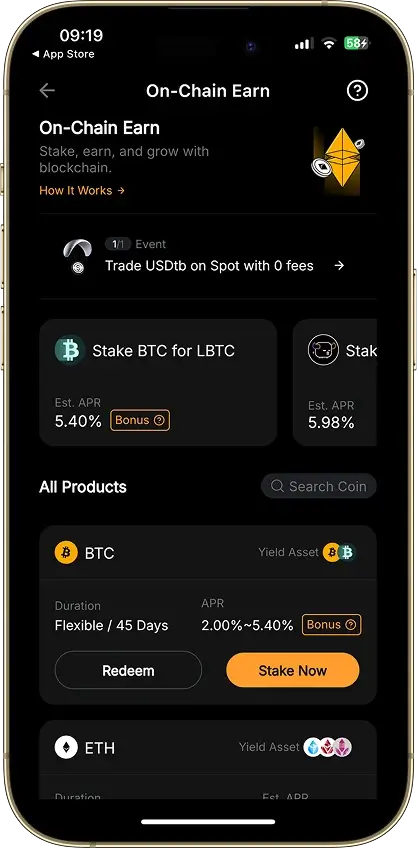
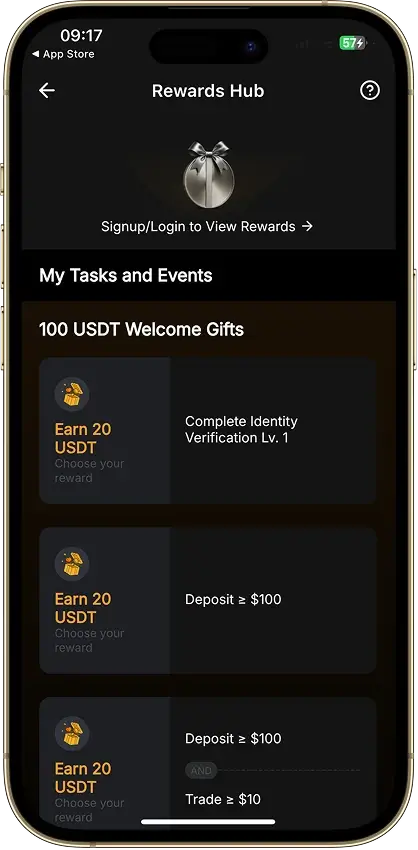
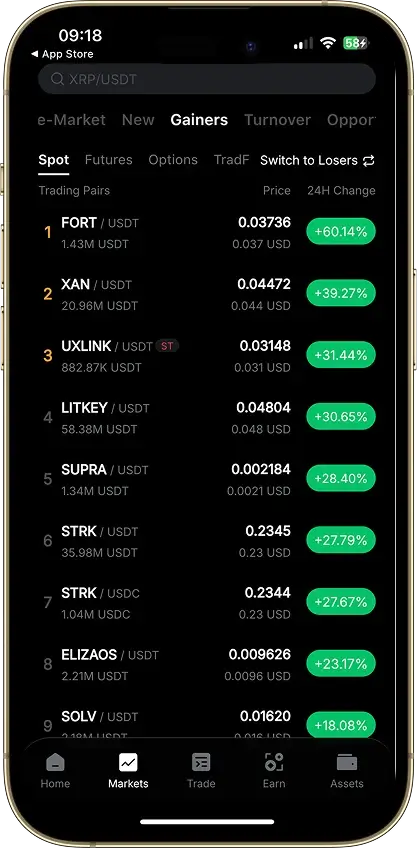
Screenshot 1 of 4
Binance screenshots


Screenshot 1 of 4
Account Records and Tax Exports
Bybit’s Tax API connects to named accounting services. Binance’s website exports have row and date caps, which can require more planning for frequent traders.
Bybit provides CSV statements covering trades and orders as well as deposits and withdrawals. Its Tax API connects with services including Koinly and Crypto Tax Calculator. This is useful when that software already contains records for the rest of the portfolio, although the connection does not complete a local tax return by itself.
Binance website trade exports cover up to 10,000 rows and six months per report, with five report generations per month across the stated download tools. A spot API query can return up to 1,000 trades over a maximum explicit 24-hour range. Older futures-history requests can span a year and remain downloadable for one week. A high-volume account may therefore need regular API collection instead of a single year-end website export.
Final Verdict
Binance is the overall winner for eligible global USDT perpetual takers. Bybit is the alternative for its unified V5 integration and independently checked reserve snapshot.
Affiliate Disclosure
Some links in this comparison are affiliate links. CryptoSlate may earn a commission if you sign up through these links. Our ratings remain editorially independent.
Choose Binance if perpetual taker commission is a recurring cost. The lower rate applies both at the regular tier and when both platforms’ token deductions qualify. Its documented funding-rate arbitrage and rebalancing bots may also fit the intended strategy.
Choose Bybit if you want to build across its products through V5 or prioritize the independent Hacken snapshot check. Budget regular fees for bot and API orders excluded from MNT payment. For spot-only trading, the matched commission ties, leaving the exact market and usable cash-out route to decide.
FAQs
Is Bybit or Binance better overall?
Binance wins this global comparison for USDT perpetual takers because it charges less at the regular tier and with eligible token payment. Bybit has an independently checked reserve snapshot and a unified V5 API. Spot commission alone does not separate them.
Which has lower spot fees?
Both charge 0.10% maker and taker at the regular spot tier. Eligible MNT payment on Bybit or BNB payment on Binance reduces that to 0.075%. Bybit excludes API, Pro, bot and copy-follower paths, among others, from its MNT deduction.
Which is cheaper for USDT perpetuals?
Binance’s regular taker commission is 0.05%, compared with Bybit’s 0.055%. On $100,000 traded, that is $50 versus $55. Eligible token payment lowers those totals to $45 and $49.50. The regular maker rate is the same 0.02% on both.
Does Bybit’s MNT discount apply to trading bots?
No. Bybit excludes bot orders from the MNT fee-payment deduction. API and Pro users, copy-follower trades, RFQ, liquidation orders, options and inverse contracts are also excluded. A bot strategy should budget the regular rate unless its specific terms provide another reduction.
Which is better for reserve verification?
Bybit wins on independent checking of the compared snapshot because Hacken examined its covered liability tree and wallet control on May 27, 2026. Binance’s process is self-published. Both support inclusion checks, but neither reserve process is a full financial audit or a guarantee against loss.
Can US residents use these exchanges?
Neither Global Bybit nor Binance.com serves US residents. Binance.US is a separate platform with its own fees and products, and Bybit has no US exchange. This comparison therefore uses the non-US global offers, not Binance.US terms.
Which should I choose for bots or APIs?
Bybit documents martingale and combo bots and groups several product families under V5. Binance documents funding-rate arbitrage and rebalancing bots plus spot FIX access. Both have Grid and DCA tools. Choose the strategy or interface needed, then check the applicable fees and account permissions.
Is either exchange better for bank withdrawals?
Neither offers one worldwide bank-withdrawal schedule. Global Bybit uses selected local partners and SWIFT where eligible. Binance’s bank routes also depend on the account, country and payment partner. Compare the current fee and available withdrawal destination in each account for the same currency before funding.



A regular taker pays $50 to trade $100,000 of USDT perpetual notional on Binance, versus $55 on Bybit. Eligible token payment reduces those figures to $45 and $49.50. For spot-only traders, neither exchange wins on the matched entry commission.
The Bybit exchange review covers its V5 trading interface and Hacken-checked reserve snapshot. The Binance trading-platform assessment details its spot FIX access, bot strategies and lower USDT perpetual taker schedule.
This page compares Global Bybit with Binance.com for eligible users outside the US. Bybit has no US exchange, so Binance.US is excluded. The separate Bybit EU account also has different products and fees.