Quick Take
- OKX appointed Andrew Cuomo to its board, extending his advisory role and deepening its tie to the ICE joint venture.
- The move points to an exchange building Wall Street-style licenses, governance and products for tokenized assets and institutional trading.
- OKX still faces scrutiny over its 2025 guilty plea, while CLARITY’s ethics fight could slow approvals and amplify backlash.


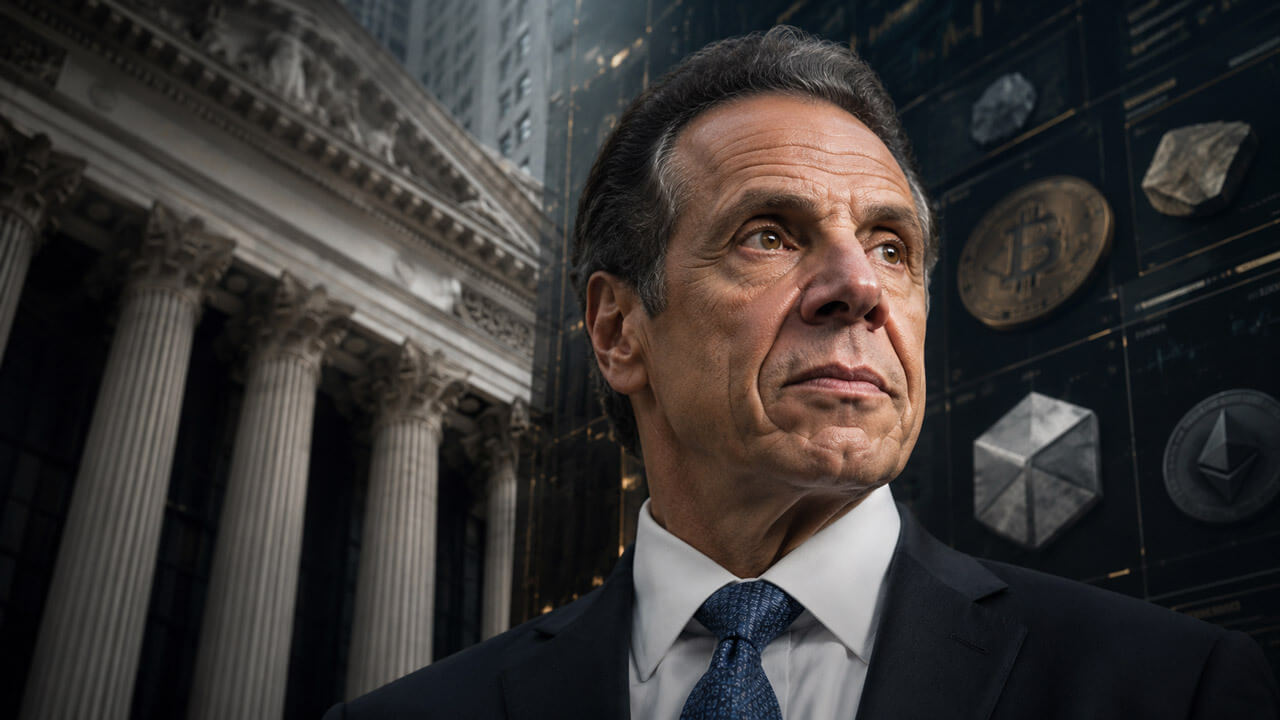
OKX added Andrew Cuomo to its board of directors this month, framing it as a natural progression from two years of him advising the company. Cuomo also co-chairs a joint venture between OKX and Intercontinental Exchange, the operator of the New York Stock Exchange.
That venture is building infrastructure for tokenized assets, institutional derivatives and around-the-clock trading, and it plans to register as a broker-dealer and futures commission merchant once regulators approve.
Through it, OKX customers would gain access to ICE futures and tokenized NYSE equities. ICE already holds a board seat at OKX from an earlier investment that valued the exchange at $25 billion.
Cuomo's directorship extends that same relationship via a licensed, publicly accountable market operator sitting inside a crypto exchange's governance.
Put together, the board seat and the ICE venture describe an exchange assembling the licenses, partners and governance of a regulated financial firm, with a former governor filling the last seat.
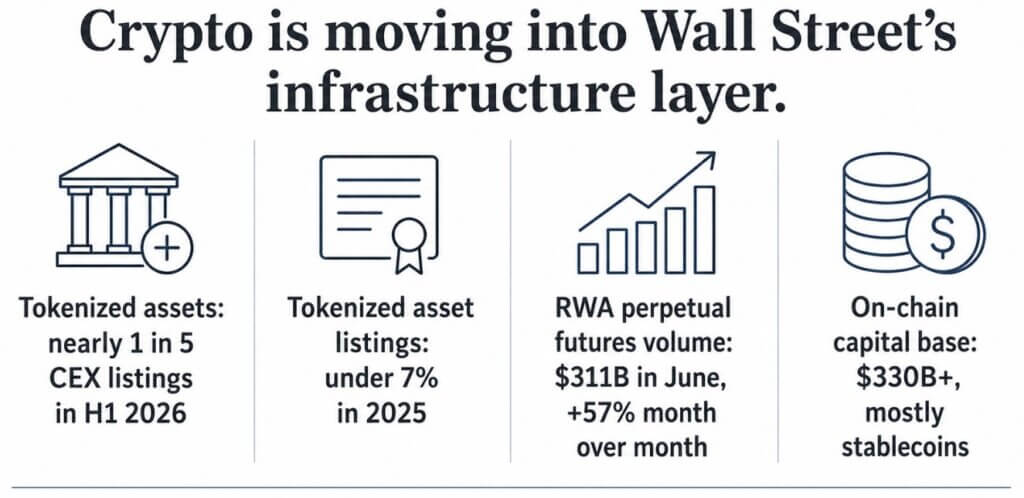
Tokenized assets became the top new listing category on major centralized exchanges in the first half of 2026, close to one in five new listings, up from under 7% in 2025. Real-world-asset perpetual futures volume climbed 57% in June to a record $311 billion.
The capital base behind that growth already tops $330 billion, most of it in stablecoins, with roughly $13 billion in tokenized Treasuries and about $1 billion in tokenized stocks.
Citadel Securities put $400 million into Crypto.com this month at a $20 billion valuation, another sign that incumbent trading firms are building directly into crypto's infrastructure.
What OKX gains
Cuomo spent a decade running New York's government, negotiating with state regulators, banks and federal agencies on everything from financial oversight to disaster response. He understands how policy gets written and how examiners think, and OKX gains a boardroom voice fluent in both.
That combination has long carried value on Wall Street, with examples such as Goldman Sachs appointing former European Commission President José Manuel Barroso as non-executive chairman of Goldman Sachs International in 2016.
A 2024 review of former officials on corporate boards found they typically bring policy expertise, added channels of communication with government, and institutional legitimacy.
A separate study found that winning a Senate or governor's race raises the odds of a later corporate board seat by roughly 30%, with average pay for those seats topping $250,000. That pattern predates crypto by decades, and OKX is applying a well-worn corporate strategy to a newer industry.
| What a former official can bring | Why it matters to OKX | Risk or caveat |
|---|---|---|
| Policy fluency | Helps translate crypto products into regulatory and institutional language. | Does not guarantee regulatory approval. |
| Government experience | Offers insight into how agencies, examiners, and lawmakers think. | Can be criticized as revolving-door politics. |
| Institutional legitimacy | Makes a crypto exchange look more like a regulated financial firm. | Reputation cuts both ways if governance questions persist. |
| Boardroom signaling | Shows counterparties that OKX is adopting establishment governance norms. | Symbolism is weaker without clear committee duties. |
| Financial-regulation context | Useful as OKX pursues broker-dealer and futures commission merchant registrations. | Licensing still depends on regulators, not résumés. |
| Public credibility | Gives OKX a recognizable voice in U.S. policy and institutional circles. | Could intensify scrutiny during the CLARITY ethics fight. |
What the title requires
A board seat carries formal duties: oversight of risk, audit, strategy and management, enforceable by shareholders and spelled out in bylaws.
OKX has not detailed which committees Cuomo will join, whether he holds independent-director status, or whether he will see reports from the compliance consultant it still retains through February 2027.
OKX's operator, Aux Cayes FinTech, pleaded guilty in February 2025 to running an unlicensed money-transmitting business and agreed to more than $504 million in penalties and forfeiture.
The Justice Department required the company to keep an external compliance consultant in place through February 2027.
As the exchange pursues broker-dealer status, ICE partnerships and U.S. institutional customers, examiners and counterparties will read its board roster as part of the compliance picture itself.
The ethics timing
The appointment lands as Congress negotiates the CLARITY Act, the bill meant to set federal rules for digital assets.
Senator Chris Van Hollen has pushed language barring sitting elected officials and their families from issuing digital assets or owning crypto platforms. That proposal targets sitting officeholders, and Cuomo has been out of office for years.
His appointment still sits inside the same question Van Hollen's amendment is trying to answer: how much overlap between political power and crypto wealth Washington will tolerate.
A former governor co-chairing a Wall Street-crypto venture and sitting on an exchange board is the revolving-door version of that same overlap.
The White House has pushed the Senate to pass CLARITY before the August recess. A group led by Senators Cynthia Lummis and Bernie Moreno reported an ethics-provision agreement on July 21, one that still needs Democratic votes to clear the Senate's 60-vote threshold.
Sizing the outcomes
In the bull case, CLARITY clears the Senate with its ethics language intact, giving OKX and similar exchanges a clear federal path to broker-dealer status.
The ICE venture moves from paperwork to product, tokenized NYSE equities and futures access reach OKX customers, and the Citadel-Crypto.com deal becomes one of several similar partnerships across the industry.
Regulated crypto exchanges start operating like the market infrastructure firms they are trying to become, and former officials become routine additions to their boards.
In the bear case, CLARITY stalls again over the ethics language. OKX's board roster draws renewed attention to its 2025 guilty plea, and the ICE venture's regulatory approvals slip past their expected timeline.
Lawmakers and reporters treat Cuomo's seat as a case study in the revolving door, a symbol of the same overlap Van Hollen's amendment is trying to police.
| Scenario | What happens next | What it would signal |
|---|---|---|
| Bull case: regulated integration | CLARITY advances, ethics language survives, and ICE-OKX moves toward licensed products. | Crypto exchanges become regulated market-infrastructure firms, not just trading venues. |
| Base case: selective institutionalization | Partnerships and board upgrades continue, but approvals move slowly, and products launch in phases. | Crypto becomes more establishment-facing, but still unevenly regulated. |
| Bear case: revolving-door backlash | CLARITY stalls, Cuomo’s role draws political scrutiny, and OKX’s prior settlement resurfaces in coverage. | Political credibility becomes a liability rather than an asset. |
| Black swan: governance shock | A compliance, ethics, or product-approval setback hits a major exchange or tokenized-asset venture. | Regulators slow the Wall Street-crypto convergence and demand stronger governance first. |
Either way, OKX's board shows that crypto exchanges think their business is heading towards licenses, institutional partners and the kind of boardroom Wall Street has run for decades.
Cuomo's seat is one data point in a longer institutional build-out, and the CLARITY vote later this year will test how much of Washington is willing to accept it.
Mentioned in this article




Editorial credits