

Gemini offers U.S. access, free ACH, and documented controls. Compare alternatives for lower entry fees or access in more countries.
Gemini vs Crypto.com: US Fees, Features and Security
Gemini wins our US comparison for financial disclosure and all-state access. Crypto.com costs less for entry-level spot trading and adds built-in bots, more App staking choices and 24/7 chat.

Crypto.com Exchange serves spot traders in the U.S. and abroad, with global margin and derivatives outside restricted jurisdictions. Its U.S. bank-transfer terms differ from Main App banking, although ACH deposit allowan...
Affiliate Disclosure
Some links in this comparison are affiliate links. CryptoSlate may earn a commission if you sign up through these links. Our ratings remain editorially independent.
Overview
Both serve US customers. Gemini combines all-state access with audited disclosures. Crypto.com separates order-book trading on its Exchange from Main App purchases, staking and cards.
Gemini Crypto.com
US Order-Book Trading
Gemini ActiveTrader
Crypto.com US Exchange
Standard Entry Spot Fees
0.60% maker / 1.20% taker
0.25% maker / 0.50% taker below $10,000 in 30-day volume
New York Residents
Exchange access available
Excluded
Bank Funding
ACH and USD wire
US Exchange ACH and Fedwire, with method-specific restrictions
General Exchange Support
Request form and email
24/7 in-app chat
Screenshots
Gemini screenshots

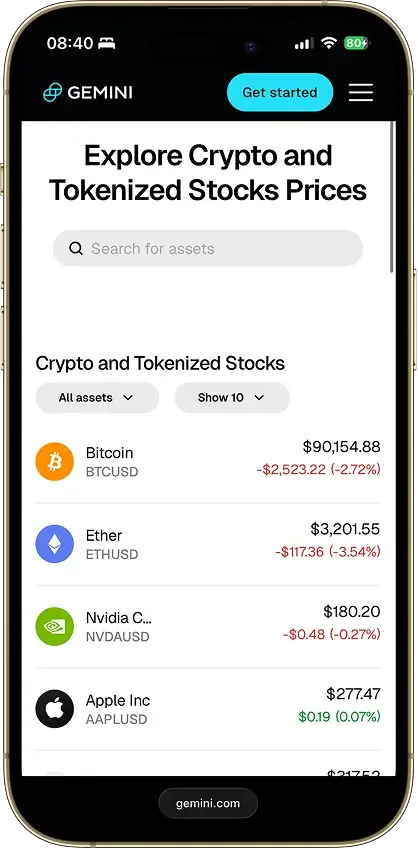


Screenshot 1 of 4
Crypto.com screenshots

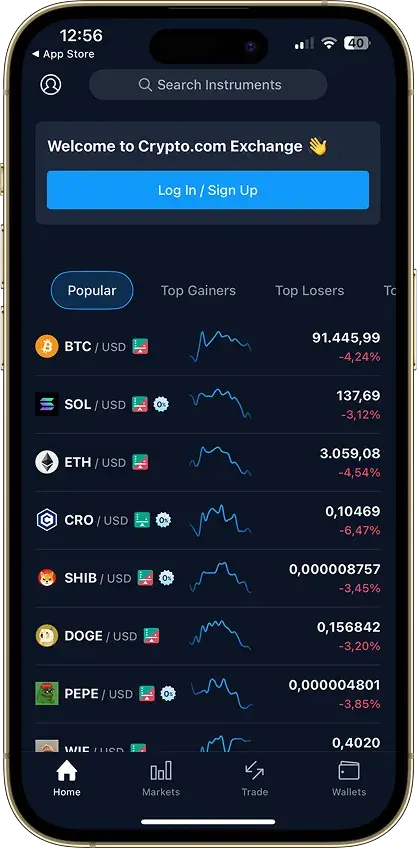

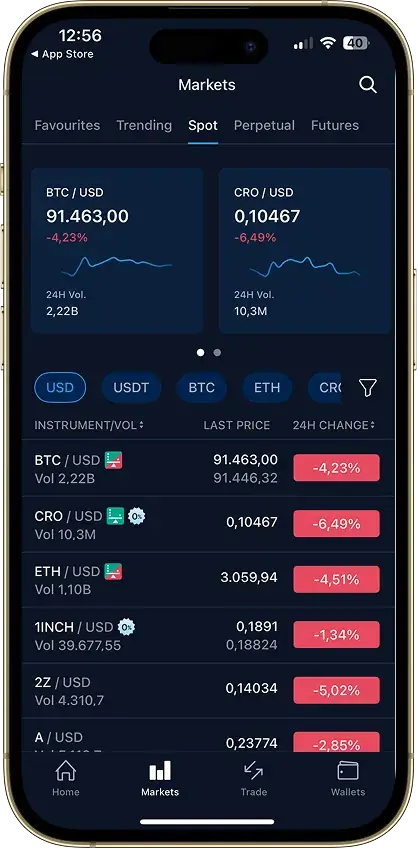
Screenshot 1 of 4
Gemini vs Crypto.com Winners by Category
Gemini is our overall US pick for financial disclosure and all-state exchange access. Crypto.com wins entry trading fees, built-in spot automation, staking selection and chat availability.
Gemini Crypto.com
Gemini gets the overall verdict for users prioritizing disclosure and routine US bank funding. Frequent traders have a clear cost reason to choose Crypto.com.
Audited financial statements, all-state access and free ACH
Lower entry commissions and additional App products
Crypto.com costs $7 less in commission on a $1,000 entry-tier taker order.
0.60% maker / 1.20% taker
0.25% maker / 0.50% taker
Gemini is the available choice of these two for a New York resident.
All 50 states, Puerto Rico and Washington, DC
New York excluded
Gemini provides more recent financial reporting. This is a disclosure judgment, not a guarantee against losses.
Audited financial statements through December 2025
Independent reserve snapshot dated December 2022
Crypto.com provides preset spot-bot tools without requiring an external API setup.
ActiveTrader with API connectivity
DCA and Grid bots for supported spot pairs
Crypto.com lists additional staking assets, including ADA and DOT. Its program excludes five states.
ETH, SOL and MON where eligible
25 App staking assets, subject to state restrictions
Crypto.com offers a live-chat channel. Availability does not establish faster case resolution.
General support by form and email
24/7 in-app chat
Gemini wins overall for the US user who puts financial disclosure ahead of trading cost. Crypto.com is the fee-focused alternative.
Trading Fees
Crypto.com charges less at the standard entry tier. These rates apply to order-book trades, not every purchase made through either platform’s basic buy screen.
Gemini Crypto.com
Entry Maker Fee
0.60%
0.25%
Entry Taker Fee
1.20%
0.50%
$1,000 Maker Order
$6 commission
$2.50 commission
$1,000 Taker Order
$12 commission
$5 commission
At $10,000 in 30-Day Volume
0.40% maker / 0.80% taker
0.20% maker / 0.40% taker
Simple Purchases
Retail quote and payment fees apply
Main App or Exchange Quick Buy quote and payment fees apply
Crypto.com wins entry spot fees, with lower maker and taker commissions before token discounts.
Ten $1,000 taker fills at the entry rates would produce $120 in Gemini commission or $50 at Crypto.com. That $70 difference excludes spread and slippage. It also assumes every fill stays in the entry tier, so it is a fee illustration rather than a monthly bill prediction.
Gemini sets tiers from qualifying trailing volume or asset balances. Crypto.com also offers CRO-based discounts, but buying Cronos for fee discounts adds token-price exposure. The standard rates above require no CRO holding.
A limit order can attract a taker fee when it immediately matches an existing order. The distinction explained in order-book trading mechanics applies to both platforms. Neither the fee schedule nor a coin count proves which exchange will deliver the better fill.
Gemini debit-card purchases add a 3.49% payment fee, and US PayPal deposits add 2.50%, before trading charges. Crypto.com displays the applicable fees in its purchase preview. Compare the crypto received for the same dollar payment when using either simple-buy interface.
US Access and Supported Cryptocurrencies
Gemini accepts customers in every US state. Crypto.com excludes New York. Each account’s available assets and withdrawal networks still need to match the coins you intend to use.
Gemini Crypto.com
Core US Account Access
All 50 states, Puerto Rico and Washington, DC
US Exchange available outside New York
Spot Asset Availability
BTC, ETH and supported altcoins, with state and entity restrictions
BTC, ETH and supported altcoins, with US product restrictions
Gemini wins US state coverage. No winner is assigned for a US coin count because the published totals are not matched US inventories.
Gemini’s Trust Center lists 99 cryptocurrencies, but state and account rules can narrow the available list. Crypto.com’s 422-asset figure describes a dated global Exchange snapshot. It is not a US asset count and does not decide the winner here.
Both require identity verification. Gemini uses Moonbase for most US consumer accounts, with Gemini Trust serving New York and Idaho accounts and certain other relationships. Crypto.com’s US Exchange terms identify Foris DAX, Inc. The company serving an account and the product’s permissions need to be checked separately.
For a New York resident, Gemini wins before fees enter the decision. Elsewhere, the relevant test is whether the specific coin, trading pair and transfer network are available. Those checks also apply when comparing other exchanges serving US customers.
Trading Tools, Staking and Cards
Crypto.com adds preset spot bots and more App staking choices. Gemini offers API-based trading and a credit card with category rewards that do not require holding an exchange token.
Gemini Crypto.com
Spot Automation
Crypto.com wins for a user who wants preset spot bots without building an API workflow.
ActiveTrader plus REST and WebSocket APIs
Built-in DCA and Grid bots plus APIs
US Retail Margin
Neither is a general-purpose US retail margin option.
Moonbase margin is limited to approved Eligible Contract Participants
Global Exchange margin excludes US users
Staking Assets
Crypto.com App staking excludes NY, CA, MD, NJ and WI. Individual account and asset rules apply.
ETH, SOL and MON where eligible
25 Main App assets, including ETH, SOL, ADA and DOT
Credit Card
4% on qualifying gas, EV charging and transit up to $300 monthly, then 1%
US credit card advertises up to 6% in BTC or CRO, with plan conditions and caps
Prepaid Card
No comparable exchange-linked prepaid card
Separate prepaid product, with plan conditions and caps
Crypto.com wins for built-in spot bots and App staking selection. This verdict gives no credit for offshore margin or perpetuals.
Crypto.com’s DCA bot schedules purchases or sales. Its Grid bot places orders within a chosen price range. Both use supported spot pairs, and neither guarantees a profit. Gemini’s REST and WebSocket connections support users who prefer to build or connect an automated strategy. FIX access serves qualifying professional workflows.
Crypto.com App staking lists 25 assets against Gemini’s three. Protocol unbonding can delay access to funds at either service. Compare the service commission and withdrawal wait alongside the choices covered by exchange staking programs. Neither platform’s headline APR is a guaranteed return.
Gemini’s card has no annual fee. Beyond its capped 4% category, it pays 3% on dining, 2% on groceries and 1% on other qualifying purchases. Crypto.com’s credit card has plan conditions, while its prepaid card follows separate Level Up terms. A higher advertised percentage is not automatically a higher net reward after plan costs and spending caps. Credit approval and interest charges are separate from exchange trading.
US customers cannot use either platform’s international crypto perpetuals as an ordinary domestic retail product. Crypto.com’s US event and limited-risk contracts are separate products with different payoffs. They should not be substituted for global leveraged perpetuals.
Deposits and Withdrawals
Both provide US bank transfers. Gemini publishes free ACH deposits and withdrawals. Crypto.com US Exchange ACH has a $100 withdrawal minimum and its own monthly and transaction-count limits.
Gemini Crypto.com
ACH Deposit Fee
No Gemini fee
No Crypto.com fee
ACH Withdrawal Fee
No Gemini fee
No ACH network fee. Additional USD withdrawal charges can apply
ACH Daily Withdrawal Limit
$100,000
$100,000 or 5 withdrawals
USD Wire Withdrawal Fee
$25
$20 Fedwire network fee plus applicable USD withdrawal charges
Instant Funding and Holds
ACH trading credit can precede settlement. Associated funds can remain restricted until cleared
US Exchange Instant ACH restricts deposited value and purchased crypto for 7 business days
Gemini wins for straightforward ACH cash-outs without a platform withdrawal fee. Crypto.com’s base Fedwire charge is $5 lower before additional charges.
Crypto.com US Exchange ACH deposits start at $1 and typically take one to five business days. ACH withdrawals start at $100, usually take one to three business days, and are capped at $500,000 or 30 withdrawals per month. These are Exchange terms. Daily and monthly ACH deposit limits are shared with the Main App, so activity there can reduce the remaining allowance.
Gemini’s ACH deposits usually clear in four to five business days. The deposit limit is account-specific. Both platforms can allow trading before the bank payment has fully settled, so buying crypto does not mean it can immediately leave the account. Crypto.com can automatically sell crypto to cover a negative USD balance if an Instant ACH deposit fails to settle.
Crypto.com’s US Exchange terms set a 0.05% charge on net USD withdrawals above $1 million over a rolling 30-day period. Its ACH guide warns that additional USD withdrawal charges may apply, despite the absence of an ACH network fee. For Fedwire, the $20 network fee is separate. That route excludes Texas, Tennessee and Hawaii. Check the account’s displayed wire minimum and limit before sending funds.
Gemini’s $25 wire withdrawal charge can be more expensive than Crypto.com’s base Fedwire charge, but ACH avoids Gemini’s wire fee. For crypto transfers, both quote charges by asset and network. Match the receiving wallet’s network to the selected withdrawal route before confirming.
Security, Custody and Financial Disclosure
Gemini publishes audited financial statements and recurring control examinations. Crypto.com’s independent reserve snapshot dates to December 2022. Neither establishes protection against every loss.
Gemini Crypto.com
Financial and Reserve Reporting
Audited financial statements through December 2025
Independent reserve snapshot dated December 7, 2022
Customer Balance-Inclusion Tool
No exchange-wide Merkle inclusion tool
Eligible users can check inclusion in the historical reserve snapshot
Login Protection
Required 2FA, with hardware-key support
Passkeys and MFA
Withdrawal Controls
Withdrawal-address allowlisting
Mandatory address whitelisting, with an optional 24-hour new-address lock
Exchange Custody
Custodial account. Separate Gemini Wallet is self-custody. Protections depend on the serving entity
Custodial account. Separate Onchain wallet is self-custody
Gemini wins financial disclosure. This is not a claim that either exchange is immune to hacks, insolvency or withdrawal restrictions.
Gemini’s reporting record is why it takes our overall US verdict despite its higher entry fees. Its Trust Center lists financial statements through December 2025 and SOC 1 Type 2 and SOC 2 Type 2 examinations through September 2025. Those reports address different questions from a customer’s ability to check inclusion in a reserve snapshot.
Crypto.com’s December 2022 report covers nine assets and uses agreed-upon procedures. It is not a current full financial-statement audit. Gemini’s absence of a Merkle tool does not erase its audited reporting, and Crypto.com’s historical tool does not establish its current liabilities.
Gemini’s qualified custody service is provided through Gemini Trust. Most US retail exchange accounts use Moonbase, so the qualified-custody description should not be applied to every account. At either exchange, two-factor authentication helps protect account access but does not eliminate exchange custody risk. Neither crypto balance has blanket deposit insurance.
Apps, API Access and Customer Support
Crypto.com offers 24/7 in-app chat. Gemini routes general exchange queries through a form and email, while cardholders have a separate phone-support route.
Gemini Crypto.com
Mobile Account Management
Gemini app with trading, funding and eligible card or staking functions
Main App for consumer products and a separate Exchange app
Advanced Trading
ActiveTrader and API connectivity
Exchange website and app, with spot bots
API Access
REST and WebSocket, plus FIX for qualifying workflows
REST and WebSocket for supported Exchange functions
General Support Channel
Request form and email
24/7 in-app chat
Crypto.com wins live-chat availability. Gemini’s card phone support is not a general exchange helpline.
Crypto.com’s chat channel gives a US customer a way to start a conversation at any hour. It does not prove that a frozen account or withdrawal dispute will be resolved faster. Neither platform publishes a comparable case-resolution benchmark.
Gemini users can move from basic buying to ActiveTrader within the account experience. Crypto.com users need to distinguish Main App balances and purchase quotes from Exchange trading. That extra separation is especially relevant when following instructions for bank transfers or downloading account records.
Both provide transaction records for reporting, and both publish service-status pages. API access and a functioning mobile app do not establish lower slippage or uninterrupted trading during volatile markets.
Final Verdict
Gemini wins overall for US users prioritizing financial disclosure and routine bank funding. Choose Crypto.com if lower entry trading commissions, built-in spot bots or additional App staking assets drive the decision.
Affiliate Disclosure
Some links in this comparison are affiliate links. CryptoSlate may earn a commission if you sign up through these links. Our ratings remain editorially independent.
Choose Gemini If…
- You live in New York and need an available exchange.
- You value audited financial reporting enough to accept higher entry trading fees.
- You plan to fund and cash out by ACH.
- You prefer a credit card with stated category rewards and no exchange-token holding requirement.
Choose Crypto.com If…
- You will trade on the US Exchange and want lower entry commissions.
- You want preset DCA or Grid bots for supported spot pairs.
- You want additional App staking choices and live in a supported state.
- You prefer an in-app chat channel available around the clock.
FAQs
Is Gemini or Crypto.com better for US users?
For occasional US purchases and holding, we favor Gemini’s audited reporting and straightforward ACH terms. Crypto.com is the alternative for lower entry spot fees and built-in trading bots. Frequent traders have a clear cost reason to choose it.
Can US retail customers use Crypto.com Exchange?
Yes. Crypto.com documents US retail Exchange accounts with ACH and Fedwire transfers. New York is excluded, and individual products have additional restrictions. Its international margin and perpetuals are not US retail products.
Which has lower trading fees?
Crypto.com Exchange starts at 0.25% maker and 0.50% taker without a CRO discount, compared with Gemini ActiveTrader’s 0.60% and 1.20%. A $1,000 entry-tier taker order therefore costs $5 or $12 in commission, excluding other costs.
Can I use Gemini or Crypto.com in New York?
Gemini provides exchange access in New York. Crypto.com excludes New York from its US Exchange and Main App footprint. Gemini’s individual assets and products still follow their own eligibility rules.
Are bank withdrawals free on both?
Gemini charges no ACH withdrawal fee and $25 for USD wire withdrawals. Crypto.com US Exchange has no ACH network fee, but its terms allow additional USD withdrawal charges. Fedwire costs $20 plus applicable additional charges. Banks can impose their own fees.
Which has more staking options?
Crypto.com’s Main App lists 25 staking assets, compared with ETH, SOL and MON on Gemini. Crypto.com App staking excludes New York, California, Maryland, New Jersey and Wisconsin. Gemini eligibility also depends on the asset, state and account.
Does either provide proof that my crypto is insured?
No blanket insurance protects either exchange’s crypto balances. Gemini’s audited reports and Crypto.com’s historical reserve snapshot are forms of disclosure, not insurance policies. Account controls, custody arrangements and any protection program have separate limits.
Are Crypto.com’s US and international derivatives the same?
No. Crypto.com’s US event and limited-risk contracts are separate from its international leveraged perpetuals. Gemini’s international perpetuals are also outside this US retail comparison. Neither product should be selected from an international product headline.



The Gemini exchange assessment favors users who want published financial reporting and a US account they can fund by ACH. ActiveTrader supplies an order book, but its entry commissions add up for repeat traders.
The Crypto.com platform review separates the Exchange from the Main App. US retail customers can use the Exchange for spot trading and bank transfers. Main App quotes, staking and card benefits follow their own terms. Global margin and perpetuals are excluded from this US comparison.