 Released in 2020
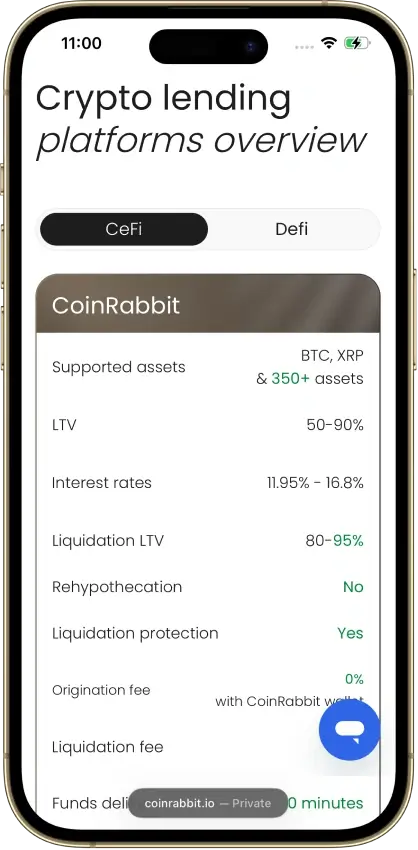
- Up to 90% starting loan-to-value
- Paid Loan Restoration after liquidation
- Full and partial open-ended repayment
CoinRabbit Overview
Key facts
- Product Name
- CoinRabbit
- Release Date
- 2020
- Service model
- centralized
- Product status
- available
- Collateral & debt
- BTC, ETH, XRP, and others; Debt currency: USDT or USDC
- Borrowing rate
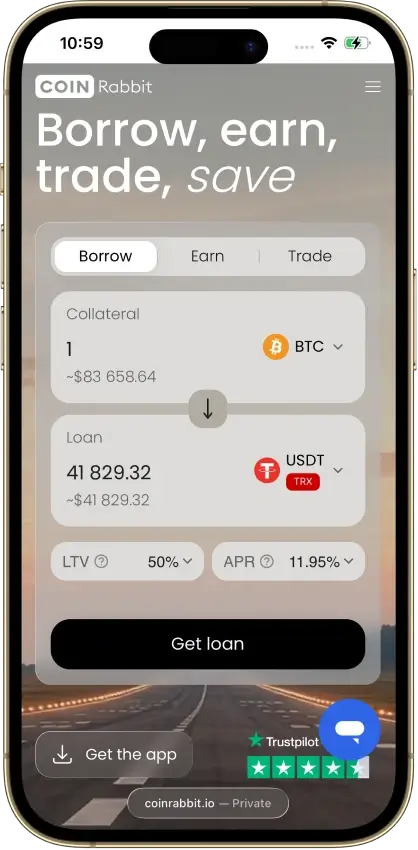
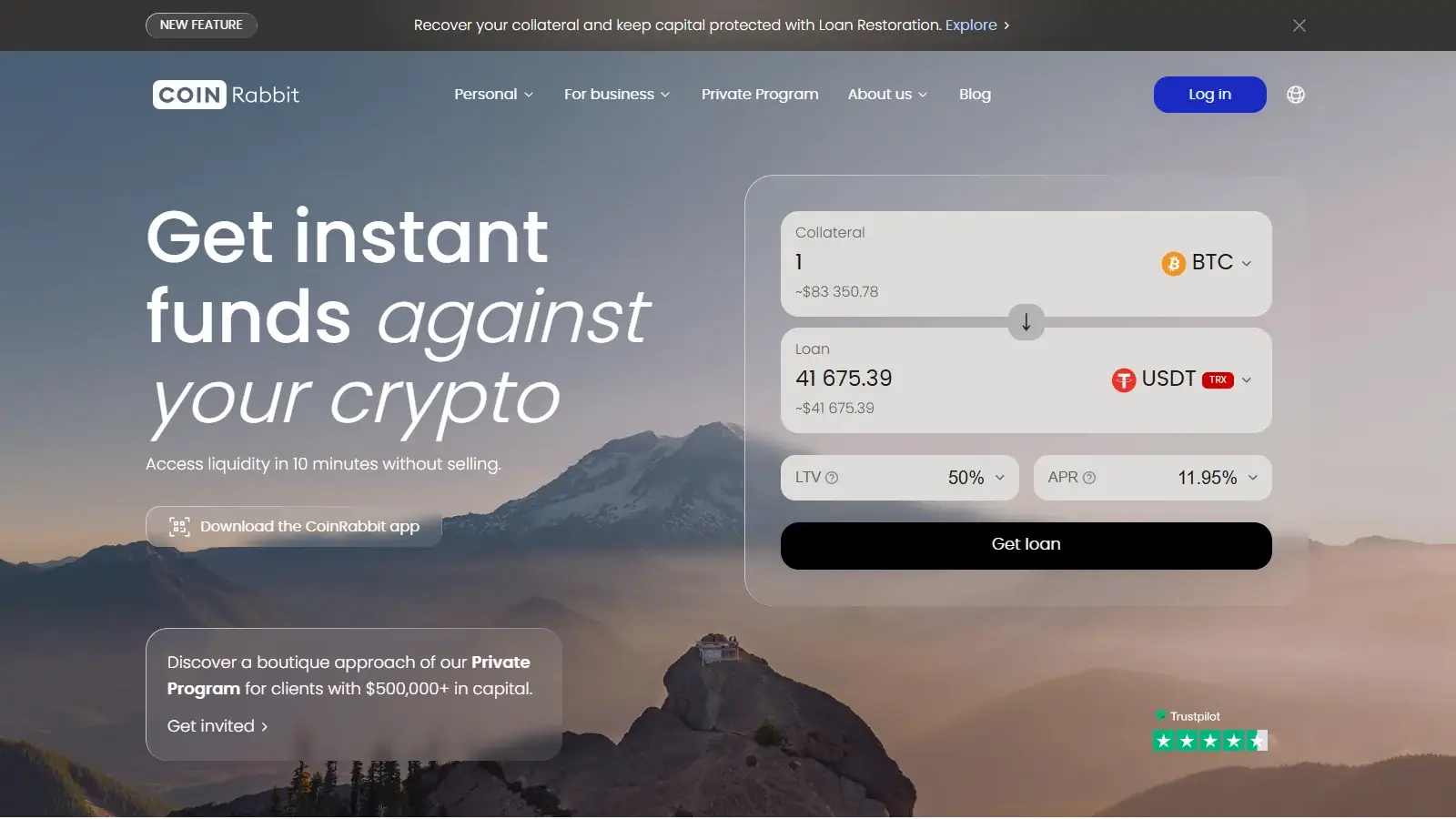
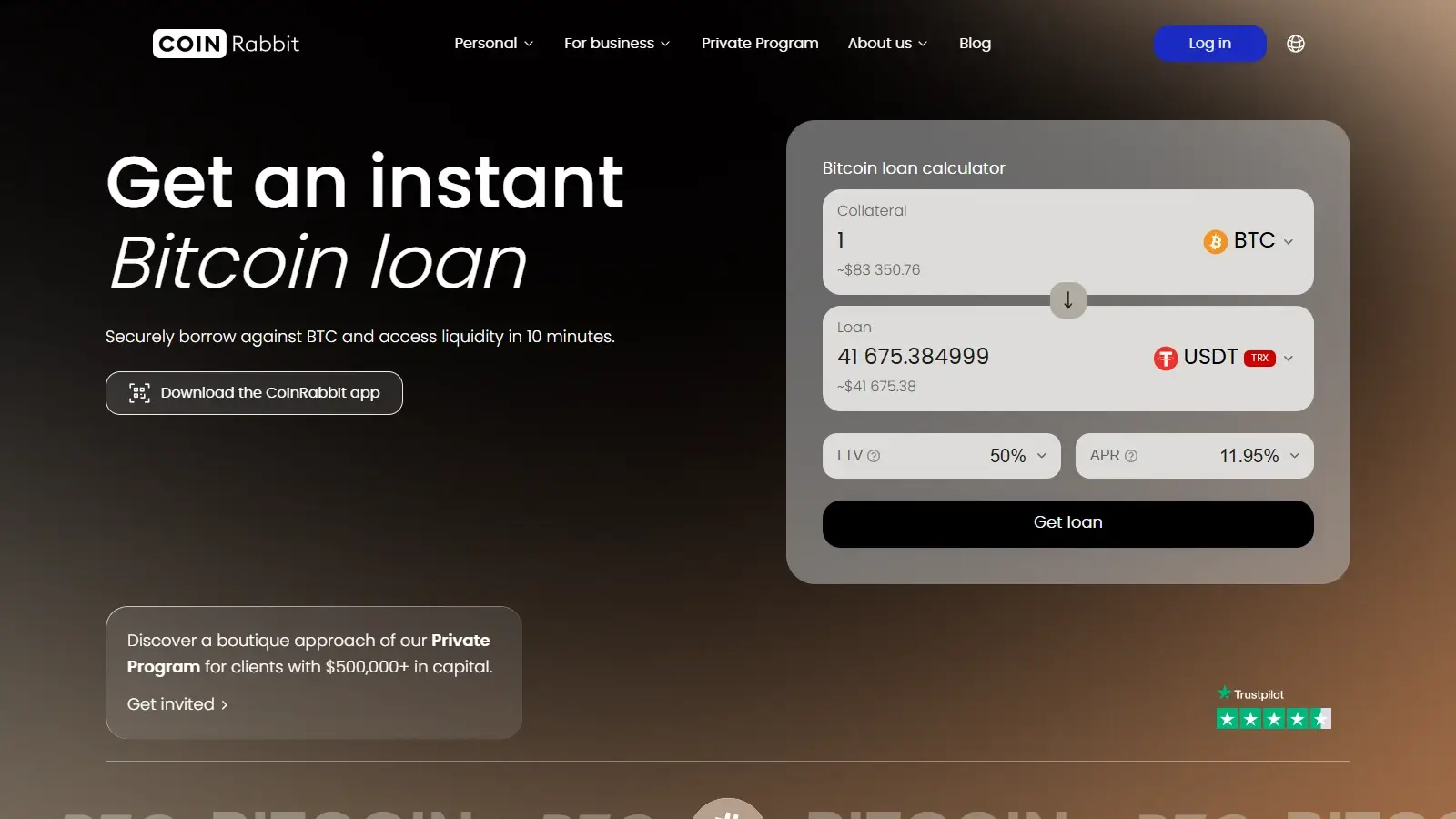
- 11.95% apr / annual; individual quote; Calculator estimate · BTC/USDT · 50% starting LTV · Open-ended; 2026-11-10 16:33:08 UTC
Additional details
- Offer scope
- CoinRabbit Crypto Loan; Crypto-backed loan for eligible borrowers outside the US, UK, Hong Kong and other restricted jurisdictions, with fixed-term (usually 30 days) and open-ended options. The 11.95% starting rate needs the 80% liquidation LTV, which caps borrowing at 65% LTV.
- Amount & term
- Asset-dependent minimum · Fixed (usually 30 days) or open-ended; Loan structure: Open-ended; Maximum: Not disclosed; Asset-dependent minimum; Term: Open-ended
- LTV & liquidation
- Per-loan trigger · Maturity liquidation. The liquidation LTV is 80% or 95%, chosen when the loan opens. A fixed-term loan can be liquidated at maturity if the internal wallet falls short.; Maximum initial LTV: 90%
- Fees
- Transfer and withdrawal fees · Restoration fee
- Repayment
- Full · Partial on open-ended loans
- Availability
- US/UK/Hong Kong excluded · Other restrictions; KYC: Conditional; Credit check: Not required
- Payout
- Crypto wallet · Advertised 10 minutes
- Custody
- Ownership transfer · Reuse clauses conflict
CoinRabbit Screenshots
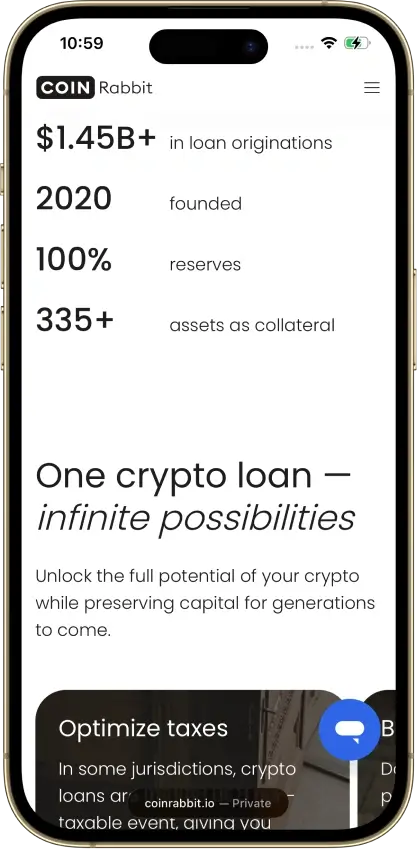
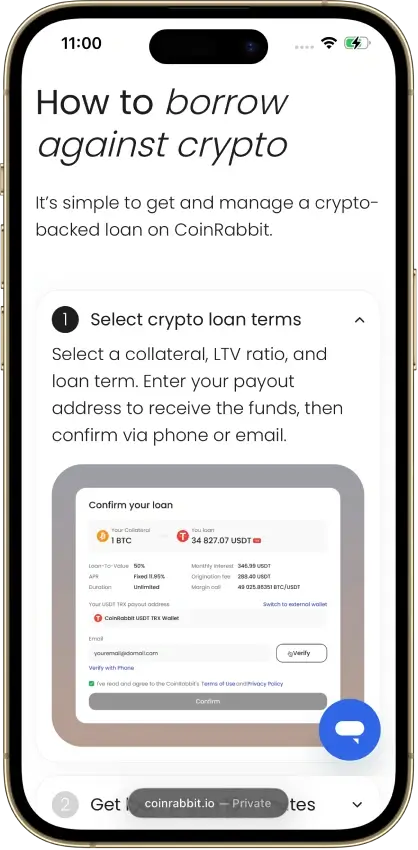
Screenshot 1 of 8
CoinRabbit Pros and Cons
Pros
- Collateral beyond Bitcoin
- Optional automatic collateral top-ups
- Fixed-term interest set at the start
Cons
- US and UK customers excluded
- Collateral ownership transfers to lender
- Open-ended loan terms can change
Rates and Fees
CoinRabbit’s advertised starting rate is 11.95% annual percentage rate (APR). The actual offer depends on the collateral, starting loan-to-value (LTV) ratio, duration, and liquidation setting. That setting is a choice between an 80% and a 95% liquidation LTV, the ratio at which collateral is sold. The 11.95% rate needs the 80% option, which caps borrowing at 65% LTV, while a 90% LTV Bitcoin loan uses the 95% option and is priced at 16.8% open-ended.
For a 30-day fixed-term loan, interest is calculated at the start for the agreed period. Early closure has no early-repayment penalty, but that does not promise a refund of unused interest. Closing after one week may still cost the full 30 days of interest. The payoff amount determines whether early closure saves interest.
The flexible-rate version of open-ended borrowing calculates interest hourly and collects it with full or partial repayment. Other open-ended loans calculate interest monthly. For open-ended loans, CoinRabbit can change conditions with at least 24 hours’ notice and reserves discretion to revise interest, despite fixed-rate wording on the product page.
The terms also mention daily accrual and compound annual interest, while CoinRabbit’s fixed-term loan guide rules out compounding for that loan. With hourly, monthly, and daily methods described, the repayment amount CoinRabbit quotes needs checking before the APR can be used to estimate the cost.
Cost
- Borrowing interest
Loan type, collateral, LTV, duration, and liquidation setting
- External collateral transfer
CoinRabbit service fee plus network fee
- External repayment or collateral increase
Service fee plus network fee
- Withdrawal
Processing and applicable network fees
- Loan restoration
Recovery fee and the required restoration amount
Using CoinRabbit’s internal wallet can involve top-up and withdrawal charges. External collateral, repayment, and top-up transfers add service and network fees shown before confirmation. Compare the amount received and the cost of getting collateral back alongside interest.
Collateral, Loan Amounts, and LTV
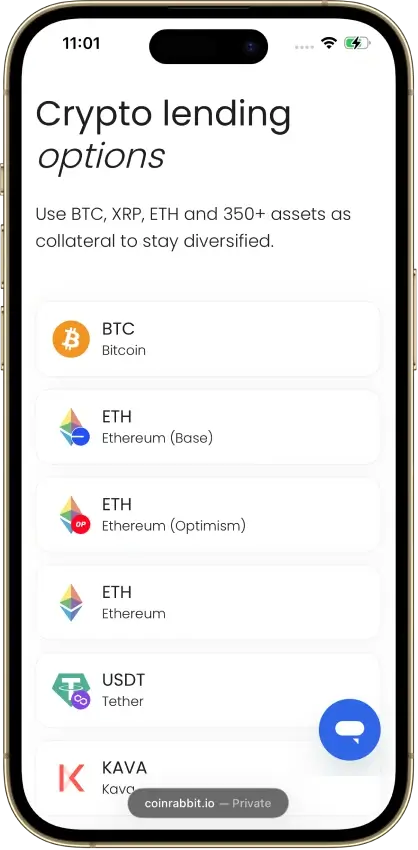
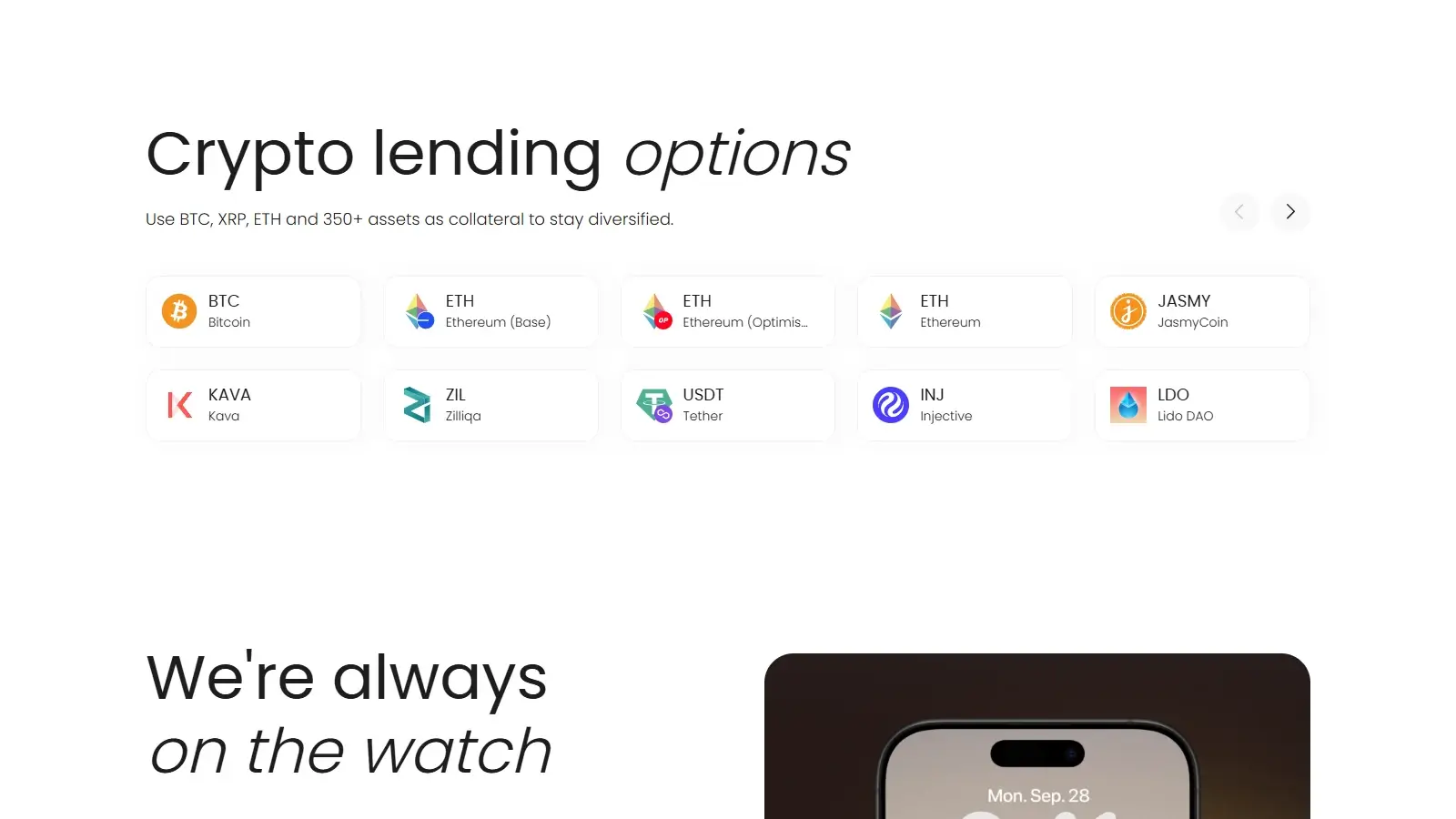
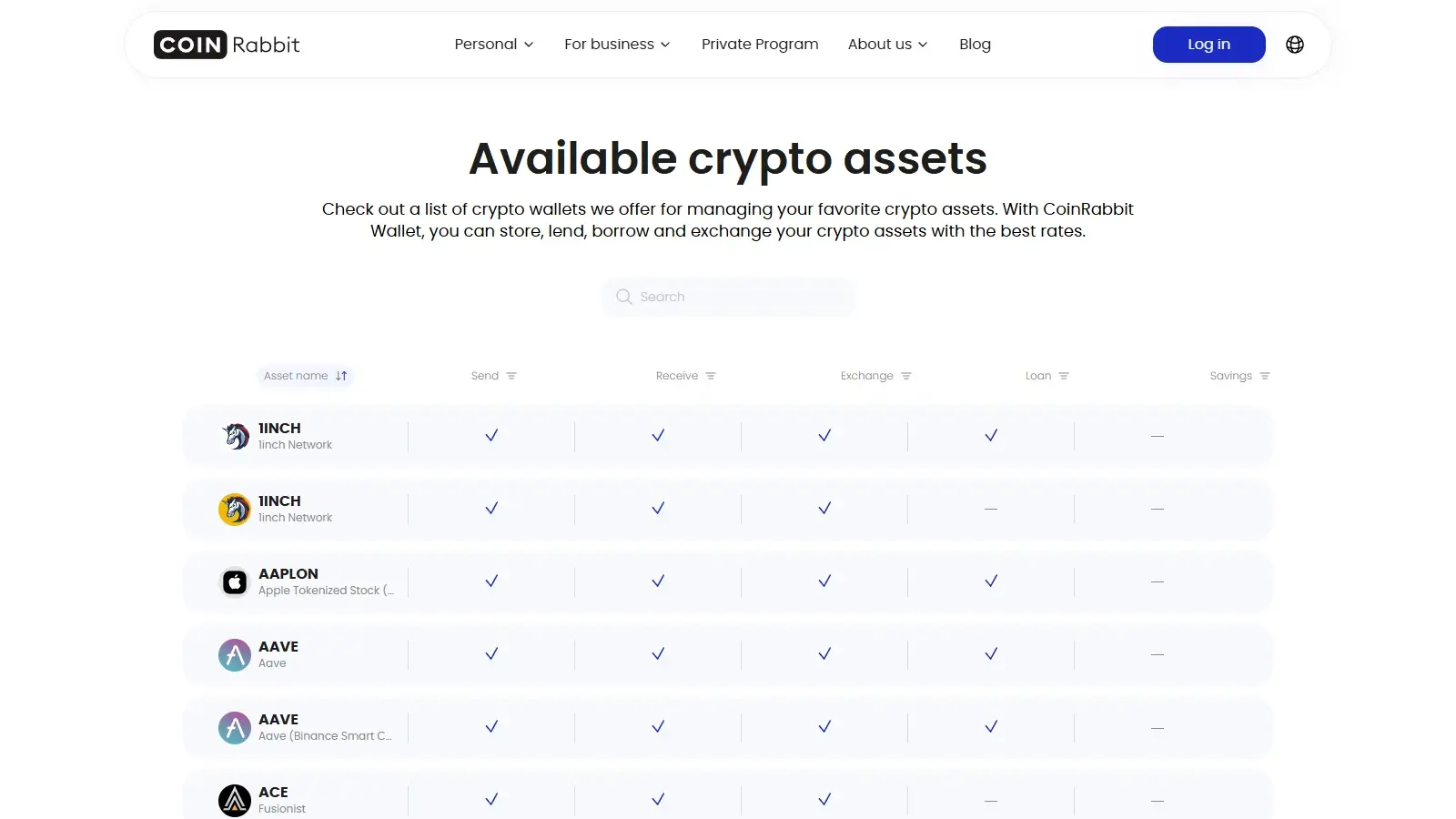
Collateral extends beyond Bitcoin (BTC) to assets including Ether (ETH) and XRP, with maximum LTV determined by the pledged asset and minimum amounts varying by offer. A borrower choosing between tokens needs the loan offer for that exact pair. Wallet or exchange support alone does not show which borrowing amount, rate, and term are available.
LTV measures debt against the collateral’s current value. Borrowing $5,000 against $10,000 of crypto starts at 50% LTV and reaches 62.5% if the collateral falls to $8,000 while debt stays unchanged. Starting with $9,000 of debt against that $10,000 leaves much less room, since a 5% price fall takes LTV to about 95%.
These examples exclude interest and fees and do not assign a CoinRabbit liquidation trigger. Each loan has its own margin-call price, which also reflects liquidity conditions. Extra collateral leaves more room for a decline but transfers more assets to the lender, so the larger price buffer comes with greater custody exposure.
Payout in Tether (USDT) or USD Coin (USDC) leaves the borrower holding tokens. A bank-funded expense requires a later exchange and withdrawal, whose charges and eligibility can reduce the usable proceeds.
Liquidation and Collateral Management
CoinRabbit uses “margin call” for the price that triggers an automatic sale when the liquidity partner’s price reaches or falls below it. Interest can move that trigger closer without a market-price decline, so both the price and the growing debt affect the time available to respond.
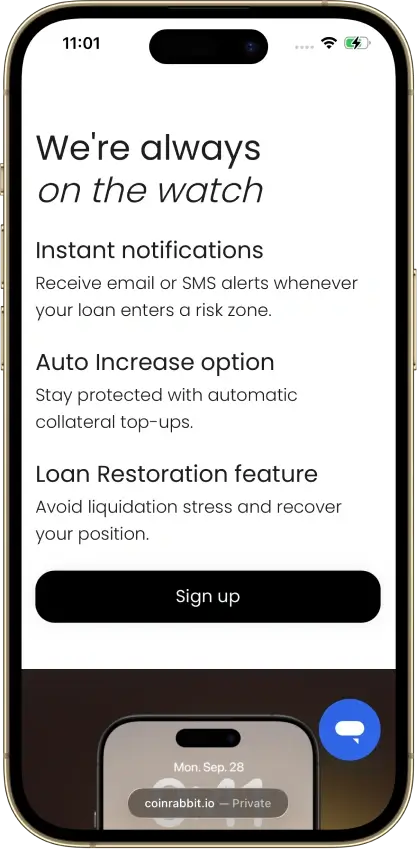
Adding collateral or making an available partial repayment can improve LTV before the loan is frozen for liquidation. After the freeze, closure and top-ups are blocked. Email and SMS alerts can arrive too late in a fast market, leaving the borrower dependent on acting before the freeze.
Liquidation sells collateral on exchanges chosen by CoinRabbit to cover debt and accrued interest. The terms set no process for returning collateral left after a price-triggered sale, leaving recovery of any remainder unexplained.
A fixed-term deadline can force a sale independently of the collateral price. At maturity, CoinRabbit attempts repayment from the internal wallet and, if that balance falls short, can sell part of the collateral to close the loan. Keeping the wallet funded for that deadline is therefore part of preventing a sale even when LTV is healthy.
Loan Restoration offers a paid way back after liquidation, with no deadline to use it. The recovery screen lists the cost of buying back the collateral, a recovery fee of 2% of the total debt including accrued interest, and any extra collateral needed while the price is still near the liquidation level. The money spent is not refundable, and a loan without the Recover option has to go through support.
Custody, Collateral Use, and Security
Ownership of collateral transfers to CoinRabbit when the loan is issued unless applicable law prohibits it. After repayment, CoinRabbit owes an equivalent amount of the pledged asset. Getting it back depends on the company returning assets held outside the borrower’s private keys.
CoinRabbit’s general terms name the lender only as “CoinRabbit.” A separate notice on its website says services may be provided by licensed partner entities depending on the jurisdiction, and it names COINRABBIT ONTARIO INC. only for services in Canada. Neither document names a registered company as the lender that owes collateral back to borrowers.
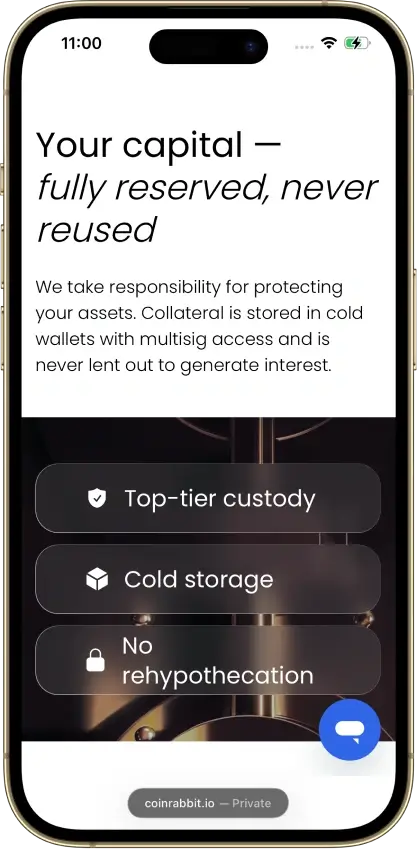
The loan clauses prohibit re-lending, rehypothecation, and other reuse of collateral. The same contract classifies received collateral as a “Deposit,” and its Earn section permits deposited assets to fund loans. That unresolved overlap means the no-reuse wording cannot be treated as an absolute restriction.
CoinRabbit describes its storage as multisignature cold wallets. For a borrower who has transferred ownership, recovery after a company failure would likely rest on the contractual return claim rather than access to those wallets.
Availability, KYC, and Credit Checks
Citizenship, residence, and current location all affect eligibility. The terms separately exclude the US, UK, and Hong Kong and list 33 other restricted jurisdictions, to which CoinRabbit can add without notice. A UK citizen living in Portugal, for example, remains excluded by citizenship.
| Restricted jurisdiction |
|---|
| Afghanistan |
| Algeria |
| Bangladesh |
| Bolivia |
| Burundi |
| Cameroon |
| Chad |
| China |
| Egypt |
| Ethiopia |
| Gabon |
| Ghana |
| Hong Kong |
| Indonesia |
| Iran |
| Iraq |
| Kuwait |
| Lesotho |
| Libya |
| Morocco |
| Myanmar |
| Namibia |
| Nepal |
| North Macedonia |
| Oman |
| Pakistan |
| Qatar |
| Republic of the Congo |
| Russia |
| Sierra Leone |
| South Sudan |
| Sudan |
| Tunisia |
| United Kingdom |
| United States |
| Yemen |
Adults can register with an email address or phone number without a traditional credit check. Users who have not completed know-your-customer (KYC) identity verification face a daily wallet-withdrawal limit that the company can change. Until verification removes that daily limit, collateral returned through an internal-wallet withdrawal may take more than one day to move out.
Application, Payout, and Timing
Select the collateral, loan currency, amount, LTV, and term before entering the payout address. Email or phone verification then leads to collateral-transfer instructions. Matching the token and network to those instructions is necessary for the intended loan to receive the deposit.
CoinRabbit advertises receipt within 10 minutes after collateral is sent, subject to blockchain confirmation. That estimate ends at the compatible crypto wallet. Anyone needing bank funds also has to allow for conversion and withdrawal after the token payout.
Repayment, Renewal, and Collateral Return
Repayment uses the loan asset, including interest and applicable charges. Selling borrowed USDT for bank funds therefore leaves a later need to obtain enough USDT to repay. CoinRabbit also reserves a right to replace a fiat-backed stablecoin after a peg decline of at least 0.5%, so the coin CoinRabbit specifies for repayment determines which asset is accepted.
Open-ended loans allow full or partial repayment without a fixed maturity, with interest continuing while debt remains. Fixed-term loans send a reminder three days before maturity, and the terms require repayment by that deadline without describing a renewal option. The borrower therefore needs a funded payoff plan before the term ends.
Full repayment makes equivalent remaining collateral due back. The terms describe a transfer to the client’s address with a withdrawal processing fee, while the product page describes immediate withdrawal availability. If the return uses an internal-wallet withdrawal, the daily limit for unverified users can delay moving the full amount out.
Account Controls and Support
The loan dashboard displays the collateral position and its margin-call price, with email and SMS notifications as the loan approaches its sale trigger. Auto Increase can add collateral automatically once enabled in the loan dashboard. It draws on the linked wallet, so available funds and the chosen settings determine whether a top-up can help.
Two-factor authentication is supported. If access to it is lost, recovery is assessed case by case and can be impossible without the required information. Losing access could make the loan harder to manage before maturity while interest continues to accrue.
Website chat and email support are available 24/7. They provide the contact route for account access and restoration questions, while the loan dashboard remains the place to follow the balance and trigger price.
Alternatives
-

Ledn
Ledn’s Bitcoin-backed Dollar Loan has a 12-month term and BTC collateral. Its policy permits pledging collateral to fund loans while prohibiting lending it for yield. Choosing CoinRabbit instead expands the collateral choices and adds open-ended repayment, while changing the custody contract the borrower must accept.
-
Nexo Credit Line
Nexo’s Credit Line, under its international offer, sets borrowing capacity across eligible portfolio collateral and prices it partly by loyalty tier. CoinRabbit prices each loan by its collateral, LTV, term, and liquidation setting, so a borrower needs both offers for the same eligible country, collateral, amount, and payout currency to compare cost.
Pillar Scores
- Cost and pricing clarity 20% weight Interest, mandatory fees, pricing conditions, and the cost of early repayment.5.0 / 10
- Collateral control and counterparty risk 25% weight Custody, permitted collateral use, and recovery rights.4.0 / 10
- Liquidation rules and risk controls 20% weight Sale triggers, warnings, penalties, and tools for managing collateral.5.0 / 10
- Repayment and flexibility 15% weight Partial payments, maturity, renewal, and collateral return.7.0 / 10
- Access and funding 10% weight Eligibility, verification, payout routes, and usable funds.6.0 / 10
- Account controls and support 10% weight Security controls, loan records, monitoring tools, and customer support.6.0 / 10
Final Verdict
CoinRabbit can suit an eligible borrower who wants several collateral choices and open-ended repayment without a scheduled maturity. That flexibility still requires repayment in the loan token, payment of transfer charges, and acceptance of later changes to open-ended conditions. Collateral ownership passes to CoinRabbit in exchange for a promise to return equivalent assets, and the reuse clauses conflict. Borrowers who need to keep legal ownership or require a firm no-reuse commitment should look elsewhere. Loan Restoration can reopen a liquidated loan only with fresh funds and a recovery fee, making it a paid second chance after a sale rather than protection against one.

Best For
Eligible borrowers seeking open-ended loans with partial repayment and accepting ownership transfer
Avoid If
- Borrowers needing US or UK access, a bank payout, or continued ownership of their collateral
CryptoSlate may earn a commission when you use partner links, at no extra cost to you. Our reviews, ratings, and editorial decisions remain independent of advertisers. Read How CryptoSlate Makes Money for funding details.