Quick Take
- Zcash broke above $1,000, lifting Grayscale’s ZCSH ETF past $400 million as futures open interest crossed $2 billion for the first time.
- The simultaneous rise in regulated assets and leveraged bets shows capital is building around ZEC across both traditional and crypto-native markets.
- The next test is whether privacy, AI-era demand and Zcash’s technical advantages can sustain the rally once momentum and short-covering fade.


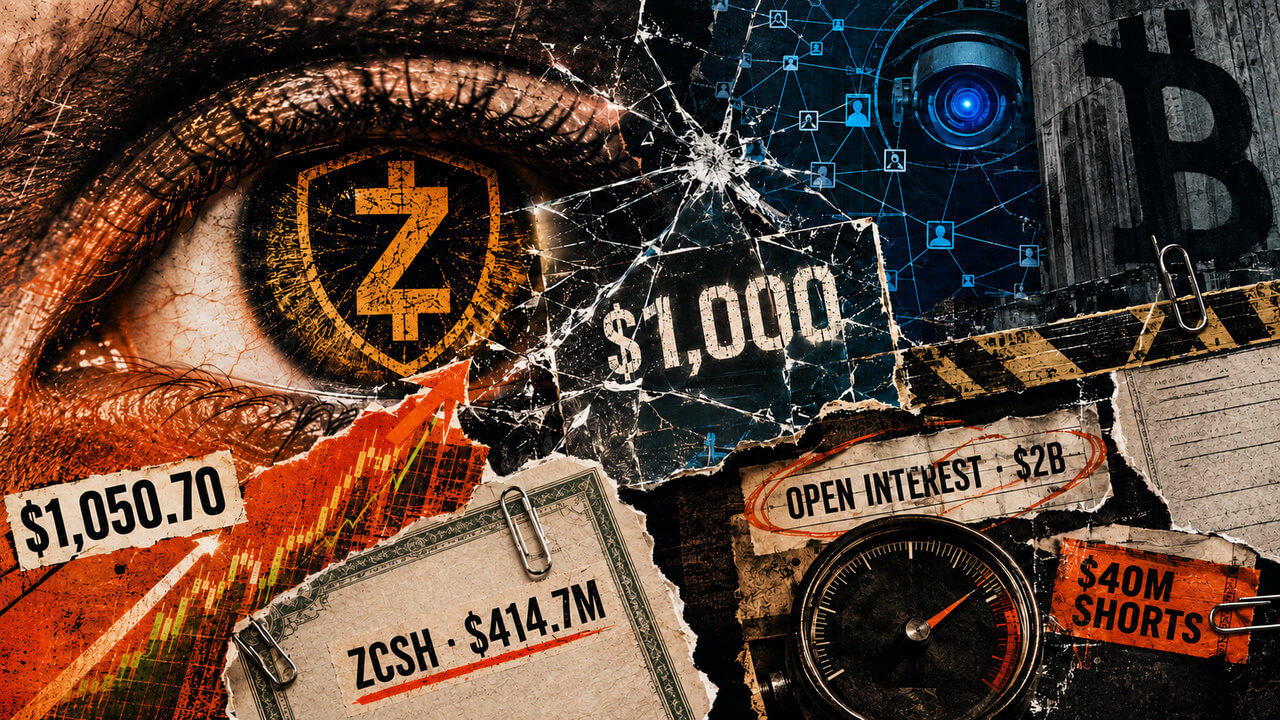
Zcash broke above $1,000 on Sept. 4, pushing the asset value of Grayscale’s recently listed ZCSH ETF past $400 million less than two weeks after its debut.
ZEC registered an intraday high of $1,050.70, up roughly 20% over 24 hours and nearly 100% over the past month.
The move lifted ZCSH’s assets to $414.7 million as of Sept. 3, compared with about $304.6 million when the fund began trading on NYSE Arca on Aug. 25.
ZCSH inherited assets from the Grayscale Zcash Trust, and the sharp appreciation in ZEC accounts for much of the increase.
Still, the fund’s ZEC holdings rose from 387,849 at launch to 428,613 by Sept. 3, while shares outstanding increased to 5.35 million.
The Sept. 4 breakout came as Bitcoin surpassed $82,000 and ETH reclaimed $2,500, but Zcash’s move was considerably larger. Roughly $40 million of ZEC shorts were liquidated in 24 hours, adding fuel to a rally that had already gathered momentum before the latest market-wide advance.
Leverage has expanded with the price. CoinGlass data showed that Zcash futures open interest crossed $2 billion for the first time, while 24-hour futures volume climbed above $6 billion for the first time since mid-August.
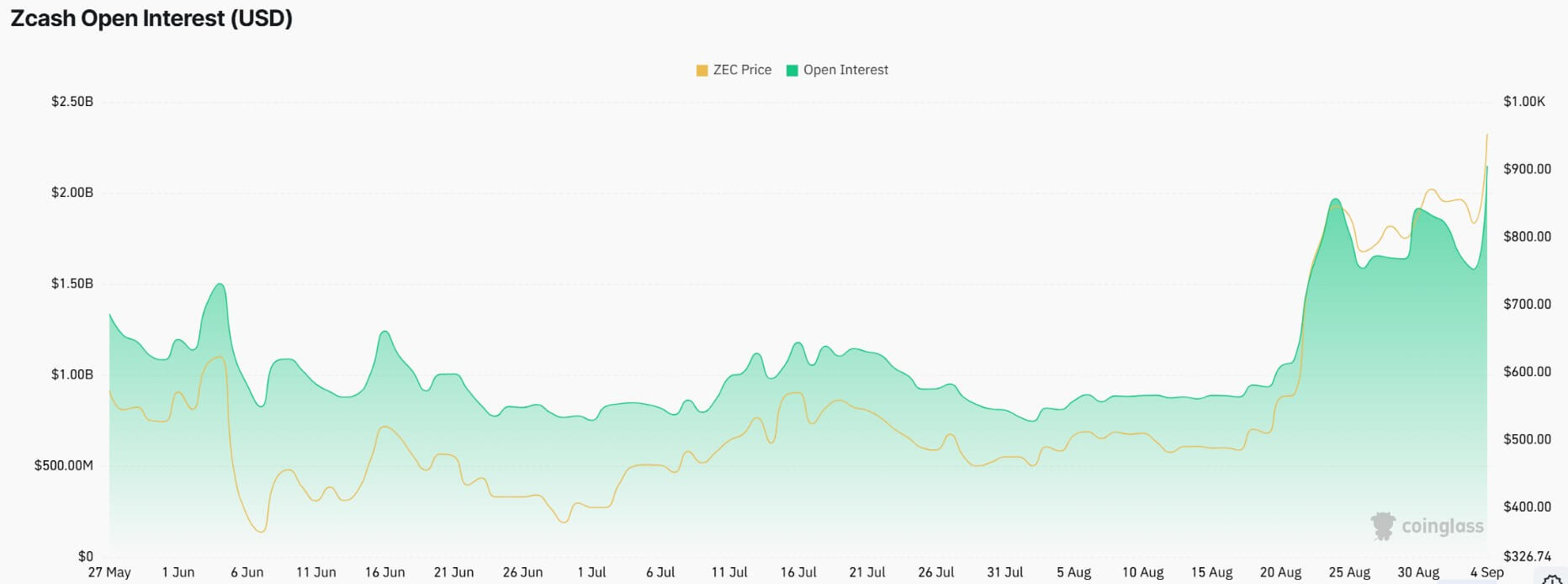
The combination suggests traders are committing substantially more capital to ZEC derivatives as the token tests levels it has not sustained in years.
The scale of the repricing is particularly stark over a longer horizon. ZEC was trading around $40 a year ago and has now returned to the top 10 largest cryptos by market cap for the first time since 2018.
That ascent has also brought increasingly aggressive forecasts. Cryptographer Arjun Khemani said characterizing the token's rally solely as a privacy-coin understates the case being made for Zcash.
He pointed to its fixed 21 million supply, Bitcoin-like emissions schedule, decade of distribution, work on quantum recoverability, plans for substantially higher transaction throughput and efforts to formally verify its shielded pool against undetectable inflation bugs.
Khemani said that “privacy is just one property of Zcash,” arguing that the larger bet is whether ZEC can develop into a form of sovereign money.
Grayscale sees AI opening a crack in Bitcoin’s dominance
The price move has revived a broader question around Zcash: whether its latest gains can translate into a lasting challenge to Bitcoin’s dominance of the digital-currency market.
Bitcoin accounts for about 93% of the market capitalization of Grayscale’s Currencies Crypto Sector, a level of dominance that alternatives such as Litecoin have failed to seriously disrupt. Zcash remains worth less than 1% of Bitcoin even after rising roughly 19-fold over the period covered by Grayscale’s latest research.
Grayscale argues Zcash has a better chance than previous challengers because it combines Bitcoin-like monetary properties with features that have become more relevant as the crypto market has matured.
Privacy is central to that thesis.
Bitcoin transactions are permanently recorded on a public ledger. Once an address is linked to an offchain identity, its balances and transaction history can potentially be reconstructed.
Grayscale argues advances in artificial intelligence could make that process faster, cheaper, and more widely accessible by improving address labeling and blockchain activity analysis.
The asset manager sees that technological shift as the beginning of a third major wave of concern over financial privacy, following the computerization of financial records in the 1970s and the growth of the internet in the 1990s.
Zcash approaches the problem differently. Its shielded transactions use zero-knowledge cryptography to conceal sending and receiving addresses and transaction amounts, allowing users to retain Bitcoin-like scarcity without making every transfer permanently visible.
Grayscale argued that distinction could become more valuable as AI makes surveillance of transparent blockchains increasingly sophisticated.
Its case extends beyond privacy. Grayscale describes Zcash as having several “second mover” advantages, including active development against emerging cybersecurity risks and cross-chain connectivity through intent-based technology that could allow wallets or AI agents to move value across networks while using Zcash as a private settlement layer.
Those features underpin the asset manager’s argument that Zcash could capture market share from Bitcoin even without reproducing Bitcoin’s merchant adoption or liquidity.
The same privacy architecture also presents one of Zcash’s largest obstacles. Shielded transactions can complicate sanctions screening, anti-money laundering controls, and efforts to trace illicit funds, creating regulatory and compliance concerns that have historically weighed more heavily on privacy-focused cryptocurrencies than on Bitcoin.
Bitcoin also retains advantages that are difficult to replicate. Its liquidity, infrastructure, brand recognition, and more than 15 years of network growth continue to reinforce its position at the center of the digital-currency market.
That leaves Zcash with a considerable gap to close.
Nevertheless, the move above $1,000 has made Grayscale’s thesis more consequential, as it puts greater weight on whether privacy and technological differentiation can produce durable market-share gains once the momentum behind the current rally cools.

Zcash is +7.50% over the past 24 hours and currently sits at rank #9 by market cap.
Mentioned in this article


Editorial credits