Every prop firm advertises one number, the evaluation fee, which buys a single attempt at the profit target. The cost of reaching a funded account is that fee multiplied by the attempts the rule set extracts. Charges billed after passing raise the total, while any refund lowers it. The tables below price all three parts, including the figure cheap-challenge comparisons leave out: what the second attempt costs after a fail.
A prop firm challenge is a paid evaluation. The fee is a one-time charge for one attempt at a stated profit target inside set loss limits. Passing converts the account to funded capital paying a profit split. Failing ends the account, and trading again means either a reset, which a few policies price below the original fee, or a new evaluation at list price.
Cheapest Prop Firms in 2026
- Evaluation fee
- From $20
- Max drawdown
- 3–6%
- Profit split
- 80%–90%
- Owned by Kraken's parent company, Payward
- Discloses its own conflicts in its terms
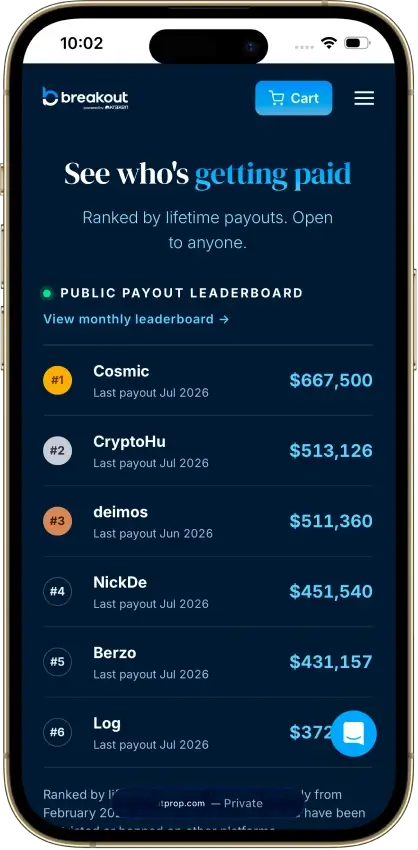
- Public payout leaderboard with totals
- Evaluation fee
- Forex / CFD: From $32.99; Futures: From $79.99
- Max drawdown
- Forex / CFD: Balance-Based Trailing (Closing Balance): 6%; Static (Initial Balance): 6–10%; Futures: 1,000–4,000 USD
- Profit split
- Forex / CFD: 70%–95%; Futures: 80%–95%
- Static loss floors on Stellar evaluations
- Flex removes funded consistency rules
- CFD and futures instant routes
- Evaluation fee
- Forex / CFD: From $19; Futures: From $59
- Max drawdown
- Forex / CFD: 4–10%; Futures: 4%
- Profit split
- Forex / CFD: 50%–100%; Futures: 80%
- Funding traders since 2016
- Scaling ladder reaches $4,000,000
- High Stakes pauses on a daily breach
- Evaluation fee
- Forex / CFD: From $29; Futures: From $83
- Max drawdown
- Forex / CFD: Intraday Trailing (Real-Time Equity): 6–10%; Static (Initial Balance): 8–10%; Futures: Balance-Based Trailing (Initial Balance): 4%; End-of-Day Trailing (Initial Balance): 3–4%
- Profit split
- Forex / CFD: 90%–100%; Futures: 80%–100%
- Scaling ceiling of $4,000,000
- Aqua Elite adds $1,000 to $3,000 a month
- Ten CFD models and five futures types
- Evaluation fee
- Forex / CFD: From $23; Crypto: From $49; Futures: From $139
- Max drawdown
- Forex / CFD: Intraday Trailing (Real-Time Equity): 5–6%; Static (Initial Balance): 5–8%; Crypto: End-of-Day Trailing (End-of-Day Equity): 4%; Intraday Trailing (Real-Time Equity): 5–6%; Futures: 2,000 USD
- Profit split
- Forex / CFD: 60%–90%; Crypto: 70%–90%; Futures: 80%
- A missed payout deadline pays you 100%
- No reset fee on any of the 51 plans
- No arbitration clause or class waiver
CryptoSlate may earn a commission when you visit partner sites through links on this page, at no extra cost to you. Our rankings and reviews remain editorially independent and based on our published methodology. Read disclosure
Disclaimer: CryptoSlate may receive a commission when you click links on our site and make a purchase or complete an action with a third party. This does not influence our editorial independence, reviews, or ratings, and we always aim to provide accurate, transparent information to our readers.Cheap Prop Firm Challenges Compared
Compare the scored firms by market coverage, evaluation structure, account size, drawdown, profit split and first-payout timing.
| Prop Firm | Markets | Starting Fee | Evaluation Types | Maximum Drawdown | Profit Split | First Payout |
|---|---|---|---|---|---|---|
 Breakout Breakout | Crypto | From $20 | One Step | 3–6% | 80%–90% | No waiting period at all. A payout can be requested as soon as net profit after the split clears $50, which can be the same day the account is funded. |
 FundedNext FundedNext | Forex / CFD, Futures | Forex / CFD: From $32.99; Futures: From $79.99 | Forex / CFD: Two Step, One Step, Instant; Futures: Futures Evaluation | Forex / CFD: Balance-Based Trailing (Closing Balance): 6%; Static (Initial Balance): 6–10%; Futures: 1,000–4,000 USD | Forex / CFD: 70%–95%; Futures: 80%–95% | — |
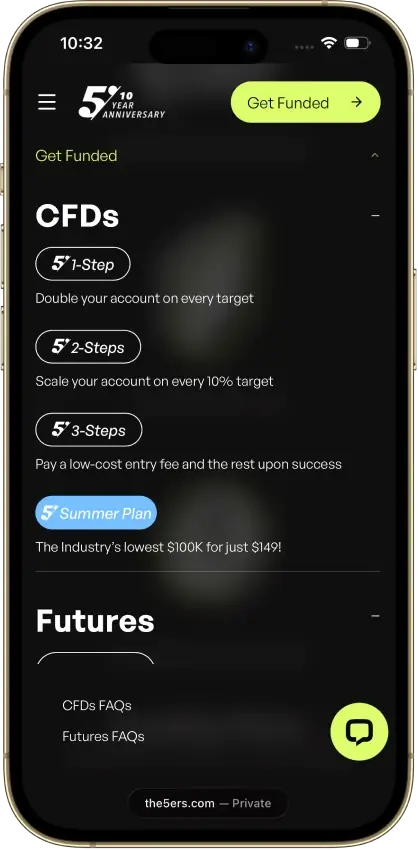
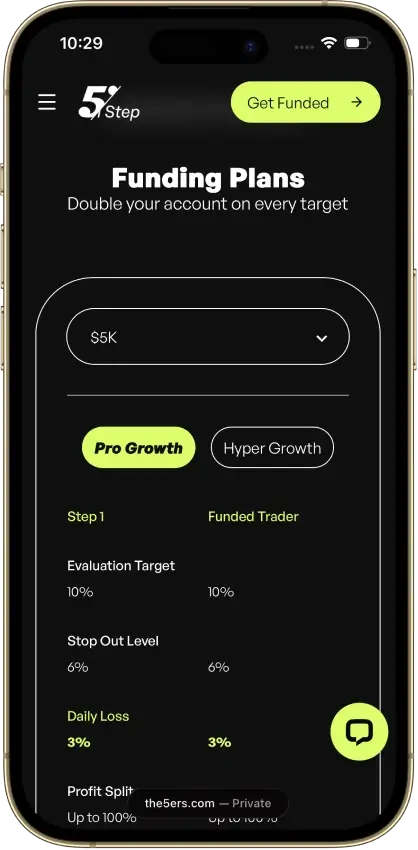
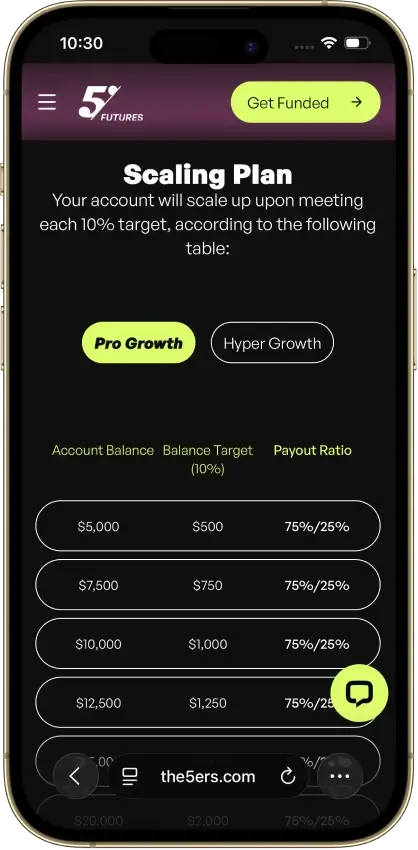
 The5ers The5ers | Forex / CFD, Futures | Forex / CFD: From $19; Futures: From $59 | Forex / CFD: One Step, Two Step, Three Step; Futures: Futures Evaluation | Forex / CFD: 4–10%; Futures: 4% | Forex / CFD: 50%–100%; Futures: 80% | 14 calendar days |
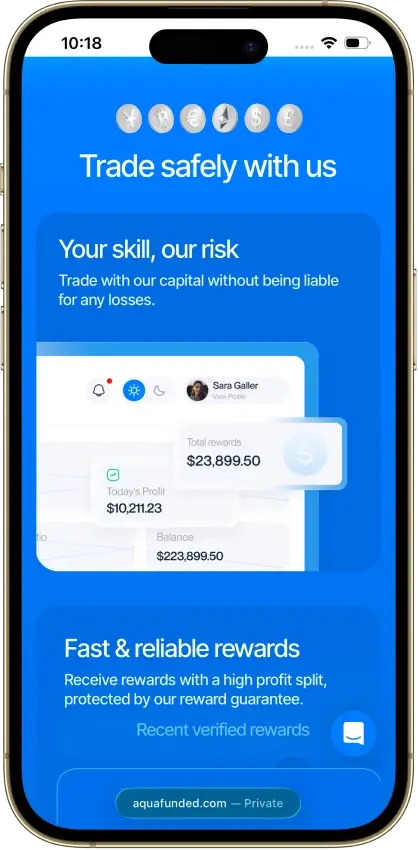
 AquaFunded AquaFunded | Forex / CFD, Futures | Forex / CFD: From $29; Futures: From $83 | Forex / CFD: Two Step, Instant; Futures: Instant, Futures Evaluation | Forex / CFD: Intraday Trailing (Real-Time Equity): 6–10%; Static (Initial Balance): 8–10%; Futures: Balance-Based Trailing (Initial Balance): 4%; End-of-Day Trailing (Initial Balance): 3–4% | Forex / CFD: 90%–100%; Futures: 80%–100% | 14 calendar days |
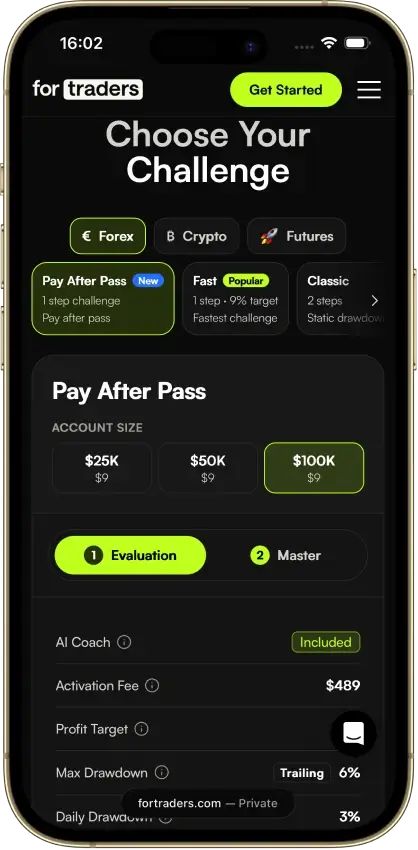
 For Traders For Traders | Forex / CFD, Crypto, Futures | Forex / CFD: From $23; Crypto: From $49; Futures: From $139 | Forex / CFD: One Step, Two Step, Three Step, Instant; Crypto: One Step, Instant; Futures: One Step, Instant | Forex / CFD: Intraday Trailing (Real-Time Equity): 5–6%; Static (Initial Balance): 5–8%; Crypto: End-of-Day Trailing (End-of-Day Equity): 4%; Intraday Trailing (Real-Time Equity): 5–6%; Futures: 2,000 USD | Forex / CFD: 60%–90%; Crypto: 70%–90%; Futures: 80% | 14 calendar days |
All figures are list prices before discount codes. The Checked column shows the date each row was last verified against the firm's published pricing and terms.
The entry column and the refund column contradict each other, with the refund column usually carrying more weight. A fee returned at the first payout costs a passing trader nothing, regardless of its size. A refund paid in store credit sits in a class of its own because credit that can only buy more evaluations is deferred revenue rather than returned money. The reset column decides the other half of the total. It separates a fail that costs a discounted retry from one that repeats the whole checkout.
Cheapest Prop Firms in Detail
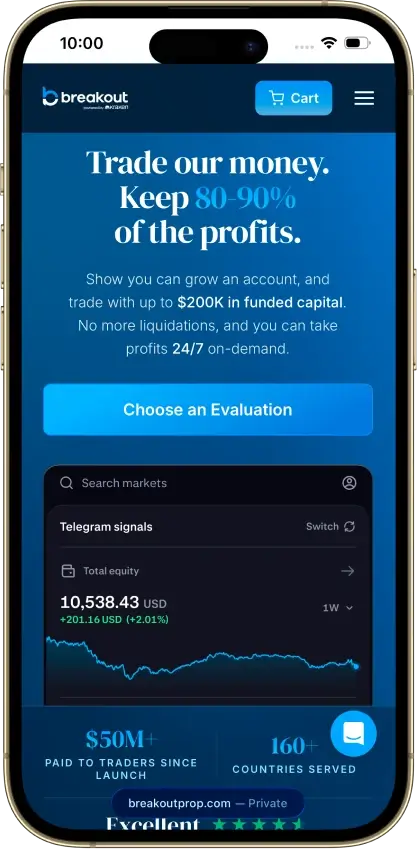
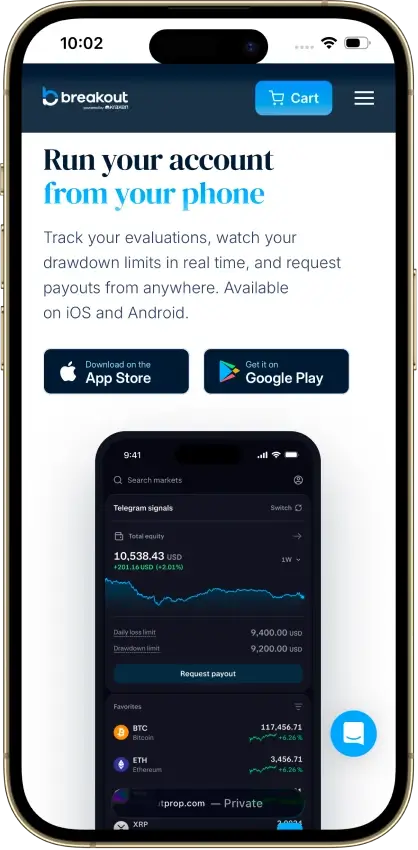
Breakout
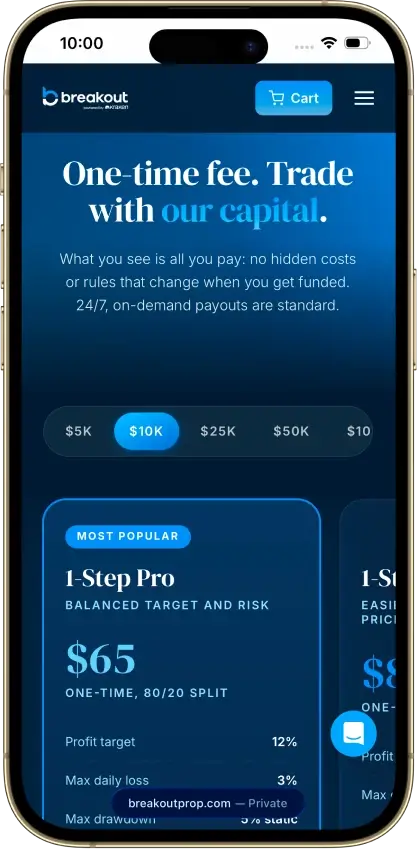
- Evaluation fee
- From $20
- Max drawdown
- 3–6%
- Profit split
- 80%–90%
Pros
- Static drawdown on all three plans
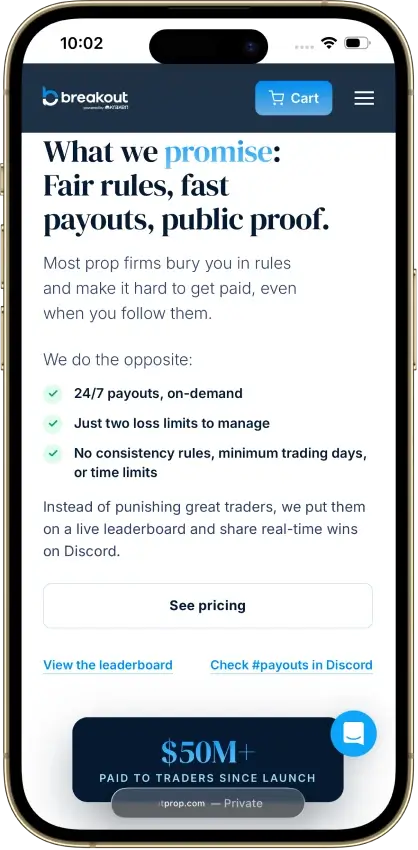
- Payouts on demand 24/7, $50 minimum
- No consistency rule or minimum days
- News trading and weekend holds allowed
Cons
- Your order may never reach an exchange
- Evaluation fee is never refunded
- Leverage varies by coin, 2x on many alts
- No MetaTrader on either terminal
- Funded capital limited to $200,000 total

FundedNext
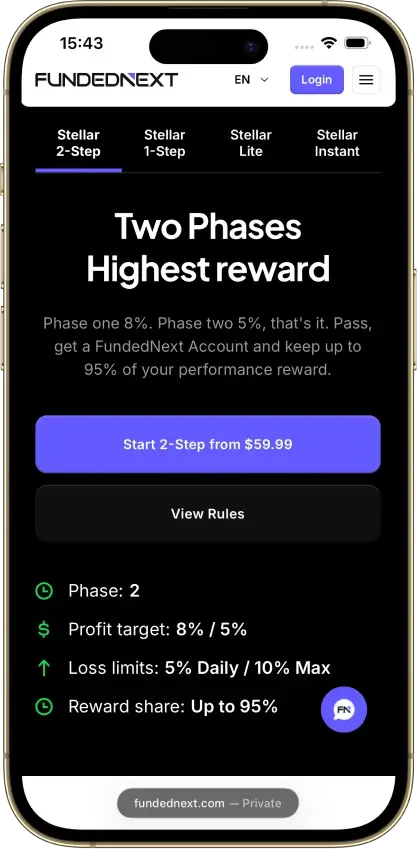
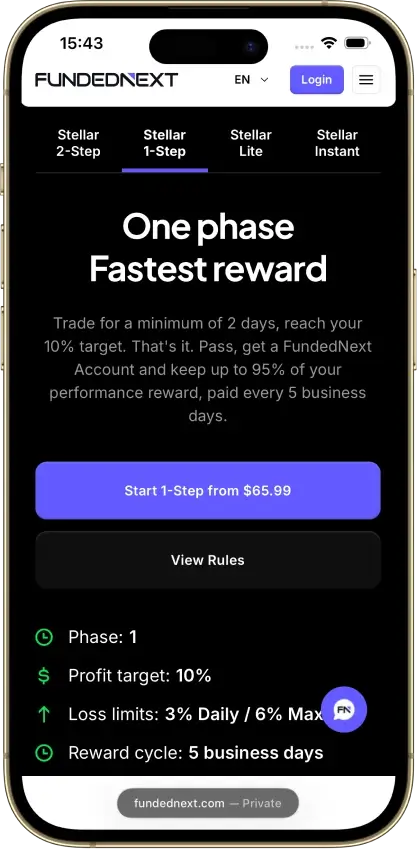
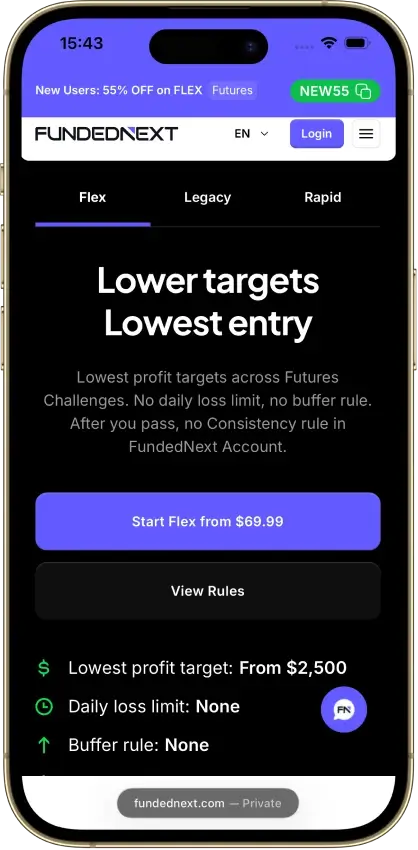
- Evaluation fee
- Forex / CFD: From $32.99; Futures: From $79.99
- Max drawdown
- Forex / CFD: Balance-Based Trailing (Closing Balance): 6%; Static (Initial Balance): 6–10%; Futures: 1,000–4,000 USD
- Profit split
- Forex / CFD: 70%–95%; Futures: 80%–95%
Pros
- Static overall loss on Stellar evaluations
- No funded consistency rule on Flex
- Tradovate, NinjaTrader and TradingView
- Lite standard challenge needs two days
- 2-Step fee return with first reward
Cons
- Flex limits requests to half the profit
- Flex concludes after five rewards
- Instant withdrawals shrink loss room
- Quick Strike can end funded CFD accounts
- Payout options cannot change after purchase


The5ers
- Evaluation fee
- Forex / CFD: From $19; Futures: From $59
- Max drawdown
- Forex / CFD: 4–10%; Futures: 4%
- Profit split
- Forex / CFD: 50%–100%; Futures: 80%
Pros
- Static drawdown on all five CFD programs
- No time limit to pass any challenge
- Entry from $19 for a 2-step $2.5K account
- Five CFD and two futures programs
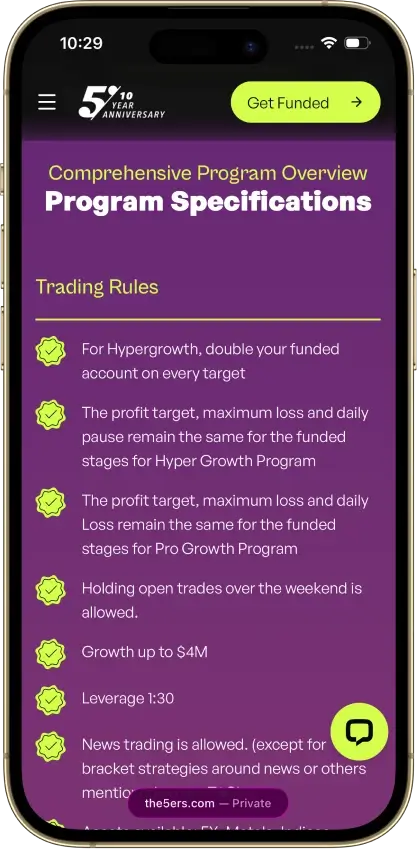
- Overnight and weekend holding on CFD plans
Cons
- Refund terms conflict on its own page
- Futures drawdown trails, unlike CFD plans
- Splits start at 50/50 on two programs
- 30x leverage on three of five CFD plans
- Scaling resets the 14-day payout clock


AquaFunded
- Evaluation fee
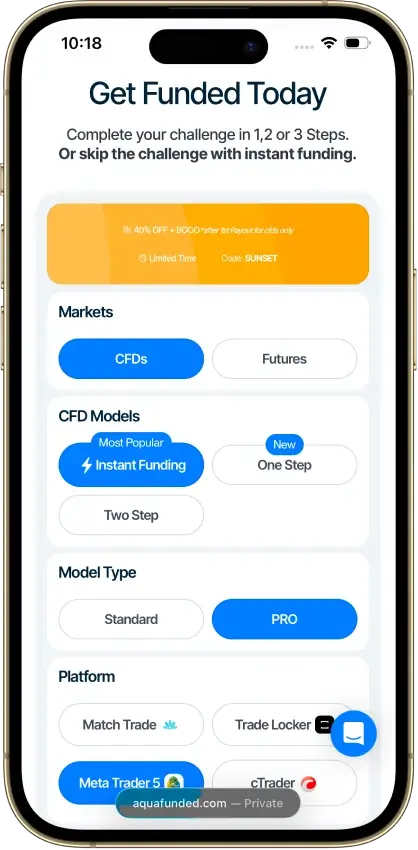
- Forex / CFD: From $29; Futures: From $83
- Max drawdown
- Forex / CFD: Intraday Trailing (Real-Time Equity): 6–10%; Static (Initial Balance): 8–10%; Futures: Balance-Based Trailing (Initial Balance): 4%; End-of-Day Trailing (Initial Balance): 3–4%
- Profit split
- Forex / CFD: 90%–100%; Futures: 80%–100%
Pros
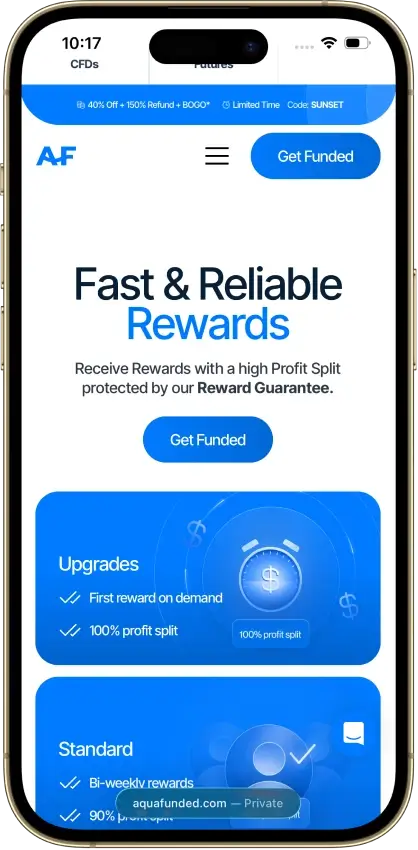
- 90% profit split on every CFD model
- $1,000 penalty if a payout misses 24 hours
- Three futures types have no daily loss limit
- Five of ten CFD models skip consistency
Cons
- The drawdown documents contradict themselves
- -2% floating loss closes the account for good
- The refund only lands on your fourth payout
- 30 days without a trade breaches funding


For Traders
- Evaluation fee
- Forex / CFD: From $23; Crypto: From $49; Futures: From $139
- Max drawdown
- Forex / CFD: Intraday Trailing (Real-Time Equity): 5–6%; Static (Initial Balance): 5–8%; Crypto: End-of-Day Trailing (End-of-Day Equity): 4%; Intraday Trailing (Real-Time Equity): 5–6%; Futures: 2,000 USD
- Profit split
- Forex / CFD: 60%–90%; Crypto: 70%–90%; Futures: 80%
Pros
- No time limit except on Strike
- EURUSD from 0.1 pips raw spread
- 74 crypto pairs, traded 24/7
- $3 per lot forex, $0 on indices
- Evaluations listed from $23
Cons
- 5-second hold rule is not in the rulebook
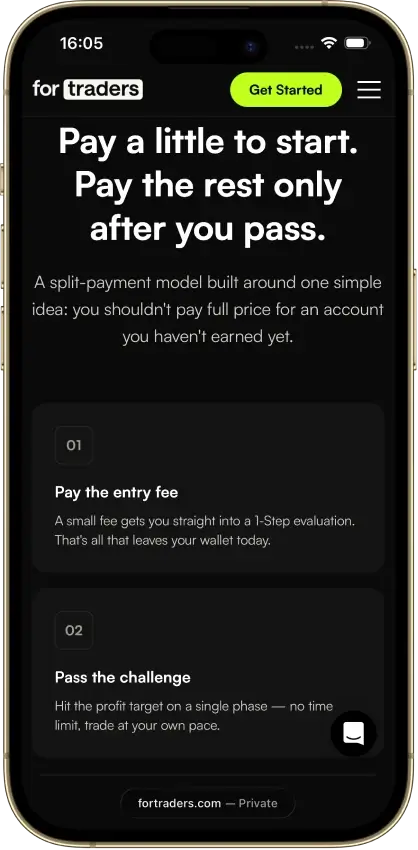
- Activation fee falls due before KYC
- 3% buffer locked up on Forex Instant
- Checkout omits drawdown limits on 37 plans


How We Rank
- Payout Reliability and Evidence 25% weight
Payout history, evidence and the conditions for receiving funds.
- Rules Fairness and Transparency 20% weight
Clarity and fairness of account rules and restrictions.
- Cost and Value 15% weight
Evaluation fees, refunds and the value of each program.
- Trading Conditions 15% weight
Markets, platforms, execution and trading limits.
- Profit Split and Scaling 10% weight
Profit sharing and paths to larger allocations.
- Firm Transparency and Stability 10% weight
Ownership, disclosures and operational stability.
- Support and Reputation 5% weight
Customer assistance and the firm’s public track record.
Checkout price begins the cost calculation; it does not finish it. The ranking considers what happens after a failed attempt, which charges appear after passing, whether a refund returns as cash or restricted credit and how the rule set affects the chance of paying again. Promotional codes cannot turn a temporary discount into a permanent advantage. The result favors a lower total route to a usable funded account, not simply the smallest number on a price card.
Entry Cost by Account Size
The same firm is rarely the lowest-priced row at every size. Futures and forex fees only become comparable once account size is included. The last column divides each list price by account size, putting every row on one scale. Dashes mark sizes a model does not sell.
| Firm and Model | Market | $5,000 | $25,000 | $50,000 | $100,000 | Per $10,000 of Size, at $100K |
|---|---|---|---|---|---|---|
| FundingPips 2-Step Pro | Forex/CFD | $29 | $134 | $224 | $422 | $42.20 |
| FundedNext Stellar Lite | Forex/CFD | $32.99 | $139.99 | $229.99 | $399.99 | $40.00 |
| FundedNext Flex | Futures | — | — | $69.99 | $129.99 | $13.00 |
| Breakout Turbo | Crypto | $20 | $95 | $180 | $330 | $33.00 |
| FTMO two-step | Forex/CFD | — | €250 | €345 | €439, from €540 | €43.90 |
| The5ers High Stakes New | Forex/CFD | $35 | $176 | $278 | $491 | $49.10 |
| The5ers Day Trade | Futures, sold as buying power | — | $59 | $100 | — | $20.00, at the $50,000 tier |
| AquaFunded 2-Step Pro | Forex/CFD | $29 | $104 | $215 | $429 | $42.90 |
| AquaFunded One Step Beginner | Futures | — | $83 | $108 | $208 | $20.80 |
| Goat Funded Trader Pay Later | Forex/CFD | $5 + $78 on passing | $5 + $238 on passing | $5 + $368 on passing | $5 + $598 on passing | $60.30, upfront and activation combined |
| Crypto Fund Trader 1 Phase | Crypto + forex | $40 | $219 | $369 | $619 | $61.90 |
These are list prices before discount codes, checked on the dates shown in the comparison above. The futures rows put a number on the split hidden by the term account size. The two markets price the same account size an order apart, and the last column makes them readable side by side.
How These Figures Were Checked
Every figure in both tables is the list price shown on the firm's own pricing page or checkout before any discount code, on the date in the Checked column. Each row names the model and account tier behind the figure. Dashes mark sizes that model does not sell, and euro-priced rows stay in euros. The per-$10,000 column divides the $100,000 list price by ten. Where a model stops below that size, it divides the $50,000 price by five. The pay-later row adds its upfront charge to the activation due on passing. Refund and reset terms come from each firm's published policies and remain first-party claims until a returned fee is verifiably shown. That treatment follows how price claims affect scoring. Trading costs are excluded, including spread and commission. Overnight charges are excluded as well. Discount codes are excluded because they rotate, even where one has run long enough to look permanent.
The Rule Set Decides How Many Fees One Pass Costs
Since the fee buys one attempt, the number behind every row above is how many attempts a pass tends to take. The drawdown rules determine that number. A static floor is drawn once below the starting balance and never moves, so winning trades add room. A trailing floor climbs with every new equity high and keeps every step it gains. Winning trades then consume the room meant to absorb losses. A tight floor turns one advertised fee into several collected ones, while the reset column prices each extra attempt.
Three Routes off the $100,000 Column
Take the $100,000 column of the tier table and follow one trader who fails once before passing. On a row with no reset, the second attempt is another evaluation at list price, so the route costs twice the figure in the cell. Where the fee never refunds, both payments are sunk. If resets carry a stage discount, the second attempt costs the listed fee minus the discount for the phase reached. On rows where the fee returns, one of the two evaluation fees comes back after the refund milestone. The timing column shows how many payout cycles that takes. The pay-later row reverses the shape. A fail is capped at the token upfront charge, with the real bill arriving as activation only when an attempt succeeds. The same column and trader produce four different totals, none of them the sticker price.
The Charges That Land After Checkout
An activation fee is easy to miss because it arrives attached to good news. The trader has passed the evaluation and the funded account is ready, but a second invoice still stands between them. Under pay-later pricing, a few dollars open the account and the balance becomes due only on success. That activation is the substance of the deal, and at some account sizes it exceeds the outright cost of an instant-funding account.
Split upgrades add cost from the other side. Where the base split reads 80/20 and the marketing shows 90/10, the gap is often a product in itself. The upgrade may cost a fifth or a third of the fee and be available only at purchase. A trader who wants the higher split is paying a higher entry fee under another name, which a refund calculation may never include.
Trading itself adds another layer of cost. Commissions and spread are priced into every fill, while swap accrues overnight. Swap-free access is another checkout upgrade, priced across forex prop firms’ overnight costs. On crypto accounts, a funding rate replaces swap and runs around the clock. The crypto prop firms’ holding costs show how those rates apply.
Monthly platform and data billing is rare on CFD accounts but standard among futures prop firms charging data fees. A processing deduction or the network cost of the payout coin can also leave the trader with less than the split implies.
What a Refund Is Worth Depends on Where It Lands
The value of a genuine refund-on-payout depends entirely on its terms. A fee returned at the first payout makes the evaluation free for exactly the traders who succeed. A fee returned at the fourth reward demands survival through several full cycles, each gated by consistency rules and minimum-day requirements, before the money moves. A fee returned as platform credit never leaves the building.
Cheap Pricing Is a Business Model, Not a Discount
The evaluation fee clears before the outcome does, and it clears again when a failed trader buys another attempt. This revenue model explains the low end of the pricing table better than generosity does without implying misconduct.
The same model explains permanent discount codes. List prices in this category are opening offers, cut at checkout by codes that rotate but rarely lapse, so the discount is better understood as the actual fee. Both tables still quote list because a stored code price goes stale the day the code changes, while the firm keeps its list price published. The prop firm costs and rule sets show what that fee buys at each firm, rule by rule.
Which Low-Cost Route Fits Which Trader
- Best for a discounted second attempt: FundingPips, which prices resets below the original fee, with the discount stepping by the phase reached.
- Best for putting off the cost until after a pass: Goat Funded Trader Pay Later, a token charge to begin with activation due only on passing, and on some sizes that activation costs more than buying an Instant account outright.
- Best for a fee returned at the first payout: FTMO on the two-step, with a free trial before any money changes hands.
- Best for pairing a low entry with an early refund: FundedNext Stellar 2-Step, which returns the fee with the first reward.
- Best for a small-account two-step: The5ers, with the High Stakes refund arriving as credits, not cash.
- Best for a bare one-time fee on a crypto account: Breakout, nothing billed after checkout and no refund on any outcome.
- Best for a high base split with nothing extra to buy: AquaFunded, which builds its split into the standard fee on every CFD model.
- Best for one cheap fee spanning crypto and forex together: Crypto Fund Trader, with weekly payouts and the split upgrade each sold separately as a share of the fee.
Risk Disclosure
Money paid for a prop evaluation is at risk from the first trade, and most participants never reach a payout at all. These accounts are simulated throughout. The firm takes no custody of trader funds, and a funded balance does not necessarily represent live firm capital. Everything here is informational, not financial advice. Links on this page may earn CryptoSlate a commission. Firms sometimes provide free evaluation accounts for testing. Neither moves a score.