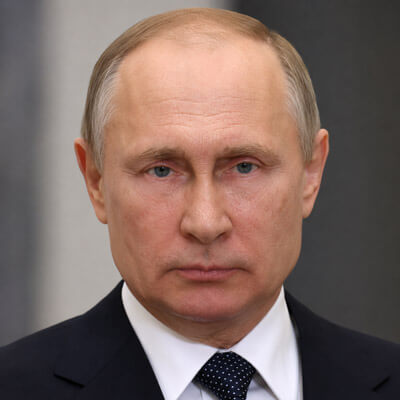
Putin out as President of Russia by…?
Current Odds
Odds Summary
June 30, 2027 leads at 10.5% reported probability on Polymarket.
Polymarket · Last synced
Market Analysis
Putin’s 2030 Term Keeps Shock Risk Contained Before 2027

The market’s core assumption is that Russia’s legal and political calendar favors continuity well beyond this contract’s deadline. The live question is how much weight to assign to rare disruption scenarios that would interrupt a system recently formalized around Putin’s extended tenure.

The pricing is anchored in a simple institutional fact: Vladimir Putin’s current presidential term runs far beyond every deadline in this market. That makes an exit before June 30, 2027 depend on a disruption outside the scheduled political calendar, which is why the curve rises with time while still treating near-term removal as a remote event.
The 2030 term makes routine succession a weak driver
Putin won Russia’s March 15–17, 2024 presidential election and began a new six-year term on May 7, 2024, placing the ordinary end of the term in 2030. That timing matters because the market’s latest listed date, June 30, 2027, arrives roughly halfway through the term rather than near a scheduled handover. The absence of a normal electoral transition before the contract deadline pushes the market toward scenarios involving death, resignation, incapacitation, or forced removal.
The 2020 constitutional amendments reinforce that continuity story. They reset Putin’s presidential term count, allowing him to run again after the current term and potentially remain in power until 2036. For market purposes, this means the legal framework supplies no built-in reason for a 2027 exit. The price therefore has to carry political and biological tail risk, while giving limited weight to ordinary institutional turnover.
The curve prices time as exposure to disruption
The listed outcomes show a steep difference between near-term and longer-window risk: 0.5% by July 31, 2026, 1.7% by August 31, 2026, 3.8% by September 30, 2026, 8.5% by December 31, 2026, and 18% by June 30, 2027. The slope matters because each added month expands the window for an unscheduled event, while the underlying political calendar remains unchanged.
| Deadline | Market-implied interpretation |
|---|---|
| July 31, 2026 | Requires an abrupt near-term shock with little time for gradual deterioration to surface. |
| December 31, 2026 | Adds months for health, elite, or constitutional stress scenarios to develop. |
| June 30, 2027 | Captures the broadest set of disruption paths before the market closes. |
The $16.88 million in volume, $2.36 million in liquidity, and $8.9 million in open interest make this curve more than a thin symbolic wager. The size matters because the market is effectively aggregating views on whether a highly personalized presidency can maintain continuity through a period that is legally designed to extend well past 2027.
The rules make even a temporary loss of office decisive
The resolution criteria introduce an important asymmetry: the market resolves to Yes if Putin ceases to be President of Russia for any period of time before the relevant deadline. That means a brief formal transfer of office, an acting-president arrangement, or a documented resignation followed by another political outcome would matter more than informal influence behind the scenes.
This rule detail matters because it separates formal office status from broader power. A scenario in which Putin delegates responsibilities, reduces public appearances, or relies more heavily on aides would not automatically trigger resolution if he remains president. The market is therefore pricing a narrow legal fact: whether he stops holding the office, not whether his day-to-day role changes.
That creates a hidden assumption inside the low near-term pricing. It assumes that any stress around Putin’s position would either be contained without changing his formal title or would arrive too late for the earlier deadlines. The June 2027 price is higher because time increases the chance that a private problem becomes an official transition.
Confirming evidence would come from continuity, not rhetoric
Evidence supporting the current market-implied story would be visible through continued performance of presidential functions, stable public ceremonies, regular official decrees, and no formal move to alter the chain of succession. AP’s description of Putin beginning his fifth term “more in control of Russia than ever” supports the idea that the system recently reaffirmed his authority rather than preparing for a managed exit.
Evidence that would pressure the curve in the other direction would need to connect directly to office status. Hypothetical examples include an official statement of incapacitation, a resignation announcement, a legally recognized acting president, a constitutional process that removes him, or credible state confirmation of death. Rumors alone can move attention, but the contract’s formal standard gives more weight to verifiable institutional actions.
The main counter-signal is how much continuity the system can absorb
The strongest counterargument to the low early-date probabilities is that highly centralized systems can look stable until they change abruptly. A narrow circle of decision-making can reduce the number of visible warning signals available to outside observers, which gives sudden-transition scenarios more relevance than a purely calendar-based model would imply. That helps explain why the June 2027 outcome sits far above the earliest dates despite the 2030 term.
The main failure mode for the shock thesis is that Russia’s formal framework has already been adjusted around Putin’s extended rule. The 2020 amendments and the 2024 term start create a legal and political path for continuity through 2030 and potentially another run afterward. As long as the presidency remains formally occupied by Putin, stress signals that stop short of a title change have limited resolution value.
For the market, the decisive catalyst is any development that converts private uncertainty into a public legal fact. Until that happens, the pricing is likely to keep treating 2027 as a deadline for extraordinary disruption rather than a waypoint in an ordinary succession cycle.
Sources
What Could Move the Odds?
Market-Implied Thesis
A 10.5% Yes price implies a limited chance that Putin ceases to be president at any point by June 30, 2027.
The 2% price for December 31, 2026 versus 10.5% by June 30 suggests the market places most implied exit risk after year-end rather than immediately.
What Could Reprice It
The key repricing trigger is a verifiable change in Putin’s presidential status, since even a temporary cessation satisfies the Yes rule.
No dated political decision or succession event is supplied. Under the rules, confirmation that he ceased to be president for any period would directly determine a Yes outcome.
Where the Market May Be Weak
Reported turnover does not itself show tradable depth: $30.36M volume beside $846.82K liquidity may overstate market capacity.
Open interest of $7.27M shows outstanding exposure, but no trader count or order-book detail is provided, leaving concentration and the cost of moving prices unmeasured.
Counter-Signal
The 2% December 31 price is the strongest counter-signal: it prices continued presidency through 2026 as much more likely than an early exit.
The later 10.5% reading adds only 8.5 percentage points across the following six months, indicating the market has not priced a broad near-term break in continuity.
Market Details
- Resolution criteria
- This market will resolve to “Yes” if Vladimir Putin ceases to be President of Russia for any period of time between market creation and the specified date (ET). Otherwise, this market will resolve to “No”.
- Platform
-


- Category
- Politics › Russia
- Scheduled deadline
- July 1, 2027, 3:59 AM UTC
- Market rules summary
- Multi-timeframe Polymarket event. Each listed timeframe is represented by its Yes price on the underlying binary market. View full rules
Frequently Asked Questions
What are the current Putin out as President of Russia by… odds?
Polymarket reports Putin out as President of Russia by… odds with June 30, 2027 at 10.5% and December 31, 2026 at 2.3%. These probabilities are market-implied and can change as liquidity and trading activity update. The latest market snapshot includes $30.49M volume, $816.77K liquidity, and $7.28M open interest. CryptoSlate last synced this market data at Oct 25, 2026, 02:47 UTC.
What could move the Putin out as President of Russia by… prediction market odds?
A 10.5% Yes price implies a limited chance that Putin ceases to be president at any point by June 30, 2027. The 2% price for December 31, 2026 versus 10.5% by June 30 suggests the market places most implied exit risk after year-end rather than immediately. Catalysts to watch include Verified cessation of the presidency before June 30, 2027, Verification of a change in presidential status, and Changes in displayed liquidity or participation.
How does the Putin out as President of Russia by… prediction market resolve?
This market will resolve to “Yes” if Vladimir Putin ceases to be President of Russia for any period of time between market creation and the specified date (ET). Otherwise, this market will resolve to “No”. Multi-timeframe Polymarket event. Each listed timeframe is represented by its Yes price on the underlying binary market.
Related Russia Markets
 Russia x Ukraine Ceasefire Date
  Which party will win Mississippi’s 2026 Senate election?

 Which party will win New Hampshire’s 2026 Senate election?