
Fed Decision in September?
Final Results
Scheduled deadline: Sep 16, 2026, 00:00 UTC
Market Resolution
Polymarket reports 25 bps increase as the winning outcome for the Fed Decision in September prediction market with a final probability of 100%. Scheduled deadline: Sep 16, 2026, 00:00 UTC. Final reported trading volume was $208.02M.
Polymarket · Final sync
 ECB Interest Rate Decision: October 2026
  Bank of Canada interest rate decision: October 2026
  Fed Decision in October?
 Market Analysis
Fed September Odds Pit Policy Patience Against Inflation Persistence
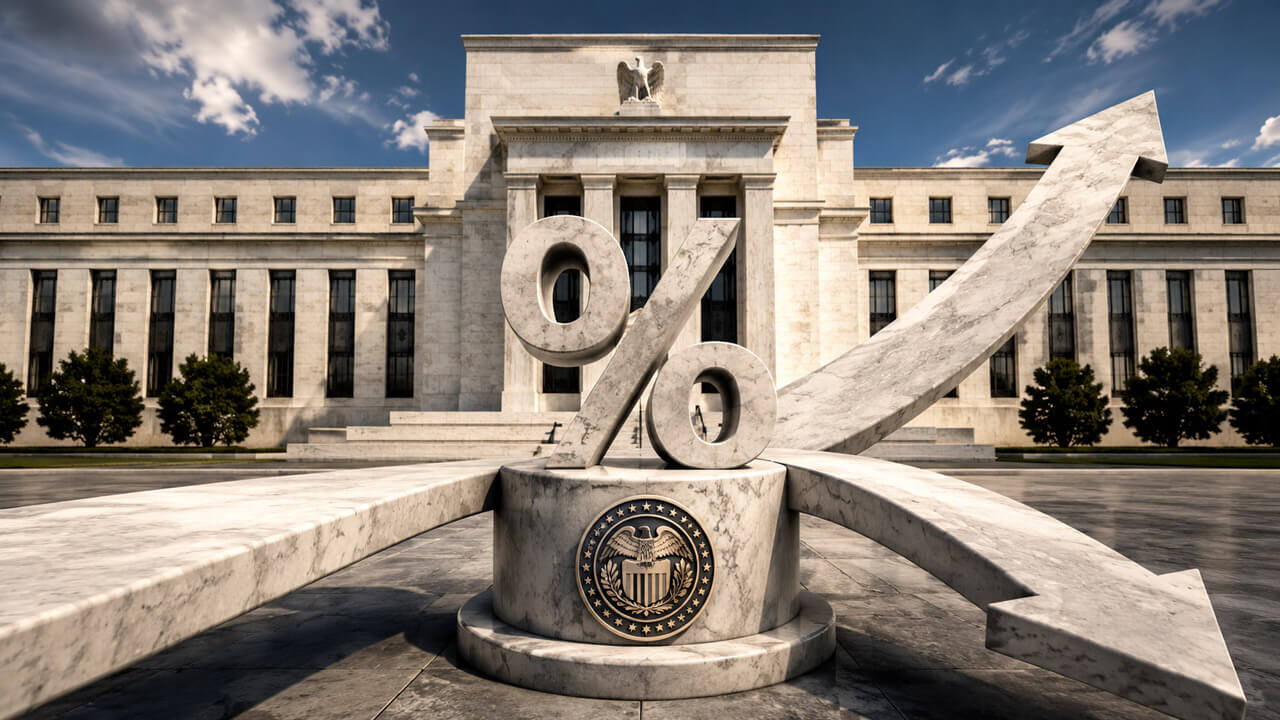
The market’s center of gravity sits with a hold, yet the sizable hike outcome signals a Fed path still hostage to inflation data. July’s meeting and the late-summer release calendar could decide whether inertia survives into September.

The September Fed market is pricing a Committee that can afford to wait, while leaving substantial room for one more inflation-driven increase. That mix follows directly from the latest official stance: the FOMC held the target range at 3.5% to 3.75% on June 17 and said inflation remains elevated relative to its 2% goal. With no change at 56.5% and a 25 basis-point increase at 38.5%, the market-implied story is that policy restraint remains the default, yet the bar for additional tightening has not disappeared.
The hold case depends on the Fed preserving optionality
The no-change outcome leads because a restrictive setting already exists. The June implementation note kept the operating framework aligned with that range, including a 3.65% interest rate on reserve balances effective June 18. That matters for the September market because the Fed does not need to move the upper bound to keep financial conditions tight; it can maintain pressure through the current target range while waiting for more evidence.
The market also has a mechanical reason to cluster around a hold. The rules resolve on the upper bound of the target federal funds range, so a steady 3.75% upper bound settles no change, while a move to 4.00% would settle the 25 bps increase outcome. That makes the September question highly sensitive to whether the Committee sees new data as requiring action, instead of merely reinforcing the current stance.
The hike probability comes from the Fed’s own inflation language
The 38.5% price on a 25 bps increase is large enough to show that June’s inflation warning carries weight. The official statement did not describe inflation as solved; it said inflation remains elevated relative to the 2% objective. That phrase matters because it gives policymakers room to justify another increase if late-summer inflation readings fail to cooperate.
The tiny prices on the tail outcomes add context. A 50+ bps increase sits at 0.9%, while a 50+ bps decrease is 2.2%. The market is treating September as a conventional policy-decision problem, centered on hold versus a quarter-point hike, rather than a shock-response meeting. That interpretation fits the scheduled nature of the September 15-16 FOMC meeting and the absence, in the supplied official materials, of an emergency-policy frame.
July is the first gate before September pricing hardens
The July 28-29 FOMC meeting is the immediate policy event before September, making it the first major test of the current distribution. A July hike could change the September setup by moving the upper bound before the market’s final decision window; a July hold with firm inflation language could preserve the September hike path; a July hold with softer language could make September inertia more convincing.
This matters because September pricing is not only about September data. It is also about how the Committee describes the reaction function in July. If officials emphasize inflation persistence, the September increase outcome has a policy narrative to lean on. If the statement points more strongly to balanced risks or cooling demand, the no-change outcome gains a clearer official anchor. The market’s $2.26 million in volume and roughly $800,500 in open interest suggest participants have already built positions around that sequencing.
The final data window can overwhelm prior messaging
After July, the market’s most important information arrives in a compressed calendar. The BEA’s Personal Income and Outlays report for July is scheduled for August 26. The BLS Employment Situation for August is scheduled for September 4, the Producer Price Index for August on September 10, and CPI for August on September 11. Those releases matter because they form the last inflation-and-labor package before the September 15-16 decision.
| Scheduled input | Why it matters for September |
|---|---|
| July Personal Income and Outlays, Aug. 26 | Gives a late read on household income, spending, and inflation pressure before blackout constraints dominate. |
| August Employment Situation, Sept. 4 | Can challenge the hike path if labor conditions weaken, or support patience if hiring remains resilient. |
| August PPI, Sept. 10 | Feeds the inflation pipeline argument ahead of CPI. |
| August CPI, Sept. 11 | Likely the most visible final inflation signal before the decision. |
The Fed’s blackout policy limits official communications from the second Saturday before the meeting through the day after the meeting. That raises the market significance of the data themselves. Once policymakers stop speaking publicly, repricing has fewer official guideposts and more dependence on the scheduled releases.
The main failure mode is a labor shock before CPI
The strongest counter-signal to the current hold-versus-hike structure would be a labor deterioration large enough to make additional tightening politically and economically harder to justify. In that scenario, the small combined cut probability, currently about 6.3% across the 25 bps and 50+ bps decrease outcomes, could become less peripheral. This is a hypothetical catalyst based on the release calendar, since no supplied source reports such a deterioration.
The opposite catalyst is also clear. If August CPI and PPI show inflation pressure persisting after July FOMC language keeps the door open, the market has a straightforward route to assigning more weight to a 25 bps increase. The September market is therefore less a referendum on one meeting than a test of whether the Fed’s June inflation concern survives the July statement and the final pre-meeting data run.
Sources
Market Details
- Resolution criteria
- The FED interest rates are defined in this market by the upper bound of the target federal funds range. The decisions on the target federal funds range are made by the Federal Open Market Committee (FOMC) meetings.
- Platform
-


- Category
- Economy › Economic Policy
- Scheduled deadline
- September 16, 2026, 12:00 AM UTC
- Settlement source
- federalreserve.gov
- Market rules summary
- Multi-outcome Polymarket event. Each listed option is represented by its Yes price on the underlying market. View full rules
Frequently Asked Questions
What was the final result of the Fed Decision in September prediction market?
Polymarket reports 25 bps increase as the winning outcome for the Fed Decision in September prediction market with a final probability of 100%. The final market snapshot includes $208.02M volume and $28.86M open interest. CryptoSlate last synced the final market data at Sep 16, 2026, 22:02 UTC.
How does the Fed Decision in September prediction market resolve?
The FED interest rates are defined in this market by the upper bound of the target federal funds range. The decisions on the target federal funds range are made by the Federal Open Market Committee (FOMC) meetings. Multi-outcome Polymarket event. Each listed option is represented by its Yes price on the underlying market. The settlement source listed for this market is Federalreserve.
Related Economic Policy Markets
 Bank of Korea interest rate decision: October 2026
  Bank of Russia interest rate decision: October 2026
  RBA interest rate decision: November 2026