



 Launched in 2024
- Bonding-curve trades and PumpSwap markets
- SOL, USDC and supported custom pair assets
- Creators earn 0.30% of each curve trade
Trade new Solana tokens from launch
Pump.Fun Overview
- Decentralized Exchange Name
- Pump.Fun
- Launch Year
- 2024
- KYC
- No
- Products
- Spot, Simple-buy Broker
- Staking
- No
- Copy Trading
- No
- Derivatives
- No
- Proof of Reserves
- No
- Trading Fees
- 1.25% - 1.25%
- Website
- pump.fun
Pump.Fun Screenshots
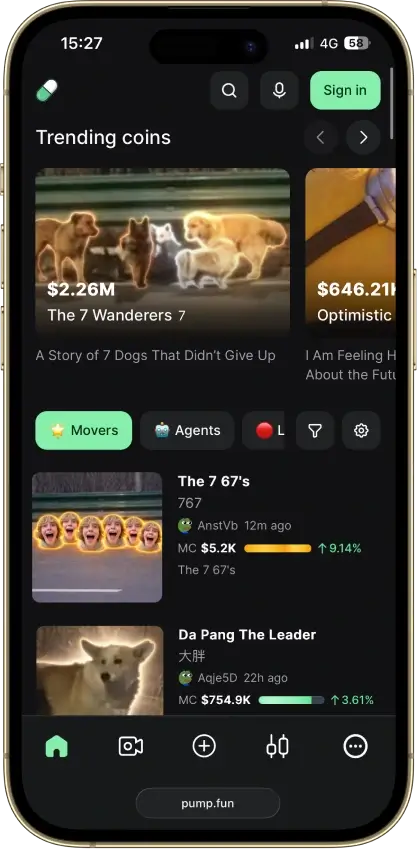
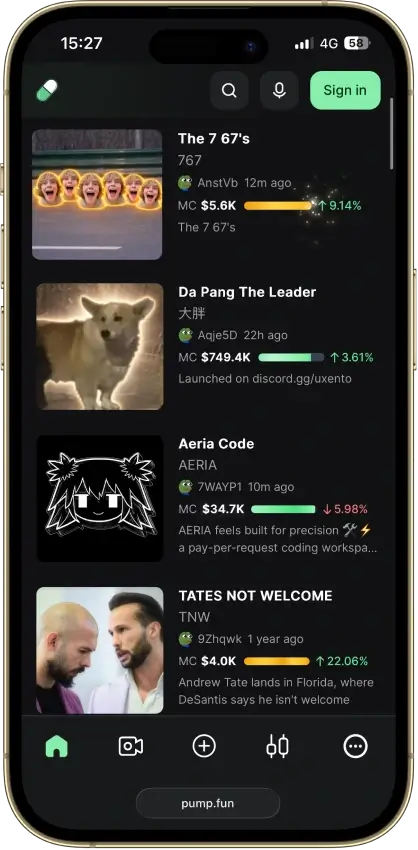
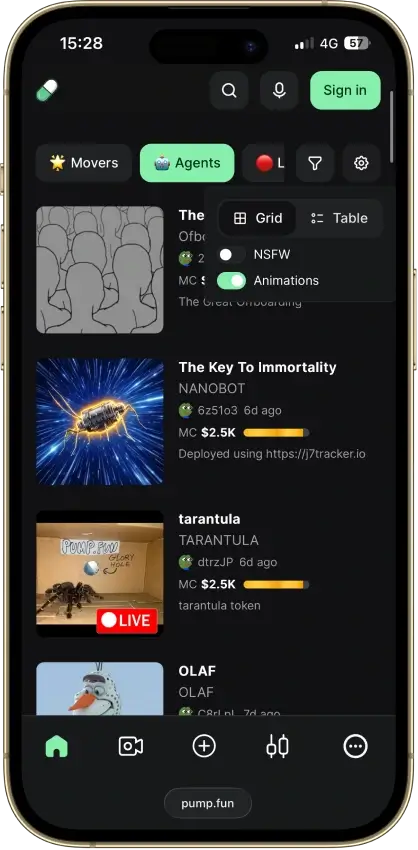
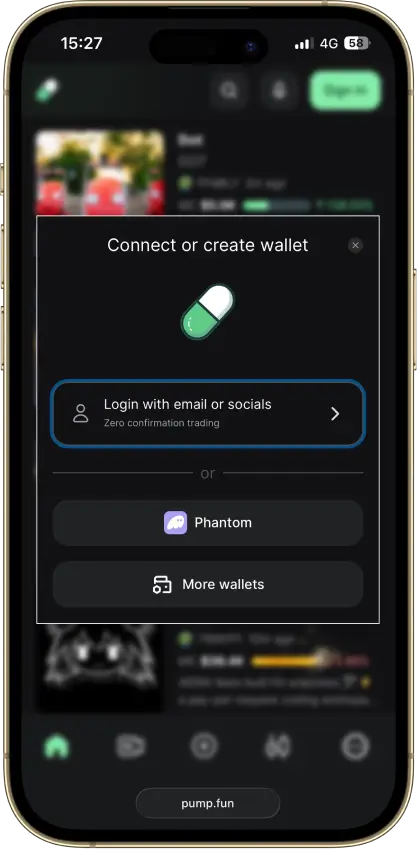
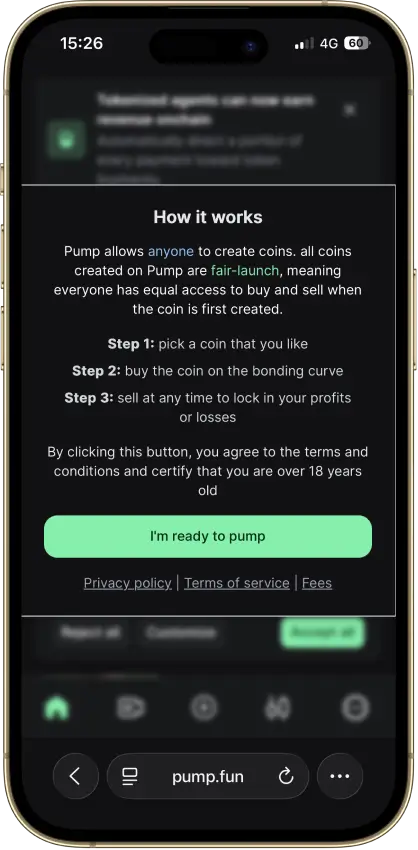
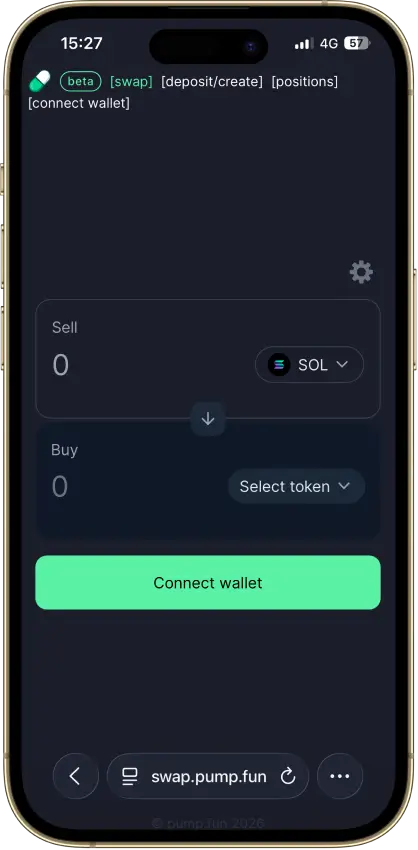
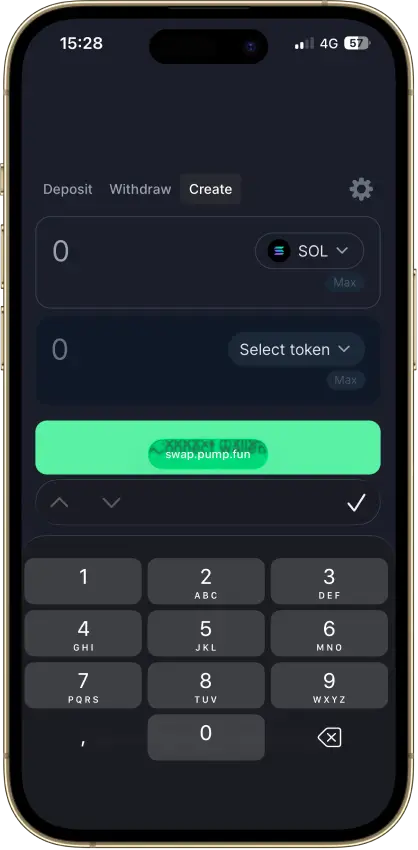
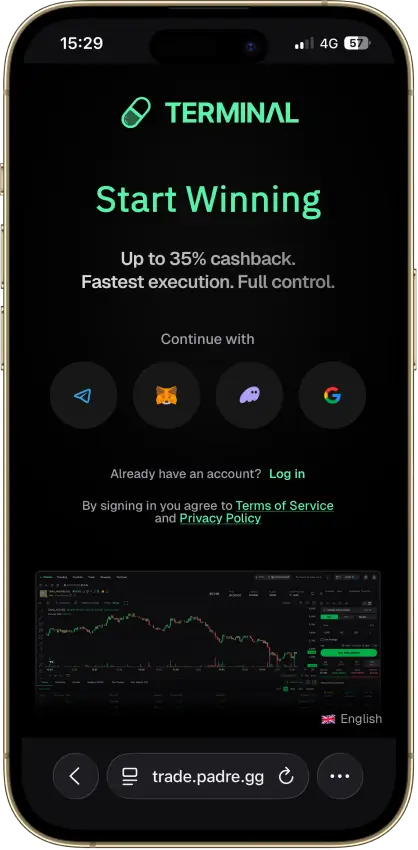
Screenshot 1 of 8
Pump.Fun Pros and Cons
Pros
- Direct access to launch-stage token markets
- Separate curve and pool fee disclosures
- Official developer tools for program access
- Mobile funding includes provider integrations
- Web and mobile apps for token discovery
Cons
- Thin markets can prevent an affordable exit
- 1.25% fee on standard curve trades
- Custom assets add issuer and bridge risks
- Custom creator fees can push costs higher
Is Pump.fun Worth It?
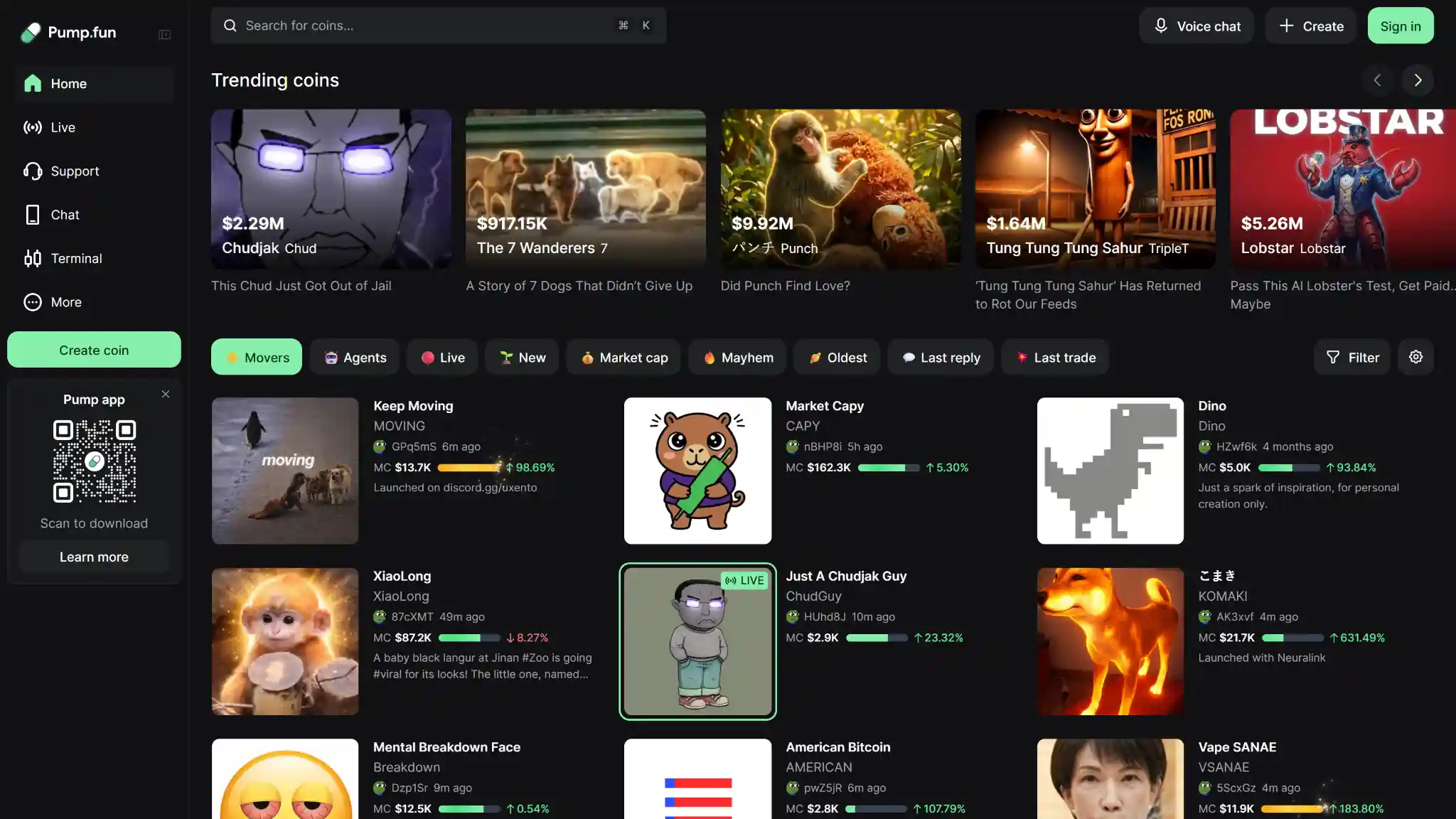
Pump.fun is worth considering when the specific token you want trades on its curve or PumpSwap pool and you understand how that market prices a sale. It offers access early in a token’s life, when information, liquidity and ownership distribution can be especially limited. The presence of a buy button tells you little about what a later sale will return.
A newcomer seeking a first purchase and a bank withdrawal has a different task. An account with one of the eligible beginner crypto exchanges can combine buying listed assets with a supported bank cash-out route. Pump’s payment integrations reduce some transfer steps, but they do not screen every token or insure a trading balance.
Who Is Pump.fun Best For
The main distinction is whether you want access to a particular speculative market or a general place to buy and hold crypto.
Creating a token through the Pump.fun launchpad involves choices about supply and who receives trading fees. A buyer inherits those settings, which can change the cost of each trade and the incentives of the people promoting the token.
Pump.fun Fees and Pricing
Pump.fun fees change with the trading route. The standard SOL/USDC schedule is useful for those pairs, but custom creator fees and app charges prevent it from serving as a universal maximum. Canonical pools are identified by Pump’s program-controlled pool authority and include its graduation pools. Other PumpSwap pools fall outside that classification and use a separate schedule.
At 1.25%, a trade with a fee base of 100 USDC incurs 1.25 USDC in trading fees. Two trades each assessed on 100 USDC would incur 2.50 USDC, before other costs. This calculation holds the fee base constant. Actual sale proceeds depend on the tokens received and their subsequent price.
The SOL and USDC pool tiers use different thresholds. For example, the lowest bands extend to 420 SOL and 59,000 USDC respectively. A token’s tier, pool identity and quote asset therefore matter more than a generic “PumpSwap fee” figure.
The EVM percentage is not an itemized reimbursement of measured gas. Pump’s terms say actual costs are not separately tracked for that calculation. Compare the final amount received, and avoid adding a second assumed gas charge without checking what the route already includes.
Deposits, Withdrawals, KYC and U.S. Availability
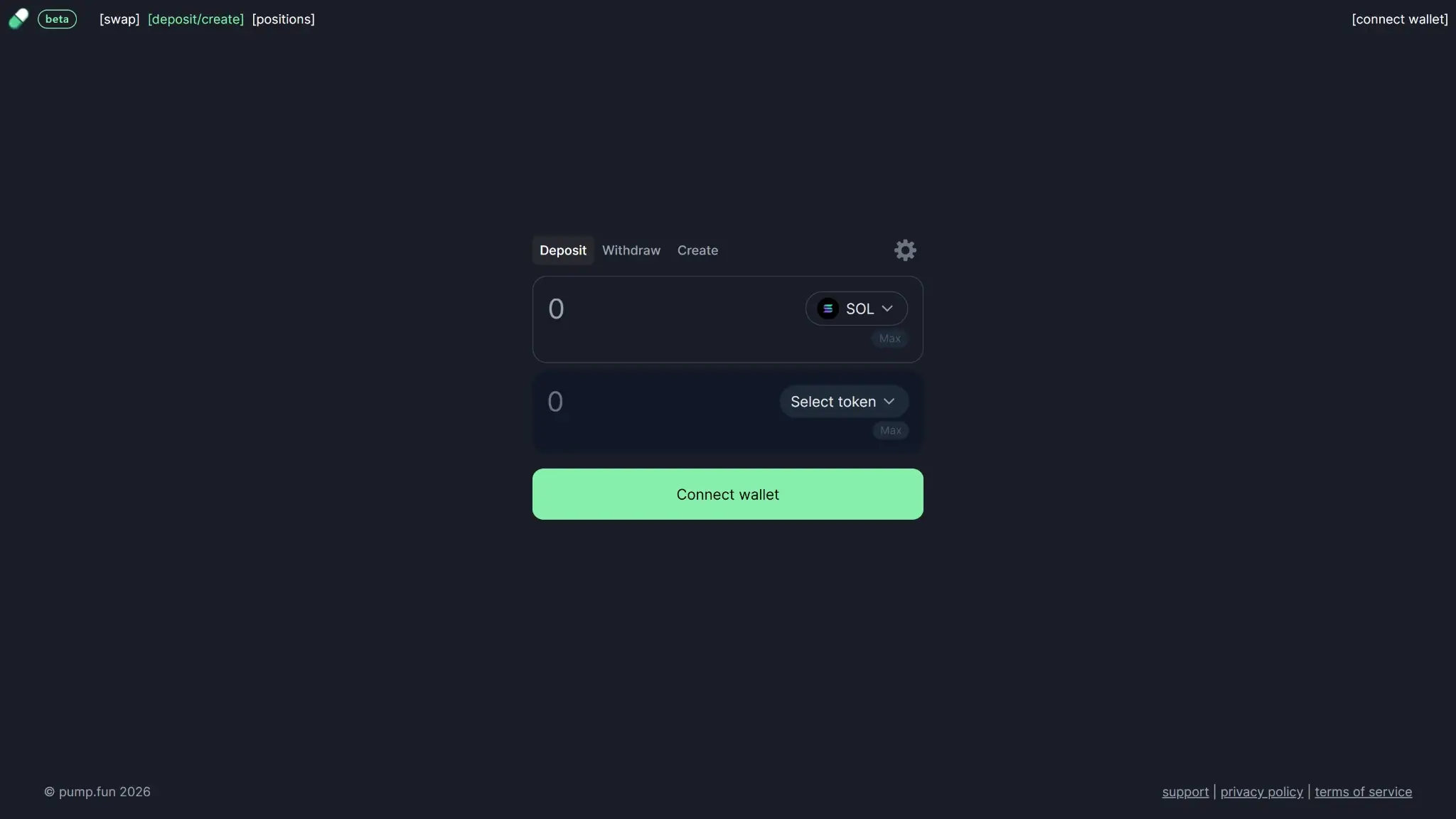
Pump offers wallet and social-account access, while fiat funding involves a separate payment provider. Know-your-customer checks, or KYC, on that purchase route can include identity documents and additional information.
Choose an access route whose recovery process you understand before funding it. A payment provider approving a purchase does not determine how you will regain access to the wallet that receives the crypto.
Upcoming Web Sign-In Change
Pump’s notice schedules the change for September 25, 2026 at 3:00 pm UTC. Web access will use email, Google, Apple or GitHub instead of browser-wallet sign-in. The notice says mobile access, API sessions and trading itself are unaffected.
Keeping an existing wallet address through the linking flow involves importing its key into the Privy-based arrangement. Users with non-exportable hardware-wallet or multisig keys are directed to a new-account route instead. Those options have different security and recordkeeping consequences. The change remains scheduled as of this review’s September 16 research date.
Do not send wallet keys to support or through a message. A new wallet also creates a new address. Preserve the old address’s transaction history separately.
Payment Rails, Networks, And Limits
The mobile help center describes direct SOL deposits, card or Apple Pay purchases, and selected cross-chain crypto deposits. The available asset and network must be chosen together.
The mobile deposit guide says transfers below the cross-chain minimum are not processed and are not refunded. An arbitrarily small test transfer can therefore be unsuitable for that route. Confirm the displayed minimum before sending.
Withdrawals And Cash-Out
Selling a token and withdrawing the proceeds are separate steps. A wallet withdrawal cannot solve a token’s lack of buyers or insufficient quote liquidity.
The help center illustrates a 1 SOL withdrawal with a 1.005 SOL balance. That establishes a published balance requirement. We did not verify that the entire extra 0.005 SOL is deducted as a flat fee, so it should not be added to every withdrawal-cost comparison as a measured charge.
An LP exit may return more of the asset that has fallen in price. Burning the LP tokens for that withdrawal is distinct from burning the initial LP tokens when a curve graduates.
Limits And Additional Checks
There is no single useful limit that covers trading, a card purchase, a cross-chain deposit and an issuer-controlled asset.
An accepted payment does not establish that the next token trade or withdrawal will succeed. Keep the purchase reference and transfer transaction separately, since they identify different parts of the journey.
Is Pump.fun Safe?
Pump.fun exposes traders to both token-market risk and technical control risk. Wallet access reduces dependence on an ordinary exchange balance, but funds committed to a pool remain subject to that program and its authorities.
PumpSwap’s documented controls include disabling buys, sells, deposits and withdrawals. This review did not independently inspect the current live authority configuration. Describing the whole service as fully permissionless or impossible to interrupt would overstate what wallet access establishes.
Audits And Incident History
Pashov’s October 2025 review covered specified Pump and AMM code and recorded three low-severity findings as resolved. Its June review had a different transfer-hook scope. The Cantina competition advertised at $2.01 million ended in April 2025, so that historical prize pool should not be presented as an active bounty.
In May 2024, Pump’s postmortem, reproduced by The Block, attributed about 12,300 SOL of losses to a former employee’s misuse of privileged access. Pump announced changes and reimbursement plans. That announcement alone does not verify that every affected party was repaid.
The February 2025 takeover of Pump’s X account was a separate incident involving promotion of a fraudulent token. BleepingComputer documented the compromise and the company’s acknowledgment. The reported compromise concerned a social channel. It does not establish a trading-contract breach.
An August 31, 2026 U.S. court decision also left certain civil racketeering claims against Baton and its founders pending while dismissing other claims. That was a ruling on motions to dismiss, not a finding that the remaining allegations were proven. It adds legal uncertainty without establishing the cause of the app-store availability change.
Supported Assets and Markets
SOL and USDC are no longer the whole pairing list. Pump’s September 12 custom-pairs page identifies additional Solana assets, including stock-linked tokens supplied by outside issuers or listing providers.
An asset bearing a stock ticker does not automatically convey the rights of a share held through a broker. Similarly, a Solana representation of another chain’s token adds backing and transfer dependencies. Holding the new token also exposes you to changes in the value or usability of the asset paired against it.
Pump announced app trading across Ethereum, Base and BNB Chain in May 2026. Its current terms also address EVM transactions. Those facts do not establish that the Solana PumpSwap program operates identically on every app-supported network.
App, UX and Customer Support
Pump’s discovery and social features are geared toward finding and trading tokens quickly. The harder task is checking the correct token, pair and transaction settings before following a popular callout.

The Android listing names Maius Imperium Limited as publisher. The iOS download restriction summarized in Quick Facts makes device and store access part of the onboarding decision. Existing-install functionality was a company claim in the removal statement, and was not tested for this review.
Reliability And Records Of Problems
Public help pages describe common funding and trading actions, but they do not provide a measured end-to-end success rate.
The app-review sample is too small and selective to establish how often a problem occurs. Before repeating a trade after an unclear response, check the transaction and balance history to avoid submitting a second purchase unintentionally.
Customer Support
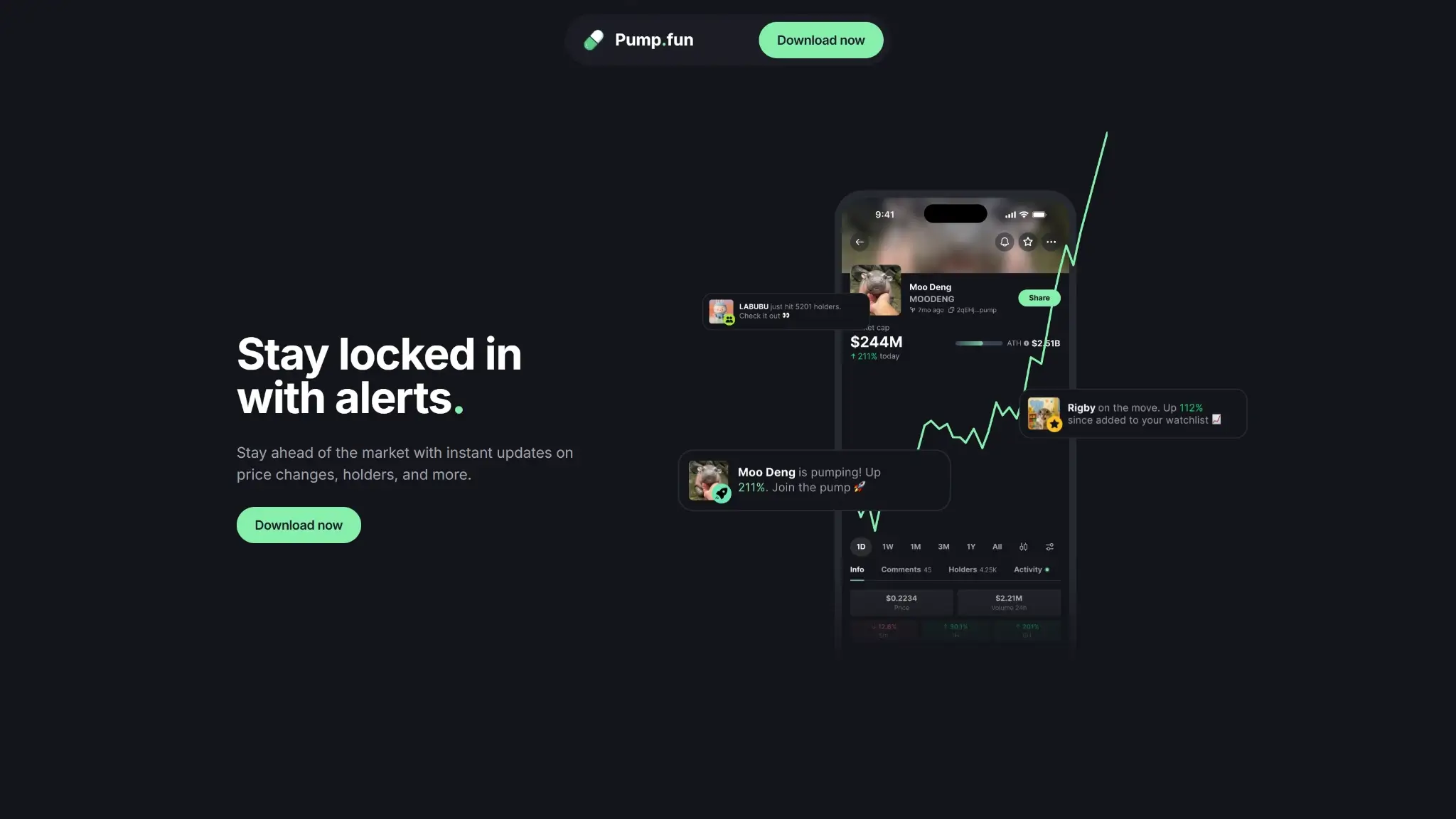
The current sign-in notice directs users to Support from the profile card on the website or app. The Android listing also provides support@pump.fun.
No support response time was measured. Keep records of the specific failed step, and verify replies through the official support route. Unsolicited direct messages can come from impersonators.
Features And Services
Before trading, identify whether the token is on a bonding curve, in a graduated PumpSwap pool or being accessed through the app on another network. The same Pump name covers those different routes.
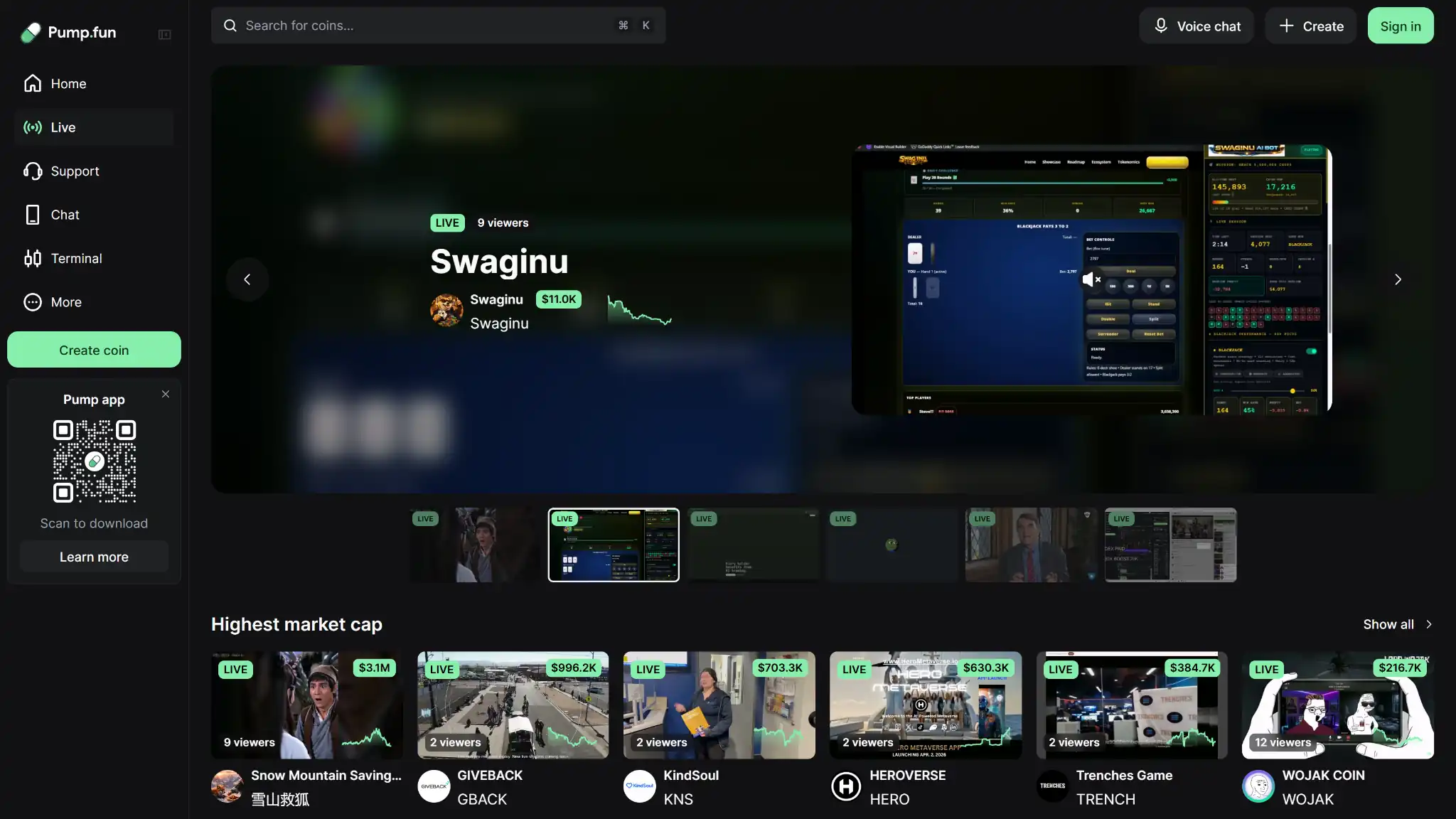
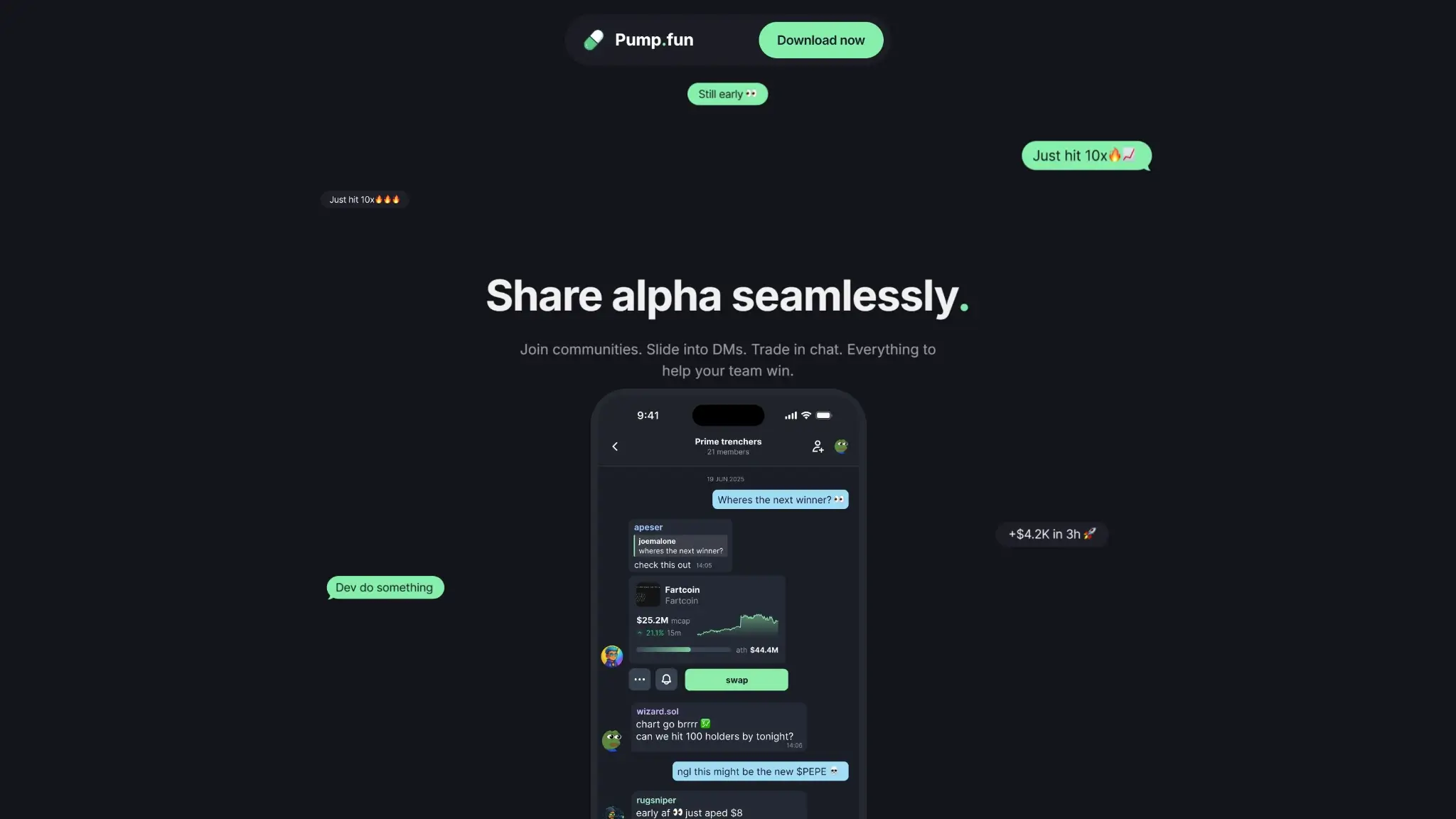
Graduation moves a token into a different trading arrangement. It does not create unlimited demand. A large holder can still sell into the available quote asset, leaving a later seller with a worse price.
Liquidity And Mayhem
Slippage tolerance is the price movement a transaction will accept, not a promise that an exit will be inexpensive. A small pool can produce substantial price impact before any extra slippage occurs. No matched trade-size quotes or completed trades were measured for this review.
Mayhem adds automated bot activity and begins with an extra token allocation. Its April 2026 disclaimer describes an initial supply of two billion tokens, split between the curve and the bot, with remaining bot tokens burned under the stated conditions. Bot activity can stop before 24 hours and does not guarantee buying demand. Applying a standard one-billion supply assumption to every token would miss that difference.
Fees As Rewards
Receiving part of a token’s fees is different from earning interest on a deposit. Returns require eligible activity and can be outweighed by the token’s price decline.
Holder rewards do not use the same direct claim flow as existing cashback coins. Pump’s developer documentation assigns distribution to Pump and says the holder-rewards choice is permanent once applied. A displayed reward label therefore needs both a fee-source check and a distribution check.
Developer Access And Records
Pump publishes program documentation and SDKs for curve and pool activity. Third-party services using “Pump” in their names should not be assumed to be official APIs.

July 2026 technical notices introduced a virtual quote-reserve parameter that adds to the actual quote-token balance in PumpSwap pricing calculations. That parameter is a pricing input, not an extra balance of spendable tokens. A developer reading only the pool’s token balance can therefore calculate the wrong quote. We did not test an authenticated export or establish that any single file contains a complete account history.
Alternatives to Pump.fun
-

Raydium
Once a token graduates out of the curve into PumpSwap, ongoing trading and direct liquidity management look more like Raydium's standard/concentrated-pool model — worth comparing for the post-graduation stage.
-

Jupiter
For an already-liquid, graduated token, Jupiter's route comparison across established Solana pools can find better execution than trading a single PumpSwap pair directly.
-
Hyperliquid Labs
Pump.fun's curve and pool trades are spot-only; a trader looking for leveraged or short exposure instead of early-stage token ownership should compare Hyperliquid's order-book perpetuals.
The alternatives become most useful once the desired token has other markets, or when the task is broader than new-token speculation.
Among decentralized exchanges, Pump’s distinctive use case is access to its launch-stage tokens and subsequent pools. Choose it for a market you have assessed, with an exit size the available liquidity can support.
Final Verdict
Consider Pump.fun for a specific token market after checking its liquidity, fee settings and wallet requirements.
Best For
Experienced traders assessing new-token liquidity.
Avoid If
- You want a general place to buy and hold crypto.
Disclaimer: CryptoSlate may receive a commission when you click links on our site and make a purchase or complete an action with a third party. This does not influence our editorial independence, reviews, or ratings, and we always aim to provide accurate, transparent information to our readers.