
Quick Take
- Elizabeth Warren backed a bipartisan housing bill that bars the Federal Reserve from issuing a retail CBDC until 2031.
- The restriction turns an executive policy into law, making it harder for future administrations to revive a digital dollar.
- Warren once called CBDCs promising, but the ban is temporary and Congress can revisit the issue after 2030.


Elizabeth Warren has spent much of the past decade warning Americans about the risks posed by privately issued and decentralized digital assets.
Over the years, the Massachusetts Democrat has built a reputation as one of crypto industry’s most recognizable critics by persistently linking the emerging industry to money laundering, speculative excess, consumer losses, and sanctions evasion.
Throughout her crusade against Bitcoin, she frequently offered a distinct alternative in a central bank digital currency, or CBDC.
In a 2021 Senate appearance, she stated:
Digital currency from central banks has great promise. Legitimate digital public money could help drive out bogus digital private money. It could help improve financial inclusion, efficiency, and the safety of our financial system – if that digital public money is well-designed and efficiently executed.

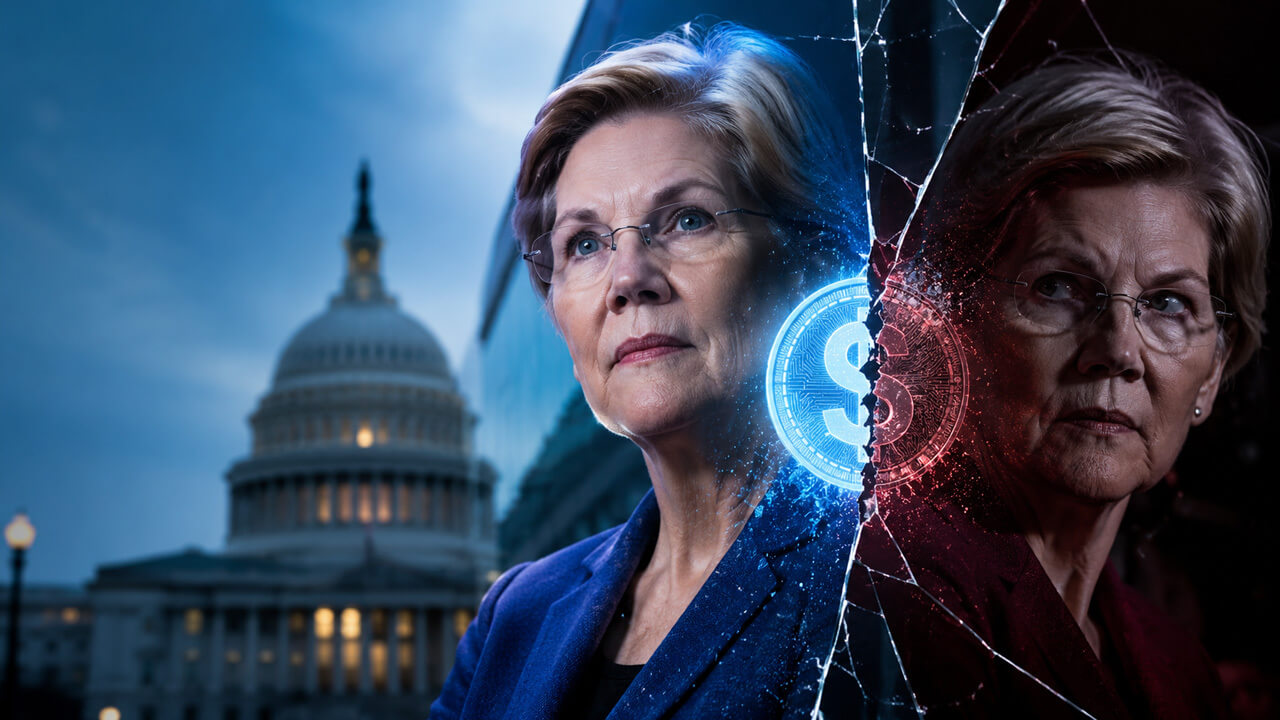
However, in a striking legislative twist, Warren has now co-authored and advanced a sweeping bipartisan package that explicitly prohibits the Federal Reserve from issuing that very digital alternative.
Late Monday, the US Senate passed the 21st Century ROAD to Housing Act in an overwhelming 85-5 vote. The legislation is primarily designed to alleviate the nationwide housing crisis by boosting construction, streamlining permitting, and barring large private equity firms from buying up single-family homes.
Yet, buried within the hundreds of pages of real estate and zoning reforms is a provision that legally blocks the US central bank from launching a retail digital dollar through at least the end of 2030.
Even after that temporary freeze expires, the Federal Reserve would be barred from moving forward with any substantially similar digital asset without receiving explicit, affirmative authorization from Congress.
Warren’s support for the housing bill does not establish that she has permanently abandoned the CBDC concept or embraced the cryptocurrency industry. However, it places her behind legislation restricting a policy she once described as holding considerable promise for the US banking industry.
The episode reflects the compromises involved in passing a large bipartisan package. A senator who previously saw a sovereign digital currency as an answer to some of crypto’s failings has accepted its near-term prohibition to advance one of her most consequential domestic policy achievements.
How CBDC restrictions survived the Housing negotiations
The Senate floor debate preceding the vote focused almost entirely on housing affordability, construction barriers, and the role of corporate landlords.
Scott said the measure addressed a market in which housing supply remained inadequate and prices were beyond the reach of many families. Warren presented the bill as evidence that bipartisan legislation did not have to be reduced to a collection of minor compromises.
According to her:
Today’s vote proves that it is possible to find bipartisan, common ground on legislation that actually helps the American people. And, importantly, it proves that bipartisan legislation doesn’t have to be the weakest, most milquetoast agreement that doesn’t offend anyone or do too much to help anyone either.
She highlighted provisions designed to encourage construction, repair existing housing, and prevent some private-equity firms from buying additional single-family homes. Warren described the package as the most significant federal housing legislation in more than three decades.
The CBDC restriction attracted little attention during those public remarks, despite the contrast with Warren’s previous position.
The CBDC language had been added to an earlier Senate version of the legislation as negotiators sought to assemble enough support for the housing provisions in both chambers.
Republican lawmakers have repeatedly characterized a government-issued digital currency as a potential tool for financial surveillance and state control over transactions.
Notably, the provision remained in the bill during negotiations with the House. This suggests that Warren accepted the restriction as part of the broader agreement, although there is no public evidence that she personally negotiated away a CBDC initiative or that the ban was the specific price demanded for the housing measures.
Meanwhile, the 85-5 vote also should not be treated as a separate Senate referendum on central bank digital currencies. Lawmakers voted on a wide-ranging housing package containing numerous provisions, and their public statements concentrated on its effect on homebuilding and affordability.
The margin nevertheless shows that the CBDC restriction was not objectionable enough to derail legislation supported by an overwhelming number of senators from both parties.
Congress codifies an existing policy direction
The immediate practical consequences may be limited because the United States is not close to introducing a retail CBDC.
The Federal Reserve had researched the possible design, benefits, and risks of a digital dollar but had not moved beyond the exploratory stage. Officials repeatedly said the central bank would not issue one without clear authorization from Congress and support from the executive branch.
President Donald Trump also moved the federal government further away from the proposal in January 2025 when he signed an executive order directing agencies to stop developing, establishing, or promoting a CBDC.
The Senate bill would therefore place into law a policy already being followed by the executive branch and supported by the current Federal Reserve leadership.
That distinction remains significant. A future president could reverse an executive order without approval from Congress. However, a statutory restriction would be harder to unwind, requiring lawmakers to pass new legislation or allow the prohibition to expire.
The bill would close that route through 2030 while preserving Congress’s ability to revisit the issue. It does not permanently eliminate a digital dollar, nor does it necessarily prevent the Fed from conducting all research involving tokenized settlement or institutional payment systems.
The US steps back as other countries advance towards CBDC
The US decision to legislate against a central bank digital currency places it in stark opposition to the rest of the world.
Data from the Atlantic Council indicates that 146 countries and currency unions, representing over 98% of the global gross domestic product, are actively exploring or developing a CBDC.
Every other member of the G20 is currently pursuing a digital currency, with eighteen of those nations in advanced stages of exploration or active pilot programs. Three countries, including the Bahamas, Jamaica, and Nigeria, have already launched their digital currencies to the public, though they have faced significant hurdles regarding domestic adoption and technical infrastructure.
While advanced economies outside the Euro Area, including Canada and Australia, have recently deprioritized retail CBDCs, emerging markets like Kazakhstan and Rwanda are accelerating their development to counter the rapid spread of private stablecoins.
Meanwhile, central banks have also shifted attention toward wholesale projects intended for transactions between banks and other large financial institutions. Those systems focus on cross-border settlement, tokenized assets, and programmable payments rather than giving individual consumers accounts or wallets at the central bank.
Still, the United States is not absent from this technological shift; the New York Federal Reserve continues to participate in Project Agorá, which focuses strictly on wholesale, cross-border transactions.
However, the door to the possibility of a digital currency being accessible to everyday American consumers has been temporarily shut. And ironically, the final nail in the coffin was hammered in by the senator who once believed a digital dollar could be the future of American banking.
Mentioned in this article



Editorial credits