




- Only wallet we review with Firo and Epic Cash
- Clean record, no hack or key flaw on file
- Opt-in Tor routing for each node
Stack Wallet Overview
- Crypto Wallet Name
- Stack Wallet
- Wallet Type
- Multi-platform wallet
- Custodial Status
- Non-custodial
- Built-in Swaps
- Yes
- Open-source
- Fully open-source
- Fiat On-ramp
- No
Additional details
- Supported Blockchains
- Bitcoin
- Platforms
- iOS, Android, Desktop (Windows), Desktop (macOS), Desktop (Linux)
- Hardware Wallet Support
- No
- Staking Support
- None
Stack Wallet Screenshots
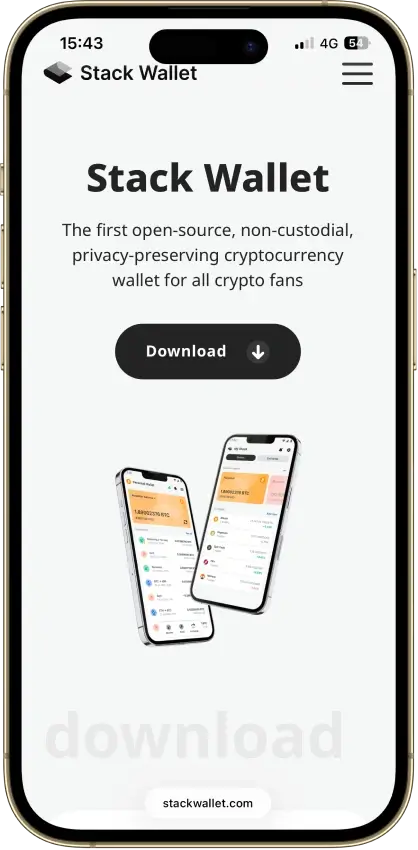
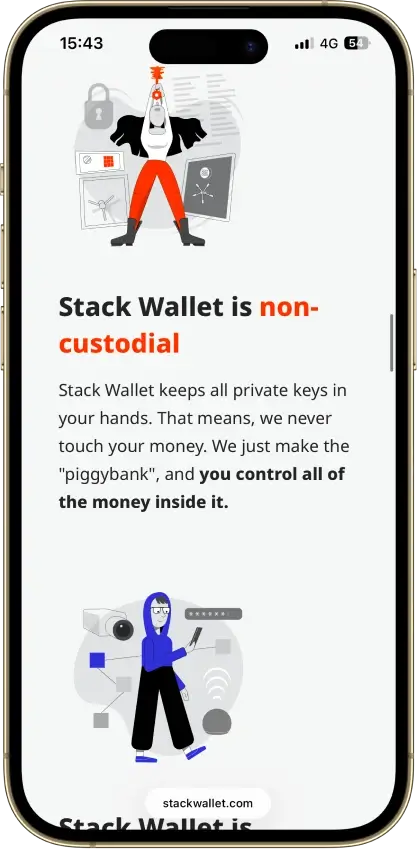
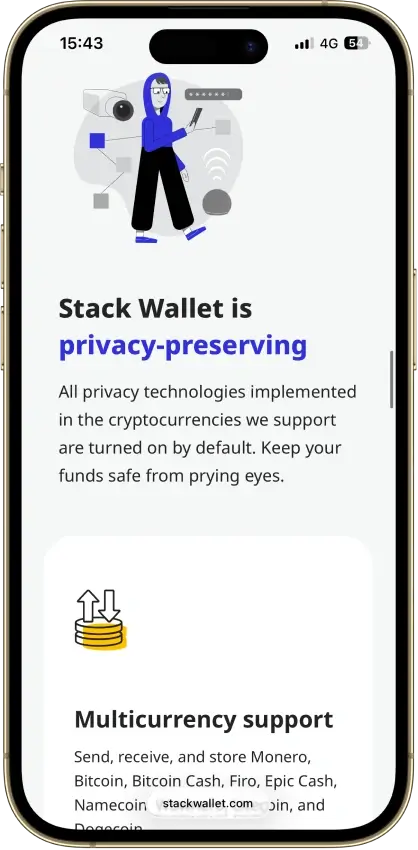
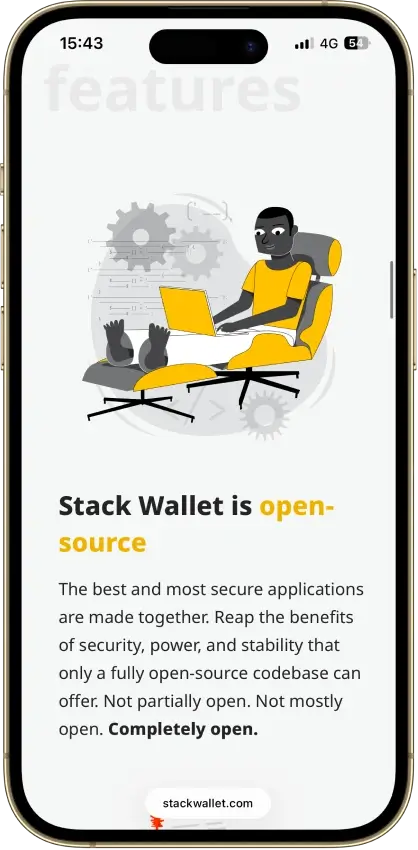
Screenshot 1 of 8
Stack Wallet Pros and Cons
Pros
- Fully open source, entire codebase public
- Apps for mobile and desktop alike
- Coin control on Bitcoin and privacy coins
- Point it at your own node per coin
- Its own F-Droid repo for Android
Cons
- No dApp browser or WalletConnect
- No hardware-wallet pairing
- App-level backup restores into Stack only
Who Stack Wallet Is Best For — And Who Should Skip It
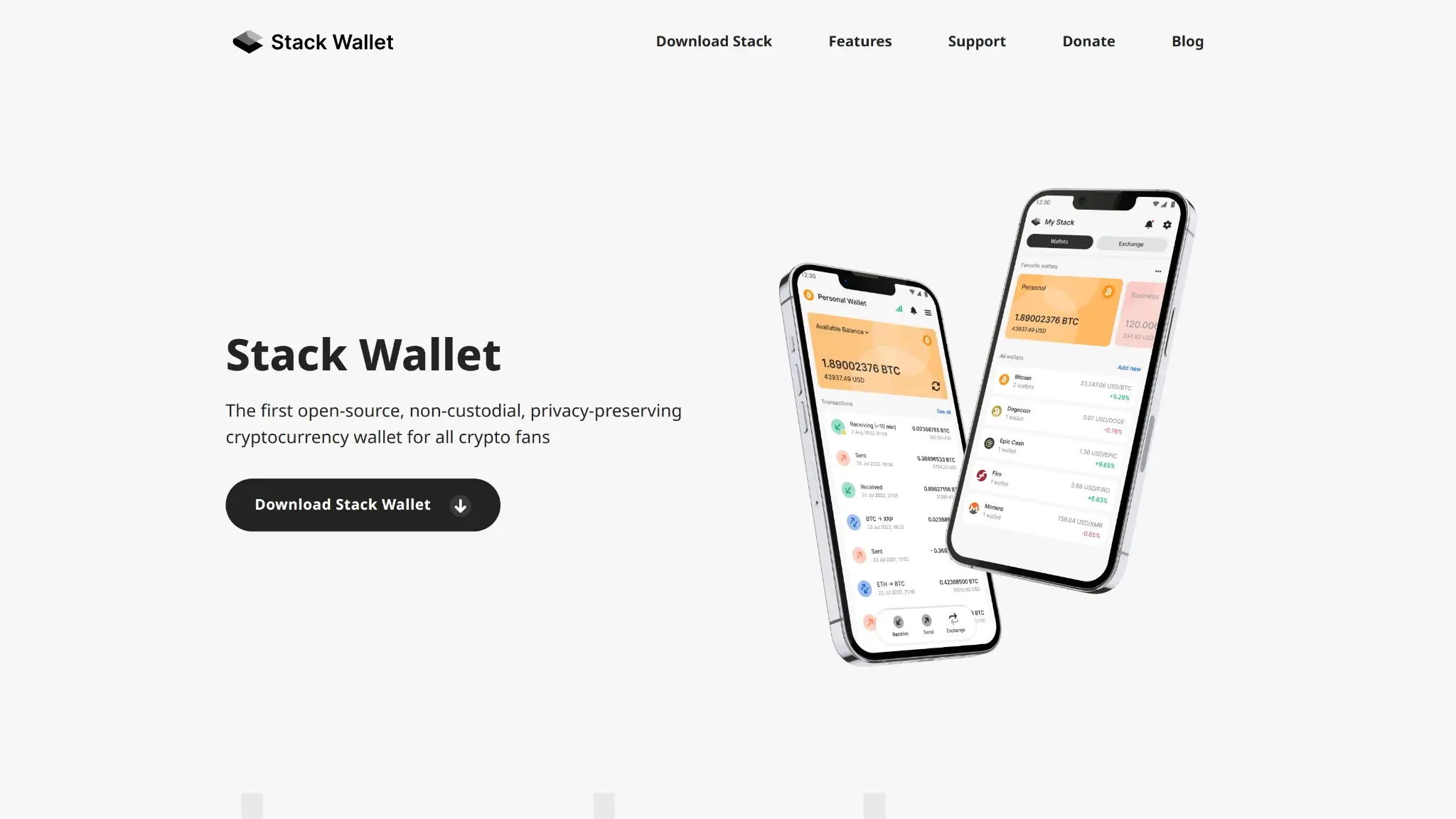
Stack Wallet is the pick for privacy-coin holders who want one open-source app with no KYC for Monero and Firo as well as the mainstream coins. Its team built its credibility in the privacy community itself.
Stack Wallet is a good fit if you
- Hold Monero or Firo and want them beside mainstream coins such as BTC and ETH in one app
- Want Epic Cash or Wownero support, which almost nothing else offers
- Refuse wallets that ask for an account or an identity check
- Install from F-Droid and want coin control plus Tor and your own node without extra tooling
It is the wrong wallet if you
- Keep large long-term holdings, which belong on a hardware wallet that Stack cannot pair with
- Live in DeFi and need a dApp browser or WalletConnect
- Want to buy crypto with fiat inside the wallet or stake coins such as ETH and SOL
- Want a backup file you can carry to any other wallet
What Is Stack Wallet And How Does It Work?
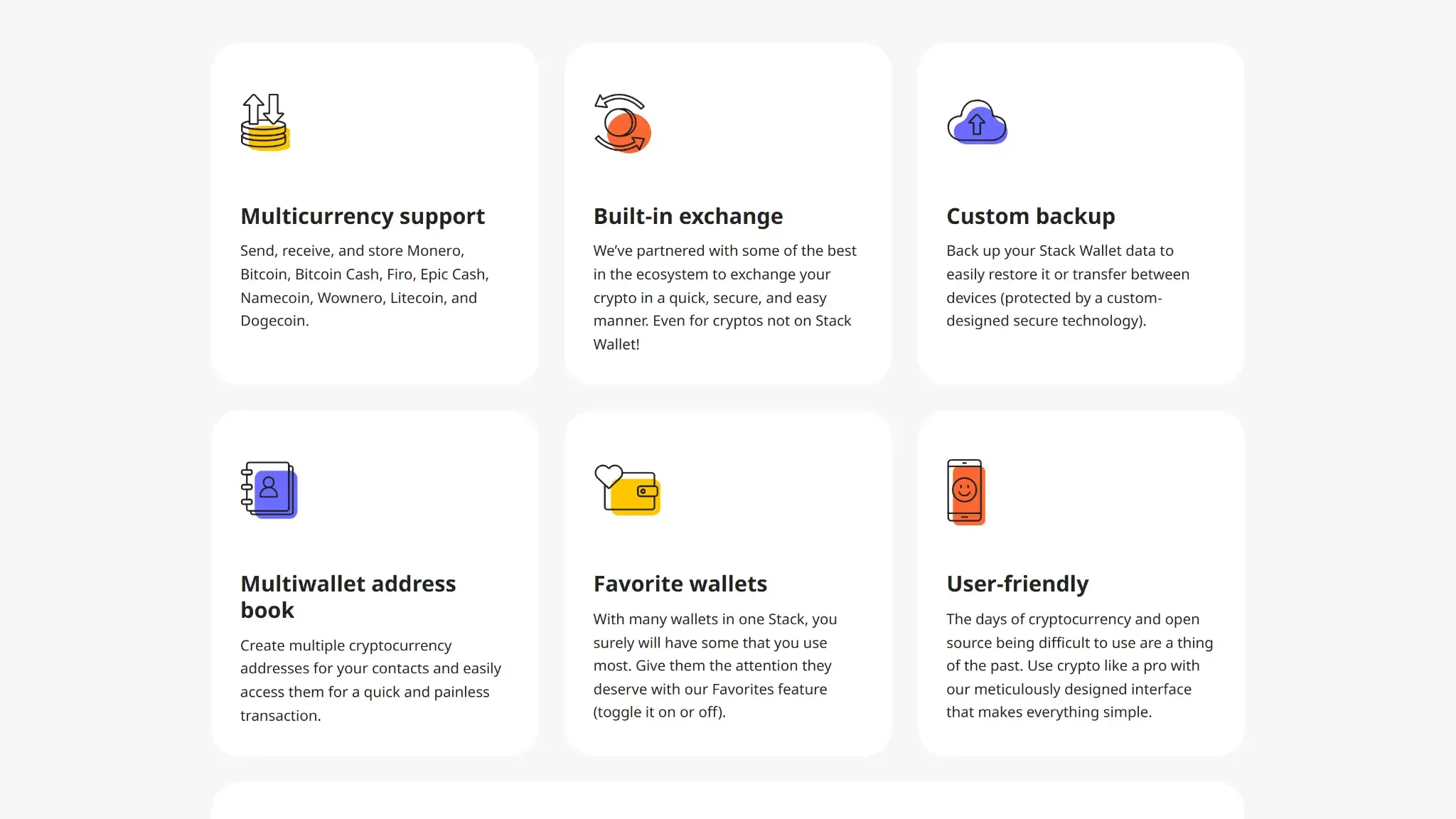
Stack Wallet comes from Cypher Stack, which is best known for development and research work in the Monero ecosystem. The official site names Stack Wallet LLC as the operating entity. The team's day job is privacy cryptography, and it shows in a coin roster that puts Monero and Firo next to Bitcoin and Ethereum. Epic Cash and Wownero are on it too, which almost no other multicoin wallet manages.
Version 2.6.0 shipped in June 2026 after regular releases through 2025 and 2026, and the GitHub repo has an active contributor base. WalletScrutiny tracks the app on both iOS and Android. Niche privacy wallets often die from abandonment, so Stack's steady release cadence counts as trust evidence.
Security and Custody
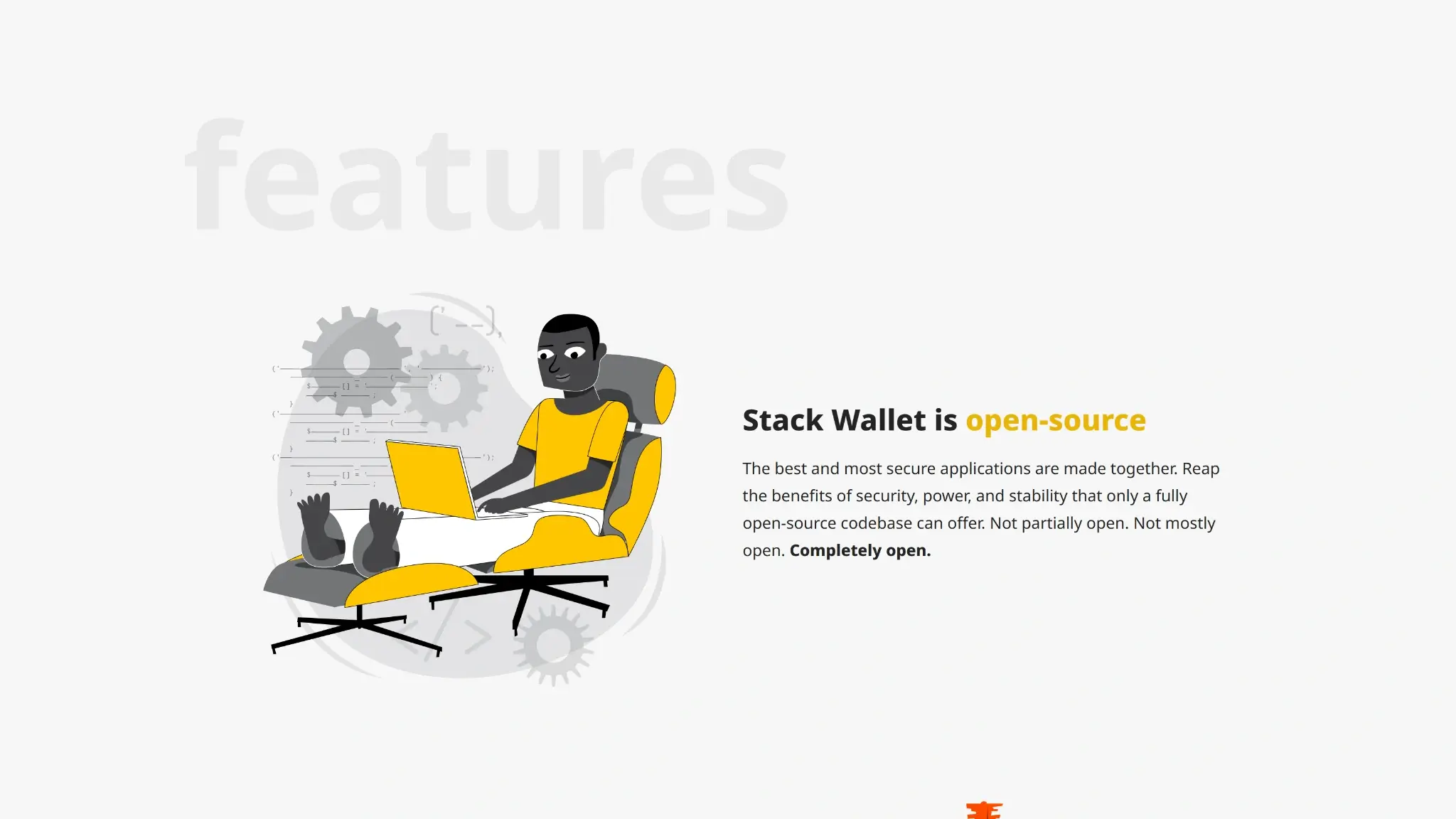
Stack Wallet is non-custodial, with private keys generated and stored locally on your device. The vendor states plainly that it never touches your money, and the app has no account or identity check anywhere, so there is no wallet-level KYC.
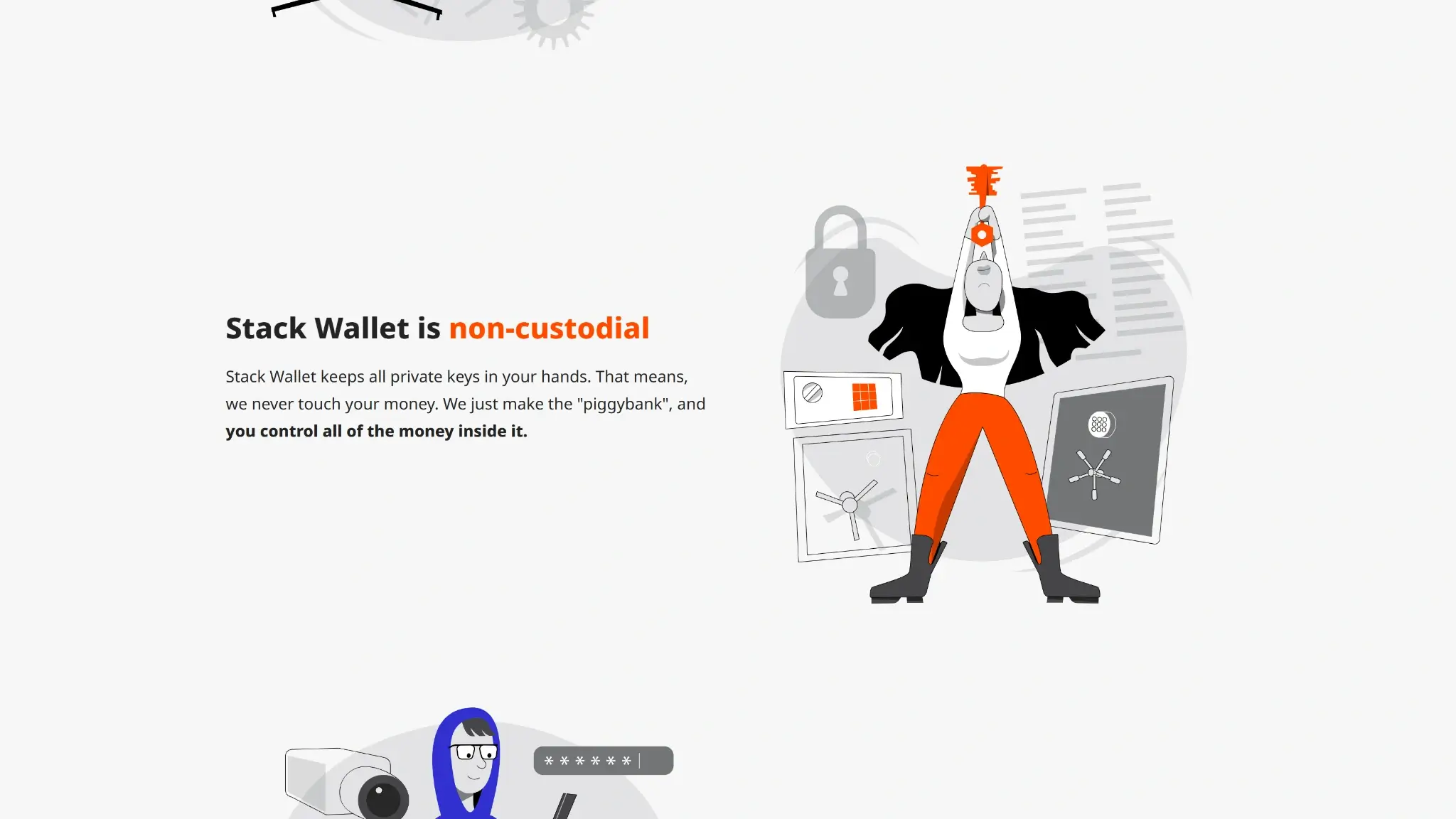
Every line of the codebase is public on GitHub, and WalletScrutiny tracks the builds. The Android app is available on Google Play, as a direct APK and through Cypher Stack's own F-Droid repository. The F-Droid repo serves users who refuse to trust app stores, which is this wallet's core audience.
Privacy runs through the whole design, starting with Tor routing as an opt-in, per-node setting that is off by default. Coin control lets you choose which outputs a transaction spends, a feature most Bitcoin-first wallets hide or omit. For each coin you can use your own node or a third-party node instead of Stack's defaults.
Its developer commissioned a penetration test from Digilol, which found a critical local-file-system vulnerability and a denial-of-service issue. The open code and WalletScrutiny build checks let anyone inspect the app.
No hack or theft involving Stack Wallet has been reported.
Supported Chains and Assets
The roster runs to roughly 25 coins, and the privacy coins set it apart. Monero and Firo are hard to support, as are Epic Cash and Wownero, because each needs its own cryptography and sync model as well as node infrastructure. Stack carries all four natively, and mainstream coins from Bitcoin and Ethereum to Cardano and Dogecoin sit alongside them.
The official homepage still advertises a shorter nine-coin list, but the GitHub README and the shipping app both show the wider roster.
The roster leaves out the long tail of EVM chains and tokens. Polygon and Arbitrum are missing, as is Base, and the ERC-20 universe beyond Ethereum itself is out of reach. There are no NFT features either, since Stack is built as a coin wallet.
Usability and Recovery
Stack runs on iOS and iPadOS as well as Android, and desktop versions cover Windows and macOS plus Linux. Stack has no browser extension and no WalletConnect, so it cannot connect to dApps and DeFi users will need a second wallet.
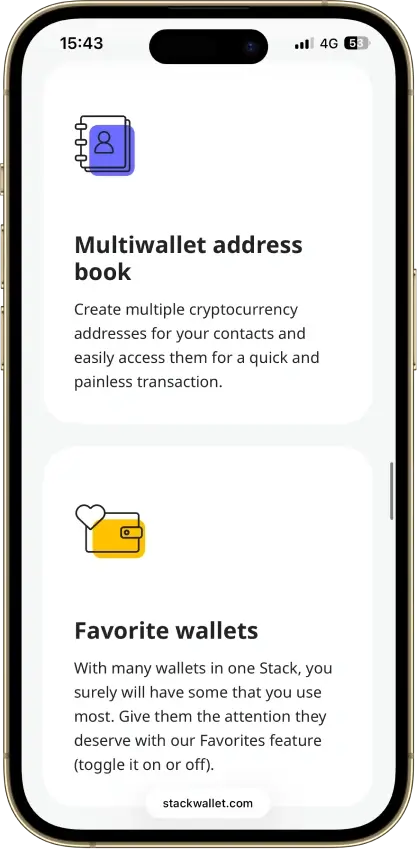
Each wallet has its own seed phrase that you write down and restore in the usual way, which is standard self-custody practice. The wrinkle is Stack's app-level backup, which bundles your whole multi-wallet setup into one file that restores only into Stack Wallet. Individual seeds are portable while the bundle is not, so plan any move to another wallet around the seeds.
The niche coins carry most of the learning curve, because Monero wallets need time to sync and nodes occasionally need switching. Coins like Epic Cash or Xelis assume a user who knows what a node is. Someone arriving from an exchange app will find the mainstream coins easy and the privacy coins a short education, which is the audience Stack has chosen.
Features
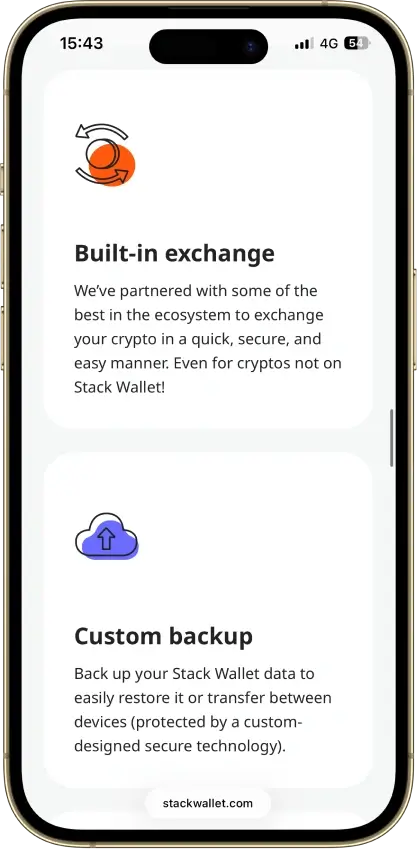
The built-in exchange routes swaps through third-party providers, with Stack taking a small fee on top of the provider's rate. No account and no wallet-level KYC is required to swap, though the third-party providers set their own policies per pair, so check the spread on each quote before accepting.
Beyond swaps, Stack keeps its feature list short and has no fiat on-ramp of any kind. You cannot buy crypto with a card here, which doubles as a privacy feature since no payment processor ever sees you. Staking is missing as well, and hardware-wallet pairing is absent too, so keys live on the connected device with no cold-signing option. The app also offers no dApp browser or portfolio layer beyond balances.
None of these gaps makes the wallet less safe. Each one narrows who it serves.
Cost
Stack Wallet is free on every platform and has no account and no subscription or premium tier. The costs you pay are network fees on each transaction, plus the provider fee and Stack's small cut on in-app swaps. With no on-ramp there is no on-ramp markup either, and the wallet adds no charges of its own beyond the swap fee.
Comparison with Other Wallets
-


Cake Wallet
Cake Wallet brings Monero, Bitcoin and other networks into an account-free app with detailed payment and privacy controls. Those controls need attention: a shared seed is optional, Lightning has its own balance,...
-

Feather Wallet
Feather Wallet puts Monero on a desktop with controls for individual outputs, remote-node connections and offline signing. It supports no other cryptocurrency. Its appeal is the ability to decide how an XMR...
-

Monerujo Wallet
Monerujo is an Android wallet for people who spend Monero and want to choose the node their phone uses. It combines local key storage with tools for repeated payments, separate accounts and...
Stack leaves out hardware signing and any in-app route from fiat on purpose, and pure Monero holders may not need its multicoin design. The alternatives below cover those cases, and every wallet we currently score sits in one ranked list.
- Cake Wallet suits users who want hardware-wallet pairing and a built-in fiat on-ramp alongside Monero.
- Feather Wallet suits users who want a fast Monero-only desktop wallet.
- Monerujo Wallet suits users who want a dedicated Monero app on Android.
None of the three supports Stack's extra privacy coins such as Firo and Wownero. None pairs coin control with opt-in Tor routing inside a completely public codebase either. Go with Cake when hardware signing or an in-app fiat route decides it. Feather and Monerujo fit when Monero is the only coin that counts.
Crypto Wallets Pillar Scores
- Custody and key security 30% weight Who can authorize spending, protection of keys and signing, and independent access to every reviewed account type.8.5 / 10
- Security validation and track record 25% weight Independent security assessments, their coverage and findings, plus updates and the handling of known incidents.6.5 / 10
- Transaction safety and signing 20% weight Transaction details, signing warnings, scam checks, permission controls and the handling of unreadable requests.7.5 / 10
- Backup and recovery 10% weight Repeatable backup checks, complete restoration, recovery dependencies, costs and resilience after backup loss.8.0 / 10
- Usability, privacy and costs 10% weight Setup and everyday tasks, accessibility, support guides, data-sharing choices and device, service and transaction costs.8.0 / 10
- Assets, networks and compatibility 5% weight Asset and network support, devices, companion apps and connections needed for the uses covered in the review.9.0 / 10
Final Verdict
Stack Wallet is non-custodial and completely open source, with privacy defaults most wallets never attempt. It is actively maintained through v2.6.0 and ships through the vendor's own F-Droid repo as well as the app stores. The limits are clear, since it has no dApp browser or hardware pairing and no on-ramp or staking. Its app-level backup also restores only into Stack. This is a narrow tool for users who want privacy-focused multicoin self-custody, and for that job it is an easy recommendation.
Disclaimer: CryptoSlate may receive a commission when you click links on our site and make a purchase or complete an action with a third party. This does not influence our editorial independence, reviews, or ratings, and we always aim to provide accurate, transparent information to our readers.