

 Launched in 2016
- DCA and Grid bots for U.S. spot traders
- Mandatory whitelist for withdrawal addresses
- Discretionary $250,000 cover for unauthorized use
Crypto.com Overview
- Crypto Exchange Name
- Crypto.com
- Parent Company
- Foris DAX Asia Pte. Ltd. (Singapore)
- Launch Year
- 2016
- KYC
- Yes
- Total Assets
- 422+
- Staking
- Yes
- Copy Trading
- No
- Derivatives
- Yes
- Proof of Reserves
- Yes
- Trading Fees
- 0.00% - 0.50%
- Maker Fee
- 0.25%
- Payout Time
- 3 days
Additional details
- Languages
- English, Spanish, German, French, Chinese, Russian, Portuguese, Italian, Korean, Arabic, Swedish, Polish, Vietnamese, Indonesian, Norwegian, Greek, Danish, Romanian, Dutch
- Products
- Spot, Margin, Futures or Perps, Options, OTC, Simple-buy Broker
- Restricted Countries
- China, Iran, North Korea, Syria, Cuba, Russia, Ukraine
- Supported Cryptos
- Bitcoin, Cronos, Ethereum, XRP, Litecoin, …Bitcoin, Cronos, Ethereum, XRP, Litecoin, EOS, Stellar, Cosmos, Chainlink, USDC, DIA, Solana
Crypto.com Screenshots

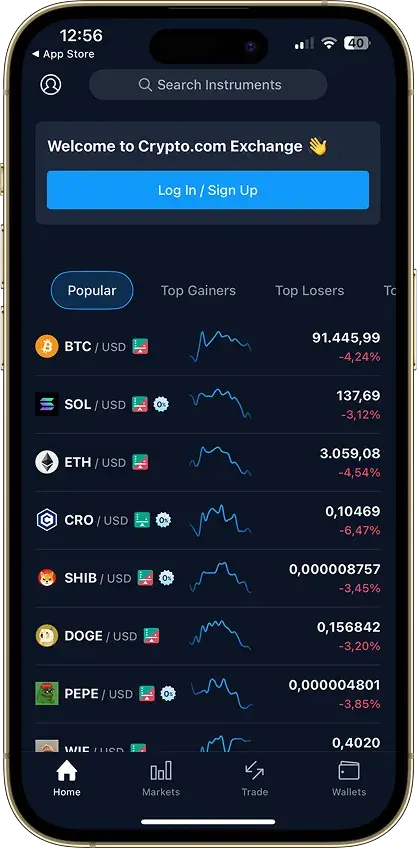
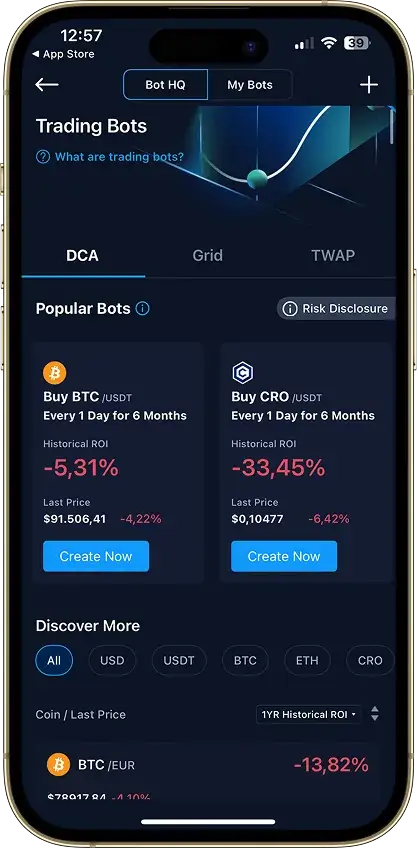
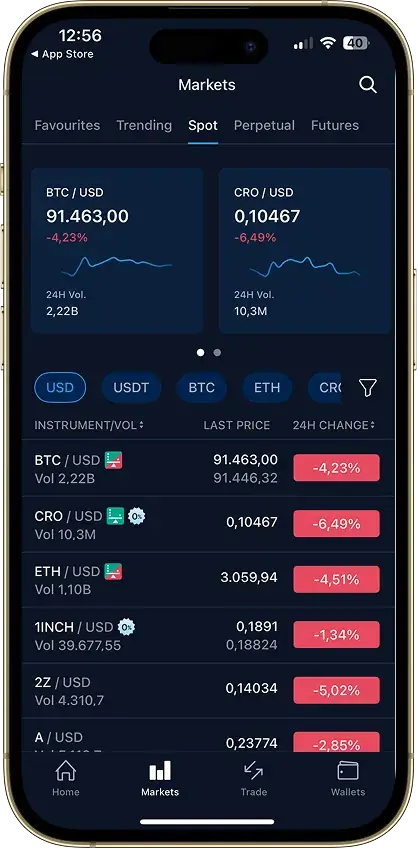

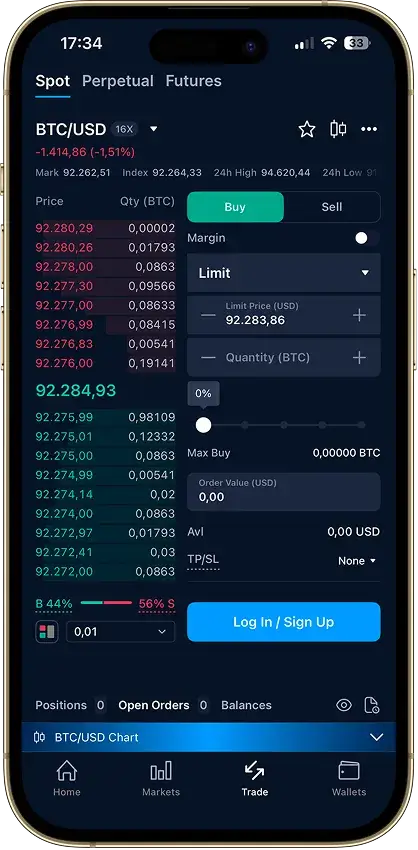
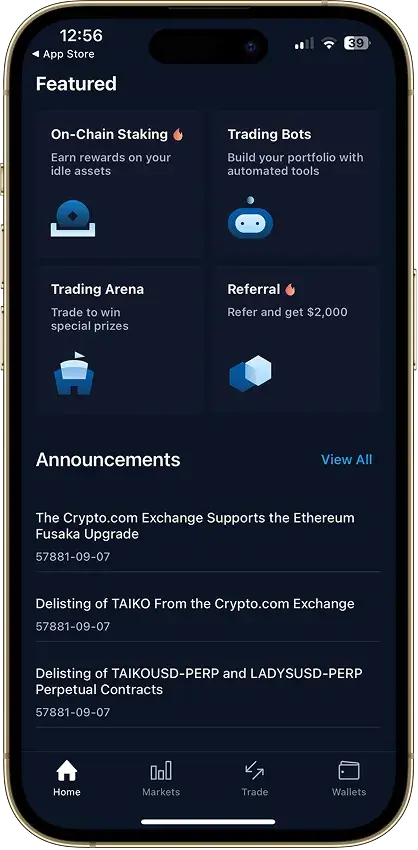
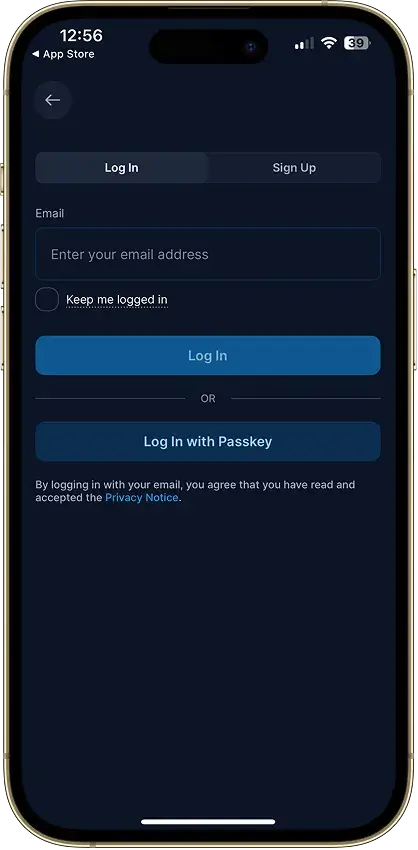
Screenshot 1 of 8
Crypto.com Pros and Cons
Pros
- 400+ spot coins on the global Exchange
- 0.25% / 0.50% entry spot fees
- CRO balance can cut maker fees to 0%
- U.S. ACH and Fedwire funding where available
- Passkeys, FIDO2 and an anti-phishing code
Cons
- Reserve attestation dates to 2022
- Seven-business-day hold on Instant ACH
- No open retail API sandbox
Quick Decision: Is Crypto.com Worth It?
Crypto.com Exchange offers U.S. retail spot trading, including DCA and Grid bots, with ACH and Fedwire funding where available. Its public standard spot schedule starts at 0.25% maker and 0.50% taker below $10,000 in 30-day volume. Check the rate attached to your account before placing an order.
Outside the U.S., the global Exchange also offers margin, futures, perpetuals, and subaccounts where permitted. Its API snapshot of August 28, 2026 listed 422 spot base assets. That global count is not a U.S. product list. Margin and global perpetuals remain restricted in the U.S., while Main App staking, cards, CDNA contracts, and Onchain have separate terms. The main drawbacks for U.S. Exchange users are Instant ACH withdrawal holds, no pass-through FDIC coverage for dollars, and the December 2022 reserve snapshot.
Who Crypto.com Is Best For And Who Should Skip It
The Exchange is available for U.S. spot trading as well as trading outside the U.S. Start with the markets and bank-transfer methods available to your account. Main App access does not include every Exchange product.
The Exchange suits spot traders who want order books, built-in bots, and API access. Global margin and derivatives add leveraged trading outside restricted jurisdictions, but are not part of the U.S. spot account.
Features And Services
The Exchange provides spot order books, bots, and APIs, with a U.S. retail service. Global margin and derivatives have additional geographic restrictions. The Main App, CDNA, cards, and Onchain are separate products.
The Exchange holds assets on your behalf. Its U.S. ACH and Fedwire services have different withdrawal minimums and charges from Main App banking. Staking, cards, CDNA contracts, and Onchain should be assessed under their own account and custody terms.
Supported Assets And Markets
The Global Exchange API listed 422 tradable crypto spot base assets across 576 spot pairs on August 28, 2026. That dated snapshot is not a U.S. asset count and does not describe the Main App. Check the markets available in your own Exchange account.
The dated Exchange count shows more than 400 spot assets without merging consumer-app coins or derivative instruments with self-custody tokens. The exchange comparison directory lists centralized exchange inventory separately from wallet-only tokens, but local account inventory remains decisive.
Liquidity, Order Types, And Trading Limits
The global Exchange matches orders by price-time priority and sets a $1 spot minimum notional. It supports market and limit orders. Stop-loss and take-profit sit beside OCO, while automation includes DCA and Grid alongside TWAP. OCO is unavailable while margin mode is enabled.
Market, limit, stop-loss, take-profit, and OCO orders are available, but they do not prove tight spreads or low slippage. Crypto.com publishes no matched execution results for comparison with another exchange.
Derivatives And Other Market Products
The global Exchange offers margin and futures plus perpetuals outside restricted jurisdictions. U.S. users instead receive CDNA event and prediction contracts, plus limited-risk contracts where eligible. They are not the global Exchange's leveraged crypto perpetuals.
Crypto.com's public API returns different derivative totals under two current contract classifications, so no single figure describes the range. OTC fully funded options are limited to eligible institutional or VIP users with desk access, so they are not treated as a standard retail feature.
Staking And Rewards
App protocol staking, Exchange CRO Rewards, consumer Earn, and Level Up use different terms. The Main App currently lists 25 staking assets. Examples include ETH and SOL, with CRO and ADA also listed. NEAR and INJ appear under a different service-fee band.
Staking offers more asset choices than a three-coin service, but the 15% to 35% deductions materially reduce validator rewards. Commission and unbonding carry more decision value than headline yield alone in a staking exchange comparison.
Cards
Crypto.com's prepaid card advertises rewards up to 5% in supported markets, while the U.S.-only Visa Signature credit card advertises up to 6% in BTC or CRO. Plan eligibility and reward caps apply after approval.
Level Up uses Basic / Plus / Pro / Private plans, and eligible Plus or Pro users can qualify through subscription instead of only through a CRO lockup route. The Crypto.com card fee guide separates prepaid funding from credit approval and plan rules.
Wallet And Self-Custody Options
Main App and Exchange balances remain custodial, while Crypto.com Onchain gives the user control of a separate wallet's recovery phrase. Crypto.com cannot restore a lost phrase or reverse an approved onchain transfer.
Moving funds to Onchain changes who controls recovery and network selection, with contract approvals also moving to the user. Those responsibilities match the distinctions in the self-custody wallet guide and separate wallet-held tokens from exchange inventory.
API And Programmatic Trading
The global Exchange supplies REST and WebSocket connectivity under a published hard limit of 10 calls per URL per second. Trading or withdrawal permissions require IP whitelisting. User endpoints are enforced per account, while market endpoints are enforced per IP.
Eligible Exchange users can place orders and query accounts through REST and WebSocket under a 10-call-per-URL-per-second limit. Trading or withdrawal permissions require IP whitelisting. Crypto.com does not provide an open retail sandbox.
Fees And Pricing
The Exchange publishes maker-taker tiers for order-book trades. The Main App quotes a purchase price and may add a variable administrative fee. Compare the fee on the service you intend to use, rather than applying Exchange commissions to a Main App purchase.
The 0.50% entry taker rate applies until 30-day spot volume reaches $10,000, when the standard rate becomes 0.40%. The Main App's variable fee prevents a stable all-in percentage comparison, so the preview quote matters more than an unsupported spread estimate.
Hidden Costs To Watch On Crypto.com
The headline Exchange rate omits several costs that appear elsewhere in the ecosystem.
- Main App administrative fee varies by order
- CRO discounts introduce token-price exposure
- Staking service fees reduce protocol rewards
- Banks may charge on Main App SWIFT withdrawals
- Crypto withdrawal fees vary by asset and network
- Derivatives add funding and liquidation costs
Exchange order-book fees are separate from Main App quote pricing. Check your account's rate and discount eligibility. A qualifying 50,000 CRO balance can cut entry pricing to 0% maker and 0.44% taker, but holding that balance adds exposure to the CRO token price.
VIP Tiers, CRO Discounts, And Level Up
Exchange volume tiers and CRO-balance discounts differ from VIP qualification. The subscription program has its own App benefits and does not replace the Exchange order-book fee schedule.
An active trader can qualify through volume without using CRO, while a CRO balance supplies another route. Eligible Plus and Pro plans can use subscription or an applicable CRO route in supported markets, which keeps card and App benefits distinct from Exchange discounts.
Advanced KYC and a first lockup of at least 1,000 CRO are required before an eligible referred Exchange user can receive up to $50. The amount is conditional, not a guaranteed sign-up award.
Deposits, Withdrawals, KYC And Availability
U.S. retail Exchange accounts can fund spot trading through ACH or Fedwire where available. These are Exchange services, not Main App bank transfers. Full identity verification is required, and funding can require further identity or source-of-funds checks.
The U.S. Exchange agreement names Foris DAX, Inc., a Delaware corporation registered as a money services business. The global Exchange's stated Cayman Islands Monetary Authority regulation must not be read as the regulatory basis for every U.S. service. CDNA contracts, cards, and custody services have their own entities and permissions.
Use the bank-transfer instructions inside the account you intend to fund. Exchange ACH and Main App ACH have different withdrawal minimums. Instant Deposit restrictions apply to the credited value, not automatically to every balance in the account.
What U.S. Users Need To Check Before Signing Up
The U.S. Exchange terms exclude New York. Fedwire has additional exclusions for Texas, Tennessee, and Hawaii. Cards, staking, and domestic derivatives contracts have separate eligibility rules.
Money-transmitter and MSB registrations apply to named services, and CDNA holds separate permissions. Those registrations do not make every global Exchange product available or convert U.S. contracts into global leveraged perpetuals.
Payment Rails, Networks, And Limits
U.S. Exchange users can deposit and withdraw dollars through ACH, or use Fedwire where available. A linked bank account must be in the same name as the Exchange account. Fedwire withdrawals also require a prior deposit from that bank.
Fiat Rails By Region
U.S. Exchange bank transfers and Main App banking use different schedules. Outside the U.S., the available currency, bank-transfer method, and fee depend on the account's jurisdiction.
Standard U.S. Exchange ACH deposits have a $1 minimum and normally take one to five business days. Crypto.com charges no deposit fee, although a bank may charge. The stated deposit ceilings are $1 million and five transfers per day, and $10 million and 30 transfers per month. First-time bank verification can delay crediting.
U.S. Dollar Withdrawal Limits
Exchange ACH withdrawals have a $100 minimum and normally take one to three business days. The stated ceilings are $100,000 and five withdrawals per day, and $500,000 and 30 withdrawals per month. They have no network fee, but bank charges and applicable USD Withdrawal Charges can still apply. The latter schedule charges 0.05% on net withdrawals above $1 million in a rolling 30-day period. That allowance does not waive the $20 Fedwire network fee. Confirm the total charge and current wire limits in your account before submitting a withdrawal.
U.S. Exchange Instant ACH deposits make the credited amount available for trading before the bank transfer settles. That value cannot be withdrawn for seven business days, whether held as dollars or converted into crypto. Daily and monthly ACH deposit allowances are shared between the Main App and Exchange.
A failed or reversed deposit is removed from the account. If that leaves a negative USD balance, Crypto.com will automatically sell crypto to cover the shortfall. The Instant ACH restriction is separate from the optional lock on a newly added withdrawal address.
Withdrawal Networks And Fees
Asset support does not guarantee the same withdrawal networks in every location. The product shows the available route and its fee before confirmation.
Main App crypto withdrawals may be instant but can take up to two or three hours. A new address waits 24 hours only when the user has enabled the optional 24-Hour Withdrawal Lock. Disabling that setting also takes 24 hours.
Verification Levels And Withdrawal Limits
Crypto.com applies verification and payment-method checks alongside product and risk controls, without one universal public withdrawal ladder.
The published ACH and SWIFT limits remain specific to those rails after verification. Unusual activity or an unsettled payment can delay a transfer. An enabled address lock adds another possible delay without creating a permanent account tier.
Is Crypto.com Safe? Security, Custody And Proof Of Reserves
Crypto.com said it reimbursed users affected by its 2022 incident. Its reserve disclosure is dated December 2022, while protection claims split across eligible bank cash, custody insurance, and a discretionary account-protection program. None provides blanket coverage for customer crypto.
Controls
Account controls include passkeys and MFA. HSM/FIDO2 controls and mandatory withdrawal-address whitelisting apply, while an optional 24-hour lock can cover newly added addresses. The user can also apply an anti-phishing code. These tools reduce account-takeover risk but do not establish platform solvency.
Custody And Insurance
Crypto.com states that customer assets are backed 1:1 in institutional-grade reserve accounts. The U.S. Exchange terms explicitly exclude pass-through FDIC insurance for customer dollars. Stablecoins and other crypto are not FDIC-insured. Main App USD accounts have separate terms that allow qualifying bank-held cash to receive pass-through coverage if the bank fails. Those Main App provisions do not cover Exchange dollars, crypto, theft, fraud, or a failure of Crypto.com itself.
A $120 million disclosure applies only to Crypto.com Custody Trust Company. The Account Protection Program separately offers discretionary goodwill protection up to $250,000 for qualifying unauthorized transactions and is not deposit insurance.
Proof Of Reserves Or Audits
Crypto.com lets eligible users verify Merkle inclusion against a December 7, 2022 snapshot. The nine assets named in the independent agreed-upon-procedures report were BTC / ETH / USDC / USDT / LINK / DOGE / SHIB / XRP / MANA.
The snapshot is not recurring and does not cover every asset or network. It is also not a full financial-statement audit. User verification lets an eligible account confirm its own balance inclusion, but the report's age limits what the snapshot proves today.
Incidents And Remediation
Crypto.com's January 2022 incident affected 483 accounts, all of which the platform said it reimbursed before introducing additional withdrawal controls. That response adds context to the incident, but it does not guarantee reimbursement for a future one.
App, UX And Customer Support
Retail purchases, transfers, staking, and cards sit in the Main App or consumer Web. Order-book pricing and APIs sit on Exchange Web and Exchange App. Moving between those surfaces makes fee and eligibility comparisons less direct.
UI And Navigation
The Main App handles purchases and transfers plus staking and cards. Some functions remain App-only, while advanced order books and APIs sit on the Exchange. A user must switch surfaces to reach published maker-taker pricing.
Mobile App
iOS and Android access covers the relevant consumer and Exchange apps. The Main App supports funding and trading plus withdrawals, staking, cards and security management where eligible. The Exchange app handles advanced market functions separately.
Reliability And Status Page
Crypto.com publishes a status page but no uptime or incident-response SLA.
The status page improves visibility when a service changes state. It does not support a claim of higher uptime or faster recovery than another exchange.
Customer Support
Crypto.com advertises 24/7 in-app live chat and a Help Center. It identifies no general consumer phone line and publishes no response-time or resolution SLA.
- 24/7 in-app live chat and Help Center access
- No general consumer phone line is published
- No response-time or resolution SLA is published
- Onchain transfers cannot be reversed
The chat channel is available at any hour, but Crypto.com does not publish queue length, human-handoff timing, or dispute-resolution rates.
Reporting And Account Records
Users can export transaction history by CSV even though Crypto.com Tax was retired in June 2024. The platform now points users to Koinly and TokenTax. Current U.S. guidance says Crypto.com may issue Form 1099-DA for certain reportable dispositions and may issue Form 1099-MISC for qualifying rewards of $600 or more.
The forms and partners assist recordkeeping but do not complete a tax return. Account activity and jurisdiction determine what the user receives, while the tax year also matters.
Crypto.com Alternatives
-


Kraken
Kraken combines quarterly reserve-inclusion checks with separate Pro trading tools and account security controls. Its entry spot fees and funding-related withdrawal holds are the main tradeoffs.
-

Coinbase
Coinbase fits U.S. users who fund by ACH and use Advanced, but Simple Buy costs and regional product rules require attention.
-

Gemini
Gemini offers U.S. access, free ACH, and documented controls. Compare alternatives for lower entry fees or access in more countries.
Alternatives matter most for traders who need a current recurring reserve attestation, lower entry spot pricing, or a different regional Exchange route.
- Kraken fee and reserve review — Recurring reserve attestations and a different pro-trading setup. Funding holds and regional rules still apply
- Coinbase bank-rail and disclosure assessment — All-state U.S. centralized spot access and audited public-company reporting. Simple-buy costs can be higher
- Gemini U.S. security evaluation — New York access and a different custody model. Asset count and entry trading fees differ
- Separate Bank And Exchange Accounts — Users who prefer dedicated funding and execution providers. Transfers add settlement and custody steps
Crypto.com Exchange combines spot order books with automation and APIs. Margin and global derivatives remain separate from its U.S. spot service. An alternative can provide a newer reserve cadence, lower entry commissions, or a bank schedule better matched to the user's country.
Crypto.com Category Scores
These scores highlight how this review performs in specific categories, with each score tailored to the focus of that category.
Final Verdict
Crypto.com Exchange combines a global trading platform with a U.S. spot service. This review assesses that global offering, not a separate U.S.-only platform. It suits spot traders who want built-in DCA and Grid bots, APIs, and bank funding. U.S. accounts have their own ACH and Fedwire terms, while global margin and perpetuals remain restricted in the U.S. The December 2022 reserve snapshot is a limitation for users seeking current reserve assurance. Check the account's withdrawal fees and settlement holds before funding it. Main App staking and cards are separate products.

CryptoSlate may earn a commission when you use partner links, at no extra cost to you. Our reviews, ratings, and editorial decisions remain independent of advertisers. Read How CryptoSlate Makes Money for funding details.