 Released in 2018
- Optional price-liquidation protection
- Loan-specific collateral sub-wallet
- Standard loans support Solana collateral
Figure Crypto-Backed Loan Overview
Key facts
- Product Name
- Figure Crypto-Backed Loan
- Release Date
- 2018
- Service model
- centralized
- Product status
- available
- Collateral & debt
- BTC, ETH, SOL · Protection: BTC/ETH; Debt currency: USD
- Borrowing rate
- 9.999–12.62% apr / annual; fixed; 8.91% interest (9.999% APR) at 50% initial LTV · 11.50% interest (12.62% APR) at up to 75% LTV · Advertised APRs exclude the 2% protection fee
Additional details
- Offer scope
- Figure Crypto-Backed Loan; 12-month US dollar term loan from Figure Lending LLC for eligible US borrowers, excluding residents of nine states and DC. Optional Liquidation Protection covers BTC and ETH loans at up to 50% initial LTV in ten states, for a 2% fee.
- Amount & term
- From $5,000 · State minimums apply · 12 months · Renewal conditional; Loan structure: Term loan; Minimum: USD 5000; Maximum: Individual quote required; From $5,000 · State minimums apply · Collateral and underwriting set the amount offered; Term: 12 months
- LTV & liquidation
- Standard: margin call 80–85% · 48-hour cure · full sale at 90%. Protected loans: price-based sales held off, with default and risk-management exceptions.; Maximum initial LTV: 75%
- Fees
- 1% origination by jurisdiction · Protection fee · 2% sale fee where allowed
- Repayment
- Monthly interest or deferral · Principal due at maturity · No prepayment penalty
- Availability
- US · Nine states and DC excluded; KYC: Required; Credit check: Required
- Payout
- Figure Markets account · Timing varies
- Custody
- Multiparty computation · Protected loans may use third parties
Figure Crypto-Backed Loan Screenshots
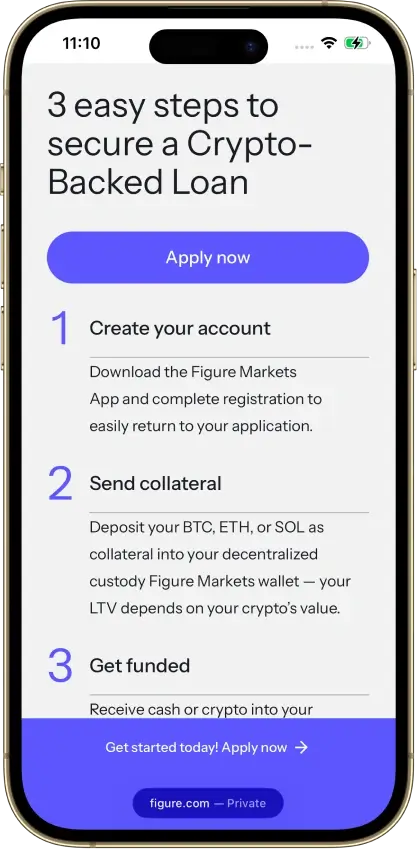
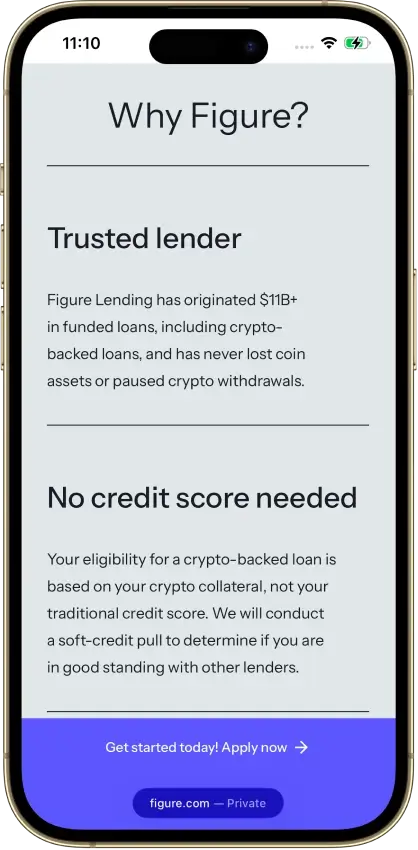
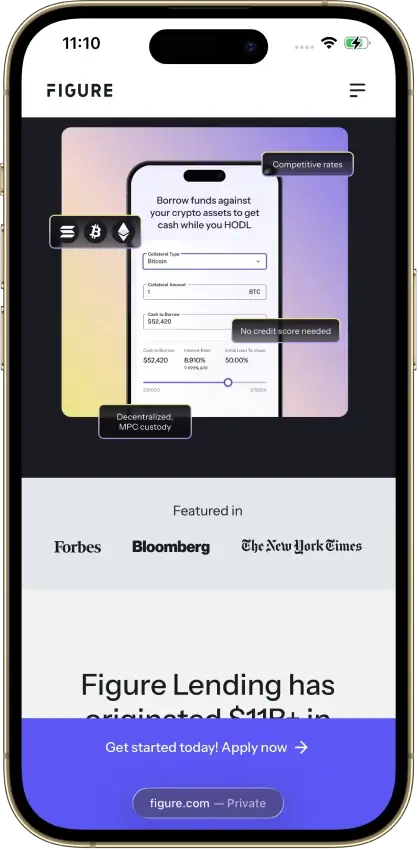
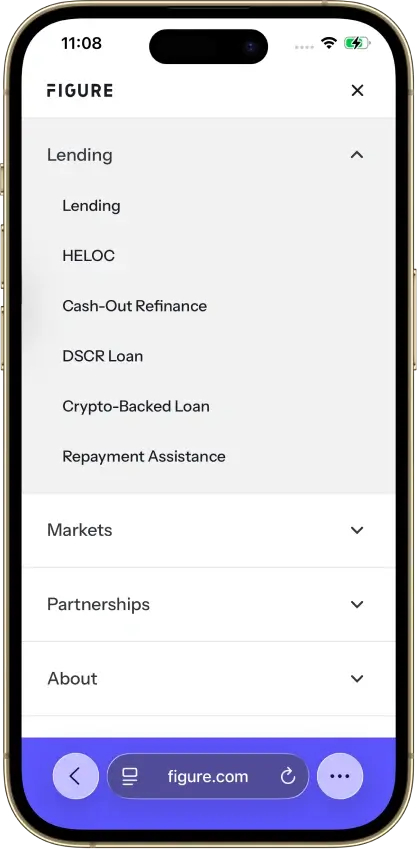
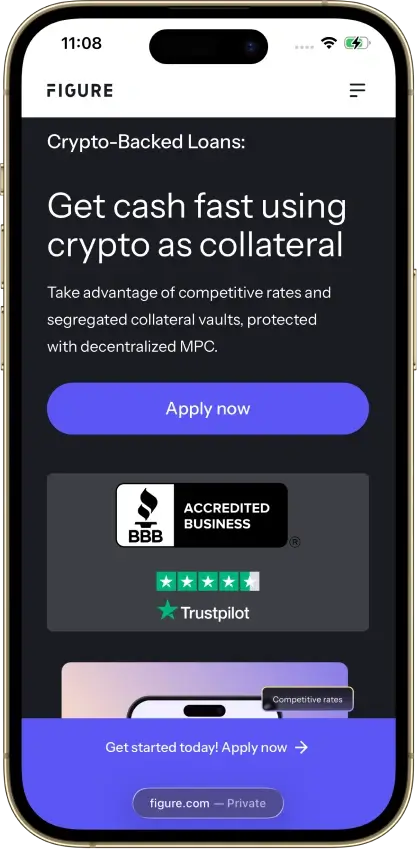
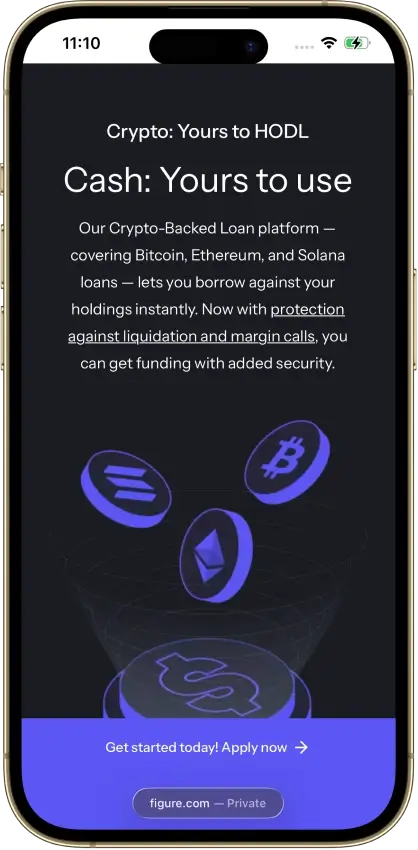
Screenshot 1 of 8
Figure Crypto-Backed Loan Pros and Cons
Pros
- Fixed rate during the loan term
- Early repayment without penalty
- BTC, ETH, and SOL collateral options
- Optional interest deferral
Cons
- Principal due at 12-month maturity
- Standard loans can be fully liquidated
- Protection restricted by state and loan type
- Deferral raises the balance due at maturity
Rates and Fees
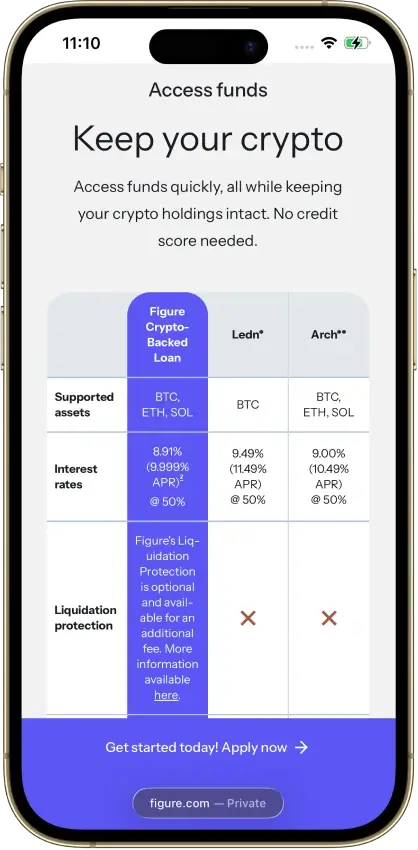
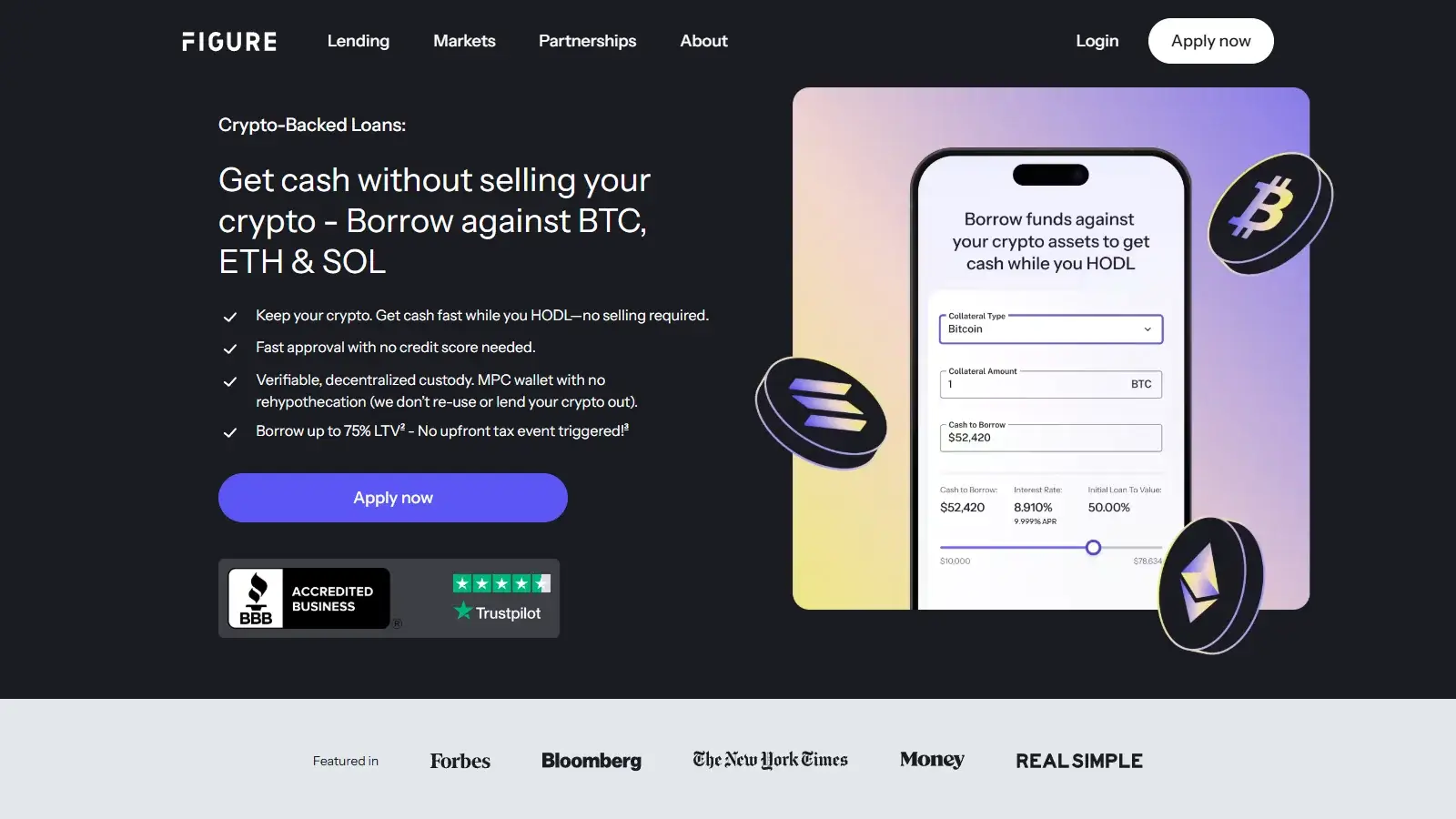
The US crypto-backed loan prices the initial collateral ratio in two tiers. At 50% initial loan-to-value (LTV), the interest rate is 8.91%, with a 9.999% annual percentage rate (APR). At up to 75% initial LTV, the rates rise to 11.50% interest and 12.62% APR. The interest rate is fixed during the 12-month loan, although rates offered to new applicants can change.
APR includes applicable borrowing fees, so comparing only the interest rate understates the annual cost. Figure’s examples include a 1% origination fee. The fee depends on jurisdiction and is capitalized into the loan, increasing the balance owed without an upfront cash payment.
A $10,000 draw with a 1% capitalized origination fee starts with a $100 fee added to the debt, before interest. The scheduled repayment amount depends on the final contract and whether interest is paid monthly or deferred. Borrowing the same cash amount at 75% LTV also moves the borrower into the higher advertised rate tier.
A collateral sale can add a 2% processing fee where permitted, reducing what remains after settling the loan. Neither advertised APR includes that potential sale cost.
Optional Liquidation Protection adds a separate, non-refundable fee of 2% of the loan amount. On a $10,000 loan, that is another $200, separate from the origination fee and interest. The advertised 9.999% and 12.62% APRs exclude that fee, while Figure’s calculator includes it in a higher APR for the protected version.
Collateral, Loan Amounts, and LTV
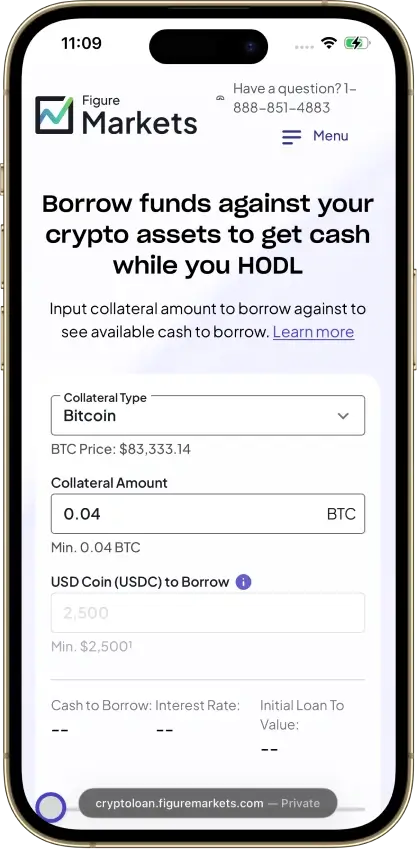
The standard loan accepts BTC, ETH, and SOL. The minimum is $5,000, subject to state-specific limits and applicant eligibility. Available collateral and underwriting determine the amount offered, so meeting the $5,000 minimum does not guarantee approval.
Initial LTV is the loan amount divided by the collateral’s value. A $10,000 loan at 50% LTV requires $20,000 of collateral before allowing for any financed fees. At 75%, the same loan needs about $13,333.33. The higher percentage releases more cash per dollar of crypto but leaves less room for a price decline.
For a constant debt balance, a 50% starting LTV reaches 90% after a collateral-price decline of about 44.44%. Starting at 75% reduces that decline to about 16.67%. Interest, fees, and any payments change those percentages, so these examples illustrate the price buffer without quoting an individual position.
Protected loans have a separate 50% maximum initial LTV and accept BTC or ETH only. SOL is available for the standard loan, while support for protected SOL loans remains planned. Borrowers using Bitcoin as collateral or ETH can seek protection where their state and starting LTV qualify. A SOL borrower wanting protection would have to change the collateral or choose another arrangement.
Liquidation and Collateral Management
Standard Figure loans have distinct warning, margin-call, and automatic-liquidation levels. A margin call requires the borrower to restore the initial LTV by adding collateral or paying down the loan.
| Standard loan starting LTV | Courtesy warning | Margin call | Automatic liquidation |
|---|---|---|---|
| 50% | 75% LTV | 80% LTV | 90% LTV |
| 75% | 80% LTV | 85% LTV | 90% LTV |
At the margin-call level, Figure gives a 48-hour cure period. If the position is not cured, Figure can sell enough collateral to restore the initial LTV. Market recovery can also cure the position.
The 90% threshold overrides that timetable. If a standard loan reaches it at any point, Figure can sell the entire collateral balance at the best available market price, which varies with liquidity, and close the loan. Where state rules allow it, a 2% processing fee on the crypto sold is deducted before any excess cash is returned. A borrower cannot rely on having 48 hours available during a rapid price fall.
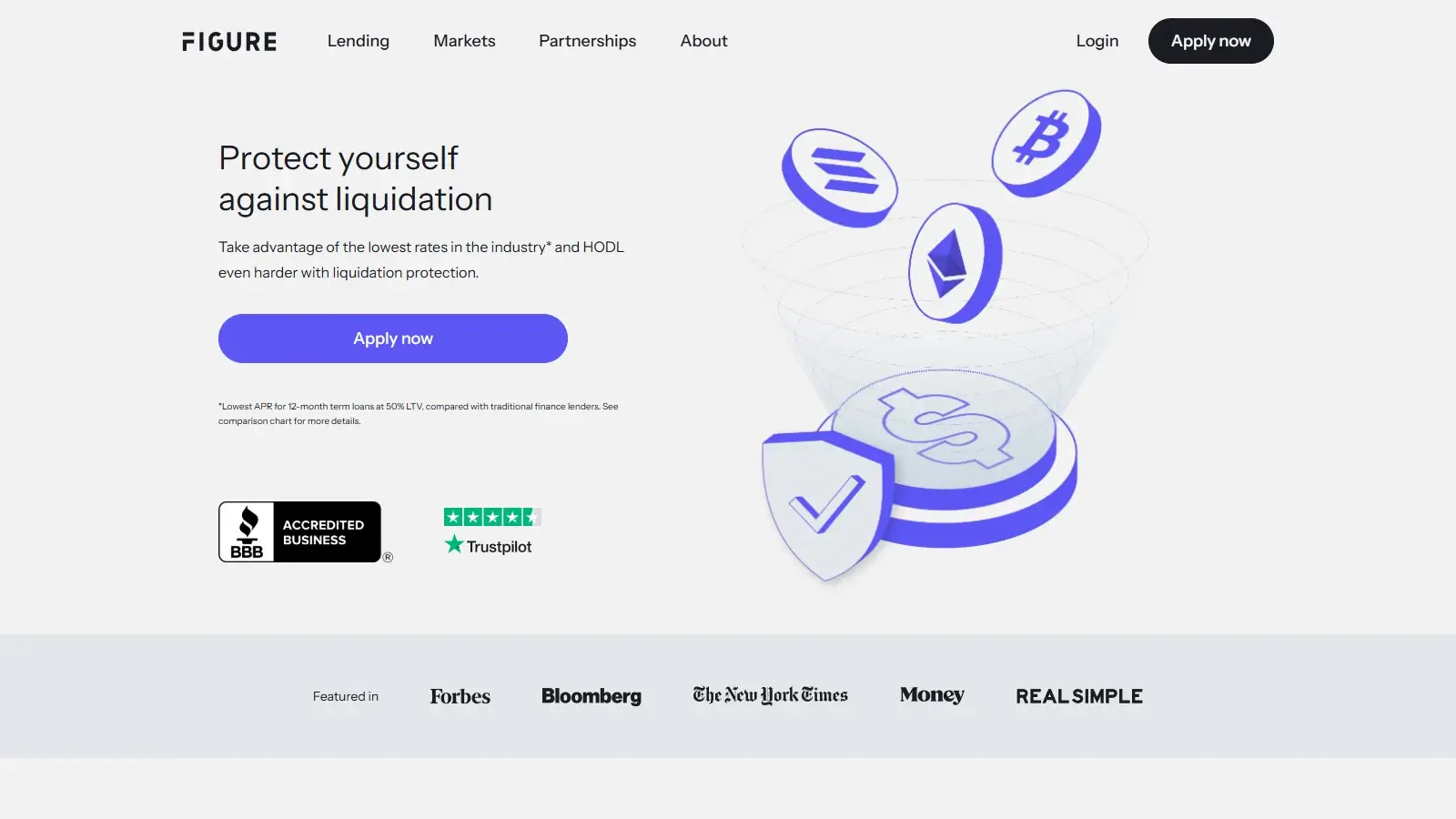
Liquidation Protection replaces the normal price-based margin framework for qualifying loans in good standing. Missed payments, default, and other agreement breaches can still lead to liquidation. Figure also retains the right to add collateral requirements, margin calls, or liquidation triggers under its risk-management policies. A protected borrower can therefore still lose collateral for reasons other than price, and Figure can impose new collateral demands during the term.
Protection is a contractual promise to hold off price-based sales, subject to those exceptions. It is not insurance, the borrower does not own a hedge, and the debt remains repayable in full. The added fee changes the sale rules without transferring the repayment obligation to Figure.
Custody, Collateral Use, and Security
Figure uses multiparty computation, or MPC, for custody. This splits transaction-key material across multiple nodes, with more than one party needed to authorize transactions. Figure describes loan collateral as segregated and promises not to reuse it for another loan or obligation, a practice called rehypothecation.
Pledged crypto is placed in a loan-specific part of the MPC wallet. Figure Payments maintains that sub-wallet as a securities intermediary, and the lender holds the associated asset claim until repayment or liquidation. The wallet terms remove those pledged assets from the customer’s ordinary withdrawal control. Seeing them in the app does not mean the borrower can transfer them.
The exchange terms allow crypto in the MPC wallet to be recorded in a compatible form on the Provenance Blockchain and treat wrapped and unwrapped assets as interchangeable. The form and network returned after repayment can therefore affect where the borrower can use the recovered crypto.
Protected-loan collateral and associated hedge instruments may also be held with third-party custodians, clearing brokers, or counterparties. Figure warns that losses from their failure may not be recoverable, so paying for protection adds counterparties without insuring their performance.
Figure promises to keep customer assets separate from company property. That contractual treatment does not guarantee a particular insolvency recovery. MPC also leaves borrowers dependent on Figure’s transaction infrastructure and the parties operating it.
Neither these digital assets nor the loans have Federal Deposit Insurance Corporation (FDIC) or Securities Investor Protection Corporation (SIPC) insurance. Custody, counterparty, and cyber risks remain outside the protection from price-based sales.
Availability, KYC, and Credit Checks
Figure Lending LLC provides the US term loan. Its loan excludes residents of Idaho, Illinois, Kentucky, Maryland, Mississippi, South Dakota, Texas, Vermont, Virginia, and the District of Columbia. State-specific loan minimums and eligibility rules still apply in supported locations.
Liquidation Protection has narrower access. The protected loan is available only in Alabama, Alaska, California, Florida, Georgia, Hawaii, Massachusetts, New York, Pennsylvania, and Utah. An applicant in another supported state may qualify for a standard loan without qualifying for protection.
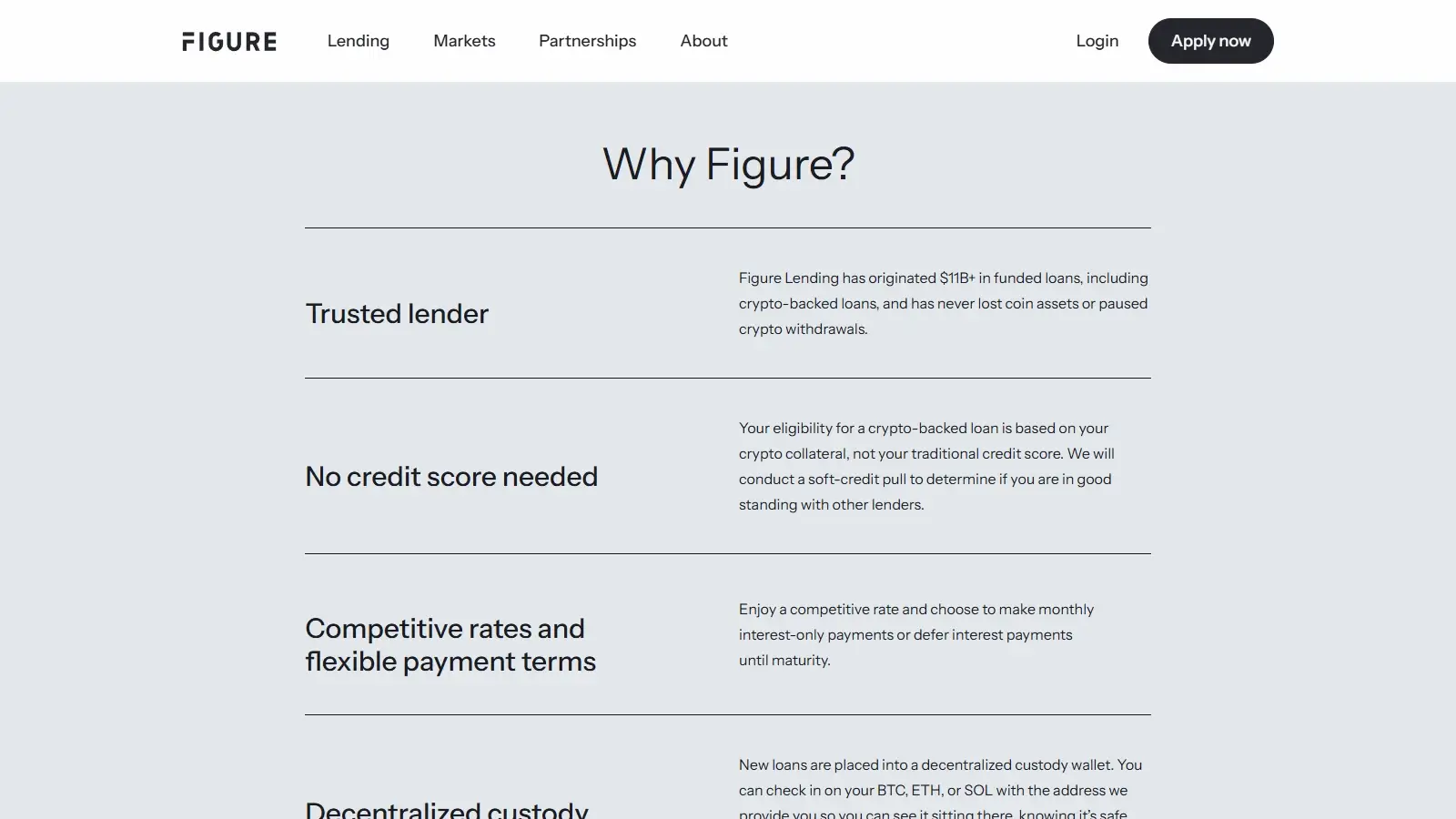
Figure requires know-your-customer (KYC) identity verification and anti-money-laundering checks, including an accepted government identification document. It also conducts a soft credit pull to assess the applicant’s standing with other lenders. That assessment means the amount of collateral alone does not establish approval, even though the inquiry is soft.
International loans come from Figure Markets Credit LLC and have their own country restrictions. Those loans can pay out in USD Coin (USDC), while the US term loan pays dollars. A US borrower needing stablecoins has a further currency-conversion step after the dollar payout.
Application, Payout, and Timing
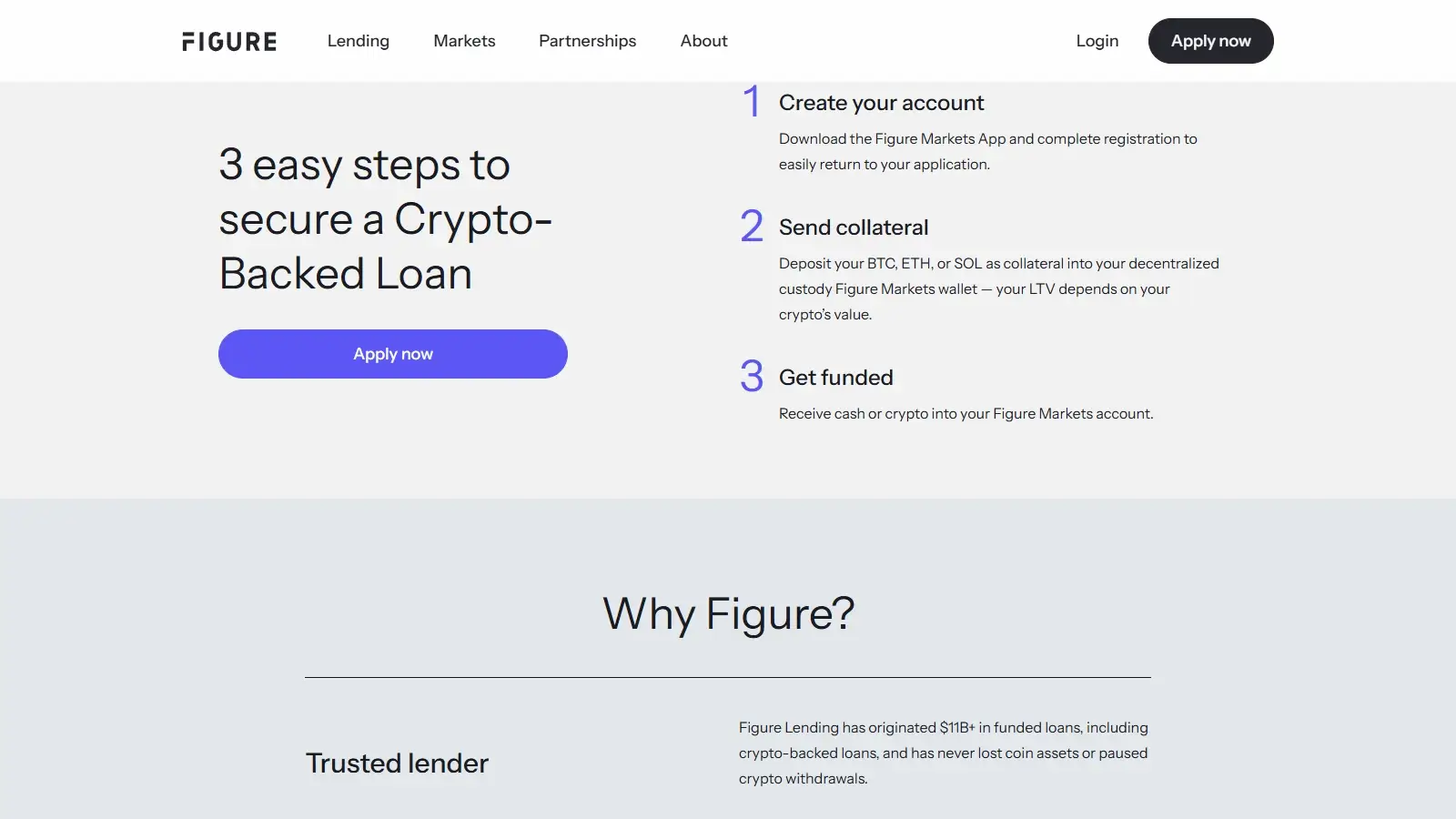
The applicant chooses a loan amount and initial LTV, completes identity and credit screening, and accepts the offered terms. Collateral is then deposited through the Figure Markets account and marked as pledged to the loan. Newer loans are managed in the Figure Markets app, with a separate borrower dashboard retained for older loans.
Funds are credited to the Figure Markets account. This is a separate step from moving cash to a bank, so an approval or account-credit notification does not mean a bank transfer has completed. Figure’s same-day approval estimate does not cover the full time needed for verification, collateral confirmation, and withdrawal. A bank-funded expense therefore needs time beyond an account-credit notification.
For protected borrowing, the selected asset and state must also qualify for that version. Any initial LTV above 50% rules out protection at origination, regardless of the borrower’s state.
Repayment, Renewal, and Collateral Return
US borrowers repay in dollars through Automated Clearing House (ACH) or wire. Figure estimates ACH processing at up to seven days and wire processing at about two days. Paying off the loan does not free the collateral immediately while a bank payment is still processing or on hold.
The loan offers monthly interest-only payments or interest deferral until maturity. For standard loans, Figure’s public pages conflict on the cost of deferral. Headlines on the loan and calculator pages and the FAQ promote deferral with no fees, while the loan descriptions on those same two pages say deferral carries a fee, with no amount stated. Confirm that charge for the selected standard offer.
For protected loans, Figure’s Liquidation Protection disclosures say the default interest-deferral feature has no additional fee. Borrowers can switch to monthly interest payments after origination. Deferred interest compounds and joins principal, increasing the maturity balance even without a deferral fee.
Borrowers still pay the separate protection fee and owe principal and interest. Standard loans also require unpaid interest at maturity, with the offered agreement’s interest calculation and any deferral charge determining the amount due.
At the end of 12 months, principal and any unpaid interest fall due unless a renewal is agreed. Renewal can incur a fee. Unliquidated collateral is released after the payment clears and the applicable hold ends.
After an ACH payoff, Figure’s loan and calculator pages give a three-week collateral hold while the payment clears, although its FAQ still gives one week. Wire repayment returns the collateral within three days, and the FAQ gives the same estimate for repayment from collateral. A borrower planning to reuse the released crypto needs the hold period confirmed for the selected repayment route before scheduling another transaction.
For an app-managed loan, release removes the pledge marker and makes the remaining collateral transferable. Older dashboard accounts may require a return-wallet address. Crypto already sold during liquidation is excluded from that return.
Account Controls and Support
Figure’s app identifies pledged collateral as encumbered in its assets section, while older loans use a borrower dashboard. Margin notices arrive by email and through the dashboard, with the required cure amount and deadline. The loan-specific deposit address allows the borrower to supply the crypto needed to meet that notice.
Standard loans allow collateral rebalancing when rising prices reduce LTV enough to release excess collateral. Protected loans disable that feature. The choice of protection therefore affects both downside management and access to crypto after a price rise.
Figure Lending LLC services the loans. For crypto-loan applications, Figure lists 888-851-4883, Monday–Friday, 8 a.m.–8 p.m. Eastern. Active-loan support is listed separately at 888-527-1950. These channels do not guarantee a response within the loan’s margin-call window.
Alternatives
-

Ledn
Ledn’s Dollar Loan offers a 12-month BTC loan for US borrowers eligible with both lenders. Ledn’s current help describes automatic liquidation at 80% LTV. From November 9, 2026, its new partial-liquidation terms instead aim to restore 65% LTV and keep the loan open when the agreement-defined trigger is reached, subject to exceptions. A standard Figure loan opened at 50% enters its margin-call period at 80% and can face a full sale at 90% before the 48 hours end. Figure also accepts ETH and SOL and offers conditional BTC/ETH protection, so the choice changes both eligible collateral and the response to a price decline.
-
Coinbase Borrow
Coinbase’s variable borrowing through Morpho has a changing rate and no scheduled maturity. Figure fixes the rate for a 12-month term, which can better fit a borrower budgeting for a defined payoff date. Coinbase’s fixed-rate option is a closer match on timing, but its Morpho contract and wrapped-Bitcoin collateral differ from Figure’s lending agreement and custody structure.
Pillar Scores
- Cost and pricing clarity 20% weight Interest, mandatory fees, pricing conditions, and the cost of early repayment.7.0 / 10
- Collateral control and counterparty risk 25% weight Custody, permitted collateral use, and recovery rights.6.0 / 10
- Liquidation rules and risk controls 20% weight Sale triggers, warnings, penalties, and tools for managing collateral.7.0 / 10
- Repayment and flexibility 15% weight Partial payments, maturity, renewal, and collateral return.6.0 / 10
- Access and funding 10% weight Eligibility, verification, payout routes, and usable funds.7.0 / 10
- Account controls and support 10% weight Security controls, loan records, monitoring tools, and customer support.7.0 / 10
Final Verdict
Figure gives eligible US borrowers a fixed-term dollar loan against BTC, ETH, or SOL, with a choice between monthly interest and deferral. Liquidation Protection is available for BTC and ETH in ten states. Protection costs extra and limits initial LTV to 50%, holding off price-based sales until maturity subject to its contractual exceptions. The standard loan remains vulnerable to full liquidation at 90% LTV, including during a margin-call cure period. Protected borrowers still owe the debt and face contractual default and risk-management exceptions. Figure is best considered by borrowers with a plan for the 12-month payoff and enough liquidity to manage collateral, fees, and the time it takes to release crypto after repayment.
Best For
Eligible US borrowers wanting a fixed dollar-loan term and a choice of interest payment schedules
Avoid If
- Borrowers needing access to pledged crypto or protection from every possible collateral sale
CryptoSlate may earn a commission when you use partner links, at no extra cost to you. Our reviews, ratings, and editorial decisions remain independent of advertisers. Read How CryptoSlate Makes Money for funding details.