 Released in 2017
- USDC paid to your Base wallet
- No fixed repayment date
- Borrow against cbBTC on Base
Aave Overview
Key facts
- Product Name
- Aave
- Release Date
- 2017
- Service model
- direct defi
- Product status
- available
- Collateral & debt
- cbBTC on Base · Normal mode; Debt currency: USDC
- Borrowing rate
- Rate not quoted; variable; Variable APY · Pool-demand pricing
Additional details
- Offer scope
- Aave V3 · Base cbBTC/USDC; Aave V3 Base pool in normal mode (E-mode disabled), with cbBTC as the only collateral and USDC as the only debt.
- Amount & term
- Depends on collateral, limits, liquidity · Open-ended; Loan structure: Open-ended; Maximum: Liquidity dependent; Depends on collateral, limits, liquidity; Term: Open-ended
- LTV & liquidation
- Health factor below 1 · 84% threshold · 6% bonus. Normal mode with no other collateral or debt positions. Pool parameters can change.; Maximum initial LTV: 81%
- Fees
- Network gas · External conversion costs
- Repayment
- Partial or full · Interest added to debt
- Availability
- Aave Labs interface · 18+ · Sanctions restrictions; KYC: Not required; Credit check: Not required
- Payout
- USDC to wallet · After confirmation
- Custody
- Pooled contracts · cbBTC issuer dependency
- Underlying protocol
- Aave V3
Aave Screenshots
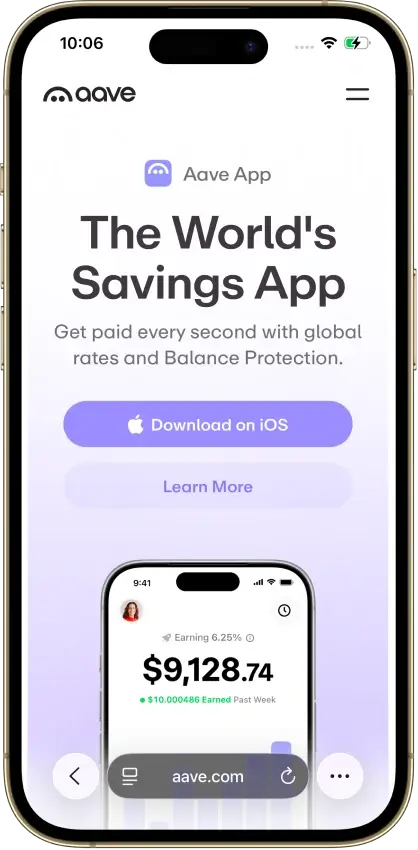
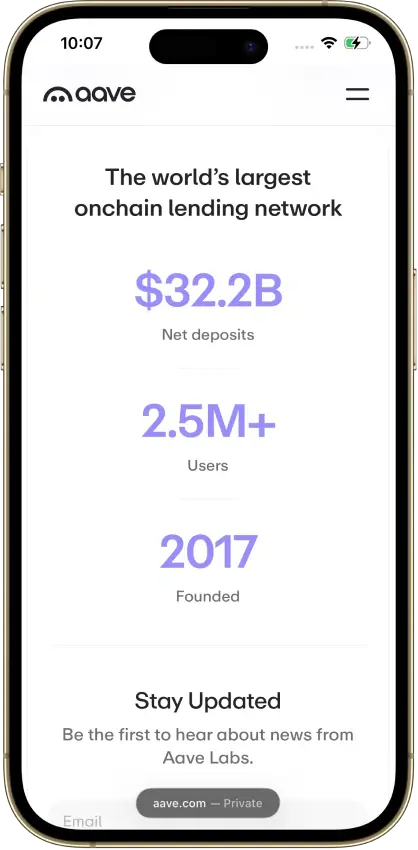
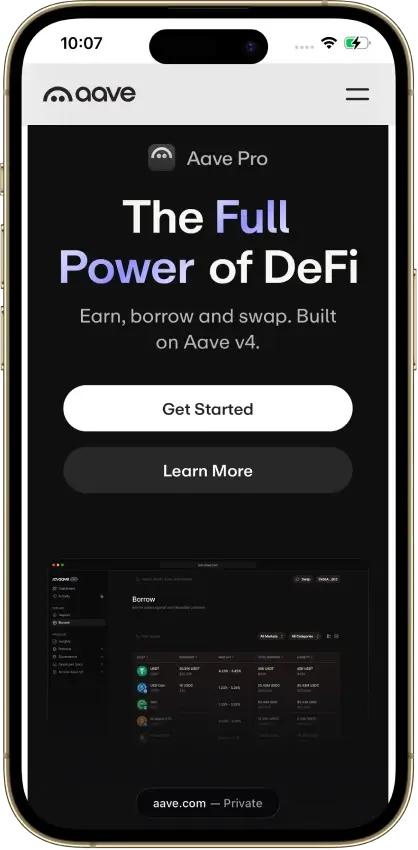
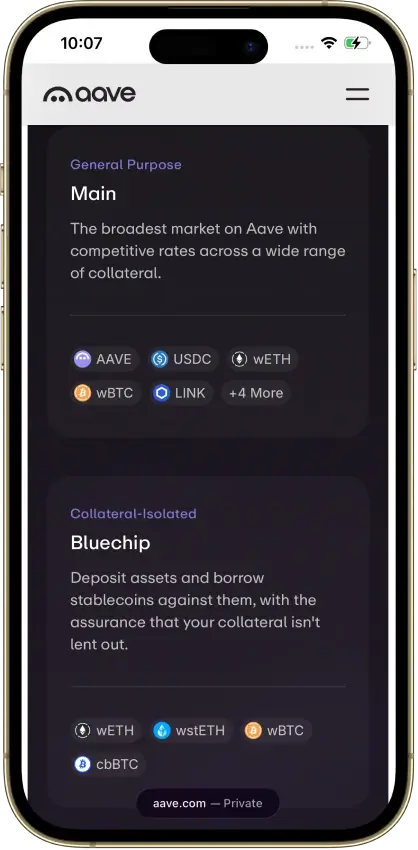
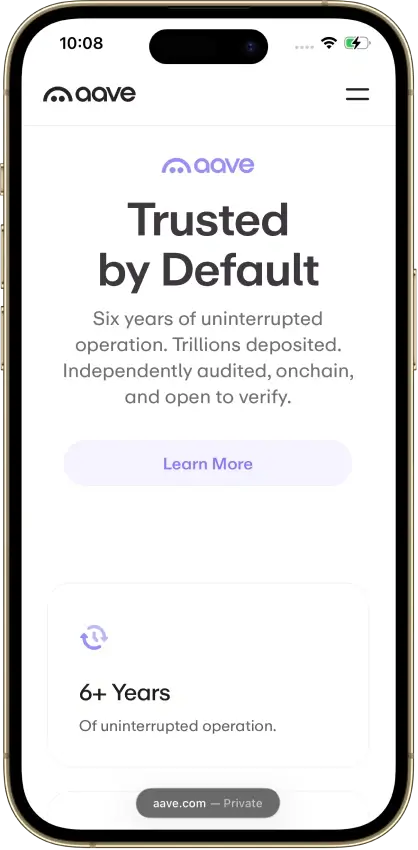
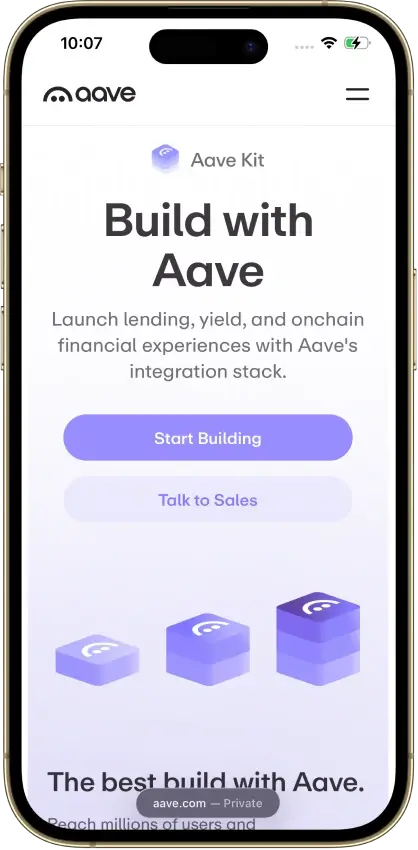
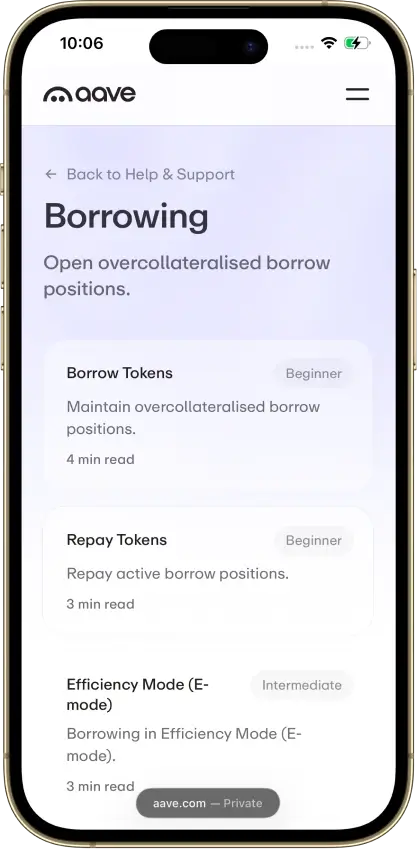
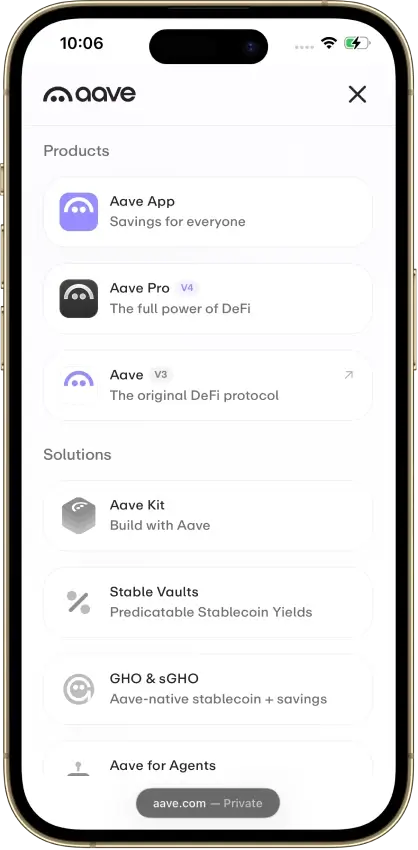
Screenshot 1 of 8
Aave Pros and Cons
Pros
- Wallet-controlled loan management
- Public pool rates and risk parameters
- Partial repayments supported
Cons
- Borrowing rate changes with demand
- Collateral exits depend on liquidity
- cbBTC adds issuer and redemption risk
Rates and Fees
Aave’s borrowing rate responds to pool demand. As more of the pool’s USDC is borrowed, the rate can increase, and governance settings can also change the calculation. Repayments and new liquidity can move it in the other direction, so keeping the debt open also means accepting changes to its cost.
The USDC market page shows a variable annual percentage yield (APY), and its historical chart labels rates as annual percentage rates (APR). Use the same measure when comparing rates, and allow for rate changes throughout the loan.
Network fees apply when you interact with the contracts. Acquiring cbBTC, obtaining USDC for repayment, and converting returned collateral can also involve charges or price differences. Include those steps in the borrowing budget, because the pool rate accounts for only the interest on the USDC debt.
Collateral, Loan Amounts, and LTV
The collateral is a Bitcoin-linked token on Base, rather than native Bitcoin. Coinbase describes cbBTC as backed by Bitcoin held in its custody, so using it adds an issuer and redemption arrangement to the borrowing decision. Someone starting with Bitcoin must first obtain the accepted token on the correct network.
In normal mode, cbBTC has an 81% maximum initial loan-to-value (LTV) ratio and an 84% liquidation threshold. Starting at the maximum leaves a narrow price margin: a 3.57% collateral-value decline reaches the threshold if debt value stays unchanged. Borrowing less initially leaves more room for a decline, though interest growth can use up that room.
Collateral value alone does not determine how much USDC you can receive. The position must also fit the protocol’s limits and the pool must have unborrowed USDC available. Supply caps can prevent adding new collateral. Borrow caps and available USDC limit new borrowing. These pool-wide limits are separate from the wallet’s collateral-based borrowing allowance.
High Efficiency Mode (E-mode) limits the asset combinations and applies its own borrowing and liquidation settings. The 81% maximum LTV and 84% liquidation threshold apply with E-mode disabled, so choosing a mode changes which price buffer a borrower can use.
Liquidation and Collateral Management
The health factor measures how much collateral protection remains behind the debt. With only cbBTC collateral and USDC debt, the health factor equals collateral value multiplied by the liquidation threshold, divided by debt value. Below 1, liquidators can act even if you intended to keep the loan open longer.
Assume 10,000 USDC of debt worth $10,000 and cbBTC initially valued at $20,000, with no other positions, interest accrual, or price-feed divergence. At the 84% threshold:
Illustrative Position
- Starting LTV
50%
- Starting health factor
1.68
- Collateral value at health factor 1
$11,904.76
- Collateral decline to that boundary
40.48%
The position reaches the boundary well before a 50% price fall, despite starting with collateral worth twice the debt. As interest increases the debt, it takes a smaller collateral decline to reach that boundary.
During liquidation, a liquidator repays some or all of the USDC debt and takes cbBTC worth the repayment plus a liquidation bonus. For cbBTC in normal mode, that bonus is 6% of the amount repaid, taken from the borrower’s collateral. You keep the USDC received when borrowing, and any cbBTC not taken remains supplied in Aave. Health factor and position size affect how much debt can be closed at once.
Adding collateral or repaying debt can improve the health factor, but the transaction has to confirm onchain in time. Until it confirms, the position remains exposed to another price move.
Custody, Collateral Use, and Security
Supplying cbBTC moves it into Aave’s pooled lending contracts, where it can be borrowed while supporting your own borrowing position. Your wallet authorizes transactions, but the cbBTC leaves it and becomes available for other users to borrow. Keeping the keys does not give you immediate access to collateral when the pool lacks unborrowed cbBTC.
The position also depends on functioning contracts, price feeds (oracles), and the network. Even if those work as expected, returning to native Bitcoin still depends on cbBTC’s underlying custody and redemption arrangement.
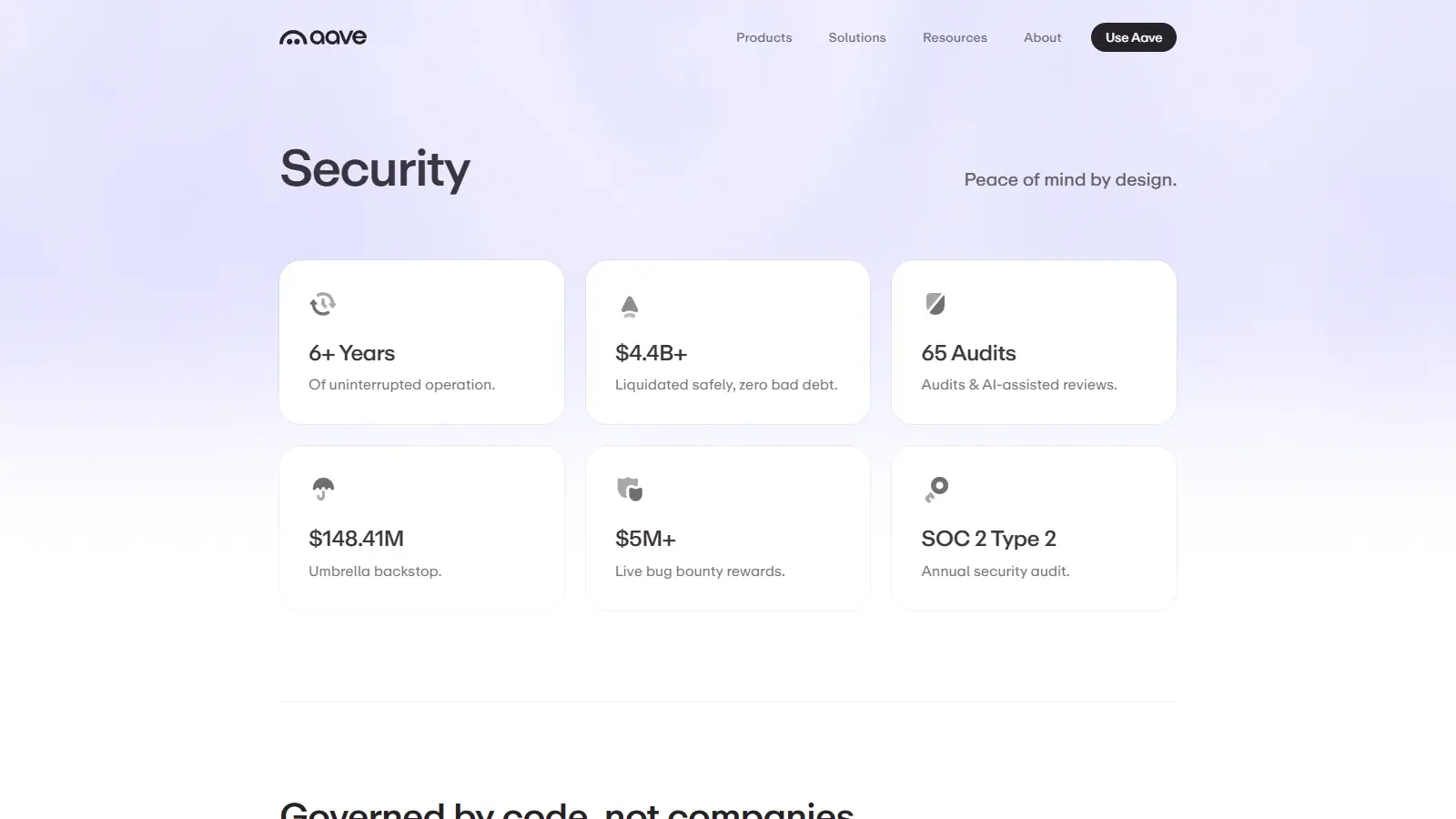
On Base, designated risk managers and multisignature wallets can change certain limits and risk settings, or pause markets, alongside governance. Some changes need no fresh public vote. Any change that lowers the liquidation threshold reduces the health factor without a price move. Aave’s audits are tied to code versions, leaving later setting changes, individual tokens, and price feeds outside what they checked.
Availability, KYC, and Credit Checks
Aave uses a wallet-based borrowing process with no conventional credit application. Aave Labs applies age, sanctions, and jurisdiction restrictions to its own interface.
Your complete borrowing path may also include buying or redeeming cbBTC and converting USDC into bank funds. Those services can require an eligible account and know-your-customer (KYC) identity checks.
Application, Payout, and Timing
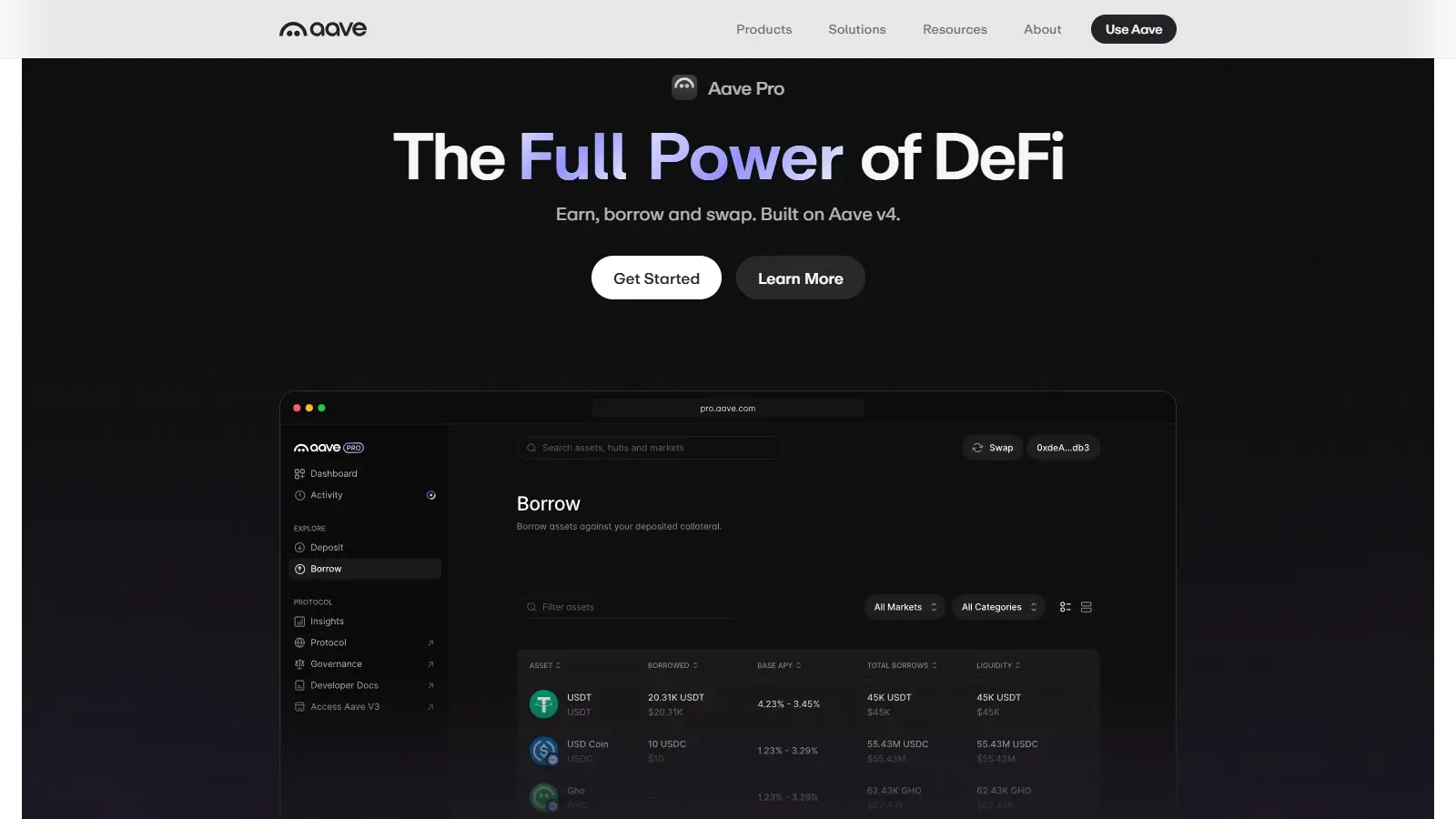
Start with cbBTC on Base and a compatible wallet. After supplying the cbBTC as collateral, select USDC, review the resulting health factor, and authorize the borrowing transaction. Once that transaction confirms, the USDC is in your wallet, ready for any further conversion or use.
Aave’s part ends when the USDC reaches your wallet. Bank funds require another service to convert USDC and send the money, with its own access checks and processing time. Holding cbBTC before starting skips token acquisition, but the later conversion and bank transfer still need to complete.
Repayment, Renewal, and Collateral Return
You can repay part or all of the USDC debt without waiting for a maturity or renewal date. Closing it requires enough USDC to cover the accrued balance, and a token approval may be needed before the repayment transaction. Keep the correct token and network-fee balance available, since assets held elsewhere cannot settle the debt until they reach the right wallet.
Repayment and collateral withdrawal are separate actions. Clearing the USDC debt removes its collateral requirement, but withdrawing cbBTC still depends on unborrowed liquidity in the pool and any remaining obligations. If the exit you want is native Bitcoin, you must then use an exchange or eligible redemption provider outside Aave and meet that provider’s rules.
Account Controls and Support
The dashboard shows supplied assets, debt balances, rates, and the health factor. Use those figures together: interest growth can reduce the health factor even when cbBTC’s price has not changed. Monitoring only Bitcoin’s price can therefore miss a deterioration caused by the debt itself.
You can use your wallet to add collateral or repay debt as the health factor falls. The Aave help center explains those steps, but Aave Labs cannot reverse a liquidation or recover lost wallet keys.
Alternatives
-

Coinbase Borrow
Coinbase Borrow puts Morpho borrowing inside a Coinbase account, which can suit eligible users who prefer an account interface to direct protocol transactions. It uses cbBTC and USDC on Base through Morpho’s lending markets, while the direct Aave loan uses Aave’s pool. Coinbase’s processing fees are added to the debt and accrue interest, adding a cost in exchange for managing the loan through the existing account.
-
Ledn
Ledn is a closer fit for someone seeking bank funds against Bitcoin through an account-based lender. Ledn holds BTC under its custody agreement and has a 12-month repayment term, changing both control of the collateral and when settlement is due. That can better match a borrower needing bank funds and a scheduled payoff than a direct wallet loan.
Pillar Scores
- Cost and pricing clarity 20% weight Interest, mandatory fees, pricing conditions, and the cost of early repayment.8.0 / 10
- Collateral control and counterparty risk 25% weight Custody, permitted collateral use, and recovery rights.6.0 / 10
- Liquidation rules and risk controls 20% weight Sale triggers, warnings, penalties, and tools for managing collateral.7.0 / 10
- Repayment and flexibility 15% weight Partial payments, maturity, renewal, and collateral return.8.0 / 10
- Access and funding 10% weight Eligibility, verification, payout routes, and usable funds.7.0 / 10
- Account controls and support 10% weight Security controls, loan records, monitoring tools, and customer support.7.0 / 10
Final Verdict
Aave V3 on Base fits experienced wallet users who already hold cbBTC and want to choose when they borrow and repay USDC. Public pool parameters help them assess the position, and partial repayment gives them a way to reduce debt without closing it completely. That flexibility requires more than keeping wallet keys secure. Variable interest changes the debt, falling collateral can trigger liquidation, and pool liquidity can delay withdrawal after repayment. The separate conversion from cbBTC back to Bitcoin also remains part of the exit. Borrowers seeking native Bitcoin collateral, bank funds, or someone who can negotiate loan terms have less reason to take on those risks.
Best For
Experienced wallet users holding cbBTC on Base who can manage variable USDC debt
Avoid If
- Borrowers who need a bank payout, native Bitcoin collateral, or a lender able to renegotiate terms
CryptoSlate may earn a commission when you use partner links, at no extra cost to you. Our reviews, ratings, and editorial decisions remain independent of advertisers. Read How CryptoSlate Makes Money for funding details.