


Quick Take
- Bitcoin fell below $83,000 after hotter US inflation triggered more than $100 million in crypto liquidations within an hour.
- October Fed rate hike odds surged from 21% to 55%, threatening Bitcoin's recovery as Treasury yields climbed.
- Bitcoin now faces an $81,300 support test, with further losses possible if bond yields and the dollar keep rising.


Bitcoin fell below $83,000 on Wednesday as hotter-than-expected US core inflation data revived expectations of further Federal Reserve interest rate hikes, triggering a fresh wave of liquidations across the cryptocurrency market.
CoinGlass data showed that over $100 million in leveraged positions were liquidated in the hour after the inflation report was released. This also pushed total liquidations above $220 million over 24 hours.
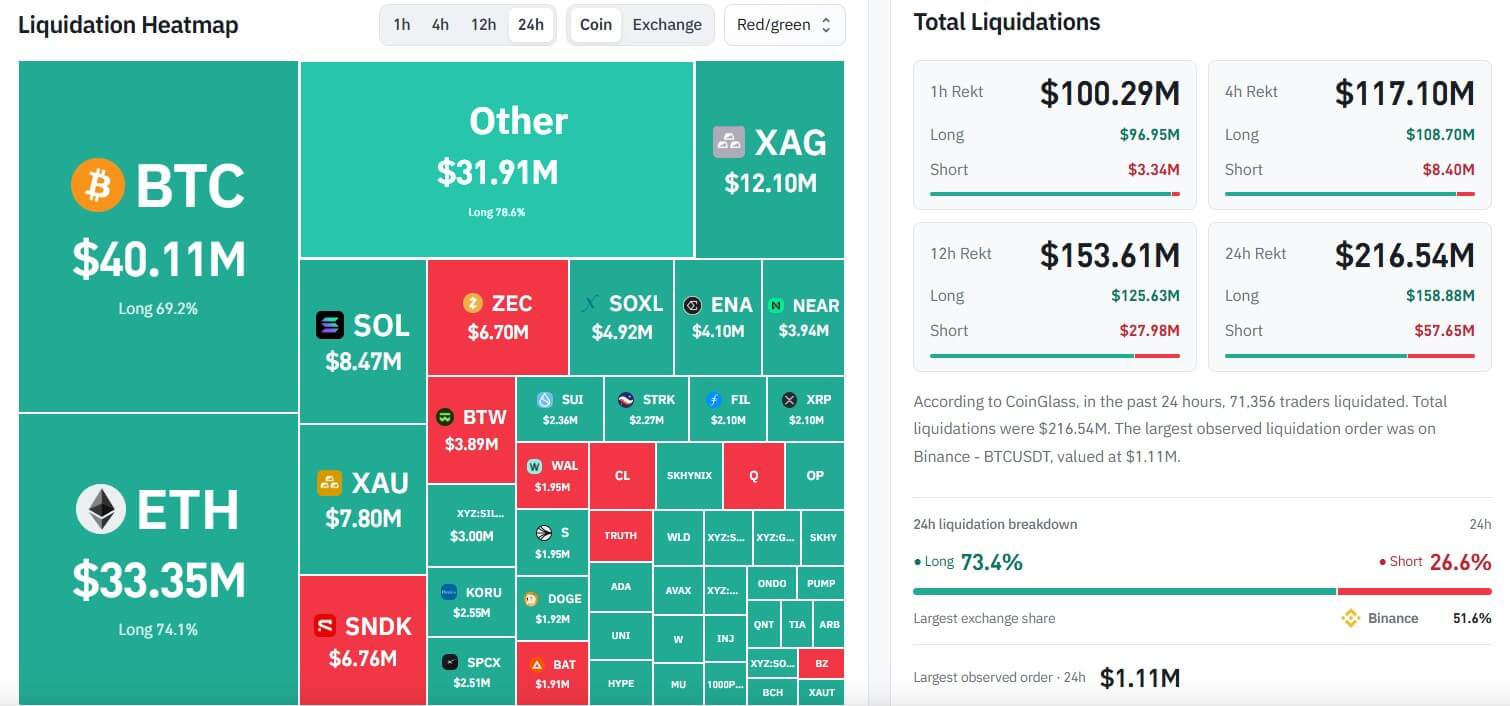
The sharp increase in forced selling highlighted how quickly traders reacted to renewed inflation pressures and the prospect of tighter US monetary policy.
Hot inflation revives Fed rate hike bets and rattles bond markets
According to the Bureau of Labor Statistics, consumer prices increased 3.7% annually in September, above the 3.6% forecast and August's 3.4% reading. Headline consumer prices rose 0.6% during the month, matching expectations, while core prices increased 0.3%, above the 0.2% consensus estimate.
On an annual basis, core inflation accelerated to 2.6% from 2.4%, suggesting that underlying price pressures remain persistent even after excluding volatile food and energy costs. This marks the 67th consecutive month US inflation has stayed above the Fed's 2% target.
Energy remained the biggest contributor to inflation, reflecting the economic fallout from the ongoing US-Iran conflict. Gasoline prices surged 9.1% during September, accounting for more than half the increase in headline CPI, while the broader energy index climbed 5.2%.
However, inflationary pressures spread to other parts of the economy. Shelter costs increased 0.4%, used vehicle prices climbed 0.7%, and higher prices were also recorded for recreation, education, air travel and medical services.
The breadth of these increases complicated expectations that policymakers could look past an energy-driven inflation shock without additional tightening.
Bond markets reacted sharply, with the benchmark 10-year Treasury yield reversing an earlier decline to rise approximately 7 to 9 basis points during the session.
Robin Brooks, a senior fellow at the Brookings Institution, warned that the inflation figures risked reigniting instability across global bond markets after a period of relative calm.
Meanwhile, the repricing also spread to expectations for Federal Reserve policy. Kalshi's prediction market showed the probability of a 25-basis-point Fed hike in October rising to 55% from 21%, while traders increased bets on further tightening through 2027.
Notably, the Fed had previously raised its benchmark interest rate by 25 basis points in September to a target range of 3.75% to 4%, its first increase in more than three years.
Can-Luca Köymen, investment strategist at Sygnum Bank, told CryptoSlate that the stronger inflation reading had reopened the possibility of another increase this month, although the bank still expects policymakers to hold rates steady.
“Core at 0.3%, above consensus, puts an October hike back in play after the market had faded it to one in five,” Köymen said.
He noted that the Fed's preferred inflation measure, the Personal Consumption Expenditures price index, will not be released until the day after its October policy decision, leaving officials to assess inflation risks without the latest PCE figures.
For Bitcoin, the immediate concern is that higher Treasury yields increase the appeal of interest-bearing assets, while a stronger dollar can tighten financial conditions and weaken demand for speculative investments.
Köymen said these macroeconomic pressures would likely influence Bitcoin's near-term direction more than daily flows into spot exchange-traded funds.
Bitcoin's demand recovery faces a critical test
The renewed macroeconomic pressure arrived just as Bitcoin's underlying demand indicators were showing signs of improvement following two months of weakness.
According to CryptoQuant data, spot Bitcoin demand has begun to recover alongside continued growth in futures demand, creating a market structure similar to that seen in August.
The analytics platform estimated that total demand increased by about 69,000 BTC after two largely negative months, suggesting buying activity was strengthening beyond leveraged derivatives positions.
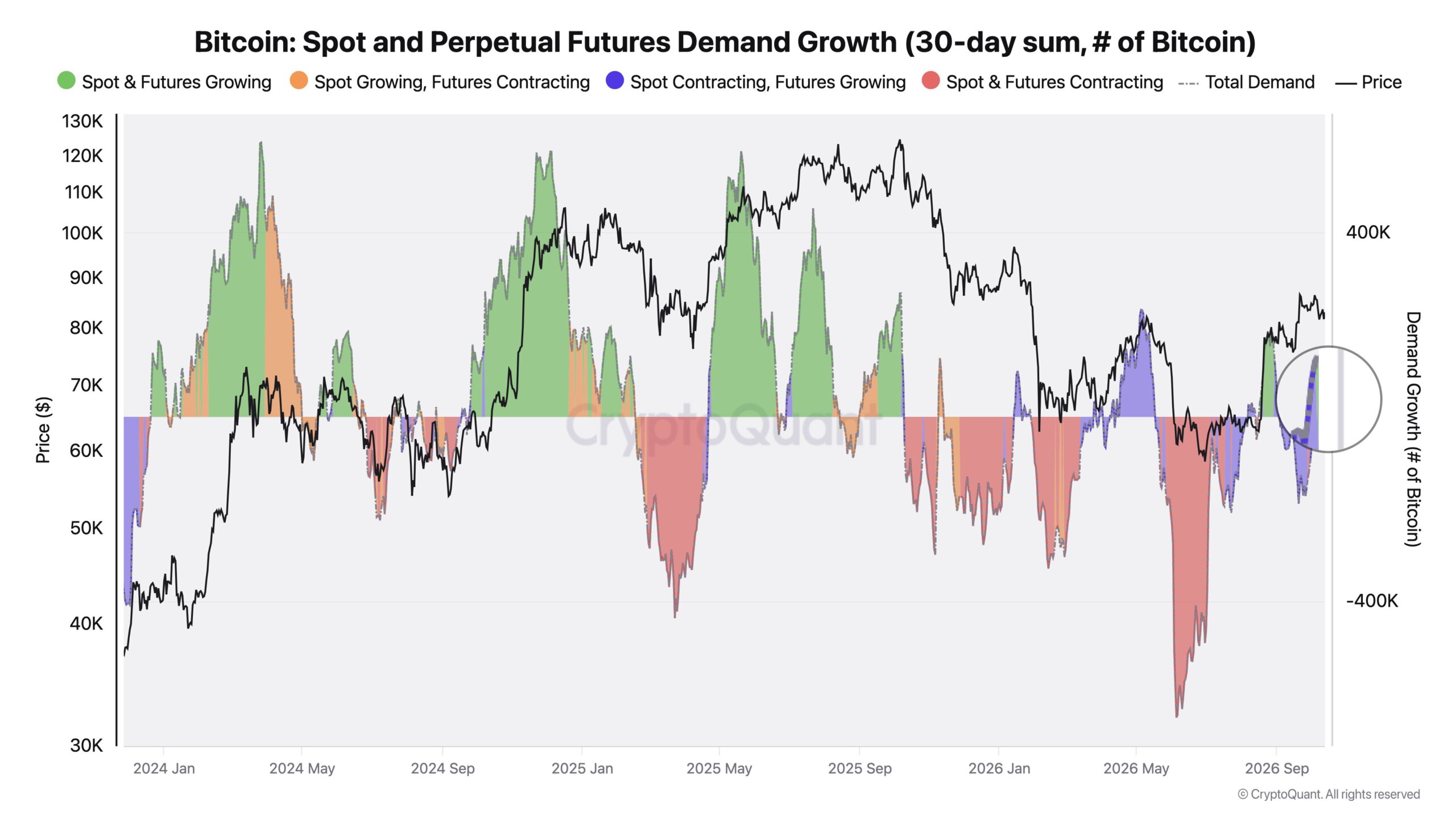
This combination has historically accompanied bullish phases in Bitcoin's market cycle, when stronger purchases of the underlying asset help sustain price advances supported by futures traders.
The improving demand picture offered a potential foundation for Bitcoin's recovery after repeated attempts to establish support above $80,000.
However, Wednesday's inflation shock introduced a fresh challenge.
The latest liquidations followed an earlier wave of more than $800 million in forced position closures across the cryptocurrency market, raising concerns that leveraged traders remained exposed despite the recent reduction in risk.
Before the inflation report, Ryan Lee, chief analyst at Bitget Research, had warned that the market's previous liquidation wave might not have fully cleared excessive leverage.
He pointed to elevated open interest as a potential source of renewed instability if an unexpectedly strong inflation reading pushed Treasury yields higher and forced investors to reassess the Fed's interest rate trajectory.
That concern has grown more pressing after Wednesday's selloff, as the latest liquidation figures suggest leveraged traders remain vulnerable to sudden macroeconomic developments.
Lewis Huang, an analyst at Bitget, told CryptoSlate that $81,300 is Bitcoin's immediate support level, warning that a sustained decline below that threshold could expose the asset to further losses.
He said the risk would increase if falling cryptocurrency prices coincided with further gains in Treasury yields, dollar strength and deteriorating sentiment across other risk assets.
Still, CryptoQuant's improving spot demand figures suggest the market may have some capacity to absorb selling pressure if underlying buying activity continues to expand.
The distinction will become increasingly important if investors respond to the inflation surprise by reducing exposure to leveraged positions while longer-term buyers continue accumulating Bitcoin.
The next major test comes at the Federal Reserve's Oct. 27–28 policy meeting, followed by the September PCE inflation release on Oct. 29.
Until then, Bitcoin's ability to defend the $81,300 support level will help determine whether improving spot demand can withstand another round of monetary tightening expectations.

Bitcoin is -2.16% over the past 24 hours and currently sits at rank #1 by market cap.
Mentioned in this article


Editorial credits