
Global Bybit fits active traders outside its named blocked markets. It does not fit users who need U.S. access, one European and global product set, or dependable bank cash-out everywhere.
Bybit vs Binance: Fees and Futures by Region
Bybit vs Binance begins with an exact fee tie: both platforms price maker and taker orders at 0.10% in their first global tier.

Binance.com combines 0.10% entry spot fees with deep liquidity and extensive trading tools, but access, fiat rails, and products vary by jurisdiction.
Affiliate Disclosure
Some links in this comparison are affiliate links. CryptoSlate may earn a commission if you sign up through these links. Our ratings remain editorially independent.


Start With the Correct Bybit and Binance Accounts
Bybit Binance
Global account
Global Bybit menu: spot, margin, derivatives, Earn, P2P, copy trading, bots, and APIs
Binance.com menu: spot, margin, derivatives, Earn, P2P, copy trading, bots, and APIs
United States
Global Bybit does not open US accounts
Binance.com does not open US accounts
Canada
Global Bybit is unavailable
Canada appears on the official Binance.com prohibition list
Separate MiCAR-authorized Bybit EU service for eligible users
No Binance entity appeared in the MiCA-authorized CASP register checked August 29, 2026
Not available through Bybit EU
Not disclosed
Self-custody
Separate Bybit Seed Phrase Wallet
Separate Binance Wallet
No clear winner
Neither platform serves US accounts in the compared form. Bybit provides a separate MiCAR-authorized EEA service, which has no derivatives.
Bybit vs Binance at a Glance
Bybit Binance
Published score
7.0/10
7.0/10
0.10% maker and taker
0.10% maker and taker
Token-paid global spot
0.075% maker and taker with an eligible MNT reduction
0.075% maker and taker with an eligible BNB reduction
Entry futures taker
0.0550% on entry Global Bybit USDT perpetuals
0.0500% on regular USD-M futures
350+
486 active base assets in an August 29, 2026 API sample
Not disclosed
1,358 active symbols in the dated sample
Margin
Up to 10 times on Global Bybit
Cross up to 5 times and isolated up to 10 times
USDT, USDC, and inverse perpetuals, dated USDC futures, and USDC options
USD-M and COIN-M futures plus options
Both available
Both available
Required for normal product use
Required for normal account activity
User inclusion plus independent Hacken verification for the May 2026 snapshot
User inclusion plus a self-published monthly archive
Mobile and desktop
iOS, Android, and a separate EU app
iOS, Android, Windows, macOS, and Linux
API design
Unified V5 across spot, derivatives, options, and RFQ
Spot REST, WebSocket and FIX, Spot Testnet, plus separate derivatives APIs
24/7 chat and tickets
24/7 chat
No clear winner
Spot pricing is tied. Binance has the lower entry futures taker rate, while Bybit has the named EEA route and independent verification of its covered reserve snapshot.
The Categories With a Defensible Decision
Bybit Binance
0.10% maker and taker
0.10% maker and taker
0.075% with eligible MNT payment
0.075% with eligible BNB payment
0.0550% on entry Global Bybit USDT perpetuals
0.0500% on regular Binance USD-M futures
Bybit EU, with no derivatives
No Binance entity in the register checked August 29, 2026
Hacken verified the May 27, 2026 covered snapshot
August snapshot is self-published
Recurring reports
First-of-month archive through August 2026
V5 combines spot, derivatives, options, and RFQ
Separate spot and derivatives interfaces
Not disclosed
Spot FIX plus Windows, macOS, and Linux apps
No simultaneous comparable quote
No simultaneous comparable quote
No same-pair and same-size test
No same-pair and same-size test
No comparable asset and term
No comparable asset and term
No comparable resolution data
No comparable resolution data
No clear winner
The measurable decisions split between Binance futures pricing and software, and Bybit's EEA route, reserve verification, and unified API.
Screenshots
Bybit screenshots

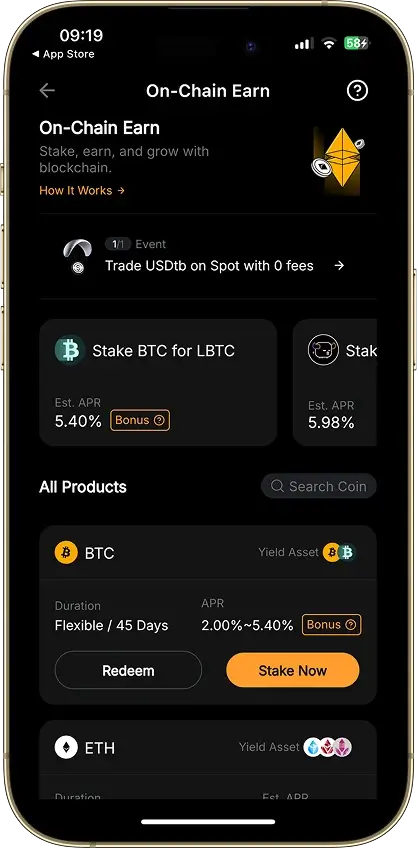
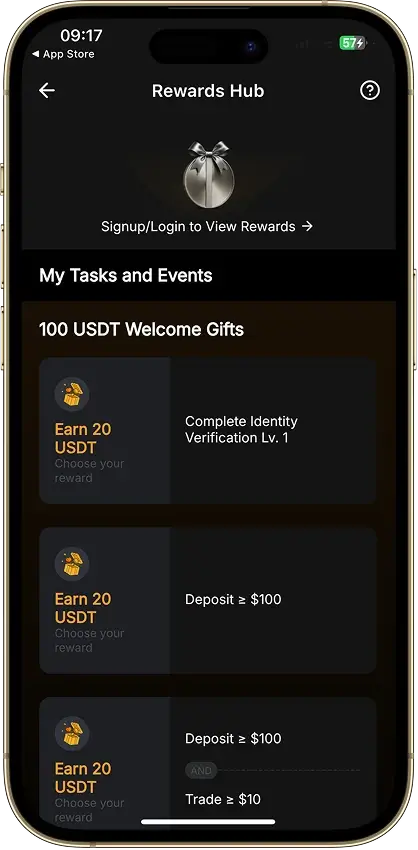
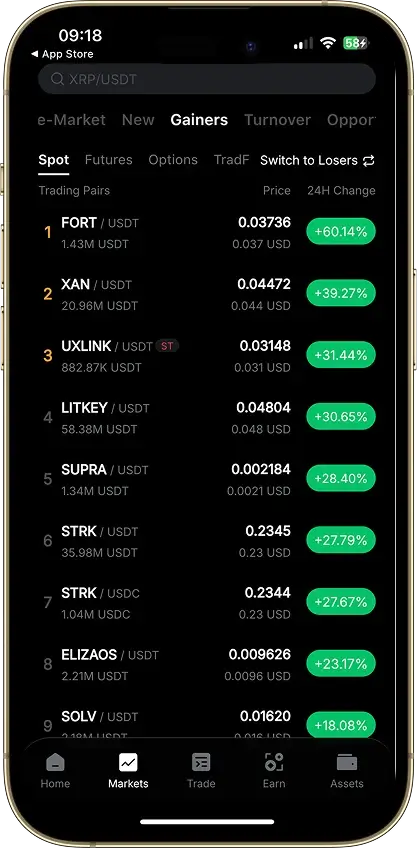
1 / 4
Binance screenshots


1 / 4
Spot and Futures Fees
Bybit Binance
0.1000%
0.1000%
0.1000%
0.1000%
Eligible token-paid spot maker
0.0750%
0.0750%
Eligible token-paid spot taker
0.0750%
0.0750%
Entry perpetual or USD-M maker
0.0200%
0.0200%
Entry Global Bybit USDT perpetual or regular Binance USD-M taker
0.0550%
0.0500%
Eligible token-paid futures maker
0.0180%
0.0180%
Eligible token-paid futures taker
0.0495%
0.0450%
Entry-tier options fee
0.0200% maker and 0.0300% taker
No public options commission is published for anonymous visitors
Bybit EU spot
0.1000% maker and 0.2500% taker until the scheduled October 5, 2026 change
Not applicable
$1,000 maker or taker at entry spot
$1.00
$1.00
$1,000 with an eligible token-paid reduction
$0.75
$0.75
$10,000 maker or taker at entry spot
$10.00
$10.00
$10,000 with an eligible token-paid reduction
$7.50
$7.50
$100,000 notional entry futures maker
$20.00
$20.00
$100,000 notional entry futures taker
$55.00
$50.00
$100,000 notional token-paid futures maker
$18.00
$18.00
$100,000 notional token-paid futures taker
$49.50
$45.00
No clear winner
Spot is tied at the entry tier and after eligible token payment. Binance has the lower entry futures taker commission.
The global entry schedules match at 0.10% for either side of the spot order book. An eligible token-paid reduction cuts either rate by 25% to 0.075%.
On Bybit, MNT payment provides this reduction but excludes options, inverse contracts, and API orders. Copy-follower trades, RFQ, and liquidations do not qualify. Binance uses BNB. Paying commission with BNB requires a token balance whose value can change, as explained in the BNB fee-discount guide. The Mantle token profile provides context for the asset used in Bybit's discount path.
These calculations cover opening commission only, excluding funding, spread, slippage, and liquidation charges. They also omit token-price exposure and the closing trade.
Simple-purchase screens use different cost logic because Bybit combines a provider fee with the quoted rate. A Binance account showed 2% Visa, Mastercard, Apple Pay, and Google Pay purchase charges on August 29, 2026. The same capture showed 1.5% for PayPal, 1.1% for Revolut, and a €1 SEPA charge. A simultaneous executable quote is needed to name the cheaper checkout.
Assets, Markets, Orders, and Execution Evidence
Bybit Binance
350+
486 active bases on August 29
Not disclosed
1,358 in the same snapshot
Margin-enabled spot symbols
Not disclosed
794 in the same snapshot
450+ pairs
567 standard USD-M perpetuals, excluding TradFi and dated contracts, plus 180 TradFi perpetuals
COIN-M contracts
Inverse perpetuals, current count not disclosed
30 contracts across 20 base assets
USDC European-style cash settlement
1,634 European-style cash-settled contracts across six underlyings
Quote emphasis
USDT and USDC, with some BTC quotes
26 quote assets appeared in the dated spot sample
Derivatives activity snapshot
About $24.7 billion in 24-hour volume and $16.0 billion in open interest at the recorded Bybit snapshot
No comparable Binance derivatives capture
BTC/USDT book
No comparable Bybit capture
0.00128-basis-point spread, about $5.78 million bid and $6.50 million ask within 10 basis points on August 29
ETH/USDT book
No comparable Bybit capture
0.04080-basis-point spread, about $2.89 million bid and $2.50 million ask within 10 basis points on August 29
Same-size slippage
Not measured
Not measured
Order rejection and latency
Not measured
Not measured
Large-order route
OTC or RFQ, with no comparable public minimum
OTC access, with no comparable public minimum
No clear winner
Binance supplies dated exact market counts, but the figures do not support a like-for-like asset, liquidity, slippage, or fill ranking.
On August 29, 2026, Binance.com's public spot API sample contained 1,358 active symbols representing 486 unique base assets. Bybit states 350+ spot assets and 450+ perpetual pairs. Because Bybit publishes open-ended figures, the two disclosures do not provide an exact listing gap.
Bybit's order menu extends past market and limit instructions to stop, take-profit, OCO, and post-only. Reduce-only and position-level TP/SL serve derivatives positions. Binance adds limit-maker plus stop or take-profit variants. It also names OCO, OTO, OTOCO, and trailing instructions, with time-in-force choices where supported.
A large order should be checked against the live depth for the exact pair. One exchange's derivatives volume cannot be placed beside the other's spot-book sample as if the measurements describe the same market.
Margin, Futures, Options, Copy Trading, and Bots
Bybit Binance
Spot margin
Up to 10 times on Global Bybit
Cross up to 5 times and isolated up to 10 times
USDT, USDC, and inverse coin-margined formats
USD-M and COIN-M formats
USDC futures on core markets
Four dated USD-M and 10 quarterly COIN-M contracts in the August 29 snapshot
USDC-settled European contracts with a public entry-tier fee
European-style cash-settled contracts across six underlyings, with no public anonymous commission
Margin modes
Isolated, cross, and portfolio margin
Cross and isolated margin, with other portfolio products separated
Maximum position multiplier
Up to 100 times on BTCUSDT and 125 times on selected USDC perpetuals
Product and account specific
Classic, Pro, and TradFi variants
Separate spot and futures copy accounts
Bots
Spot Grid, DCA, Futures Grid, martingale, and combo
Spot Grid, Futures Grid, arbitrage, rebalancing, DCA, Auto-Invest, and a marketplace
No clear winner
Both cover several derivatives formats, copy trading, and bots. Bybit supplies public options pricing and portfolio margin, while Binance supplies dated contract counts.
Bybit combines USDT-, USDC-, and inverse perpetuals with dated USDC futures, USDC options, and isolated, cross, or portfolio margin. Binance separates USD-M and COIN-M futures, supports options, and names spot and futures copy accounts alongside six bot tools and a marketplace.
Contract-specific collateral, maintenance margin, and liquidation rules can change risk before fee differences matter. The derivatives exchange guide sets out those variables. Automated tools also require strategy testing. An automated crypto strategy explainer helps separate bot availability from evidence that a strategy will make money.
Staking and Earn Products
Bybit Binance
Flexible and Fixed Easy Earn, loan supply, On-Chain Earn, and Launchpool
Flexible, Locked, ETH and SOL staking, Soft Staking, Dual Investment, Smart Arbitrage, and On-Chain Yields
Not disclosed
More than 300 Simple Earn assets
Platform commission
Displayed yield is net of applicable product charges
No single exchange-wide commission
Payout timing
Varies by Easy Earn, fixed, and on-chain format
Product specific
Redemption
Flexible terms can be redeemed, while fixed products may lock
Flexible, locked, and protocol products use separate rules
Regional access
Product and entity specific
Product and account specific
No clear winner
Binance supplies the only numeric Earn asset count. A return decision still needs the same asset, term, net rate, quota, and exit rule.
Binance documents more than 300 Simple Earn assets across flexible and locked terms. On-chain structures sit inside the same count. Bybit groups Easy Earn with fixed-rate loan supply. On-Chain Earn and Launchpool are separate, as are distribution products. These labels do not establish a return winner.
A reward rate may move during the commitment. Compare the same asset and term first. Then check the displayed net rate and quota, followed by redemption time.
Fiat Funding, P2P, Withdrawals, and Networks
Bybit Binance
No account access
No account access
SEPA through Bybit EU where available
A €1 SEPA Instant example appeared August 29, but it did not establish account eligibility
Selected SWIFT and local partners, with terms shown in-flow
Dated USD, CHF, and GBP SWIFT examples, subject to local access
Provider and country specific
Country, currency, and provider specific
P2P
Escrow marketplace in supported countries
Spot and local-currency P2P in supported countries
Same day to T+1 for some SEPA routes
Rail specific
Network and provider conditions apply
No Binance crypto-deposit fee, while the sender can charge
Fixed asset-and-network amount shown before confirmation
Asset-and-network amount shown before confirmation
USDT routes
TRC-20 and ERC-20 are named, with other networks available
19 networks displayed in the dated capture
BTC examples
Live confirmation controls
Native minimum 0.0001 BTC and fee 0.00002 BTC on August 29
USDT examples
Live confirmation controls
0.01 USDT on BNB Smart Chain, 0.3 on Ethereum, and 1.5 on Tron on August 29
Published non-VIP withdrawal ceilings
20,000 USDT daily without verification, 1 million USDT at Standard, and 2 million USDT at Advanced or Pro before individually approved higher limits
Account, asset, network, jurisdiction, and risk specific
Security holds
Recent changes and reviews can delay transfers
Ownership checks and risk reviews can delay transfers
No clear winner
Bybit supplies the clearer authorized EEA account route. All-in fiat and crypto transfer costs still require the same country, method, asset, network, and timestamp.
Fiat access changes at both platforms because no single bank-transfer menu covers every country. Bybit uses partners for cards and bank routes, with SEPA on Bybit EU and P2P in supported markets. On Binance, the country and account determine availability. Currency choice and payment provider narrow it further.
Crypto transfer costs can be compared only after choosing the same asset and chain. Binance displayed 19 USDT withdrawal networks in the August 29 capture. Bybit explicitly supports routes including TRC-20 and ERC-20, but no simultaneous Bybit network count is available.
The lowest displayed network fee is useful only when the receiving wallet supports that exact route. A wrong-chain transfer can cost far more than the saved commission.
KYC, Licensing, and Geographic Access
Bybit Binance
Government ID and liveness, with proof of address at Advanced
Government ID and personal details, with added documents when required
Typical KYC timing
About 15 minutes in ordinary cases, up to 48 hours
No universal completion time
United States
Unavailable
Unavailable
Canada
Unavailable
Prohibited
MiCAR-authorized Bybit EU service
No entity in the MiCA CASP register checked August 29
Spot and spot margin, no derivatives
Not disclosed
United Kingdom
Not listed among Global Bybit's blanket country exclusions. Product-specific restrictions still apply
FCA notice says no Binance Group authorization or registration
Other named account blocks
Mainland China, Hong Kong, Singapore, and additional restricted jurisdictions
The Netherlands and sanctioned territories named in Binance.com's prohibition list
No clear winner
Both require identity checks. Bybit has the named MiCAR-authorized EEA route, while neither compared platform accepts US or Canadian accounts.
At least Standard KYC is mandatory across Bybit's normal products. Binance keeps deposits and trading limited until identity verification is complete. The same gate applies to withdrawals and API activity. Either platform can ask for proof of address or additional source-of-funds material later.
Security, Custody, and Reserve Verification
Bybit Binance
Custody description
Majority cold storage, in-house custody, and policy-level segregation
Named ADGM custodian, separate internal ledgers, possible omnibus wallets and pooled fiat
Government crypto insurance
None
None. SAFU is an emergency fund, not deposit insurance
Available for covered balances
Available through Merkle and zero-knowledge methods
Hacken verified the May 27, 2026 covered snapshot
August snapshot is self-published
Publication pattern
Recurring reports, including the May 2026 snapshot
Monthly archive from February 2023 through August 2026
Dated covered count
Not disclosed
53 assets on August 1, 2026
Scope limit
Snapshot coverage does not prove every liability or future condition
Snapshot coverage is not a complete financial audit
Exchange-wallet incident
About $1.5 billion in ETH removed in February 2025. Bybit reported replenishment within about 72 hours and no customer haircut
More than 7,000 BTC removed in May 2019. Binance said SAFU covered the loss without reducing user balances
Compliance event
No comparable Bybit corporate plea is established
2023 guilty plea and $4.3 billion resolution. Separate SEC case dismissed in 2025
No clear winner
Bybit has the independently verified snapshot. Binance has the documented monthly archive and a 53-asset August coverage figure. Neither proves continuous solvency.
Bybit account controls include TOTP and passkeys, with anti-phishing codes and address allowlisting. New-address locks and device review cover sensitive changes. Binance documents 2FA and hardware keys, plus anti-phishing codes and allowlisting. Device review and restricted API permissions cover the remaining account paths.
Exchange custody persists on both platforms because the exchange retains the private keys. The account-held crypto custody guide explains why login protection and proof of reserves do not create direct key control.
Bybit has the independently verified snapshot, while Binance gives users the longer documented monthly archive and the 53-asset August coverage figure. Neither reserve process guarantees that all obligations can always be met.
Website, Apps, APIs, Reporting, and Support
Bybit Binance
Mobile apps
iOS and Android with near web parity, plus a separate Bybit EU app
iOS and Android with funding, trading, Earn, P2P, and security tools
Desktop apps
Not disclosed
Windows, macOS, and Linux
Trading API
Unified V5 REST and WebSocket across spot, derivatives, options, positions, assets, and RFQ
Spot REST and WebSocket, Spot FIX, and separate derivatives APIs
Test environment
Not disclosed
Spot Testnet
Published rate boundary
Default HTTP IP ceiling of 600 requests per five seconds, plus endpoint limits
Endpoint and product specific
Key controls
Granular scopes, IP allowlisting, HMAC or RSA, and 2FA for key changes
Permission limits, IP allowlisting, and RSA signing
Reporting
CSV exports and a Tax API for partner software
Website and API history, with up to 10,000 rows and six months per website export
24/7 chat and tickets
24/7 chat
Public service data
Status page, no published multi-month uptime percentage
Maintenance notices, no published uptime percentage
No clear winner
Bybit unifies more trading functions under V5. Binance adds Spot FIX and native desktop applications. Support and uptime outcomes remain unranked.
Bybit's web and mobile interfaces expose spot plus derivatives. Copy trading is integrated, while Earn and bot controls occupy separate modules. Binance places Lite-style purchasing beside advanced markets on mobile and web. Desktop applications provide another route.
Binance Wallet is separate from the exchange. The Binance Wallet custody analysis covers its self-custody responsibilities, which do not transfer exchange reserve evidence or SAFU coverage into the wallet.
Choose Bybit If...
Bybit fits users prioritizing the authorized EEA route, independently verified reserve evidence, or one unified trading API.
- You need the named MiCAR-authorized route for an eligible EEA account and accept that Bybit EU offers no derivatives.
- Third-party verification of a point-in-time reserve report matters more than a longer exchange-published archive.
- One V5 interface for spot, derivatives, options, and RFQ simplifies integration across assets and positions.
- A public entry-tier Global options fee or an eligible MNT reduction matches your intended order path.
Choose Binance If...
Binance fits supported-country users prioritizing its lower entry futures taker fee, dated market set, Spot FIX, or desktop applications.
- The account qualifies for Binance.com and the exact pair needed appears among the 1,358 active spot symbols captured on August 29, 2026.
- A 0.0500% entry USD-M taker fee saves more than the 0.0550% rate on entry Global Bybit USDT perpetuals for the expected futures volume.
- Spot FIX or a native desktop application matches the intended workflow.
- Monthly reserve publication and the 53-asset August snapshot fit the verification process, or the strategy requires Binance's named automation tools.
Final Verdict
Choose between Bybit and Binance only after matching the legal entity, fee path, product, funding route, and withdrawal network to the intended transaction.
The Bybit vs Binance verdict splits because their global spot schedules produce the same $1 commission on a $1,000 entry-tier order. An eligible token-paid reduction brings either charge to $0.75. The token and qualifying order paths differ. Local service also changes the result.
Binance.com has the measurable futures-price advantage because its entry taker rate is 0.0500%, compared with 0.0550% on entry Global Bybit USDT perpetuals. It also supplies dated spot and derivatives counts plus Spot FIX. Desktop applications and a monthly reserve archive add separate reasons to choose it.
Bybit is the more direct choice for an eligible EEA account because Bybit EU is MiCAR-authorized, though the service has no derivatives and follows its own pricing. Global Bybit adds an independently verified reserve snapshot and a unified V5 interface.
Confirm whether the account belongs to Global Bybit, Bybit EU, or Binance.com, then compare the signed-in bank route and withdrawal network for the intended asset. This matters because Bybit EU removes derivatives, while Binance.com's cash rails and both platforms' withdrawal routes vary by account.
Bybit vs Binance FAQs
Is Bybit or Binance cheaper for spot trading?
The global schedules put maker and taker orders at 0.10% on both platforms, which costs $1 on a $1,000 order. Eligible MNT payment on Bybit or BNB payment on Binance can reduce that commission to 0.075%, or $0.75 on the same order. Spread, payment charges, and withdrawal fees are separate costs.
Are Bybit and Binance available in the United States?
Neither platform serves US accounts in the compared form. This page covers international Binance.com only. Binance.US is out of scope. US users need a platform that is authorized and available in their state for the intended product.
What are the Binance vs Bybit futures fee differences?
Binance has the lower entry taker commission on the compared schedules. Regular USD-M taker orders cost 0.0500%, while entry Global Bybit USDT perpetual taker orders cost 0.0550%. Their entry maker rates are both 0.0200%. Funding and liquidation costs can outweigh the opening commission.
Does Bybit or Binance list more crypto assets?
Bybit's open-ended figure of 350+ spot assets and Binance.com's dated API count of 486 active bases do not establish a like-for-like asset winner. Country restrictions can reduce the tradable set. Network support can narrow withdrawals further.
Which has more derivatives, Bybit or Binance?
A clean total is unavailable because the platforms classify their contract sets differently. Bybit has USDT- and USDC-margined perpetuals alongside inverse contracts. It also lists dated USDC futures and USDC options. Binance separates futures into USD-M and COIN-M markets, then lists options with dated API counts.
How do Bybit and Binance proof-of-reserves systems differ?
Bybit's May 27, 2026 covered snapshot received independent Hacken verification and supports user inclusion checks. The August 1 Binance report encompassed 53 assets and sits in a monthly archive. Merkle and zero-knowledge tools support inclusion checking. Binance publishes the report itself. Neither process is a complete financial audit or a guarantee of continuous solvency.
Does Bybit or Binance have clearer fiat withdrawals?
Neither supplies one global answer. Bybit EU provides SEPA where available, while Global Bybit uses selected bank partners and P2P. Binance funding availability depends on the signed-in country, account, currency, and provider. Compare both cash-out screens before moving funds.
Do Bybit and Binance require KYC?
Both require KYC, but Bybit begins normal product access at Standard verification. Binance requires full identity verification for normal deposits and trading. The check also gates withdrawals and API use. Either platform can request proof of address or additional source-of-funds documents after onboarding.

Bybit vs Binance begins with an exact fee tie: both platforms price maker and taker orders at 0.10% in their first global tier. Either exchange can cut eligible spot commission to 0.075% when fees are paid with its associated token. Futures pricing, reserve verification, regional access, and API design separate the two accounts. Beyond that tie, Binance.com charges 0.0500% for an entry USD-margined futures taker order, compared with 0.0550% on entry Global Bybit USDT perpetuals. Bybit supplies a MiCAR-authorized European service and an independently verified reserve report. Binance's monthly reserve archive accompanies a dated international spot sample. Binance.com adds Spot FIX alongside separate derivatives APIs, while Bybit runs one unified V5 interface.
Global Bybit's 7.0/10 exchange product assessment applies to Bybit.com. The service is unavailable in the U.S., Canada, mainland China, Hong Kong, and Singapore, while EEA users migrate to Bybit EU. Its Global product set combines spot and derivatives with copy trading and built-in bots. Bybit EU is a separate account outside this Global Bybit assessment.
Binance.com scores 7.0/10 in the Binance.com market and access rating. This comparison covers international Binance.com. Binance.US is not included.