A proprietary trading firm sells a beginner an attempt. The tightest number on the account usually ends that product before the biggest number in the marketing becomes relevant.
A prop firm charges a one-time evaluation fee for a trading account with a profit target and a set of loss rules. Hit the target without breaking a rule and the firm issues a funded account with an agreement to pay out a share of its profits. Nothing is deposited and nothing is held in custody at any stage, because both accounts are simulated from the first trade to the last.
The table below carries every firm holding a published CryptoSlate score.
Best Prop Firms for Beginners in 2026
- Evaluation fee
- From $20
- Max drawdown
- 3–6%
- Profit split
- 80%–90%
- Owned by Kraken's parent company, Payward
- Discloses its own conflicts in its terms
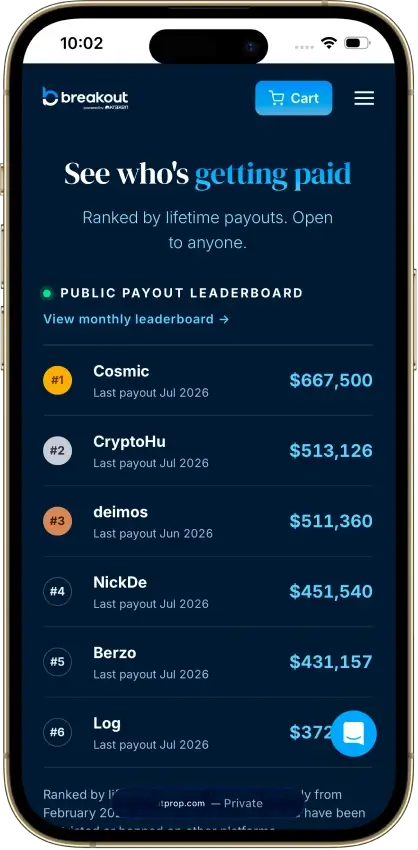
- Public payout leaderboard with totals
- Evaluation fee
- Forex / CFD: From $32.99; Futures: From $79.99
- Max drawdown
- Forex / CFD: Balance-Based Trailing (Closing Balance): 6%; Static (Initial Balance): 6–10%; Futures: 1,000–4,000 USD
- Profit split
- Forex / CFD: 70%–95%; Futures: 80%–95%
- Static loss floors on Stellar evaluations
- Flex removes funded consistency rules
- CFD and futures instant routes
- Evaluation fee
- From EUR 79
- Max drawdown
- End-of-Day Trailing (Closing Balance): 10%; Static (Initial Balance): 10%
- Profit split
- 80%–90%
- Rules spelled out in more detail than any rival
- Repeatable free trial before you pay
- Selling evaluations longer than almost anyone
- Evaluation fee
- Forex / CFD: From $19; Futures: From $59
- Max drawdown
- Forex / CFD: 4–10%; Futures: 4%
- Profit split
- Forex / CFD: 50%–100%; Futures: 80%
- Funding traders since 2016
- Scaling ladder reaches $4,000,000
- High Stakes pauses on a daily breach
CryptoSlate may earn a commission when you visit partner sites through links on this page, at no extra cost to you. Our rankings and reviews remain editorially independent and based on our published methodology. Read disclosure
Disclaimer: CryptoSlate may receive a commission when you click links on our site and make a purchase or complete an action with a third party. This does not influence our editorial independence, reviews, or ratings, and we always aim to provide accurate, transparent information to our readers.Prop Trading Firms for Beginners Compared
Compare the scored firms by market coverage, evaluation structure, account size, drawdown, profit split and first-payout timing.
| Prop Firm | Markets | Evaluation Types | Account Sizes | Maximum Drawdown | Profit Split | First Payout |
|---|---|---|---|---|---|---|
 Breakout Breakout | Crypto | One Step | $5,000–$200,000 | 3–6% | 80%–90% | No waiting period at all. A payout can be requested as soon as net profit after the split clears $50, which can be the same day the account is funded. |
 FundedNext FundedNext | Forex / CFD, Futures | Forex / CFD: Two Step, One Step, Instant; Futures: Futures Evaluation | Forex / CFD: $2,000–$200,000; Futures: $25,000–$150,000 | Forex / CFD: Balance-Based Trailing (Closing Balance): 6%; Static (Initial Balance): 6–10%; Futures: 1,000–4,000 USD | Forex / CFD: 70%–95%; Futures: 80%–95% | — |
 FTMO FTMO | Forex / CFD | Two Step, One Step | $10,000–$200,000 | End-of-Day Trailing (Closing Balance): 10%; Static (Initial Balance): 10% | 80%–90% | 14 calendar days |
 The5ers The5ers | Forex / CFD, Futures | Forex / CFD: One Step, Two Step, Three Step; Futures: Futures Evaluation | Forex / CFD: $2,500–$250,000; Futures: $25,000–$150,000 | Forex / CFD: 4–10%; Futures: 4% | Forex / CFD: 50%–100%; Futures: 80% | 14 calendar days |
Published firm terms and our reviews supplied the fee, floor, payout-gate and US-access data, checked between 10 and 12 August 2026.
The score weighs payout evidence above product features, and how prop-firm scores are weighted is public.
Beginner-Friendly Prop Firms in Detail
Breakout
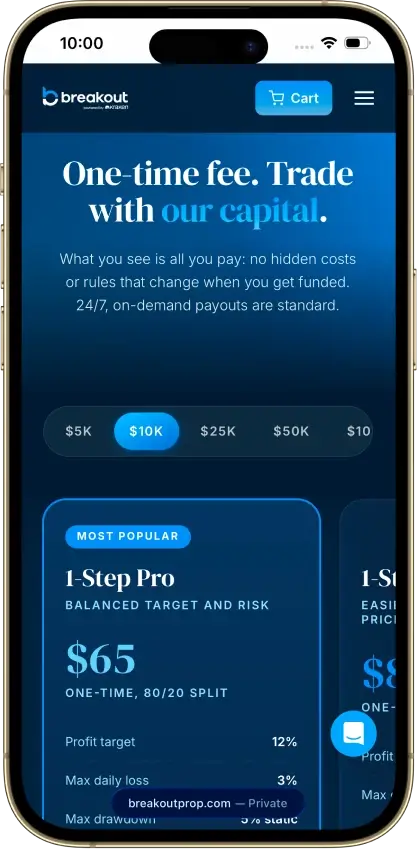
- Evaluation fee
- From $20
- Max drawdown
- 3–6%
- Profit split
- 80%–90%
Pros
- Static drawdown on all three plans
- Payouts on demand 24/7, $50 minimum
- No consistency rule or minimum days
- News trading and weekend holds allowed
Cons
- Your order may never reach an exchange
- Evaluation fee is never refunded
- Leverage varies by coin, 2x on many alts
- No MetaTrader on either terminal
- Funded capital limited to $200,000 total




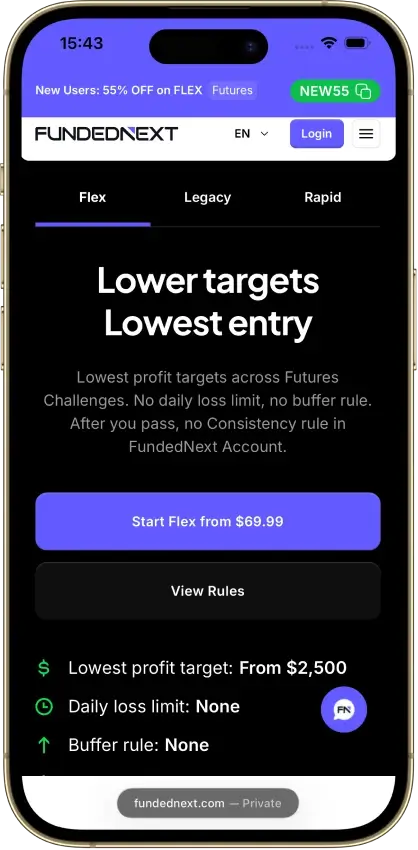
FundedNext
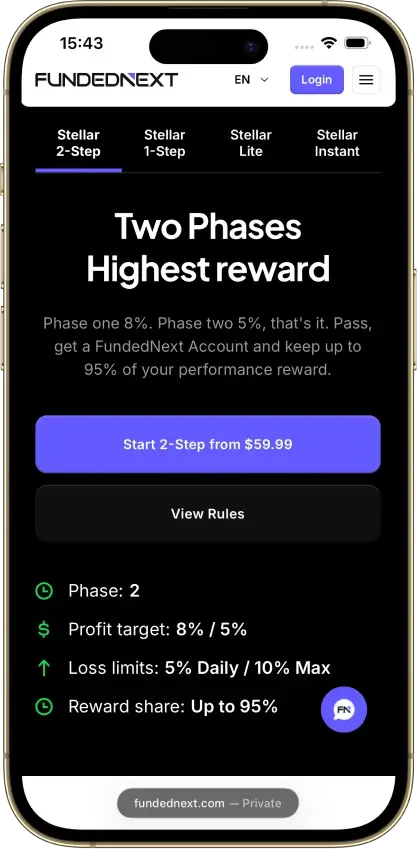
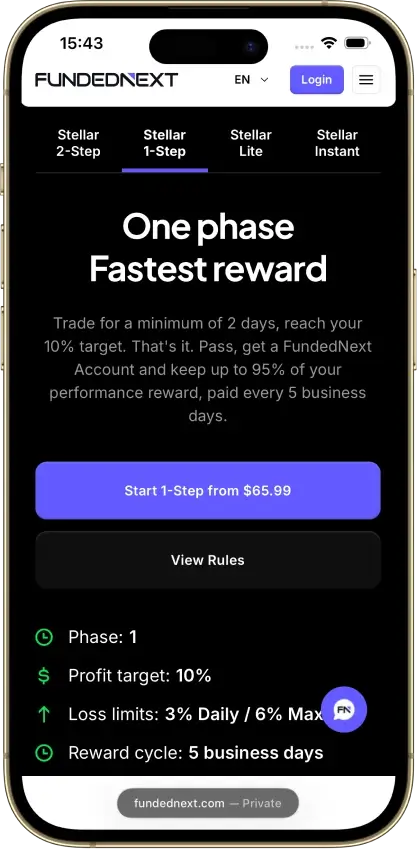
- Evaluation fee
- Forex / CFD: From $32.99; Futures: From $79.99
- Max drawdown
- Forex / CFD: Balance-Based Trailing (Closing Balance): 6%; Static (Initial Balance): 6–10%; Futures: 1,000–4,000 USD
- Profit split
- Forex / CFD: 70%–95%; Futures: 80%–95%
Pros
- Static overall loss on Stellar evaluations
- No funded consistency rule on Flex
- Tradovate, NinjaTrader and TradingView
- Lite standard challenge needs two days
- 2-Step fee return with first reward
Cons
- Flex limits requests to half the profit
- Flex concludes after five rewards
- Instant withdrawals shrink loss room
- Quick Strike can end funded CFD accounts
- Payout options cannot change after purchase


FTMO
- Evaluation fee
- From EUR 79
- Max drawdown
- End-of-Day Trailing (Closing Balance): 10%; Static (Initial Balance): 10%
- Profit split
- 80%–90%
Pros
- Fee refunded in full at your first payout
- Static 10% max loss on the 2-step route
- No time limit on any evaluation
- 48,676 reviews, the largest base in prop
- MT4, MT5 and cTrader all supported
Cons
- Among the priciest evaluations anywhere
- 1-step floor rises, reset only by a payout
- 1-step fee is not refundable
- No weekend holding on Standard accounts






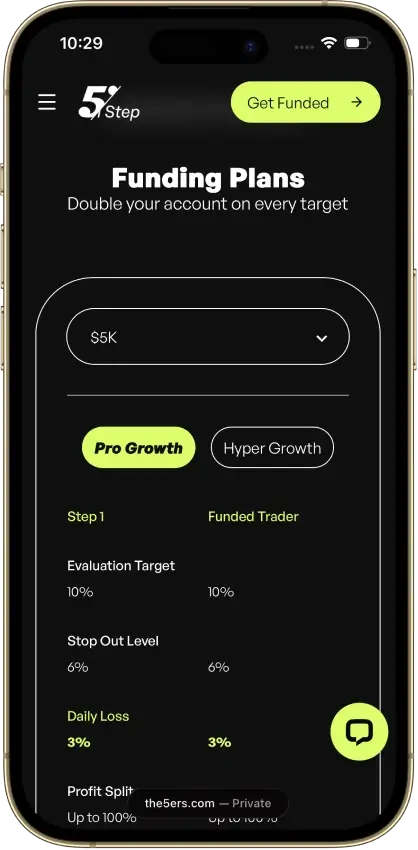
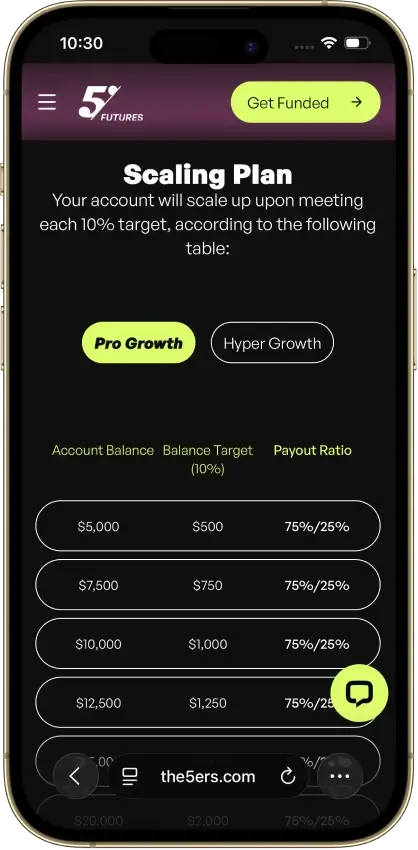
The5ers
- Evaluation fee
- Forex / CFD: From $19; Futures: From $59
- Max drawdown
- Forex / CFD: 4–10%; Futures: 4%
- Profit split
- Forex / CFD: 50%–100%; Futures: 80%
Pros
- Static drawdown on all five CFD programs
- No time limit to pass any challenge
- Entry from $19 for a 2-step $2.5K account
- Five CFD and two futures programs
- Overnight and weekend holding on CFD plans
Cons
- Refund terms conflict on its own page
- Futures drawdown trails, unlike CFD plans
- Splits start at 50/50 on two programs
- 30x leverage on three of five CFD plans
- Scaling resets the 14-day payout clock




How We Rank
- Payout Reliability and Evidence 25% weight
Payout history, evidence and the conditions for receiving funds.
- Rules Fairness and Transparency 20% weight
Clarity and fairness of account rules and restrictions.
- Cost and Value 15% weight
Evaluation fees, refunds and the value of each program.
- Trading Conditions 15% weight
Markets, platforms, execution and trading limits.
- Profit Split and Scaling 10% weight
Profit sharing and paths to larger allocations.
- Firm Transparency and Stability 10% weight
Ownership, disclosures and operational stability.
- Support and Reputation 5% weight
Customer assistance and the firm’s public track record.
On this page, the overall firm score is the starting point, not a shortcut for beginner suitability. We then read the rules most likely to control a first attempt: daily loss, floor design, consistency conditions, access restrictions and the route to a first payout. Fees are considered with resets and later charges rather than as a standalone bargain. A beginner should therefore compare two adjacent layers: the firm's evidence-backed record and the specific account terms they are likely to face.
What the Fee Buys, and How the Firm Earns
The standard purchase charges a one-time evaluation fee for an account governed by a profit target and loss rules. Passing leads to a funded account with a payment agreement attached. Failure ends the attempt, consumes the fee and leaves a fresh attempt available for another fee.
Repurchasing after a failed attempt generates another fee for the firm. Some firms state this conflict openly in their own terms. That revenue model is a fact worth carrying into the rulebook, not an allegation of misconduct. Every rule reads differently once it is understood as something the seller collects on when it is broken.
Checkout shows the evaluation fee but may omit reset fees for a fresh attempt and activation fees charged at the moment of passing. Some funded accounts also carry monthly platform charges or market-data fees. None of these charges is universal, and the checkout figure excludes them all. Beginners rarely budget for activation because success triggers it. Failure has a known cost by the second attempt, while passing can arrive with an invoice.
Some firms return the evaluation fee once a stated payout level is reached, while others never return it. The complete cost of a first campaign includes the fee and the resets a realistic learning curve will consume. Add whatever the funded stage charges monthly, then subtract a refund only if the trader reaches the outcome most buyers never do.
The Rule That Ends Most First Accounts
The daily loss limit ends most first accounts because it is usually the smallest allowance on the account. The firm's clock sets its reset, and beginner position sizing crosses small numbers quickly. Reaching the total floor takes a bad week, but the daily limit can fall inside a single session. In the classic first-account sequence, a loss prompts doubled size to win it back. Another loss then crosses the limit in under an hour.
Two details create the rule's built-in traps. The firm's fixed UTC time defines the day, so the limit resets on its schedule. The reference is commonly a balance that excludes open positions. A floating profit at the reset does not enlarge the next day's allowance, and a losing position closed afterward lands its whole loss on the new day's number.
When the limit is a percentage of the current balance, its dollar value falls after every losing day. The allowance is therefore tightest when a beginner starts chasing recovery. The rule tightens as the account weakens.
The Consistency Rule Ends Payouts, Not Accounts
The daily loss limit ends accounts. The consistency rule ends payouts. It caps the share of total profit that any single day, and at some firms any single position, may contribute, and it is applied when a withdrawal is requested, not while the trading happens. An account can pass the evaluation, stay inside every loss rule, and still have its first request refused because too much of the profit arrived at once.
Run it on a generic funded account that is up $4,000, with $2,400 of that from one session. The single day is 60% of the total, so under a 40% cap the withdrawal does not clear. Nothing is breached and nothing is confiscated. The account has to keep trading until the best day dilutes to the cap, which here means growing total profit to $6,000 without a bigger day along the way, and every extra session runs under the same daily loss limit that ends most first accounts. The rule never takes the money. It demands more exposure before releasing it.
Firms describe consistency rules as filters for separating luck from skill. For a beginner, one good day becomes an obligation to trade more at the moment the account first has something to lose. Faster payout schedules sold at checkout commonly carry a consistency requirement absent from the standard schedule. The upgrade that promises quicker money therefore adds a new way for the money to be held. Each firm's version sits in the table above.
A Lower Fee Buys a Smaller Account, and a Smaller Account Fails Faster
Evaluation fees scale with account size, so the natural first purchase is the small one. The rules scale with it in percent. The trading does not. A stop is sized to the setup, to the distance a market has to move to prove the idea wrong, and that distance costs what the smallest tradable size makes it cost, whatever account sits behind it.
Put a $10,000 account with a $500 daily allowance next to a $100,000 account with a $5,000 one. The percentages are identical. Now run the same beginner through both with a stop that risks $150 because the setup demands it at minimum size. The small account holds room for three of those in a day. The large one holds room for thirty-three. A cheap evaluation is not a discounted version of the expensive one. It is a tighter one wearing the same percentages, and the money saved at checkout tends to flow back to the firm through resets.
The Floor Is Worth More Than the Split
Loss floors come in kinds that behave nothing alike. A static floor is measured once, against the balance the account opened with, and stays where it was set for the life of the evaluation. A trailing floor is different: every new equity high pulls it upward, and no losing day brings it back down. An end-of-day variant waits for the close, takes its next level from the closing balance at a fixed UTC stamp, and freezes for good once it reaches a set level. Checkout pages often label all of them drawdown and leave it there.
Start the path at $100,000. A 5% trailing rule places the initial floor at $95,000. Equity touches $103,000 and the floor follows to $98,000. The trader then gives back $5,000 from the high, the account lands on $98,000, and the evaluation is over, $2,000 below its starting balance after having been $3,000 ahead. The same path against a 5% static floor is survivable. That floor never left $95,000, and the account sits $3,000 above it with the attempt still alive.
Now the split. A checkout page will quote a base share, 80/20 in the trader's favor, and price the move to 90/10 as an extra bought there and then. That upgrade spends money on a profit that does not exist yet. The floor type governs the outcome that comes first. Ten extra points of a payout are worth nothing until a payout exists, and whether one ever exists is decided at the floor. A beginner choosing between a wider static floor and a richer split is choosing between surviving and being better paid for a survival that just became less likely.
What Has to Happen Before the First Payout
Passing moves no money. What changes is the contract: the firm now owes a share of the account's profits under its withdrawal terms, which is why overall prop-firm rankings weight payout evidence above product features. Funded is a payment promise, and the first payout is where the promise is first tested.
Between passing and the money sit gates the checkout page never itemizes. The first-payout clock starts only when the funded account places its first trade, later than the pass. A minimum number of trading days follows, with some firms requiring profitable days specifically. No request is accepted below the withdrawal threshold. Identity verification commonly runs at the first request instead of at signup. The consistency check above then applies to the request itself. Each gate is public, and each one sits past the point where the marketing stops describing the product. The window and the threshold for every scored firm sit in the table.
Advertised payout speed measures the shortest leg of that route. A 24-hour claim describes processing once a valid request is approved, and says nothing about when the account becomes allowed to file one, so a fast firm behind a long window still pays slowly the first time. Where the evaluation fee is refundable, the refund is commonly tied to a payout milestone too, which makes the first payout the moment the fee comes back, or the moment it becomes clear it never will.
Risk Disclosure
An evaluation fee is capital at risk in full from the moment it is paid, and most people who pay one never reach a payout. Funded accounts are simulated, and simulated funding does not necessarily represent live capital held by any firm. This page is informational and is not investment advice. CryptoSlate may earn commissions from firms named in the comparison, which has no route into any score.