
Largest Company end of July?
Final Results
Scheduled deadline: Jul 31, 2026, 23:59 UTC



24 more outcomes Other final results
- Saudi AramcoNo
- AmazonNo
- BroadcomNo
- Company ANo
- Company BNo
- Company CNo
- Company DNo
- Company ENo
- Company FNo
- Company GNo
- Company HNo
- Company INo
- Company JNo
- Company KNo
- Company LNo
- Company MNo
- Company NNo
- Company ONo
- Company PNo
- Company QNo
- Company RNo
- Company SNo
- Company TNo
- OtherNo




Market Resolution
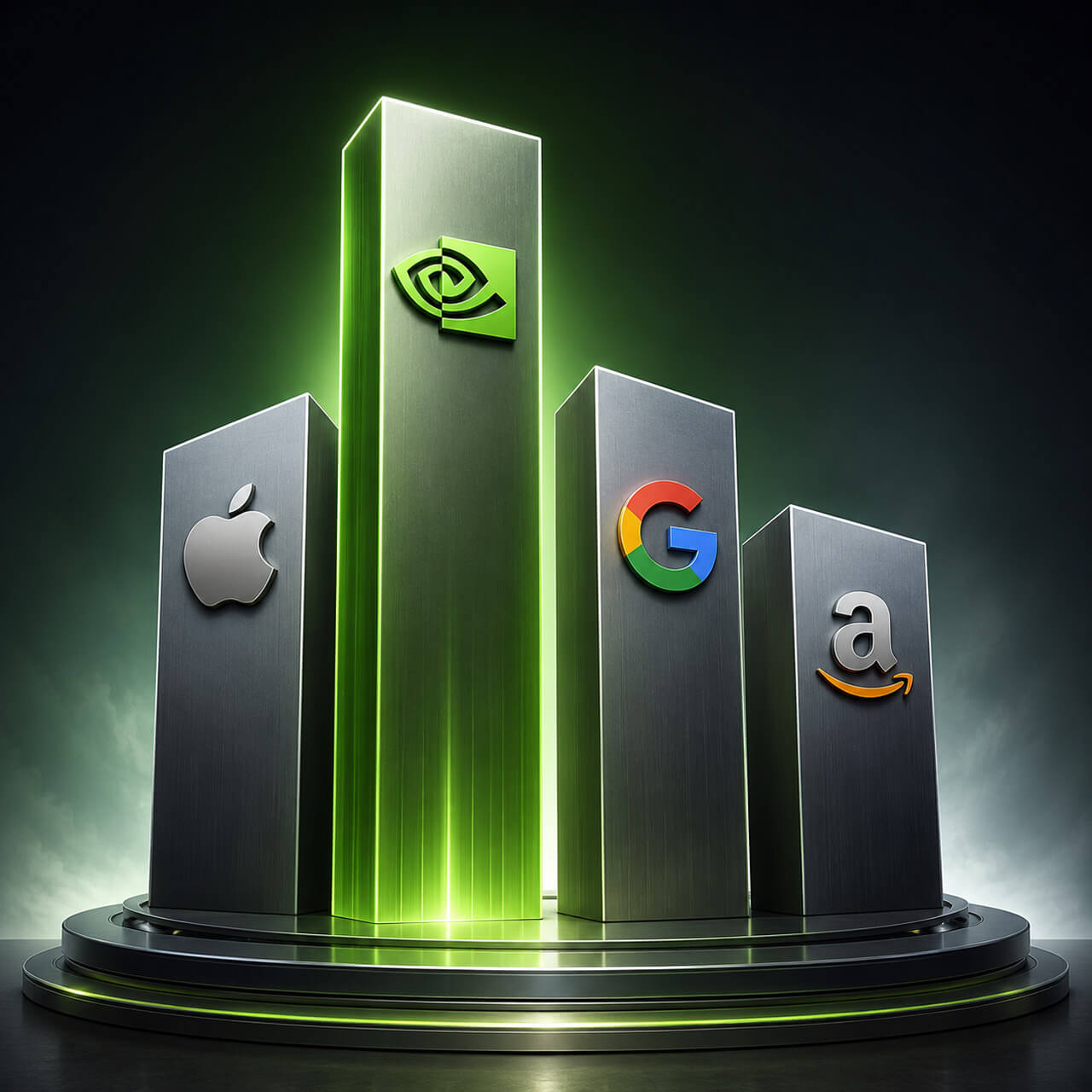
Polymarket reports NVIDIA as the winning outcome for the Largest Company end of July prediction market with a final probability of 100%. Scheduled deadline: Jul 31, 2026, 23:59 UTC. Final reported trading volume was $7.78M.
Polymarket · Final sync
Market Analysis
NVIDIA’s July Crown Tests AI Dominance Against Apple’s Gravity
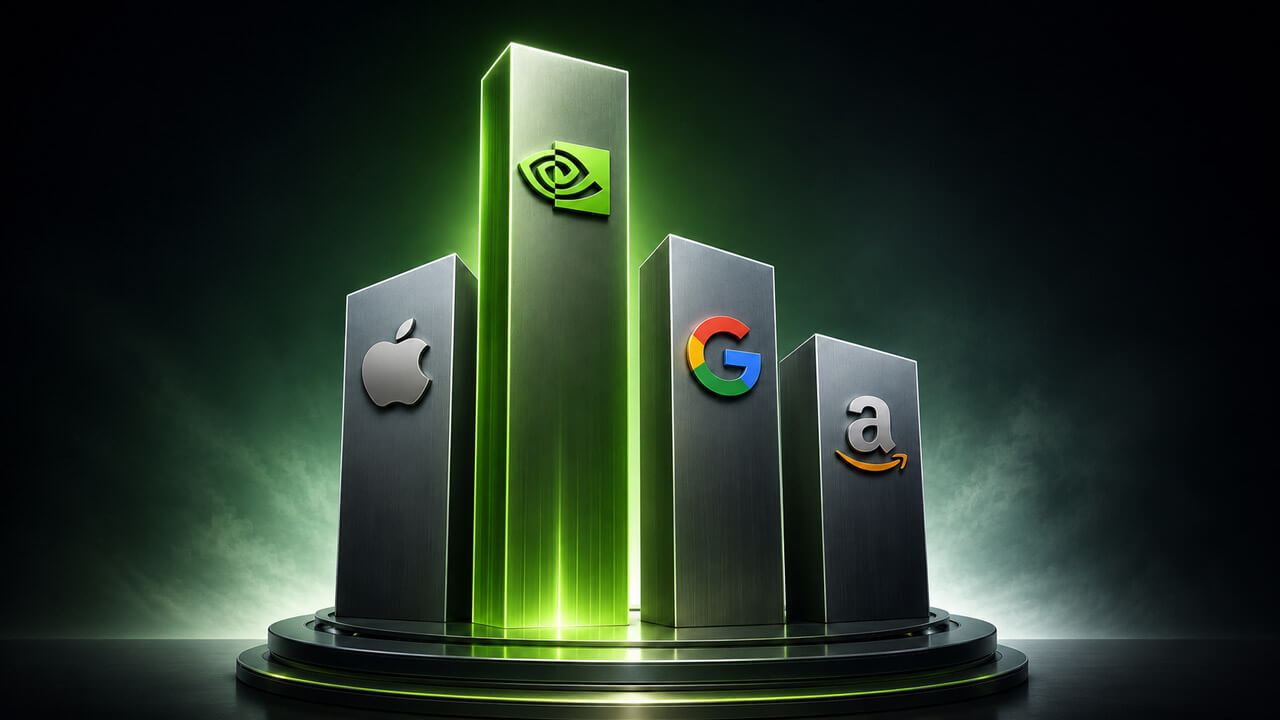
A late-July cutoff turns the world’s largest-company race into a test of starting position, mega-cap momentum, and how quickly confidence can shift. The pricing suggests NVIDIA controls the path, while Apple and Alphabet need a narrower, faster chain of events.

NVIDIA’s 92.5% share of the market is best read as a calendar-driven judgment: with resolution tied to the largest global market capitalization at the July 31, 2026 market close, the market is treating the race as one where current scale and short time horizon matter more than long-range corporate narratives. The remaining outcomes are priced as narrow escape routes, which makes the setup sensitive to any evidence that the market-cap gap can compress quickly.
NVIDIA is being treated as having both the lead and the cleanest path
The strongest inference from the 92.5% NVIDIA price is that the market believes the company either already holds a meaningful market-cap lead or sits close enough to the top that ordinary daily volatility favors the incumbent. That matters because this is a one-day measurement, not a judgment on full-year revenue, product quality, or strategic positioning. By July 31, the only score that counts is equity value at the close.
The $2.04 million in volume and $1.02 million in liquidity give the signal more weight than a thin novelty market. The size suggests the market has attracted enough capital to express a concentrated view: NVIDIA’s AI-linked equity premium is being treated as durable through the final weeks of July. The so-what is straightforward: any challenge has to overcome both company-specific sentiment and the inertia of mega-cap index flows that often reinforce existing leaders.
Apple’s path depends on defensive gravity and a fast relative swing
Apple’s 6.1% price makes it the only clearly live alternative in the market’s current structure. That allocation implies a specific path: Apple does not need every AI narrative to reverse, but it likely needs a relative move where NVIDIA stalls or falls while Apple is supported by its status as a giant consumer-technology cash-flow compounder. In a short-window market, that kind of rotation can matter as much as fresh fundamental data.
This is why Apple’s probability is meaningfully above the other challengers. The market appears to be assigning value to Apple’s ability to serve as a large-cap shelter if enthusiasm around AI infrastructure cools. The implication for the market is that Apple functions as the main beneficiary of a broad reassessment of risk appetite, especially if the final week brings pressure on high-multiple semiconductor and AI-exposed names.
Alphabet has a route, while Microsoft’s tiny price sends a sharper message
Alphabet at 2.6% is priced as a lower-probability beneficiary of the same mega-cap technology rotation, with an additional AI-platform angle. The market is allowing for a scenario where investors reward large digital platforms and their AI distribution advantages, but the price suggests the arithmetic hurdle is steeper than Apple’s. That distinction matters because resolution depends on market cap rank, not on which company has the most persuasive strategic narrative.
Microsoft’s 0.1% price is especially informative because it sits near the bottom despite Microsoft’s inclusion among the usual mega-cap technology contenders. Based on the odds alone, the market is saying that brand, scale, and relevance are insufficient if the path to first place requires too much relative appreciation before the close. Tesla, Amazon, Broadcom, and Saudi Aramco at 0.1% each are being treated as remote paths where the necessary move would likely require an extraordinary market shock or a major rival drawdown.
The hidden assumption is that no sudden AI confidence break arrives
The NVIDIA-heavy pricing depends on a quiet assumption: there is no abrupt loss of confidence in AI infrastructure demand, chip margins, supply availability, export exposure, or hyperscaler spending appetite before July 31. Those are broad categories, and no such development is implied by the supplied market data. They matter because NVIDIA’s market-cap leadership is tightly connected to investors’ willingness to capitalize future AI demand at very large scale.
Several hypothetical catalysts could force repricing if they arrive before the close:
- A company update, customer signal, or sector report that changes expectations for AI accelerator demand.
- A broad technology selloff that hits semiconductor leaders harder than consumer-platform peers.
- A sharp Apple or Alphabet rally tied to earnings commentary, product expectations, or large-cap rotation.
- A policy or supply-chain development that changes how investors value AI hardware exposure.
- A final-week volatility spike that narrows the market-cap gap ahead of the July 31 closing print.
Each catalyst matters because the market has little time to absorb a new ranking. A modest narrative shift may have limited effect if NVIDIA’s lead is wide; a sharp relative move in the final sessions could dominate the entire resolution.
The close-date rule makes arithmetic more important than conviction
The resolution rule is precise: largest company in the world by market cap on July 31, 2026, as of market close. That means the market is exposed to closing-price mechanics, relative daily returns, and share-count assumptions. It also means long-term debates about who will dominate AI, devices, cloud, or advertising only matter if they change equity values before that deadline.
| Outcome | Market price | Implied path |
|---|---|---|
| NVIDIA | 92.5% | Hold the lead or avoid a major relative drawdown. |
| Apple | 6.1% | Benefit from defensive mega-cap rotation or NVIDIA weakness. |
| Alphabet | 2.6% | Pair a strong platform rally with compression in the leader. |
| Others | 0.1% each | Require an exceptional ranking shock before the cutoff. |
The main failure mode for the current market-implied story is a narrowing gap that happens without an obvious NVIDIA-specific negative catalyst. If Apple or Alphabet begins gaining ground through broad market rotation, the market’s reliance on NVIDIA’s starting position becomes less secure. If NVIDIA holds its relative value through sector volatility, the existing pricing logic becomes harder to dislodge before the final close.
Sources
Market Details
- Resolution criteria
- This market will resolve to the largest company in the world by market cap on July 31, 2026, as of market close.
- Platform
-


- Category
- Finance › Tech
- Scheduled deadline
- July 31, 2026, 11:59 PM UTC
- Market rules summary
- Multi-outcome Polymarket event. Each listed option is represented by its Yes price on the underlying market. View full rules
Frequently Asked Questions
What was the final result of the Largest Company end of July prediction market?
Polymarket reports NVIDIA as the winning outcome for the Largest Company end of July prediction market with a final probability of 100%. The final market snapshot includes $7.78M volume and $1.43M open interest. CryptoSlate last synced the final market data at Jul 31, 2026, 22:27 UTC.
How does the Largest Company end of July prediction market resolve?
This market will resolve to the largest company in the world by market cap on July 31, 2026, as of market close. Multi-outcome Polymarket event. Each listed option is represented by its Yes price on the underlying market.
Related Tech Markets
 What price will silver hit in October 2026?
  What price will gold hit October 12–16, 2026?
  What price will gold hit in October 2026?