Fed rate hike in 2026?
Final Results
Market Resolution
Polymarket reports Yes as the winning outcome for the Fed rate hike in 2026 prediction market with a final probability of 100%. Scheduled deadline: Dec 9, 2026, 00:00 UTC. Final reported trading volume was $10.12M.
Polymarket · Final sync
 ECB Interest Rate Decision: October 2026
  Bank of Canada interest rate decision: October 2026
  Fed Decision in October?
 Market Analysis
Three Dissents Turn a Fed Hold Into Hike Risk
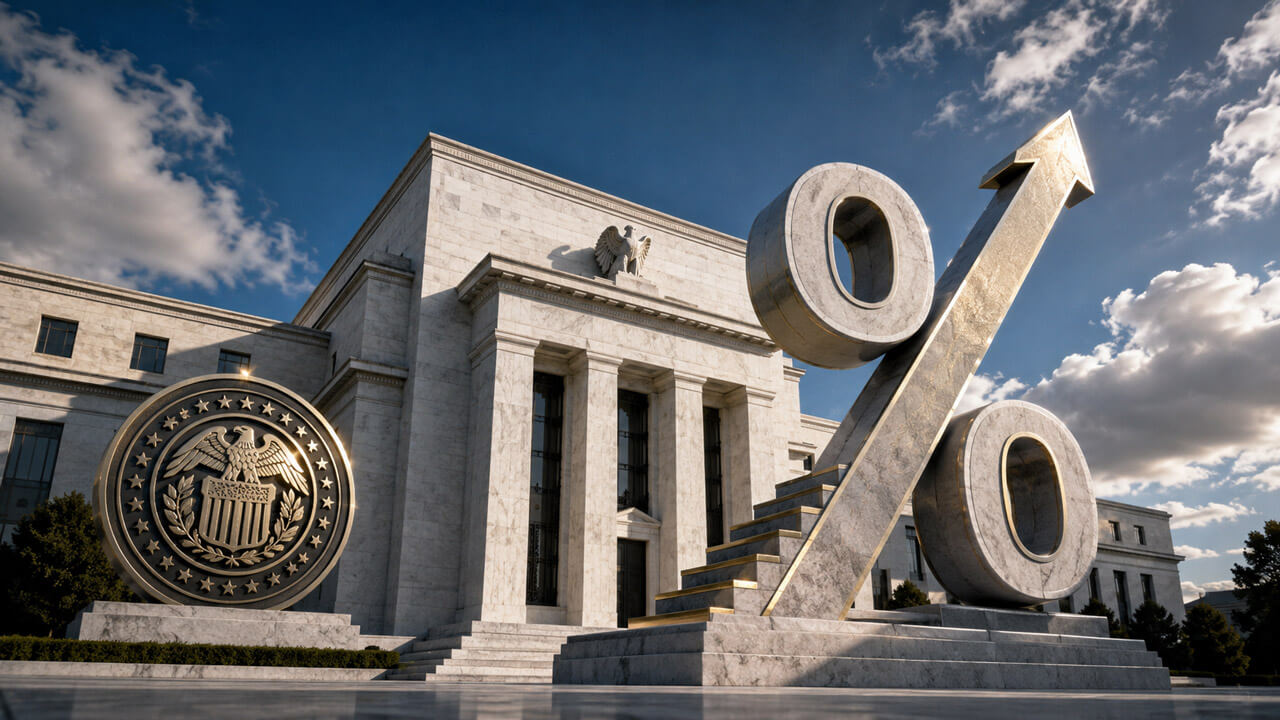
The July decision preserved the current target range, while the 70.5% Yes probability rests on a narrower proposition: one increase before December. Dissent, official projections, and the pre-September inflation calendar identify the evidence capable of sustaining or reversing that assessment.

Thesis: the elevated Yes price is supported by the unusually low policy threshold embedded in the resolution criteria: the Federal Reserve needs to raise the upper bound of its target range once at any point through the December 8-9 meeting. That proposition can remain credible even if the Committee avoids beginning a prolonged tightening cycle. July's unchanged decision therefore carries less explanatory weight than the split within the Committee, the inflation path, and the number of remaining decision dates.
The market assigns 70.5% to a 2026 hike, with $8.77 million in volume and $1.53 million in open interest. Those figures show meaningful engagement with the question, though they do not establish why the outcome will occur. The causal case rests on whether elevated inflation produces enough concern among a majority of voting policymakers to turn an existing hawkish minority into a decision to raise rates.
The resolution threshold makes a single move the central question
The market resolves Yes if the upper bound of the federal funds target range increases between January 1 and the Fed's December meeting. The relevant test is therefore an event, not the year-end level of rates or the duration of any subsequent policy stance. A hike followed by a hold would satisfy the stated criterion; so would a hike that later gave way to a reduction before year-end.
Inference: this structure supports a higher probability than a forecast framed around a sustained period of tighter policy. The June Summary of Economic Projections placed the median appropriate federal funds rate at 3.8% for 2026, compared with 3.6% for 2027 and 3.4% for 2028. That sequence is consistent with a policy path in which a 2026 increase can coexist with lower projected rates in later years. It does not, by itself, confirm that a hike will occur, since projections are conditional judgments rather than Committee commitments.
July's unchanged decision still revealed a hawkish fault line
On July 29, the FOMC maintained its 3.50%-3.75% target range. Three members dissented in favor of a 25-basis-point increase. The majority's choice to hold is the immediate policy fact, yet the scale of dissent supplies direct evidence that a hike was already under active consideration within the Committee.
The July minutes add a second layer. They said market participants were fully pricing a 25-basis-point hike by the September meeting and another increase by the end of the first quarter of 2027, while inflation remained elevated relative to the Fed's 2% objective. This matters because the Yes case requires a shift among only part of the hold majority, provided the existing dissenters maintain their preference. It also creates a clear failure mode: policymakers may judge that inflation is elevated yet sufficiently contained to justify patience.
September inflation data can validate or disrupt the hawkish path
BEA reported that both headline PCE and core PCE rose 0.2% month over month in July. The next CPI release is scheduled for September 11, ahead of the September 15-16 FOMC meeting. That timing makes the report a concrete repricing event, since policymakers will receive a fresh broad inflation reading shortly before deciding whether the July hold should continue.
Hypothetical catalyst: CPI evidence of persistent or renewed price pressure would strengthen the factual premise cited in the July minutes that inflation remains above the 2% goal. A reading that points toward softer inflation would weaken the argument for an immediate hike and reinforce the July majority's restraint. Neither result automatically dictates a policy decision; the supplied record does not provide a numerical inflation threshold that triggers action.
Two later meetings preserve optionality after September
The Fed calendar lists policy meetings on September 15-16, October 27-28, and December 8-9. September and December include a Summary of Economic Projections. These dates matter because a September hold does not end the market's Yes pathway. October and December remain opportunities for the Committee to respond to intervening inflation data or revise its projected policy path.
Inference: a lower September probability of action could still leave substantial room for a year-end hike if inflation data remain firm and the December projections retain or raise the 2026 policy-rate median. Conversely, a downward shift in the September or December median projection, combined with softer inflation readings, would challenge the premise that policymakers see additional tightening as appropriate.
The main counter-signal is that the voting majority already chose patience
The strongest evidence against the Yes case is the July outcome itself: despite elevated inflation and three dissents, the Committee did not raise the range. A majority may place greater weight on waiting for additional data, and the June projections' lower medians for 2027 and 2028 indicate that the Fed's longer projected direction was toward lower rates after 2026.
For the No case to gain force, evidence would need to show that the July dissent did not broaden and that incoming inflation data reduce the urgency for action. For Yes to retain its current rationale, the record would need to show persistent inflation pressure, continued hawkish policymaker support, or projections that preserve a higher 2026 policy path. The September CPI release and the three remaining FOMC decisions are the scheduled tests of those competing explanations.
Sources
Market Details
- Resolution criteria
- This market will resolve to “Yes” if the upper bound of the target federal funds rate is increased at any point between January 1, 2026 and the Fed's December 2026 meeting, currently scheduled for December 8-9, 2026. Otherwise, this market will resolve to “No”.
- Platform
-


- Category
- Economy › Economic Policy
- Scheduled deadline
- December 9, 2026, 12:00 AM UTC
- Settlement source
- federalreserve.gov
- Market rules summary
- Binary market. Payout is 1 USDC for a winning outcome, 0 USDC for a losing outcome. View full rules
Frequently Asked Questions
What was the final result of the Fed rate hike in 2026 prediction market?
Polymarket reports Yes as the winning outcome for the Fed rate hike in 2026 prediction market with a final probability of 100%. The final market snapshot includes $10.12M volume and $127.11K open interest. CryptoSlate last synced the final market data at Sep 16, 2026, 20:17 UTC.
How does the Fed rate hike in 2026 prediction market resolve?
This market will resolve to “Yes” if the upper bound of the target federal funds rate is increased at any point between January 1, 2026 and the Fed's December 2026 meeting, currently scheduled for December 8-9, 2026. Otherwise, this market will resolve to “No”. Binary market. Payout is 1 USDC for a winning outcome, 0 USDC for a losing outcome. The settlement source listed for this market is Federalreserve.
Related Economic Policy Markets
 Bank of Korea interest rate decision: October 2026
  Bank of Russia interest rate decision: October 2026
  RBA interest rate decision: November 2026