Thinking about holding Bitcoin in a tax-advantaged retirement account, without handing the keys to a high-fee middleman, is possible with a Bitcoin IRA. This page explains how Bitcoin IRAs work, what to watch for, and how we evaluate providers so you can make a confident, tax-aware choice.
Note on our 2026 list
Our ranked list of the top Bitcoin IRA companies for 2026 is being finalized now. We are auditing fees, custody arrangements, supported assets, and rollover processes across leading providers.
In development shortlist, subject to change:
- Leading custodial Bitcoin IRA platforms with qualified custodians
- Low-cost self-directed IRA administrators that support Bitcoin through regulated exchanges
- Hybrid broker, custodian, and cold storage solutions with transparent insurance terms
If you operate a Bitcoin IRA platform and want to be considered, contact the CryptoSlate reviews team with your current fee schedule and custodial documentation.
Top Bitcoin IRAs
- Minimum
- $1,000To open an account
- Trading fee
- 1% per tradeCrypto buys and sells
- Account fees
- $0 monthly / annualOther transaction fees may apply
- Custody via Coinbase, Fidelity and Fireblocks
- IRA distributions in kind to your own wallet
- U.S.-based live support by phone and chat
CryptoSlate may earn a commission when you visit partner sites through links on this page, at no extra cost to you. Our rankings and reviews remain editorially independent and based on our published methodology. Read disclosure
Disclaimer: CryptoSlate may receive a commission when you click links on our site and make a purchase or complete an action with a third party. This does not influence our editorial independence, reviews, or ratings, and we always aim to provide accurate, transparent information to our readers.What is a Bitcoin IRA?
A Bitcoin IRA is a self-directed Individual Retirement Account that lets you hold Bitcoin, and in some cases other crypto, inside a tax-advantaged wrapper. You can open a new Roth or Traditional self-directed IRA, or you can roll over funds from a 401(k), 403(b), TSP, or another IRA, then allocate to Bitcoin through a qualified custodian or approved trading venue.
How Bitcoin IRAs work
- Choose a Structure: Custodial platform or self-directed IRA administrator.
- Fund the Account: Transfer, rollover, or contribute subject to annual IRS limits.
- Trade and Custody: Buy Bitcoin via the provider’s desk or an integrated exchange, then store with the provider’s chosen custodian or your account’s designated storage solution.
- Ongoing Costs: Expect admin fees, trading spreads, and custody or storage fees.
- Distributions, follow IRA rules on withdrawals and required minimum distributions for Traditional accounts.
Bitcoin IRAs Reviews
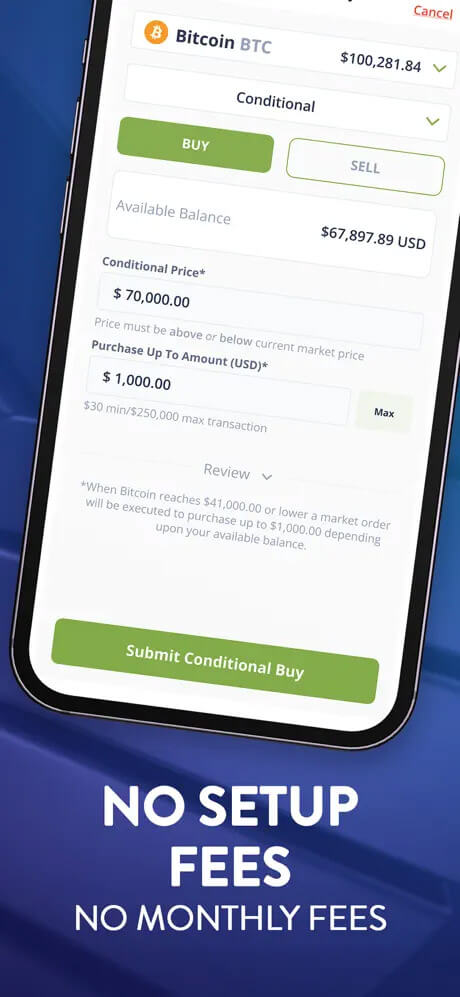
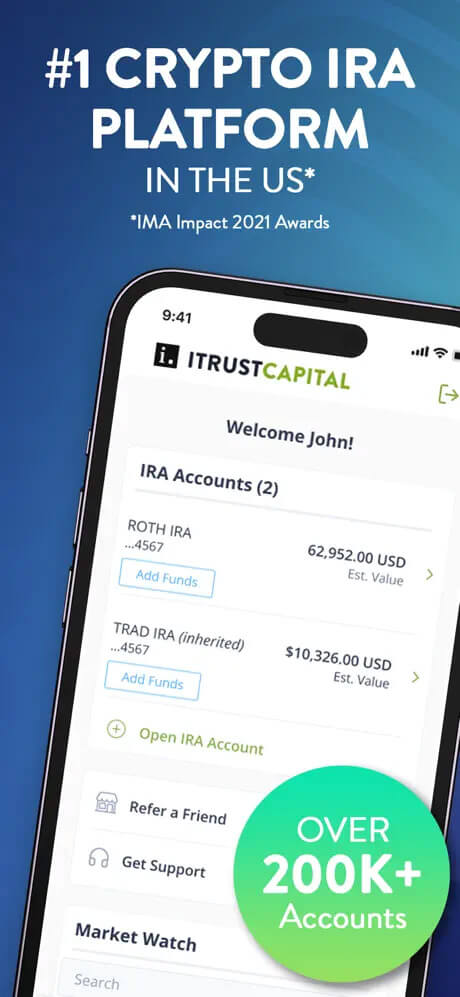
iTrustCapital
- Minimum
- $1,000To open an account
- Trading fee
- 1% per tradeCrypto buys and sells
- Account fees
- $0 monthly / annualOther transaction fees may apply
Pros
- 10,000+ stocks and ETFs, fractional from $20
- $0 stock commissions and no monthly fees
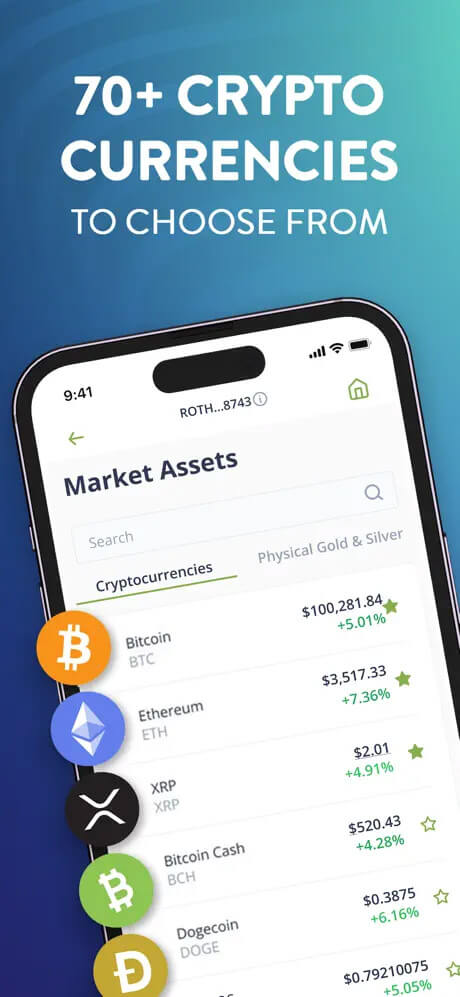
- 100+ cryptocurrencies with 24/7 trading
- USD and crypto withdrawals from PCA
- Crypto orders settle in 15 to 30 seconds
Cons
- $1,000 to open, $500 minimum per top-up
- A 22% fee comes off staking rewards
- PCA USD withdrawals take 5 to 10 business days
- No extended-hours stock trading
- ACATS transfers not yet available

What to look for
- Total Cost of Ownership: Setup, annual admin, trading spreads, wire fees, storage, and any “platform” or “partners” fees
- Custody and Key Management: Named qualified custodian, cold storage details, segregation of assets, insurance terms, incident response
- Execution Quality: Price discovery, slippage controls, and whether orders are routed to a single desk or multiple venues
- Transparency: Published fee schedule, audited financials for the custodian, clear disclosure of counterparties
- Supported Assets: Bitcoin only or broader crypto menu, confirm compliance with your IRA type
- Rollover Support: Guided paperwork, timeline expectations, and no surprise liquidation or check fees
- Service and Controls: SOC reports, permissions, beneficiary designations, two factor auth, and withdrawal safeguards
Our Evaluation Methodology
CryptoSlate scores Bitcoin IRA providers across weighted pillars:
- Fees and pricing transparency, we model a 10k, 50k, and 250k allocation, including hidden spreads
- Custody architecture, qualified custodian, cold storage depth, insurance disclosures, and segregation
- Trading and liquidity, execution venues, slippage controls, settlement times
- Compliance and audits, SOC reports, regulatory registrations where applicable, third party attestations
- User experience, onboarding, rollover handling, portal security, and support responsiveness
- Track record, years in operation, incident history, and leadership depth
Fees, read this before you choose
Common line items you will see:
- Account Setup: Usually a one time charge
- Annual Admin fee: Often tiered by balance
- Trading: Explicit commission or an embedded spread, sometimes both
- Custody or Storage: Per year or per month, occasionally bundled
- Miscellaneous: Outbound wires, check handling, re-registration, distribution processing
If a provider will not publish a full fee schedule, assume the spread is the profit center.
Custody and Security
Insist on the name of the qualified custodian, the cold storage model, and the insurance policy, including limits and exclusions. Ask whether assets are held in segregated wallets, how withdrawals are authorized, and how often recovery procedures are tested.
Taxes and Compliance: Quick Overview
- Traditional IRA: Contributions may be tax deductible, withdrawals are taxed as ordinary income
- Roth IRA: Contributions are after tax, qualified withdrawals are generally tax free
- Prohibited transactions: Personal use of assets or self dealing can disqualify the IRA
- Reporting: Your custodian or administrator handles 1099-R and 5498 where applicable
Tax rules change, talk to a qualified tax professional before moving retirement funds.
How to Roll Over Into a Bitcoin IRA
- Confirm your current plan allows direct rollover to a self-directed IRA.
- Open the new IRA, complete identity and beneficiary setup.
- Initiate a trustee to trustee rollover, avoid taking receipt of funds.
- After funds settle, place Bitcoin trades through the approved channel.
- Verify custody and statements, then document your cost basis.
Risks
- Volatility: Price swings can be severe, manage position sizing
- Counterparty Risk: You rely on administrators, custodians, and trading partners
- Regulatory Changes: Rules or interpretations can shift, affecting access or costs
- Operational Missteps: Wrong wallet setup or sloppy rollovers can create taxes or penalties
Alternatives
- Keep a standard brokerage IRA and buy a spot Bitcoin ETF inside it
- Hold Bitcoin outside of retirement accounts for maximum self custody flexibility
- Use a hybrid approach, ETFs in the IRA, self custody in taxable accounts
Editorial Standards
CryptoSlate does not accept payment for numerical placement in rankings. We may receive referral fees if you open accounts using links on this page; this does not affect our scoring. We disclose relationships and keep pricing models transparent on our advertising page.