
Quick Take
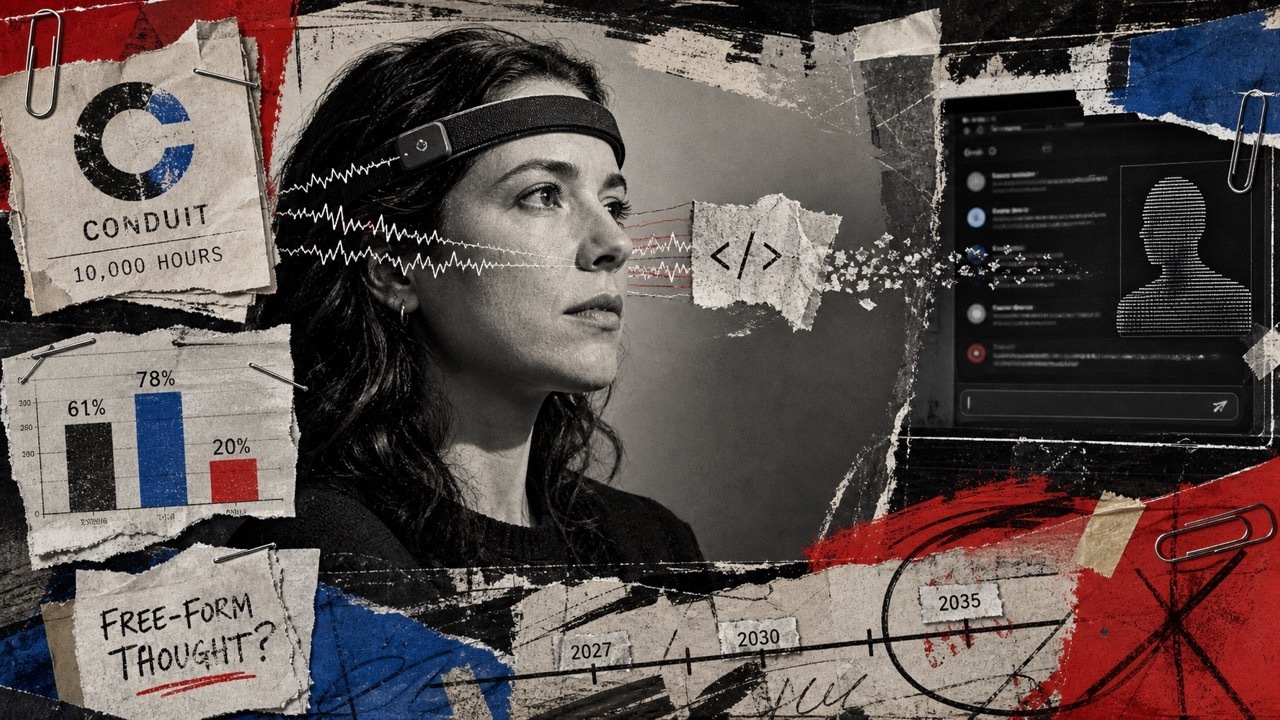
- Naomi Bashkansky left OpenAI and joined Conduit to build models that turn non-invasive neural recordings into text prompts.
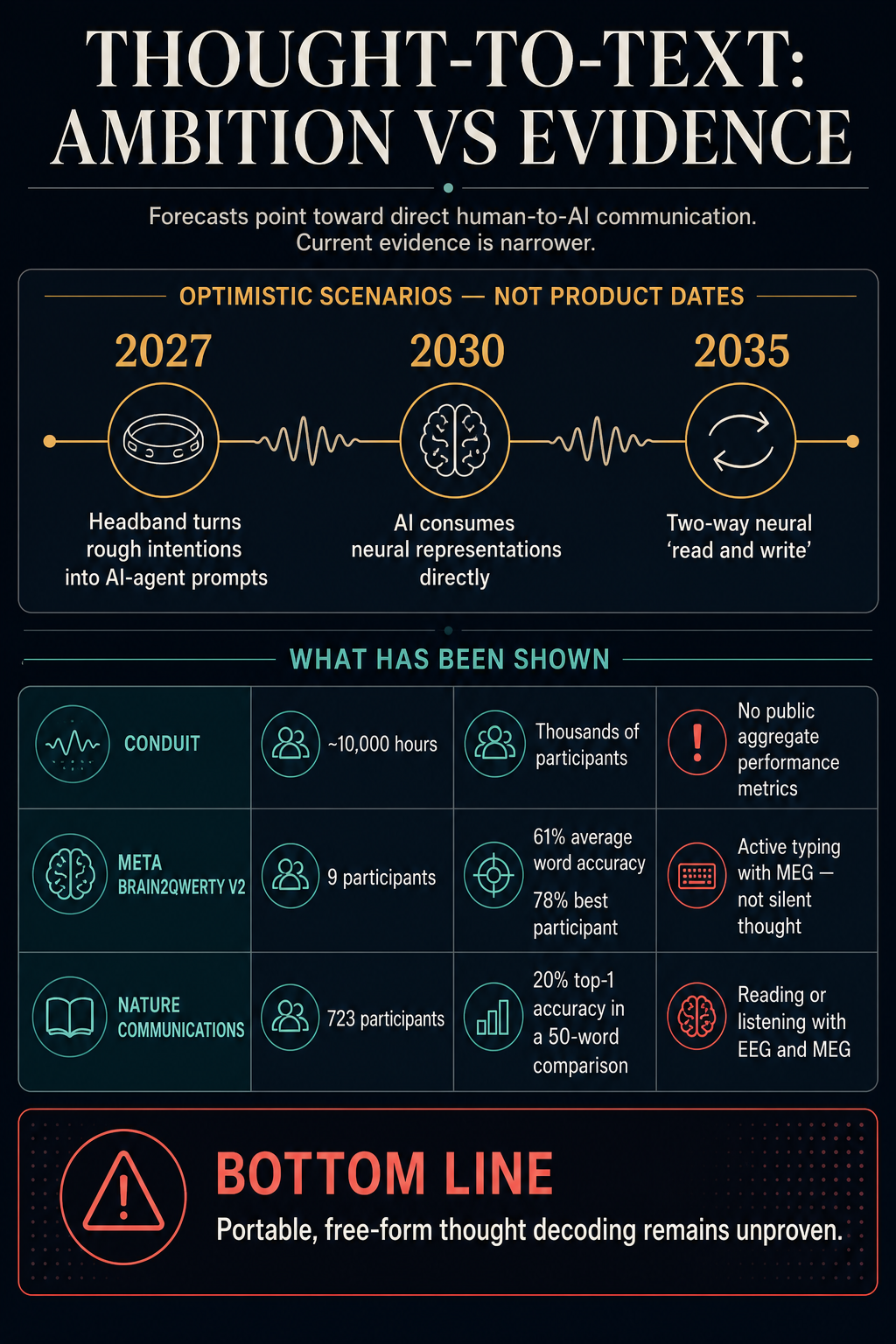
- She says a headband could decode rough intentions into AI coding prompts by 2027, with broader brain-to-AI milestones later.
- Conduit has 10,000 hours of neuro-language data, but still has not shown public aggregate performance on free-form thought decoding.


Former OpenAI alignment researcher Naomi Bashkansky said she resigned from the AI company on July 23 and joined Conduit the next day as a founding researcher. At Conduit, she will work on models designed to turn non-invasive neural recordings into text that can direct AI agents, a goal her essay calls “telepathy.”
Bashkansky said she spent about 1.5 years at OpenAI, and described the new role in an Aug. 4 essay. She predicted that a headband could decode rough intentions into prompts for an AI coding agent in 2027.
Her later scenarios envision AI systems consuming neural representations directly by 2030 and two-way “read and write” technology by 2035.
She called those vignettes optimistic predictions, and the essay includes no launch commitment for any of them.
The data-scale bet
In a December 2025 account, Conduit said it had gathered roughly 10,000 hours of neuro-language data from thousands of people. Participants wore multimodal headsets while typing, speaking, reading or listening during sessions with a language model.
The company published a few claimed zero-shot examples, excluding aggregate performance metrics, its evaluation protocol or third-party replication. Bashkansky argued that Conduit’s results improve with increasing training hours and described the work as a greenfield alternative to the narrower research she could pursue at OpenAI.
Meta reported in June that the results of its latest Brain2Qwerty reached 61% average word accuracy and 78% for its best participant, with performance improving log-linearly as data increased.
The experiment recorded nine people with magnetoencephalography while they actively typed sentences.
Where current systems fall short
A Nature Communications study spanning 723 participants also found that performance improved with more EEG and MEG data. Yet it studied people reading or listening rather than producing language, and reported 20% top-1 accuracy in a 50-word comparison.
The study's authors said practical non-invasive brain-to-text remained an open challenge.
Conduit’s next evidentiary hurdle is to establish public aggregate performance by linking its 10,000-hour dataset to a portable system that decodes free-form thought. The company has not yet shown that result.
Mentioned in this article


Editorial credits