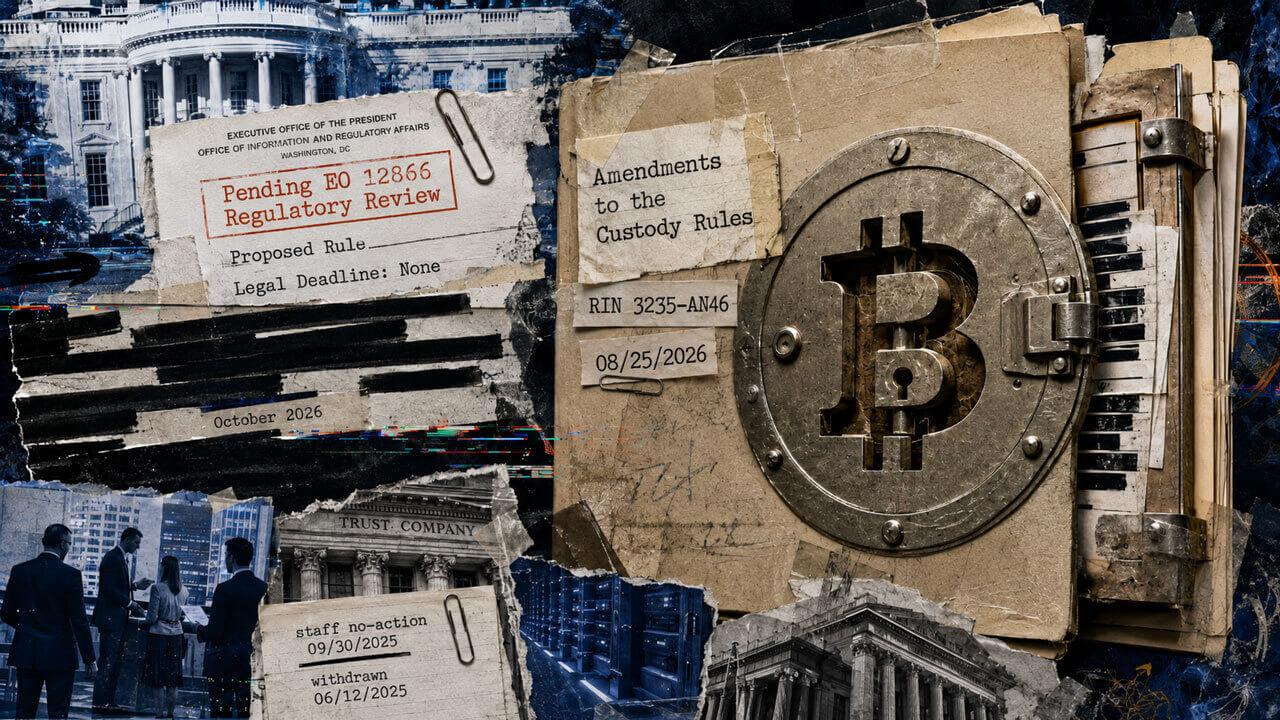
Quick Take
- The SEC’s crypto custody-rule rewrite entered White House review on Aug. 25.
- The process affects advisers, funds, banks and state trust companies handling crypto assets.
- October 2026 is only a planning target; the draft’s key rules remain undisclosed.


The SEC crypto custody rewrite for investment advisers and funds, including their crypto assets, entered White House review on Aug. 25. The move starts an active pre-publication review of an economically significant proposal with direct consequences for advisers, investment companies and the institutions that hold their assets.
The Office of Information and Regulatory Affairs record lists the SEC's “Amendments to the Custody Rules” as pending at the proposed-rule stage, with no legal deadline. OIRA coordinates Executive Branch review of significant draft regulations before an agency publishes them. The receipt advances the rulemaking process; publication and Commission consideration still lie ahead.
The Unified Agenda entry says the SEC is considering changes for investment adviser client assets and fund assets, including crypto. It lists October 2026 as the target for a notice of proposed rulemaking. That date is an agency planning target, while the OIRA record lists no legal deadline.
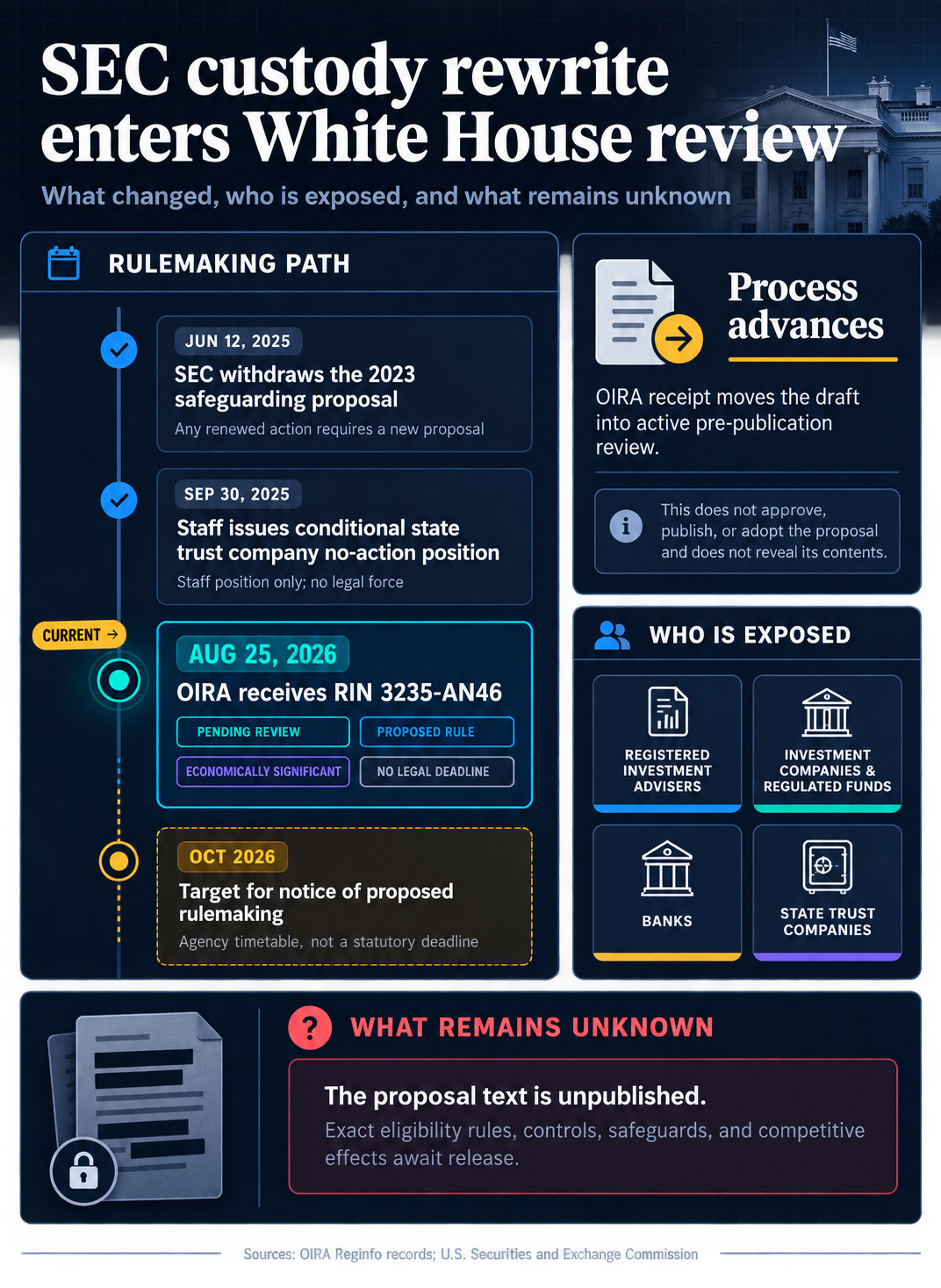
Registered investment advisers and investment companies sit closest to the rulemaking. Their custody arrangements rely on institutions that meet federal requirements, bringing banks and state trust companies into the commercial stakes. The published records provide no operative proposal language, leaving the direction of any changes to eligibility, controls, or safeguards unresolved.
The proceeding follows a regulatory reset. In June 2025, the SEC withdrew its 2023 safeguarding proposal, ended the path to a final rule from that measure, and said future action would require a new proposal. The draft now at OIRA therefore starts a new rulemaking rather than reviving the earlier proposal's requirements.
A more limited staff position has shaped the market in the meantime. On Sept. 30, 2025, SEC investment-management staff said they would not recommend enforcement against registered advisers or regulated funds that treated certain state trust companies as banks for crypto custody when specified conditions were met.
Those conditions cover authorization, safeguarding policies, audited financial statements, independent control reports, custody contracts, risk disclosures and best-interest determinations. The custody agreement must segregate client or fund assets and bar lending, pledging or rehypothecation without prior written consent. Advisers or funds must also disclose material risks and determine that using the custodian serves the best interests of clients, funds and their shareholders.
The no-action letter is a staff enforcement position with no legal force, but it provides the practical baseline that advisers, funds, banks, and state trust companies use today. The SEC crypto custody rewrite puts that baseline into an active rulemaking frame. Release of the SEC's proposal will turn the current process signal into a substantive debate over which institutions may custody crypto assets and the safeguards they must provide.
Editorial credits