An account sold as having no evaluation may still impose a profit target in its withdrawal terms. An evaluation-free account can pay a trader without a pass stage ever existing. The alternative moves the evaluation target out of the dashboard and into the payout conditions, where the sales page never has to mention it. The drawdown clause, payout eligibility clause, fee schedule and restrictions list reveal which product is being sold.
Best No Evaluation Prop Firms in 2026
- Evaluation fee
- Forex / CFD: From $32.99; Futures: From $69.99
- Max drawdown
- Forex / CFD: Balance-Based Trailing (Closing Balance): 6%; Static (Initial Balance): 6–10%; Futures: 3–4%
- Profit split
- Forex / CFD: 80%–95%; Futures: 80%–95%
- 24-hour payout or $1,000 compensation
- CFD and futures under one firm
- No consistency rule on any CFD model
- Evaluation fee
- Forex / CFD: From $29; Futures: From $83
- Max drawdown
- Forex / CFD: Intraday Trailing (Real-Time Equity): 6–10%; Static (Initial Balance): 8–10%; Futures: Balance-Based Trailing (Initial Balance): 4%; End-of-Day Trailing (Initial Balance): 3–4%
- Profit split
- Forex / CFD: 90%–100%; Futures: 80%–100%
- Scaling ceiling of $4,000,000
- Aqua Elite adds $1,000 to $3,000 a month
- Ten CFD models and five futures types
- Evaluation fee
- Forex / CFD: From $23; Crypto: From $49; Futures: From $139
- Max drawdown
- Forex / CFD: Intraday Trailing (Real-Time Equity): 5–6%; Static (Initial Balance): 5–8%; Crypto: End-of-Day Trailing (End-of-Day Equity): 4%; Intraday Trailing (Real-Time Equity): 5–6%; Futures: 2,000 USD
- Profit split
- Forex / CFD: 60%–90%; Crypto: 70%–90%; Futures: 80%
- A missed payout deadline pays you 100%
- No reset fee on any of the 51 plans
- No arbitration clause or class waiver
- Evaluation fee
- From $5
- Max drawdown
- Intraday Trailing (Real-Time Equity): 6–8%; Static (Initial Balance): 6%
- Profit split
- 80%–100%
- Cheapest entry we rate, $5 up front
- Reward Guarantee or they pay $1,000
- Eight account models, more than any rival
CryptoSlate may earn a commission when you visit partner sites through links on this page, at no extra cost to you. Our rankings and reviews remain editorially independent and based on our published methodology. Read disclosure
Disclaimer: CryptoSlate may receive a commission when you click links on our site and make a purchase or complete an action with a third party. This does not influence our editorial independence, reviews, or ratings, and we always aim to provide accurate, transparent information to our readers.No Evaluation Prop Firms Compared
Compare the scored firms by market coverage, evaluation structure, account size, drawdown, profit split and first-payout timing.
| Prop Firm | Markets | Evaluation Types | Account Sizes | Maximum Drawdown | Profit Split | First Payout |
|---|---|---|---|---|---|---|
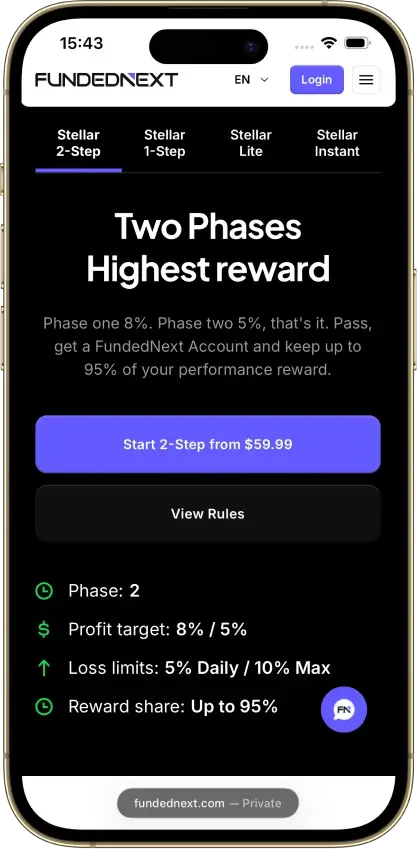
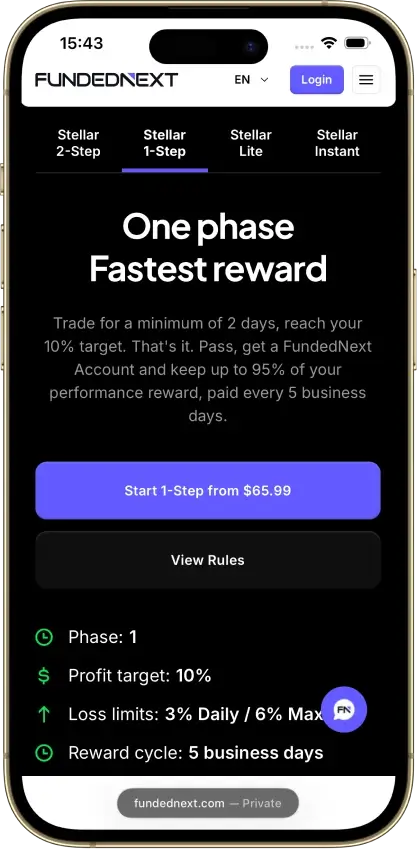
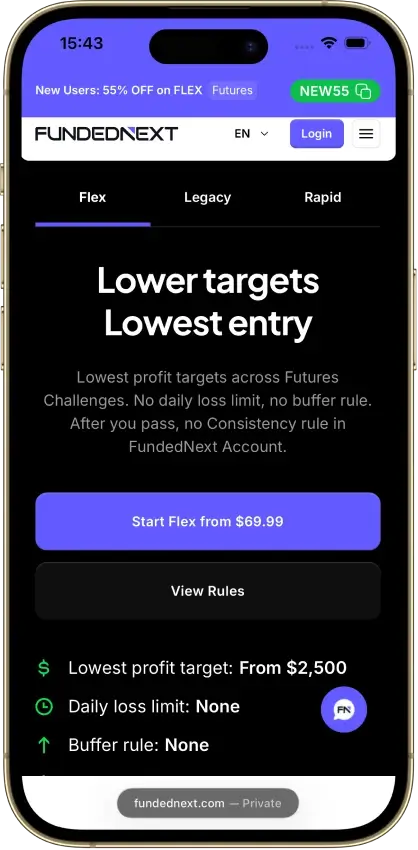
 FundedNext FundedNext | Forex / CFD, Futures | Forex / CFD: Two Step, One Step, Instant; Futures: Futures Evaluation | Forex / CFD: $2,000–$200,000; Futures: $25,000–$150,000 | Forex / CFD: Balance-Based Trailing (Closing Balance): 6%; Static (Initial Balance): 6–10%; Futures: 3–4% | Forex / CFD: 80%–95%; Futures: 80%–95% | Fastest is Rapid Daily at one day. Stellar 1-Step pays after 5 business days, Stellar 2-Step and Stellar Lite after 21 days, Stellar Instant on demand or bi-weekly, and Rapid Pro every 3 days. Flex and Legacy gate the first withdrawal on 5 benchmark days rather than elapsed time. |
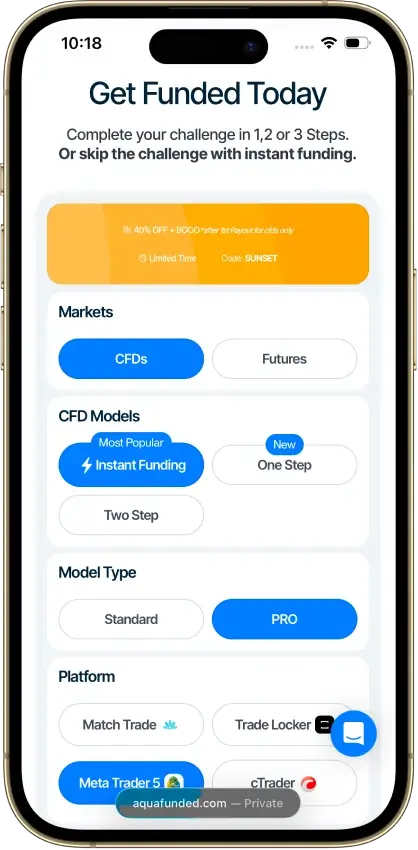
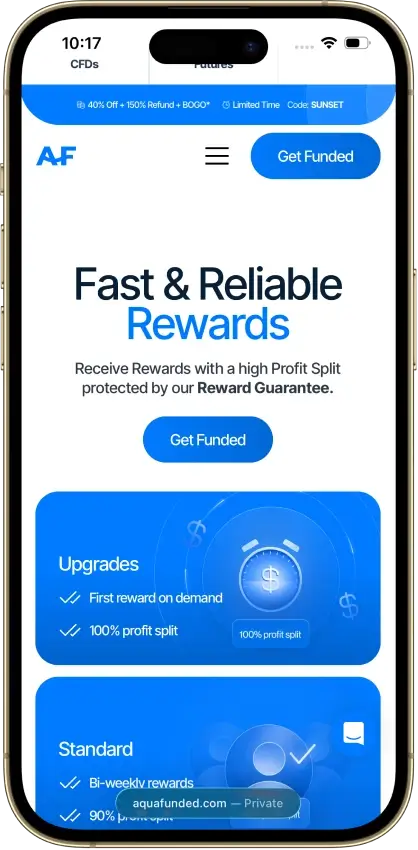
 AquaFunded AquaFunded | Forex / CFD, Futures | Forex / CFD: Two Step, Instant; Futures: Instant, Futures Evaluation | Forex / CFD: $2,500–$400,000; Futures: $25,000–$150,000 | Forex / CFD: Intraday Trailing (Real-Time Equity): 6–10%; Static (Initial Balance): 8–10%; Futures: Balance-Based Trailing (Initial Balance): 4%; End-of-Day Trailing (Initial Balance): 3–4% | Forex / CFD: 90%–100%; Futures: 80%–100% | 14 calendar days |
 For Traders For Traders | Forex / CFD, Crypto, Futures | Forex / CFD: One Step, Two Step, Three Step, Instant; Crypto: One Step, Instant; Futures: One Step, Instant | Forex / CFD: $3,000–$100,000; Crypto: $3,000–$100,000; Futures: $25,000–$100,000 | Forex / CFD: Intraday Trailing (Real-Time Equity): 5–6%; Static (Initial Balance): 5–8%; Crypto: End-of-Day Trailing (End-of-Day Equity): 4%; Intraday Trailing (Real-Time Equity): 5–6%; Futures: 2,000 USD | Forex / CFD: 60%–90%; Crypto: 70%–90%; Futures: 80% | 14 calendar days |
 Goat Funded Trader Goat Funded Trader | Forex / CFD | One Step | $5,000–$100,000 | Intraday Trailing (Real-Time Equity): 6–8%; Static (Initial Balance): 6% | 80%–100% | 14 calendar days |
The table is a decoder, not a verdict on the label printed at checkout. Read the payout and floor columns together: a profit threshold before withdrawal behaves like a relocated target, while a moving floor does the filtering once done by a pass stage. Refund and reset terms complete the picture by showing what happens to the fee after success or failure. The account is evaluation-free only when the full rule set supports that claim.
No Evaluation Prop Firms in Detail
FundedNext
- Evaluation fee
- Forex / CFD: From $32.99; Futures: From $69.99
- Max drawdown
- Forex / CFD: Balance-Based Trailing (Closing Balance): 6%; Static (Initial Balance): 6–10%; Futures: 3–4%
- Profit split
- Forex / CFD: 80%–95%; Futures: 80%–95%
Pros
- News and weekend trading open on CFD
- Futures contract limits fixed, not tiered
- 2-Step fee refunded with the first reward
- 15% cash bonus on 2-Step and 1-Step
- Fees from $32.99
Cons
- CFD add-ons stack up in cost quickly
- Futures limited to Tradovate and NinjaTrader
- $100K+ CFD accounts get MT4 and MT5 only
- Stellar Instant trails, the other three don't


AquaFunded
- Evaluation fee
- Forex / CFD: From $29; Futures: From $83
- Max drawdown
- Forex / CFD: Intraday Trailing (Real-Time Equity): 6–10%; Static (Initial Balance): 8–10%; Futures: Balance-Based Trailing (Initial Balance): 4%; End-of-Day Trailing (Initial Balance): 3–4%
- Profit split
- Forex / CFD: 90%–100%; Futures: 80%–100%
Pros
- 90% profit split on every CFD model
- $1,000 penalty if a payout misses 24 hours
- Three futures types have no daily loss limit
- Five of ten CFD models skip consistency
Cons
- The drawdown documents contradict themselves
- -2% floating loss closes the account for good
- The refund only lands on your fourth payout
- 30 days without a trade breaches funding



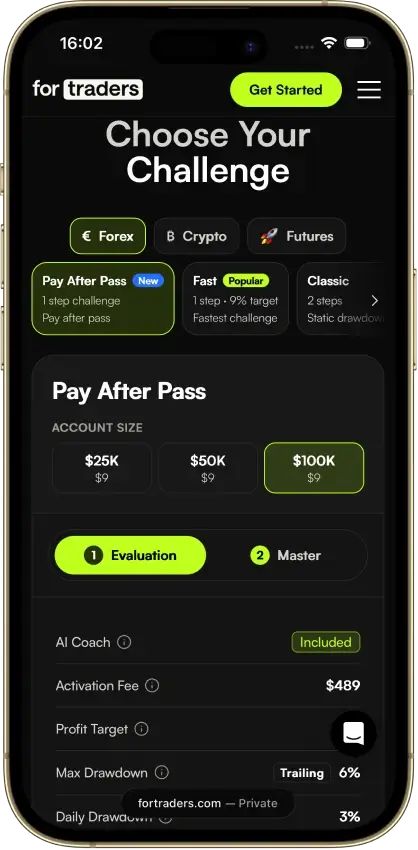
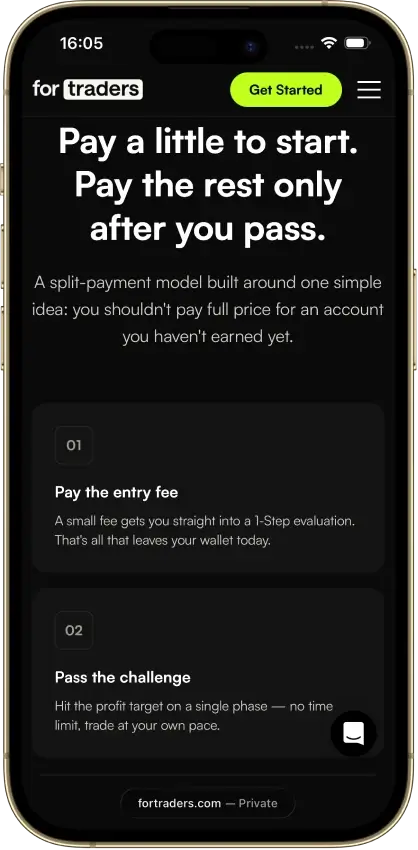
For Traders
- Evaluation fee
- Forex / CFD: From $23; Crypto: From $49; Futures: From $139
- Max drawdown
- Forex / CFD: Intraday Trailing (Real-Time Equity): 5–6%; Static (Initial Balance): 5–8%; Crypto: End-of-Day Trailing (End-of-Day Equity): 4%; Intraday Trailing (Real-Time Equity): 5–6%; Futures: 2,000 USD
- Profit split
- Forex / CFD: 60%–90%; Crypto: 70%–90%; Futures: 80%
Pros
- No time limit except on Strike
- EURUSD from 0.1 pips raw spread
- 74 crypto pairs, traded 24/7
- $3 per lot forex, $0 on indices
- Evaluations listed from $23
Cons
- 5-second hold rule is not in the rulebook
- Activation fee falls due before KYC
- 3% buffer locked up on Forex Instant
- Checkout omits drawdown limits on 37 plans


Goat Funded Trader
- Evaluation fee
- From $5
- Max drawdown
- Intraday Trailing (Real-Time Equity): 6–8%; Static (Initial Balance): 6%
- Profit split
- 80%–100%
Pros
- Fees refunded after the fourth funded payout
- $100 minimum payout, paid in 2 days
- Scales to $2M with up to 100% split
- Static floor, no consistency rule on 1 Step
Cons
- Up to three loss limits run at once
- Complaints cluster on payout denials
- Pay Later activation can top the Instant price





How We Rank
- Payout Reliability and Evidence 25% weight
Payout history, evidence and the conditions for receiving funds.
- Rules Fairness and Transparency 20% weight
Clarity and fairness of account rules and restrictions.
- Cost and Value 15% weight
Evaluation fees, refunds and the value of each program.
- Trading Conditions 15% weight
Markets, platforms, execution and trading limits.
- Profit Split and Scaling 10% weight
Profit sharing and paths to larger allocations.
- Firm Transparency and Stability 10% weight
Ownership, disclosures and operational stability.
- Support and Reputation 5% weight
Customer assistance and the firm’s public track record.
Product labels are decoded before the ranking is applied. We first test whether a genuine evaluation-free route exists by reading the target, drawdown, payout, refund and reset clauses together. The firm-level score then supplies context on the operator behind those terms. This keeps two judgments separate: whether the account is accurately described, and whether the firm has enough evidence behind its wider service record to deserve confidence.
What a No Evaluation Prop Firm Is
A no evaluation prop firm sells a funded account with no pass stage in front of it. The buyer pays a one-time fee and receives a simulated balance the same day. The agreement lets the trader retain a portion of any profit produced, with risk policed by a loss floor instead of a profit target. The account is simulated throughout, as every prop account is, and no money of the buyer's is deposited or traded. Prop firms generally use instant funding for this product. No evaluation and no challenge float looser.
The Labels Compared
| The Label | What It Is Applied To | The Clause That Decides |
|---|---|---|
| No evaluation | An account with no profit target at any stage, or an evaluation whose target was relocated into the withdrawal terms. Both are sold under this exact wording | Payout eligibility. A profit figure required before the first withdrawal is a target, wherever it is printed |
| No challenge | Interchangeable with no evaluation across the category. Deleting the word challenge changes nothing about whether a target exists | The same clause, plus what a floor breach costs. A breach that sends the account back to checkout is a failed challenge under any name |
| Instant funding | Commonly the genuine article: a simulated account that can reach a withdrawal without a pass stage, carrying a tighter floor and a heavier fee to make up for it | The drawdown clause. On these accounts the floor does the filtering the evaluation used to do |
| One phase, one step | An evaluation with a single stage. A target, a floor and a reset fee, with the word challenge stripped from the packaging | The dashboard target. A percentage gain that opens the funded stage is an evaluation by definition |
Every row resolves to one of the two products. An evaluation-free account has no profit target anywhere in its terms. It charges once and polices risk entirely through its floor. The renamed evaluation keeps the target but moves it out of a pass dashboard and into the conditions attached to the first withdrawal. Direct funding, a wording that surfaces from time to time, lands on either product depending on the firm using it and carries no information on its own.
An Evaluation Is a Structure, Not a Word
Strip the wording away and an evaluation joins a required profit target to a loss floor and a fee spent again when the floor wins. A firm can remove the word from every sales page it runs and leave that structure in place. Firms have a reason to do so because every failure that ends at the checkout page books another fee, and some state exactly that in their own terms. This describes how the sector is built without alleging misconduct. It also explains why the vocabulary drifts while the product holds still.
The location of the profit target settles whether an account is evaluation-free. If none exists before funding or payment, the label is accurate. If one exists anywhere, the account is an evaluation. The remaining question is what relocating the target bought the firm.
What the Drawdown Clause Tells You About a No Challenge Account
Without a pass stage filtering entrants, an evaluation-free account uses its floor to filter them after purchase. Read the clause for what the floor follows and whether it ever stops.
A static floor is fixed below the starting balance and stays there no matter what the account does afterward. A trailing floor moves upward with every new peak the account prints, and no loss brings it back down. On funded-from-day-one accounts, the calculation determines more than the trailing label alone. A trail computed on closed balances ignores everything that happens inside a session. A trail computed on live equity counts open profit the moment it exists.
On a $100,000 account with a 5% trailing floor read from live equity, the floor opens at $95,000. A position that runs $3,000 into open profit lifts the peak to $103,000 and the floor to $98,000, and the floor stays there when the position retraces and closes flat. The account sits at its starting balance with $2,000 of its original $5,000 of room remaining, and not one losing trade has been closed. The same sequence against a floor read from closed balances changes nothing, because the peak never printed. One clause separates those two accounts, and the storefront label covers both.
A third pattern waits for the close: at a set UTC hour the closing balance produces the new level, and nothing that happens inside the session can move it. That end-of-day behavior dominates the neighboring futures segment, and end-of-day futures drawdown behavior is compared separately. Daily loss limits get their own line in the clause: they are commonly computed from the balance at a fixed UTC time rather than from the starting balance, and commonly exclude open positions, so the figure that ends a bad day resets at a clock the trader did not choose.
A live-equity trail tighter than the same firm's evaluated floor shows that an account sold without an evaluation has moved the filter past checkout instead of removing it.
The Payout Clause Is Where the Target Hides
The payout eligibility clause lists everything standing between a funded balance and money leaving the firm, and it is the clause a relocated target moves into.
The items to find: a minimum profit before the first withdrawal can be requested, a minimum number of trading days, a consistency percentage capping how much of the total one day may contribute, and a limit on the size of the first payout. Any profit minimum in that list is a target. The account was sold as having none, and it has one, positioned after the purchase instead of before the funding. A trader who breaches the floor on the way to it has failed a challenge that was never called one, and the fee is gone either way.
The payout clause also contains the refund line. Some prop firms return a fee at a stated payout milestone, while others offer no refund. A refund triggered by reaching a payout is a pass reward, and a pass reward implies a pass. It prices the exact event the sales page says does not exist.
What the Fee Schedule Gives Away
Across prop firms the one-time fee is the norm, while everything layered on top varies. Reset fees and activation fees charged on passing both exist. Monthly platform fees and market data fees also appear, but none is universal. Each one decodes differently on an account sold as evaluation-free.
A reset fee settles the question by itself. Reset only means something when there is a state worth restoring, and the state being restored is a fresh attempt. A no-challenge account with a reset fee in its schedule is an account the firm expects to fail and resell.
An activation fee due on passing is a contradiction printed in the firm's own terms. Passing is an evaluation event. A fee schedule that charges for it describes an evaluation, whatever the banner above it says. Monthly platform and data charges decode neutrally because they attach to infrastructure throughout the prop-firm market.
The level of the fee carries information as well. An account sold without an evaluation is commonly priced above the same firm's evaluated route at the same size, because the firm gives up the fail-and-rebuy revenue an evaluation generates and recovers it in the single payment. An evaluation-free fee sitting level with the evaluated one deserves a slower read of the other clauses. The split reads the same way at checkout: evaluated accounts commonly hand the trader 80/20 from the first funded day, while accounts sold without an evaluation commonly open below that figure and climb it back through scaling milestones, so the distance between the opening split and the advertised one is part of the fee, collected from withheld profit instead of up front.
The Restrictions List Is the Fourth Clause
Below the fee schedule sits a list of what the account may not do, and on an account sold without an evaluation it deserves the same reading as the floor. The recurring entries: automated trading and EAs, trading through scheduled news, and holding positions overnight or across the weekend. Each is a filter, and a filter on this product runs after the purchase, where triggering it costs the full fee.
A news restriction commonly closes a window around high-impact releases, barring new positions inside it or voiding profit booked there. A weekend or overnight ban decides whether a swing approach can exist on the account at all, and it reads together with the floor build, since holding through open profit against a live-equity trail is exactly where a breach without a losing close happens. An EA clause splits into automation barred outright and automation allowed with copy-trading limits. The distinction determines whether a coded edge can run.
The decoder reading matches the floor's. A restrictions list noticeably tighter on the funded-style account than on the same firm's evaluated route is doing the filtering the pass stage used to do, one prohibited behavior at a time.
One Phase Is a Shorter Evaluation, Not a Missing One
One phase, one step and their variants all describe an evaluation. A single stage with a profit target, a floor and a reset fee is a shorter challenge. Clearing one target instead of a sequence is a material difference, but the evaluation is still present. A list seating one-step evaluations beside instant accounts therefore mixes different purchases.
Instant Funding or an Evaluation: Right for and Wrong For
The clauses create the product segments, independent of experience levels.
The account without an evaluation fits:
- A method that books profit in closed trades and moves on, since a trailing floor punishes open profit that retraces
- A budget that survives one breach at the full fee, because a breach on this product commonly means a fresh purchase, not a reset
- A calendar that clears the restrictions list, with no dependence on news windows or weekend holds
- A trader whose priority is reaching the first withdrawal quickly instead of cheaply
The evaluated route fits:
- Positions held through open profit, which a static floor ignores and a live-equity trail hunts
- A first account in the category, where the cost of a lesson is a reset fee instead of the full price
- A method that needs the wider loss allowance evaluated accounts commonly carry at the same size
- A buyer optimizing fee per dollar of funded balance over speed to the first payout
We score firms, leaving checkout labels outside the rubric. Demonstrated payment carries the most weight, and a firm's own paid-out total is logged as a claim rather than evidence, however detailed the figure gets. We publish the prop-firm scoring framework in full. The table applies the decoder to the scored field through each firm's checkout label, the bar in front of its first withdrawal, the floor build behind it and the path the fee takes.
An empty label column means the firm sells its pass stage openly. A filled one must be read against the payout column, where a profit figure standing in front of the first withdrawal is the relocated target this page exists to find. The refund column completes the reading because the fee's path back shows which product collected it.
Fees, floors and split terms by account size stay current across the complete prop-firm comparison.
Market-specific mechanics differ: crypto trading prop firms separate exchange routing from CFDs, while forex and CFD rule sets cover leverage, swaps and platform access.
Risk Disclosure
Fees paid to any prop firm are at risk in full, and most participants never reach a payout. Accounts on both sides of this comparison are simulated, and simulated funding does not necessarily represent live capital held by the firm. Nothing here is financial advice, and this comparison is informational. CryptoSlate may earn a commission through links on this comparison, which does not affect any score.