


 Released in 2022
- The widest network list of any wallet we review
- DEX aggregator draws on 100+ liquidity pools
- Create and trade NFTs inside the wallet
OKX Wallet Overview
- Crypto Wallet Name
- OKX Wallet
- Release Date
- 2022
- Wallet Type
- Multi-platform wallet
- Custodial Status
- Non-custodial
- Built-in Swaps
- Yes
- Open-source
- Partially open-source
- Fiat On-ramp
- Yes
Additional details
- Supported Blockchains
- Bitcoin, Ethereum, BNB Smart Chain, Avalanche, Tron, Arbitrum, Base, Optimism, Polygon, Solana
- Token Standards
- Native coin, ERC-20, BEP-20, SPL, TRC-20
- Platforms
- iOS, Android, Browser extension
- Hardware Wallet Support
- Yes
- Staking Support
- Limited
- Supported Hardware Wallets
- Ledger, Trezor
- Hardware Connection Methods
- USB
OKX Wallet Screenshots
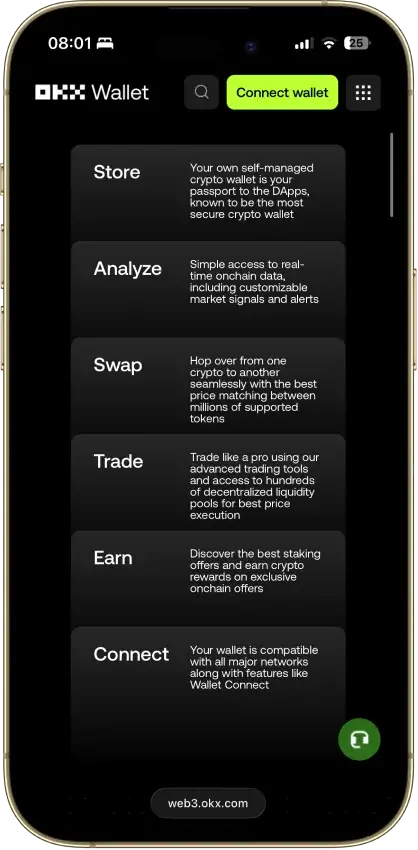
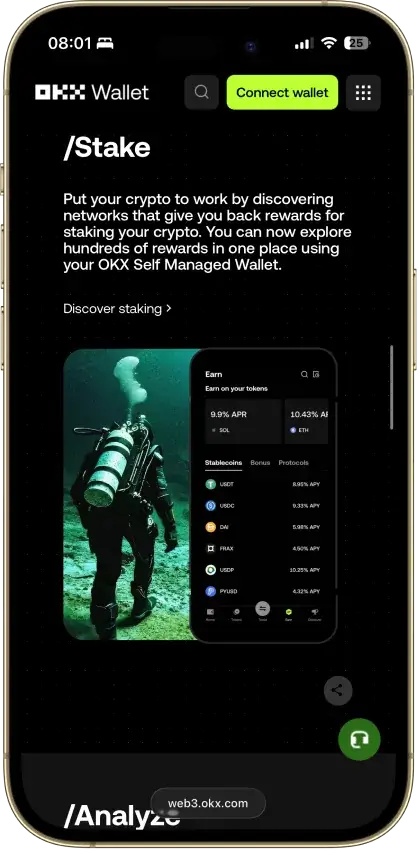
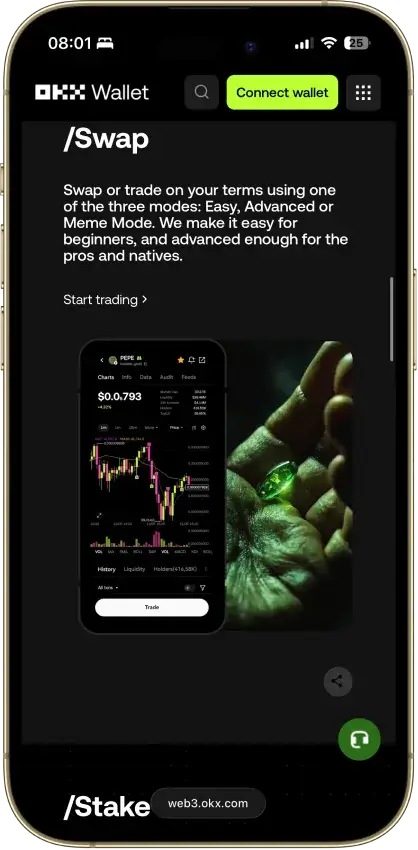
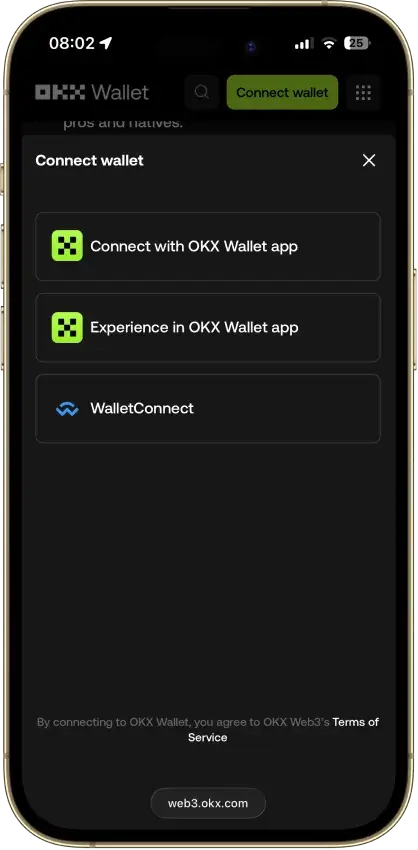
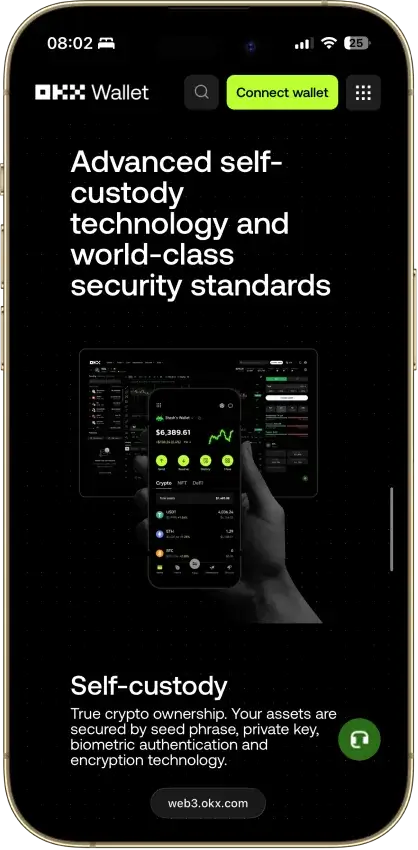
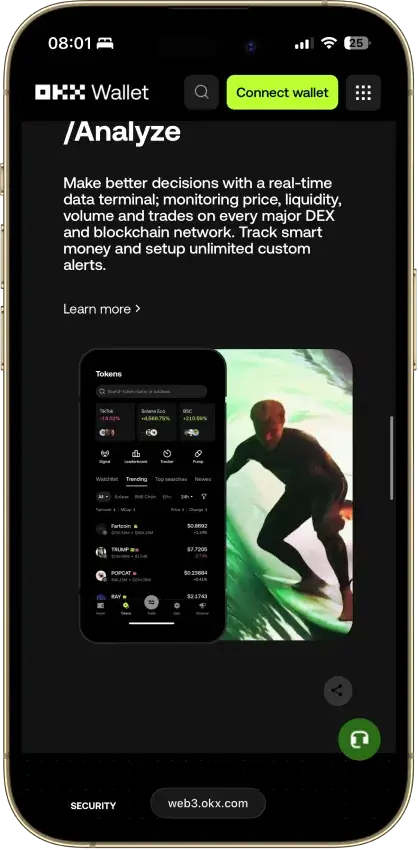
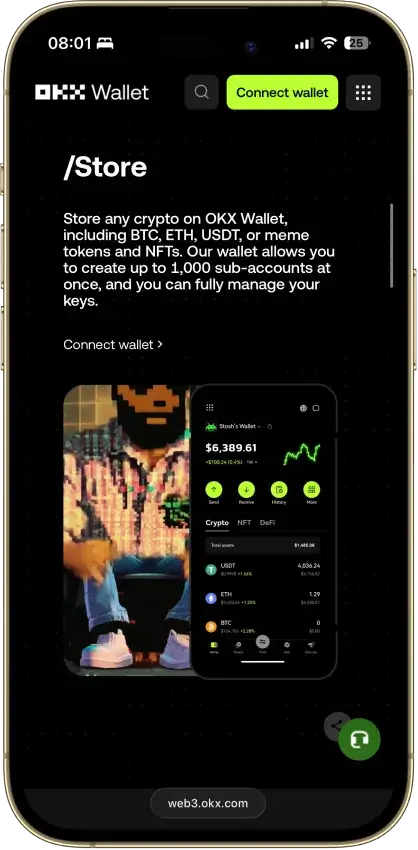
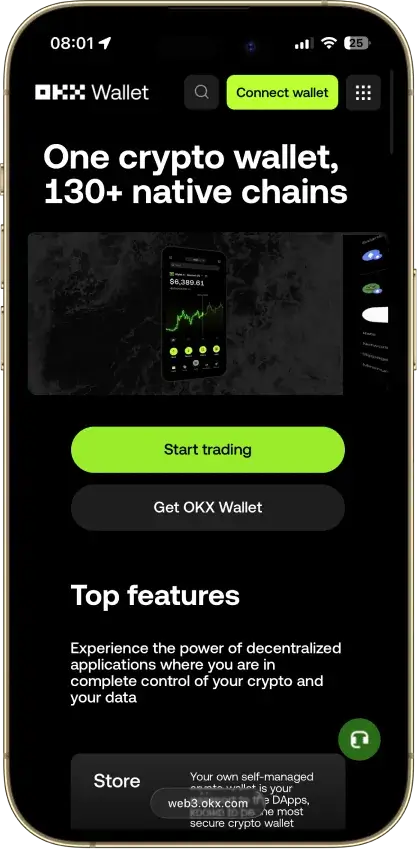
Screenshot 1 of 8
OKX Wallet Pros and Cons
Pros
- Pre-approval scam and phishing alerts
- Built-in token-approval revoke tool
- CertiK and SlowMist audits plus bug bounty
- Cross-chain bridging in one interface
- Earn staking stays non-custodial
Cons
- $505M DOJ guilty plea, consultant to 2027
- Aggregator laundered ~$100M Bybit funds
- Keyless mode hands OKX one key share
- Client code is not fully open source
Who OKX Wallet is Best for — and Who Should Skip It
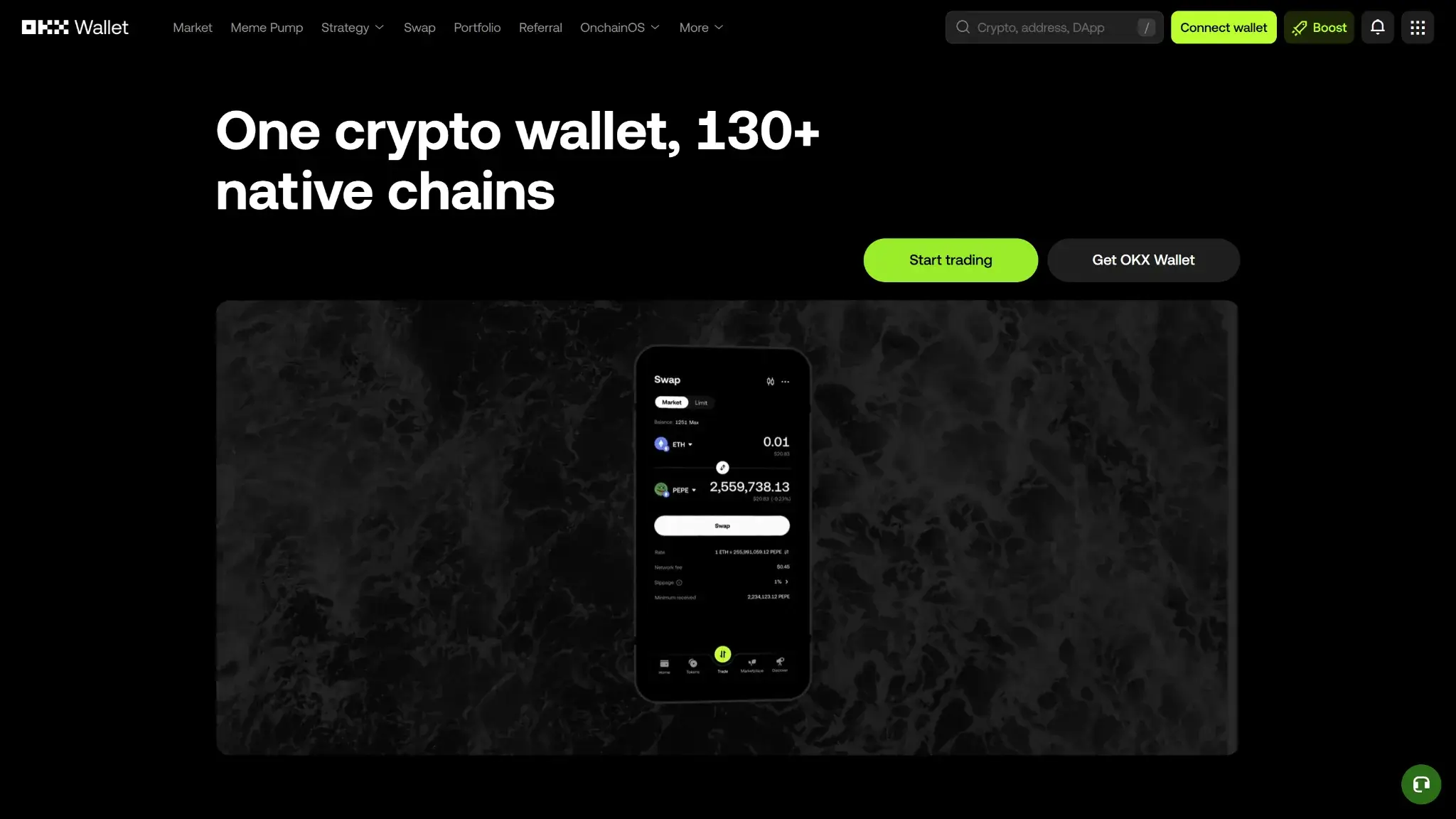
OKX Wallet earns its place for multi-chain users who want one interface across every ecosystem they touch and accept a closed-source client from a regulated exchange that pleaded guilty to US charges in 2025.
- It fits DeFi users active on many chains and traders who want aggregated swap routing without leaving the wallet. OKX exchange customers get self-custody in the same app, and hardware wallet owners can pair their devices with it.
- It does not suit open-source purists or anyone who wants a wallet no company can geo-block. Users who see OKX's 2025 record as disqualifying for a wallet that touches their money should look elsewhere too.
What is OKX Wallet and How Does it Work?
OKX Web3 Wallet is the self-custody wallet built by OKX, the global crypto exchange operated by Aux Cayes FinTech Co. Ltd out of the Seychelles and founded by Star Xu. It is a separate product from an OKX exchange account. The exchange holds customer funds and requires KYC. The Web3 Wallet generates keys and signs transactions on your device, with no identity check for standard use. It runs as a browser extension and as mobile and desktop apps, and it also lives inside the main OKX app for exchange users who want both.
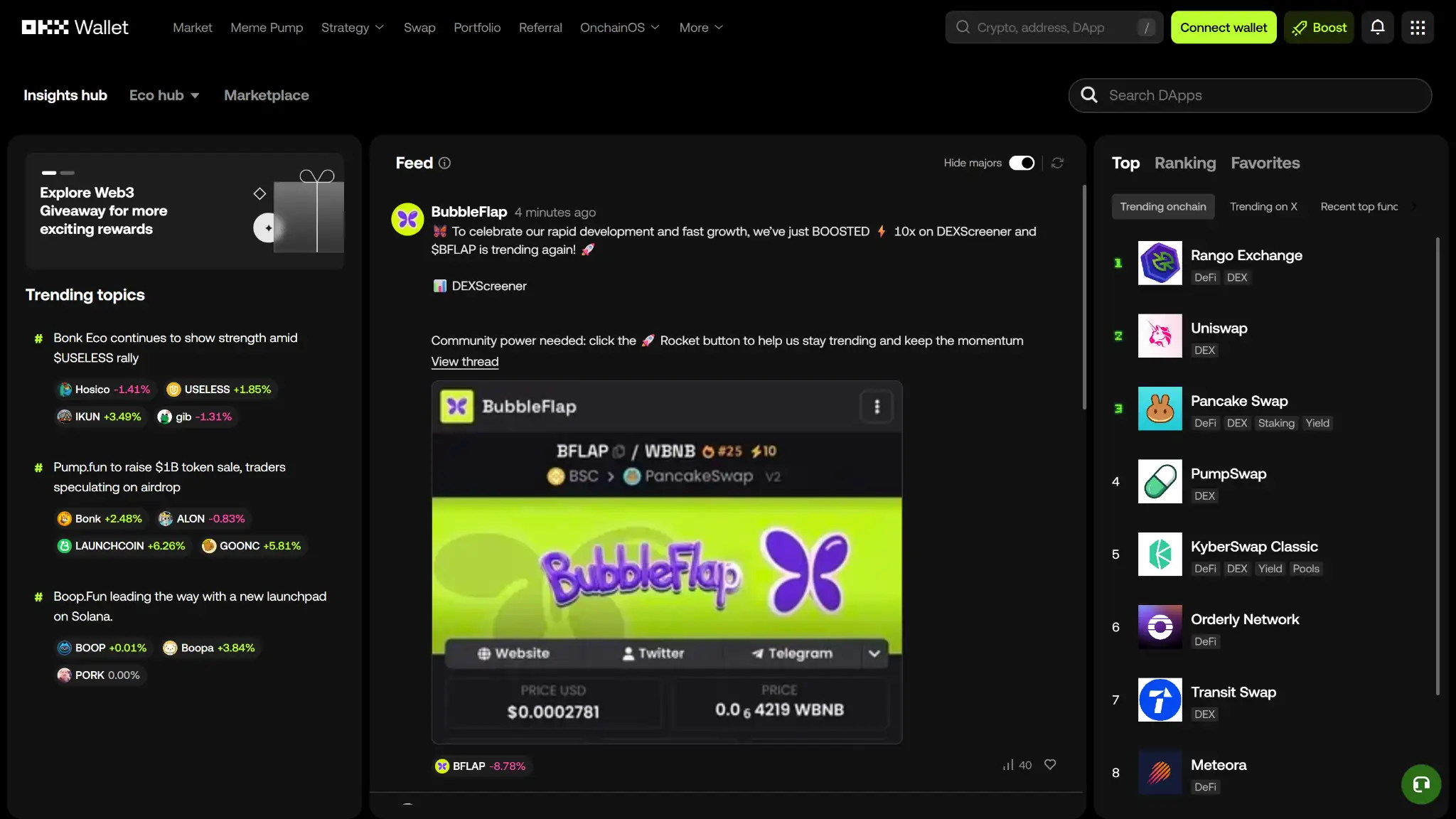
In February 2025, OKX pleaded guilty in the US to operating an unlicensed money-transmitting business and paid roughly $505 million. The company re-entered the US market in April 2025 with a FinCEN-registered entity that now holds money-transmitter licenses in 40+ states, and the self-custody wallet was part of that relaunch.
Security and Custody
In standard mode, OKX Wallet is non-custodial, with a seed phrase and keys that are generated and stored on your device. Transactions are signed locally, and the same accounts restore in any compatible wallet. OKX cannot move your funds and cannot recover your seed if you lose it.
New keyless-wallet creation ended on May 23, 2025, while existing keyless wallets remain usable. Keyless mode uses MPC to split your private key into three shares, with one on OKX's server and the other two on your device and in your iCloud or Google Drive backup. Any two of the three can reconstruct the key. That design removes the seed phrase and makes recovery easier, but it means OKX holds a share capable of participating in reconstruction. OKX cannot reconstruct the key or spend with its share alone. Emergency escape uses the device and cloud shares to export conventional wallet credentials without OKX approval.
On audit coverage the wallet does better than most closed-source rivals. OKX provides CertiK and SlowMist security reports. SlowMist assessed key management in the mobile apps and the browser extension from March 2 to March 20, 2026, covering key handling from generation to deletion. A separate audit of the MPC implementation on Android came back low risk, with nine suggestions plus one low-severity finding. A public bug bounty runs on HackenProof. The client also flags phishing and malicious URLs and explains in plain language what a contract approval grants. A built-in tool lets you revoke token approvals.
None of these reports replaces open code, since OKX shares only some smart-contract and SDK repositories and outsiders cannot audit the full wallet client end to end. You are trusting the auditors' reports and OKX's build process instead of reading the code yourself.
Track Record
OKX's 2025 record includes events that matter for anyone storing funds with the company.
- On February 24, 2025, OKX's operating entity pleaded guilty to running an unlicensed money-transmitting business in the US and agreed to pay about $505 million. Prosecutors cited more than $5 billion in suspicious transactions and criminal proceeds flowing through the exchange. A compliance consultant that OKX chose oversees the company through February 2027, instead of a court-appointed independent monitor.
- In March 2025, OKX temporarily suspended its Web3 DEX-aggregator services after roughly $100 million from the Bybit hack, attributed to North Korea's Lazarus Group, was laundered through OKX Web3. OKX froze new wallet creation in certain markets during the same upgrade, and European regulators later examined its MiCA licensing position over the same episode.
None of these events took funds from Web3 Wallet users, and the wallet stays recommendable because OKX settled the US case and relaunched there under registration after upgrading its abuse detection. Still, a wallet from a company with a guilty plea and a documented role as a laundering conduit carries more trust risk than one with a clean record.
Supported Assets, Networks, and Compatibility
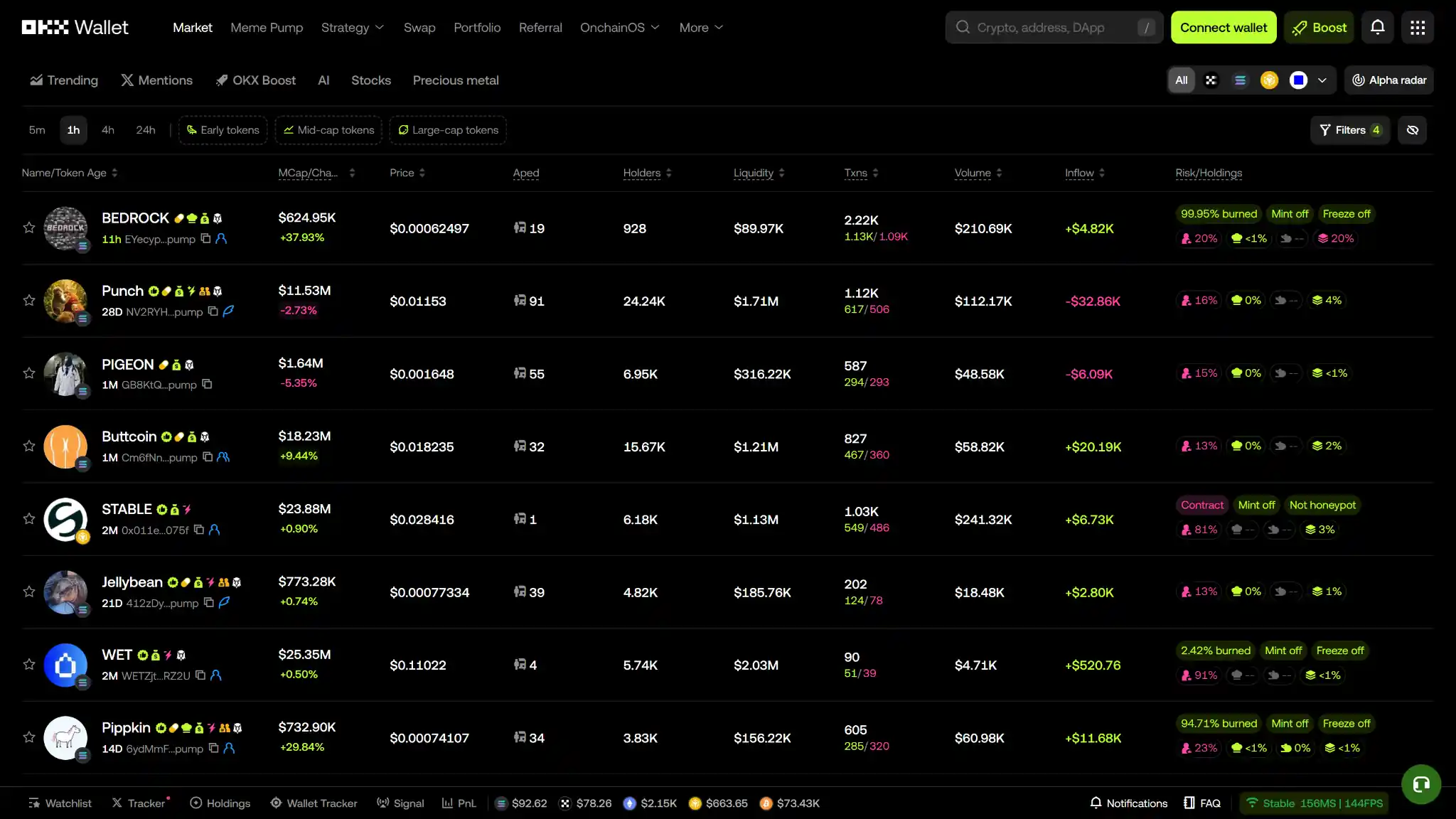
OKX Wallet supports 130+ native chains, which puts it at or near the top of the multi-chain field. Coverage reaches Bitcoin and Solana as well as the EVM networks. Tron and the Cosmos-ecosystem chains are supported too, along with a long tail of newer L1s and L2s. Token support follows each chain natively. NFT support includes creating and storing NFTs plus marketplace access, with feature depth varying by chain. If your portfolio is scattered across ecosystems that normally force three or four separate wallets, consolidation is OKX Wallet's clearest selling point.
Usability and Recovery
Onboarding takes minutes on any platform, and no KYC is required for standard self-custody use. Identity checks only appear when you touch exchange-linked features or the fiat on-ramp. The extension and the mobile and desktop apps restore from the same seed, so cross-device use works the way you would expect.
Recovery depends on which account type you picked, and standard mode puts it all on your seed phrase. Write the phrase down, because if you lose it your funds are gone and no one can help. Keyless mode trades that risk for the 2-of-3 share scheme, where losing your phone is survivable as long as your cloud backup share exists. The cost of that convenience is the OKX-held share described above, plus a new dependency on your Apple or Google account security.
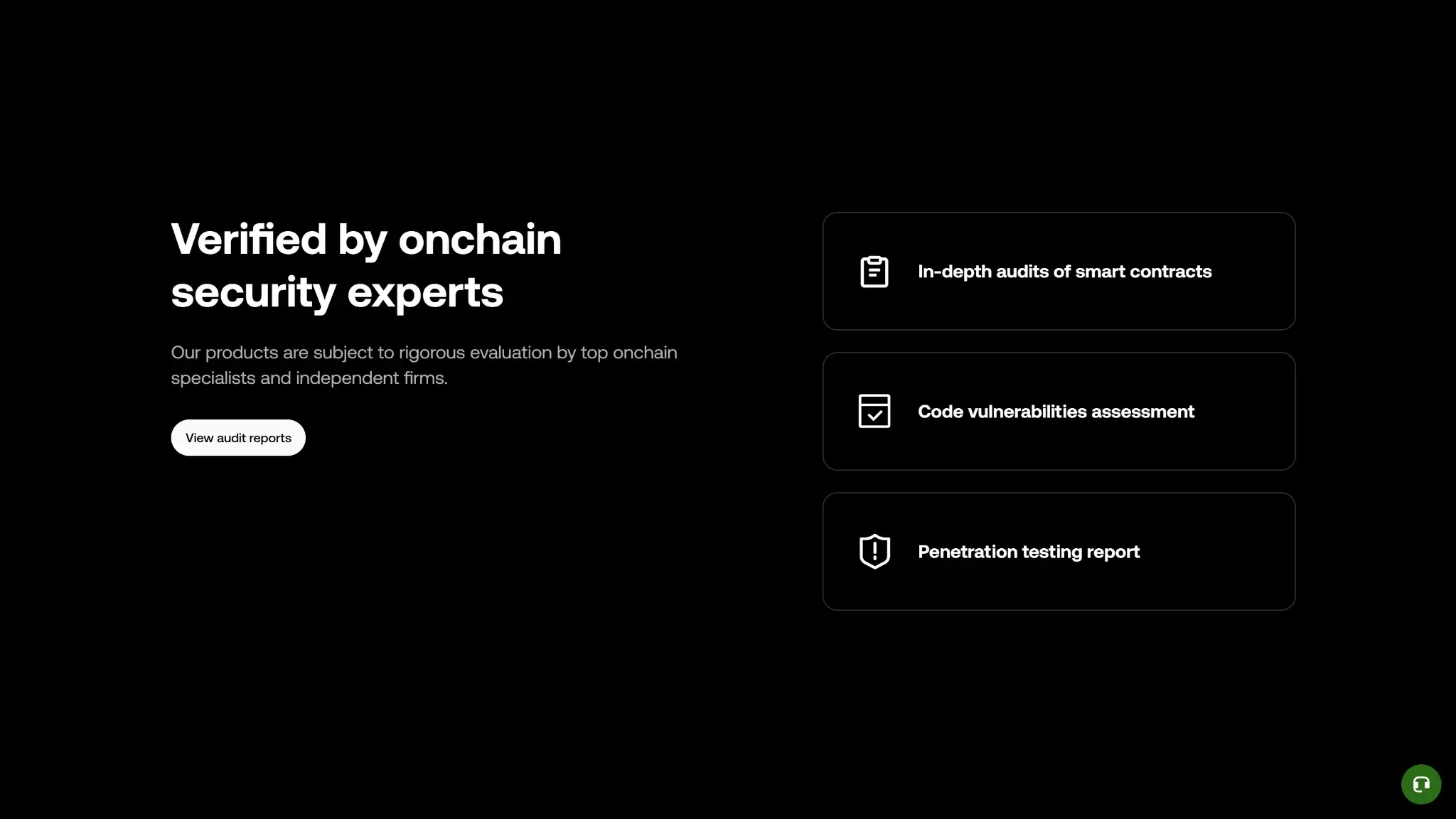
For larger balances, the wallet pairs with Keystone 3 and 3 Pro over USB or QR codes and also supports Ledger and Trezor devices. Pairing a hardware wallet keeps OKX Wallet as the interface while moving key storage and signing to a dedicated device, which is the setup to use for anything you would mind losing.
OKX applies IP-based geo-blocking to its services, which sets it apart from permissionless wallets such as MetaMask. It has acted on it too, freezing new wallet creation in certain markets during the March 2025 upgrade, so your access to the app depends partly on where OKX decides to operate.
Features
The DEX aggregator is the flagship feature, routing swaps across 100+ liquidity pools and major DEXs to find pricing. It charges an interface fee of 0% to 0.5% on top of pool fees and slippage, and it handles cross-chain routing and bridging from the same interface. It is also the feature that was suspended in March 2025, so its abuse controls are newer than the feature itself.
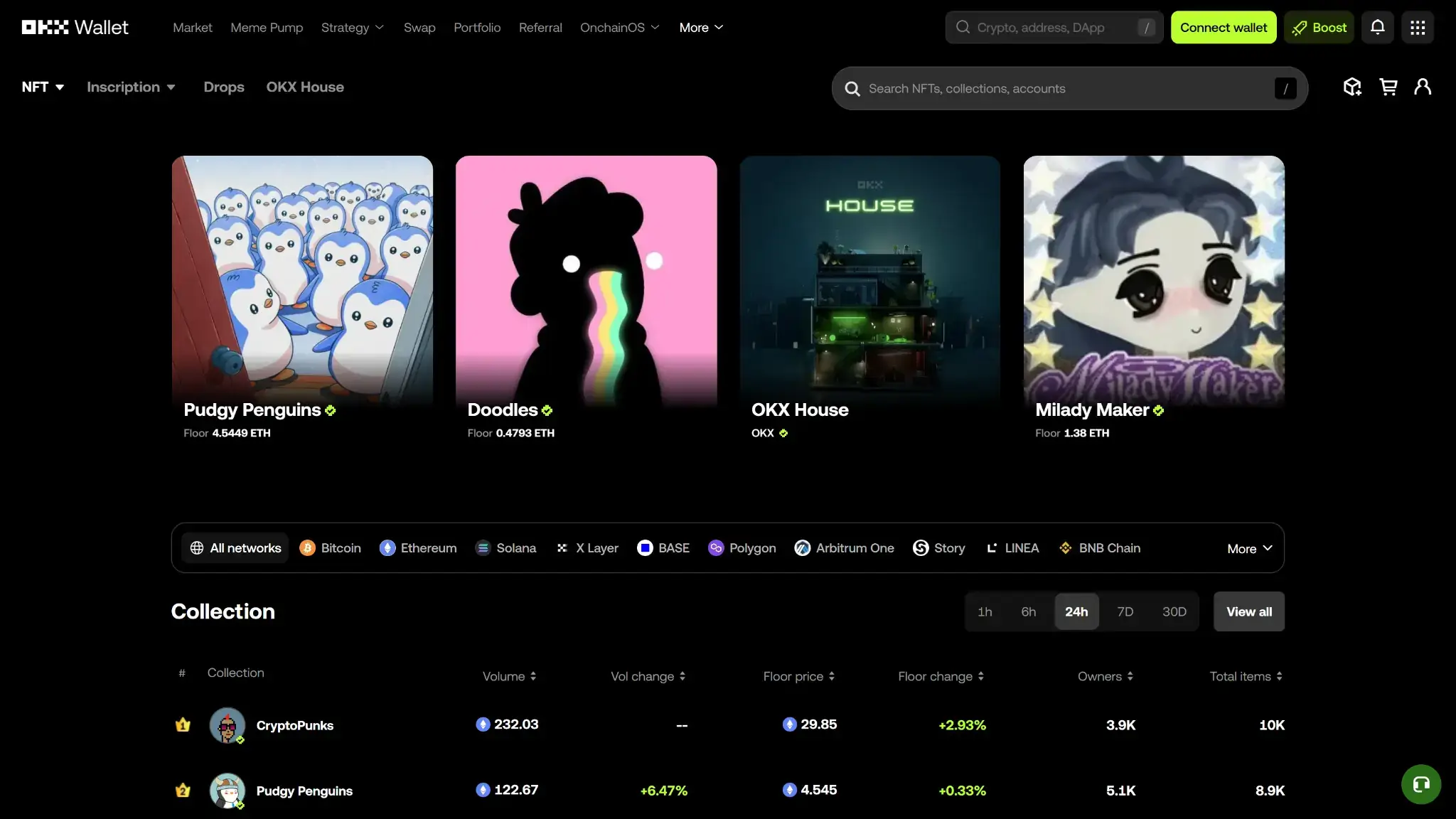
Web3 Earn surfaces staking and DeFi yield inside the wallet while keeping funds non-custodial. Rewards come from the underlying networks and protocols, not from an OKX ledger entry, which is the right model and worth naming because plenty of exchange-branded “earn” products are custodial lending in disguise.
The fiat on-ramp hands you off to third-party partner providers whose fees vary by provider and payment method, and they differ between regions. Treat the quoted total as the full price and compare it against buying on an exchange and withdrawing.
Cost
The app is free on every platform, so your costs come from using it. Every transaction costs network gas, and each swap adds the 0% to 0.5% interface fee on top of pool fees and slippage. Cross-chain moves add bridge fees, and buying crypto with fiat in the wallet adds the on-ramp partner's fee. None of these is unusual for wallets like this one, but they add up quickly for an active multi-chain user. Heavy swappers can compare against Rabby's flat 0.25% to see what routing convenience costs them.
Comparison with Other Wallets
-


MetaMask
MetaMask combines EVM dApp access with native Bitcoin, Solana and TRON accounts. It offers hardware connections and optional linked-login recovery, with a 0.875% wallet swap fee.
-

Rabby Wallet
Rabby is an EVM wallet with transaction previews, portfolio tracking and a 0.25% standard swap fee. It supports hardware connections but not native Bitcoin or Solana accounts.
-
Trust Wallet
Trust Wallet combines multichain accounts with optional cloud backup and a separate SWIFT passkey wallet. Check account-specific recovery, swap costs and access after its announced September network changes.
The concerns with OKX Wallet sit with the company more than the software. The client cannot be audited end to end, and the parent company is under a DOJ compliance consultant until 2027. IP geo-blocking and stacking swap costs add friction on top. If any of that rules it out for you, work through our current crypto wallet rankings, starting with these three.
- MetaMask suits users who want neutral infrastructure with no exchange parent and no IP geo-blocking.
- Rabby Wallet suits active EVM DeFi users who want a flat 0.25% swap fee and pre-transaction risk checks.
- Trust Wallet suits mobile-first users who want broad multichain coverage in a simpler app.
None of those three matches 130+ native chains and a full DEX aggregator behind one interface, and that consolidation is the reason to stay with OKX, paired with a hardware signer for meaningful sums.
Crypto Wallets Pillar Scores
- Custody and key security 30% weight Who can authorize spending, protection of keys and signing, and independent access to every reviewed account type.9.5 / 10
- Security validation and track record 25% weight Independent security assessments, their coverage and findings, plus updates and the handling of known incidents.7.0 / 10
- Transaction safety and signing 20% weight Transaction details, signing warnings, scam checks, permission controls and the handling of unreadable requests.8.0 / 10
- Backup and recovery 10% weight Repeatable backup checks, complete restoration, recovery dependencies, costs and resilience after backup loss.8.0 / 10
- Usability, privacy and costs 10% weight Setup and everyday tasks, accessibility, support guides, data-sharing choices and device, service and transaction costs.8.0 / 10
- Assets, networks and compatibility 5% weight Asset and network support, devices, companion apps and connections needed for the uses covered in the review.8.0 / 10
Final Verdict
As software, OKX Wallet covers 130+ chains and pairs a DEX aggregator that routes across 100+ liquidity pools with non-custodial Earn. Independent security reports and a bug bounty back it up, along with useful phishing and approval warnings. The company behind it is the weak point. OKX pleaded guilty in the US in 2025 and sits under a compliance consultant until 2027. Its DEX aggregator served as a conduit for Lazarus Group laundering, and the client is closed source. OKX Wallet is recommendable for multi-chain users who accept that history, and it works best with a hardware signer attached.
Disclaimer: CryptoSlate may receive a commission when you click links on our site and make a purchase or complete an action with a third party. This does not influence our editorial independence, reviews, or ratings, and we always aim to provide accurate, transparent information to our readers.