Quick Take
- The FBI says eight Steam games may have infected about 8,000 devices and stolen at least $220,000 from crypto wallets.
- The case shows wallet security can fail at download time, before users ever open their wallets or approve transfers.
- Investigators traced Bitcoin-funded gift cards and deliveries, but it remains unclear how the games bypassed Steam's checks.


The FBI is seeking potential victims who downloaded eight games named in its Steam malware investigation, a case that shows crypto custody can fail before a wallet ever opens.
In a separate federal complaint reported by Local 10, agents allege an eight-game campaign infected about 8,000 devices, gained unauthorized access to roughly 80 crypto wallets, and stole at least $220,000.
Local 10 reported that agents arrested 21-year-old Zyaire Dontaevious Zamarion Wilkins on July 14 and accused him of financing and procuring malware and helping market the infected games. The complaint describes the venue only as a “popular digital distribution software company.” Wilkins is presumed innocent unless convicted.
The FBI notice lists BlockBlasters, Chemia, Dashverse, DashFPS, Lampy, Lunara, PirateFi and Tokenova, and places the suspected Steam activity between May 2024 and January 2026. Local 10 reported that the complaint dates its broader alleged campaign through February 2026.

Custody begins at software distribution
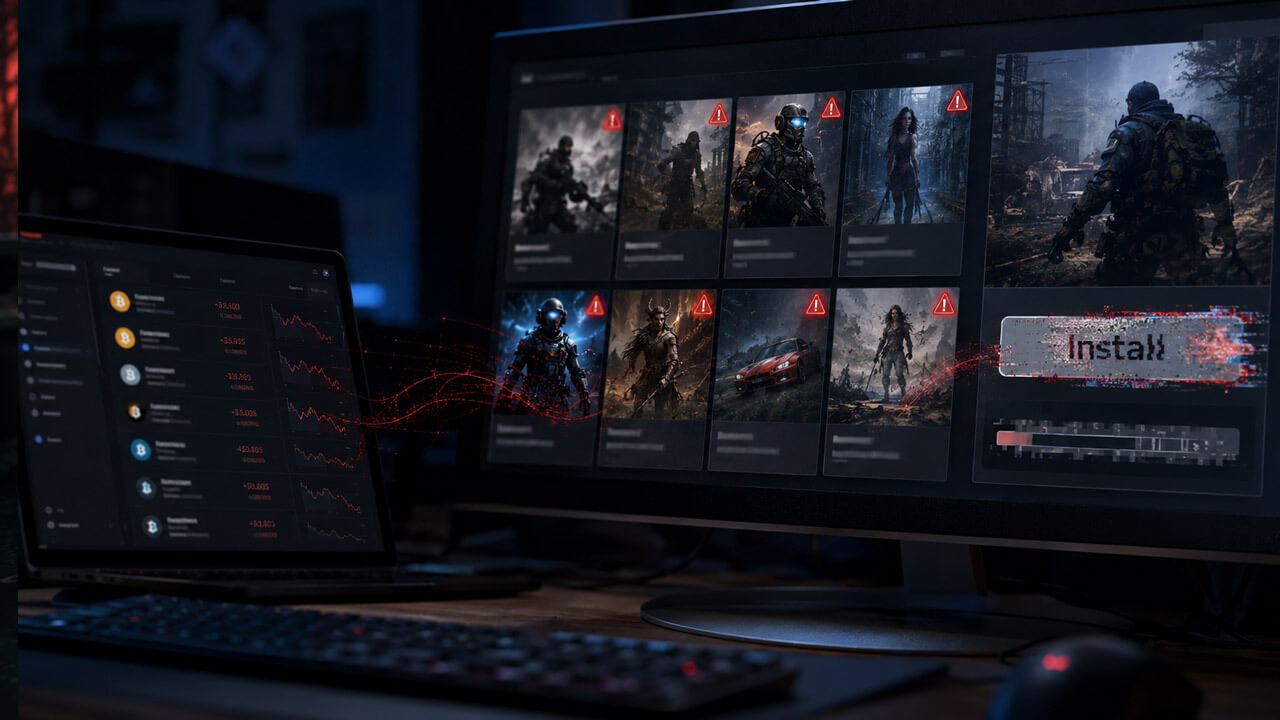
According to the complaint, the alleged group promoted the games on Discord, Telegram, X, and LinkedIn. Bots identified people with large crypto holdings and sent targeted messages encouraging them to download. Once installed, the malware allegedly captured private data and credentials; the group also discussed tricking victims into authorizing transactions that emptied wallets.
One FBI-listed title shows how a trusted download could expose wallet data. A February 2025 cyber advisory said PirateFi was available on Steam from Feb. 6 to Feb. 12, 2025, and that it contained the Vidar infostealer, which could steal credentials, session cookies, and crypto wallet information.
The attack chain creates two control layers. Valve's onboarding documentation says initial builds are checked for harmful behavior, but its review documentation says approved games can later be updated without another review. Those documents do not establish how the games in this case allegedly bypassed controls, but they show that scrutiny must cover both initial and updated builds.
For wallet users, an official marketplace cannot be the only trust boundary. Keeping wallet secrets and authenticated sessions away from gaming endpoints limits what an infostealer can reach, while deliberately reviewing transaction prompts addresses the separate risk of approving a malicious transfer. Neither control replaces marketplace screening.
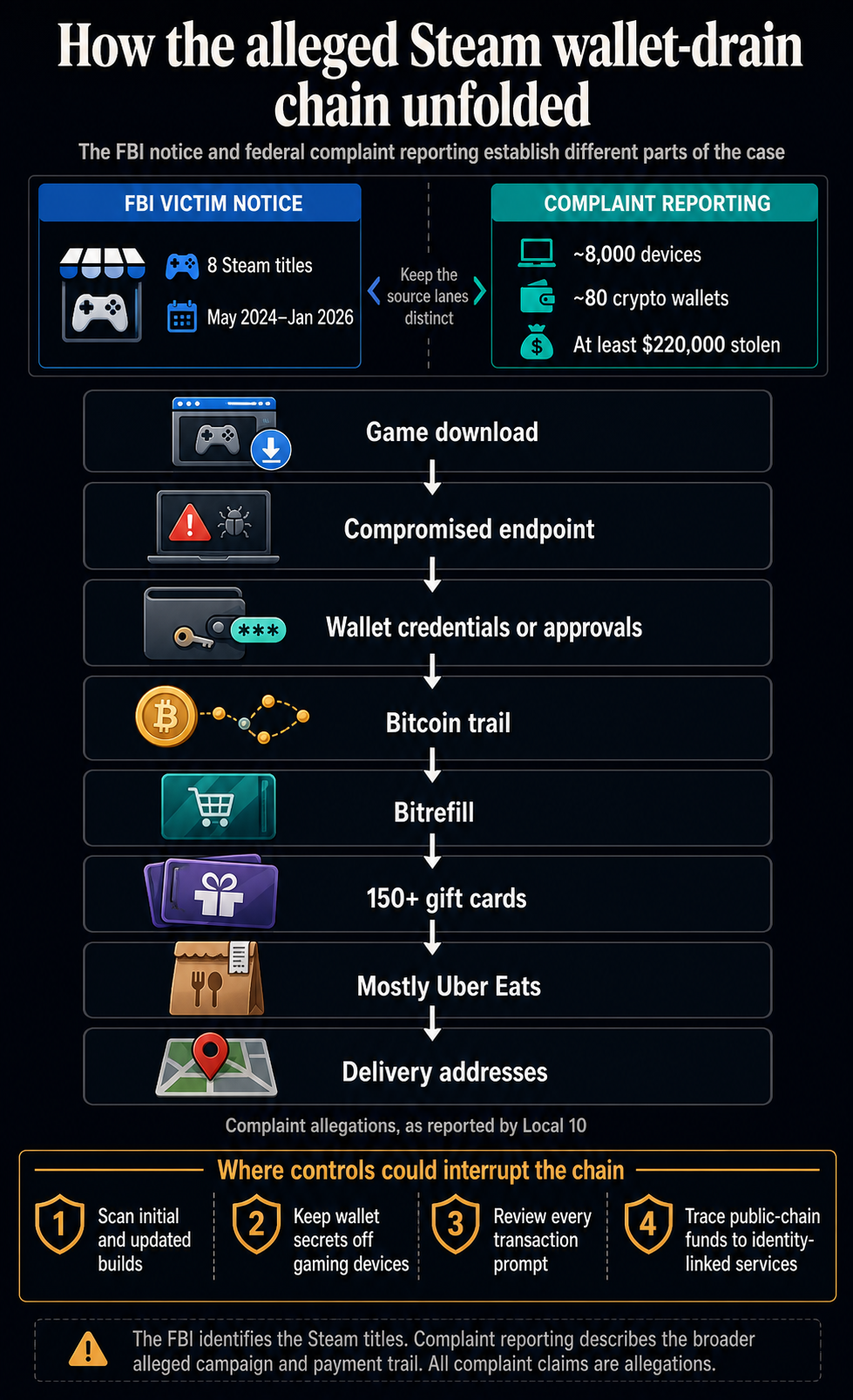
The alleged payment trail exposes the reverse side of the attack. Local 10 reported that investigators followed Bitcoin payments from a scheme-linked wallet to Bitrefill, an online service used to buy more than 150 digital gift cards, mostly for Uber Eats. A subpoena to Uber then allegedly connected those cards to an account with deliveries to addresses associated with Wilkins.
Blockchain transparency did not prevent the thefts, but it allegedly preserved a traceable path until the funds touched an identity-linked service. Software distribution is therefore part of custody security before an incident; on-chain records and off-ramp data can become investigative evidence after one.
Mentioned in this article

Editorial credits