




- Solana swaps through competing routing sources
- Automated and manual swap settings
- Perps, lending and staking in one interface
Get the best Solana routes
Jupiter Overview
- Decentralized Exchange Name
- Jupiter
- KYC
- No
- Products
- Spot, Futures or Perps, Simple-buy Broker
- Staking
- Yes
- Copy Trading
- Yes
- Derivatives
- Yes
- Proof of Reserves
- No
- Trading Fees
- 0% - 0.5%
- Website
- jup.ag
Jupiter Screenshots
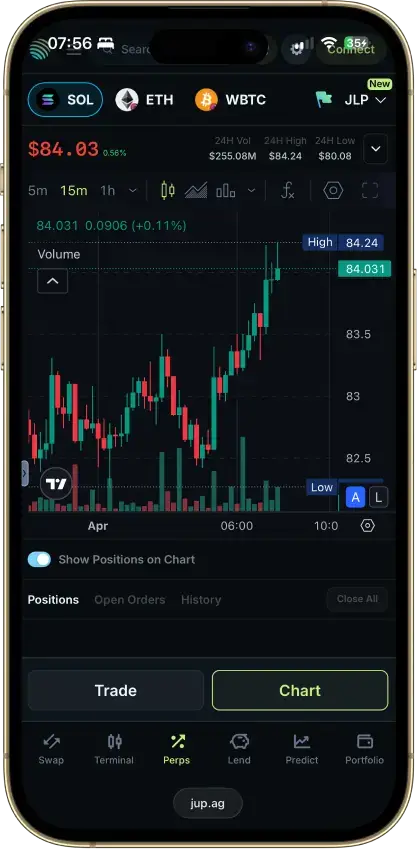
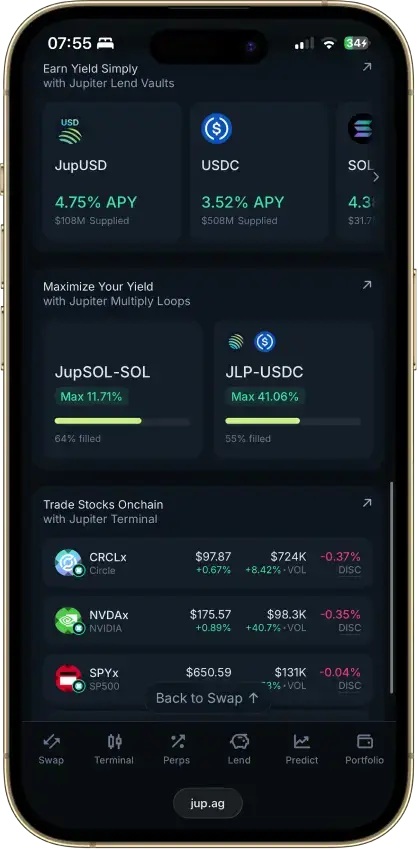
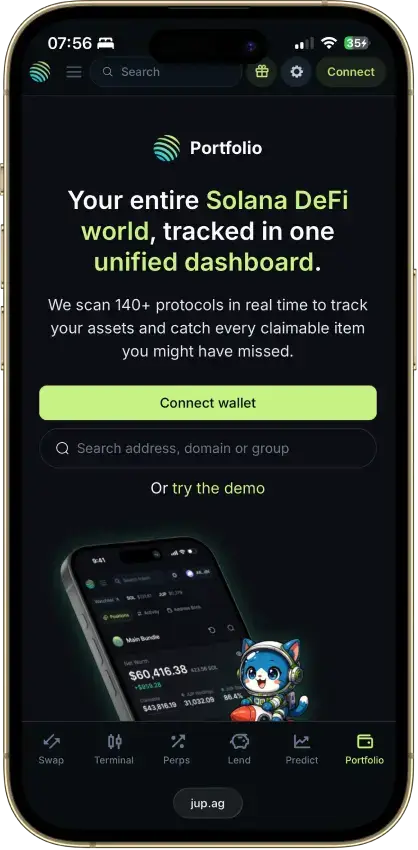
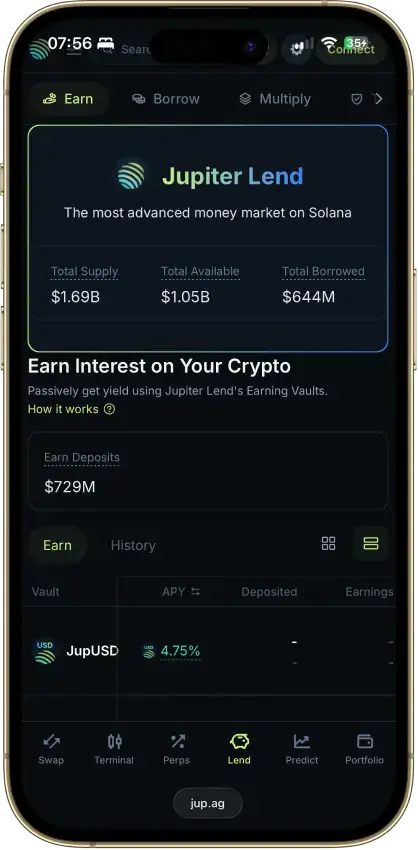
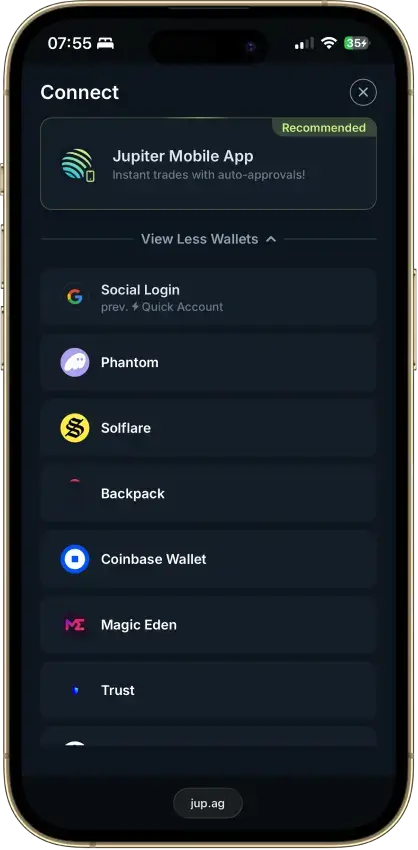
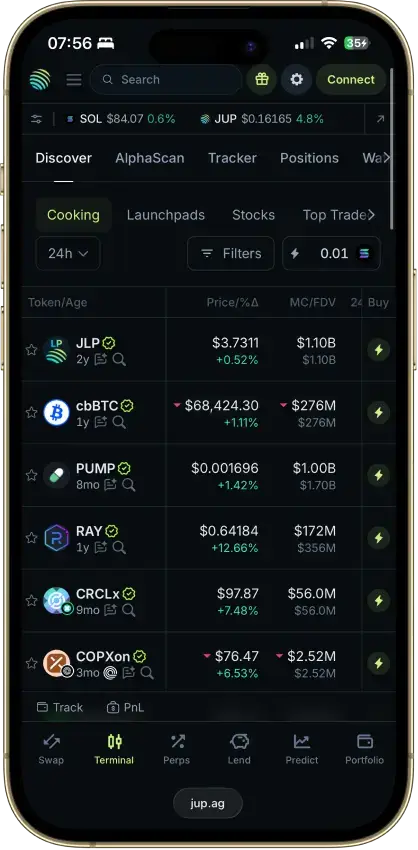
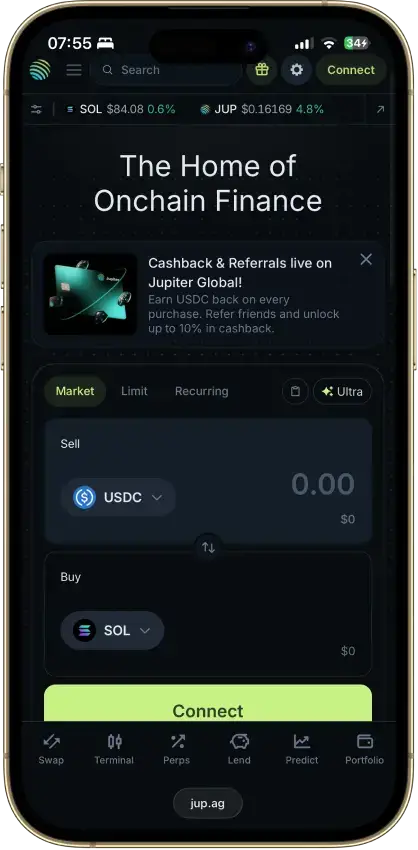
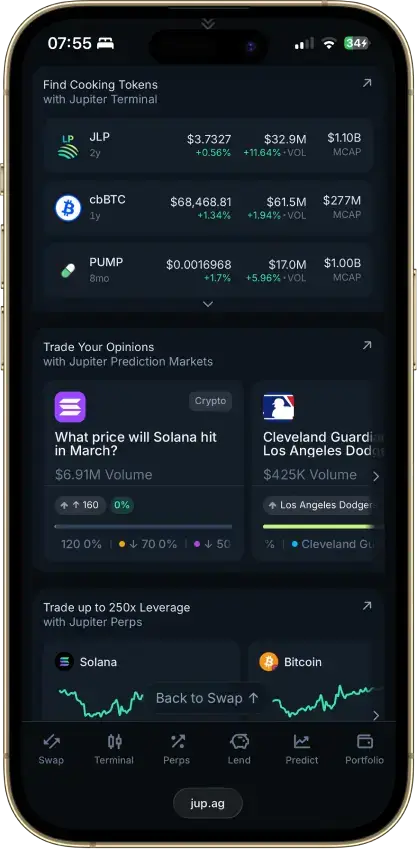
Screenshot 1 of 8
Jupiter Pros and Cons
Pros
- Solana routes compete for swap orders
- Manual controls alongside automated swaps
- Desktop transaction history supports CSV
- Published Lend upgrade and admin controls
Cons
- Native mobile and web fees differ
- Manual swaps exclude execution support
- Lending withdrawals depend on liquidity
- Linked Lend bounty is currently paused
Is Jupiter Worth It?
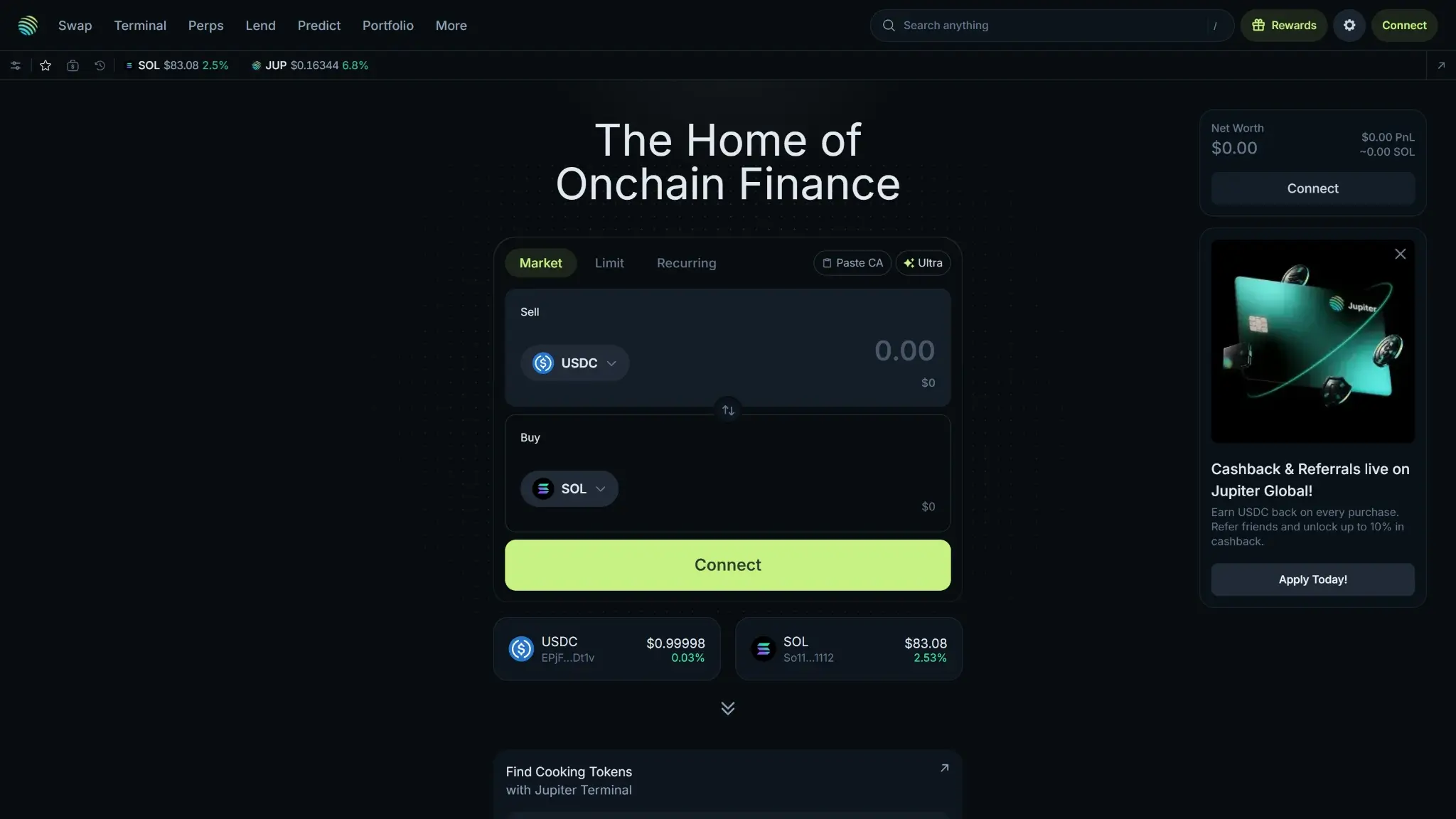
Jupiter is useful when you want a quote across several Solana liquidity sources without checking each pool separately. Ultra handles execution settings automatically, while Manual lets you choose slippage and transaction-fee settings. Manual has no Jupiter commission, but its transactions fall outside Jupiter's execution-support and refund model. Jupiter's fee page makes Manual protection against maximal extractable value (MEV) dependent on configuration, while its Manual guide warns that protection is absent. Do not assume Ultra's default protection carries over. Manual lets you choose broadcasting settings, with a Jito tip payable when you select Jito broadcasting.
A perps position borrows against pool liquidity, a Lend deposit enters lending contracts, and Spend holds a partner-managed balance. Connecting the same wallet does not give those activities identical risks or withdrawal rights.
Who Is Jupiter Best For
An existing Solana wallet makes Jupiter more straightforward to use. Starting from a bank card introduces a payment provider before trading can begin.
For a trader who already holds Solana assets, Jupiter's routing and position views can reduce the number of sites needed for routine activity. Someone whose priority is bank deposits and withdrawals should also compare crypto exchanges by local payment support.
Jupiter Fees and Pricing
Jupiter fees depend on the interface and transaction type. The useful comparison is the amount received after the quote's charges, plus any separately payable network costs.
For an unchanged $1,000 perps notional, the base opening and closing charges total $1.20. That excludes borrow charges, price impact, any collateral conversion and network costs. Applying 0.06% only to the cash collateral would understate the bill.
Hidden Costs To Watch On Jupiter
Ultra Gasless Support covers SOL costs upfront and recovers them from the swap, on top of the ordinary commission. Recovery must stay within 10% of trade value. Eligibility requires less than 0.01 SOL in the wallet, a verified sell-side token and roughly a $10 minimum trade, adjusted for network costs. A fixed SOL cost therefore takes a larger share of a small trade. JupiterZ routes work differently: the market maker covers network and priority fees without that recovery charge, but does not cover the rent for a new token account.
Pool charges and price impact can affect a swap even when the Jupiter commission is zero. A new token can fall into a higher fee band, and a route can change between the first quote and the signed transaction. Compare final output in both directions if you expect to buy and then sell, rather than doubling a single headline percentage.
Perps add an hourly borrowing cost and a price-impact charge. Creating a position can also require SOL account rent, which is distinct from a fee and can return when the account closes.
Fee Discounts And Product Versions
Some Ultra pairs qualify for zero Jupiter commission, including specified pegged-asset routes. This is a pair-specific schedule, not evidence of a universal VIP discount. Native mobile has its own fee bands, including different charges on common pairs.
Legacy Limit and DCA schedules should also stay separate from web V2 orders. Check the order version before applying an old flat-rate example. Promotional rewards should not be subtracted from trading costs unless your actual eligibility and payment are established.
Deposits, Withdrawals, KYC and U.S. Availability
A core Jupiter swap begins with a wallet, while Spend and fiat purchases introduce identity checks and provider eligibility. One login does not make those checks interchangeable.
Jupiter identifies SumSub as Spend's identity-verification provider. Manual review can extend onboarding beyond the ordinary automated process. That verification is not a promise that every card, transfer currency or withdrawal method becomes available.
What U.S. Users Need To Check Before Signing Up
The main interface's restrictions are summarized in Quick Facts. Spend publishes a separate state-based eligibility list, so the availability of a Jupiter-branded card does not override the trading terms. Check the exact product before funding it and do not use a VPN to bypass restrictions. Spend currently lists bank deposits as temporarily unavailable in California, New York, Connecticut and Puerto Rico. Recheck the intended bank route before sending money.
When choosing a beginner crypto exchange, confirm the bank-withdrawal route before the first purchase. With Jupiter, a successful card purchase into a wallet does not establish that the same provider will cash out those funds later.
Fiat And Crosschain Funding Routes
Desktop card purchases and the native app can use different payment providers, so support and fees follow the route actually selected.
Universal Deposit amounts below the displayed minimum accumulate until the threshold is met. That is not the same as an immediate successful deposit. For a fiat purchase problem, the provider that processed the payment handles cancellation or refund eligibility. A completed blockchain transfer cannot be recalled.
Withdrawal Networks And Fees
Tokens held in your wallet can be sent on their supported network. Assets committed to another product first have to be released under that product's rules.
Jupiter Spend's remittance routes charge for incoming and outgoing transfers. USDT-funded Spend deposits cannot be withdrawn to fiat. Only USDC-funded deposits are eligible for that route.
Verification Levels And Withdrawal Limits
There is no single Jupiter withdrawal allowance covering a wallet, lending position and partner account. Spend remittance has a $10,000 per-transfer ceiling, while lending exits depend on liquidity and configured limits. Check withdrawable funds rather than assuming that the displayed total balance can leave immediately.
Complete the requested provider checks before depending on a fiat exit. Approval for Spend identity does not by itself establish eligibility for every bank corridor or remove a lending contract's withdrawal limits.
Is Jupiter Safe?
Jupiter publishes security reports for its individual contracts. A swap, lending deposit and partner-held balance each require a different assessment, even when the user signs with the same wallet.
Controls
Lend publishes separate authorities for upgrades, protocol configuration, initialization and operational activity. Its upgrade wallet requires four of seven signers, and the public program repository describes a 12-hour delay for upgrades. Configuration authority is separate, so that delay should not be presented as a guarantee that every parameter change waits 12 hours.
Perps and lending also depend on price data and position-management logic. An audit of a swap program does not establish that every oracle, integrated token or later lending feature has the same reviewed behavior.
Custody And Insurance
The custody question is where the funds sit after signing, not whether a wallet was used to enter the product.
None of those arrangements should be assumed to provide bank-deposit insurance or automatic compensation for a loss. An audit report and a support policy serve different purposes from insurance.
Proof Of Reserves Or Audits
Jupiter’s published reports cover named programs, including Swap v6, perpetuals and parts of Lend. The Lend transparency page also lists newer 2026 AMM reviews. These are reviews of code within defined scopes, not a financial audit of all user liabilities or a guarantee about every live integration.
The bounty link on that page currently leads to a program marked paused and not accepting submissions. An available security contact should not be confused with an active reward program.
Incidents And Remediation
Jupiter’s main X account was compromised in February 2025 and used to publish malicious promotions. The team’s incident report described account recovery, device replacement and follow-up credential procedures, while leaving the exact takeover method unresolved. This was a social-account incident, not proof that the swap contracts themselves were drained.
It remains a practical reason to verify the domain and token mint independently of a promotional post. A familiar account name alone cannot authenticate a newly promoted token.
Supported Assets and Markets
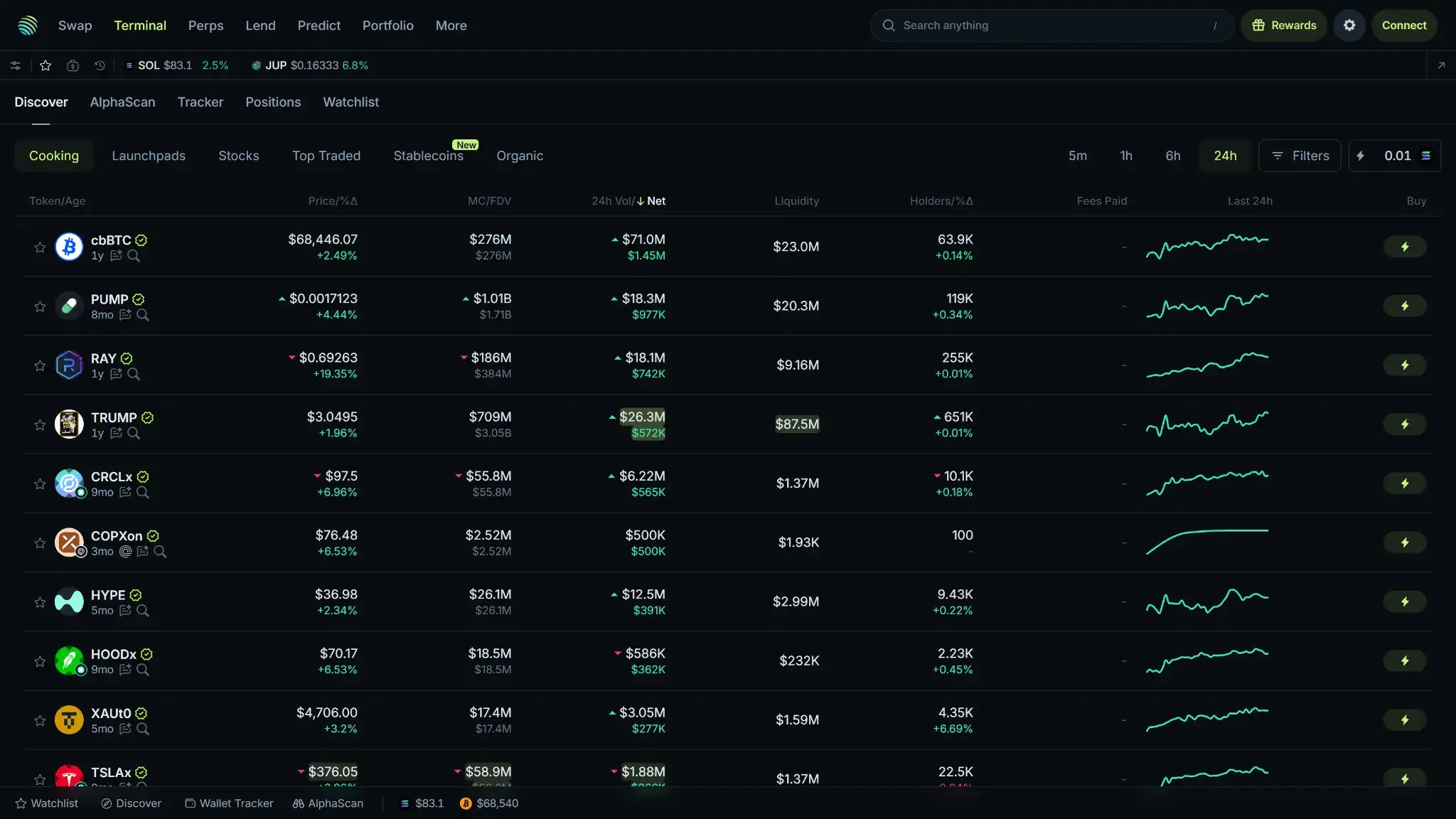
Jupiter compares swap routes on Solana, drawing on automated market makers that hold liquidity in pools and on quotes supplied by market makers. Search results can include tokens with thin liquidity or restrictive transfer controls, so finding the token is only the start of evaluating a trade.
Check the token's mint address, expected output and price impact before signing. For a small or newly created token, a visible buying route does not prove that an equally usable selling route will remain available. Price movement, depleted liquidity and token restrictions can all change the exit.
App, UX and Customer Support
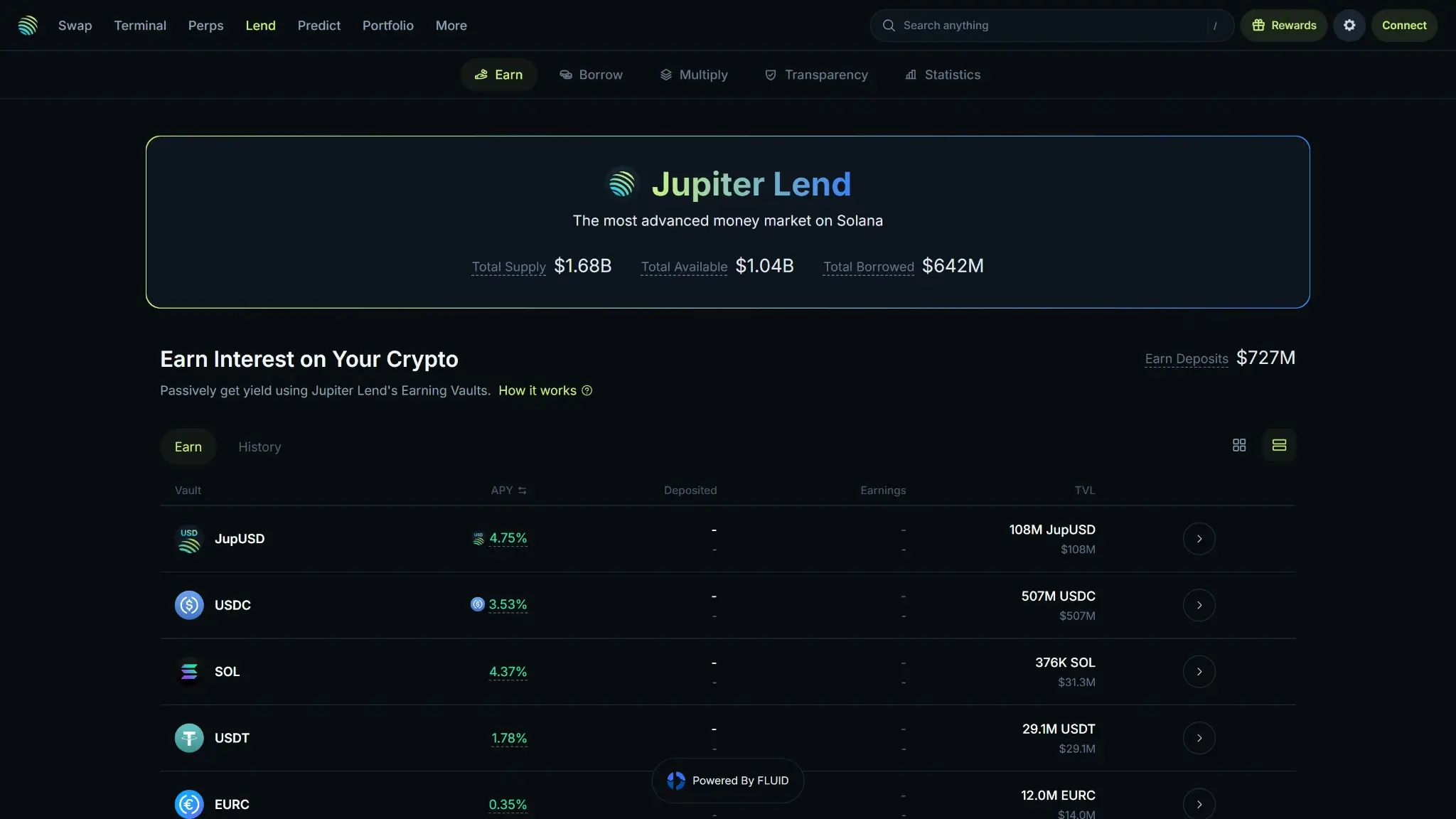
The website makes switching between trading and position-management products easy, but the fee and support differences require attention at each switch.
UI And Navigation
In our logged-out September 16 check, the USDC-to-SOL quote preview exposed a 0.02% platform-fee row. The network-fee row remained blank, so the preview did not establish the complete cost of executing from a funded wallet. Both $100 and $1,000 input samples returned quotes, with output changing as routes and markets updated.
Jupiter Portfolio adds transaction history and desktop CSV export. The export includes only loaded history and respects the filters hiding failed or spam transactions. Load every page you need before exporting. Multiple token movements from one transaction can occupy several rows, and the file does not replace a complete tax calculation.
Mobile App
The official Apple and Google listings identify Raccoon Labs as the mobile developer. The Chromium extension is a separate install linked from Jupiter's site. Native mobile fees differ from web fees, and the desktop CSV export is unavailable on small screens.
The small set of app-store reviews we examined praised convenience but also raised fee-page discoverability, a resolved font-size onboarding issue and occasional prediction-screen freezing. Those comments are useful usability signals, not measurements of swap reliability or security.
Reliability And Status Page
Jupiter's status page separates the website and several APIs, including Swap V2, Ultra and Trigger. Its rolling availability percentages describe those listed components and their current window. They do not measure the probability that your particular swap, bank transfer or lending withdrawal will succeed.
Use the affected component's status alongside your transaction record when diagnosing a failure. A working website does not establish that a payment provider has completed a transfer, and a delayed lending exit does not necessarily mean the website is down.
Customer Support
Use the support hub or in-app Get Help route, and identify the product and transaction involved before opening a ticket.
The compensation process’s stated waiting period is not a response-time promise for every support request. Support also cannot reverse a correctly executed blockchain transfer merely because its destination was wrong.
Features That Matter on Jupiter
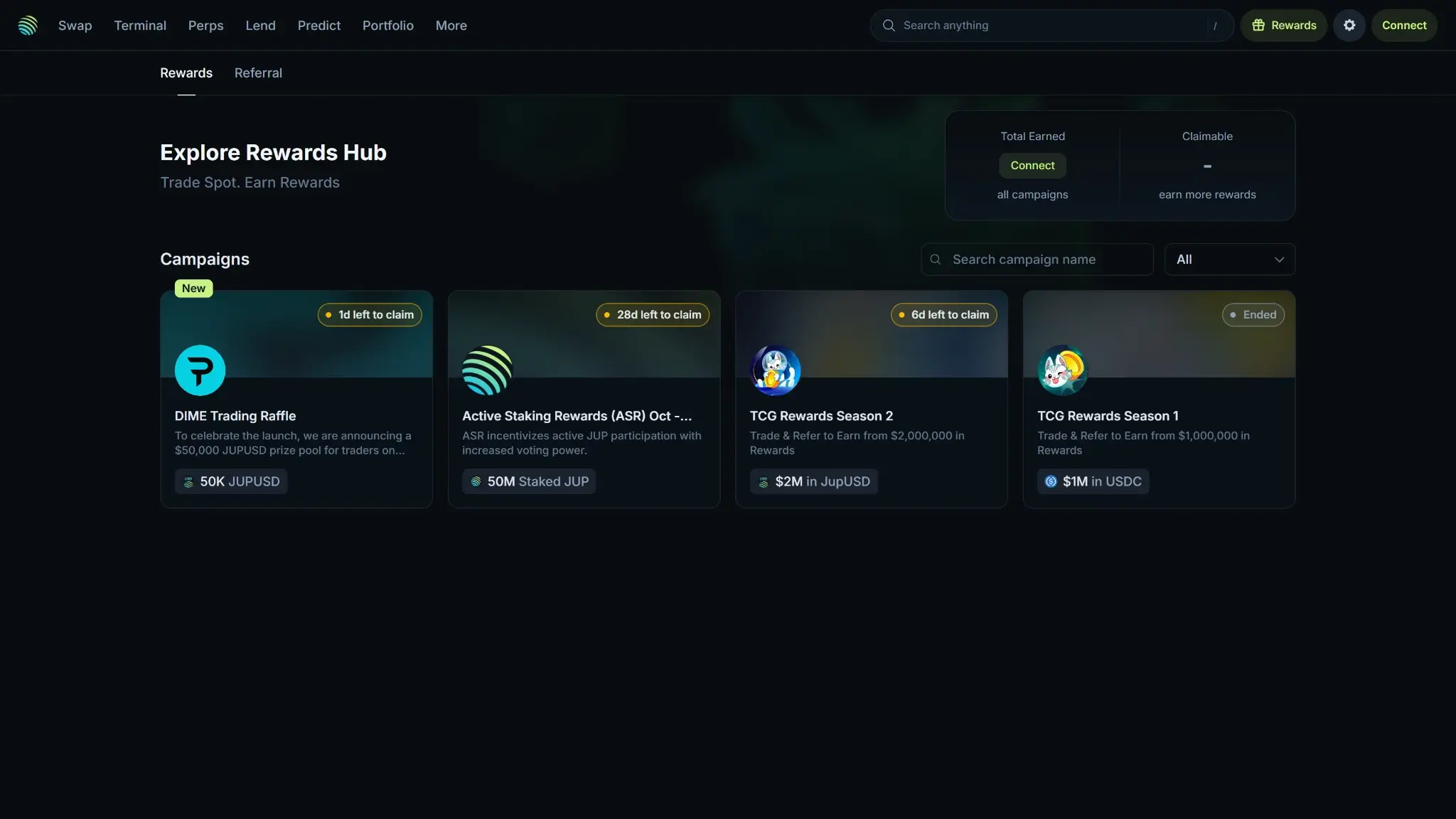
Jupiter compares pool routes with market-maker quotes for a requested swap. Manual settings let you exclude routing sources, which gives you more control but can change the price available for that order.
Prediction markets, Offerbook and Gacha also appear in Jupiter's navigation. Their presence should not be read as the same eligibility, pricing or risk profile as a spot swap.
Perpetuals And Margin Controls
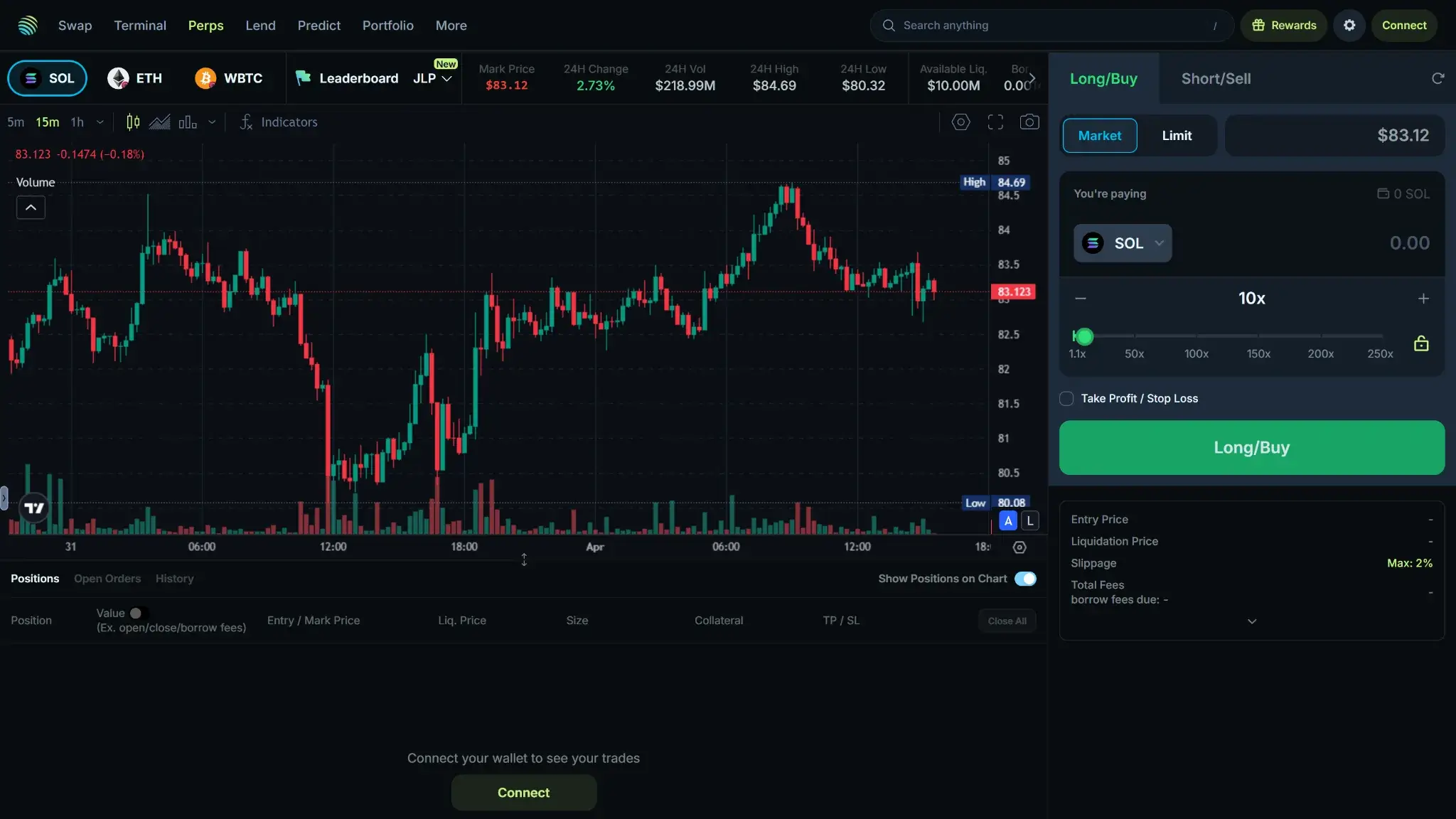
Jupiter Perps offers SOL, ETH and wBTC positions with an opening range of 1.1–250x. The separate 500 parameter used in maintenance-margin calculations is not a 500x opening limit. Long positions use the underlying asset as collateral, while shorts use USDC, so a different input token may need conversion.
Positions in the same asset and direction merge, with a maximum of six asset-and-side combinations. Borrow charges reduce collateral while a position remains open. Liquidation takes the remaining collateral, so stop-loss settings and the displayed liquidation estimate should not be treated as guaranteed protection against a loss.
Staking And Rewards
JupSOL represents a claim on staked SOL and keeps that exposure transferable. Its usefulness depends partly on how you plan to exit, since selling the token and unstaking the underlying SOL have different costs and timing.
An immediate market sale depends on the quote and liquidity. Compare that output with the delayed unstaking route before treating JupSOL’s transferability as a promise of an immediate exit at its staking value.
Jupiter Lend’s ordinary Earn product pays variable interest from borrowing activity. Its 10% reserve factor applies to borrower interest, not to the principal you deposit. Smart Vaults add optional automated-market-maker exposure, where collateral or debt can consist of a changing token pair. Smart Earn supplies paired liquidity without borrowing, but still exposes funds to the assets and contracts involved.
JLP serves a different purpose again: it supplies the pool backing perpetual trades. Its value reflects the pool’s assets and trading outcomes as well as fee income. It should not be treated as a stable savings balance.
Card
Jupiter Spend uses Rain or DCS for cards, assigned according to residence. Deposited supported stablecoins are converted into a USD balance held through financial partners. Spending that balance is different from signing a swap directly from a DeFi wallet.
Physical cards are being introduced in phases, so availability can differ from the virtual card. Card eligibility does not establish access to the main trading interface, and a supported payment country does not automatically have a supported bank-withdrawal route.
Wallet And Self-Custody Options
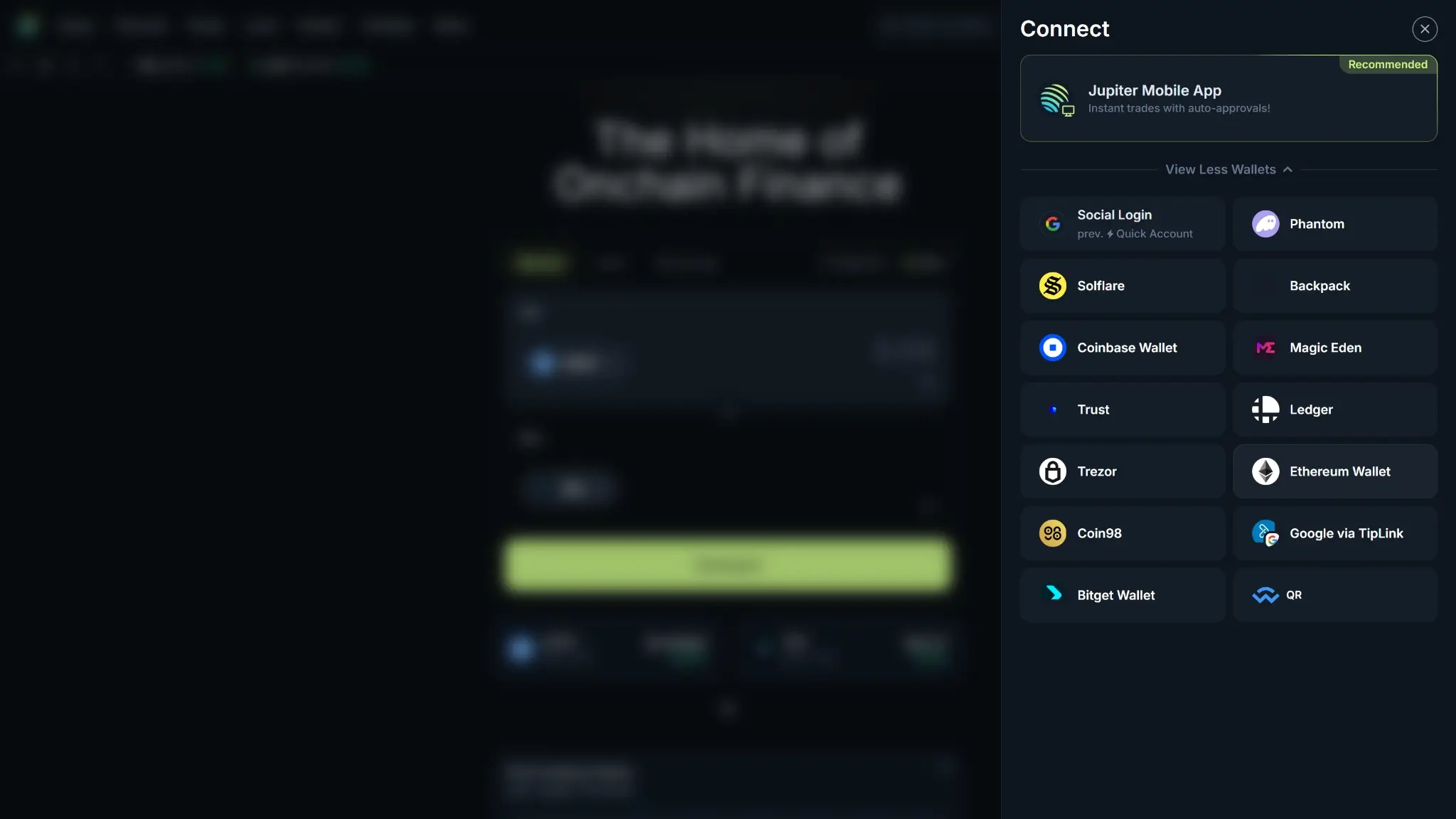
Jupiter accepts external wallets alongside its own wallet products. Jupiter ID offers email, Google and Apple access, with older login methods shown separately. Its embedded wallet has an exportable private key and no recovery phrase. Keeping an exported backup changes your recovery options if access to the login account is lost.
Jupiter Mobile and the Chromium extension are distinct products. The extension supports hardware wallets and optional Auto-Earn, which moves enabled stablecoins into Lend. That setting changes the funds’ exposure from a wallet balance to a lending claim. The extension’s code is not currently open-source.
API And Programmatic Trading
Swap V2 is the current developer workflow replacing Ultra API. The retail interface still uses the Ultra name, so the API migration does not mean that retail Ultra disappeared.
Choose the integration path according to how much transaction assembly and submission you intend to manage.
A third-party app using Jupiter may therefore charge differently from Jupiter's own website. The integration's fee fields and final token amounts show the applicable charges. A retail percentage alone cannot establish the cost of an API-powered trade.
Alternatives to Jupiter
The useful alternative depends on whether you want a different trading network, a different way to access a specific Solana pool, or the earlier launch-curve stage before a token reaches liquid pools at all.
-


Raydium
Jupiter compares routes across existing Solana pools; a trader who wants to select and manage a specific pool position directly, rather than have it aggregated, should compare Raydium's standard and concentrated-liquidity options.
-

Uniswap Labs
Jupiter's routing is Solana-specific; assets on Ethereum or other supported EVM networks need Uniswap's wallet-swap and liquidity-position model instead.
-

Pump.Fun
A token that hasn't graduated into liquid Solana pools yet won't show a usable Jupiter route; Pump.fun's launch-curve access covers that earlier, higher-risk stage.
Among decentralized exchanges, Jupiter is useful for comparing several Solana liquidity sources in one quote. Its connected products can reduce navigation between apps, but accessing a Lend deposit or Spend balance still requires that product's own exit process.
Final Verdict
Jupiter is useful for comparing Solana swap routes, provided you account for each product’s fees, access rules and withdrawal conditions.
Best For
Solana traders comparing swaps and managing DeFi positions
Avoid If
- You need one fee schedule and withdrawal policy for every product
Disclaimer: CryptoSlate may receive a commission when you click links on our site and make a purchase or complete an action with a third party. This does not influence our editorial independence, reviews, or ratings, and we always aim to provide accurate, transparent information to our readers.