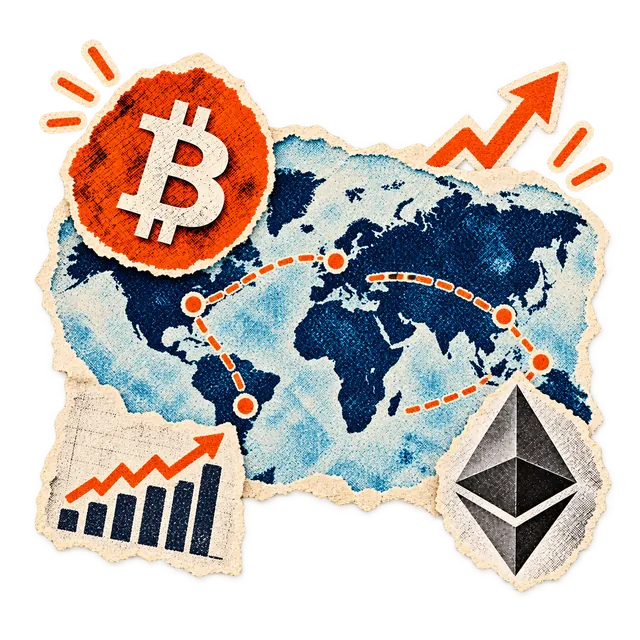



Paid (PAID) is the native token of the UsePaid protocol, a blockchain bridge designed to automatically route a portion of token trading fees to creators' X accounts through X Money. The protocol combines on-chain token activity with a familiar social-media payment rail to automate creator payouts across supported networks.
Overview
UsePaid is built around automated creator payments. A portion of fees generated through token trading can be routed to eligible creators without requiring them to manually claim or manage the payment process. The system is designed to connect on-chain fee flows with X Money, formerly associated with X's payment ecosystem.
PAID is the protocol's native value-accrual token. It does not determine who can launch, what UsePaid charges, or who receives creator payments. Holding PAID is also not required to access the bridge.
Creator Payouts
The primary function of UsePaid is to automate the distribution of creator payouts from on-chain token fees. Instead of requiring creators to manage multiple blockchain transactions or payment systems, the protocol is designed to route a portion of applicable fees to their X accounts through X Money.
This model connects decentralized token activity with an established social-media payment interface. By using an automated process, creators can receive payouts without needing to participate directly in each underlying fee transaction.
Multi-Chain Bridge
UsePaid operates as a bridge designed to support token activity across multiple blockchain networks. Its payout infrastructure is intended to work across supported chains while maintaining a unified process for creator compensation.
The multi-chain structure is a key part of the protocol's design. Rather than requiring creators to manage separate payout systems for different networks, UsePaid aims to provide a single automated mechanism for routing eligible fees.
Role of PAID
PAID's sole stated function is value accrual through a transparent buy-and-burn mechanism funded by protocol fees. It is not a governance token and does not serve as a fee token required to use the bridge.
According to the protocol's stated economics, 20% of bridge fees are used to purchase PAID, with the acquired tokens subsequently removed from supply. The amount of PAID removed therefore depends on the fees generated by protocol activity.
No Governance Requirement
Holding PAID does not grant holders governance rights over the UsePaid protocol. The token does not determine what UsePaid charges, who can launch, or who receives creator payments.
Nothing about the bridge is gated behind PAID ownership. This separates the token's role from protocols where token ownership provides voting power, access to services, or control over protocol parameters.
Value Accrual and Supply
The buy-and-burn mechanism connects protocol usage with PAID's supply dynamics. As the bridge generates fees, the portion allocated to the mechanism is used to acquire PAID and remove the purchased tokens from circulation.
The mechanism therefore creates a relationship between bridge activity and token supply. Higher fee generation can result in more PAID being purchased and removed, while lower protocol activity results in less capital being directed toward the mechanism.
Market Context
UsePaid combines blockchain-based fee routing, cross-chain infrastructure, and creator payments through a social-media payment rail. Its model is focused on making creator compensation automatic rather than requiring creators to manage the underlying on-chain payment process.
PAID complements this infrastructure through a narrower economic role. Rather than providing governance or access to the bridge, the token is designed to accrue value through protocol-funded purchases and burns.
Risks and Considerations
PAID's value-accrual mechanism depends on the continued generation of fees by the UsePaid protocol and the implementation of its buy-and-burn process. Changes in bridge activity, fee levels, supported networks, or payout infrastructure can affect the amount of capital directed toward PAID purchases.
PAID also carries risks common to crypto assets, including market volatility, liquidity risk, smart-contract risk, bridge and cross-chain infrastructure risk, and changes to protocol functionality. The buy-and-burn mechanism does not guarantee a particular market value for the token.