
Quick Take
- Blast will wind down its Ethereum layer-2 after saying maintenance costs exceed the revenue it generates.
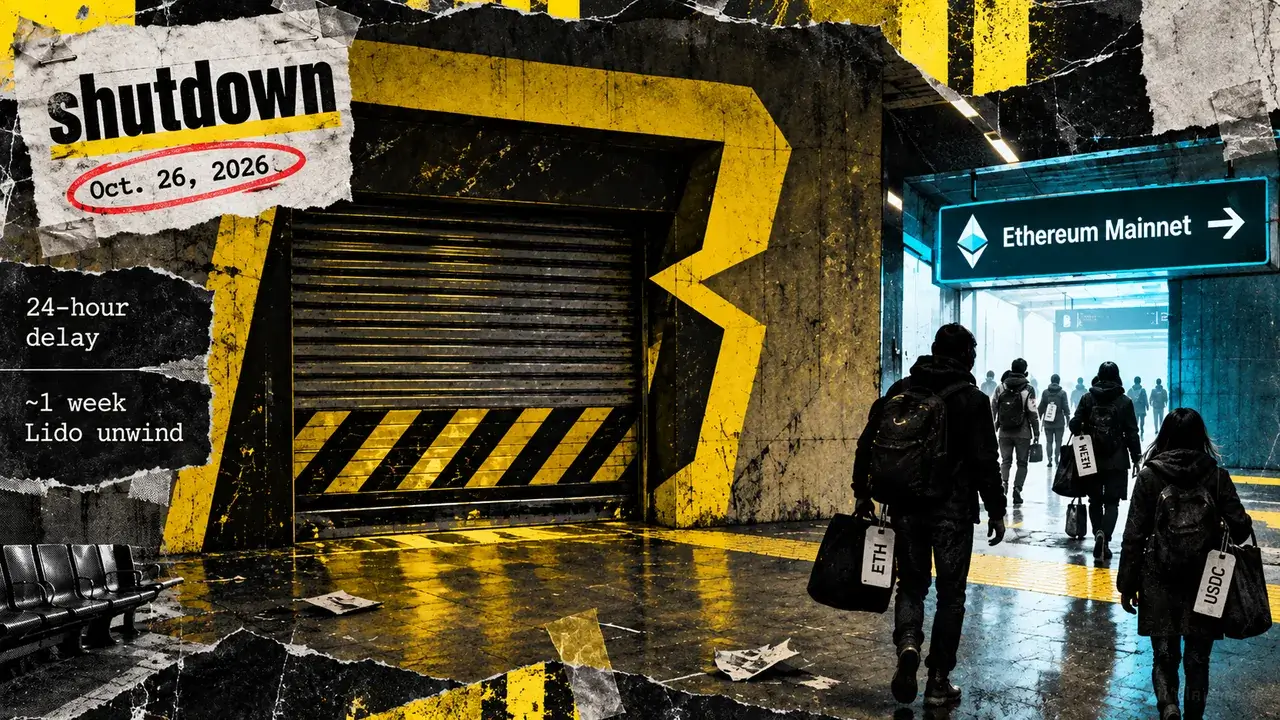
- Withdrawals will pause during a Lido unwind expected to take about a week, then reopen with a 24-hour delay.
- Normal-interface withdrawals end Oct. 26, and Blast says assets remain recoverable afterward through its Ethereum mainnet bridge contracts.


Ethereum layer-2 network built around native yield Blast said on Oct. 2 that it will shut down because maintaining the chain costs more than it earns.
The project asked users to move their assets to Ethereum mainnet by Oct. 26 to withdraw through its normal interface.
Blast said in its shutdown announcement that it sees no credible path to making the network economically sustainable. It plans to wind down the chain through an asset withdrawal process that will temporarily interrupt users’ ability to exit.
The decision comes nearly three years after Blast disclosed $20 million in funding from Paradigm and Standard Crypto on Nov. 20, 2023. The network opened early access that November, with a mainnet launch then planned for February 2024.
Its documented design describes an Ethereum-compatible optimistic rollup that passes yield from ETH staking and real-world-asset protocols to users. The website identifies Lido and MakerDAO as yield sources and lists additional investors among Blast's backers.
The yield model was intended to let holders benefit from returns earned by those underlying protocols, but Blast now says those operating economics no longer justify keeping the network running.
Blast's withdrawal pause and Oct. 26 cutoff
Blast said it will first withdraw its assets from Lido, which its design identifies as a source of ETH staking yield, a process that is expected to take approximately one week.
User withdrawals will be temporarily unavailable during the unwind, even after the network reduces its withdrawal delay to 24 hours.
Withdrawals will resume with the new 24-hour delay once the Lido process is complete, according to the announcement. The roughly one-week interruption and the withdrawal delay after reopening are separate parts of the exit timetable.
The request to move funds back to Ethereum includes balances held in Blast’s web app, which the announcement calls the PWA. Blast encouraged all users to withdraw before Oct. 26.
After that date, Blast said assets will remain withdrawable, but users will need to interact directly with its bridge contracts on Ethereum mainnet.
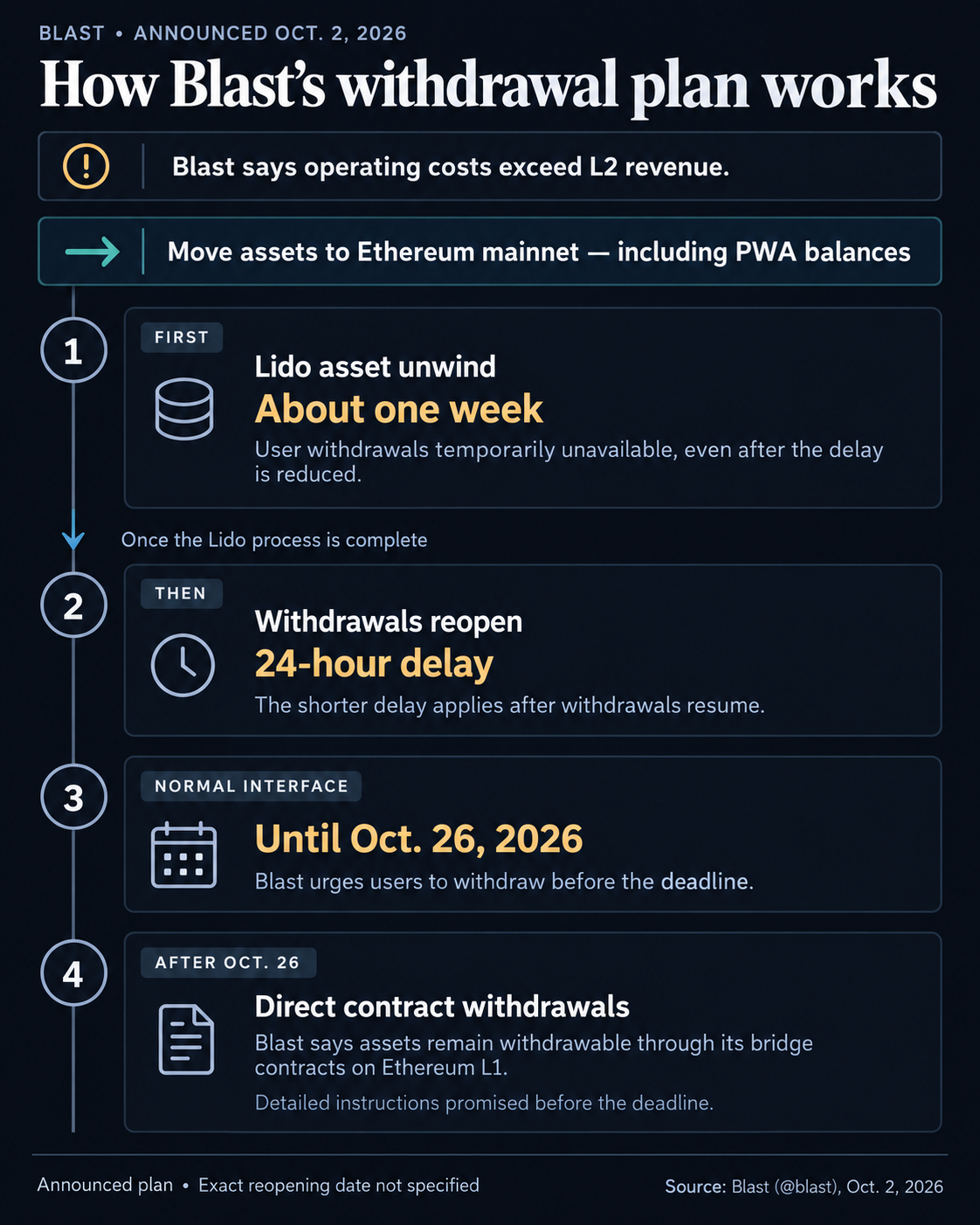
Blast promised to publish detailed instructions for that route before the deadline. The announcement gives an approximate duration for the Lido unwind but does not specify an exact date when normal withdrawals will resume.
Mentioned in this article



Editorial credits