
UK Social Media Ban Date
Current Odds
Odds Summary
June 30, 2027 leads at 61.5% reported probability on Polymarket.
Polymarket · Last synced
Market Analysis
Starmer’s under-16 social ban faces a deadline credibility test
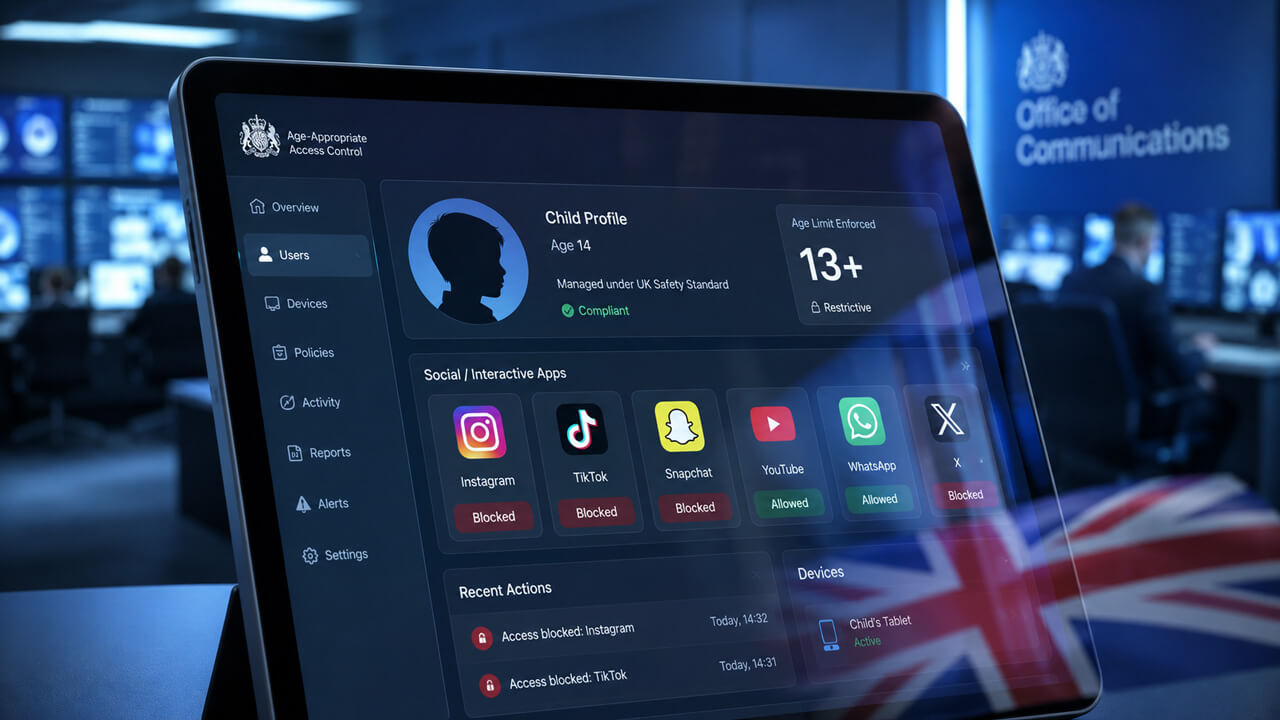
Polymarket’s paired deadlines suggest the market is treating the UK ban as a test of administrative follow-through after Starmer’s announcement. The analytical payoff sits in the narrow gap between dates, where timing, regulatory wording, and thin liquidity collide.

The market is pricing the proposed under-16 social media ban as a live policy project whose hardest question is timing. Keir Starmer’s June 15 announcement gives the proposal political sponsorship, yet the event resolves on whether a ban is actually in effect by specific dates. That gap between intention and legal operation explains the mid-40s pricing across both listed deadlines.
Starmer’s announcement supplies legitimacy; settlement demands legal effect
The June 15 statement matters because a prime ministerial announcement can coordinate departments, regulators, and platforms around a timetable. For a market settling on the existence of an in-force ban, political sponsorship is only the first layer. The settlement source is Ofcom, so the price has to absorb the risk that a public pledge enters procedural stages before it becomes an operative restriction on access by children under 16.
That distinction matters because a ban can be announced, debated, scoped, and prepared without satisfying the resolution standard. If pricing leaned purely on the announcement, the near-term date would likely carry a stronger signal. The current level implies meaningful execution risk around age-assurance design, platform coverage, and the official moment at which a restriction counts as in effect.
The two deadlines tell a single-path implementation story
The December 31, 2026 contract is at 43.5%, and the June 30, 2027 contract is at 44%. In a “by” structure, an extra six months would normally create a visible gap if the market expected implementation during the first half of 2027. The half-point difference points to a clustered belief: either the ban arrives fast enough to satisfy both dates, or the process slips beyond both.
This matters because the market is compressing the policy path into a launch-window question. The narrow spread gives limited evidence that early 2027 is being priced as a decisive transition period. That could arise from assumptions about government urgency, ambiguity around “in effect,” or the sparse liquidity anchoring both outcomes near each other.
Ofcom’s role turns wording into the market’s main bottleneck
Because Ofcom is the settlement source, the central question becomes whether the regulator records or implements a ban in terms that match the market. A narrower measure, a staged duty, or an age-assurance requirement that stops short of an access ban could create a gap between policy progress and resolution success. That gap matters because markets tied to regulatory wording can move on definitions as much as political momentum.
The phrase “children under the age of 16 from accessing social media services” also embeds scope questions. The market has to infer what services count, what form of access restriction qualifies, and whether partial implementation qualifies. Any Ofcom publication clarifying these terms would carry immediate pricing relevance because it reduces competing interpretations of the same announcement.
Thin liquidity magnifies official signals and procedural silence
The displayed liquidity of $666 matters because this is a political-regulatory market with a small visible capital base. The provided snapshot lists no volume, open interest, or trader count, limiting evidence about depth of conviction. That is a fragile evidentiary base, so official documents can move displayed odds faster than broad policy debate.
Silence also has market weight. Each week without a formal timetable consumes the limited runway to December 31, 2026, while the later date carries only marginal additional value in the current structure. A single official publication with a commencement date could reshape both contracts together; an official delay beyond June 2027 would challenge their shared premise.
Only formal milestones can separate the two dates
For the dates to diverge, the market needs evidence that the policy is likely to become operative in a particular window. Hypothetical examples with direct pricing relevance include:
- A published government timetable or legal instrument setting commencement before Dec. 31, 2026.
- An Ofcom statement or guidance indicating when platforms must prevent under-16 access.
- A formal delay, consultation extension, or implementation schedule reaching beyond June 30, 2027.
- A scope clarification that covers fewer services or a different age threshold than the market question.
- A legal or operational challenge that pushes the effective date outside both windows.
These catalysts matter because vague progress leaves the settlement test unresolved. A speech reaffirming intent may support the broad narrative, while a document stating when obligations begin would affect the condition the contracts measure.
Delay evidence would challenge the political-intent premise
The main counter-signal is straightforward: government intention can lose market weight as the calendar advances without enforceable text. Starmer’s announcement explains why the ban carries a material probability by both dates. The absence of a wider deadline gap suggests the Yes-by-2027 thesis relies on a fast official pathway.
If Ofcom or the government signals that work remains at consultation, scoping, or technical design stage late in 2026, the pricing premise weakens because “in effect” requires legal effect alongside intent. A clear in-force date before year-end would explain why the two contracts have moved together: once the earlier deadline resolves, the later one follows the same factual event.
Sources
What Could Move the Odds?
Market-Implied Thesis
The 61.5% June 2027 price implies the under-16 social-media restriction is more likely to take effect by then than by end-2026.
This aligns with GOV.UK’s stated aim to lay initial regulations by end-2026 and have the first restrictions operating in Spring 2027, rather than a broad shutdown of online services.
What Could Reprice It
Whether the government lays the first social-media age-restriction regulations before Parliament by end-2026 is the clearest timing test.
That formal step would substantiate the Spring 2027 implementation path; delay would challenge the market’s preference for the June 2027 timeframe over December 2026.
Where the Market May Be Weak
The pricing signal is lightly tested: $5.13K traded and $827 open interest are modest beside $35.21K displayed liquidity.
Displayed liquidity does not establish that substantial capital has accepted the timing thesis. The multi-timeframe format also derives each date from separate binary Yes prices, which can fragment participation.
Counter-Signal
The timetable could fail because a completed legal and enforcement framework is not yet evidenced by the policy plan alone.
The Online Services (Age Restrictions) Bill remains at committee stage, while Ofcom’s age-assurance report evaluates current provider use rather than confirming universal, workable enforcement for the planned restriction.
Market Details
- Resolution criteria
- On June 15, 2026, Prime Minister Keir Starmer announced the UK government’s intention to ban children under the age of 16 from accessing social media services.
- Platform
-


- Category
- Politics › UK
- Scheduled deadline
- July 1, 2027, 3:59 AM UTC
- Settlement source
- ofcom.org.uk
- Market rules summary
- Multi-timeframe Polymarket event. Each listed timeframe is represented by its Yes price on the underlying binary market. View full rules
Frequently Asked Questions
What are the current UK Social Media Ban Date odds?
Polymarket reports UK Social Media Ban Date odds with June 30, 2027 at 61.5% and December 31, 2026 at 12%. These probabilities are market-implied and can change as liquidity and trading activity update. The latest market snapshot includes $5.13K volume, $35.27K liquidity, and $827 open interest. CryptoSlate last synced this market data at Oct 21, 2026, 19:42 UTC.
What could move the UK Social Media Ban Date prediction market odds?
The 61.5% June 2027 price implies the under-16 social-media restriction is more likely to take effect by then than by end-2026. This aligns with GOV.UK’s stated aim to lay initial regulations by end-2026 and have the first restrictions operating in Spring 2027, rather than a broad shutdown of online services. Catalysts to watch include Initial regulations being laid before Parliament by end-2026, Regulations laid before Parliament by end-2026, and Legislative progress and age-assurance implementation.
How does the UK Social Media Ban Date prediction market resolve?
On June 15, 2026, Prime Minister Keir Starmer announced the UK government’s intention to ban children under the age of 16 from accessing social media services. Multi-timeframe Polymarket event. Each listed timeframe is represented by its Yes price on the underlying binary market. The settlement source listed for this market is Ofcom.
Related UK Markets
 Greater Manchester Mayoral Election Winner


 Next UK Chancellor of the Exchequer in 2026?


 Which party will win Wisconsin’s 2026 governor election?