
Norway vs. England
Final Results
Scheduled deadline: Jul 11, 2026, 21:00 UTC
Market Resolution
Polymarket reports Draw as the winning outcome for the Norway vs. England prediction market with a final probability of 100%. Scheduled deadline: Jul 11, 2026, 21:00 UTC. Final reported trading volume was $48.21M.
Polymarket · Final sync
Market Analysis
England’s pedigree meets Norway’s Haaland problem in Miami quarter-final
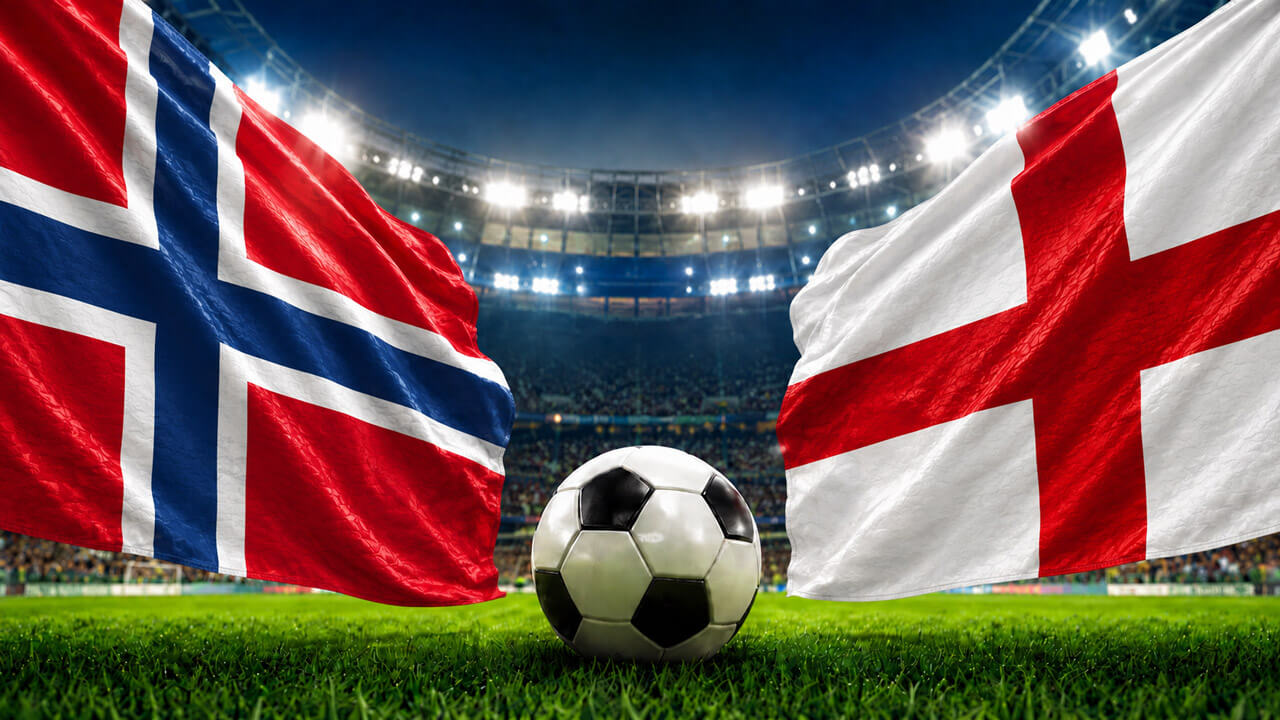
England enters the Miami quarter-final with the cleaner institutional case, yet Norway brings the kind of concentrated scoring threat that can bend a knockout market quickly. The price is built around which evidence carries more weight: England’s broader base or Norway’s sharper spear.

The market’s tilt toward England is best read as a preference for depth, qualification dominance, and tournament survivability over Norway’s narrower but highly dangerous Haaland-led path. That framing explains why England sits above 50% while Norway remains a live underdog and the draw holds meaningful weight in a knockout fixture where one goal can compress every assumption.
England’s price leans on a wider sample of control
England’s case starts before this quarter-final. FIFA’s team profile says England were the first European nation to qualify for the 2026 World Cup, doing so in October 2025 with two matches to spare after winning their first six qualifiers without conceding. For this market, that matters because clean qualification data gives England a broader baseline than a single knockout result. It supports the inference that the market is valuing England’s ability to control matches across game states, opponents, and venues.
The recent 2-1 win over Congo DR adds a different kind of evidence. FIFA noted it was England’s first World Cup win after trailing at half-time, which helps explain why the England outcome can command a majority price despite the narrow scoreline. A team that has already shown it can recover from a deficit carries a different market profile from one whose favorite status depends on scoring first.
The tension is that the same Congo DR match also supplies the main reason England has not pulled further away. A 2-1 comeback proves resilience, yet it also confirms that England can be disrupted early. In a three-outcome market, that matters because a slow England start feeds both the Norway path and the draw path at the same time.
Norway’s number is anchored by ceiling, not reputation
Norway’s 22.5% share is difficult to explain through World Cup history alone, given FIFA notes this is the country’s first appearance at the tournament since 1998. The stronger explanation is current-cycle evidence: Norway finished first in UEFA Group I qualifying and sealed that run by beating Italy 4-1 in Milan on the final matchday. That result gives the market a reason to treat Norway as more than a novelty quarter-finalist.
The decisive player-level variable is Erling Haaland. FIFA highlighted that Haaland scored his fifth goal of the tournament and his 60th for Norway overall in the 2-1 win over Côte d’Ivoire. That kind of finishing form changes how the market can price an underdog. Norway may not need long territorial control if its best attacking sequences end with Haaland receiving high-value chances. Martin Odegaard’s presence adds a creative reference point around that threat, giving Norway a recognizable mechanism for turning limited possession into scoring pressure.
That mechanism is why the Norway price can stay supported even after a slight 24-hour move lower. A favorite can own the deeper résumé, while the underdog owns the most direct single-player route to a match swing. If Norway scores first, the market would likely have to reassess whether England’s comeback evidence from Congo DR transfers cleanly against a side with Haaland protecting a lead.
The draw price says the market respects knockout friction
The draw at 26.5% is the quiet center of this market. FIFA’s bracket lists Norway vs England as Match 99, a July 11 quarter-final at Miami Stadium, and the event’s close time of 9:00 PM UTC places pricing pressure on late team news before kickoff. Because the market includes a draw outcome, the settlement convention attached to the listed event is itself important for pricing. Any clarification around the period being measured would affect how much value the market assigns to stalemate scenarios.
On the field, the draw price also fits the evidence. England’s latest win was narrow. Norway’s latest win was narrow. Both advanced through 2-1 results, and both have incentives to avoid the first major mistake in a quarter-final. The market can therefore price England as the stronger side while still giving a large share to a level scoreline if Norway’s defensive shape slows the match or England’s attack needs time to solve the matchup.
| Market input | Why it matters |
|---|---|
| England 51.5% | Rewards qualification strength and recent comeback evidence. |
| Draw 26.5% | Prices a tight knockout script and possible settlement sensitivity. |
| Norway 22.5% | Captures Haaland’s form and Norway’s qualifying ceiling. |
| $1.92M liquidity | Allows late news to be absorbed quickly before the close. |
Repricing would come from team news before tactics
The most immediate catalysts are availability signals. A confirmed injury, suspension, or unexpected benching involving Haaland would directly weaken Norway’s clearest route to beating the market-implied favorite. By the same logic, any England absence that reduces defensive control or recovery pace would matter because Norway’s path is concentrated around punishing fewer chances.
Lineup structure could also move the price. A hypothetical Norway setup that prioritizes Odegaard between lines and Haaland running behind would reinforce the underdog’s most efficient route. A hypothetical England XI built to suppress transition chances would strengthen the favorite’s implied story. Because the market already has nearly $490,000 in volume and $381,000 in open interest, new information near kickoff can shift the balance without needing a broad narrative change.
- Norway-positive catalyst: Haaland fully fit, aggressive attacking lineup, early evidence England struggles with direct runs.
- England-positive catalyst: first-choice defensive unit confirmed, midfield control selected, Norway forced into long defensive spells.
- Draw-supportive catalyst: conservative lineups, high Miami heat management, or a slow first half with few clear chances.
The main counter-signal is England’s vulnerability after control breaks
The strongest challenge to England’s majority position is that knockout football can punish a team whose edge is distributed across many phases. England’s qualification profile signals control, but Norway’s best evidence points to shock creation: a 4-1 win away to Italy in qualifying and Haaland’s five-goal tournament. Those are the kinds of inputs that matter when one transition, set piece, or goalkeeper error can change the entire match economy.
The market’s current shape therefore depends on an assumption that England’s broader strength will reduce the number of Haaland moments enough to let pedigree prevail. If the opening phase shows Norway creating clean entries into the final third, the England price would be vulnerable to a quick reassessment. If England pins Norway back and turns the match into repeated defensive work, the current favorite story gains confirmation. That is the hinge: whether Norway’s elite threat gets enough supply to make England’s deeper résumé feel secondary during the actual game state.
Sources
Market Details
- Resolution criteria
- This event is for the upcoming FIFA World Cup game, scheduled for Saturday, July 11, 2026 between Norway and England.
- Platform
-


- Category
- Sports
- Scheduled deadline
- July 11, 2026, 9:00 PM UTC
- Settlement source
- fifa.com
- Market rules summary
- Multi-outcome Polymarket event. Each listed option is represented by its Yes price on the underlying market. View full rules
Frequently Asked Questions
What was the final result of the Norway vs. England prediction market?
Polymarket reports Draw as the winning outcome for the Norway vs. England prediction market with a final probability of 100%. The final market snapshot includes $48.21M volume and $27.1M open interest. CryptoSlate last synced the final market data at Jul 12, 2026, 00:17 UTC.
How does the Norway vs. England prediction market resolve?
This event is for the upcoming FIFA World Cup game, scheduled for Saturday, July 11, 2026 between Norway and England. Multi-outcome Polymarket event. Each listed option is represented by its Yes price on the underlying market. The settlement source listed for this market is fifa.com.
Related Markets
 Spain vs. Argentina
 France vs. England
 England vs. Argentina