
Mexico vs. England
Final Results
Scheduled deadline: Jul 6, 2026, 00:00 UTC

Market Resolution
Polymarket reports England as the winning outcome for the Mexico vs. England prediction market with a final probability of 100%. Scheduled deadline: Jul 6, 2026, 00:00 UTC. Final reported trading volume was $38.15M.
Polymarket · Final sync
Market Analysis
England Leads, Yet Mexico and the Draw Keep This Market Tight
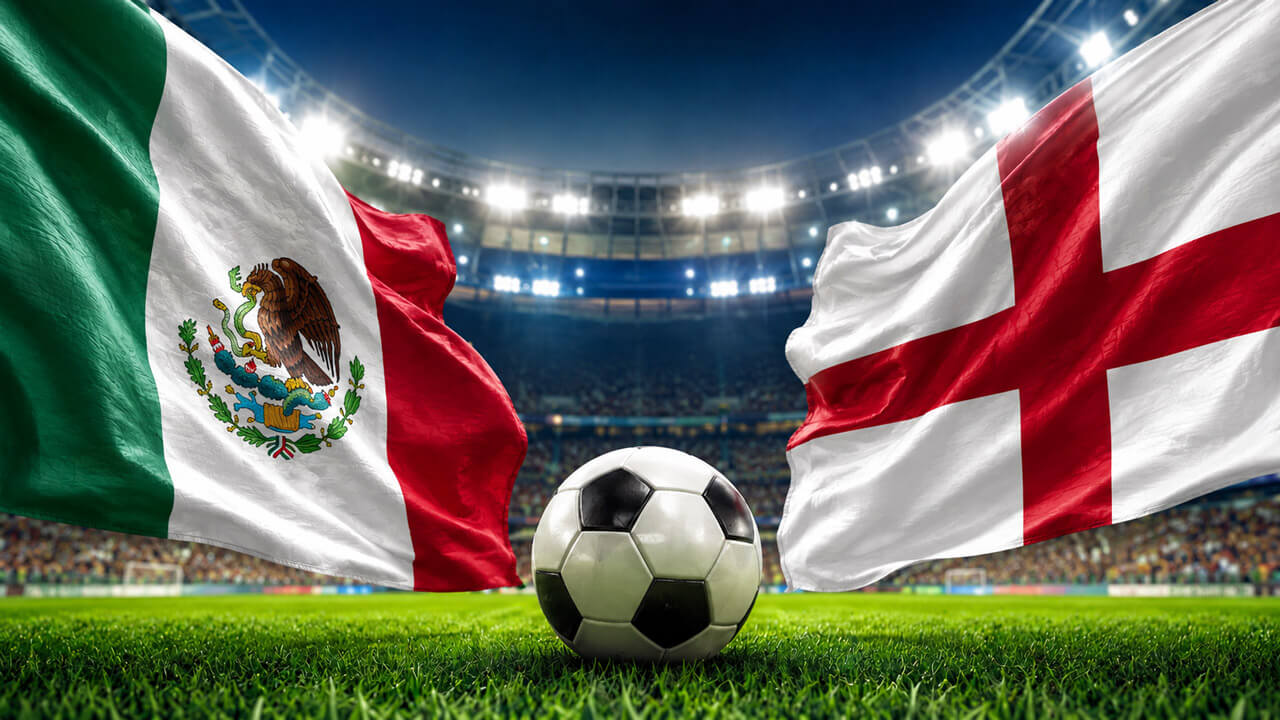
England sits ahead, yet the three-way structure leaves little separation between a Mexico result and a draw. The market’s shape points to a narrow quality premium colliding with World Cup caution, long-dated information gaps, and settlement details that can matter more as kickoff approaches.

The market is pricing England as the leading outcome, while giving Mexico and the draw enough probability to keep the match from becoming a one-direction story. That shape matters because the main debate is about how much a perceived quality advantage can survive soccer’s draw risk, World Cup match incentives, and a long runway before the July 2026 close.
England’s lead is modest because the draw absorbs so much probability
With England at 39.5%, Mexico at 31%, and the draw at 30.5%, the market-implied story is a narrow England preference with no dominant result. The gap matters because England-supportive assumptions must compete with a large draw bucket in a three-outcome structure; stronger squad perception alone may shift only part of the probability if expected match dynamics stay cautious.
The setup also suggests Mexico is being treated as more than a token outcome. That is an inference from how close Mexico sits to the draw, and it matters because any Mexico-supportive information can affect two related interpretations: a direct Mexico win case and a lower-scoring, lower-separation match that keeps the draw highly relevant.
The draw leg turns match tempo into a pricing variable
The separate draw outcome makes tactical pace and match state central to pricing. The supplied market fields do not include venue, lineup, or broader tournament-stage context, so the current distribution cannot be tied to those specifics. That absence matters because draw pricing can move for reasons beyond either team’s headline strength: hypothetical scenarios such as conservative selections, game-state incentives, difficult weather, or rhythm-breaking officiating could all support a match where control takes longer to convert into a decisive result.
Because resolution points to FIFA as the settlement source, confidence may also depend on how FIFA-reported match information maps to the three listed choices. The supplied rules state that each listed option is represented by its yes price, and they do not include expanded tie-treatment language in the provided context. That matters because any later clarification on draw settlement mechanics could affect how market participants assign probability before team news even arrives.
Thin turnover gives early priors more influence than fresh information
The financial footprint creates another reason the prices can sit close together. Volume is listed at $2.53K and open interest at $2.52K, while liquidity is much larger at $148.11K. That mix points to a market with available quoting depth and limited executed history, which matters because current prices may rely heavily on broad priors instead of a deep sequence of information-driven trades.
| Signal | Why it matters to pricing |
|---|---|
| Volume: $2.53K | Limited turnover leaves fewer confirmed price-discovery events. |
| Liquidity: $148.11K | Depth is available, but future execution will test the current anchor. |
| Open interest: $2.52K | The committed risk base is still small relative to the event horizon. |
| Close: July 6, 2026 | Lineups, form, venue context, and rules interpretation can still reshape assumptions. |
This matters because long-dated sports markets can remain anchored to reputation until a high-quality catalyst forces a new framework. A single official development can matter more here than in a mature, heavily traded match market, since the current distribution has had relatively little executed volume to harden around one narrative.
Mexico’s path needs venue, tempo, or availability help to gain force
Mexico’s 31% can be read as respect for situational pathways alongside team quality. The market is leaving room for conditions that narrow the match, especially if future official information supports a Mexico-friendly environment or weakens England’s assumed advantage. Until those details are confirmed in the event context, they remain catalysts instead of established facts.
- Confirmed venue and kickoff conditions that alter assumptions about crowd support, heat, altitude, or travel.
- Official squad news showing absences, suspensions, or fitness limits for either side.
- Pre-match tactical signals pointing to conservative shapes or lower pressing intensity.
- Settlement clarification that changes how the draw outcome is interpreted.
These catalysts matter because they do not all move the market through the same channel. A Mexico availability boost could lift the Mexico outcome directly, while a slower-tempo setup could support the draw and cap directional enthusiasm for both teams.
A clean England setup is the main stress test
The strongest counterargument is that the current lead already captures a simple hierarchy: England is being treated as the side with the clearer win path. If future information shows England with a healthy first-choice group, favorable preparation, and no obvious tactical constraints, the Mexico and draw probabilities could lose shared support. In a three-way market, even modest reallocation from the draw can materially change the order of outcomes.
The key counter-signal would be an England price rise accompanied by a falling draw price on meaningful executed volume and lower reliance on passive quoted liquidity. That pattern would suggest the market is shifting away from the caution-and-compression thesis. The main failure mode for the current tight structure is a future information set that makes the match look more open for England specifically, while giving Mexico fewer situational routes to keep the contest close.
Sources
Market Details
- Resolution criteria
- This event is for the upcoming FIFA World Cup game, scheduled for Sunday, July 5, 2026 between Mexico and England.
- Platform
-


- Category
- Sports
- Scheduled deadline
- July 6, 2026, 12:00 AM UTC
- Settlement source
- fifa.com
- Market rules summary
- Multi-outcome Polymarket event. Each listed option is represented by its Yes price on the underlying market. View full rules
Frequently Asked Questions
What was the final result of the Mexico vs. England prediction market?
Polymarket reports England as the winning outcome for the Mexico vs. England prediction market with a final probability of 100%. The final market snapshot includes $38.15M volume and $20.22M open interest. CryptoSlate last synced the final market data at Jul 6, 2026, 03:27 UTC.
How does the Mexico vs. England prediction market resolve?
This event is for the upcoming FIFA World Cup game, scheduled for Sunday, July 5, 2026 between Mexico and England. Multi-outcome Polymarket event. Each listed option is represented by its Yes price on the underlying market. The settlement source listed for this market is fifa.com.
Related Markets
 Spain vs. Argentina
 France vs. England
 England vs. Argentina