

France vs. Senegal
Final Results
Scheduled deadline: Jun 16, 2026, 19:00 UTC
Market Resolution
Polymarket reports France as the winning outcome for the France vs. Senegal prediction market with a final probability of 100%. Scheduled deadline: Jun 16, 2026, 19:00 UTC. Final reported trading volume was $28.89M.
Polymarket · Final sync
Market Analysis
France’s Heavy Favorite Status Collides With Senegal’s Draw Leverage
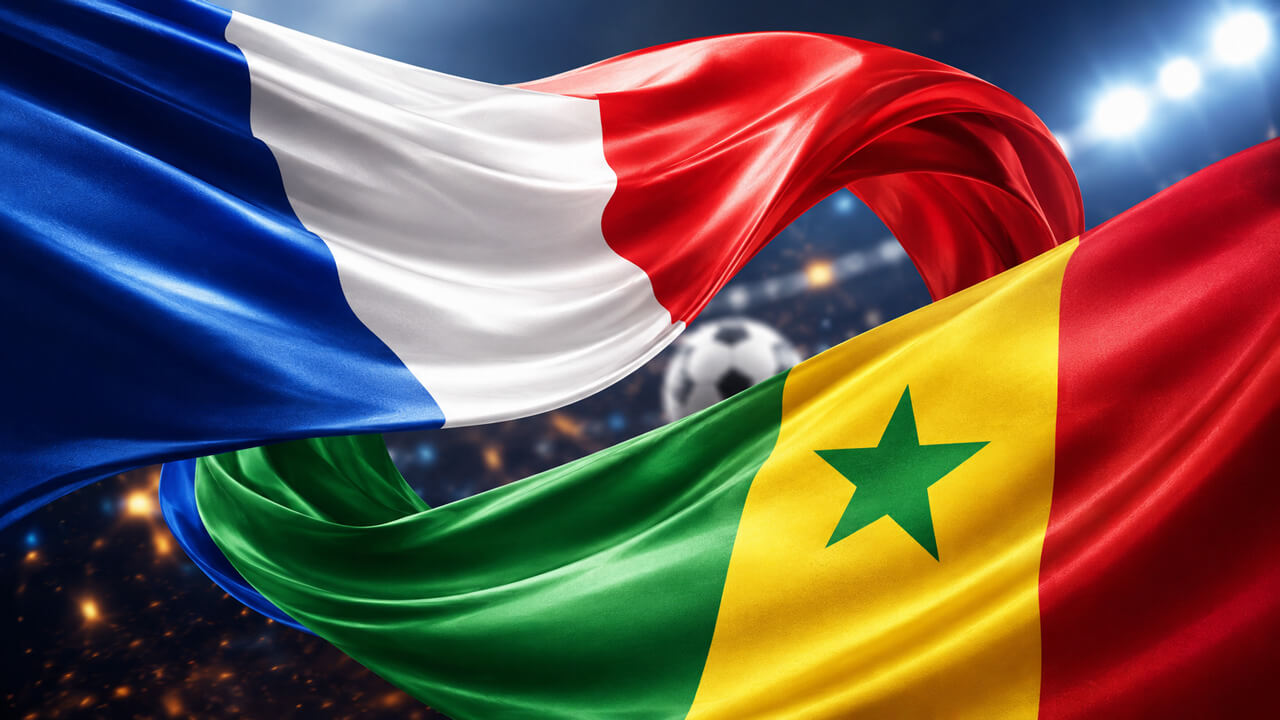
The market is telling a story of French control, yet the separate draw outcome gives Senegal relevance through a route short of an outright upset. The pricing hinges on whether pre-match information reinforces a quality gap or turns this into a match shaped by caution.

France’s 65.5% Yes price frames the June 16, 2026 World Cup match as a game where the favorite controls most paths to settlement, while Senegal’s 12.5% and the draw at 21.5% split the resistance into two different stories. The useful reading is that the market is paying for a presumed gap in match-winning capacity, then reserving a meaningful share for a result that blocks both teams from winning outright.
The favorite price implies a quality gap that must survive match-day information
As an inference from the three-way prices, France is being treated as more than a preferred side: its Yes price is more than triple the draw and more than five times Senegal’s. That shape matters because a favorite in a market with a draw option needs enough expected control to convert superiority into a win inside the settlement window. The market-implied thesis rests on assumptions about chance creation, defensive stability, and game management, with the listed market data leaving those assumptions implicit.
The close date, June 16, 2026 at 7:00 PM UTC, matters because a long pre-match runway gives team news, tournament incentives, and official match context time to challenge those assumptions. A France price this high can absorb ordinary debate about a competitive opponent, while verified information that changes the expected scoring balance would have a cleaner route into the market.
The draw price is the pressure valve for Senegal’s strongest path
The 21.5% draw price is central because it captures a Senegal-resilient result that stops short of Senegal finishing ahead. In a multi-outcome event, that allocation can keep the Senegal win price contained even when the match is viewed as competitive. A 1-1 or 0-0 script, described here as hypothetical game states, would damage the France outcome while leaving Senegal’s outright win secondary to the draw.
This matters because the market can express respect for Senegal’s resistance through two channels. The lower Senegal price points to skepticism about an outright win, while the draw share leaves room for a disciplined match, a slow tempo, or a late equalizer. The split reduces the need for a single upset narrative.
Deep liquidity raises the bar for narrative-only movement
The market’s $3.47 million in volume, $6.24 million in liquidity, and $2.45 million in open interest suggest that casual opinion has to compete with a substantial existing position base. That depth matters because durable repricing is more likely to require verifiable football information than vague sentiment around national-team reputation. It also means small pieces of news can be interpreted through the existing France-favorite frame unless they directly alter expected lineups or match incentives.
FIFA settlement makes late-game incentives pre-match relevant
The listed settlement source is FIFA’s tournament page, so the result recorded for the match drives the outcome. Shots, possession, and perceived dominance matter only if they translate into France, Senegal, or draw. That makes pre-match expectations about game state important: a favorite can look superior on paper while a tournament situation still increases the practical appeal of caution.
- A hypothetical lineup disclosure removing or restoring high-impact players would test the assumed quality gap.
- Official group context by match day could make a draw strategically important for one or both sides.
- Verified weather, pitch, or refereeing conditions that affect finishing quality could redirect attention toward the draw.
- Any rule or scheduling clarification from Polymarket or FIFA would matter if it changes how the recorded result is interpreted.
The clearest counter-signal is a match framed by caution
The main failure mode for the current distribution is a pre-kickoff setup where France’s superiority is acknowledged, yet the incentives point toward risk control. If either side can achieve a tournament objective with a draw, the France win path becomes more dependent on early scoring or a decisive tactical advantage. That would challenge the assumption that quality converts into a full three-outcome win share.
The opposite confirmation would come from official information that narrows Senegal’s route to containment: full-strength France expectations, match conditions favorable to attacking rhythm, or tournament incentives that reward chasing a win. In that case, the market-implied story of French control would have firmer support from sources closer to kickoff.
Sources
Market Details
- Resolution criteria
- This event is for the upcoming FIFA World Cup game, scheduled for Tuesday, June 16, 2026 between France and Senegal.
- Platform
-


- Category
- Sports
- Scheduled deadline
- June 16, 2026, 7:00 PM UTC
- Settlement source
- fifa.com
- Market rules summary
- Multi-outcome Polymarket event. Each listed option is represented by its Yes price on the underlying market. View full rules
Frequently Asked Questions
What was the final result of the France vs. Senegal prediction market?
Polymarket reports France as the winning outcome for the France vs. Senegal prediction market with a final probability of 100%. The final market snapshot includes $28.89M volume and $9.93M open interest. CryptoSlate last synced the final market data at Jun 16, 2026, 21:37 UTC.
How does the France vs. Senegal prediction market resolve?
This event is for the upcoming FIFA World Cup game, scheduled for Tuesday, June 16, 2026 between France and Senegal. Multi-outcome Polymarket event. Each listed option is represented by its Yes price on the underlying market. The settlement source listed for this market is fifa.com.
Related Markets
 Spain vs. Argentina
 France vs. England
 England vs. Argentina