
Overview
Introduction
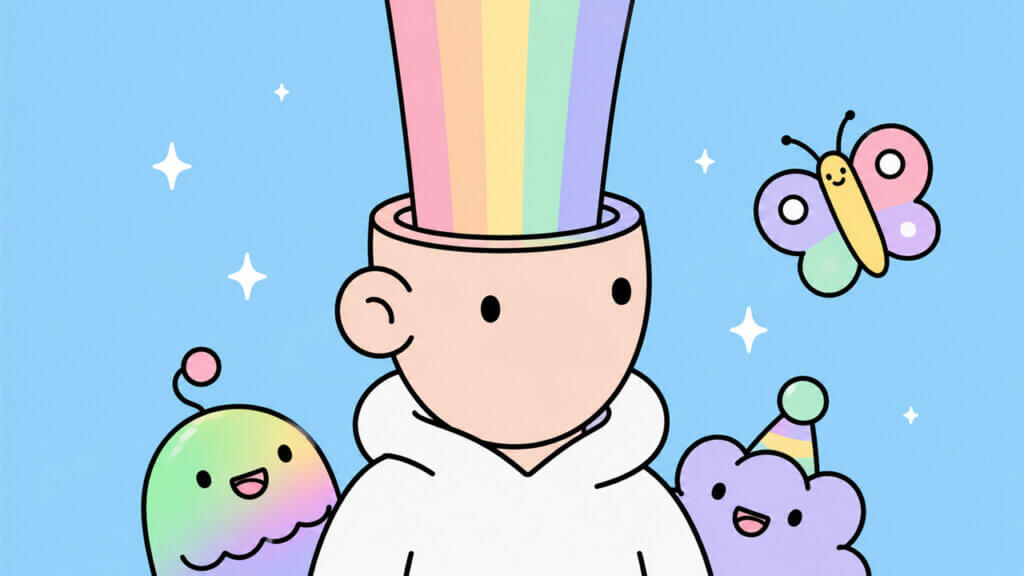
You've probably seen the colorful characters on the internet. Maybe someone had one as a Twitter profile picture. Maybe you saw a headline about Pharrell Williams and a $704 million valuation and thought: what exactly is going on here?
Doodles NFT launched in 2021 as a 10,000-piece Ethereum collection of hand-drawn character art. That's still what the core product is. But the brand around it has expanded into something layered: a Solana-based token called DOOD, an avatar app called Stoodio, an AI image model trained on Doodles-owned IP, and an onchain worldbuilding layer called DreamNet.
Each of those things works differently, costs differently, and carries different risks. This guide separates them clearly, so you know what you're actually buying before you connect a wallet.
Key Takeaways
- What it is. It started as a fixed Ethereum profile-picture collection created from Burnt Toast's character art.
- What it changes. The project has expanded into apps, media, AI tools, companion assets, and the separate DOOD token.
- Main risk or limitation. Buying a Doodle does not grant full media ownership, guaranteed utility, or protection from token and marketplace scams.
What Is Doodles NFT?
A Doodles NFT is a token. One of 10,000 on the Ethereum blockchain, each representing a colorful character with its own combination of visual traits.
That's the simple version. The confusing part is that Doodles also lends its name to a suite of products: Stoodio for character customization, Doodles 2 as a companion asset format, DOOD as a fungible ecosystem token, Doodles AI as a proprietary image model, and DreamNet as an experimental onchain worldbuilding layer.
An NFT, an app account, and a fungible token are three different things. They carry different rights, different risks, and different wallet requirements. Knowing which one you're looking at matters more than anything else in this guide.
If you're new to how any of this works at the blockchain level, This guide explaining how blockchain records ownership is the right starting point before evaluating specific collections.
How the Original Doodles NFT Collection Works on Ethereum
The 10,000-Piece Original Doodles NFT Collection
Here's the thing about a 10,000-piece collection: that ceiling is the whole point. Once all 10,000 tokens are minted, no more can be added. That fixed supply is what collectors care about when they talk about scarcity.
The original Doodles NFT collection is tied to a single Ethereum smart contract: 0x8a90CAb2b38dba80c64b7734e58Ee1dB38B8992e. That contract address is your ground truth. It confirms you're looking at the real collection and not a copy.
This matters because fakes exist. Later products like Doodles 2, Space Doodles, wearables, the Dooplicator, Genesis Box, and DOOD all carry the Doodles name, but they are not additional tokens inside the same original 10,000. An asset can be officially connected to Doodles and still be something entirely different from owning one of the originals.
Before you act on any holder benefit or access claim, confirm the asset belongs to the correct collection, contract address, and chain.
Doodles NFT: Traits, Rarity, and Provenance
Two things determine whether a Doodle is genuine, and where it sits within the collection: traits and provenance.
Traits are the visual attributes that make one Doodle look different from another, like a specific background color, headwear, or facial expression. Some trait combinations are rare across the full 10,000, which affects collector demand. Provenance is the on-chain history: every wallet that has ever held the token, every transfer, every listing.
The artwork drives attention. The blockchain record is what separates a real token from a copy. That distinction matters most when browsing a marketplace, where fake collections often mimic the art closely enough to fool a quick glance.
| Feature | What It Means For You |
|---|---|
| Ethereum contract | The original collection is tied to one specific address. Lookalikes on other chains are not the original. |
| Fixed supply | 10,000 tokens exist. Later products are separate assets, not extras in the same set. |
| Traits and rarity | Visual rarity may affect collector demand, but it does not guarantee resale value or liquidity. |
| Token history | Every transfer and listing is visible on-chain through a block explorer or marketplace record. |
The chain check is especially important when fake collections copy the art onto cheaper networks. If you're new to Ethereum, understanding how Ethereum wallets handle NFT custody is worth doing before you start browsing listings.
Doodlebank and Early Holder Participation
Doodlebank was an early community treasury mechanism that gave original Doodles holders a say in how project funds were used. It was part of what separated Doodles from a simple art mint at launch: holders were positioned as stakeholders, not just buyers.
That framing no longer describes how the project operates. As Doodles shifted toward a more traditional entertainment company structure, the early holder-governance model was left behind. A buyer today should look at what the current, verifiable holder benefits actually are, rather than what was pitched in 2021.
How Doodles Became a Web3 Entertainment Brand
The original collection got attention as profile-picture art. What kept Doodles alive after the 2021 NFT cycle cooled was a push into media, branded products, AI tools, and live experiences.
From PFPs to Media IP
The shift from collectible to media IP came with real capital behind it. A 2022 funding announcement reported a $54 million round at a $704 million valuation, with Seven Seven Six leading and Pharrell Williams joining as board member and chief brand officer.
That scale of investment moved Doodles into a different category from most NFT projects. The goal was to build entertainment properties around the characters, not just sell collectibles. Doodles agreed to acquire animation studio Golden Wolf in 2023 to expand original content capacity, which put Doodles closer to an IP-driven entertainment brand than a typical profile-picture collection.
For context on how Doodles fits the larger pattern of NFT projects that survived the post-2021 downturn, the NFT market boom-bust report covers which collections kept producing real work after speculation cooled.
Stoodio, Doodles 2, and Wearables
Stoodio is the app layer where users create and customize Doodles-style characters. Doodles 2 extends that into a companion asset format, with wearables and account-based experiences that sit alongside the original collection.
These are separate asset types. A Stoodio profile, a wearable, a Doodles 2 character, and an original Ethereum Doodle all sit inside the same brand universe. They do not carry identical rights, scarcity, or resale profiles.
Think of it as hub and spoke. The original Ethereum collection is the recognizable center. Stoodio, Doodles 2, wearables, and token access are products built around that center. Buying into one does not give you the rights or benefits of another.
Doodles AI and DreamNet
These are the most experimental parts of the Doodles ecosystem, and together they represent the biggest departure from what NFT collectors were buying in 2021.
Doodles launched Doodles AI in March 2026, powered by a proprietary model called Prism 1.0, trained on Doodles-owned IP with no third-party training data described in the announcement. In practice, this means the model generates art in the Doodles visual style without drawing on external datasets, which matters for IP control and future licensing.
DreamNet is harder to summarize. It functions more like a story protocol than a fan app: character agents, place creation, token-weighted participation, trust scores, and a Vector Worldstate that AI media tools can draw on for content production. Holders and token participants can contribute to a shared world. That world then feeds into media production.
Both layers add complexity for new users. Before connecting a wallet to any Doodles product, confirm which layer you're actually interacting with, because each one has different requirements, different token connections, and different risk profiles.
What the DOOD Token Adds to Doodles
DOOD is a fungible token tied to the Doodles ecosystem. It is separate from the original NFT collection in every practical sense: different asset type, different blockchain, different wallet setup, different risk profile.
DOOD Is a Token, Not the Original NFT
The phrase “Doodles token” sometimes gets used loosely to mean DOOD. They are not the same thing. DOOD is fungible ecosystem exposure. Holding DOOD does not make you an original Doodles collector. Holding an original Doodle does not automatically give you DOOD.
| Asset | What It Represents |
|---|---|
| Doodles NFT | A non-fungible Ethereum token from the original 10,000-piece collection. |
| DOOD token | A separate fungible token launched on Solana, not part of the original NFT set. |
DOOD Token Supply and Allocation
The total DOOD supply is 10 billion. Sixty-eight percent is allocated to community and growth categories, covering holders, ecosystem growth, liquidity, and new users.
A large community allocation sounds positive, but it does not automatically translate into utility or price support. Large community allocations come with vesting schedules, token unlocks, and selling pressure that affects the market. They also attract scam claim sites that copy official branding and offer fake airdrops. Verify the current official claim route before connecting a wallet, because fake token contracts and airdrop pages are a reliable attack surface during any token event.
If you plan to trade DOOD, centralized venues and onchain swaps carry different custody, liquidity, and contract-verification risks. Understanding how decentralized exchanges work is useful before using any onchain swap with a token you're unfamiliar with.
What Doodle NFT Owners Get
This is the section most buyers skip, and the one most likely to cause problems later. Owning a Doodle gives you blockchain-verified control of a specific token and a limited media license tied to it. It does not give you the Doodles brand, unrestricted commercial rights, or any guaranteed financial return.
NFT Ownership Versus Media Rights
NFT ownership and media rights are two different things, and the Doodles license keeps them clearly separate. The Doodles Digital Collectibles Media License Agreement grants personal, non-commercial use of the linked collectibles media while reserving rights that are not expressly licensed.
That means you can use a Doodle as a profile picture or display it personally without issue. It does not mean you own the artwork outright. The token and the image rights travel together only within the license terms.
Commercial Use Limits
Commercial use is limited under the current media license. The agreement excludes commercialization, derivative works, modification, new NFT creation based on the linked media, and trademark use without approval.
This is easy to miss because buying an NFT is often described casually as “owning the art.” In this case it is not. If you plan to use a Doodle in merchandise, advertising, a game, or any revenue-generating product, you need to read the active license before assuming you can.
Transfers, Forks, and Platform Risk
When a Doodle changes hands, the license transfers to the new lawful owner and the seller's license ends. That makes wallet security and correct transfer records part of your rights picture, not just a trading detail.
Forks and platform support can also change holder treatment. The license gives Doodles discretion around which mainnet version is recognized for rights and participation. A wrapped, bridged, or forked version of a Doodle may not carry the same treatment as the original. Do not assume it does without checking.
How to Buy, Hold, or Use Doodles NFT Safely
The biggest risk when buying Doodles is not market volatility. It is operational: connecting to the wrong collection, approving a fake token contract, or signing a malicious transaction before you realize what it does.
Verify the Collection Before Connecting
Verification happens before the wallet prompt appears. A Doodles search on any marketplace will surface lookalikes, so start from official project links, confirm the contract address, and inspect the marketplace listing before approving anything.
Run through this checklist before buying or claiming:
Confirm the original Ethereum contract for original Doodles. Start from official Doodles links, not ads, search results, or DMs. Check marketplace verification badges and collection history. Avoid collections with copied art and short mint histories. Review any approvals after using unfamiliar apps.
If a listing looks legitimate at a glance, cross-reference it against the official contract address. NFT marketplaces support discovery and trading. They do not screen every listing for fakes. That verification step is your responsibility.
Use the Right Wallet and Network
Original collection tokens require Ethereum-compatible wallet setup. DOOD activity on Solana requires Solana-compatible setup. For anyone new to self-custody wallets, beginner crypto wallet options covers custody types, recovery methods, and network compatibility in plain terms.
Keeping wallets separate also reduces risk. A wallet you use for long-term NFT storage should not be the same one you use to test claim links, new token swaps, or unfamiliar mints. If one wallet is compromised, the other stays safe.
Airdrop Links Carry High Risk
Scammers copy branding, domain names, and social posts during token launches. The DOOD launch attracted significant attention, which made it a target. Fake claim sites that closely mimic official pages are common during any high-profile token event.
Keep it simple: use official links only, verify the domain character by character, connect a wallet you can afford to lose, read every transaction prompt before approving, and revoke permissions you no longer need. Never enter a seed phrase into any claim site, browser popup, support form, or direct message.
How to Evaluate Doodles NFT Without Chasing the Floor Price
Floor price gets most of the attention in NFT communities, but it is one of the weaker signals for evaluating whether an asset is worth buying. A Doodles floor price tells you the cheapest listed token at a given moment. It does not tell you whether demand is real, whether rights are clear, whether products are being delivered, or whether the token has any durable utility.
Floor Price Is Only One Signal
Floor price is useful for a quick market read, but it can be thin, volatile, and sensitive to a few listings. A collection can show a high floor while real demand is shallow, or a low floor while long-term holders are inactive.
More useful checks include: recent sales volume, how many unique buyers there are, listing depth across price levels, holder concentration, offer quality, and whether tokens actually trade near the displayed floor price. For broader context on where
NFT Value and Token Value Can Move Separately
Doodles the NFT and DOOD the token are different assets, and they can trade in opposite directions. The NFT is scarce collection ownership with a media license attached. DOOD is fungible token exposure to a broader ecosystem that keeps expanding.
A token launch can increase attention without lifting every NFT, and an NFT floor can hold up even when the token trades poorly. Evaluate the asset you actually plan to own rather than assuming every Doodles-linked price will move together.
Red Flags to Check Before Buying
Hype moves fast in NFT markets, but the checks below are slower and more reliable. Run through them before any purchase:
- Whether official products have actually shipped versus what was promised on old roadmaps.
- Real usage numbers in Stoodio, Doodles AI, or DreamNet.
- Holder concentration and any patterns that suggest wash trading.
- DOOD token unlock schedules and allocation-related selling pressure.
- Whether the media license supports your intended commercial use.
- Marketplace liquidity during quiet periods, when the hype has died down.
None of these turn Doodles into a risk-free asset. They make the decision less dependent on social momentum and a single floor-price screenshot.
FAQs
Is DOOD the same as a Doodles NFT?
No. DOOD is a fungible ecosystem token, while a Doodle is a non-fungible Ethereum collectible from the original 10,000-piece collection.
What blockchain is Doodles NFT on?
The original collection is on Ethereum. DOOD activity is Solana-linked, so users may need a different wallet and network setup for token actions.
Who created Doodles NFT?
Doodles was co-founded by artist Scott Martin, known as Burnt Toast, and Web3 builders Evan Keast and Jordan Castro.
Can Doodles NFT owners use the art commercially?
Current Doodles licensing gives holders personal, non-commercial display rights to the linked media, but it does not grant broad commercialization, derivative-work, or trademark rights.
What is Stoodio?
Stoodio is the Doodles app layer for creating and customizing Doodles-style characters, wearables, and related experiences beyond the original 10,000 Ethereum NFTs.
Is Doodles NFT still active?
Yes. Doodles has continued through DOOD, Stoodio, Doodles AI, DreamNet, media projects, and brand partnerships, but activity should be evaluated separately from NFT price speculation.
